Writing doesn't require expensive gear or an MFA. What it does require is showing up regularly with something to write on and something to write toward. The right craft book at the right moment can change everything. Here's exactly what's worth buying and, just as importantly, what you can skip.
By Colin B. · Published June 4, 2026 · Last reviewed June 4, 2026
A $15 craft book and a good notebook get you further than you'd think. Writing software is optional until you're working on something long.
We earn commission on qualifying Amazon purchases — see our
affiliate disclosure.
Price tiers and budget totals shown above are editorial estimates;
actual Amazon prices vary.
At a glance
Our top pick in each category
The fastest path through this guide — each best-starter pick by category.
Scroll for the budget and upgrade alternatives.
Don't buy software before you have a writing habit. Scrivener is excellent, but a $60 app won't make you write. A notebook and pen will. Start analog, earn the software.
Your notebook matters more than your pen. Most writers have strong opinions about notebooks; very few have strong opinions about which specific ballpoint they use. Invest in a notebook you'll be proud to fill.
Buy one craft book and read it before buying a second. The temptation is to stockpile craft books as a form of procrastination. One book, read closely, is worth a shelf of books skimmed.
Your first craft book is the most important purchase you'll make as a writer. The wrong one sends you down rabbit holes of theory before you've written anything. The right one makes you want to close the cover and start a draft. There are hundreds of craft books and most are useful eventually, but only a few are the right call on day one. These three cover the ground most beginners actually need.
Craft Books — what's the difference?
A few common shapes, each making a different trade.
General Craft
Start here: works for any form or genre equally.
Best for
All beginners
Tone
Memoir + instruction
Length
~288 pages
Best for Anyone starting from scratch, regardless of genre
Tradeoff Less form-specific than genre-focused picks
Half craft manual, half memoir about King's own career. The memoir half makes you want to write; the craft half teaches you how. Covers voice, revision, and reading like a writer. Works whether you're writing horror, literary fiction, or personal essay. The single book we'd hand a new writer on day one.
What we like
Half memoir, half craft manual: reads like a story, teaches like a class
Covers voice, revision, and the reading habit in plain language
King's honesty about failure makes the advice feel earned, not academic
What to know
Fiction-heavy: poets and essayists will want a supplemental title
Bird by Bird: Some Instructions on Writing and Life
$15.01 as of Jun 22, 2026
★★★★☆Our rating· Only 1 left in stock - order soon.
Lamott's take is the antidote to perfectionism. Famous for the 'shitty first drafts' chapter alone. Where King writes from authority, Lamott writes from the mess, and beginners often find her more reassuring. The two books cover different ground and you'll eventually want both.
What we like
'Shitty first drafts' chapter is required reading for every beginner
Warm, honest voice that reduces the perfectionism that stops most writers
What to know
More about the writer's psychology than craft mechanics
Story: Substance, Structure, Style and the Principles of Screenwriting
$10.52 as of Jun 22, 2026
★★★★☆Our rating· Only 1 left in stock - order soon.
The fiction and screenwriting bible. McKee breaks story structure at a level other craft books skip. Dense, demanding, and worth every page if you're serious about plot-driven work. Wait until you've finished a first draft before picking this up.
What we like
Comprehensive story-structure framework used by Hollywood and novelists alike
Breaks down what makes scenes and sequences actually work
What to know
Heavy and academic: not a beach read, demands full attention
Screenwriting framing may confuse prose-first writers at first
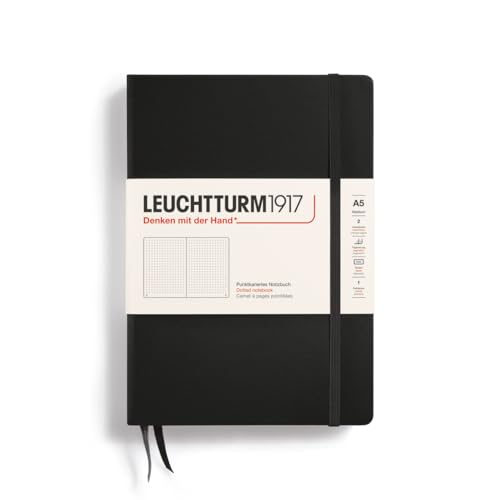
Your notebook is where writing actually happens: morning pages, scene fragments, overheard dialogue, ideas you'll lose if you don't catch them. Most writers have strong opinions about notebooks. The short version: buy a real one. The cheap composition-book approach sounds appealingly frugal but produces writing you don't respect, in a place you don't want to return to.
Best starter
Leuchtturm1917
A5 Hardcover Notebook
$25.75 as of Jun 22, 2026
★★★★★Our rating· Only 1 left in stock - order soon.
Leuchtturm beats Moleskine for writers on one key feature: every page is numbered, with a table of contents in the front so you can find your entries later. Hard cover, paper that handles fountain pens without ghosting, and the binding holds up to years of carry. The notebook serious writers actually use.
What we like
Page numbers and built-in table of contents let you find entries later
80 gsm paper handles fountain pens with minimal ghosting
Available in dotted, lined, plain, and squared grid options
The iconic writer's notebook. Elastic closure, back pocket, and a bookmark ribbon. Not as feature-rich as the Leuchtturm but genuinely good and instantly recognizable. A fair budget pick if the Leuchtturm is out of reach.
What we like
Elastic closure keeps it shut in a bag without bending pages
Inner pocket holds notes, cards, or loose manuscript pages
What to know
No page numbers or table of contents: hard to navigate once filled
Thinner paper than Leuchtturm shows fountain pen ink through to the back
Rhodia paper is the gold standard for fountain pen users. The 90 gsm Clairefontaine paper produces zero bleed-through and near-zero ghosting even with wet inks. The sewn binding lays completely flat, which matters at hour two of a long writing session. Overkill if you use ballpoints.
What we like
90 gsm paper handles wet fountain pen inks with zero bleed-through
Sewn binding lays completely flat for comfortable long sessions
What to know
Pricier per page than Leuchtturm: best saved for fountain pen use only
Most beginners don't need dedicated writing software. A notebook and any basic text editor will take you through your first year. But when you're working on something long, Scrivener changes how you think about structure. It's less a word processor and more a project management tool for your manuscript. Buy it when you're ready to draft something with chapters, not before.
Best starter
Literature and Latte
Scrivener 3 [Download]
$$
★★★★★Our rating
Scrivener lets you draft a novel the way you'd write one: in fragments, with the structure visible at all times. Chapters live in a binder, scenes drag to rearrange, and the corkboard keeps your outline next to your draft. The $59 one-time price is cheaper than a year of Word.
What we like
Binder system lets you rearrange scenes and chapters without cut-paste
One-time $59 purchase, no annual subscription
Corkboard and outliner stay visible alongside your draft
What to know
Steep learning curve: expect 2-3 hours of setup before real use
Not a strong mobile app: best as a desktop-first tool
If your writing group, teacher, or eventual agent asks for a .docx file, you need Word. Focus Mode strips away distractions for a clean writing environment. Not as powerful as Scrivener for long projects, but the industry-standard submission format.
What we like
Submission-ready .docx files: the format agents and publishers expect
Focus Mode creates a clean, distraction-free writing environment
What to know
Annual subscription: $70/year versus Scrivener's one-time purchase
The pen you write with matters more than you'd think, and less than fountain pen enthusiasts want you to believe. The real case for a quality pen is ergonomic: a smooth-writing instrument reduces hand fatigue over long sessions. Ballpoints are fine. A fountain pen is noticeably better for an hour of longhand, which is why so many writers swear by them.
Best starter
Pilot
Metropolitan Fountain Pen
$24.15 as of Jun 22, 2026
★★★★★Our rating· Only 1 left in stock - order soon.
The entry-level fountain pen that's good enough to keep forever. At $18, it writes smoother than any ballpoint and makes long writing sessions noticeably more comfortable. The ink reservoir is cartridge-based for easy refilling. Generations of writers have started here and never felt the need to upgrade.
What we like
Smooth steel nib reduces hand fatigue over long writing sessions
Cartridge or converter system makes refilling easy
At $18, less than most notebooks you'll fill with it
What to know
Needs cartridges or a converter: not grab-and-go like a ballpoint
Nib dries out if uncapped: cap it when not actively writing
The G2 is the gold standard for writers who don't want to think about pens. Smooth, consistent, cheap, and available everywhere you might run out. A 12-pack lasts months. If you want to start writing without learning fountain pen maintenance, this is your pen.
What we like
Smooth, consistent write quality across the entire 12-pack
Available everywhere when you need a replacement mid-draft
What to know
Ballpoint feel creates more hand fatigue over long longhand sessions
If the Metropolitan hooked you on fountain pens, the LAMY Safari is the natural next step. The triangular grip reduces hand fatigue for long daily sessions, and it's available in a range of nib widths so you can match the pen to your notebook and writing style.
What we like
Triangular grip corrects writing angle and reduces hand fatigue
Wide range of nib widths for different styles and notebooks
What to know
Proprietary T10 cartridges: no generic refill substitutes without a converter
Plastic body feels less premium at the $30-40 price point
Two books that live on your desk and get consulted for life. The Elements of Style is short enough to read in an afternoon and contains more useful guidance per page than most full-length craft books. A print thesaurus does something a digital one doesn't: it lets you browse concept clusters and find the word you didn't know you were looking for.
Best starter
Strunk and White
The Elements of Style
$12.20 as of Jun 22, 2026
★★★★★Our rating· In Stock
Seventy pages that have improved more prose than any other book in print. Some advice is dated, but the core principles (prefer the specific, omit needless words, use active voice) are still the best starting framework for clean writing. Read it once; reread it after your first revision.
What we like
Under 100 pages: reads in an afternoon, referenced for a lifetime
'Omit needless words' alone is worth the cover price
What to know
Some advice is dated and prescriptive: treat as guidance, not gospel
The digital thesaurus gives you synonyms. The print Roget gives you word families, shades of meaning, and the serendipity of landing on the word you didn't know you needed. Writers who use a print thesaurus often find it changes how they think about language.
What we like
Organized by concept: finds words a digital lookup never would
Browsing the clusters surfaces language you didn't know you wanted
What to know
Index-dependent: the book is nearly unusable until you learn it
Most people want to write but wait to feel ready. Here's what actually happens in the first thirty days, what you'll get wrong, and what makes the difference between writers who stick with it and everyone else.
The single biggest obstacle to writing is waiting to feel like writing. Most beginners treat the desire to write as a prerequisite. It isn’t. Productive writers treat writing the same way they treat brushing their teeth: not something they feel like doing, something they do anyway, at roughly the same time, every day.
The first month of creative writing is really just the first month of building that habit. The writing itself is secondary. What matters is that you show up.
Here’s what that actually looks like.
Week 1: Show up and write badly
The first thing you’ll write will probably be bad. That’s not a problem. It’s the whole point.
Most beginners either don’t write at all (waiting for inspiration) or write in bursts when they feel motivated and then stop for days. Both approaches produce the same result: nothing finished, no improvement, no writing identity. The writers who get better are the ones who write badly, consistently, until they start writing well.
Pick a time. Thirty minutes in the morning works better than “whenever I have time” because whenever-I-have-time means never. Set a timer. Write until it goes off. Don’t edit while the timer is running.
Write whatever comes. Journals, scenes from your life, things that happened to you, things you wish had happened, the conversation you replayed in your head after you should have said something different. Don’t worry about whether it’s fiction or nonfiction or creative or personal. Just produce words.
The only rule for week one: you can write anything, but you can’t write nothing.
Most aspiring writers are readers. Being a reader isn’t the same as reading like a writer.
Reading like a writer means slowing down to ask how it’s done. When a scene works, stop and ask why. When a line of dialogue sounds real, look at the punctuation, the rhythm, the word choices. When you can’t put a book down at 11pm, notice what the writer did at the end of the chapter to keep you from sleeping.
This is how craft actually transfers. Not from reading about craft books (though craft books help), but from close attention to writers who are doing the thing you want to do.
In week two, read twenty minutes before your writing session. Don’t read the same thing you’re trying to write, at least not at first. Read things that are slightly better than what you’re producing and slightly different in form. If you’re writing personal essays, read published essays. If you’re writing a novel, read a few pages of a novel that’s doing something you want to understand.
This sequence (read, then write) works better than the reverse. You arrive at the page having just seen the thing done well. Your standards are calibrated.
Pick a writing prompt if you don’t know what to work on. The Rumpus and NaNoWriMo publish them free. A good prompt isn’t a crutch, it’s a starting gun.
By week three, you should have accumulated some pages. Now the question is what to do with them.
The answer is: write toward something. A scene that goes somewhere. A memory with a point. A character who wants something and can’t have it. Not every piece needs a destination, but at this stage you need to practice the discipline of shape.
Beginners often write beautifully in the middle of things and badly at endings. Endings require decisions. They require choosing what the piece is actually about, and committing to it. That commitment is uncomfortable, which is why so many beginners leave everything unfinished.
Practice ending things this week. Write a piece under 1,000 words with a real ending. It doesn’t have to be a good ending. It just has to be an ending. The discipline of finishing something, even something small, is more valuable than 5,000 words of beautiful middle.
A few things you’ll probably get wrong in week three, and that’s fine:
Summarizing instead of showing. “She was sad” is a summary. “She drove home and didn’t remember the route after she parked” is a scene. Practice turning summaries into scenes.
Dialogue that explains too much. Real people don’t say what they mean. Fictional dialogue should imply, reveal, deflect. Read your dialogue aloud. If it sounds like a TED Talk, cut it.
Adjective overload. Prose that reaches for description in every sentence wears a reader out. Trust nouns and verbs more.
None of these are fatal. Noticing them is the whole job.
By the end of the first month, you know a few things: you know whether you like writing in the morning or at night, whether you write better with prompts or without them, and roughly what kind of writing feels most like yours.
Now start something slightly longer than you think you can finish. A 2,000-word short story. A personal essay about something that happened to you. Five connected flash pieces. Not a novel (yet). Something you could finish in three or four weeks if you showed up every day.
The most important thing you can do in week four is not to finish the piece. It’s to get in the habit of returning to work in progress. Returning is a skill. It requires you to read back, figure out where you left off, get inside the world again, and push forward. Beginning writers often avoid this because returning feels slower than starting fresh. But starting fresh every session means never finishing anything.
Write forward. Don’t edit previous sessions. Save revision for after the draft exists.
What comes after month one
After thirty days of regular writing, a few things become clear:
What you like to write. You might discover you care more about real events than invented ones, or the reverse. You might discover essays feel like yours and fiction doesn’t, or that you only come alive when you’re writing dialogue. Follow this.
What’s actually hard. Every writer has a weak spot. Beginners often struggle with endings, or with compression, or with making scenes feel urgent. Knowing your specific weakness is more useful than general advice.
Where to go next. A community, a class, or a more structured craft book. Now that you’ve written some things, you have context for what the advice actually means.
The writers who get better are not the ones who feel more ready. They’re the ones who wrote badly on Tuesday and showed up again on Wednesday.
Save your money
What you don't need yet
Beginners get pressured to buy a lot of stuff that doesn't help them play
better. Here's what we'd skip on day one.
A Freewrite or dedicated distraction-free device — A $600 single-purpose writing device solves a discipline problem that discipline solves. Build the writing habit first.
Writing classes or workshops — Classes are most valuable once you have drafts to workshop. Go in with nothing written and you'll spend the time taking notes you won't know what to do with.
Craft book subscription boxes or bundles — One good craft book read closely beats ten books skimmed. Don't stockpile reading as a substitute for writing.
A standing desk or ergonomic chair — Worth it eventually, but get the writing habit first. Buying ergonomics before you're writing daily is buying furniture, not a writing practice.
A printer and ink — Wait until you're submitting something. Printing a rough draft feels productive and mostly just wastes ink.
A writing mentor or coach — Useful after you have a body of work to discuss. Too early and the relationship is expensive advice with nothing to apply it to.
First week
Your first seven days
A short, real plan to get from gear-on-doorstep to actually playing.
Order 'On Writing' and read the first 100 pages before starting anything else. · Buy
Read something every day you want to write like. Not how-to. An actual writer doing the thing you want to do. · Action
FAQ
Common questions
Do I need expensive software to start writing?
No. A notebook and your phone's Notes app can take you through your first year. Scrivener makes long-form work easier, but buy it when you have something to put in it, not before you've written a word.
Does it matter whether I write by hand or on a computer?
It matters a little. Many writers report that longhand slows them down in a way that helps (less self-editing as you go). But the best method is whatever you'll actually do consistently. Start with what you have.
How much should I write per day to improve?
More important than word count is frequency. Thirty minutes daily beats three hours on Saturday. Most writing teachers recommend 500-1000 words a day for serious practice; most working writers produce 500-2000 words in a session. Find a number you can hit most days and start there.
Should I take a class before I start?
Not yet. Classes and workshops are most valuable when you have drafts to share and specific problems to solve. Read a craft book, write some things, and then take a class around month six or twelve when you know what questions to ask.
Is Scrivener worth it?
For short stories, essays, and poems: no. For a novel or memoir over 20,000 words: yes, obviously, and the $59 one-time price makes it cheaper than a year of a subscription alternative. The one-time cost and the structural tools are both worth it once you're working at that scale.
What's the best craft book for fiction writers specifically?
Start with 'On Writing' by Stephen King for voice and discipline. Then read 'Story' by Robert McKee for structure and scene. Those two together cover what most MFA programs spend a year teaching.
Poets and Writers — The main trade publication for literary writers. Grants, contests, agent listings, and craft essays. The MFA database here is the definitive resource if you ever consider a graduate program.
The Rumpus — Essays, interviews, and writing prompts. Best for literary fiction and personal essay writers. The Dear Sugar archive is a masterclass in voice.
NaNoWriMo — National Novel Writing Month. The annual November challenge (50,000 words in 30 days) is the single most effective forcing function for finishing a first draft. Community forums are active year-round.
Electric Literature — Contemporary fiction and essays. Read the Recommended Reading series to find what's being published now and develop a sense of current literary standards.
r/writing — Active writing community. Skip the 'is my idea good?' posts; search for revision advice, publishing timelines, and craft questions. The wiki has a curated craft book list.
The Paris Review Interviews — Long-form interviews with major writers about process, discipline, and craft. Free online. Read two or three and you'll understand why different writers have completely different methods.
As an Amazon Associate, JustBeginning earns from qualifying purchases.
We may also earn commission from other affiliate programs linked on this
page. Editorial recommendations are independent; we don't choose
products based on commission rates.
Product prices and availability are accurate as of the date and time
indicated and are subject to change. Any price and availability
information shown on Amazon at the time of purchase will apply.


 Best starter