Crosswords are one of the few hobbies where all you need is a pencil. Grab a puzzle book, get humbled by Monday's grid, and work your way up from there. Here's what actually helps and what you can skip, from the best starter books to the one reference that earns its shelf space.
By Colin B. · Published June 5, 2026 · Last reviewed June 5, 2026
A starter puzzle book and a decent pencil are all you need. The whole setup costs less than one takeout meal.
We earn commission on qualifying Amazon purchases — see our
affiliate disclosure.
Price tiers and budget totals shown above are editorial estimates;
actual Amazon prices vary.
At a glance
Our top pick in each category
The fastest path through this guide — each best-starter pick by category.
Scroll for the budget and upgrade alternatives.
Start with easy puzzles, not the Sunday beast. The New York Times rates its daily puzzles Monday through Saturday by difficulty, with Sunday being a large-format Wednesday. Monday is genuinely easy. Start there, not because you're not smart enough for Saturday, but because Monday teaches you the rhythms and conventions. Saturday can wait a month.
You don't need ink. Many solvers insist on pen as a discipline move ('commit to your answer'). That's advice for people who already know the clue conventions. As a beginner, use pencil. Erasing is not weakness; it's the fastest way to learn why you got it wrong.
A crossword dictionary is optional but worth it. Once you've been solving for a few weeks, you'll notice the same obscure words come up constantly: OREO, ARIA, ALOE, ERNE. A crossword dictionary teaches you the canon. You're not cheating; you're learning the vocabulary of the form.
The puzzle book is the whole hobby. For beginners, the New York Times collections are the gold standard, not because they're harder, but because NYT Monday puzzles are perfectly calibrated for entry-level solvers: fair cluing, clean themes, and the same conventions you'll encounter everywhere else. Start with an easy Monday-Wednesday collection. When those feel manageable, step up to a Thursday-Saturday volume. The Sunday omnibus books are large-format Wednesday difficulty and worth having eventually.
Puzzle Books — what's the difference?
A few common shapes, each making a different trade.
Monday–Wednesday (Easy)
The right starting point. Themes are clear, clues are fair.
Difficulty
1-3 / 7
Grid size
15x15
Avg time
5-20 min
Best for Complete beginners, anyone building daily habits
Tradeoff You'll outgrow Monday puzzles within a month: that's a good sign
Thursday–Friday (Tricky)
Wordplay-heavy. Expect rebuses and misdirections.
Difficulty
4-5 / 7
Grid size
15x15
Avg time
20-45 min
Best for Solvers with 2-3 months of daily practice
Tradeoff Thursday rebuses are a new mechanic; expect to be confused the first time
Saturday–Sunday (Expert)
No themes, maximum misdirection, the real puzzle test.
Difficulty
6-7 / 7
Grid size
15x15 / 21x21
Avg time
45-120 min
Best for Experienced solvers who find Friday easy
Tradeoff Saturday has no theme and punishing wordplay; not for beginners
Best starter
New York Times
The New York Times Easy to Not-So-Easy Crossword Puzzle Omnibus
$12.99 as of Jun 22, 2026
★★★★★Our rating· In Stock
This is the book that turns a casual interest into a genuine habit. NYT Monday puzzles have clean themes, fair wordplay, and clues that reward logical thinking without requiring decades of pop-culture trivia. The 'not-so-easy' Tuesdays and Wednesdays are staged just right: harder than Monday but never crushing. 200 puzzles in a book that fits in a bag.
What we like
NYT Monday cluing is the industry benchmark for fair, learnable puzzles
200 puzzles across Monday-Wednesday difficulty, months of material
Same conventions you'll use on the NYT app and in competition
What to know
Paperback binding creases fast under daily use
No explanations when you're stuck; you'll need a dictionary nearby
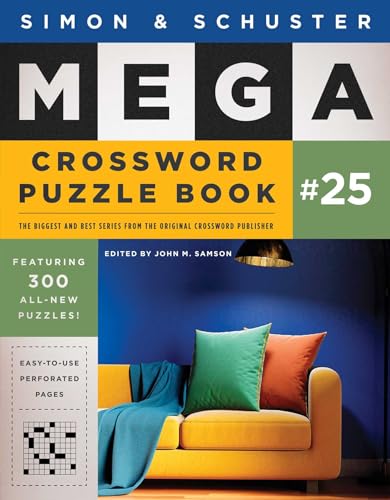
300 puzzles for under $15. These aren't NYT-quality; the cluing is looser, the themes are less crisp, but they're perfectly fine for building vocabulary and speed. Good for travel, planes, or the pile next to your bed that you chip away at slowly. Volume matters when you're building pattern recognition.
What we like
300 puzzles per book: unbeatable volume for the price
Mixed difficulty means built-in progression within one book
What to know
Cluing is less consistent than NYT; occasional ambiguous answers
Themes can feel dated compared to modern constructors
The New York Times Sunday Crossword Omnibus Volume 12
$11.55 as of Jun 22, 2026
★★★★☆Our rating· In Stock
Sunday puzzles are large-format Wednesdays: harder than Monday, not as punishing as Saturday, but with more elaborate themes and more wordplay per grid. At 200 Sunday puzzles per omnibus, this is a meaningful step up. Buy it after you can reliably finish Monday-Wednesday in a reasonable sitting. The Sunday grid rewards patience you haven't built yet as a beginner.
What we like
Large-format Sunday grid rewards richer themes and longer answers
Same NYT quality cluing: fair, consistent, constructors are credited
What to know
Not a beginner book; pick this up after two months of daily puzzles
Time per puzzle is 2-3x a daily; don't use this for quick sessions
The pencil-versus-pen debate is real among serious solvers, but for beginners the answer is mechanical pencil, full stop. You'll erase constantly while learning, not from carelessness but because crossword cluing misdirects you on purpose. A good mechanical pencil keeps lines clean and grids readable. The eraser matters as much as the pencil. Bring a separate block eraser; the nub on a standard pencil is too small for a full grid.
Best starter
Pentel
GraphGear 1000 Mechanical Pencil
$9.30 as of Jun 22, 2026
★★★★★Our rating· In Stock
A 0.5mm lead makes grid squares easy to fill without crowding. The retractable tip protects the lead, the grip is comfortable for long solving sessions, and the build quality is noticeably better than a cheaper mechanical pencil. Crossword solvers who upgrade from dollar-store pencils often land here and stay for years.
What we like
0.5mm lead fills small grid squares without crowding letters
Retractable tip, drops in a bag without breaking the lead
Metal barrel and grip hold up to years of daily use
What to know
Stock HB lead is slightly hard; buy 2B refills for softer lines
More pencil than a casual solver needs if you only do Sunday puzzles
The classic. Softer graphite than generic No. 2 pencils, which means darker lines and easier erasing. You'll sharpen them every few puzzles, which some people find meditative. A 12-pack lasts months. Not as precise as a mechanical pencil, but perfectly comfortable for casual solvers.
What we like
Softer graphite than generic pencils; lines are darker and erase cleanly
No mechanical pencil to fiddle with; grab one and go
What to know
Needs sharpening every 2-3 puzzles; get a good sharpener too
Tip gets dull mid-puzzle; mechanical pencil stays consistent
Pencil erasers are too small for the number of corrections you'll make learning crosswords. This block eraser removes graphite completely without smearing, and the clean edge gives you control in tight grid squares. Every serious pencil solver eventually owns one. Under $3.
What we like
Erases graphite completely without ghosting or smearing
Sharp edge gives control in tight grid squares
What to know
Leaves white eraser crumbs; dust the page after correcting
Crosswords have a private vocabulary: a set of short, vowel-heavy words that constructors reach for constantly because they fit awkward corners: OREO, ARIA, ALOE, ERNE, ETNA, OLEO. A crossword dictionary catalogs all of them by word length, making it easy to look up 'seven-letter word for Italian volcano.' You don't need one to start, but most solvers who get serious own one within the first few months. A standard thesaurus is also genuinely useful; many clues are synonym games.
Best starter
Merriam-Webster
Crossword Puzzle Dictionary
$7.31 as of Jun 22, 2026
★★★★★Our rating· Only 1 left in stock - order soon.
The most comprehensive crossword reference in print: over 660,000 answer words organized by clue category and word length. When you're staring at a clue you've never seen before, this is the book you reach for. The clue index is thorough enough to find answers from clue fragments. Merriam-Webster's editorial rigor keeps it authoritative across editions.
What we like
660,000+ answer words: the most complete printed crossword reference
Clue index lets you look up by topic, not just word length
Updated editions include modern pop culture entries
What to know
Heavy and large; not a bag book, it lives on the desk
Digital crossword apps have real-time lookup; this requires page-flipping
★★★★☆Our rating· Only 1 left in stock - order soon.
A leaner and cheaper alternative to the Merriam-Webster. Fewer total entries but covers the high-frequency crossword canon thoroughly. If you're just getting started and want a reference without committing to the full Merriam-Webster, this is a reasonable entry point. Paperback format means it actually travels.
What we like
Smaller and lighter than Merriam-Webster, fits in a bag
Covers the core crossword vocabulary thoroughly for the price
What to know
Fewer obscure entries; you'll hit limits faster on hard puzzles
Less frequently updated; older pop-culture entries can be thin
A handful of books exist specifically to teach crossword solving as a skill: not puzzle collections, but guides that decode constructor thinking, explain tricky clue types (rebuses, wordplay, abbreviation conventions), and give you frameworks for when you're stuck. One good guide is worth weeks of frustrated solo solving. Ben Tausig's and Deb Amlen's books are the two most-recommended among regular solvers.
Best starter
Amy Reynaldo
How to Conquer the New York Times Crossword Puzzle
$8.96 as of Jun 22, 2026
★★★★★Our rating· Only 1 left in stock - order soon.
Amy Reynaldo ran Crossword Fiend for a decade and this guide distills what she learned about how constructors think. It explains the conventions beginners don't know they're missing: how clue punctuation signals wordplay, why question marks matter, and how to decode theme entries. One afternoon with this book cuts weeks off the learning curve.
What we like
Explains the unwritten rules beginners don't know they're missing
Written by a veteran solver who knows what trips up newcomers
What to know
Short book; experienced solvers will find it too basic
Thinking Inside the Box: Adventures with Crosswords
$6.95 as of Jun 22, 2026
★★★★☆Our rating· Only 1 left in stock - order soon.
Part history, part memoir, part solving guide: Raphel tells the story of competitive crossword solving while teaching the craft alongside it. More literary than a how-to book, and more useful than a pure history. Good for solvers who want to understand the culture they're entering, not just the mechanics. A satisfying read even if you're only a casual solver.
What we like
Entertaining read even when you're not actively solving
Covers competitive crossword culture, useful context for serious solvers
What to know
More narrative than instructional; don't expect a drill book
Requires some baseline crossword knowledge to fully appreciate
Most people quit crosswords because they start on the wrong puzzle. Here's how to actually get hooked, from finishing your first Monday to cracking your first Thursday.
Crosswords have a reputation problem. People try one on an airplane, get stuck on half the clues, and decide they’re “not a crossword person.” They’re wrong; they started on the wrong puzzle.
The New York Times rates its daily crosswords by difficulty, Monday through Saturday, with Monday being genuinely accessible to anyone with a decent vocabulary. Most people who bounce off crosswords tried a Thursday. That’s like trying to learn chess by playing a grandmaster.
Here’s what your first month actually looks like, and what makes the difference between bouncing off and getting hooked.
Week 1: The conventions you don’t know you don’t know
Every crossword has unwritten rules. Once you know them, clues that looked like gibberish become logical. Before you know them, you spend your energy on confusion that has nothing to do with your vocabulary.
The grammar rule. The answer matches the part of speech and tense of the clue. If the clue is “Ran quickly,” the answer is a past-tense verb. If it’s “One who runs,” it ends in -ER or -OR. You can often narrow the answer type before you know the letters.
The question mark rule. A question mark at the end of a clue signals wordplay. “Dog’s bark?” might not be WOOF; it could be ELM (an elm bark). The question mark is the constructor’s way of saying “I’m being tricky here.” Don’t take the surface meaning literally.
Abbreviation signals. If the answer is abbreviated, the clue will signal it: either by including an abbreviation (“Dr.’s org.” = AMA), by being phrased cryptically, or by the crossing letters making a non-word obvious. A clue will never require an abbreviated answer without warning you.
Crosswordese. There’s a private vocabulary of short, vowel-heavy words that appear constantly because they fit awkward grid corners: ARIA (operatic solo), OREO (sandwich cookie), ALOE (soothing plant), ERNE (sea eagle), ETNA (Sicilian volcano), OLEO (margarine), ALEE (away from the wind). Memorize these ten words and you’ll fill in roughly 15% of every grid you’ll ever solve.
Around day seven or eight, something clicks. You stop filling individual squares and start reading the grid spatially, seeing which corners are locked by crossing answers, which section to tackle next when you’re stuck.
The key move at this stage: work from the answers you know. Crossword grids are dense with crossing letters. If you know three letters of a seven-letter word, you have something to guess from. Start with clues you’re confident about, fill in those answers, and use the crossing letters to unlock the harder clues around them.
When you’re completely stuck, try these in order:
Re-read every clue in the stuck section. Your first interpretation isn’t always right. A clue that seemed to be about music might be about architecture; re-reading with fresh eyes often surfaces the correct reading.
Think about theme entries first. In NYT puzzles, the longest answers (usually 15+ letters, running all the way across the grid) are almost always thematically connected. If you can identify the theme (puns, hidden words, fill-in-the-blank phrases) you can sometimes infer theme answers without knowing the clue at all.
Check the crosses. If a square could be two different letters depending on the answer, solve the crossing answer first. The crossing always tells you which option is right.
Week 3: The vocabulary builds faster than you expect
By week three, you’ll notice you’re not looking up crosswordese anymore. The recurring short answers (ARIA, OREO, ALOE, ERNE) are filling in automatically from partial crosses. This is the sign that pattern recognition is forming.
At this stage, try a Tuesday or Wednesday. The cluing is harder, but the structure is identical. Monday clues are usually literal; Tuesday clues start to misdirect; Wednesday adds wordplay to the misdirection. The jump from Monday to Wednesday is gradual, not a cliff.
Two things help at this stage more than anything else:
Review puzzles after you finish them. XWordInfo.com archives every NYT crossword with constructor notes, clue analysis, and average solve times by skill level. When a clue’s answer still doesn’t make sense after you’ve filled it in, the site usually explains it. Understanding why an answer is right teaches you the logic faster than any how-to guide.
Understand that Thursday is a different genre. Thursday puzzles introduce rebuses: squares where multiple letters share one box, or where a concept (like a chess piece or a compass direction) replaces letters in multiple answers. Your first Thursday will be confusing even if you can reliably finish Wednesday. That’s normal. Thursday is the one day of the week where the rules genuinely change.
Week 4: Getting comfortable with being stuck
Here’s the thing about crosswords that nobody tells you: being stuck is the game. It’s not a failure state. The satisfaction of the puzzle comes from the moment when a clue you’d written off suddenly makes sense, when the crossing letters reveal an unexpected interpretation and everything falls into place.
The best solvers aren’t the ones who know the most trivia. They’re the ones who are most comfortable sitting with ambiguity: who can hold a clue loosely, try a few interpretations, use the crossing letters as feedback, and stay patient instead of forcing a wrong answer.
By the end of week four, you should be:
Finishing most Monday puzzles without looking anything up
Finishing most Tuesday puzzles with one or two lookups
Making meaningful progress on Wednesday before getting stuck
Understanding that Thursday is a specific skill to build next month
The next step after your first month
A few things change the slope dramatically once you have the basics:
Try the LA Times crossword. It’s free, published daily, and calibrated slightly easier than NYT on average. Good for building speed and confidence on days when you want a puzzle without the pressure of the NYT’s harder cluing.
Read the constructor notes. Crosswords are made by real people with specific intentions behind each clue. XWordInfo lets you click through to constructor profiles, interviews, and their notes on the cluing choices. Understanding the constructors’ perspective changes how you read clues.
Consider the NYT Crossword app. At $40 a year, it’s the best way to build a daily habit: streak tracking, clean interface, and an archive of thousands of past puzzles to practice on. The Mini (a 5x5 puzzle, 2-3 minutes) is a useful daily warmup even when you don’t have time for a full solve.
One more thing: if you want to understand where you are relative to other solvers, check XWordInfo’s average solve times for each day. The median Monday solve time is around 8 minutes for people who track it. The first time you beat the median (probably around the two-month mark) feels genuinely good.
Save your money
What you don't need yet
Beginners get pressured to buy a lot of stuff that doesn't help them play
better. Here's what we'd skip on day one.
A crossword app subscription — The NYT Crossword app is excellent but costs $40/year. Learn on paper first; working in a book is slower and more forgiving, which is what beginners actually need.
A crossword tournament entry — The American Crossword Puzzle Tournament is genuinely fun, but you'll enjoy it more after you can reliably finish a Thursday. Get a few months of daily solving under you first.
Constructor software — Crossword Compiler and Crossfire are tools for building puzzles, not solving them. Fun rabbit hole; explore it after you've solved a few hundred puzzles and started noticing constructor choices.
A dedicated solving board or book stand — A hardcover book on a table works fine. If you eventually solve in bed or on the couch every night, a lap desk helps, but most beginners don't need one.
Ink pens for solving — Pen-only solving is a discipline challenge that makes sense once you know crossword conventions well. As a beginner, you will need to erase. Use pencil.
First week
Your first seven days
A short, real plan to get from gear-on-doorstep to actually playing.
Order a Monday–Wednesday NYT crossword book and a mechanical pencil. · Buy
Try one Monday puzzle. Don't look anything up. See how far you get without help; even if you finish only a corner, that's useful data. · Action
Learn the core crossword vocab: ARIA, OREO, ALOE, ERNE, ETNA, OLEO, ALEE, ALAR, ESNE. These 8-10 words appear in nearly every crossword you'll ever do. Write them on a sticky note. · Learn
Do a second Monday puzzle using the crossword dictionary for any clue that stumps you after 5 minutes. You're not cheating; you're learning the vocabulary. · Action
Try a Tuesday. It's a step up but uses the same conventions. Get comfortable with theme entries; in NYT puzzles, the long answers (usually 15+ letters) are always thematically connected. · Action
Bookmark XWordInfo.com: free archive of NYT crosswords with constructor notes, answer explanations, and stats on how long solvers typically take. Invaluable for understanding why you got stuck. · Learn
XWordInfo · NYT crossword database with constructor notes and answer analysis
Solve at the same time every day for a week; morning coffee is traditional. Habit formation matters more than speed at this stage. · Action
FAQ
Common questions
How hard is it to start doing crosswords?
Monday NYT puzzles are genuinely accessible for a total beginner; most adults can finish one in 15-30 minutes after a few days of practice. The learning curve is mostly vocabulary (a private set of short, vowel-heavy words that appear constantly) rather than intelligence. Give it a week of daily puzzles before judging your aptitude.
Should I use a pencil or pen?
Pencil for beginners, full stop. Crossword cluing is designed to misdirect you; you'll change your answers frequently while learning conventions. Pen-only solving is a discipline challenge worth attempting after a few months, not on day one.
Is it cheating to use a dictionary or look up answers?
As a beginner, no. Looking up an answer you couldn't get and then understanding why it fits is one of the fastest ways to learn the crossword vocabulary. The goal is pattern recognition, not memory. Once you can finish most Monday-Tuesday puzzles without help, try going clean.
What's the difference between easy and hard crosswords?
NYT rates its dailies Monday (easiest) through Saturday (hardest) by difficulty. Monday clues are literal: 'Dog's bark' = WOOF. Saturday clues are deliberately misleading; the same answer might be clued 'Pitch problem?' Thursday adds rebuses, where multiple letters go in a single square. Start on Monday, work your way up.
How long before I can finish a full crossword?
Most people can finish a Monday NYT puzzle within two weeks of daily practice. Wednesday within a month. Thursday-Saturday takes two to six months depending on how often you solve. The jump from Wednesday to Thursday is the biggest: Thursday introduces rebuses and the hardest wordplay.
Are there free crosswords online?
Yes. The LA Times crossword is free daily at latimes.com/games. The American Values Club crossword (AVCX) has a free tier. The NYT crossword is free for Monday-only. For unlimited NYT access ($40/year), the app is genuinely excellent; try the free options first.
NYT Crossword (The New York Times) — The gold standard. Daily Monday-Saturday puzzles rated by difficulty, plus a Sunday large-format. First-month free trial; $40/year after. The app is excellent for tracking solving streaks.
XWordInfo — The best free NYT crossword database. Every puzzle archived with constructor notes, answer analysis, and average solve times. Essential when you want to understand why you got stuck.
Wordplay (NYT Crossword Blog) — The NYT's own crossword blog, constructor interviews, solving tips, and Monday-Friday writeups explaining the theme and tricky clues. Read after solving, not before.
Rex Parker Does the NYT Crossword Puzzle — The longest-running independent crossword blog. Irreverent daily recaps with every answer explained. Opinionated and occasionally caustic; exactly what you want when a clue makes no sense.
AVCX (American Values Club Crossword) — A subscription indie crossword with a free tier. More diverse constructors and modern cluing than NYT. A good companion once you've got the conventions down.
Crossword Fiend — Daily reviews of the NYT and other major crosswords. More measured tone than Rex Parker. Good for understanding constructor choices and clue logic.
American Crossword Puzzle Tournament (ACPT) — The oldest and largest crossword competition in North America. Annual event in Stamford, CT. Worth attending even as a spectator; the community is welcoming and the finals are genuinely exciting.
As an Amazon Associate, JustBeginning earns from qualifying purchases.
We may also earn commission from other affiliate programs linked on this
page. Editorial recommendations are independent; we don't choose
products based on commission rates.
Product prices and availability are accurate as of the date and time
indicated and are subject to change. Any price and availability
information shown on Amazon at the time of purchase will apply.
Our top pickThe New York Times Easy to Not-So-Easy Crossword Puzzle Omnibus


 Best starter