Every buck, bull elk and moose drops its antlers each winter and grows a new set. Shed hunting is walking the woods in late winter and spring to find them. Here's when deer and elk drop, where sheds pile up, how to search a slope, the binoculars, pack and boots that help, and the state rules on season closures and what you can keep.
By Colin B. · Published November 19, 2026 · Last reviewed November 19, 2026
eTrex 22x Handheld GPS
— Garmin eTrex 22x: marks finds and tracks your grid without cell service.
Budget total
$120
Typical total
$450
Entry 10x42 binoculars and a daypack that can strap antlers come to about $120 if you already own boots. The typical setup adds waterproof hiking boots or rubber boots, trekking poles and a handheld GPS.
We earn commission when you buy through links on this page, including
Amazon. See our affiliate disclosure.
Price tiers and budget totals shown above are editorial estimates;
actual prices vary.
At a glance
Our top pick in each category
The fastest path through this guide — each best-starter pick by category.
Scroll for the budget and upgrade alternatives.
Know the calendar. Whitetail bucks drop antlers from late December into March, with most in February and March in the north. Mule deer drop from February to April and elk in March and April. Go too early and you push deer that are still carrying antlers and low on winter fat.
Check the rules. Some western states close public winter range to shed hunting until spring. Wyoming west of the Continental Divide opens May 1. Utah requires a free online course for part of the season. National parks don't allow collecting. Many states need a permit to keep a skull with antlers still attached.
Get permission. Most good shed ground is private. Ask landowners in fall or early winter, offer to share what you find, and close every gate you open.
Search where deer spend winter. Look on south-facing slopes, in bedding cover, along trails between food and beds, at fence and creek crossings, and around winter food like standing corn or browse.
The gear
What you actually need
Binoculars
Binoculars help two ways. Before the season you watch deer from a distance to see if bucks have dropped. During the search you glass open slopes and field edges for the white of an antler before walking to it. A 10x42 is the usual choice: 10 power for detail, 42 mm lenses for low light. 8x42 is steadier and wider if your hands shake.
Best starter
Vortex
Crossfire HD 10x42 Binoculars
$149.00 as of Nov 19, 2026
★★★★★Our rating· In Stock
Sharp, bright glass that's waterproof and fogproof, in a body that fits a chest harness. Vortex's lifetime warranty covers you if you drop them on a rock. A pair many hunters own for years. Sold by EuroOptic. About $149, 4.8 stars from 4,078 ratings.
A cheap, waterproof 10x42 that's good enough to watch fields at dusk and glass a slope for white bone. A sensible first pair if you're not sure you'll stick with it. Sold by Amazon. About $91, 4.4 stars from 2,714 ratings.
Better glass and coatings than the Crossfire, and the bigger 50 mm lenses gather more light at dawn and dusk. You see more detail in shadow. Worth it if you glass big open country for hours. Sold by EuroOptic. About $549, 4.7 stars from 320 ratings.
You need a pack that carries water, snacks and a layer, and that you can strap antlers to. Look for compression straps or a load shelf on the outside so tines don't poke you. A 20 to 35 liter daypack is enough for whitetail country. Out west, where elk sheds weigh 8 to 12 pounds each, a frame pack makes the walk out much easier.
Best starter
TideWe
40L Hunting Backpack with Rain Cover
$51.99 as of Nov 19, 2026
★★★★★Our rating· In Stock
A quiet fabric daypack with side straps and a rain cover. There's room for water, a jacket and a lunch, and you can strap a pair of whitetail sheds to the outside. Sold by WILDPULSE. About $52, 4.8 stars from 1,589 ratings.
An aluminum frame pack with a removable bag. Strap elk antlers to the frame, keep your gear in the bag, and the hip belt carries the weight instead of your shoulders. Sold by Amazon. About $270, 4.4 stars from 623 ratings.
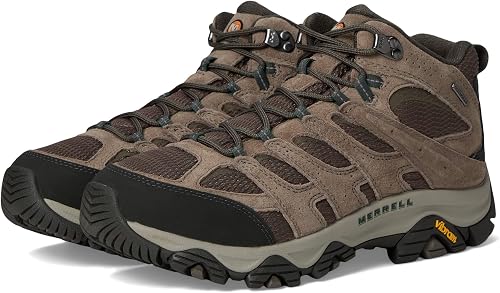
Shed season is wet. Snowmelt, mud and creek crossings are normal, and you may walk 5 to 10 miles a day. A broken-in waterproof hiking boot with good tread works for most ground. Knee-high rubber boots are better in swamps, marsh edges and deep mud. Bring a dry pair of wool socks in your pack either way..
Best starter
Merrell
Men's Moab 3 Mid Waterproof Hiking Boot
$124.99 as of Nov 19, 2026
★★★★★Our rating· In Stock
A popular hiking boot that's comfortable from the first day, with a waterproof liner and a grippy sole. Good for long days on hills, field edges and muddy trails. About $125, 4.5 stars from 5,466 ratings.
A knee-high insulated rubber boot for swamps, creek bottoms and spring mud. Your feet stay dry when you cross water, and the neoprene top keeps cold out on early mornings. About $139, 4.8 stars from 3,437 ratings.
Trekking poles save your knees on steep slopes and help on muddy or icy ground. Many shed hunters also use a pole to flip leaves or check a shape without bending down. A phone mapping app shows property lines, but a handheld GPS works without cell service, keeps a track of your grid and marks every antler you find.
Best starter
Cascade Mountain Tech
Carbon Fiber Quick Lock Trekking Poles
$64.99 as of Nov 19, 2026
★★★★★Our rating· In Stock
Light carbon poles with cork grips and flip locks that are easy to adjust with gloves on. They help on steep, muddy slopes and fold short enough to strap to a pack. Sold by Amazon. About $65, 4.6 stars from 3,594 ratings.
A rugged handheld GPS that runs about 25 hours on two AA batteries. Track your grid so you don't walk the same ground twice, and mark each find to see patterns year to year. Sold by Amazon. About $200, 4.3 stars from 2,081 ratings.
Finding your first shed takes miles, but it gets easier once your eyes learn what to look for. A month is enough to learn the rules, get permission, scout winter deer areas and walk a grid. Here's a week-by-week plan.
Most people walk past their first few sheds. Go slow, look for pieces, and put in the miles.
Week 1: Rules and permission
Look up your state’s shed rules. Check for winter range closures, required courses, and what to do if you find a skull with antlers attached. Then ask landowners. Knock on doors in person, say exactly what you’ll do and when, and offer to share. Public land works too, but it gets crowded the first week it opens.
Use a map to mark thick bedding cover, south-facing slopes, food plots or crop fields, and creek or fence crossings. Watch fields from a distance at dusk with binoculars to see if bucks still have antlers. Don’t walk through bedding areas yet. Pushing deer in late winter burns fat they need.
Once most bucks have dropped, go in. Walk a slope in straight lines 20 to 30 yards apart, then come back the other way. Stop every few steps and scan in a circle. Spend extra time on trails, beds and crossings. Overcast days are easier because antlers don’t hide in glare and shadow.
Most sheds show up as a single white tine or the curve of a base, not a whole antler. Look for shapes that don’t match the sticks. When you find one, search the area hard, since the other side is often within 100 yards. Strap antlers to your pack with the tines pointed down.
Ask two landowners near you for permission to walk their ground in March. · Action
Mark bedding cover, food and creek crossings on a map or phone app before you go. · Learn
Get a pair of 10x42 binoculars and a pack that can carry antlers. · Buy
Walk one south-facing slope slowly in a grid, 20 to 30 yards between passes. · Action
FAQ
Common questions
When should I start shed hunting?
For whitetails, mid-February through March is the main window in most of the US. Wait until most bucks have dropped, which you can check with trail cameras or by watching deer in fields. Elk sheds come later, usually March and April.
Where do you find the most sheds?
Where deer spend winter: thick bedding cover, south-facing slopes, trails between beds and food, and winter food sources. Fence crossings and creek jumps are good too, since the jolt can knock a loose antler off.
Is shed hunting legal on public land?
Often yes, but rules vary. Some states close winter range until spring, some require a course or permit, and national parks ban collecting. Check your state agency and the land manager before you go.
Can I keep a skull with antlers attached?
Usually not without checking first. Many states treat a dead head as a game animal and require a permit or a call to a game warden before you take it. Leave it, mark the spot and call.
How do I spot sheds on the ground?
Look for pieces, not whole antlers. A curved white tine, the round base, or a straight beam that doesn't match the sticks around it. Walk slowly, stop often, and look on bright overcast days when bone stands out.
National Deer Association — Deer biology and management, including when bucks drop antlers and why you shouldn't pressure deer in late winter.
Wyoming Game and Fish Department — Rules for the shed antler season west of the Continental Divide, a good example of how western states close winter range.
Your state's fish and wildlife agency — Check your own state's rules on antler collection, season closures, required courses and skulls with antlers attached.
JustBeginning earns commission from affiliate programs. As an Amazon
Associate, we earn from qualifying purchases. This costs you nothing
extra and doesn't change our recommendations.
Prices and availability are accurate as of the date and time
shown and can change; the price on Amazon when you buy is what
applies.
How this works.

 Best starter