Deer hunting is the kind of hobby that turns a skeptic into an evangelist — but only if the first season doesn't overwhelm you. The good news: you don't need a $2,000 rifle to shoot a deer. Here's what first-year rifle hunters actually need, what to skip, and how to keep your first season under $1,500.
By Colin B. · Published May 29, 2026 · Last reviewed July 13, 2026
A realistic first season runs $900–1,600 for gear alone, plus $50–200 for a license and tags depending on your state. The rifle and scope are the biggest line items — once you own them, annual costs drop sharply.
We earn commission on qualifying Amazon purchases — see our
affiliate disclosure.
Price tiers and budget totals shown above are editorial estimates;
actual Amazon prices vary.
At a glance
Our top pick in each category
The fastest path through this guide — each best-starter pick by category.
Scroll for the budget and upgrade alternatives.
Get your hunting license and hunter education certificate first. Most states require a hunter ed course for first-time hunters, and license applications close before season. Do this in summer — don't wait until September.
Don't buy a $1,500 rifle for your first season. A $400 rifle in a popular caliber (.308, .30-06, .243) will shoot accurately enough to kill a deer at any realistic range. Buy your rifle at Cabela's, Bass Pro, or a local gun store — the Savage Axis II and Mossberg Patriot are where most first-year hunters start.
Scout before you buy gear. If you're hunting public land, your gear list is different than private land with a blind already set up. Know whether you're walking 2 miles or sitting 200 yards from your truck before spending on a pack or boots.
The gear
What you actually need
Scopes
For deer hunting, you need a scope that's clear in low light (dawn and dusk are prime time), holds zero after being banged around in a truck, and has enough magnification for your typical shots. For most eastern whitetail hunting — shots under 150 yards — a 3-9x40 is the perfect starting scope. Don't get sucked into variable magnification and illuminated reticles you'll never use.
Scopes — what's the difference?
A few common shapes, each making a different trade.
3-9x40 (Standard)
The deer hunter's default. Covers any whitetail shot you'll take.
Magnification
3–9x
Objective
40mm
Best range
Up to 200 yd
Best for Eastern whitetail, mixed woods and fields, most beginners
Tradeoff Max 9x limits shots beyond 250 yards in open country
The Crossfire II is the default answer when a new hunter asks 'what scope should I put on my deer rifle?' Clear glass, reliable zero retention, and Vortex's unconditional lifetime warranty. If it fails for any reason — even your fault — they fix or replace it free. At $180, this is exactly where the money goes.
What we like
Vortex lifetime warranty: break it any way and they replace it free
Clear glass at dawn and dusk — when deer actually move
3-9x40 is the proven deer hunting magnification for any terrain
What to know
Turrets aren't for field adjustments — set zero, cap them, done
No illuminated reticle — a real tradeoff in deep pre-dawn darkness
Often available under $100, the Bushnell Trophy has been on deer rifles since your dad was hunting. Multi-coated lenses, strong light transmission, and a reticle that works in dawn light. Not quite as sharp as the Vortex, but a legitimate deer scope that won't let you down in the woods.
What we like
Under $100 with multi-coated lenses — legitimately functional for deer
Proven track record — this scope has tagged countless whitetail
What to know
Not as sharp as Vortex in low light — noticeable at dusk
Seals can fail over seasons; use a scope cover in heavy rain
When you want to shoot past 200 yards or hunt open country, the Diamondback's extra magnification makes a real difference. The step up from Crossfire is visible — buy it when you're hunting fields and want to stretch your range. Same unconditional Vortex lifetime warranty.
What we like
4-12x covers woodland shots AND open-country field shots over 200 yards
Brighter and cleaner glass than the Crossfire II at all magnifications
Same unconditional Vortex lifetime warranty as the Crossfire II
What to know
Overkill for eastern whitetail hunters with typical shots under 150 yards
Heavier than the Crossfire — adds ounces on a long morning carry
Deer hunting clothing has two jobs: blend in and stay warm. Most states require blaze orange during firearm seasons — plan your system around it. A good camo jacket and pants in a proven pattern handle the blending. Layer underneath with merino or fleece for warmth. Avoid cotton: it holds moisture and becomes dangerously cold when wet.
Best starter
Nomad
Mens Harvester Nxt Jacket | Wind Resistant W/Sound Kill Tech, Mossy Oak Droptine Camo, Medium
$$
★★★★★Our rating
Nomad hits the sweet spot between budget poly fleece and $300 Sitka gear. The Harvester uses a brushed-fleece face that's quiet in the brush and warm enough for most November mornings, printed in a proven Mossy Oak pattern. This is the camo jacket that actually shows up in deer camps — not the fancy stuff and not the rack discount bin.
What we like
Brushed-fleece face is quiet in brush when reaching for a rangefinder
Proven Mossy Oak camo pattern disappears in mixed hardwood cover
Mid-price sweet spot — better than budget, half the cost of Sitka
What to know
Sizes run large — go down one size if between measurements
Not windproof on its own; needs a base layer on cold mornings
Blaze orange is legally required during firearm season in nearly every state. A vest goes over your camo layer and comes off in the stand — that's the entire job. Walls makes a reliable insulated version for cold mornings and a lightweight shell for warm ones. This is not optional gear.
What we like
Required by law in most states — not a choice, just buy it
Vest silhouette leaves arm movement unrestricted for mounting a rifle
What to know
Adds zero warmth — it's a safety layer, not an insulation layer
Deer can perceive the orange — remove it in the stand where legal
Sitka is what professional guides wear when gear failure has real consequences. The Core LW Hoodie is a mid-layer powerhouse: Optifade camo designed around deer vision science, odor-resistant treatment, and warmth-to-weight no polyester fleece matches. Buy after your first season when you know you'll keep hunting.
What we like
Optifade pattern is scientifically designed around deer color vision
Merino-blend: warm, breathable, and naturally odor-resistant
Sitka build quality holds up after a decade of hard hunting seasons
What to know
At $150+ for a hoodie, overkill if you hunt one weekend per year
Requires hand-wash or delicate cycle — inconvenient end-of-season laundry
Your boots carry you in and carry a deer out. For a first-year hunter, you want insulation (400g Thinsulate handles most November whitetail conditions), waterproofing (leather with Gore-Tex or rubber), and ankle support for uneven ground. Budget boots break down in one season; mid-tier boots at $150–200 last five years. Don't economize on boots.
Best starter
Irish Setter
Vaprtrek 400g
$$
★★★★★Our rating
Irish Setter has been making hunting boots in Red Wing, Minnesota for decades. The Vaprtrek is their hiker-leaning model — lighter than a traditional hunting boot, with Gore-Tex waterproofing and 400g Thinsulate. Covers most early-season through mid-November conditions. Holds up to multi-mile walks and creek crossings.
What we like
Gore-Tex waterproofing holds up in actual creek crossings and marsh
400g Thinsulate is the sweet spot for October through mid-November
Lighter than traditional hunting boots — less fatigue on long walks
What to know
400g is borderline below 20°F — bring chemical warmers for late-season sits
Break-in period is real — wear them around the house two weeks before season
Under $130 and Rocky's most popular hunting boot. Full-grain leather upper holds up to brush, and the lug sole grips wet leaves reliably. Pair with heavy wool socks for cold days. The smart buy if you're not yet sure hunting will stick.
What we like
Under $130 — the right price if you're not yet committed to hunting
Full-grain leather upper survives brush, briars, and rocky terrain
What to know
Lighter insulation than the Vaprtrek — not for late-season stand sits
Leather needs conditioning after wet seasons to prevent cracking
Kenetrek builds the boots western big-game guides swear by. The Mountain Extreme 400 is serious footwear — KSB SuperFabric upper, K-Talon outsole for technical terrain, 400g Thinsulate, and a last that fits like a hiking boot, not a construction boot. Buy these when you know you'll hunt hard for ten years. They'll outlast the rifle.
What we like
KSB SuperFabric upper survives shale, granite, and 10-day pack trips
K-Talon outsole is the benchmark for technical western terrain
Holds shape and structure after years of hard hunting seasons
What to know
At $500+, overkill for flat eastern farms and food-plot stands
Most foot shapes benefit from a custom insole — budget $50 extra
Beyond scope and clothing, three things make a measurable difference in the field: binoculars (you'll spot more deer in a morning of glassing than walking twice the distance), electronic hearing protection (a rifle blast without protection is permanent hearing damage every single shot), and a purpose-built hunting pack. Budget $300–400 for this category.
Best starter
Vortex Optics
Diamondback HD 10x42 Binoculars
$212.49 as of Jun 22, 2026
★★★★★Our rating
The binoculars question in hunting communities has one answer under $300: Vortex Diamondback HD. Same unconditional lifetime warranty as their scopes. HD glass that punches above its price against Leica and Zeiss at twice the cost. 10x42 is the universal deer-hunting configuration — enough to assess antlers at 300 yards, light enough to carry all day.
What we like
HD glass and Vortex lifetime warranty at an honest price — the consensus pick
10x42 works from thick eastern woods to open western fields
Magnesium chassis survives truck-floor drops and pack compression
What to know
10x magnification shows every hand shake — use a chest harness
Not compact — won't fit a shirt pocket; needs dedicated carry system
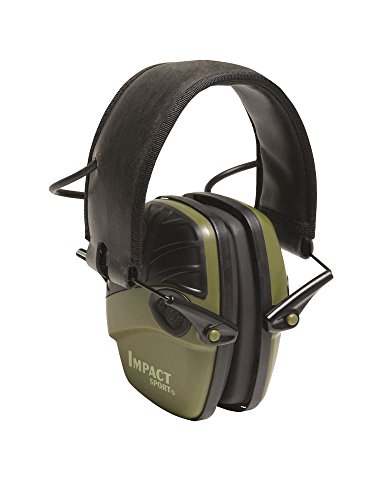
Electronic hearing protection amplifies ambient sound (you'll hear deer walking on leaves) while cutting gunshots to safe levels instantly. The Impact Sport is the standard in hunting and at ranges — it does both jobs without costing $200. Every rifle blast without protection causes permanent cumulative hearing loss. This is health protection.
What we like
Amplifies ambient sound so you hear deer approaching in the woods
Instantly suppresses gunshot noise to prevent permanent hearing damage
The range-proven standard — used by hunters and competitive shooters
What to know
AAA batteries drain in cold weather — bring a spare pair every hunt
Profile can contact high-comb stocks when cheek-welding to sight in
A purpose-built hunting pack: 34L main compartment for a deer quarter, integrated rifle/bow holder, tree-stand carry straps, and a blaze-orange rain cover. ALPS OutdoorZ has been the entry-level standard for hunting packs for a decade because the zippers hold up and the frame transfers load properly.
What we like
Integrated rifle/bow holder keeps hands free on the walk in
34L main compartment fits a quartered whitetail for the pack-out
Blaze orange rain cover included — safety coverage built in
What to know
34L is undersized for multi-day western hunts — that's a different pack
Hip belt lacks padding for heavy loads over 30 lbs
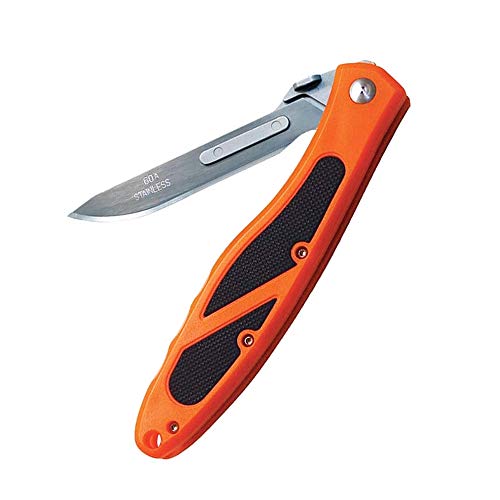
Field dressing a deer is something you do at the most important moment of your season — you need a knife equal to it. A fixed-blade hunting knife is the standard for reliability: no folding mechanism to fail when your hands are cold and bloody. The Buck 119 and Havalon Piranta represent two philosophies: one tough fixed blade that outlasts you, and one lightweight folder with replaceable surgical blades that stays sharp for every cut.
Best starter
Buck Knives
119 Special Fixed Blade
$$
★★★★★Our rating
The Buck 119 has been the standard deer hunting knife for 60+ years. 6-inch drop-point blade in 420HC stainless, full tang, and a leather sheath. It'll field-dress a deer, break down quarters, and last a lifetime with minimal care. When in doubt, start here.
What we like
60-year track record — the knife most experienced deer hunters know
Full tang fixed blade: no moving parts to fail in cold or bloody conditions
Leather sheath and Forever Warranty included — buy once, done
What to know
420HC blade needs light maintenance to hold an edge across multiple seasons
Heavier than folder knives — carries differently in a vest pocket
Eight pieces covering every field task: boning knife, skinning knife, caping knife, bone saw, game spreader, diamond sharpener. If you're not sure which knife does what yet, the WildPak teaches you. Under $40 and a solid first-season kit while you figure out your preferences.
What we like
Eight-piece set covers every field dressing task from field to kitchen
Under $40 — right price for a first season when you're still learning
What to know
Thinner blades than dedicated hunting knives — flex on heavy bone work
Kit approach means nothing is optimized; trade up once you know your style
The Piranta changed how serious hunters field-dress deer. Surgical-grade replaceable blades mean the knife is always sharp — swap blades mid-deer when it starts dragging. Weighs almost nothing. Once you've used one, the fixed-blade approach feels obsolete. Comes with 12 replacement blades.
What we like
Replaceable surgical blades stay sharp for every cut — never resharpen mid-deer
Ultra-light at 2.9 oz — barely noticeable in a vest pocket all season
12 replacement blades included — covers an entire season plus more
What to know
Thin blades aren't for heavy bone or joint work — bring a bone saw too
Blades snap if torqued sideways — very sharp, requires careful handling
The rifle, the license, the blaze orange — you've got the gear. Here's what actually happens when you walk into the woods on opening morning, and what to do about it.
Every deer hunter you know had a first season where they didn’t shoot a deer. Most of them had two. This is not failure — it’s the actual curriculum. The woods teach you things you cannot learn at a desk, and the first season’s real job is paying attention.
This is what that season looks like: the preparation that matters, the morning you walk in, the long patience between arrival and opportunity, and — if it comes — the moment you pull the trigger and everything changes.
Before opening day: the three things that actually matter
Most first-year hunters spend money on gear they don’t need and skip the three things that would actually make their season:
Zero your rifle, then zero it again. Your rifle needs to be sighted in at 100 yards. This means going to a range, settling the crosshairs, and shooting groups until you understand exactly where the bullet goes when you squeeze the trigger. Three range sessions before season is not excessive. One is not enough. You need to know, not guess, how your specific rifle performs — because deer don’t appear in ideal conditions.
Get access to land and walk it. A hunting lease, public land, or private permission — it doesn’t matter which, but you need to know the property before you hunt it. Walk it in daylight. Find the food sources (fields, mast-producing oaks, agricultural edges), the bedding areas (thick brush, cedar tangles, south-facing slopes), and the travel corridors connecting them. Deer move predictably between where they sleep and where they eat. Walk the property twice before season and you’ll know more about where deer will be than 90% of new hunters.
Scout for sign. You’re looking for three things: rubs (bucks scraping velvet off their antlers on small trees — look for shredded bark at 2–4 feet high), scrapes (patches of pawdirt with a licking branch overhead — fresh ones are dark and wet), and trails (worn depressions in the forest floor where deer walk the same route every day). Fresh sign means deer are using that area now. Old sign means they used to.
Opening morning
You will be awake before you want to be. This is correct. Deer are most active in the first and last hour of daylight, and you need to be in position 30 minutes before legal shooting time — before the woods wake up. If deer hear you crashing through brush at first light, your morning is already over.
Hunt the wind. The single most important tactical concept in deer hunting. Deer have a sense of smell that dwarfs yours — they can detect human scent at hundreds of yards. You must position yourself so that the wind is blowing from the deer’s direction toward you, not from you toward the deer. Check the forecast the night before and plan your approach accordingly. You can make noise. You cannot control your scent trail if the wind is wrong.
Settle in and stop moving. New hunters move too much. Every rustle, every adjustment, every check of the phone alerts deer. Pick your spot, get comfortable, and commit to stillness. Deer hunting is mostly waiting, and the quality of your waiting determines whether you see deer.
Use your binoculars. Glass the edges, the trail junctions, the shadows under the oaks. Your eye at 1x finds movement; binoculars reveal what’s actually there. A deer standing still in dappled light at 80 yards is nearly invisible without glass. Most deer you’ll miss in your first season you’ll miss because you didn’t see them — not because you missed the shot.
The long middle of the season
Most first-year hunters see deer they don’t shoot, don’t see deer when they expect to, and spend a lot of time wondering what they’re doing wrong. This is the curriculum.
The rut changes everything. In most of the whitetail range, the rut — peak breeding season — runs from late October through mid-November. Bucks that have been nocturnal and invisible suddenly move in daylight, cover ground, and make poor decisions. The rut is when your odds spike dramatically. If you’ve been hunting in early October with nothing to show for it, do not quit before the rut.
Your first deer will probably be a doe. Does are legal in most states, more numerous, and — important for new hunters — less paranoid. A doe feed-walking toward you in daylight is a more realistic first-season encounter than a big buck. Take the shot. Venison is venison, and the experience of successfully harvesting a deer is what turns a curious new hunter into a permanent one.
Patience is a skill, not a personality. You’ll want to leave your stand early, take a bad shot, or move when you should stay still. The internal negotiation is real: “I’ve been here four hours, I haven’t seen anything, maybe I should…” The answer is almost always: stay put. Deer move on their own schedule. You being still and in position is the entire job.
Making the shot
When a deer comes within range and you decide to shoot, a few things matter above everything else:
Wait for a broadside or quartering-away presentation. The vital zone — heart and lungs — is behind the deer’s shoulder on a broadside shot, or behind and slightly forward on a quartering-away shot. Do not shoot a deer facing directly at you, directly away from you, or quartering hard toward you. Wait for the presentation to open up. A deer that’s feeding will give you time if you’re patient.
Put the crosshairs behind the shoulder, one-third up the body. This is your aiming point for a heart/lung shot on a broadside deer. Not the shoulder, not the neck, not the head — behind the shoulder. Take a breath, exhale half of it, and squeeze the trigger without jerking.
Expect the deer to run. Most deer shot through the vitals will bolt and run 50–150 yards before going down. This is normal. Mark where the deer was standing when you shot, and where it ran. Wait 20–30 minutes before walking to the spot — a deer bumped too early will run much farther. Go to where the deer was, look for blood, and follow the sign carefully.
You need to get the deer’s internal organs out within a few hours of harvest to prevent the meat from spoiling. This sounds worse than it is. It’s a practical skill, it’s fast (15–20 minutes when you know what you’re doing), and there are hundreds of clear YouTube tutorials. Watch two videos before season.
The basics: you’re removing the stomach, intestines, lungs, and heart through an abdominal incision, keeping the meat clean and cool. Drag the deer to a clearing if possible. Work cleanly. The heart and liver are edible — save them.
If you shot a deer and aren’t sure what to do next, call the person who took you hunting, or call the local DNR. That’s what they’re there for. First-time hunters ask questions all the time. Nobody thinks less of you.
Save your money
What you don't need yet
Beginners get pressured to buy a lot of stuff that doesn't help them play
better. Here's what we'd skip on day one.
A rangefinder — For most whitetail hunting under 150 yards, you can estimate range well enough after practice. Buy one after season one if you find yourself shooting at longer distances.
A tree stand or ground blind — Borrow one your first season if possible. Stand hunting requires scouting, hardware, and land permissions — too many variables to rush. Learn to hunt from the ground first.
Scent-control clothing and sprays — Deer smell you regardless of what you're wearing. Learn to hunt the wind first — it's free and more effective than $300 of scent-elimination apparel.
Deer calls and rattling antlers — Calling works during the rut — about one week in November. It's a second-season skill. Learn to pattern deer movement and work feeding and bedding areas first.
Trail cameras — Valuable scouting tool, but you need access to land before you can scout it. Get your land permission, walk the property, and understand the terrain before buying cameras.
A suppressor — Legal in most states for hunting, excellent for hearing protection, and comes with a 9-month NFA wait and a $200 tax stamp. Save this conversation for year three.
First week
Your first seven days
A short, real plan to get from gear-on-doorstep to actually playing.
Take your state's hunter education course — required for first-time hunters in most states, available online and in-person. · Action
IHEA-USA course finder · International Hunter Education Association — find your state's required course
Buy your hunting license and deer tags — check your state fish and wildlife agency's website for dates and deadlines. · Action
Buy your rifle at Cabela's, Bass Pro, or a local gun store. Choose .308 Winchester if undecided. Tell them you're a first-time hunter — they'll help you pick and arrange the background check. · Action
Order a Vortex Crossfire II 3-9x40 scope — have a gunsmith or experienced shooter mount and bore-sight it. · Buy
What rifle caliber should a first-time deer hunter choose?
.308 Winchester is the right answer for most first-year hunters. It's accurate at deer distances, ammo is available everywhere, and recoil is manageable. .30-06 has slightly more power if you plan to eventually hunt elk. .243 Winchester is excellent if recoil is a concern — you'll shoot more and shoot better.
Do I need a hunting license even if I'm hunting on private land?
Yes. A hunting license is required by your state regardless of land ownership. The landowner doesn't own the deer — the state does. You also need deer tags that must be filled out and attached to the deer immediately after harvest.
How much does a first deer season actually cost?
Budget $1,200–1,800 for gear (rifle, scope, camo, boots, accessories) plus $50–200 for licenses and tags depending on your state. Ammunition for a season costs $40–80. The biggest variable is land access — public land is free, hunting leases run $500–2,000+/season in most whitetail states.
How far away can a deer be for a safe, ethical shot?
The maximum ethical range for most beginners is 150–200 yards — the range at which you can reliably hit a softball-sized vital zone from realistic field positions. Know your personal accurate range from practice, not theory. Most deer in eastern woods are shot under 100 yards.
Is deer hunting hard to learn?
The shooting part is learnable in a summer of range time. The hard part is the puzzle: reading deer sign, understanding bedding and feeding patterns, positioning yourself downwind, and making decisions in low light. This takes seasons, not months. First-year hunters often see deer and make mistakes. That's normal.
Do I need blaze orange and can deer actually see it?
Blaze orange is legally required during firearm season in nearly all states — check your specific regulations. Deer can perceive orange but lack the full color range that makes it pop to human eyes. More practically: orange doesn't spook deer nearly as often as human scent and movement do.
Your State Fish & Wildlife Agency — The only authoritative source for your specific seasons, bag limits, legal calibers, and blaze orange requirements. Rules vary dramatically by state — check before you buy anything.
IHEA-USA Hunter Education — Runs the state-by-state hunter ed courses required for first-time hunters. Online and field components available in most states. Do this before season, not after.
MeatEater — Steve Rinella's hunting media brand is the best beginner-accessible hunting content available. Start with the podcast — it covers tactics, ethics, and cooking without assuming years of experience.
Field & Stream — Long-running outdoor magazine. Best beginner resource for whitetail deer tactics — written by hunting editors with decades of field experience.
r/hunting — Large, welcoming subreddit. Post your gear questions here — you'll get straight answers from hunters who've made the same beginner mistakes.
r/whitetail — Focused subreddit for whitetail-specific tactics, scouting, and harvest posts. Useful once you're through the basics and ready to get into stand placement and deer behavior.
As an Amazon Associate, JustBeginning earns from qualifying purchases.
We may also earn commission from other affiliate programs linked on this
page. Editorial recommendations are independent; we don't choose
products based on commission rates.
Product prices and availability are accurate as of the date and time
indicated and are subject to change. Any price and availability
information shown on Amazon at the time of purchase will apply.

 Best starter