Good bagels need only flour, water, salt, yeast and malt, but they're stiffer and chewier than any other bread you'll make. Here's the high-protein flour and barley malt that make the difference, a scale and a few dough tools, what you need to boil and bake, and the books with recipes that work.
By Colin B. · Published November 19, 2026 · Last reviewed November 19, 2026
A bag of bread flour, instant yeast, barley malt syrup, a digital scale and a bench scraper come to about $35. Add a spider strainer, a heavy sheet pan, parchment and a bagel book for about $110.
We earn commission when you buy through links on this page, including
Amazon. See our affiliate disclosure.
Price tiers and budget totals shown above are editorial estimates;
actual prices vary.
At a glance
Our top pick in each category
The fastest path through this guide — each best-starter pick by category.
Scroll for the budget and upgrade alternatives.
Use high-protein flour. Bagels need flour with 12.5 to 14 percent protein for their chew. Bread flour works. High-gluten flour is what most bagel shops use. All-purpose flour makes soft, bready bagels.
Weigh everything. Bagel dough is stiff, usually 55 to 60 percent water by weight. A few grams of water changes how it kneads and shapes. A kitchen scale is the one tool that matters most.
Plan for an overnight rest. The best home bagels are shaped, then rested in the fridge for 12 to 24 hours. That slow rest builds flavor and makes them easier to boil without collapsing.
Stiff dough is hard on mixers. A small stand mixer can strain on a big batch. Make 6 to 8 bagels at a time, or knead by hand for 10 minutes. It's good exercise.
Bagel chew comes from protein. High-gluten flour runs about 14 percent protein and is what most bagel shops use. Bread flour at about 12.7 percent works well too. Barley malt syrup adds a light sweet, malty flavor and helps the crust brown and shine. Use a spoonful in the dough and another in the boiling water. Diastatic malt powder is a different product that helps yeast and browning in small amounts.
Best starter
King Arthur
High Gluten Flour
$12.95 as of Nov 19, 2026
★★★★★Our rating· In Stock
A 14 percent protein flour that's a common choice for New York style bagels. It gives a dense, chewy crumb that bread flour can't quite match. Sold in a home-size bag, so you don't need a 50 lb sack. Sold by Amazon. About $12.95, 4.8 stars from 711 ratings.
At 12.7 percent protein, it makes very good bagels and also works for pizza, sandwich bread and rolls. A good flour to learn on if you don't want a bag of something special. Sold by Amazon. About $7.76, 4.7 stars from 8,668 ratings.
Thick, dark malt syrup for both the dough and the boil. It gives the classic bagel flavor and a glossy, browned crust. A jar lasts for many batches at a spoonful at a time. Sold by Eden Foods. About $12.55, 4.7 stars from 3,418 ratings.
Instant yeast mixes straight into the flour with no proofing, which is easiest for stiff dough. A 1 lb bag is far cheaper than packets and keeps for months in the freezer in an airtight container. Most bagel recipes use about 1 percent instant yeast by flour weight, or less for a long overnight rest in the fridge.
Best starter
SAF
Instant Yeast, 1 lb Pouch
$3.99 as of Nov 19, 2026
★★★★★Our rating· In Stock
The instant yeast many bakeries and home bakers use. It's reliable, mixes right into the flour, and a 1 lb bag stored in the freezer lasts a year or more of regular baking. Sold by Amazon. About $3.99, 4.7 stars from 32,914 ratings.
The grocery-store brand of instant yeast in a resealable bag. Keep it in the freezer and it lasts for months. A fine choice if SAF is out of stock. Sold by Anucollectionx LLC. About $7.46, 4.7 stars from 1,048 ratings.
A digital scale is the most useful tool in bagel making. Bagel dough is stiff, and weighing flour and water to the gram keeps it the same every batch. It also lets you divide dough into even 100 to 115 g pieces so bagels bake at the same rate. A bench scraper cuts dough, cleans the counter and lifts sticky pieces. A dough whisk helps mix stiff dough by hand.
Best starter
OXO
Good Grips 11 lb Food Scale with Pull-Out Display
$64.95 as of Nov 19, 2026
★★★★★Our rating· In Stock
A sturdy scale that reads in grams, with a display that pulls out so a big bowl doesn't block it. The 11 lb limit covers a full batch of dough plus the bowl. Sold by Amazon. About $65, 4.7 stars from 9,014 ratings.
A compact, simple scale that reads to 1 gram and has been a home baker favorite for years. Two buttons, a tare function and a long battery life. It fits in a drawer when you are done. Sold by Amazon. About $25, 4.6 stars from 7,431 ratings.
A steel bench scraper with ruler marks along the edge. Use it to divide dough, scrape the counter clean, and lift shaped bagels without squashing them. Sold by Amazon. About $14.97, 4.8 stars from 19,094 ratings.
You'll boil bagels in a wide pot of water for about 1 minute per side, so you need a spider or slotted spoon to lift them out without deflating them. Then they bake on a heavy sheet pan lined with parchment at about 425 to 450 F. Thin pans warp and burn the bottoms. A baking steel under the pan helps the bottoms brown evenly.
Best starter
Nordic Ware
Naturals Aluminum Half Sheet Pan
$35.00 as of Nov 19, 2026
★★★★★Our rating· In Stock
A heavy aluminum half sheet that heats evenly and doesn't warp in a hot oven. It holds 8 bagels with room to spare and is the same pan most home bakers use for everything. Sold by Amazon. About $35, 4.7 stars from 35,145 ratings.
A wide wire basket on a long handle. It lifts boiled bagels out of the pot and lets water drain away, so they stay round and don't tear. Pick a basket 6 inches or wider. Sold by BRILLBOW. About $9.48, 4.8 stars from 31,301 ratings.
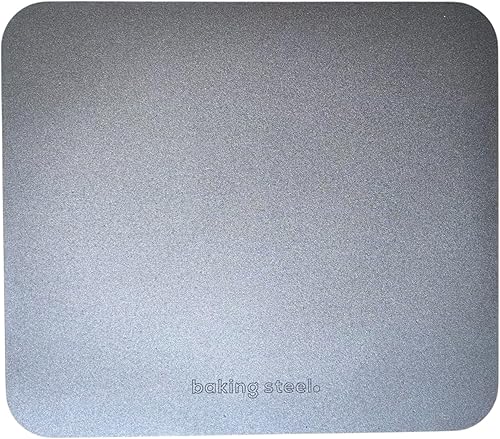
A thick steel plate that stores heat. Set your sheet pan on it, or bake bagels right on it, for darker bottoms and better rise. It also makes very good pizza. Sold by Baking Steel. About $139, 4.5 stars from 609 ratings.
Bagels take a little practice, but four batches is enough to get them chewy, shiny and round. Here's a week-by-week plan that starts with a simple same-day batch and ends with overnight bagels and your own toppings.
Bagels are a stiff dough, a cold rest, a quick boil and a hot oven. Make the same recipe four weeks in a row and change one thing at a time. Keep notes on weights and times.
Week 1: A same-day batch
Weigh 500 g bread flour, 290 g water, 10 g salt, 5 g instant yeast and 15 g barley malt syrup. Mix and knead for about 10 minutes until smooth. It should feel much stiffer than sandwich bread. Let it rise for an hour, divide into 8 pieces of about 100 g, and shape. Rest 30 minutes, boil 1 minute per side and bake at 450 F for about 20 minutes. They won’t be perfect. That’s the point.
Try two methods. For the poke method, roll a tight ball, push your thumb through the middle and stretch the hole to about 2 inches. For the rope method, roll a 10 inch rope, wrap it around your hand, overlap the ends under your palm and roll them together on the counter. The rope gives a more even bagel. Keep the dough covered so it doesn’t dry out while you work.
Shape your bagels, put them on an oiled, parchment-lined pan, cover tightly and refrigerate for 12 to 24 hours. Next morning, drop one in a bowl of cold water. If it floats within about 10 seconds, they’re ready. If not, leave them on the counter and test again every 15 minutes. Boil in water with a spoonful of malt syrup. Expect better flavor and a shinier crust than week 1.
Set out plates of sesame seeds, poppy seeds, dried onion, coarse salt or everything seasoning. Press each bagel into the toppings right out of the boil, while it’s still wet. Bake seeded side up. Try a few plain ones too, so you can taste the bagel itself. Freeze extras sliced in half the same day for toasting later.
Mix and knead a half batch by hand until the dough is smooth and stiff, about 10 minutes. · Action
Shape 4 bagels with the rope and loop method and rest them in the fridge overnight. · Action
Do the float test, boil for 1 minute per side, and bake at 450 F until deep brown. · Action
FAQ
Common questions
Why do you boil bagels?
Boiling sets the outside before baking. It gelatinizes the surface starch, which gives the shiny, chewy crust and stops the bagel from rising too much in the oven. That's what keeps the inside dense.
What flour is best for bagels?
High-gluten flour around 14 percent protein, like King Arthur Sir Lancelot, gives the chewiest bagel. Bread flour around 12.7 percent is a close second and easier to find. Avoid all-purpose flour.
Do I need barley malt syrup?
It's not strictly needed, but it gives the classic bagel flavor, color and shine. Add a spoonful to the dough and to the boiling water. Honey or brown sugar work as a substitute.
Why are my bagels flat?
They likely over-proofed. Do the float test: drop one bagel in a bowl of water. If it floats within a few seconds, they're ready to boil. If it sinks, give them more time. If they spread before that, shorten the rest.
How do I get the seeds to stick?
Press the bagels into a plate of seeds right after they come out of the boil, while the surface is still wet and sticky. Then put them seeded side up on the pan.
JustBeginning earns commission from affiliate programs. As an Amazon
Associate, we earn from qualifying purchases. This costs you nothing
extra and doesn't change our recommendations.
Prices and availability are accurate as of the date and time
shown and can change; the price on Amazon when you buy is what
applies.
How this works.


 Best starter