Backgammon is one of the oldest games on earth, and one of the most satisfying to get good at. The rules take fifteen minutes. The strategy takes years. Here's what to buy first, what separates a good set from a cheap one, and what you don't need until you're genuinely hooked.
By Colin B. · Published June 5, 2026 · Last reviewed June 5, 2026
A solid starter set runs $35-80. Add $15-25 for a good book. Premium sets for serious players start around $100.
We earn commission on qualifying Amazon purchases — see our
affiliate disclosure.
Price tiers and budget totals shown above are editorial estimates;
actual Amazon prices vary.
At a glance
Our top pick in each category
The fastest path through this guide — each best-starter pick by category.
Scroll for the budget and upgrade alternatives.
Don't buy a premium set until you've played for a month. A $50 folding set plays identically to a $100 one while you're learning. Buy cheap, play a lot, then upgrade once you know backgammon is your game.
Checkers size matters more than you'd think. Standard checkers in budget sets are 1-1/4"; the tournament standard is 1-9/16". If you plan to play at clubs or travel to games, invest in the right size from the start.
The doubling cube is not optional for real backgammon. Any set worth buying includes one. Learn to use it early, even badly, because backgammon without the cube is a slower, less interesting game.
The board is where all the money goes in backgammon. Entry-level sets use cheap plastic checkers and vinyl boards; they work but feel flimsy. A mid-range folding case set in the $50-80 range gives you real weight in the checkers, a proper hinge, and a board that stays flat. Premium sets in the $100-400 range are about materials and craftsmanship: wood inlay, leather, weighted pieces. All of them play the same game. Buy mid-range unless you're gifting it.
Sets — what's the difference?
A few common shapes, each making a different trade.
Magnetic travel
Compact magnetic set; pieces stay put for travel.
Weight
< 1 lb
Piece hold
Magnetic
Price range
$15-25
Best for Travel, testing the game before committing to gear
Tradeoff Small board size; less comfortable for long sessions at home
Folding case
Hinged board doubles as the storage case, the default pick.
Weight
2-5 lbs
Storage
Built-in case
Price range
$35-80
Best for Most beginners: balanced heft, easy storage, plays well
Tradeoff Heavier than a travel set; lower-end hinges can feel flimsy
Tournament briefcase
Premium leather or croco exterior, the long-term set.
Weight
5-12 lbs
Storage
Latched briefcase
Price range
$100-400
Best for Serious players, gift-givers, display-worthy investment
Tradeoff Overkill until you know you'll play for years
Best starter
WE Games
Wood Inlay Beachwood Backgammon Set
$163.99 as of Jun 22, 2026
★★★★★Our rating· In Stock
Solid wood construction, weighted checkers, a proper doubling cube, and two sets of dice, everything you need in a handsome folding case for around $50. The hinges hold, the board stays flat, and the checkers have real heft. This is the set you buy when you want to start right without spending premium money.
What we like
Wood construction with real heft, doesn't feel like a toy
Comes with checkers, two dice sets, and a doubling cube
Hinged case keeps everything together between sessions
What to know
Slightly under tournament dimensions; check specs if that matters
Felted interior shows wear after a year of heavy play
Travel Size Backgammon Mini Game Set, Izmir - Magnetic Checkers and 9-inch Board in Sleek Leatherette Case - Classic Strategy Board Game
$42.99 as of Jun 22, 2026
★★★★☆Our rating· In Stock
A compact magnetic travel set for around $20. The magnetic pieces stay put on bumpy surfaces, genuinely better than a vinyl mat for actual travel. Packs flat, survives any trip, and gets you playing a proper game without much investment. The right buy if you're not sure backgammon will stick.
What we like
Magnetic pieces stay put on uneven surfaces, actually travel-ready
Under $25, packs flat, goes anywhere you'd go
What to know
Small board size, less comfortable than a full-size set at home
Wycliffe Brothers is the benchmark brand for serious home backgammon. The Gen III comes in a croco-textured leatherette exterior with properly weighted checkers, a precision doubling cube, and two sets of dice, everything built to last decades. Around $100, this is what committed players buy when they're done with starter gear.
What we like
Wycliffe Brothers is the name serious players upgrade to
Properly weighted checkers, precision dice, and doubling cube included
Croco leatherette exterior, looks sharp and stores well
What to know
Around $100, overkill before you're sure backgammon will stick
Croco finish shows fingerprints; wipe between sessions
Most beginner sets include serviceable checkers, but upgrading to tournament-standard pieces is the biggest quality-of-play improvement you can make for under $25. Tournament-standard checkers are 1-9/16" in diameter, weighted, and smooth enough to stack cleanly. If your set's checkers are lightweight plastic that skid around, an upgrade transforms the tactile experience of the game.
Best starter
1-9/16" Tournament Urea Backgammon Checkers
$26.99 as of Jun 22, 2026
★★★★★Our rating· In Stock
Tournament-standard 1-9/16" diameter, urea resin construction, and properly weighted. The standalone checkers to buy when your set's original pieces feel cheap and skiddy. Drop them into almost any folding case and it immediately plays better. About $20 for all 30 pieces.
What we like
1-9/16" tournament standard, correct size for serious play
Urea resin feels substantial and warm, not like cheap plastic
30 pieces included, correct count for a full backgammon game
What to know
Check your board's point width; not all cases fit this size
No carrying case; store in a zip bag inside your set
A cheap set of 30 replacement checkers for around $10. Smaller than tournament standard at 1-1/4", but perfect if you just need to replace lost pieces in a budget set or want a spare set for travel. Includes 5 bonus dice. Not an upgrade pick, a replacement pick.
What we like
Under $10, the cheapest way to replace lost or broken checkers
Includes 5 bonus dice, handy if your set's dice are worn
What to know
1-1/4" size, smaller than tournament standard 1-9/16"
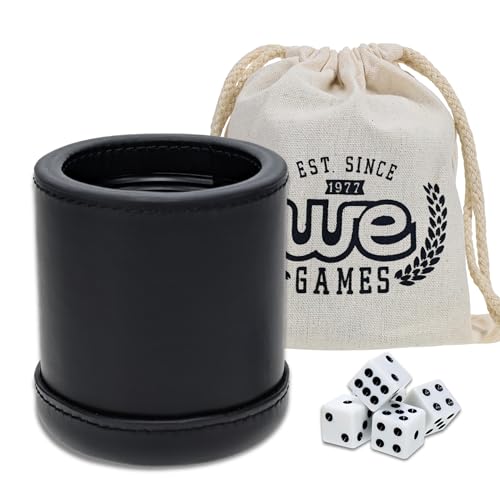
Standard dice in most budget sets are imprecise enough that the numbers aren't truly equally likely. It sounds paranoid until you've watched someone roll doubles four times in a row and wonder. Precision backgammon dice are manufactured to tighter tolerances and make a real difference in serious play. A leather dice cup is equally important: dice must be tumbled from a cup for fair play, and cheap plastic cups skip off the board instead of tumbling cleanly.
Best starter
Bello Games
Professional Precision Cut Backgammon Dice
$44.99 as of Jun 22, 2026
★★★★★Our rating· Only 1 left in stock - order soon.
Bello Games makes the standard precision backgammon dice used in serious home play across the US. At 5/8 inch, these fit most backgammon dice cups and boards. Properly milled edges, clean faces, balanced corners. The upgrade that makes every roll feel fair for around $10.
What we like
Made in the USA, precision milled to tight tolerances
5/8" size fits most standard US backgammon dice cups
Clean, uniform faces, noticeably fairer than budget dice
What to know
5/8" won't fit cups designed for smaller 11mm or 13mm dice
Upgrade matters less in casual play, more relevant for serious games
Leather dice cups tumble the dice properly and muffle the clatter, essential for apartment play and real fairness. Cheap plastic cups let dice bounce or slide without a real tumble. WE Games' handmade leather cups are a one-time $15-20 purchase that lasts decades.
What we like
Proper tumble action, dice exit fairly without bouncing off the board
Quieter than plastic, meaningful for apartment play
What to know
Most decent sets already include cups; check before buying separately
Handmade sizing varies slightly; verify fit with your dice
Backgammon rewards study more than most games. The mathematics of pip counting, checker play, and cube decisions are genuinely learnable from a book. Start with one clear beginner text, play a lot, then return for more. Don't buy an advanced problem book before you've played 30 games; you won't have the context to absorb it.
Best starter
Magriel
Backgammon by Paul Magriel
$24.99 as of Jun 22, 2026
★★★★★Our rating· Only 1 left in stock - order soon.
Magriel's 1976 classic is still the standard reference. It covers checker play, bear-offs, cube decisions, and advanced strategy in a clear, methodical voice. Every serious backgammon player owns a copy. Read once, play 20 games, read it again; the second read lands completely differently.
What we like
The definitive beginner-to-intermediate reference for 50 years
Covers checker play, bear-offs, and cube decisions systematically
Dense but methodical, rewards re-reading as your game develops
What to know
Not a quick read: it's a reference text, not light instruction
Cube theory has advanced since 1976, but the fundamentals hold
501 Essential Backgammon Problems by Bill Robertie
$23.69 as of Jun 22, 2026
★★★★☆Our rating· Only 1 left in stock - order soon.
Problem books are how serious players study. Robertie presents 501 positions: look, decide, compare your answer. This is the fastest way to build checker intuition and pattern recognition. Wait until you've played regularly for a few months before opening this one.
What we like
501 graded problems, fastest way to build pattern recognition
Robertie is the most respected instructional author in the game
What to know
Useless before 30+ games of experience; context doesn't exist yet
Pure problem-and-solution format, no guided instruction
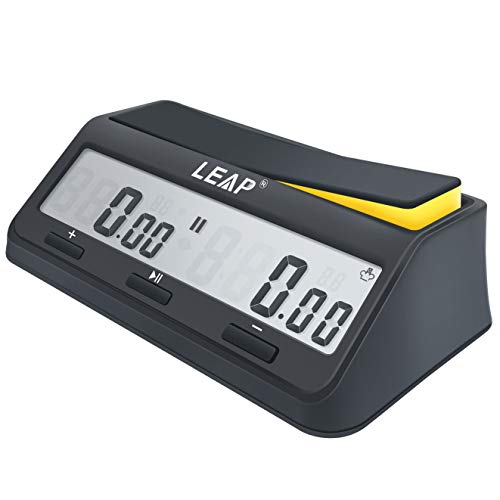
Clocks aren't required for casual play, but once you're playing in a club or want to add discipline to home games, a chess clock works perfectly for backgammon. The game uses delay timing: each player gets a bank of time plus a per-move delay. Most digital chess clocks support this mode. You don't need a backgammon-specific clock; any chess clock with delay mode does the job.
Best starter
DGT
North American Chess Clock 2024 Edition
$84.24 as of Jun 22, 2026
★★★★★Our rating· In Stock
DGT is the global standard in tournament chess and backgammon clocks. The North American model is intuitive to program, supports delay timing (what backgammon requires), and will outlast your interest in any game. About $45-55 and worth every dollar once you're playing seriously.
What we like
The international tournament standard for chess and backgammon
Delay mode built in, the right timing mode for backgammon
Clear display and intuitive button layout
What to know
Total overkill for casual home games; skip this in month one
Costs as much as a good starter set; prioritize the set first
A capable digital game clock for under $25. Supports delay timing, which is what backgammon needs. The button feel isn't as satisfying as the DGT, but it does the job for club play and home games. A sensible placeholder before you know whether you want to invest in the premium.
What we like
Under $25 and supports delay timing, functionally correct for backgammon
Good starting point before committing to the premium DGT
What to know
Button travel feels mushy compared to the DGT standard
Most people learn backgammon in an afternoon and spend years getting better at it. Here's what those first days actually look like: the rules that click fast, the concepts that don't, and when the game starts getting interesting.
Backgammon has been played for five thousand years. That’s not trivia; it’s a clue. Games that last that long do so because they reward skill without punishing beginners so hard they quit. The rules fit in five minutes. The strategic depth is genuinely bottomless. The gap between those two things is where all the fun lives.
Here’s what your first week actually looks like.
Day 1: The rules take an hour, tops
Set up the board. The starting position is fixed; it’s the same every game, and most boards have a diagram printed inside the case. Learn it once and it becomes automatic.
The movement is simple: you roll two dice and move checkers that many points toward your home board (the lower-right quadrant for the lighter-colored player, lower-left for darker). You can move one checker the total, or two checkers each their own die. You can’t land on a point where your opponent has two or more checkers (that’s a made point, and it’s blocked). If you land on a point where they have exactly one checker (a blot), you hit it, sending it to the bar. They have to re-enter from your home board before doing anything else.
That’s most of the game. The rest is bearing off. Once all your checkers are in your home board, you start removing them. First one to bear off all 15 wins.
Two things that trip up everyone in day one:
Doubles. When you roll doubles, you play each die value twice: four moves, not two. So double-6 means four checkers can each move six points. This changes your planning dramatically when you roll it.
The bar. When your checker is hit, it goes to the bar in the middle. Your next roll must re-enter it before you can do anything else. If all the points in your opponent’s home board are made (blocked), you lose your turn entirely. Getting stuck on the bar at the wrong moment is catastrophic, and fascinating.
Play five games without the doubling cube. Just learn the movement, get comfortable with the setup, and start noticing patterns: which points are worth making, what it means to have your checkers spread too thin, how getting hit in your opponent’s home board is much worse than getting hit elsewhere.
A few checker principles worth knowing early:
Make points. Two checkers on the same point can’t be hit. You want to build a chain of made points (this is called a prime), and blocking your opponent with a six-prime (six consecutive points blocked) is one of the most powerful positions in the game.
Don’t leave blots in your home board. A checker in your home board that can be hit goes to the bar, and then you have to re-enter from scratch while your opponent is already bearing off. Painful.
Race position matters. Backgammon is partly a race. Knowing roughly how many moves you are from bearing off (your pip count) is how serious players decide whether to accept the doubling cube or drop. You don’t need pip counting in week one, but start noticing whether you’re ahead or behind in the race. Your intuition will develop.
Don’t worry about optimal opening moves yet. Open the game, make the boards you can make, and watch where you end up. The patterns will start repeating.
This is where backgammon becomes a different game.
The doubling cube is a six-sided block with numbers 2, 4, 8, 16, 32, and 64. It starts off the board at 64. Before rolling, either player may offer to double the stakes. The opponent accepts (takes), plays on for double the value, and now owns the cube (meaning only they can offer the next doubling). Or they drop, conceding the game for the current stake.
The mathematics of the cube are deep (there’s a whole branch of study around it). For your first week, use this heuristic: double when you have a clear advantage and it will get worse for your opponent if they decline. Accept (take) unless your position looks nearly hopeless.
You will double too early. You will drop positions you should take. That’s fine. The cube is learnable through repetition in a way it simply isn’t through reading alone.
Two situations where the cube is especially interesting:
Gammons. If you bear off all your checkers before your opponent bears off any, you win a gammon, double the value. This makes certain cube positions more aggressive: if there’s a realistic gammon threat, the math shifts toward doubling earlier.
The Crawford rule. In match play (first to N points), when one player is one point away from winning, the doubling cube is not used for one game. This prevents the trailing player from desperately doubling every game to try to catch up in one shot. You’ll encounter this in any organized club play.
Spreading your checkers thin early. Beginners try to race immediately, leaving lots of loose blots. Strong players hunt those blots and build primes. In the early game, consolidation beats speed.
Dropping takes too quickly. Most beginners drop any cube offer where they’re not clearly winning. But in backgammon, you need roughly 25% winning chances to take a double (technically it depends on gammon rate, but 25% is a starting heuristic). If you’re dropping anything below 50/50, you’re giving up real equity.
Ignoring the bar. Getting one checker hit isn’t usually devastating. Getting two hit (especially with your opponent’s home board building up) often is. Watch how quickly your position changes when you have checkers stuck on the bar.
Running too early in a back-game. Sometimes you’re losing the race badly. The correct play is often not to race anyway; it’s to anchor deep in your opponent’s home board and wait for a shot when they’re bearing off. This is called a back game, and it’s one of backgammon’s most interesting strategic patterns.
None of these are things to fix in week one. They’re things to notice.
What to do next
After your first week, your game improves fastest from two sources:
Play more. Backgammon Galaxy gives you unlimited games against bots at any strength level, with post-game analysis showing your worst cube and checker errors. Playing 20 online games is worth more than reading 50 more pages.
Read Magriel. Paul Magriel’s Backgammon is the book. Start with the early chapters on checker play; the concepts will click much faster now that you’ve actually played.
Find a club. Most mid-size cities have a weekly backgammon night, often at a bar, low-stakes cash game optional. The US Backgammon Federation lists clubs at usbgf.org. Playing in person with people who are better than you accelerates everything.
You’re not going to be good yet at day seven. You’re going to know the game, have a feel for positions, and be genuinely curious about what you don’t know yet. That’s a great place to be.
Save your money
What you don't need yet
Beginners get pressured to buy a lot of stuff that doesn't help them play
better. Here's what we'd skip on day one.
A $200+ premium leather set — A $50 folding set plays exactly the same game. Buy premium after six months when you know it'll actually get used.
Backgammon analysis software (eXtreme Gammon, GnuBG) — Powerful tools for reviewing positions, but only useful once you have enough game experience to compare against. Not for week one.
Advanced cube theory books — Robertie's cube books and similar texts presume a real foundation. Read Magriel first, then problem books, then cube theory.
A game clock — Casual home games don't need timing. Buy a clock when you're playing at a club or want to add discipline to home sessions.
A standalone doubling cube — Every decent set already includes one. Only relevant if you bought a bare-bones travel set that skips it.
First week
Your first seven days
A short, real plan to get from gear-on-doorstep to actually playing.
Learn the rules: movement, hitting blots, and bearing off. · Learn
Skill dominates over any meaningful sample; strong players beat weaker ones consistently because of better cube decisions and checker play. But in a single game, the dice can reverse any outcome. That's the point: luck creates drama; skill determines who wins over a match or a session.
How do I learn to use the doubling cube?
Start by doubling whenever you feel you have a clear advantage, and accepting all but the most hopeless positions. You'll be wrong often. The cube's mathematics (equity, take points, gammon rate), takes months to internalize. Read the Magriel chapter on the cube, then just play it and notice what happens.
Can I play backgammon online for free?
Yes. Backgammon Galaxy is the best free client, with bot opponents at every strength level and a built-in game analyzer. Play65 and First Internet Backgammon Server (FIBS) are alternatives with active communities. Getting reps online between in-person sessions dramatically accelerates your learning.
How do I find other local players?
Search 'backgammon club [your city]'; most mid-size cities have one, often meeting weekly at a bar or community center. The US Backgammon Federation lists clubs by state at usbgf.org. Reddit's r/backgammon has a club-finder thread pinned in the wiki.
What's the minimum gear I actually need to start?
A board, 30 checkers (15 per player), two pairs of dice, and a doubling cube. Any set in the $35-50 range includes all of this. You can play backgammon competently for years on a $40 set.
How is tournament backgammon different from casual play?
Timed moves (hence the clock), match scoring (first to N points, not single games), and the Crawford rule (when one player is one point from winning, the cube is suspended for one game). The rules of play are identical; the meta is what changes.
US Backgammon Federation — National governing body. Club directory, official rules, and rated tournament listings. The right first stop for organized play.
Backgammon Galaxy — Best online backgammon client. Free bots at every strength level plus a built-in game analyzer. Essential for getting reps when no opponent is around.
r/backgammon — Active community. Post a position for analysis, ask about cube decisions, find club recommendations. The wiki has a solid beginner FAQ.
bgonline.org — The most complete backgammon resources archive online. Annotated match databases, articles by top players, and position discussions going back decades.
GnuBG (GNU Backgammon) — Free, world-class backgammon AI. Use it to analyze games and find errors in your checker play and cube decisions. Worth learning after a few months of play.
As an Amazon Associate, JustBeginning earns from qualifying purchases.
We may also earn commission from other affiliate programs linked on this
page. Editorial recommendations are independent; we don't choose
products based on commission rates.
Product prices and availability are accurate as of the date and time
indicated and are subject to change. Any price and availability
information shown on Amazon at the time of purchase will apply.
Our top pickWE Games Wood Inlay Beachwood Backgammon Set


 Best starter