Warhammer's skirmish game is the smartest on-ramp to miniature gaming: a small squad instead of a full army, games that finish in 90 minutes, and the same legendary GW miniatures. Here's what to buy first (and what to skip while you figure out if it sticks).
By Colin B. · Published June 4, 2026 · Last reviewed June 4, 2026
The starter set is the bulk of the spend. Paints and tools spread out over time as your collection grows.
We earn commission on qualifying Amazon purchases — see our
affiliate disclosure.
Price tiers and budget totals shown above are editorial estimates;
actual Amazon prices vary.
At a glance
Our top pick in each category
The fastest path through this guide — each best-starter pick by category.
Scroll for the budget and upgrade alternatives.
Don't buy paints before you have your starter set in hand. The colors you need depend entirely on which faction you're painting.
The Starter Set is the right first purchase. The big seasonal campaign boxes ($150-200) are tempting but waste money if the game doesn't click for you.
You need primer before you can paint anything. It's the most-skipped step and the reason most beginner paint jobs look rough and chippy.
Plan for two or three learning games before everything clicks. Kill Team has real rules depth; the first game is mostly rule lookups, and that's normal.
The gear
What you actually need
Starter Set
Kill Team comes in several box formats, and picking the wrong one wastes money. The Starter Set is the right entry: it includes the core rules, two small squads, dice, range rulers, and terrain pieces. You'll play your first game the same weekend you unbox it. The big seasonal campaign boxes are exciting but expensive; save them for after you've decided Kill Team is your game. Individual team boxes are for players who already own the rules and want a specific faction.
Starter Set — what's the difference?
A few common shapes, each making a different trade.
Kill Team Starter Set
Rules, terrain, two squads. The right first purchase.
Squads
2 starter teams
Rules
Full core rules
Price
~$60
Best for Complete beginners buying their first Kill Team product
Tradeoff Starter squads are smaller than full operative team boxes
Best for Players who already own the rules and want a specific faction
Tradeoff Useless without the starter set or core rulebook first
Best starter
Games Workshop
Kill Team Starter Set
$96.90 as of Jun 22, 2026
★★★★★Our rating· In Stock
The cleanest entry point: two balanced starter squads, the full core rulebook, terrain pieces, dice, and a range ruler. Everything in one box, nothing missing. Buy this before any other Kill Team product and play before you buy anything else.
What we like
Everything included: rules, two teams, terrain, dice, ruler
Two faction preview helps you find your preferred playstyle
Lowest-cost entry before committing to a full faction
What to know
Starter squads are smaller than full faction team boxes
Factions in the box may not be your long-term preference
★★★★☆Our rating· Only 1 left in stock - order soon.
A full season campaign box with two complete operative teams, premium terrain, and a narrative campaign supplement. If you've played the starter and want to go deeper with a specific faction pair, this is the next step. The space-hulk setting is one of Kill Team's best environments.
What we like
Full-size squads ready for competitive and casual play
Premium modular terrain adds real variety to board setups
Narrative campaign adds structure beyond pickup games
What to know
Nearly 3x the cost of the starter set
Specific faction pair; only buy if you want both teams
★★★★☆Our rating· Only 5 left in stock - order soon.
If you already own Warhammer 40K miniatures and want to use them in Kill Team, the Compendium unlocks most existing 40K factions without buying a new box. Not the starting point for most beginners, but the right bridge if you're already in the 40K hobby.
What we like
Unlocks most 40K factions for Kill Team play
Best value if you already own 40K miniatures
What to know
Not a standalone game; needs the core rules separately
Compendium teams are weaker than dedicated KT faction boxes
Primer is the most important painting step beginners skip. It creates a surface paint actually bonds to; without it, your Citadel paints will chip off the first time you handle the model. GW spray cans are formulated specifically for their plastic and are reliable. Black primer is the default for dark armies; grey or white primer works better for bright colors or the Contrast paint workflow.
Best starter
Games Workshop
Citadel Chaos Black Spray
$17.00 as of Jun 22, 2026
★★★★★Our rating· Only 11 left in stock - order soon.
The default primer for most Kill Team factions. Black undercoat means paint only needs to land on raised surfaces; the recesses stay dark automatically, giving your miniatures immediate depth without any shading work. Formulated for GW plastic, so it won't crack or frost.
What we like
Formulated for GW plastic; no cracking or frosting when applied right
Black base pre-shades recesses so you need fewer paint layers
Standard primer for the majority of Kill Team factions
What to know
Can't spray below 50F or in high humidity without frosting
GW cans are smaller and pricier than hardware-store primers
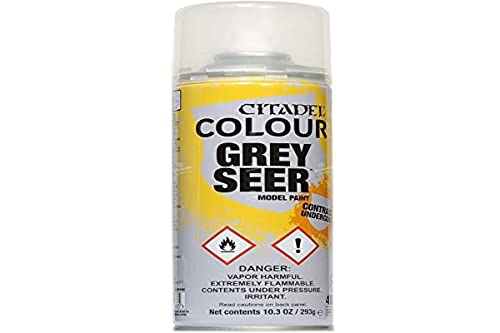
If you're painting bright armies or using Contrast paints, grey primer is the better base. Contrast paints pool and flow best over a light undercoat. Grey Seer is the standard light primer for the Contrast workflow and pairs perfectly with Wraithbone-style recipes.
What we like
Pairs perfectly with GW Contrast paints for one-step shading
Better base for bright color schemes (yellow, white, pastels)
What to know
Dark colors need more coats over grey than over black
Same price as Chaos Black but serves a narrower use case
Larger can for roughly the same price as a GW spray. Army Painter primers bond well to plastic and come in faction-matched colors, which is useful if you want a colored base coat. Spray over a test sprue first to confirm it plays nicely with your chosen Citadel paints.
What we like
Larger can for the same price as a GW spray
Wide color range lets you primer-match your faction scheme
What to know
Color quality is inconsistent; test on a spare mini first
Some paints adhere slightly worse than Citadel over AP primer
Kill Team factions have recommended color schemes, and GW's Citadel range is designed to match them exactly. For beginners, start small: a handful of base paints for your faction colors, one or two shades (Nuln Oil and Agrax Earthshade cover 90% of situations), and a dry brush highlight color. Don't buy 60 paints at once. Buy for your specific miniatures and expand as you paint.
Best starter
Games Workshop
Citadel Shade: Nuln Oil
$9.91 as of Jun 22, 2026
★★★★★Our rating· In Stock
The single most impactful purchase in miniature painting. Nuln Oil is a dark wash that flows into recesses automatically, adding shadow and depth to any miniature with a single coat. Apply it over your base colors and watch your models transform. Every Kill Team player uses this.
What we like
One coat adds immediate depth and shadow to any base-coated mini
Works over any color; the universal first shade for all factions
Used by beginners and professional painters alike
What to know
Can pool on flat surfaces if applied too heavily
Shake well each time; separates if stored for months
Contrast paints are one-step wonders: apply a single coat over light primer and get a shaded, graduated base color in minutes. The starter set samples multiple colors so you can find which fit your faction before buying the full range. Great for painters who want results fast.
What we like
One-coat shading system saves hours per miniature
Starter set samples colors to find your faction match cheaply
What to know
Only works over light primer; useless over black undercoat
A solid base-color palette at roughly half the price of buying individual Citadel pots. The Warpaints range mixes well and covers cleanly. Not a perfect match for GW faction paint recipes, but close enough that online guides translate with minor color substitutions.
What we like
Solid color range at roughly half the Citadel per-pot price
Dropper bottles give more control than GW's flip-top lids
What to know
Color names don't match GW faction guides; requires translation
Coverage slightly thinner than Citadel base paints
Most beginners buy too many brushes and use too few. You need three: a medium base brush for blocking in colors, a small detail brush for fine work, and a stiff drybrush for highlights. The Army Painter starter set covers all three. Upgrade to a Winsor and Newton Series 7 for your detail work once you've painted a dozen models and know what fine-point control actually feels like.
Best starter
The Army Painter
Army Painter Wargames Mega Brush Set
$70.99 as of Jun 22, 2026
★★★★★Our rating· In Stock
Covers every brush type you'll use in your first six months: base, detail, drybrush, and wash brushes. Not the highest quality, but totally adequate while you're learning technique. Cheap enough to replace individual brushes as they wear without any guilt.
What we like
Covers base, detail, drybrush, and wash in one purchase
Inexpensive enough to replace without regret when they wear out
What to know
Tips lose their fine point after 2-3 months of regular use
Not suitable for ultra-fine detail or competition-level painting
The brush miniature painters upgrade to and never go back from. Kolinsky sable holds a needle-fine point and springs back to shape after thousands of strokes. One Series 7 outlasts a dozen cheap brushes. Buy after you've painted at least one complete squad.
What we like
Kolinsky sable holds a finer point than any synthetic brush
Lasts years with proper care vs. months for synthetics
What to know
Expensive for a single brush; overkill until you're truly committed
Requires careful washing and dry storage to justify the investment
★★★★☆Our rating· Only 1 left in stock - order soon.
Drybrushing is the fastest way to add highlights to armor, stone, and fur. Load the brush with paint, wipe most of it off, then lightly drag it across raised surfaces. GW's large drybrush has the right stiff bristle shape for the technique. One brush covers most Kill Team drybrushing jobs.
What we like
Stiff bristle shape is purpose-built for the drybrushing technique
Highlights armor plating and texture in under a minute per model
What to know
Single-purpose tool; using it for regular painting ruins the shape
GW brushes wear faster than premium drybrushes at the same price
Three tools you need before you start: sprue cutters, plastic cement, and a hobby knife. Sprue cutters remove minis from the plastic frame without tearing. Plastic cement (not super glue) chemically bonds GW plastic for joins that will not pop off. The hobby knife cleans mold lines before painting. Get these three right and your assemblies will look clean from the start.
Best starter
Tamiya
74035 Sharp Pointed Side Cutter
$37.60 as of Jun 22, 2026
★★★★★Our rating· Only 4 left in stock - order soon.
The sprue cutter that miniature painters recommend above every other. Spring-loaded flush-cutting blades leave almost no nub on the part. One purchase that lasts a decade. Cheap cutters tear the plastic and leave white stress marks; the Tamiya does not.
What we like
Flush-cut blades leave virtually no nub on miniature parts
One purchase that lasts a decade with light cleaning
Spring-loaded for comfortable repetitive cutting sessions
What to know
Plastic sprues only; metal or resin will chip the blades
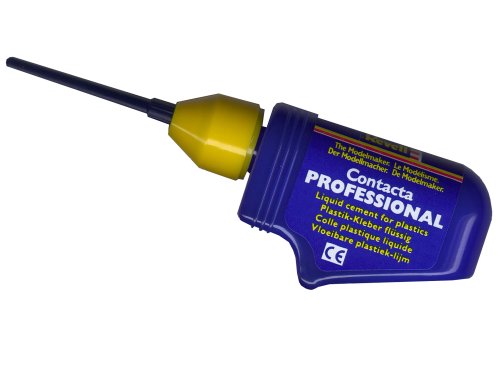
Plastic cement works by chemically welding the two plastic surfaces together; the join is stronger than the plastic itself. This is what GW miniatures are designed for. Super glue is brittle and parts will pop off. The fine needle applicator gets into tight joins cleanly.
What we like
Chemical weld is stronger than the plastic itself
Fine needle applicator reaches tight joins precisely
What to know
Capillary action means it can flow into unintended seams
Longer set time than super glue; hold pieces for 30 seconds
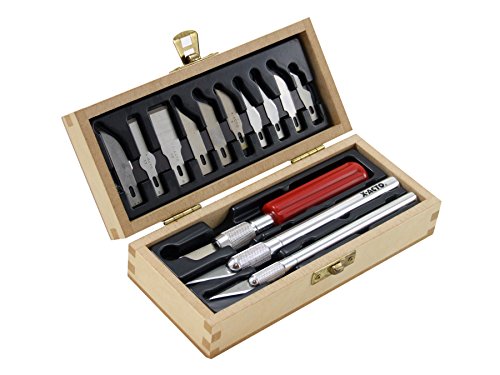
You need a sharp knife to remove mold lines before painting. The X-Acto X1 with a #11 blade is the standard choice. Scrape lightly at 90 degrees to the mold line and the ridge peels away cleanly. Replace blades often; a dull knife tears instead of shaves.
What we like
#11 blade scrapes mold lines cleanly on GW plastic
Kit includes spare blades to last a full project
What to know
Blades dull quickly; replace every 5-10 models for clean results
Requires a cutting mat to protect your work surface
Kill Team rewards patience. Here's what actually happens in your first four weeks (assembly, primer, paint, your first game) and when each part starts to feel less like homework.
Kill Team has a reputation for being complicated. It is, but not in the way people warn you about. The rules have depth, but they’re learnable. The painting has a curve, but it’s satisfying in a way spreadsheets and screens aren’t. The real challenge in month one is sequencing: doing things in the right order so nothing blocks anything else.
Here’s what the first four weeks actually look like, week by week, with the things that matter and the things you can safely ignore.
Week 1: Assembly
The box arrives. Resist the urge to start painting immediately. Every beginner wants to skip assembly and get to color, and every beginner regrets it. Paint the model assembled, not the other way around.
Open the sprues. You’ll see plastic frames covered in parts connected by thin gates. Your first tool use: the sprue cutter. Clip as close to the part as you can without cutting into it — leave a tiny nub, then clean it with your knife. Cheap cutters leave white stress marks in the plastic; a proper flush cutter (the Tamiya is the standard) leaves nothing visible.
Mold lines are the thin ridges running along every part where the two halves of the mold met during casting. Scrape them lightly with a hobby knife at 90 degrees to the line — not dragged, scraped. This takes five minutes per model and makes the paint job look twice as good.
Use plastic cement, not super glue. Plastic cement chemically welds the two surfaces together; the join is stronger than the plastic itself. Super glue is brittle and parts pop off mid-game.
Assemble all your models before you prime anything.
Week 2: Primer and First Paint
Prime your assembled squad before painting. Without primer, Citadel paints will chip off the first time you pick up a model. GW’s spray primers are formulated for their plastic and are reliable. Chaos Black is the default for most dark-armored factions; Grey Seer if you’re using Contrast paints.
Spray in a warm, dry environment. Below 50 degrees F, or in high humidity, the primer frosts and ruins the surface. Outdoors in good weather or in a ventilated garage is ideal.
Let it dry overnight before painting.
Then: paint one model before the whole squad. Not to practice, not as a test — paint it because finishing a single model tells you more about what you actually want to do next than any amount of planning. You’ll discover which colors you like, which you don’t, and where you need more practice.
The three-step workflow every beginner should know:
Base coat: block in the main colors with one or two coats of base paint. No need for perfection; just coverage.
Shade: brush Nuln Oil over the entire model. Watch it flow into every crevice. Let it dry completely.
Drybrush: load a stiff drybrush with a lighter version of your base color, wipe 90% of it off on paper, then lightly drag it across raised edges. This picks out highlights automatically.
That’s it. Three steps. A model painted this way looks good (not competition-worthy, but good). Finish your whole squad with this method before adding complexity.
Play your first game before your squad is fully painted. Seriously.
The rules in Kill Team have layers. The turn structure, activation order, action sequence, and special abilities are all interconnected. None of it lands from reading alone; you need to play through it and make mistakes in context.
Set up the starter terrain. Place both squads. Play through the first three or four rounds with the rulebook open, looking things up as questions arise. This is normal and expected. By round three, you’ll stop needing the book for the basics.
Key rules that trip up almost everyone in the first game:
Conceal vs. Engage order: each operative is either in Engage order (can shoot, counts as visible) or Conceal order (harder to target, can’t shoot). Switch these deliberately, not by accident.
Cover: if a model is partially behind terrain, it has cover, which makes it harder to wound. Position every model with this in mind.
Action economy: each operative gets two actions per activation. Moving twice is valid. Shooting costs one action. Overwatch costs one action and carries into the opponent’s turn.
Lose your first game. Lose your second. By game three you’ll have a rough sense of your faction’s strengths, and by game five you’ll be playing intentionally rather than reactively.
Week 4: Building Habits
By week four, the hobby has two tracks running in parallel: playing and painting. Most Kill Team players find they prefer one, and that’s fine. You can be a committed competitive player with grey plastic, or a painter who rarely finishes a game. Most people end up somewhere in the middle.
A few habits worth building now:
Wash your brushes immediately after each session. Acrylic paint dries hard and ruins a brush tip permanently if you leave it. Rinse in water, reshape the tip with your fingers, and store upright with the hairs pointing up.
Keep a wet palette. A piece of parchment paper over a damp sponge keeps your paints workable for hours instead of drying out between models. A dedicated wet palette costs $15 and solves one of the most common beginner frustrations.
Don’t strip and restart models. The temptation to strip your first models and repaint them after you’ve improved is real. Resist it for at least six months. Your early models are how you learn; they should look like early work. Repaint fresh models instead of revisiting old ones.
After a month, you know whether Kill Team has its hooks in you. If it does, the next decision is faction: which operative team to invest in properly, painted to a standard you’re proud of, for competitive or casual play. That’s a separate guide. For now: you’ve started.
Save your money
What you don't need yet
Beginners get pressured to buy a lot of stuff that doesn't help them play
better. Here's what we'd skip on day one.
An airbrush — Excellent for basecoating armies quickly, but a $200 setup the first month is skipping steps. Master brush technique first.
A full Warhammer 40K army — Kill Team uses small squads of 5-15 models. You don't need a 2000-point army and will actively regret buying one before learning the game.
A lightbox for photography — For photographing finished miniatures. A genuine nice-to-have eventually, but not before you've actually painted anything.
Sculpting tools and greenstuff — For customizing and converting miniatures. Learn to paint first; conversions are a year-two part of the hobby.
A dedicated gaming mat — The starter set terrain works fine for your first dozen games. A proper mat is a sensible year-one purchase, not day one.
A display cabinet — Makes sense once you have 10-15 painted models you're proud of. Before that it's just a shelf for grey plastic.
First week
Your first seven days
A short, real plan to get from gear-on-doorstep to actually playing.
Watch the official How to Play video and one assembly walkthrough for your starter teams. · Learn
Warhammer Community · Official Kill Team hub with rules updates, tutorials, and free content
r/killteam wiki · Community-maintained beginner guide with rules summaries
Assemble both starter squads before you paint anything. Don't paint then assemble. · Action
Prime both assembled squads in one session. Let dry overnight before painting. · Action
Paint one model start-to-finish before worrying about painting the whole squad consistently. · Action
Play your first game with unpainted or partially painted models. Rules first, paint second. · Action
Find a local game store or Kill Team community near you. · Action
GW Store Finder · Find your nearest Games Workshop or independent stockist
FAQ
Common questions
How long does a Kill Team game take?
About 60-90 minutes once you know the rules. Your first two or three games will run longer as you look things up. By game five, 90 minutes is the ceiling for most players.
Do I have to paint my miniatures to play?
No. You can play with assembled but unpainted plastic, and many players do. Painting adds a huge dimension to the hobby, but it is not required to play or enjoy competitive Kill Team.
How does Kill Team compare to full Warhammer 40K?
Kill Team uses 5-15 models per side instead of 50-100. Games are faster, cheaper to collect, and easier to store. The rules are different but close enough that learning Kill Team is the best introduction to the GW ecosystem.
How much does it cost to start Kill Team?
The Starter Set ($60), primer ($20), a few paints ($25), and basic brushes ($15) puts you at about $120 to play and paint your first games. Costs grow as you expand your faction collection.
Can I use existing Warhammer 40K miniatures in Kill Team?
Most 40K factions have Kill Team rules via the Compendium or dedicated team boxes. If you already own 40K minis, check the Kill Team faction list before buying anything new.
Is Kill Team a good hobby for someone who has never done miniature gaming?
Yes, but set realistic expectations. The learning curve covers assembling, priming, painting, and a ruleset with real depth. Plan for the hobby to take 4-6 hours a week before it fully clicks.
Warhammer Community — Official GW hub. Rules updates, errata, new team announcements, and free hobby tutorials. Bookmark the Kill Team section.
Goonhammer — Kill Team — The go-to site for competitive Kill Team. Faction tier lists, tournament coverage, and the clearest beginner primers available.
Vanguard Tactics (YouTube) — Tactical deep-dives and faction breakdowns. Some of the clearest rules explanations for new players.
Peachy (YouTube) — Painting tutorials focused on speed-painting and beginner technique. Excellent for learning the contrast and wash workflow.
r/killteam — Active subreddit. The wiki has solid beginner guides. Good for rules questions, painting advice, and finding local players.
Stat Check — Kill Team points calculator and stat reference. Invaluable for list-building and comparing operative datasheets mid-game.
As an Amazon Associate, JustBeginning earns from qualifying purchases.
We may also earn commission from other affiliate programs linked on this
page. Editorial recommendations are independent; we don't choose
products based on commission rates.
Product prices and availability are accurate as of the date and time
indicated and are subject to change. Any price and availability
information shown on Amazon at the time of purchase will apply.

 Best starter