You're about to sit down with a group of friends, invent a character from scratch, and collectively tell a story where anything can happen. D&D is easier to start than you think — and the gear list is shorter than the marketing makes it look. Here's exactly what you need for your first session.
By Colin B. · Published May 15, 2026 · Last reviewed June 1, 2026
The Starter Set plus one dice set gets you to the table for under $45. Add a battle mat and you're at $100. D&D is cheap to start — the hobby expands exactly as much as you let it.
We earn commission on qualifying Amazon purchases — see our
affiliate disclosure.
Price tiers and budget totals shown above are editorial estimates;
actual Amazon prices vary.
At a glance
Our top pick in each category
The fastest path through this guide — each best-starter pick by category.
Scroll for the budget and upgrade alternatives.
Buy the Starter Set before anything else. It contains a condensed rulebook, a ready-to-run adventure, and five pre-built characters — everything you need for four to six sessions. The Player's Handbook and Dungeon Master's Guide are beautiful books, but you won't know what questions they answer until you've actually played. Start the Starter Set first, buy the core books after you know you're hooked.
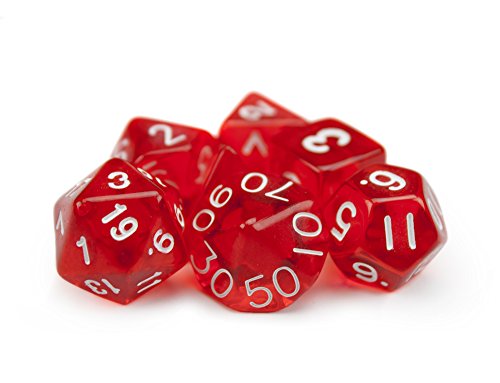
You only need one set of dice to play. A standard 7-piece polyhedral set (d4, d6, d8, d10, d12, d20, and a percentile die) is all any single player needs. People buy second and third sets because dice are fun to collect — that's a month-two problem. Start with one set, ideally in a color you like, and stop there.
Theater of the mind is free. A battle grid and miniatures make combat easier to track but are completely optional — plenty of great games happen with nothing but verbal description. Don't buy a mat or minis until you've played three or four sessions and know whether your group does tactical combat or narrative play. Save the $50 until you know you need it.
The single most important decision in your D&D setup is which rulebook to start with. The Starter Set is designed for groups that have never played — it teaches the game through play, gives the Dungeon Master a hand-held adventure to run, and costs less than a nice dinner. The full Player's Handbook covers character creation from scratch and is the book every serious player eventually owns, but it assumes you already understand the basics. Start with the Starter Set. Graduate to the core books once you've played and know you want to go deeper.
Getting Started — what's the difference?
A few common shapes, each making a different trade.
Starter Set
Pre-built characters, a self-contained adventure, simplified rules. Play tonight.
Price
~$20–25
Sessions
4–6 included
Rulebook
Simplified
Character creation
Pre-built only
Best for First-timers, groups who want to play before investing
Tradeoff Can't build your own character — you pick from the five included sheets
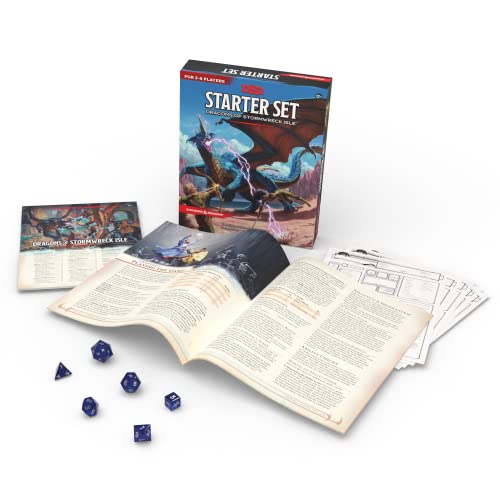
The official entry point to D&D, updated for the current edition. Includes a stripped-down rulebook covering everything you need to play, five pre-made character sheets so nobody has to build a character before session one, and the Dragons of Stormwreck Isle adventure — a punchy 48-page module designed to teach the game while you play it. Four to six sessions of content in one box, under $25.
What we like
Complete adventure included — playable the same night
Pre-built characters mean zero setup required for players
Costs less than dinner — lowest-risk entry to a new hobby
What to know
Simplified rules omit options you'll want once you're hooked
Only 5 pre-built characters, no custom character creation
The complete rulebook every D&D player eventually needs. The 2024 revision is the clearest version yet — better organized, better indexed, with improved character creation rules. Buy this once you've finished the Starter Set and want to build a character from scratch. It covers all 12 classes, subclasses, backgrounds, spells, and the full equipment list.
What we like
All 12 classes with full character creation from scratch
Best-organized edition yet — well-indexed for quick mid-session lookup
What to know
Overwhelming for beginners — play the Starter Set first
Costs $50+ — buy only after you know D&D has stuck
For the person running the game. Contains everything DMs need beyond the PHB: encounter-building guidelines, magic item tables, worldbuilding tools, and rules for adjudicating edge cases. The 2024 revision is significantly better organized than its predecessor — it actually tells you how to run a session in plain language. Only buy this if you're the DM.
What we like
Actually explains how to run a session in plain language
Encounter-building tables and magic item lists save hours of DM prep
What to know
Only useful if you're the DM — players don't need it
Every D&D player needs one set of polyhedral dice: a d4, d6, d8, d10, d12, d20, and a d100 (two d10s used together). You will roll these constantly. The d20 is the workhorse — attack rolls, skill checks, saving throws, all d20. Get a set that feels good in your hand and has numbers you can read at a glance. The $8 bags with tiny indistinct numerals are fine for one session and miserable for twenty. Spend $12–20 and get something with clear numbering and satisfying weight.
Best starter
Chessex
Opaque Polyhedral 7-Die Set
$6.22 as of Jun 22, 2026
★★★★★Our rating· In Stock
Chessex has made dice for tabletop gamers for decades and the opaque line is their bread-and-butter starter set. Clear numerals, balanced weight, available in a dozen color combinations. These feel like real dice — not the brittle hollow plastic that comes free in some starter sets. Pick a color that feels like your character and go.
What we like
Clear numerals readable at a glance from across the table
Balanced weight — feels like real dice, not cheap hollow plastic
What to know
One set only — most players end up wanting more colors eventually
Under $8 and adequate for any session. The color variation between bags is high — you might get something gorgeous or something muddy. Legibility varies. A perfectly reasonable starter if you're not sure you'll stick with the hobby.
What we like
Under $8 — almost free to try the hobby before committing
Gets the job done for any session, any class, any DM
What to know
Color and legibility varies widely by batch — luck of the draw
Cheaper feel than Chessex — fine for a trial, not forever
FanRoll's metal dice are heavier, louder when they land, and much more satisfying to roll than any plastic set. They run $25–40. Not necessary, but if you roll a natural 20 on metal dice, you will feel it differently. Buy after you've confirmed the hobby has you — this is a reward purchase, not a starter purchase.
What we like
Substantially heavier — every roll feels like a real event
Won't chip, crack, or fade like plastic sets over time
What to know
Can scratch vinyl mats and damage wooden dice trays
Overkill until you're sure D&D has genuinely stuck
When your party gets into a fight, everyone benefits from a shared visual: who's where, what's adjacent to what, which door is blocked. A battle map is a grid (usually 1-inch squares, with each square representing 5 feet in-game) that lets you track positions. You don't need one — D&D works fine without it — but the first time your fighter asks 'can I reach the orc?' and the DM has to guess, you'll wish you had it. Vinyl gridded mats are the standard: durable, dry-erase compatible, rollable, and usable for decades.
Best starter
Chessex
Megamat Reversible Battle Grid
$44.45 as of Jun 22, 2026
★★★★★Our rating
The classic battle mat and still the best value in the category. Thick vinyl, double-sided (1-inch square grid on one side, 1-inch hex grid on the other), dry-erase compatible, and big enough for nearly any encounter at 34.5" x 48". Chessex has been making these since the 1990s and the quality shows. A one-time purchase that will outlast every campaign you run.
What we like
Huge 34.5" x 48" surface handles any size encounter
Double-sided: square grid and hex grid in one mat
What to know
Rolls up but bulky to transport compared to folding mats
Permanent marker ruins it — dry- or wet-erase only
Smaller and cheaper than the Megamat, but more portable and easy to store flat. The 24" x 30" size handles most combat encounters, folds down to notebook size, and works with any wet- or dry-erase marker. A perfectly functional option if you game at different locations or don't want to roll up a large mat every session.
What we like
Folds flat to notebook size — easy to carry or store anywhere
Handles most encounters at a lower price than the Megamat
What to know
24" x 30" is cramped for large battles with many figures
Fold crease lines can be distracting on the playing surface
Miniatures are small figurines representing characters and monsters on the battle map. They're not required — many tables use coins, bottle caps, or just call out positions verbally. But if your group likes tactical combat, having a physical figure for your character is surprisingly meaningful. D&D's official unpainted miniature line (Nolzur's Marvelous Miniatures) are excellent quality, pre-primed for painting, and run about $5–7 each. You don't need to paint them — grey primed minis work fine on the table. Buy one for your character and let the DM handle the rest.
Best starter
WizKids
D&D Nolzur's Marvelous Miniatures: Human Fighters
$9.99 as of Jun 22, 2026
★★★★★Our rating· In Stock
The official D&D unpainted miniature line. Pre-primed in grey, ready to paint or use as-is, with excellent detail for the price. This fighter pack is a versatile pick for most party builds. They snap into a base, stay upright on the mat, and feel like a real game piece. At $5–7 per blister, buying one for everyone at the table costs less than pizza.
What we like
Pre-primed in grey — ready to use straight from the package
Excellent sculpt detail for the $5–7 price point
What to know
Fighter pack only — other classes require separate purchases
Unpainted grey look is functional but not visually exciting
A 112-piece acrylic token set covering a full range of heroes and monsters — fighters, mages, goblins, dragons, undead, and more. Each token sits in a clear plastic base and stands upright on the grid. Not as satisfying as a real mini, but the DM will have every monster type covered in one $20 purchase instead of buying individual packs. A smart DM starter buy.
What we like
112 pieces covers every hero and monster type in one purchase
Acrylic standees are durable and stay upright on the grid
What to know
Tokens lack the tactile personality of a real miniature
Generic art style feels flat at more narrative-focused tables
The Dungeon Master Screen is a folded cardstock barrier between the DM and the players — it hides the DM's notes and dice rolls, and has the most-referenced game tables printed on the player-facing and DM-facing sides. It's a DM-only purchase, but an excellent one. Having attack bonuses, condition effects, and DC tables at a glance means the DM spends time narrating instead of page-flipping. Buy this when the person running your game has committed to the role.
Best starter
Wizards of the Coast
D&D Dungeon Master's Screen Reincarnated
$
★★★★★Our rating
The official DM Screen, updated with the most useful tables from the current edition — conditions, actions in combat, encounter DCs, light and vision rules. Sturdy enough to hold up through years of sessions. The DM-side tables are actually well-curated, not just decorative. Under $15 and the closest thing to a required DM accessory.
What we like
Tables genuinely curated for current edition — not decorative filler
Under $15 — essential for any DM who wants fewer mid-session page flips
What to know
Portrait orientation limits sightlines across a crowded table
A wide landscape-format screen with dry-erase document pockets and faux dragon skin exterior. The landscape orientation is more comfortable to talk over than portrait screens, gives the DM more workspace, and the dry-erase pockets let you slide in custom reference sheets. A meaningful upgrade once you've been DMing for a while and know exactly what you want on your panels.
What we like
Landscape format is easier to talk over than portrait screens
Dry-erase pockets let you slot in custom reference sheets
What to know
Pricier — only worth it once you've committed to long-term DMing
Faux dragon skin exterior is cosmetic, not a structural upgrade
Most people spend two sessions not quite knowing what they're doing and one session feeling like they finally get it. That's completely normal — and faster than it sounds. Here's what your first five sessions actually look like.
Dungeons & Dragons has been intimidating newcomers for fifty years. The books are thick, the terminology is arcane (literally), and somewhere on the internet someone is always fighting about the right way to play. None of that matters for your first session. The game you’ll actually play in your first five sessions is simpler, more improvisational, and more fun than the rulebook suggests.
Here’s what the first five sessions actually look like — what to prepare, what to expect, and when it starts to click.
Before Session 1: Who’s running the game?
D&D requires one person to be the Dungeon Master (DM). The DM describes the world, plays all the non-player characters, runs the monsters, and adjudicates the rules. Everyone else plays a single character.
The DM has more prep work than the players, but the Starter Set makes this manageable for a first-timer. If you’re using the official Starter Set (recommended), the DM reads the adventure module — about 60 pages — and has a complete, hand-held adventure ready to go. Players read nothing in advance. That’s by design.
For players: Your one job before session one is to pick a character from the five pre-built sheets included in the Starter Set. Don’t build a character from scratch yet. Pick the one that sounds most appealing — the mysterious wizard, the battle-scarred fighter, the smooth-talking rogue — and trust that it’ll work.
For the DM: Read the Starter Set rulebook cover to cover (32 pages, 90 minutes), then read the first chapter of the adventure module. You don’t need to have the whole campaign memorized. You need to know enough to run the opening scene.
The first session of D&D is part teaching session, part actual game. Expect to spend 30–45 minutes on setup and rules before the adventure begins.
The DM will explain:
The d20 system. Most actions in D&D involve rolling a 20-sided die, adding a modifier (a number from your character sheet), and comparing the result to a Difficulty Class (DC) the DM sets. Roll high enough — you succeed. Roll low — you don’t. That’s 80% of the game.
Your character sheet. Six ability scores (Strength, Dexterity, Constitution, Intelligence, Wisdom, Charisma) drive every modifier. Your attack roll adds your proficiency bonus and the relevant ability modifier. Your HP is how much damage you can take before going unconscious.
Actions in combat. On your turn, you can move, take one action (usually attack or cast a spell), and sometimes a bonus action. Don’t worry about memorizing this — the DM will prompt you.
Your first combat encounter will probably happen in the first session. Here’s what to expect:
Roll for initiative (d20 + Dexterity modifier) — this determines turn order. On your turn, tell the DM what you want to do in plain language. “I attack the goblin with my sword.” The DM tells you to roll a d20, add your attack bonus, and compare to the target’s Armor Class. If you hit, roll damage dice.
It will feel slow and mechanical the first time. That’s normal. By session three, initiative and attack rolls will take seconds.
Don’t worry about getting every rule right in session one. The DM makes a call, the game moves forward. You’ll look up the precise rule between sessions. This is how every D&D table has worked since 1974.
Sessions 2–3: Combat clicks; roleplaying opens up
By your second session, the mechanics have started to settle. You remember which dice to roll for attacks versus damage. Initiative feels natural. The combat rhythm — move, act, see what the DM does with the monsters — starts to feel like a conversation rather than a procedure.
This is also when roleplaying usually opens up. Roleplaying is when your character speaks or acts as themselves rather than as a game piece. Your rogue intimidating a shopkeeper. Your cleric trying to convince the village elder that the party can be trusted. Your paladin making a promise they’ll have to keep.
You don’t have to do voices. You don’t have to “act.” The bar for roleplaying is simply: make a choice your character would make, not the optimal mechanical choice. When the DM gives you an NPC to talk to, try saying what your character would actually say instead of asking “what’s the best option?” That small shift changes the quality of the game enormously.
Spell-casters: Session two is when magic users discover they’ve been a little confused about spell slots. A spell slot is a resource — you spend it to cast a spell. You have a limited number per day. Once they’re gone, some spells are unavailable until you rest. New wizards and clerics burn all their spell slots in combat one and wonder why they feel underpowered afterward. Manage your resources. Save the big spells for when they matter.
Something shifts around session four. You start making decisions based on who your character is, not just what the best tactical move is. You remember what happened last session and reference it unprompted. The world the DM has been building starts to feel real — or at least, real enough.
A few things will be happening simultaneously:
Party dynamics emerge. Someone at the table has become the de facto tactician. Someone else keeps doing unexpectedly creative things with their abilities. The characters start to have distinct personalities even at tables that don’t roleplay heavily. This is one of D&D’s pleasures that doesn’t show up in the rulebook.
You’ll hit a rule you don’t know. Grappling, flanking, concentration spells, opportunity attacks — there are corners of D&D that don’t come up until they suddenly come up. When this happens, the DM makes a call and the game continues. Look it up between sessions. Don’t stop the scene.
The adventure will do something unexpected. Good D&D adventures have branching paths and consequences. A choice your party made in session two will have changed something by session four. When this happens, pay attention — this is the part that isn’t in any board game.
By session five you’re not a beginner anymore. You have a character you’ve made decisions for, a story you’ve participated in, and at least one moment you’ll probably still talk about in six months.
Things every beginner gets wrong
Every new D&D group makes the same handful of mistakes. You’ll make some of them. That’s fine:
The DM tries to run the whole rulebook at once. You don’t need every rule for session one. Core D&D is: roll d20, add modifier, beat the DC. That’s it. Add rules as they’re needed.
Players optimize instead of roleplay. If your character never makes a decision that’s bad for their hit points, you’re playing a miniatures game, not D&D. Let your character be a person.
The party splits up constantly. In D&D, separated parties are a logistical nightmare for everyone. Unless you have a specific reason to split, stay together.
Everyone forgets to use their bonus actions. Bonus actions are easy to forget because they’re conditional and listed in small type. Check what triggers yours at the start of each session until it’s automatic.
The DM is too precious about the adventure module. The adventure is a guide, not a script. When players go off-plan (and they will), the DM improvises. The game is usually better for it.
If you’ve made it to session six, you’re not just trying D&D — you’re playing D&D. A few things will meaningfully accelerate your experience:
Build a character from scratch. The Starter Set pre-builds are great training wheels, but building your own character — choosing your class, background, ability scores, and personality traits — creates a different relationship with the game. D&D Beyond’s free character builder makes this painless.
Finish the Starter Set, then talk about what’s next. The Starter Set adventure wraps up around session six or eight. This is the natural moment to decide: does the group want to run another published adventure, or does the DM want to build their own world? Both are great options. The conversation itself is part of the hobby.
Find one other piece of D&D content. One podcast, one YouTube channel, one book. Not to study — to absorb the culture. Listening to a few episodes of a well-run actual-play podcast is the fastest way to see what the game looks like at its best.
The learning curve in D&D is unusually long and unusually rewarding. Most hobbies plateau. D&D just keeps opening up. Five sessions from now, you’ll know exactly why people play it for years.
Save your money
What you don't need yet
Beginners get pressured to buy a lot of stuff that doesn't help them play
better. Here's what we'd skip on day one.
The full core rulebook set on day one — The Starter Set covers everything you need for your first 4-6 sessions. Buy the Player's Handbook and DMG after you know the hobby has taken hold — not before.
Painted miniatures — Painting minis is its own hobby, not a D&D requirement. Grey unpainted minis work fine on the table and save you from an expensive side quest before you've played session one.
Fancy dice towers or dice trays — Satisfying accessories, but zero impact on the game. Roll your dice on the table. Add the tray if you find dice ricocheting into the pizza a consistent problem.
Third-party adventure modules — There are hundreds of excellent adventures beyond the Starter Set — from official WotC campaigns to indie publishers. Don't buy any of them until you've finished the Starter Set and know your group is committed.
Campaign management software — D&D Beyond, Foundry VTT, Roll20 — all excellent, and all optional. Paper and pencil work for years. Go digital when your group specifically needs it (scheduling, remote players, etc.), not before.
First week
Your first seven days
A short, real plan to get from gear-on-doorstep to actually playing.
Order the Starter Set so it arrives before your first scheduled session. · Buy
DM reads the Starter Set rulebook cover to cover. It's 32 pages. Budget 90 minutes. · Learn
Session zero: everyone picks a character from the included pre-built sheets. Talk about what kind of story you want — action-focused or narrative-focused, serious or goofy. Ten minutes of alignment before session one prevents a month of mismatched expectations. · Action
Play your first session. Get to the first combat encounter. Don't worry about getting every rule right — the DM makes the call, you note the question, you look it up between sessions. · Action
After session one: if the group wants to come back, the DM picks up the Player's Handbook for the next character-building session. · Learn
D&D Beyond (free) · Official digital companion — free character builder, spell lookup, and rules reference
The sweet spot is one DM plus three to five players. You can technically play with one player and one DM (duet D&D), and there are rules for it, but the experience is different. For beginners, four players total (one DM, three players) is ideal — enough to fill the party roles without the coordination overhead of six people.
Does someone need to be the Dungeon Master?
Yes — D&D requires one person to run the game. The DM describes the world, plays all the non-player characters, adjudicates the rules, and runs the adventure. It's more work than being a player, but also more creative. The Starter Set is specifically designed to make this manageable for a first-time DM. Someone has to go first.
Is D&D 5e the same as D&D 2024?
Mostly yes. The 2024 Player's Handbook is a revision of the 5th edition rules — backward compatible with most 5e content. Starter Set adventures from either era work with the 2024 core rules. When people say '5e,' they usually mean the rules system; when they say '2024 edition,' they mean the updated books. Don't let the versioning confuse you.
How long does a D&D session take?
Most sessions run three to four hours. Shorter (two hours) is common when people have schedules; longer (five to six hours) happens on big nights. The Starter Set adventure is designed for four to six sessions. Plan on an afternoon — D&D rewards unhurried time more than almost any other hobby.
Do I need to buy anything if I'm just a player (not the DM)?
Technically no — the DM owns the Starter Set, and the pre-built character sheets are included. In practice, each player should have their own dice set ($10–20). If you're using the full Player's Handbook instead of the Starter Set, you'll want your own copy eventually — or use D&D Beyond's free digital character builder.
Is D&D difficult to learn?
The Starter Set is designed to teach the game by playing it — the DM reads the rulebook, everyone else learns at the table. The core mechanic is simple: describe what you want to do, roll a d20 and add a modifier, and the DM tells you if you succeed. Most players are comfortable with combat and skill checks by session two. The depth comes from learning when to apply the rules, not from the rules themselves.
D&D Beyond — Wizards of the Coast's official digital companion. Free character builder, complete rules reference, and spell lookup. Every player should bookmark this before session one.
Dungeon Master's Workshop (YouTube) — Clear, practical DMing advice for new Dungeon Masters. Start here if you're the one running the game — better organized than most D&D YouTube.
Critical Role (YouTube) — The most-watched actual-play D&D show. Professional voice actors playing at the highest narrative level. Inspiring and occasionally overwhelming — watch after your first campaign, not before it.
Reddit: r/DnD — Enormous community. The wiki and FAQ threads are worth bookmarking. Avoid opinion threads on controversial rules until you've played enough to have opinions of your own.
Reddit: r/DMAcademy — Specifically for Dungeon Masters. Questions like 'how do I balance my first encounter' and 'my players went completely off the rails' get answered here daily.
As an Amazon Associate, JustBeginning earns from qualifying purchases.
We may also earn commission from other affiliate programs linked on this
page. Editorial recommendations are independent; we don't choose
products based on commission rates.
Product prices and availability are accurate as of the date and time
indicated and are subject to change. Any price and availability
information shown on Amazon at the time of purchase will apply.
Our top pickD&D Starter Set: Dragons of Stormwreck Isle


 Best starter