Historical wargaming rewards people who love tactics, history, and the satisfaction of assembling and painting a small army from scratch. The learning curve is real — you'll build and paint before you play — but so is the payoff. Here's which game system to start with and what to buy first.
By Colin B. · Published June 3, 2026 · Last reviewed June 3, 2026
Tamiya Side Cutter for Plastic
— Tamiya's side cutter is the benchmark hobby clipper — cuts cleanly from sprue without leaving marks.
Budget total
$200
Typical total
$400
A starter set with rulebook plus paints and tools runs $200-300. Terrain adds another $80-120. Budget more time than money — painting takes weeks.
We earn commission on qualifying Amazon purchases — see our
affiliate disclosure.
Price tiers and budget totals shown above are editorial estimates;
actual Amazon prices vary.
At a glance
Our top pick in each category
The fastest path through this guide — each best-starter pick by category.
Scroll for the budget and upgrade alternatives.
Choose your game system before you buy anything. The army you build is system-specific — Bolt Action minis don't carry over to SAGA. Bolt Action (WWII, 28mm scale) is the most forgiving gateway: massive player base, excellent YouTube content, and starter sets that bundle everything. SAGA (Dark Ages/Medieval) needs a smaller army — 12-24 minis vs. 50+ — which means you're at the table faster.
Starter sets are nearly always the right move. They bundle the rulebook, dice, and two starting forces at 20-30% below component pricing. Don't buy individual plastic boxes until you understand what your chosen army actually needs.
You will paint miniatures — plan for it. Most wargaming communities expect painted armies at game nights, and tournaments require them. Budget 2-4 weeks of evening painting before your first pickup game. The good news: painting is half the hobby, and a lot of players enjoy it as much as the games.
The gear
What you actually need
Starter Sets
Your game system is the first and most important decision — it determines your army, your opponent pool, and your entire future purchase path. Bolt Action (WWII, 28mm) is the most beginner-friendly: the player base is enormous, the starter content is excellent, and the WWII theme is immediately familiar. SAGA (Dark Ages, 28mm) lets you reach the table faster because a playable warband is just 12-24 minis. Flames of War (WWII, 15mm) enables divisional-scale battles and paints faster due to smaller scale, but the army counts are higher. All three are excellent; Bolt Action is the lowest-friction start.
Starter Sets — what's the difference?
A few common shapes, each making a different trade.
Bolt Action (WWII)
28mm WWII. Biggest beginner community and best starter content.
Era
WWII
Scale
28mm
Army size
30–60 minis
Game time
2–3 hours
Best for Most beginners; huge local club and online community presence
Tradeoff Larger army size means more painting before your first game
Bolt Action is the most widely-played historical wargame, and Band of Brothers is the right entry. You get the complete 2nd Edition rulebook, a bag of order dice, US airborne troops, and German grenadiers — everything two people need for their first game. The WWII match-up is well-balanced, and the online tutorial content is extensive.
What we like
Complete package: rulebook, order dice, and two plastic starter armies
Bolt Action has the largest historical wargaming community worldwide
WWII theme is instantly familiar — rules click faster than fantasy systems
What to know
50+ minis to assemble and paint before you can play your first game
US/German focus; other nationalities require separate army purchases
SAGA is the smart pick for players who want to reach the table faster. A complete warband is 12-24 minis — paintable in a long weekend — and the battle-board mechanic creates genuinely different games even with the same two forces. The 2nd Edition rulebook includes six starter factions and all the rules to play; pair it with a Gripping Beast Viking or Norman plastic box for your first army.
What we like
Warband of 12-24 minis — table-ready weeks faster than Bolt Action
Battle-board mechanic creates genuine tactical depth without complexity
What to know
Rulebook only — minis sourced separately from Gripping Beast or Victrix
Smaller community than Bolt Action; finding opponents takes more effort
Flames of War: Bulge American Spearhead Starter Force
$$
★★★★☆Our rating
15mm minis are cheaper per model than 28mm, which matters when a full Flames of War list runs 50-100 figures. This Bulge American Spearhead starter gives you a legal, balanced company at a fraction of building from individual blisters. If WWII divisional-scale tactics interest you more than squad skirmishes, this is your entry point.
What we like
15mm scale means cheaper per-mini cost versus 28mm alternatives
Legal starter force in one box — no guesswork on army composition
What to know
15mm detail is fiddly; expect more time on assembly than 28mm
FoW tournament meta evolves quickly — check current lists before buying
Wargaming paint is not the same as hardware-store craft paint. Miniature paint is pre-thinned to flow over fine detail without obscuring it, and the historical color ranges (Field Grey, Desert Yellow, British Khaki) map directly to real uniform references. A starter paint set, a couple of good brushes, and a shade wash are all you need to get your first army looking table-ready. The speed trick every veteran knows: wash everything with a shade after the base coat and the minis immediately look three times better.
Best starter
The Army Painter
Army Painter Wargamers Complete Paint Set
$$
★★★★★Our rating
Designed specifically for wargame miniatures — the colors are calibrated for historical uniforms, the Quickshade dip shades an entire platoon at once, and the brushes are scaled for 28mm infantry. Under $50 for everything you need to finish your first army.
What we like
Historical colors pre-selected — Field Grey, British Khaki, Desert Yellow
Quickshade dip shades an entire squad in one 20-minute session
Brushes sized for 28mm infantry — no separate brush purchase needed
What to know
Quickshade leaves gloss; needs matte varnish coat to seal properly
Starter paints are smaller pots — restock individual colors early
★★★★☆Our rating· Only 11 left in stock - order soon.
Vallejo is the serious wargamer's paint standard. The Model Color range covers every WWII and ancient-period uniform color imaginable, with coverage and consistency that Army Painter can't match. The dropper bottles don't dry out between sessions. Once you've finished a first army and want better results, this is where most historical painters land.
What we like
Dropper bottles stay usable for years — no dried-out pots
Model Color covers every WWII and ancient uniform shade accurately
Exceptional coverage; one thin coat usually suffices as a base
What to know
More expensive per-ml than Army Painter; easy to over-collect
Requires a wet palette — adds one more step to your setup
Contrast paints do base coat, shading, and wash in a single stroke — they flow into recesses automatically. For historical wargamers with 50+ infantry to paint, they're a genuine force multiplier. Not as nuanced as traditional layering, but an army looks good on the table much faster. Especially good on 15mm Flames of War minis.
What we like
One stroke = base coat + shade + wash simultaneously
Speed-painting large squads in an evening is genuinely achievable
What to know
Less control than traditional layering — not for display-quality minis
Demands white or light grey primer — wrong primer wastes the paints
Every plastic miniature comes on a sprue — a frame of runners you cut the parts from. Three tools handle all the work: a pair of sharp side cutters to clip parts cleanly, a hobby knife to scrape away mold lines and gate marks, and plastic cement to fuse the joins invisibly. Skip the super glue for plastic minis — it doesn't bond plastic the way solvent cement does. Super glue is for metal and resin.
Best starter
Tamiya
Side Cutter for Plastic
$29.00 as of Jun 22, 2026
★★★★★Our rating
Tamiya's side cutter is the industry benchmark for hobby work. The ultra-fine angled blade cuts cleanly from plastic sprues with minimal gate marks, which means less cleanup time on every single mini. Every serious historical wargamer either owns one or is about to. Buy it once; it lasts years.
What we like
Ultra-fine blade leaves minimal gate marks — less cleanup per mini
Precision tip fits into tight sprue slots without snapping nearby detail
Spring mechanism prevents fatigue through hundreds of minis
What to know
Plastic only — damaged by metal sprues or wire
Spring wears under very heavy use after a few years
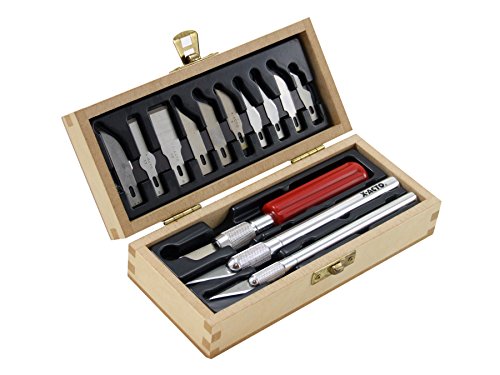
After clipping parts from sprues, every mini has gate marks and mold lines running along every surface. An X-Acto knife scrapes them flat in seconds. The Basic Set includes interchangeable blades and a case — enough to clean an entire army's worth of minis before needing a replacement blade.
What we like
Replaceable blades stay sharp — swap when scraping slows down
Case keeps blades organized and covered between sessions
What to know
Requires a cutting mat for safe use — add one to your order
Handle gets slippery with glue residue; wipe down regularly
Plastic cement fuses plastic by melting the surfaces together — the bond is stronger and more invisible than any adhesive. Tamiya's Extra Thin formula uses capillary action to draw the cement into joints without pre-applying: touch the brush to a join and it wicks itself in. Essential for multi-part plastic kits like Bolt Action infantry.
What we like
Capillary action draws cement into joins — no pre-application needed
Fuses plastic for an invisible, structurally stronger joint than glue
What to know
Only for plastic — metal and resin minis still need super glue
Moving painted minis across bare dining-room table is the fastest way to lose interest in the hobby. Terrain defines the table, creates tactical decisions, and makes the game look like the battles you're reenacting. Start with a game mat to replace bare wood, add a few ready-made pieces for cover and line-of-sight blocking, and finish bases with matching basing material so your minis look like they belong on the battlefield.
Best starter
Battlefront Miniatures
Battlefield in a Box: European Farm
$$$
★★★★★Our rating
Pre-painted resin terrain from Battlefront — opens the box and hits the table immediately. The European farmhouse works for any WWII game (Bolt Action or Flames of War) and looks genuinely convincing alongside painted infantry. Buying pre-painted terrain up front keeps your hobby time focused on minis, not buildings.
What we like
Pre-painted and ready to play — no hobby work required
European style suits Bolt Action, Flames of War, and SAGA equally
What to know
Resin chips and cracks if handled roughly or stored without padding
Fixed paint scheme may not match a desert or Eastern Front army exactly
Proper basing ties minis to the battlefield — the difference between a mini with and without basing is dramatic, and takes less than a minute per figure. This kit covers everything: static grass, rocky debris, sand, and the basing glue. Buy it when you buy your first starter set; it makes your first finished minis look genuinely finished.
A proper game mat is the single biggest visual upgrade per dollar in wargaming. Battle Systems' neoprene Grassy Fields mat rolls flat with no creasing, and the texture breaks up bare dining-table wood into a convincing field. Standard 3x3 feet covers a Bolt Action table; 4x4 for Flames of War.
What we like
Rolls flat — no warping or creasing unlike mousepad or vinyl mats
Realistic texture breaks up the visual monotony of a blank table
What to know
Heavy and bulky for club transport — better suited to a home table
Field-green mat may contrast visually with desert or snow terrain pieces
A few purchases make pickup games run faster and protect your investment. For Bolt Action players, order dice are not optional — they are the game's activation mechanism, not a stylistic choice. A foam carry case matters the moment you've painted a completed platoon: dropping a tray of painted minis is a bad afternoon. Everything else — tape measure, tokens, templates — can wait until after your first game tells you what you actually need.
Best starter
Warlord Games
Bolt Action Order Dice (Grey)
$24.65 as of Jun 22, 2026
★★★★★Our rating· Only 11 left in stock - order soon.
Bolt Action's order dice are the heartbeat of the game — players draw one blindly per turn to determine which side activates a unit. The official Warlord dice come in national faction colors and are correctly weighted, which matters for the blind-draw mechanism. You need one die per unit in your army.
What we like
Required to play Bolt Action — not a cosmetic accessory
Faction-colored dice immediately show which side controls which units
What to know
Only for Bolt Action — useless for SAGA or Flames of War
Easy to mix nationality colors in the bag; buy labeled storage bags
Painted minis are fragile — a single drop off a shelf chips paint and snaps weapons. Feldherr's foam inserts hold each mini in a custom-cut pocket and fit in a carry case sized for a standard Bolt Action platoon. Buy this when you finish painting your first army. The cost of re-painting a 30-mini force is much higher.
What we like
Custom foam pockets protect painted minis from transit damage
Sized for a complete Bolt Action infantry platoon
What to know
Standard insert slots may not fit cavalry or large-base vehicles
Foam smell takes a few days to air out on new cases
You won't play your first game in week one — you'll be assembling and painting. Here's what that first month actually looks like, and when it starts being worth it.
Historical wargaming is different from most hobbies in one important way: you will not play your first game the day your box arrives. You’ll assemble plastic minis, prime them, paint them, and base them — and only then will you sit across a table from an opponent and roll dice. That delay puts some people off. It keeps everyone else hooked for life.
This is what your first month actually looks like: the decisions, the workflow, and the exact moment when this stops being a project and starts being a hobby.
Week 1: Choose your system and order your kit
The most important decision in historical wargaming happens before you buy anything. Your game system determines your army, your rules, and your opponent pool — and armies are not interchangeable between systems. A box of Bolt Action plastic infantry won’t convert into a SAGA warband.
The three most beginner-friendly systems:
Bolt Action (WWII, 28mm scale) is the best starting point for most people. The player base is the largest of any historical wargame, local clubs almost universally have Bolt Action players, and the YouTube tutorial content is excellent. The WWII theme is immediately legible — you don’t have to learn a fictional setting alongside the rules. The tradeoff: a standard 500-point army is 30-50 minis, so you’ll be painting for a few weeks before your first game.
SAGA (Dark Ages and Medieval, 28mm scale) is the smart pick if you want to reach the table faster. A legal warband is 12-24 minis — paintable over a weekend if you keep the scheme simple. The battle-board mechanic (each faction has a unique board of dice-powered abilities) creates real tactical depth without a complicated rulebook. Vikings vs. Anglo-Saxons is a classic opener.
Flames of War (WWII, 15mm scale) suits players who want divisional-scale engagements. The smaller scale means individual minis are cheaper, but army counts are higher — expect 50-100 figures in a standard list. The painting goes faster at 15mm, though the detail is fiddler to pick out.
Once you’ve chosen: order your starter set (which should include the rulebook and dice), a primer spray, and paint supplies in the same cart. The minis will be ready to work on the moment they arrive.
Open your starter set and you’ll find frames of plastic sprues — the parts held in a grid of runners. Every part clips from the runner with side cutters, then gets cleaned up with a hobby knife before assembly. This process is slower than it looks in YouTube videos, and that’s fine.
Assembly workflow for a single mini:
Clip the part from the sprue with fine side cutters (Tamiya 74001 — don’t cheap out here).
Scrape the gate mark flat with a hobby knife. Every clip point leaves a small nub that catches paint if you ignore it.
Run the knife along any mold lines — the faint seam where the two halves of the mold met. They’re subtle until you prime, then they’re obvious.
Dry-fit the parts before gluing. Nothing is worse than cementing a torso to legs pointing the wrong direction.
Apply Tamiya Extra Thin Cement to plastic joins. Touch the brush to the seam and the solvent wicks in — capillary action does the work.
Hold for 10 seconds and move on.
A squad of ten infantry takes 45-90 minutes the first time through. By your third squad, you’ll do it in 30. Don’t try to assemble the whole box in one sitting — it’s a recipe for sloppy joins and lost parts. Do one squad at a time.
A note on primer: before any paint goes on, every mini needs to be primed. Gray or brown spray primer is standard for historical. It creates a tooth for the paint to grip, fills micro-scratches, and gives you a neutral base to read colors accurately. Spray outdoors, sweep the can constantly, and keep the nozzle six inches from the mini.
Week 3: Painting your first squad
The most common mistake new wargame painters make is trying to paint like a display hobbyist. Display painting — blending, layering, non-metallic metal — takes years to develop and produces individual showcase pieces. You are not doing that. You are painting 40 infantry to a table-ready standard that looks good at three feet. Different goal, different techniques.
The three-step wargame paint method:
Base coat — one thin coat of each color in its correct area. Brown for leather, field grey for German uniforms, olive drab for US gear. Thin your paints with a few drops of water. The coat should be transparent enough to see the primer through it; a second coat will opaque it. Two thin coats, not one thick one.
Shade wash — after base coats dry, brush a thin wash (Army Painter Quickshade or Citadel Shade) over the entire mini. It flows into recesses and adds instant depth and shadow. This single step makes a tabletop-quality mini look three times better. Let it dry for two hours, not twenty minutes — it stays tacky.
Edge highlight (optional but recommended) — pick out the raised edges of armor, weapons, and pouches with a slightly lighter version of the base color. Takes five minutes per mini and adds definition.
A squad of ten painted to this standard: 3-4 evening sessions. Your first squad will take longer; your fifth will take half as long.
Basing is what ties minis to the battlefield. An unbased mini looks like a toy. A based mini looks like it belongs. The process takes less than a minute per figure: brush PVA glue on the base, dip in sand or grit, let dry, drybrush brown then tan, glue down static grass, done.
Once your first squad (or warband) is based and varnished, you’re ready to play. Don’t wait for the whole army — play your first game with whatever you’ve finished, using cardboard tokens for the units that aren’t painted yet. Most opponents won’t mind for a learning game, and the game will tell you which units you actually want to paint next.
What your first game will teach you:
The rules always make more sense in play than on paper. The order dice mechanic in Bolt Action feels abstract reading about it; it feels natural the second turn you actually draw dice from a bag. Don’t try to memorize the rulebook before playing. Read the overview section, find an opponent (your local game store’s club night is the best place), and look up rules as they come up.
After your first game, you’ll know whether you want to expand your force or try a different army. You’ll also know which units were fun to play and which you’ll never build again. Paint toward what you like — this is a hobby, and it lasts as long as you enjoy it.
Things you’ll fail at — and that’s fine
Your first minis will look rough. This is universal. Keep them; most painters find the contrast with later work motivating.
Assembly glue and primer decisions will be second-guessed. Everyone has a preferred brand. Try what you have, upgrade when you have opinions.
You’ll buy minis before you’ve painted what you have. This is called “the pile of shame” and affects 100% of wargamers. Don’t try to fix it; just keep painting.
Your first game will have rules wrong. Everyone plays their first few games with some rules misread. Look it up, correct it, move on.
What comes after month one
At the end of your first month you’ll have a painted, legal force and a game under your belt. From here, the hobby opens up:
Campaign play — most systems have campaign rules that create persistent armies with history across multiple games.
Tournaments — Bolt Action especially has an active tournament scene; many local stores run beginner-friendly events.
More painting — the pile of shame awaits.
The community at your local game store is the single best resource for all of this. Historical wargamers are, as a group, enthusiastic about sharing knowledge with newcomers. Show up, bring your minis, and ask questions.
Save your money
What you don't need yet
Beginners get pressured to buy a lot of stuff that doesn't help them play
better. Here's what we'd skip on day one.
Airbrush — Highly recommended by veterans, but a distraction for beginners. Learn brush control first — you need the skill regardless.
Resin minis — Resin is more detailed but requires respirator work during sanding and is more brittle than plastic. Plastic kits are better in every way for starters.
Army-specific supplements — The core rulebook has enough lists to play for months. Supplements matter when you've outgrown the starter armies.
Display-quality paint techniques — Non-metallic metal, blending, OSL — these make models beautiful but require 100+ hours of practice to land. Get the army on the table first.
Light box for photos — Fun for the hobby community side, but irrelevant until you've finished a unit you're proud of. That comes later.
First week
Your first seven days
A short, real plan to get from gear-on-doorstep to actually playing.
Decide on your game system — Bolt Action, SAGA, or Flames of War — before ordering anything. · Action
Assemble your first squad — five or six minis — before attempting the full box. · Action
Prime and base-coat that first squad. One completed unit gives you confidence for the rest of the army. · Action
Find your local wargaming club or game store — most clubs have a demo night where experienced players teach the rules in a real game. · Action
Find a game store · GW store finder — many also stock Bolt Action and host open gaming nights
FAQ
Common questions
Do I have to paint my miniatures?
For casual kitchen-table games, no. For any club night, friendly event, or tournament — yes, unpainted armies are almost universally frowned upon. Most wargamers find that the painting is half the hobby and enjoy it as much as the games themselves.
How long does it take to get my first game in?
Expect 3-6 weeks from first purchase to first game. The time is almost entirely assembly and painting — not rule-learning. SAGA shortens this considerably because a warband is 12-24 minis; Bolt Action takes longer because a starter platoon is 50+ figures.
Is historical wargaming the same as Warhammer?
No. Warhammer is a fantasy/sci-fi IP with fictional armies. Historical wargaming uses real armies from real periods — WWII, Dark Ages, Napoleonics — with rules designed to reflect actual tactical doctrines. The modeling and painting skills overlap heavily, but the games are completely separate.
Which game system should I choose as a complete beginner?
Bolt Action if you want the lowest-friction start — largest player base, most YouTube content, excellent starter sets. SAGA if you want to reach the table fastest, since you only need 12-24 minis. Flames of War if divisional-scale WWII tactics interest you more than squad-level skirmishes.
How much does a full starter army cost?
A complete, legal, painted starter army runs $80-150 in plastic minis plus $30-50 in paints and supplies. The starter set bundling (rulebook + two armies) is almost always the most cost-efficient entry. Budget $200-300 total for everything you need to play your first game.
Can I mix miniatures from different manufacturers?
Yes, within a system the rules only specify unit types, not which manufacturer's minis you use. Victrix, Gripping Beast, Warlord, and Perry Miniatures all make compatible 28mm historical plastics. The only hard rules are scale (28mm minis don't mix visually with 15mm) and base size requirements.
Warlord Games — Publisher of Bolt Action and Black Powder. Army lists, official FAQs, painting guides, and the best plastic historical ranges available.
Studio Tomahawk — Publisher of SAGA. Rulebook errata, official FAQs, and the faction battleboards that define the game.
Battlefront Miniatures — Publisher of Flames of War. The official army builder tool is essential for list construction before buying models.
Tabletop Time (YouTube) — Excellent Bolt Action battle reports with rules explanations. The best starting point for watching Bolt Action played.
Guerrilla Miniature Games (YouTube) — Ash Barker's channel — covers Bolt Action, SAGA, and dozens of other historical and indie wargames. Beginner-friendly tone.
r/wargaming — Active community across all systems. The wiki and beginner megathread are genuinely useful — search before posting.
r/bolt_action — Bolt Action-specific subreddit. Army list advice, painting feedback, and scenario discussion. Welcoming to newcomers.
Beasts of War — News, reviews, and tutorials covering the full historical wargaming landscape. Good for tracking new releases across all manufacturers.
As an Amazon Associate, JustBeginning earns from qualifying purchases.
We may also earn commission from other affiliate programs linked on this
page. Editorial recommendations are independent; we don't choose
products based on commission rates.
Product prices and availability are accurate as of the date and time
indicated and are subject to change. Any price and availability
information shown on Amazon at the time of purchase will apply.
Our top pickWarlord Games Bolt Action: Band of Brothers

 Best starter