Jigsaw puzzles are one of the cheapest, most satisfying solo hobbies you can start today. The barrier is literally a box and a flat surface. But the right first puzzle matters: pick one too hard and it sits unfinished, too easy and it's not fun. Here's what to buy, and what to skip until you're hooked.
By Colin B. · Published June 4, 2026 · Last reviewed June 4, 2026
A single puzzle is $15-25. Add a roll-up mat ($35) and sorting trays ($15) and you're set for years. The puzzles themselves are the recurring spend.
We earn commission on qualifying Amazon purchases — see our
affiliate disclosure.
Price tiers and budget totals shown above are editorial estimates;
actual Amazon prices vary.
At a glance
Our top pick in each category
The fastest path through this guide — each best-starter pick by category.
Scroll for the budget and upgrade alternatives.
Your first puzzle should be 500-1000 pieces with a colorful, varied image. Avoid anything that's half sky, water, or solid color. The sections that look different are what make sorting possible. Vintage advertisements, food markets, busy cityscapes, and fantasy art all work well.
You don't need a puzzle table or dedicated surface. A rollup mat ($30-40) lets you work on your dining table, roll it up at dinner, and unroll it without losing a single piece. Buy this before your second puzzle.
Cheap puzzles are a real frustration, not because they're harder, but because pieces don't fit right. You'll force two pieces together and only discover the mistake twenty minutes later. Ravensburger and White Mountain are worth the extra $5-8.
The puzzle itself is where all the judgment lives. Two things matter for beginners: piece count and image type. Start at 500-1000 pieces, big enough to feel satisfying and small enough to finish. For the image, pick something with many distinct color regions: a vintage market, a fantasy landscape, a busy kitchen. Avoid open sky, ocean, or anything where one color dominates more than a third of the image. You'll be sorting by color and edge shape, so give yourself something to sort.
Puzzles — what's the difference?
A few common shapes, each making a different trade.
300-500 pieces
Quick finish, good for first puzzles and casual evenings.
Session time
2-4 hours
Table size
24 x 18 in
Difficulty
Easy
Best for Absolute beginners, kids, or anyone who wants a quick win
Tradeoff You'll outgrow these fast if puzzling becomes a habit
1000 pieces
The standard size. Multi-session weekend project.
Session time
6-15 hours
Table size
30 x 24 in
Difficulty
Moderate
Best for Most adults. The default starting point for serious puzzling.
Tradeoff Takes multiple sessions, so a rollup mat becomes essential
Best for Committed puzzlers who want a major multi-week undertaking
Tradeoff Requires a large dedicated surface and serious time commitment
Best starter
White Mountain Puzzles
Farmers Market 1000-Piece
$$
★★★★★Our rating
White Mountain's signature style, dense colorful images with lots of distinct regions, is the closest thing to a beginner-friendly puzzle standard. Pieces are thick and cut cleanly, and the image variety means you're always sorting by something meaningful. The Farmers Market and Candy titles are perennial starter picks.
What we like
Dense colorful imagery makes sorting manageable for beginners
Thick pieces with clean cuts fit better than cheap brands
Wide variety of titles: food, vintage art, cityscapes, nature
What to know
Popular titles sell out -- check stock before planning a gift
Often under $15 and consistently solid. Buffalo pieces fit reliably and the images are a step above generic. Their nature and nostalgia series are everywhere -- you'll spot them at Target or Walmart if you want to hold one before buying online.
What we like
Under $15 -- cheapest reliable entry from a trusted brand
Widely available at Target and Walmart for in-person preview
Reliably fitting pieces compared to no-name generic brands
What to know
Thinner pieces than White Mountain or Ravensburger
Image variety feels less inspired -- more predictable themes
German engineering in puzzle form. Ravensburger pieces have a softclick fit, each piece snapping in with a tiny satisfying resistance that confirms it's right. The linen finish reduces glare and pieces are thick enough to pick up easily. Once you've puzzled with Ravensburger, cheaper brands feel noticeably worse.
What we like
Softclick fit confirms each piece immediately -- no second-guessing
Linen finish reduces glare during long sessions
Thicker pieces are easier to pick up and harder to lose
What to know
Costs $25-35 per puzzle, a real spend at 4-5 puzzles per year
Smaller US title catalog compared to White Mountain
If you work at a dining table, you need a rollup mat. Without one, an unfinished puzzle owns your table until it's done. A rollup mat lets you assemble for an hour or two, roll it up, and put it away. The mat keeps every piece in its exact position until you're ready to continue. This one accessory removes the biggest practical friction of the hobby.
Best starter
Jumbl
1500-Piece Puzzle Caddy
$69.99 as of Jun 22, 2026
★★★★★Our rating· In stock
More than a simple rollup mat -- the Jumbl caddy combines a non-slip felt work surface with two removable sorting trays. When you need the table back, the whole puzzle stores safely inside. The felt surface keeps pieces from shifting, and the included trays let you start organizing the moment you open it.
What we like
Non-slip felt surface plus 2 sorting trays in one purchase
Puzzle stores inside the caddy intact -- no piece shifting
Slides under a couch or stands upright in a corner
What to know
More setup time than a plain rollup mat -- unfold and position first
★★★★☆Our rating· Only 7 left in stock - order soon.
Under $25 and does the job for standard 1000-piece puzzles. The foam underlayer is thinner than the Jumbl, so it's more portable, but pieces shift slightly more during rolling. Fine for occasional puzzlers who want the functionality without spending much.
What we like
Under $25 -- the cheapest functional rollup mat
Lighter and more compact than premium versions when stored
What to know
Thinner foam means more piece movement when rolling -- go slowly
Sorting trays are the difference between a puzzle that feels like work and one that flows. You dump all the pieces, sort by color and edge type into the trays, and suddenly instead of 1000 random pieces you have 8 organized piles. Any set of shallow stackable trays works. Ravensburger makes the standard: shallow enough to see all pieces at a glance, sturdy enough to stack when not in use.
Best starter
Ravensburger
Sort and Go Puzzle Sorting Trays
$
★★★★★Our rating
Six trays that stack neatly and fit over a 1000-piece work surface. The shallow depth means you can see every piece without digging, and the raised edges stop pieces sliding off. Ravensburger designed these for their own puzzles, so the proportions are exactly right.
What we like
Shallow depth lets you see all pieces at once without digging
Raised edges keep pieces from sliding off mid-sort
Stackable when not in use -- minimal storage footprint
What to know
No lids -- not suited for long-term piece storage between sessions
Six trays can feel insufficient for complex many-color images
★★★★☆Our rating· Only 15 left in stock - order soon.
Under $15 and the functionality is essentially identical to Ravensburger's. Slightly smaller individual trays, but still shallow and stackable. Good option if you're not sure how serious you'll get before spending more.
What we like
Under $15 for the set -- cheapest entry into organized sorting
Stackable and compact for easy storage between sessions
What to know
Smaller individual tray area -- more shuffling for large color groups
Poor lighting is the most underrated puzzle frustration. Overhead room light creates shadows in piece piles, and slightly different shades of blue or green look identical in dim conditions. A bright, adjustable task lamp positioned at the edge of your puzzle surface changes the whole experience. You'll stop squinting, and pieces that looked identical in overhead light reveal subtle differences in texture and tone. Worth the $30-40.
Best starter
TaoTronics
TT-DL13 LED Desk Lamp
$$
★★★★★Our rating
Bright, adjustable, and under $40. Five color temperature modes and a flexible arm mean you can direct it exactly where shadows fall in your piece piles. The 5500K daylight mode is ideal for distinguishing similar colors. Doubles as a general desk lamp between puzzle sessions.
What we like
5500K daylight mode reveals subtle color differences between pieces
Flexible arm positions light exactly where shadows fall in piles
Doubles as general desk lamp between puzzle sessions
What to know
USB port on the base -- inconvenient if table is against a wall
Arm length may not reach center of very large puzzle surfaces
★★★★☆Our rating· Only 3 left in stock - order soon.
OttLite built their reputation in craft and needlepoint communities for true-color rendering. Their ClearSun LED closely mimics natural daylight, which is particularly helpful for distinguishing similar puzzle piece shades. Often stocked at Michael's if you want to see it before buying online.
What we like
True-color ClearSun LED mimics natural daylight at the puzzle surface
Available at Michael's if you want to try it before ordering online
What to know
Heavier and bulkier than slim-arm lamps -- takes more table space
Pricier than basic desk lamps for a functionality you may not need
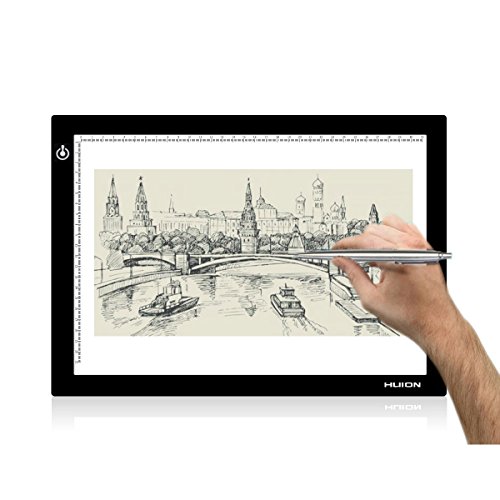
Puzzlers use light pads to hold individual pieces against the backlight, revealing subtle shape differences invisible in ambient light. Particularly useful for puzzles with similar-colored regions. Not necessary for most 1000-piece puzzles, but genuinely useful for anything above 1500 pieces or with lots of uniform color.
What we like
Backlighting reveals piece shapes invisible in ambient light
Thin, stores flat, and useful for tracing and calligraphy too
Adjustable brightness for different lighting environments
What to know
Overkill for standard 1000-piece colorful puzzles
Used beside the puzzle to examine pieces, not as overhead lighting
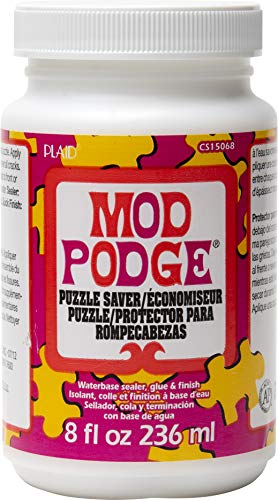
Not every finished puzzle needs to be preserved, but if you want to frame one, puzzle glue is the right tool. Apply on top, let it dry, flip and apply on the back, and the puzzle becomes a rigid board you can frame or hang. Ravensburger's dedicated glue is the most reliable. For frames, buy to fit the puzzle dimensions. Standard 1000-piece puzzles measure 27 x 19 inches, but verify your specific puzzle before ordering a frame.
Best starter
Ravensburger
Puzzle Conserver Glue
$11.99 as of Jun 22, 2026
★★★★★Our rating· In Stock
Made specifically for puzzles, dries clear, and comes with a spreader. Two coats (top and back) creates a rigid board you can frame. The formula doesn't yellow and preserves the image without distortion. The standard recommendation across every puzzle community online.
What we like
Designed specifically for puzzle preservation, not improvised
Dries completely clear and won't yellow over time
Comes with spreader, no separate brush needed
What to know
One bottle per 1000-piece puzzle -- buy two for large formats
The craft community's go-to multipurpose option. Same formula as regular Mod Podge in a convenient applicator bottle sized for puzzle work. Slightly cheaper than Ravensburger's glue and available at every craft store for same-day pickup.
What we like
Widely available at Michael's and Walmart for same-day pickup
Slightly cheaper than Ravensburger's dedicated formula
What to know
Can warp thin pieces if applied too thick -- use light coats
Dries slightly milky if applied too heavily, clear when thin
Most people pick the wrong first puzzle and blame themselves. Here's what actually goes wrong in your first few weeks, and how to make sure it doesn't.
Jigsaw puzzles have a reputation for being quiet and meditative. They are, eventually. But the first few puzzles are a different experience: you pick an image that looks beautiful on the box, dump out a thousand pieces, and immediately wonder what you’ve done. Then you either figure it out or you give up and assume puzzles aren’t for you.
They almost certainly are for you. You just need to get through the first three or four puzzles before the rhythm kicks in.
Here’s what actually happens — and what to do about it.
Puzzle 1: Choose the image, not the box
The most common beginner mistake is buying a puzzle because the box image is beautiful. A moody seascape. A soft watercolor garden. An atmospheric winter scene. These puzzles are hard. Not because they have more pieces, but because large sections of the image are nearly identical in color and tone, and you’re sorting by color.
Pick your first puzzle based on this criterion: how many distinct color regions does the image have? A vintage candy shop with dozens of different products. A fantasy map with labeled territories. A food market with stalls in ten different colors. These are beginner images. A gray castle under a cloudy sky is not.
White Mountain Puzzles sells a line of 1000-piece puzzles specifically designed with dense, varied imagery. Their titles like Candy, Farmers Market, and The Sky’s the Limit are perennial recommendations on r/jigsawpuzzles for exactly this reason: you’re always sorting by something, never stuck staring at a hundred identical blue pieces.
Piece count matters too. Start at 1000. Under 500 and the puzzle is over before the satisfaction kicks in. Over 1000 and you risk the experience feeling like a slog before you’ve developed technique.
On your first puzzle, you probably sorted roughly into edge pieces and non-edge pieces, then worked somewhat randomly. On your second puzzle, you learn to sort properly.
Before placing a single piece, dump everything out and sort all pieces into groups by their dominant color. Give each color group a dedicated space — a tray, a small bowl, or just a distinct zone on the table. You want to be able to grab all the red-dominant pieces without touching any green ones.
This step takes about fifteen minutes. It saves two to three hours.
The key insight is that you’re not working on one puzzle. You’re working on six or eight small puzzles simultaneously, each covering a region of the image. Finish the red section, finish the blue section, connect them. The brain handles small bounded problems much better than a single infinite one.
Get sorting trays before puzzle 2. The Ravensburger 6-piece set is the standard — shallow enough to see all pieces at a glance, stackable when you’re done. Using small bowls works but the shallow tray is noticeably better.
Puzzle 3: Solving the table problem
By puzzle 3, you either have a dedicated puzzle table or you’ve discovered how annoying it is to share a dining table with an unfinished puzzle. You cannot leave it unattended. You can’t eat at the table. Every time someone walks by, you hold your breath.
The solution is a puzzle rollup mat. You assemble on the felt surface, and when you need the table back, you roll the mat up (it holds every piece in place), slide it under a bed or lean it in a corner, and unroll it next session. This sounds too good to work. It works.
The Jumbl mat is the most recommended option. It’s slightly more expensive than the budget alternatives, but the thicker felt means pieces don’t shift during rolling. A rolled puzzle that’s lost half its progress is worse than no mat at all.
With a mat, the table is available by dinnertime. The puzzle continues. This is what lets the hobby become a habit rather than a one-off event.
Puzzle 4: Working with difficult sections
By puzzle 4, you’ll pick something slightly more challenging — because puzzle 3 went well and you’re feeling confident. This is when you run into the “empty sky” or “wall of green” problem: a large section of nearly identical pieces.
Two techniques help here.
The first is shape sorting. Within a monochrome section, the color differences are too subtle to use, but piece shapes are distinct. Sort the pieces from that region into groups by tab count (how many tabs vs. blanks) and tab position. A piece with two tabs on opposite sides is different from a piece with two tabs adjacent. Your eye doesn’t naturally see this — you have to look for it deliberately.
The second is working inward from completed edges. If you’ve already placed the pieces around a difficult region, you can use the shape of the remaining hole as a guide. Each empty slot has a specific shape. Work the border of the hole, not the pile of loose pieces.
These techniques feel slow and methodical. They are. But they work, and using them on puzzle 4 means puzzle 5 feels noticeably faster.
Puzzle 5: When it clicks
Somewhere around puzzle 4 or 5, something changes. You stop consciously thinking about technique and start just doing it. You sit down, dump pieces, sort, and work — and an hour passes without you noticing.
This is the meditative quality people talk about. It’s not available to beginners because beginners are actively problem-solving technique, not applying it automatically. You have to get past that phase first.
By puzzle 5, you’ll know your preferences: do you like 500-piece puzzles for a single long evening, or 1000-piece weekend projects? Do you prefer illustrative art, photography, or maps? Do you work alone or is it better with another person?
You’ll also know whether you’re going to frame anything. Most people don’t — it’s expensive and you lose the puzzle. But if you finish something that feels worth keeping, Ravensburger puzzle conserver glue is the right tool: apply thin coats to top and back, let it dry, and it becomes a rigid framing-ready board.
You’ve got the fundamentals. A few things worth knowing as you go deeper:
Puzzle swaps and libraries. Many libraries now have puzzle lending sections. Facebook Marketplace and local buy-nothing groups are full of used puzzles at $2-5. There’s no reason to pay full price forever.
The 2000-piece jump. At some point you’ll want to try something bigger. A 2000-piece puzzle is roughly twice as long, requires a noticeably larger surface (about 38 x 26 inches), and demands everything you’ve learned about sorting and shape recognition. Don’t attempt it until you’ve finished at least three 1000-piece puzzles confidently.
Wooden puzzles. Wentworth, Liberty Puzzles, and Artifact Puzzles make precision hand-cut wooden puzzles with irregular whimsy pieces (shapes that look like animals, people, or objects). They’re expensive ($50-100+) and a completely different experience from cardboard. Worth trying once you know the hobby has stuck.
Save your money
What you don't need yet
Beginners get pressured to buy a lot of stuff that doesn't help them play
better. Here's what we'd skip on day one.
A dedicated puzzle table — Costs $200-400 and solves a problem a $35 rollup mat already solves. Wait until you've finished ten puzzles and know you're committed.
A light board for your first puzzle — Genuinely useful for 2000+ piece puzzles with lots of uniform color. Overkill for your first 1000-piece with a colorful image.
Puzzle frames before your first completed puzzle — Buy the frame after you finish, once you know the exact dimensions of the puzzle you want to display.
Wooden or premium hand-cut puzzles — Wentworth and Liberty wooden puzzles are beautiful experiences at $60-100+ each. Build the habit with cardboard first, then upgrade.
A puzzle accessory kit — Bundled kits typically include a mediocre mat, low-quality trays, and glue that doesn't perform well. Buy each thing separately when you actually need it.
First week
Your first seven days
A short, real plan to get from gear-on-doorstep to actually playing.
Buy your first puzzle, or dig one out of the back of a closet. · Action
Choose a table with enough room. A 1000-piece puzzle needs about 30 x 24 inches of clear surface. · Action
Order a White Mountain 1000-piece puzzle with a colorful, varied image. · Buy
500-1000 pieces is the right range for most adults. Under 500 feels too easy; over 1000 and the first experience is often frustrating. Start with 1000 and pick a colorful, busy image.
What makes a good first puzzle image?
Pick something with lots of distinct color regions: vintage markets, fantasy art, busy cityscapes, food-themed images. Avoid anything where one color (sky, ocean, grass) dominates more than a third of the image. You'll be sorting by color, so give yourself variety.
Do I need to glue a puzzle if I'm not framing it?
No. Most puzzles don't get glued. Glue is only necessary if you want to hang or frame the finished puzzle. Otherwise, just disassemble and pass it on -- many puzzlers trade finished puzzles with neighbors or donate them to libraries.
How do I store an unfinished puzzle overnight?
A rollup mat is the best answer -- roll it up, put it in a corner, unroll tomorrow. Without one, slide a spare piece of cardboard underneath and cover loosely. Avoid covering with a towel, which shifts pieces.
How long does a 1000-piece puzzle take?
For a first-timer, 8 to 20 hours depending on the image and how many people are working on it. With a colorful varied image and sorting trays, 10-12 hours is typical. Puzzles with lots of one color take significantly longer.
Are cheap puzzle brands worth it?
They're usable, but the frustration is real. Cheap pieces don't fit precisely -- you'll place two pieces that almost fit and only discover the mistake later. Ravensburger and White Mountain at $15-25 are worth it; anything under $10 usually isn't.
r/Jigsawpuzzles — Active community of serious puzzlers. The wiki has excellent brand comparisons and recommendations. Good place to ask for image suggestions in any theme you enjoy.
Puzzle Warehouse — The largest US puzzle retailer. Browse by piece count, brand, and subject. Excellent for finding specific titles that sell out on Amazon.
Serious Puzzles — Another major specialty retailer with a well-curated catalog. Good for European brands like Ravensburger and Clementoni with limited Amazon presence.
Ravensburger Puzzles — Browse the full Ravensburger catalog by piece count and theme. Their store has titles not on Amazon. The 1000-piece section is the best place to start browsing.
As an Amazon Associate, JustBeginning earns from qualifying purchases.
We may also earn commission from other affiliate programs linked on this
page. Editorial recommendations are independent; we don't choose
products based on commission rates.
Product prices and availability are accurate as of the date and time
indicated and are subject to change. Any price and availability
information shown on Amazon at the time of purchase will apply.
Our top pickWhite Mountain Puzzles Farmers Market 1000-Piece


 Best starter