The Rubik's Cube has 43 quintillion possible permutations — and humans have turned solving it into a legitimate competitive sport with 40,000 registered WCA athletes. The right cube matters: a magnetic cube feels snappy and precise where a cheap one feels gummy and off. The best beginner cube costs $12. Here's what to buy first and the GAN vs. MoYu question answered.
By Colin B. · Published June 1, 2026 · Last reviewed June 1, 2026
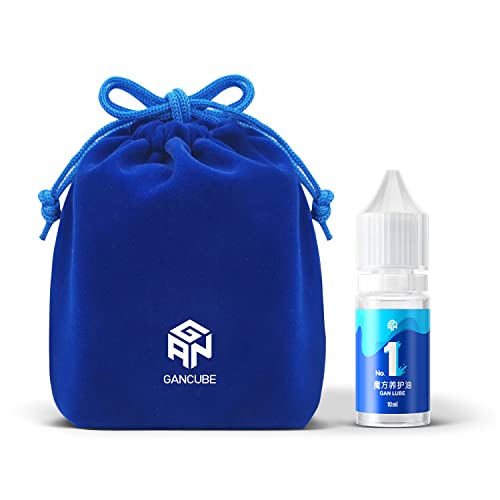
Gan Magic Cube Lubricant
— Lube your cube and it'll feel like a $50 cube. A 10-minute upgrade worth every cent.
Budget total
$15
Typical total
$70
A quality magnetic cube is $12-15. Add a timer ($35) and lube ($8) when you're ready to get serious. The gear is cheap — the time investment is the real cost.
We earn commission on qualifying Amazon purchases — see our
affiliate disclosure.
Price tiers and budget totals shown above are editorial estimates;
actual Amazon prices vary.
At a glance
Our top pick in each category
The fastest path through this guide — each best-starter pick by category.
Scroll for the budget and upgrade alternatives.
Don't buy a premium cube first. A $12 magnetic cube performs so close to a $50 GAN that most experienced solvers can't distinguish them on video. Start cheap, prove the hobby sticks, then upgrade when you actually feel the difference — and you will feel it eventually.
Magnetic is worth the extra $5-8. Non-magnetic cubes existed before 2016 and most competitive solvers won't go back. The magnets help align each layer as you turn, reducing misalignments and lockups. Buy magnetic.
Learn the beginner method, not CFOP right away. CFOP is what competitive speedcubers use — it requires memorizing 78 OLL and 21 PLL algorithms. The beginner layer-by-layer method uses 7 algorithms. Master it first; you'll solve in under 2 minutes quickly, and that's enough to fall in love with the hobby.
The cube you train on matters more than marketing suggests. Budget magnetic cubes now perform so close to premium cubes that beginners lose almost nothing by starting cheap. The key feature is magnets — they give each layer a satisfying click that helps align pieces as you turn, reducing misalignments and lockups. Non-magnetic cubes are not wrong; they're just less forgiving and slower to feel comfortable on. Start magnetic, start at the low end, and upgrade when your times plateau and you can feel the difference.
3×3 Speed Cubes — what's the difference?
A few common shapes, each making a different trade.
Budget Magnetic
The $8-15 sweet spot — magnetic feel at minimal cost.
Magnets
Fixed
Price
$8-15
Adjustability
None
Best for First-time solvers, testing the hobby, anyone under 45 seconds
Tradeoff Factory lube is adequate but a lube job helps immediately
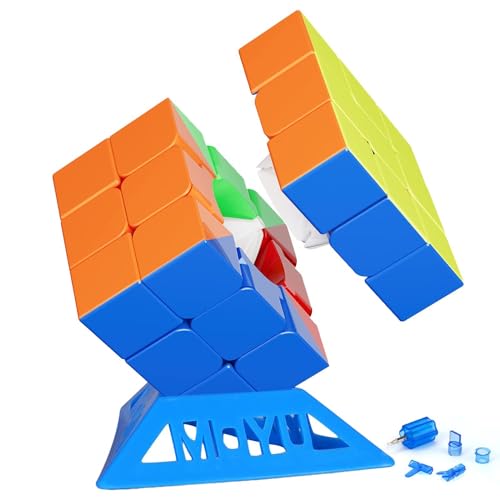
The RS3M is what most speedcubing communities recommend to new solvers, and for good reason. It's magnetic, smooth out of the box, and performs far above its $12 price point. MoYu ships it pre-tensioned and pre-lubed so you can start solving the moment it arrives. When you eventually upgrade to a $50 GAN, you'll understand what you outgrew — but that could take a year.
What we like
Magnetic alignment — noticeably better feel than non-magnetic cubes
MoYu quality control at a budget price point
Ships ready to solve — no break-in period required
What to know
Factory lube is functional but slow — a $8 lube job transforms it
Not as smooth as premium cubes, but the gap is smaller than it sounds
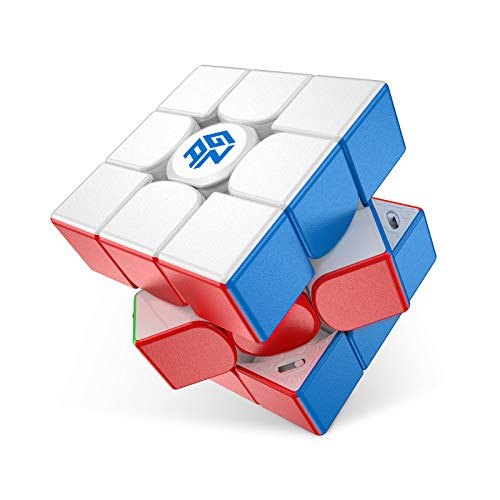
GAN makes the cubes that win WCA competitions. The 11 M Pro has adjustable magnets, spring tension, and elasticity so you can tune it exactly to your feel preferences. Noticeably smoother corner-cutting and more consistent turns than budget cubes. Wait until you're regularly under 45 seconds before buying one — before that, the cube is not holding you back.
What we like
Adjustable magnets and spring tension — tune it to your exact preference
Corner-cutting performance used by WCA top competitors
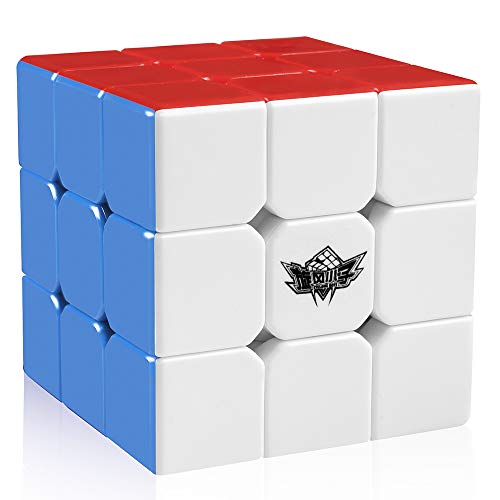
At around $6, this gets you solving without committing. Non-magnetic means no satisfying click and more imprecision compared to a magnetic cube. But if you're genuinely unsure whether speedcubing will stick, spend $6 first and upgrade to a magnetic cube if it does. Most people who try it do stick with it.
What we like
Under $6 — the lowest possible commitment to try the hobby
Durable stickerless design, no peeling labels to deal with
What to know
Non-magnetic — the turning is less precise and less satisfying
You'll want to upgrade within a month if you stick with it
You can time yourself on a phone stopwatch — but a Stackmat timer changes the ritual. You place both palms on the sensors to reset, hold until it turns green, lift off to start. It's how every WCA competition runs, and practicing on one means no awkward transition when you compete. A phone app suffices for the first month; a real timer matters once you're tracking rolling averages seriously.
Best starter
SpeedStacks
G4 Pro Stackmat Timer
$$$
★★★★★Our rating
The official WCA competition timer, used at every sanctioned event worldwide. Start here and your timing routine never needs to change when you compete. Connects to csTimer.net over a 3.5mm cable for session logging — genuinely useful once you're analyzing rolling averages and tracking personal bests.
What we like
Official WCA competition timer — no relearning when you compete
3.5mm output connects to csTimer.net for automatic session logging
Palm-sensor activation is accurate to milliseconds
What to know
At $35+, hard to justify before you're tracking times consistently
Included mat is thin — a silicone cube mat underneath improves it
A physical cube timer that mimics the Stackmat experience at roughly half the price. No software connectivity, but for home practice it performs the core function perfectly. A reasonable choice for the first few months before you're tracking session stats.
What we like
Half the price of SpeedStacks — adequate for casual home timing
Palm-sensor activation — same muscle memory as competition timers
What to know
No csTimer or software connectivity for session tracking
Not WCA-approved — you'll need the SpeedStacks before competing
Lubricating your cube is the single biggest performance upgrade you can make without buying a new one. Speed lube (thin, silicone-based) makes pieces glide faster and is what most solvers use on their main cube. Thick lube applied to the core slows controlled movement for more consistency. For beginners, a speed lube is all you need — apply it to the core and touch each piece, reassemble, and your cube will feel transformed in 10 minutes.
Best starter
GAN
Magic Cube Lubricant
$
★★★★★Our rating
GAN's lube is purpose-built for speed cubes and widely available online. A small bottle lasts dozens of applications. Apply a drop to the core tracks and a light touch to each piece — your cube will turn noticeably faster and smoother in one session. Works on any brand cube, not just GAN.
What we like
Purpose-built for speed cubes — not a DIY silicone workaround
Small bottle lasts dozens of lube sessions — extremely cost-effective
Works on any cube brand, not just GAN cubes
What to know
A drop too much turns the cube mushy — technique matters
Doesn't replace thick core lube for cubers who want full customization
Once you're tuning cubes deliberately, you'll want both thin (speed) and thick (control) lube on hand. A variety kit gives you both types plus a lube applicator — enough to experiment with different setups across multiple cubes without buying full bottles of each.
What we like
Both thin speed lube and thick control lube in one kit
Lube applicator tip included — no improvising with toothpicks
Enough for 50+ applications across multiple cubes
What to know
More than you need for a single starter cube
Takes time to learn the difference between lube types by feel
Once the 3×3 clicks, you'll want more. The Pyraminx is the easiest non-3×3 puzzle — only 4 algorithms total, looks impressive solved, and your 3×3 intuition transfers immediately. The 4×4 is the natural next challenge: same core technique as the 3×3 plus parity problems. Megaminx follows after that — a 12-sided monster for when you're genuinely deep in the hobby. Buy one new puzzle at a time.
Best starter
MoYu
MFJS Pyraminx Magnetic
$
★★★★★Our rating
The Pyraminx is the best first non-3×3 puzzle for new speedcubers. It uses only four algorithms, looks beautiful when solved, and most people crack it within a few hours of learning the 3×3. The magnetic version from MoYu gives you that same satisfying click at a very low price. Great to pull out when you want a quick win.
What we like
Only 4 algorithms — most beginners solve it in under 3 hours total
Magnetic version has the same satisfying click as your 3×3
A crowd-pleaser: solve it in front of someone and they're impressed
What to know
Much easier than the 3×3 — won't challenge you for long
Pyraminx WCA events are competitive; casual solvers rarely compete here
The 4×4 is the natural progression after mastering the 3×3. It uses the same last-layer technique plus an added step: pairing the 4×4's edges before you reach the 3×3 stage. Parity algorithms are the one new thing to learn — configurations that look wrong but aren't, requiring their own fix. QiYi's WuQue M is smooth, magnetic, and priced right for a second puzzle.
What we like
Leverages all your 3×3 knowledge — the learning curve is smaller than it looks
QiYi magnetic lineup performs well above its price point
4×4 WCA events have a real beginner-friendly community
What to know
Parity cases require new algorithms — expect a frustrating first encounter
Larger size means harder to palm-turn quickly at first
A 12-sided, 50-piece monster that uses the same layer-by-layer logic as the 3×3 extended across more faces. The algorithms are mostly identical to 3×3 OLL and PLL — the challenge is tracking 12 colors instead of 6. A surprisingly accessible puzzle for experienced 3×3 solvers. The WCA Megaminx event is genuinely fun to watch competitively.
What we like
Same layer-by-layer logic as 3×3 — mostly familiar algorithms
Magnetic version makes the many-piece turning much more manageable
One of the most visually impressive puzzles to have solved on your shelf
What to know
12 colors is genuinely confusing until your eye adjusts
Slower solves — average Megaminx takes 5-10 minutes for beginners
A cube mat protects your table and provides a grippable surface for the timer — important when you're slamming palms down repeatedly. A carrying case is optional until your collection grows past three puzzles. Both are under $20, and a good mat immediately makes your solving setup feel more intentional.
Best starter
CuberSpeed
MoYu Competition Mat
$13.99 as of Jun 22, 2026
★★★★★Our rating· In Stock
Protects your table from the timer's rubber feet and your cube from scratches. The silicone surface grips the Stackmat timer perfectly and cushions drops. It's a $10 upgrade that immediately makes your setup feel intentional — and it'll outlast several cubes.
What we like
Protects both table surface and cube from impact scratches
Non-slip silicone surface keeps the timer from sliding mid-session
Rolls up for travel — fits in any cube bag
What to know
Sizing varies by brand — verify fit with your specific timer model
Silicone attracts dust and lint — needs periodic wiping
A zippered case for your growing cube collection. Padded dividers keep puzzles from knocking against each other in transit, and most hold 6-9 cubes plus a timer. For home solving a ziplock bag works fine, but once you're heading to meetups or competitions, a proper case keeps everything organized.
What we like
Padded dividers prevent cubes from scratching each other in transit
Most hold 6-9 cubes plus timer — enough for a competition loadout
Under $15 and noticeably better than a tote bag for care
What to know
Larger puzzles (4×4, Megaminx) may need a specifically sized case
Not structured enough to protect cubes from direct impact if dropped
Most people think solving a Rubik's Cube requires genius. It doesn't — it requires learning 7 algorithms, which takes an afternoon. After that, it's a reflex sport. Here's what the first month looks like.
Speedcubing has a reputation problem. Most people who haven’t tried it believe that fast solvers have memorized something incomprehensible — a thousand-step sequence that only a certain type of brain can hold. This is wrong.
The standard beginner method uses seven algorithms. An algorithm, in this context, is a short sequence of moves — typically 6-12 turns — that reliably produces one specific result on the cube. Learn these seven sequences and you can solve any scrambled Rubik’s Cube, every time. The rest is just building the speed to execute them faster.
That first month is a very specific experience. Here’s what it actually looks like.
Week 1: Your first solve
You’ll spend the first session watching a tutorial with the cube in your hands, pausing every 30 seconds to execute the next move sequence. This is normal. Everyone does it.
The beginner layer-by-layer method solves the cube in three stages: the first layer (called the white cross and first-layer corners), the middle layer (four edge pieces), and the last layer (the top face). The first two stages are largely intuitive — you can figure out most of the moves logically once you understand what needs to happen. The last layer is where the algorithms live.
J Perm’s beginner tutorial on YouTube is the standard. Watch it with the cube in your hands, not just your eyes. Pause. Execute. Rewatch. This is how everyone learns.
Your first unassisted solve will probably take 5-15 minutes. Write the time down. That number is your baseline, and watching it shrink over the next weeks is genuinely satisfying.
By the end of week one, almost everyone hits sub-5-minutes on unassisted solves. Some people hit sub-3-minutes. The algorithm sequences aren’t memorized yet — you’re still thinking about each move deliberately — but the path through the cube is becoming familiar.
The first plateau most beginners hit: the last-layer algorithms. There are two sets (called OLL and PLL in the beginner method — don’t worry about those labels yet). The beginner method uses simplified versions that are longer but easier to remember. Some people nail them in a day; others need a week of practice before they stop having to look them up. This is normal.
Week 2: Building muscle memory
By week two, the algorithm sequences are starting to become reflexes. You’re not thinking “right-up-right-up-left-up-left-down” anymore — you’re thinking “do the top-layer algorithm” and your hands execute it.
This is when timing yourself starts to feel meaningful rather than humbling. Use csTimer.net (free, browser-based) or a phone timer. Track your solves in a session. Watch your rolling average of 5 solves (called Ao5 in the community) slowly drop.
The goal for week two is sub-2-minutes consistently. Most people reach it. Here’s what helps:
Look ahead. While you’re finishing one step, your eyes should already be finding the pieces for the next step. This is the core skill of speedcubing — anticipating what comes next so your hands never stop moving.
Slow down on purpose for one session. Counterintuitive but effective: deliberately slow, smooth, deliberate turns expose bad habits that speed hides. You’ll find moves you can eliminate.
Don’t over-optimize yet. You’ll read about “finger tricks” and advanced OLL/PLL algorithms. Ignore them for now. The gains at this stage come from fluency with the beginner method, not from swapping in more efficient algorithms.
Sub-1-minute is the first real milestone. It’s when the hobby stops feeling like memorization and starts feeling like a sport.
Getting there doesn’t require learning a new method. It requires the same seven algorithms you already know, executed with less hesitation and more efficient finger movement. Two things accelerate this:
1. Improve your cross. The white cross (first step) is the most improvable part of the beginner method. Advanced solvers plan the entire cross in their head during the 15-second inspection period before the timer starts. You don’t need to do this yet, but even planning one or two cross pieces mentally before your hands move will shave 10-20 seconds off your solves.
2. F2L intuition. The second stage (inserting the four corners and edges that complete the first two layers) can be done much more efficiently by combining moves you’re currently doing separately. Watch one F2L tutorial video — not to memorize anything, just to understand that paired-piece insertion is a thing. Your intuition will start doing it naturally.
Most solvers who practice consistently hit sub-1-minute somewhere in weeks 3-4. When it happens, the solve will feel fast in a way none of your previous solves did. It’s the moment the hobby becomes an actual sport in your hands.
Sub-1-minute is where the beginner method runs out of road. The next natural step is CFOP — the full competitive algorithm set. Full CFOP has 78 OLL algorithms and 21 PLL algorithms, which sounds overwhelming, but most solvers learn them a handful at a time over months. You don’t need all 78 OLL to be competitive; learning the most common 20 and using lookahead to compensate for the rest gets you remarkably far.
The speedcubing community is also unusually organized. WCA competitions happen in most cities several times a year — and watching one as a spectator before you compete is one of the best things you can do as a new speedcuber. The range of skill in the room is inspiring rather than intimidating: the same event where the winner solves in 8 seconds also has competitors solving in 45 seconds, and everyone is cheering for everyone.
A few habits that separate people who plateau from people who keep improving:
Time every session, not just good solves. Your Ao5 and Ao12 averages are more honest than cherry-picked best times.
Review bad solves. When a solve takes longer than usual, figure out why — was it a missed algorithm, a slow F2L pair, or just a bad cross?
Show someone else. Teaching the beginner method to a friend is one of the most reliable ways to solidify your own understanding of each stage.
Save your money
What you don't need yet
Beginners get pressured to buy a lot of stuff that doesn't help them play
better. Here's what we'd skip on day one.
A premium GAN or MoYu Weilong ($45+) — You won't feel the performance difference until you're under 45 seconds. A $12 magnetic cube will not hold you back for at least the first year.
A Stackmat timer in the first month — A phone stopwatch or free online timer (csTimer.net) works perfectly for the first 4-6 weeks. Add the Stackmat when you're timing sessions consistently.
CFOP algorithms beyond the beginner set — The full CFOP system has 78 OLL + 21 PLL algorithms. The beginner layer-by-layer method gets you to sub-2 minutes with 7. Master the basics first.
Cube lubricant on day one — Your cube ships pre-lubed and ready to solve. Wait until the turning feels slow or gunky before lubing — that's your first signal it needs attention.
Competition registration — WCA competitions are fantastic, but go as a spectator first. Most speedcubers compete for the first time around 6-12 months in and wish they'd gone to watch earlier.
First week
Your first seven days
A short, real plan to get from gear-on-doorstep to actually playing.
Order a magnetic 3×3 — the MoYu RS3M is the standard recommendation. · Buy
Solve it once, guide open in front of you. That first solve — even if it takes 30 minutes — is the breakthrough moment. · Action
Record your first unassisted timed solve. Phone stopwatch is fine. Write the time down. You'll want to compare it to your week-3 time. · Action
Join r/Cubers and post your first time. The community is welcoming to beginners and will cheer you on. · Action
r/Cubers · The main speedcubing community — search the wiki for FAQ
Goal for week one: sub-5-minutes without the guide. Most people hit it. It feels great. · Action
FAQ
Common questions
What cube should I buy as a complete beginner?
The MoYu RS3M 2021 Magnetic is the standard community recommendation — around $12, magnetic, and it performs far above its price. Don't spend more until you're regularly under 45 seconds and can feel the difference.
Do I need a magnetic cube, or is a regular one fine?
Magnetic is worth the extra $5-8. The magnets help each layer click into alignment as you turn, which means fewer misalignments and lockups. Almost every serious speedcuber uses magnetic. Don't start with non-magnetic if you can avoid it.
GAN or MoYu — what's the actual difference?
MoYu makes excellent budget-to-mid-range cubes and is the right starting point. GAN makes the premium flagship cubes most top competitors use — adjustable magnets, finer tolerances, higher price. Start MoYu; graduate to GAN when you're sub-30 and can actually use the tuning options.
How long does it take to solve a Rubik's Cube for the first time?
With a good tutorial (J Perm's beginner series is the standard), most people solve their first cube in 45-90 minutes of active learning. The first unassisted solve usually takes 10-30 minutes. Sub-5-minutes comes within the first week of practice.
What's the difference between the beginner method and CFOP?
The beginner layer-by-layer method uses 7 algorithms and gets you to sub-2 minutes with practice. CFOP is the professional system with 78 OLL + 21 PLL algorithms; it's what sub-20-second solvers use. Learn beginner first, add CFOP pieces over months — don't try to jump straight to full CFOP.
How much does it cost to get started in speedcubing?
A magnetic 3×3 cube is $12-15 and that's all you need to start. Add a Stackmat timer ($35) once you're tracking times seriously. Total startup cost is well under $50. The big investment is time, not gear.
World Cube Association — The governing body for competitive speedcubing. Official rules, competition listings, and the global rankings database. Find a competition near you here.
csTimer — Free browser-based timer and session tracker. Connects to the SpeedStacks Stackmat via cable. The standard training tool for serious speedcubers worldwide.
SpeedSolving.com Wiki — The most complete written reference for speedcubing methods, algorithms, and terminology. Look up any method or term here.
J Perm (YouTube) — The most-watched speedcubing channel. His beginner tutorial is the gold standard for first-time solvers. After that, his CFOP transition series and algorithm tutorials are excellent.
CubeHead (YouTube) — The go-to channel for cube reviews and comparisons. Before buying any cube, search his channel — he's covered almost everything sold today.
r/Cubers — Active community of 500,000+ speedcubers. Check the wiki for the FAQ — it answers most beginner questions. Post your first solve time; the community is genuinely welcoming.
AlgDB.net — Algorithm database for CFOP, Roux, and other methods. When you're ready to learn OLL and PLL, this is the reference you'll live in.
As an Amazon Associate, JustBeginning earns from qualifying purchases.
We may also earn commission from other affiliate programs linked on this
page. Editorial recommendations are independent; we don't choose
products based on commission rates.
Product prices and availability are accurate as of the date and time
indicated and are subject to change. Any price and availability
information shown on Amazon at the time of purchase will apply.
Our top pickMoYu RS3M 2021 Maglev Magnetic Speed Cube


 Best starter