Aquascaping turns your aquarium into a miniature underwater landscape: sculpted stone, rooted plants, careful light and chemistry. It's more design project than fish tank, and it rewards patience and precision. The gear looks intimidating: CO2 systems, active substrate, high-CRI lighting. Here's exactly what you need to start your first planted scape, and what you can skip.
By Colin B. · Published May 31, 2026 · Last reviewed August 7, 2026
Aquascaping is expensive to enter: CO2 alone runs $120–300, quality lighting adds $80–200, and active substrate costs $30–60. Budget $400 to start lean; $650 for a setup that won't limit your plants.
We earn commission on qualifying Amazon purchases — see our
affiliate disclosure.
Price tiers and budget totals shown above are editorial estimates;
actual Amazon prices vary.
At a glance
Our top pick in each category
The fastest path through this guide — each best-starter pick by category.
Scroll for the budget and upgrade alternatives.
Aquascaping is not aquarium keeping. The goal isn't happy fish; it's a planted landscape. You'll spend more time thinking about stone placement, plant layering (foreground, midground, background), and light spectrum than you will picking fish species. Fish come after the design works, or not at all.
CO2 is optional but transforms the hobby. No-CO2 planted tanks look beautiful if you stick to low-demand plants: anubias, java fern, bucephalandra, mosses. Add CO2 injection and the plant palette opens dramatically, but so does algae risk. Start without CO2, learn your light schedule, then add gas.
Buy your hardscape first, then choose your tank. Dragon stone and driftwood need to fit through the tank opening and suit its proportions. Most beginners pick a tank, then discover the stone they love won't fit the composition. Do it backward: find the stone you want, then choose the tank around it.
Aquascapers prefer rimless tanks: no plastic frame interrupting the view. Low-iron glass (sometimes called ultra-clear) removes the greenish tint that standard glass adds at angles. A 10–15 gallon tank is the right starting size: big enough to scape interestingly, small enough that water chemistry errors don't become disasters. Resist nano cubes; they're beautiful in photos and brutal to maintain as a beginner.
Best starter
Landen
60P 23 Gallon Rimless Low Iron Aquarium Tank
$279.99 as of Jun 22, 2026
★★★★★Our rating· Only 9 left in stock - order soon.
The Landen 60P is 23 gallons of low-iron, rimless glass in the most popular aquascape format. The ultra-clear glass reads true to your scape's colors, and the rimless top gives you unobstructed planting access. This is the tank most intermediate aquascapers wish they'd started with.
What we like
Low-iron glass shows true color: no greenish tint at the edges
Rimless design gives unobstructed planting and trimming access
14.5 gallons: right-sized for a first serious aquascape
What to know
No lid, filter, or heater included; you're building from scratch
Low-iron glass is more fragile than standard; handle carefully
Ten-gallon standard tanks are the most available glass aquarium in the US. The plastic rim is a visual concession, but at $20–30 it lets you learn the hobby without committing to a premium tank. Replacement parts, filters, and lids are available at every pet store.
What we like
Under $30, a low-stakes entry point while you learn the hobby
Universal sizing: replacement parts and lids available everywhere
What to know
Plastic rim interrupts the view; looks less polished than rimless
Standard glass has a green tint visible at sharp viewing angles
★★★★☆Our rating· Only 15 left in stock - order soon.
At 55 gallons and 35 inches wide, the 90P gives your aquascape room to breathe: wider perspective, more hardscape options, taller background plants. Once you've managed a smaller scape and understand your maintenance rhythm, this is the right next step.
What we like
36-inch width gives space for Dutch-style or Nature Aquarium depth
Larger water volume is more forgiving of chemistry errors
What to know
Heavier maintenance: more trimming, more CO2, more fertilizer
Difficult to aquascape well without prior experience on a smaller tank
Light is what grows plants; everything else supports it. You want a full-spectrum LED with adjustable intensity and a built-in timer. The key spec is PAR (photosynthetically active radiation) at substrate level, and the ability to dim: high PAR drives algae if your CO2 and nutrients can't keep up. Start at 50–60% intensity and increase slowly. Cheap LEDs that claim high PAR rarely deliver it, and you'll be replacing them within a year. Buy from a brand the planted tank community actually trusts.
Best starter
Hygger
Auto On Off Full Spectrum Aquarium LED Light, 18-24 Inch
$41.79 as of Jun 22, 2026
★★★★★Our rating· In Stock
The Hygger 957 is the beginner planted tank recommendation on most forums for good reason: full spectrum, dimmable, timer-capable, and fairly priced. It grows medium-demand plants reliably without pushing beginners into algae overdrive the way brighter lights can. Community-tested across thousands of planted tanks.
What we like
Dimmable + built-in timer: set a 6–8 hr schedule and walk away
Full spectrum hits the wavelengths plants actually use for growth
Community-vetted: most planted tank forums recommend this exact model
What to know
Mounting hardware can wobble on frameless tank lips; add foam tape
Timer app is functional but not polished; set it once and ignore it
Under $40 and genuinely grows low-to-medium demand plants. No wireless dimming, but the manual switch works fine. If you're testing whether aquascaping will stick before spending more, this is the honest low-risk entry light.
What we like
Under $40: the lowest committed entry point for planted tanks
Grows low- and medium-demand plants reliably at full power
What to know
No app or timer; pair with a $10 outlet timer to automate schedule
Too dim for high-light carpeting plants like HC Cuba or glossostigma
The Fluval Plant 3.0 is where most aquascapers graduate to. Bluetooth control, precise spectrum tuning, strong PAR output across the full tank width, and a ramp schedule that mimics natural daylight. When you're ready to grow demanding stem plants or carpet plants, this is the light to have.
What we like
Bluetooth scheduling with smooth sunrise/sunset ramp (plants love consistency)
Strong PAR output grows demanding carpeting and stem plants reliably
What to know
App crashes occasionally on first setup, which is frustrating but a one-time pain
Overkill if you plan to keep only low-light plants like anubias and moss
CO2 is plant food dissolved in water. Plants grow faster, healthier, and more colorfully with CO2 supplementation, and it suppresses algae by out-competing it for nutrients. You have three real options: pressurized CO2 (most reliable), DIY yeast CO2 (free but inconsistent pressure), or liquid carbon like Seachem Excel (no hardware, low-demand plants only). For a true aquascape with demanding plants, pressurized CO2 is the correct choice. A paintball-adapter setup is the sweet spot for starters: easy to refill, affordable, and genuinely pressure-stable.
CO2 System — what's the difference?
A few common shapes, each making a different trade.
Paintball CO2
20oz paintball tank + mini regulator. Fill for ~$5 at any sporting goods store.
Tank size
20oz CO2
Refill cost
~$5
Duration
4–8 weeks (10 gal)
Best for First CO2 setup, 10–20 gallon tanks
Tradeoff Runs out faster than a 5lb cylinder; more refill trips
Add Seachem Excel daily. No hardware required. Low-demand plants only.
Equipment
None
Cost
$20–30/bottle
Plant range
Low-demand only
Best for No-CO2 low-tech tanks, anubias and java fern setups
Tradeoff Not a true CO2 substitute; demanding plants will still underperform
Best starter
FZONE
Aquarium CO2 Regulator for Paintball with DC Solenoid
$62.99 as of Jun 22, 2026
★★★★★Our rating· In Stock
FZONE's paintball CO2 regulator is the most reliable entry into pressurized CO2 without buying a large cylinder. One needle valve, a solenoid that shuts off CO2 at night, and a bubble counter for tuning. Pairs with any 20oz paintball CO2 tank from Walmart or Dick's. Straightforward setup with strong community reviews.
What we like
Solenoid shuts off CO2 at night, preventing overnight pH crashes
Paintball adapter means easy $5 refills at any sporting goods store
Bubble counter built in: easy to see and tune your CO2 injection rate
What to know
20oz paintball tank sold separately; buy one at Walmart for ~$30
Solenoid needs a power timer to function; pair with a $10 outlet timer
A dual-stage regulator maintains consistent output pressure even as the CO2 cylinder empties (a single-stage drops pressure as the tank runs low). Designed for standard CGA-320 CO2 cylinders (5lb, 10lb). The right setup for serious aquascapers with 20+ gallon tanks who want stable CO2 without refilling every few weeks.
What we like
Dual-stage maintains stable pressure even as the cylinder empties
5lb cylinder lasts 3–6 months, meaning far fewer refill trips than paintball
What to know
5lb cylinder + regulator together run $150–200 upfront
Must locate a local CO2 supplier for refills, not as convenient as paintball
Flourish Excel is not a CO2 replacement; it's a bioavailable carbon source low-demand plants can use, with mild algaecide properties. Useful for low-tech tanks with anubias, java fern, and mosses, or as a spot treatment for algae. Don't add it expecting carpet plants to grow; do add it if you want a simple tank without any hardware.
What we like
No hardware at all: a daily drop from a bottle is sufficient
Mild algaecide effect helps keep glass and plants clean in low-tech tanks
What to know
Not a true CO2 substitute; demanding plants won't reach their potential
Easy to overdose if you miss a day and double-dose; kills plants fast
Substrate is the foundation your plants grow into, and unlike most aquarium gear, you can't easily swap it once the scape is planted. Active substrates (aquasoil) buffer water pH toward slightly acidic and release nutrients directly to roots. They're the correct choice for planted aquascapes. Inert substrates (gravel, sand, Eco-Complete) are chemically passive: fine for fish tanks and low-tech planted tanks, but you'll need root tabs to feed hungry root feeders as the tank matures.
Best starter
Fluval
Plant and Shrimp Stratum, 4.4 lb
$15.99 as of Jun 22, 2026
★★★★★Our rating· In Stock
Fluval Stratum is the most widely available active substrate in the US and does everything right: porous structure for root development, natural pH buffering toward 6.5–7.0, and 12–18 months of slow-release nutrients. Available at most pet stores as a fallback. Use 2–3 inches deep for planting.
What we like
Buffers pH to 6.5–7.0, ideal for most planted tank plant species
Porous structure lets roots penetrate and anchor strongly
Available at most local fish stores; no wait if Amazon is slow
What to know
Clouds water for 1–2 days on first fill (normal, not a defect)
Buffering capacity depletes after 18–24 months and needs replacing
Eco-Complete is a volcanic basalt substrate that arrives pre-loaded with beneficial bacteria. It doesn't buffer pH or release nutrients like active substrates, but it provides solid root structure and works in a wide range of water conditions. The right pick if your fish have specific pH requirements that ADA or Fluval would disrupt.
What we like
Pre-loaded with bacteria, meaning shorter cycling wait after setup
pH-neutral: won't alter water chemistry, works with any fish species
What to know
Not an active substrate; plants grow slower without root tab supplements
Dark fines cloud water initially; a light rinse before use helps
ADA Aqua Soil is the gold standard for serious aquascapers; it's what most IAPLC competition scapes use. Rich in organic matter, aggressive pH buffering, and the best raw plant growth of any substrate. The catch: it leaches ammonia heavily for the first 2–4 weeks, requiring frequent water changes before adding livestock.
What we like
Best plant growth of any substrate, used in competition-level aquascapes
Lowers and stabilizes pH aggressively, ideal for soft-water plants
What to know
Leaches ammonia for 2–4 weeks; not beginner-friendly for livestock timing
Compacts faster than alternatives, typically needs replacing in 12–18 months
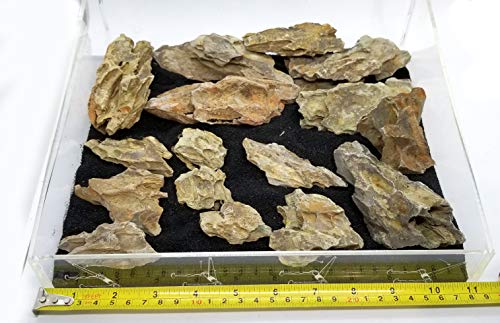
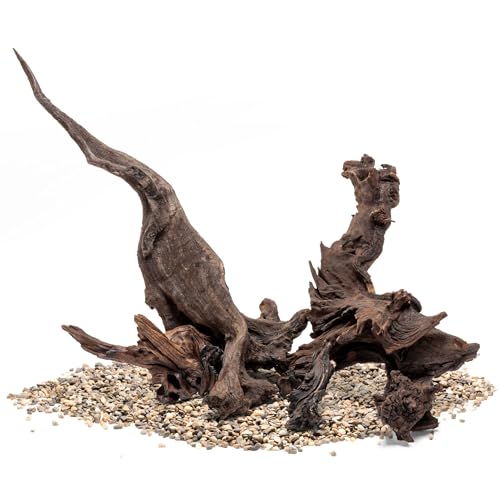
Hardscape (stone and wood) is the skeleton of an aquascape. Plants grow around it, so the material you choose defines the style of the scape. Dragon stone (Ohko stone) is the beginner default: lightweight, pH-neutral, and its natural pits and channels look great with moss attached. Malaysian driftwood adds warmth and releases tannins that gently lower pH, beneficial for most planted tank plants. Buy more hardscape than you think you need. You'll use some pieces and discard others as you find the right composition.
Best starter
Aqualexs
Ohko Dragon Stone Mixed Sizes for Aquarium
$34.99 as of Jun 22, 2026
★★★★★Our rating· In Stock
Dragon stone (Ohko stone) is the beginner default for aquascape hardscape: pH-neutral so it won't alter your water chemistry, lightweight so you can stack without risking glass cracks, and covered in natural cavities that moss and anubias attach to beautifully over time. Most Nature Aquarium and Iwagumi-style scapes start here.
What we like
pH neutral: won't harden water or stress soft-water plants
Natural pits let mosses and ferns anchor and grow over time
Lightweight enough to stack safely without risking tank glass
What to know
Sharp edges; wear gloves when arranging pieces in the tank
Each bag varies in shape and size; composition takes trial and error
Driftwood - Malaysian Drift Wood for Fish Tank, Planted Tank, Terrarium, Paludarium - Small (8-12")
$28.99 as of Jun 22, 2026
★★★★☆Our rating· In Stock
Malaysian driftwood sinks immediately (unlike most wood), releases warm amber tannins that soften water chemistry, and provides natural surfaces for java fern and anubias to root onto. It's the warmth in a planted scape (stone alone reads cold; wood balances it). Pre-soak 24–48 hours to reduce the initial tannin burst.
What we like
Sinks immediately: no boiling or soaking for weeks like spider wood
Tannins naturally soften water and lower pH, beneficial for most plants
What to know
Tints water amber for weeks; use activated carbon if you want clarity
Each piece varies significantly; exact shape and size won't match photos
Active substrates feed plant roots for the first 12–18 months, but the water column still needs nutrients, especially nitrogen, potassium, and iron. A liquid all-in-one fertilizer handles this with one weekly dose. Root tabs supplement heavy root feeders (crypts, swords) that the substrate alone can't support as it depletes. For planting: your fingers work for large plants, but tweezers and scissors are necessary for small foreground plants and regular trimming. A basic tool set is $15 and will outlast five substrate changes.
Best starter
Seachem
Flourish Freshwater Plant Supplement 500ml
$10.52 as of Jun 22, 2026
★★★★★Our rating· In Stock
Seachem Flourish is the most proven all-in-one liquid fertilizer in the hobby. One dose twice a week covers trace elements, nitrogen, and micronutrients that active substrate eventually stops providing. The 500ml bottle lasts 3–6 months for a 15-gallon tank. Start at the recommended dose and cut back if you see algae.
What we like
Covers trace elements and micronutrients in one twice-weekly dose
500ml bottle lasts months: very low ongoing cost per gallon
Thousands of successful planted tanks run on this exact product
What to know
Light on nitrogen and potassium; may need separate supplementation
Bottle goes bad faster once opened; refrigerate for longer shelf life
Root tabs are pressed fertilizer tablets you push into the substrate near heavy root feeders: crypts, swords, and deep-rooting stem plants. Essential once your active substrate depletes (12–18 months) or if you're running Eco-Complete. Push two tabs near the roots of each heavy feeder and replace every 3–4 months.
What we like
Feeds root-hungry plants directly at absorption: more efficient than liquid
Slow-release formula lasts 3–4 months per tab: minimal maintenance
What to know
Too shallow and they cause algae; bury at least 2 inches deep
Individual tabs are fragile when wet; work quickly during planting
Aquarium Aquascape Tools Kit 15in, 4 in 1 Anti-Rust Aquatic Plant Aquascaping Tool Stainless Steel Tweezers Scissor Spatula for Aquarium Tank Clean Fish Tank Aquascape Accessories Set(Silver)
$19.99 as of Jun 22, 2026
★★★★☆Our rating· In Stock
Stainless steel straight tweezers (for planting small foreground plants), curved tweezers (for reaching behind hardscape), spring scissors for trimming, and a spatula for substrate work. Everything you need in one set at one reasonable price. Your hands can't safely reach the far corners of a planted tank; these can.
What we like
Straight + curved tweezers plus scissors: covers all three planting needs
Stainless steel holds up to repeated wet use without corroding quickly
What to know
Pivot joint rusts if left wet; dry thoroughly after every single use
Scissors spring loosens over time, common in budget tool sets
A planted aquascape doesn't look like much in week one. Here's what actually happens, from dry-scaping your hardscape to seeing your first CO2 bubbles on plant leaves.
Most people set up their first planted tank, fill it with water, and then sit in front of it waiting for something to happen. For two weeks, not much does. Then, around week three, something clicks: the plants pearl (tiny oxygen bubbles on leaf tips), the carpet starts to carpet, the fish find their rhythm. You look at it from the couch and realize it worked.
That early gap between setup and satisfaction is where most beginners quit, or panic, or start ripping things up. This guide is about bridging it: knowing what’s happening, what’s normal, and when to intervene versus when to wait.
Before water: the dry-scape
Most aquascapers set up their tank completely dry before adding a single drop of water. This is not a stylistic choice. It’s the only sane way to arrange hardscape; you can lift, rotate, stack, and discard pieces without fighting water resistance or disturbing already-planted substrate.
Here’s what dry-scaping looks like in practice:
Start with the big focal stone. In aquascape design, there’s almost always one dominant piece of hardscape: the largest stone, the most interesting piece of driftwood. Place it off-center (roughly the 1/3 and 2/3 mark across the tank width, not the center). The eye needs asymmetry to find something interesting.
Add secondary stones or wood. They should echo the shape and texture of the focal piece without competing with it. Odd numbers (1, 3, 5 stones) look more natural than even groupings. Angled toward the same direction reads as a cohesive composition.
Photograph it from the front. At eye level, camera flat, same angle you’ll view the tank. This is the photo you’ll refer to when your hands are inside wet substrate. The composition that looked right with your head above it often looks completely different straight on.
Check the spacing. Plants need substrate depth (at least 2–3 inches) to root. Don’t let hardscape eat too much floor space or you’ll have nowhere to plant. And make sure every piece fits through the tank’s opening.
Filling a planted tank is not like filling a fish tank. You’re trying to disturb your freshly arranged substrate and hardscape as little as possible.
Place a small plate or Ziploc bag on top of your substrate and pour water onto it; the bag diffuses the flow so your substrate doesn’t crater. Pour slowly. Expect cloudy water for 12–24 hours from active substrate like Fluval Stratum; this is normal and clears on its own.
Plant everything before the tank fully clouds. The first planting session is the most disorienting one: visibility drops fast, your hand disturbs substrate with every move, and small foreground plants refuse to stay put. Here’s how to handle each type:
Anubias and java fern: Do not plant these. Tie them to hardscape with thin fishing line or plant glue. Their rhizome (the thick horizontal stem) must stay above substrate or it will rot.
Stem plants (bacopa, rotala, ludwigia): Use long tweezers. Push the stem at least an inch into the substrate at a slight angle. They’ll float loose at first; weight the pot end if needed. Plant in groups of 5–7, not single stems scattered everywhere.
Foreground plants (dwarf sagittaria, microsword): Push each individual plantlet into the substrate with tweezers. It will try to float. Keep going. They look terrible for the first two weeks.
Mosses: Spread thinly across hardscape and secure with mesh, fishing line, or tissue. Don’t overload; it grows outward from wherever you attach it.
Don’t add fish yet. The tank needs to cycle; beneficial bacteria need to establish in the filter and substrate before livestock can live safely. If you used Eco-Complete (pre-loaded with bacteria) you may have a shorter wait; if you used ADA Amazonia, expect 2–4 weeks of ammonia leaching before the tank is fish-safe.
Run your light for 6 hours a day. Not more. The most common beginner mistake is running the light too long in week one, before the plants have established enough to consume the nutrients that would otherwise feed algae.
By the end of week one, your plants look worse than when you put them in. This is expected and terrifying in equal measure.
Most aquatic plants “melt” when moved from their emersed (above-water) nursery form to submerged life. The leaves that were growing in humid air are a different plant from the leaves that will grow underwater; they dissolve, get reabsorbed, and are replaced by aquatic-form leaves. Anubias melts are subtle; stem plant melts can look like you’ve killed everything. You haven’t. Remove melted leaves with scissors so they don’t rot, but leave the stems and roots alone.
CO2 week. If you’re adding CO2, week two is when to dial it in. Start at 1 bubble per second from your diffuser. Over the following week, increase to 2–3 BPS while watching for signs of overdose: fish gasping at the surface or congregating near the water surface means too much CO2. Aim for a pH drop of 0.5–1.0 units over the CO2-on period. A drop needle (CO2 indicator) gives you a visual reading: yellow means too much, green is perfect, blue means none.
The algae arrives. Week two or three, you’ll see algae. Almost certainly green spot algae (small hard dots on glass and slow-growing leaves), possibly green dust algae on the glass, maybe some staghorn on the outflow. This is normal. It means your tank is cycling. Don’t panic. Don’t add algae killers. Do:
Scrape glass algae with a credit card or algae scraper
Remove heavily-algaed leaves from affected plants with scissors
Shorten your light schedule by 30 minutes if the bloom is significant
Add some fast-growing stem plants if you haven’t; they outcompete algae for nutrients
The algae crisis almost always resolves by week four as plants establish and start outcompeting it.
Month one: the scape starts breathing
Around week four, things shift. Plants that melted grow back in their aquatic form: denser, more compact, often brighter. Stem plants that looked limp start standing up. If you planted a foreground grass, individual plantlets have sent runners and you can see the carpet starting to spread.
This is when aquascaping gets addictive. You start noticing details: the angle light hits a particular stone, where the java moss has started to creep, the way CO2 pearling makes a stem plant look like it’s covered in tiny crystals. The tank is alive in a way that a simple fish tank never quite is.
A few things to start doing at week four:
Trim stem plants. When background stems reach the surface, trim them 1–2 inches below where you want the final height. Replant the cuttings in front of the parent. Within 2 weeks both stem and cutting will have sent side shoots; this is how you fill in the background.
Dose fertilizer. Twice a week with Seachem Flourish or your liquid fert of choice. Watch for yellowing (nitrogen deficiency) or holes in leaves (potassium deficiency) and adjust.
Consider adding a cleanup crew. Nerite snails eat algae off glass and leaves without disturbing plants. Amano shrimp graze thread algae. Both are easier on the ecosystem than fish at this stage.
Plants aren’t growing / turning yellow: The most common causes in order: not enough light, not enough CO2 (if injecting), not enough fertilizer (nitrogen first, then iron). Test one variable at a time.
Green hair algae outbreak: Too much light, not enough CO2, or a recent disturbance (replanting, water change that added excess nutrients). Shorten light to 5 hours. Add fast-growing stem plants as nutrient sponges. Manual removal with a toothbrush works on small patches.
Brown fuzzy algae (staghorn): Low CO2 is the culprit. Raise your CO2 injection rate. Spot-treat with liquid Excel using a syringe; squirt directly on the affected area with the filter off.
Foreground carpet refuses to spread: Probably insufficient light at the substrate level or not enough CO2. Carpeting plants like dwarf hair grass need the highest PAR in the tank. Try raising the light slightly or adding a CO2 boost.
Save your money
What you don't need yet
Beginners get pressured to buy a lot of stuff that doesn't help them play
better. Here's what we'd skip on day one.
ADA equipment — Aqua Design Amano makes the best substrate, fertilizers, and tools, and charges premium prices for all of them. Start with Fluval and Seachem. Upgrade to ADA when you know you're committed.
A CO2 controller and pH probe — An automatic solenoid timer is enough for 95% of planted tanks. A pH controller adds precision but also adds a failure point. Learn manually first; add automation once you understand the chemistry.
An auto top-off system — Evaporation in a 10–15 gallon tank means topping off a cup of water once or twice a week. An ATO adds complexity for a problem that takes 30 seconds to solve by hand.
More than one tank — Multiple tanks is a common hobby progression and a common hobby trap. Master one scape before starting a second; the lessons transfer directly and you'll make fewer expensive mistakes.
First week
Your first seven days
A short, real plan to get from gear-on-doorstep to actually playing.
Plan your scape on paper before buying anything. Decide style (Iwagumi, Nature Aquarium, jungle?) and rough plant zones: foreground carpet, midground structure, background height. Sketch it even badly. The constraint makes better designs. · Action
Visit a local fish store to handle hardscape in person. The piece you want must fit your tank opening and feel right in your composition. Bring tank dimensions on your phone. · Action
Order your substrate; it takes the longest to settle and must go in first. · Buy
Dry-scape before adding water. Arrange hardscape in the empty dry tank until the composition feels right. Photograph it. You'll want that reference when your hands are in wet substrate. · Action
Order plants last; they ship live and need to go in fast. Order from a reputable aquatic plant seller or your local fish store; check for snails and algae on arrival. · Action
No, but it depends on which plants you want. Low-demand plants (anubias, java fern, bucephalandra, mosses) grow well without CO2. High-demand plants (most stem plants, carpeting plants like dwarf hair grass or HC Cuba) need CO2 injection to grow properly and not melt. Start without CO2 if you're new to planted tanks, then add injection after you understand your light schedule.
How much does a starter aquascape cost?
A lean no-CO2 setup: a 10-gallon tank, budget light, Eco-Complete substrate, and easy low-light plants, runs about $150. A proper mid-range setup with a rimless tank, active substrate, CO2 injection, and quality LED runs $400–650. ADA products, pressurized CO2, and premium plants push past $1,000.
What plants should I start with?
Low-demand plants that don't require CO2: anubias (tie to hardscape, don't bury the rhizome), java fern (same principle: tie it, never plant it), bucephalandra, and java moss. For easy foreground without carpet complexity, try dwarf sagittaria. Once comfortable, add easy stem plants like bacopa or rotala for background height.
How do I prevent algae in a planted tank?
The trinity: right light duration (6–8 hours to start), balanced CO2 (if injecting), and enough plants to out-compete algae from day one. The most common mistake is running too much light too early. Start at 50% intensity for 6 hours, then slowly increase after 4 weeks. Fast-growing stem plants in the background soak up excess nutrients that would otherwise feed algae.
Do I need fish in a planted aquascape?
No. Many aquascapers run 'dry start' setups with just humid air for the first weeks, to establish carpeting plants before flooding. You can also run a completed scape with only shrimp; they graze algae and add life without producing much waste. Fish are optional decoration, not requirements.
The 2Hr Aquarist — The most scientifically rigorous planted tank resource available. APT fertilizer creator. Every article cites research; every recommendation is tested. Start with their CO2 and fertilizer guides.
MD Fish Tanks (YouTube) — Accessible aquascape tutorials from beginner to advanced. Best channel for step-by-step scape builds that show real process and real mistakes.
Green Aqua (YouTube) — World-class Hungarian aquascape shop. Full scape builds by IAPLC-level aquascapers. Aspirational but technically instructive for any level.
Aquarium Co-Op (YouTube) — Practical planted tank and fish keeping advice. Cory's beginner videos on plant care, fertilization, and CO2 are clear, no-nonsense, and widely trusted.
r/PlantedTank — Active community with a strong wiki: beginner FAQs, fertilizer calculators, plant ID help. Good for identifying what's wrong with your plants or scape.
As an Amazon Associate, JustBeginning earns from qualifying purchases.
We may also earn commission from other affiliate programs linked on this
page. Editorial recommendations are independent; we don't choose
products based on commission rates.
Product prices and availability are accurate as of the date and time
indicated and are subject to change. Any price and availability
information shown on Amazon at the time of purchase will apply.
Our top pickFluval Plant and Shrimp Stratum, 4.4 lb