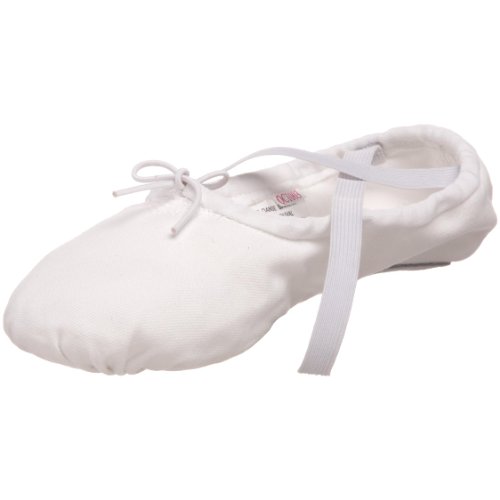
Ballet for adults is having a genuine moment, studios report record enrollment, and the gear questions are real: canvas or leather, full-sole or split-sole, do you need a home barre? This guide cuts through the noise. Here's exactly what to buy for your first semester of adult ballet, and just as importantly, what you can safely skip.
By Colin B. · Published May 24, 2026 · Last reviewed June 22, 2026
Ballet is one of the cheaper performing arts to start. Shoes ($30–60), a basic leotard and tights ($40–60), and leg warmers ($15) gets you through the first semester. A home barre is optional but useful, budget another $80–120 if you want one.
We earn commission on qualifying Amazon purchases — see our
affiliate disclosure.
Price tiers and budget totals shown above are editorial estimates;
actual Amazon prices vary.
At a glance
Our top pick in each category
The fastest path through this guide — each best-starter pick by category.
Scroll for the budget and upgrade alternatives.
Vita VibeVita Vibe - USA Made - Prodigy Series Ash Wood Ballet Barre - Portable Double Bar with Carry Bag - Freestanding Stretch/Dance Bar - 4 FT - 5 FT
Don't buy pointe shoes. If you're a brand-new adult beginner, pointe is at minimum a year away, probably more. No reputable teacher will put you on pointe before your feet and ankles are strong enough to support it safely. Buy soft flats and focus on everything else.
Call the studio before ordering dancewear. Dress codes vary: some require black leotard and pink tights, some just want athletic wear, some are fully open. Five minutes on the phone saves you returning a perfectly good leotard.
Ballet shoes need to fit differently than street shoes. They should be snug, almost tight, with very little room at the toe. The common mistake is buying them like athletic shoes and having them swim. Size down 1.5 to 2 full sizes from your street shoe size, then check the brand's specific sizing chart.
The gear
What you actually need
Ballet Shoes
Your shoe choice is the most consequential gear decision in adult ballet. For beginners, the main question is full-sole vs. split-sole, not canvas vs. leather. Full-sole gives floor feedback that corrects poor arch habits and forces your intrinsic foot muscles to work; that's why teachers recommend it for the first six months. Canvas breaks in instantly with zero stiffness; leather (like the Bloch Dansoft) is more durable and the classic teacher recommendation, but takes a class or two to soften. Split-sole bypasses the arch feedback loop, save it for when your teacher says your footwork is solid.
Ballet Shoes — what's the difference?
A few common shapes, each making a different trade.
Full-Sole Leather
Classic teacher recommendation, durable, snug fit, softens in 1–2 classes.
Sole
Continuous
Material
Leather
Break-in
1–2 classes
Best for Adult beginners, anyone building arch strength, first 6 months
Durable, professional feel, needs breaking in and regular conditioning.
Sole
Split
Material
Leather
Break-in
~2 weeks
Best for Committed students who want longer-lasting footwear
Tradeoff Requires breaking in; needs moisture to stay supple
Best starter
Bloch
Women's Dansoft Full Sole Leather Ballet Slipper/Shoe
$$
★★★★★Our rating
The Dansoft is the shoe most adult beginner teachers name by brand. Leather breaks in after one or two classes, not painful, just firm at first, and then lasts far longer than canvas. The full sole gives floor feedback that corrects poor arch habits, and the elastic and drawstring fit like a second skin. Bloch is a respected professional dance brand, not a knockoff, at a fair price.
What we like
Durable leather outlasts canvas, often lasting a year or more of regular classes
Full sole forces foot muscles to work, building correct arch habit
Bloch is a trusted professional dance brand at a fair price
What to know
Leather needs a class or two to soften, slightly firm out of the box
Must size down significantly from street shoe size
unisex-adult Pro 1 Canvas Ballet Slipper, Flesh, 12 W
$9.16 as of Jun 22, 2026
★★★★☆Our rating
Sansha has been making professional dance shoes since 1982 and the Pro 1 is their evergreen beginner flat. Same full-sole canvas construction as the Bloch Dansoft, typically $5–10 less. The right choice if you're testing whether ballet will stick before committing to a pricier option.
What we like
Professional dance brand at an entry price, not a fashion knockoff
Full-sole canvas, same beginner-appropriate construction as Bloch
What to know
Less size-consistent than Bloch, check reviews for your specific size
Split-sole canvas is the standard shoe for intermediate and advanced recreational dancers. The Hanami is Capezio's most popular option: lightweight, comfortable from the first wear, and better at showing off arch point than full-sole. Move here after six months once your teacher confirms your footwork is solid and you want more visible foot articulation.
What we like
Split sole gives more visible arch point than full-sole canvas
Most popular split-sole flat among recreational adult dancers
Lightweight and comfortable from the first class
What to know
Not ideal as a first shoe, wait until your footwork is teacher-approved
Most adult beginner studios want a leotard and pink tights, the dress code exists because teachers need to see your alignment and hip position, not because ballet is fussy about fashion. A simple dark leotard and ballet-pink convertible tights is the universal first outfit. Convertible tights (an opening in the foot) let you roll them down for foot exercises and let teachers see your ankle position clearly. Some studios accept athletic wear, so a quick call before your first class is worth it, but a leotard always passes.
Best starter
Capezio
Women's Classic Short Sleeve Leotard
$$
★★★★★Our rating
Simple, flattering, and correct at every studio from recreational to pre-professional. The short sleeve is the most universally accepted cut, some studios restrict sleeveless, none restrict short sleeve. Capezio is a professional dance brand, so it reads right in class. Black or navy are the most practical first colors. This is the plain white shirt of ballet dancewear.
What we like
Short sleeve is the universally accepted cut at every studio level
Professional dance brand that reads correctly in a ballet class
Fits true to size with reliable quality across colors
What to know
No built-in padding, wear a bra underneath if needed
Eurotard's pinch-front camisole is a flattering, no-fuss first leotard and consistently affordable. The gathered front is forgiving across body types, the straps stay put through barre, and the fabric holds its shape through regular washing. A smart starting point while you are still deciding how committed you will be to class.
What we like
Pinch front is flattering across a wide range of body types
Holds shape through regular washing at an affordable price
What to know
Color availability varies, check stock for your preferred color
Lighter fabric than Capezio, a less structured feel in class
Most studios require pink tights, and convertible tights (an opening in the foot) are the adult standard. The opening lets you roll them down for foot work and lets teachers see your ankle position. Capezio's ultra soft version has a comfortable waistband, doesn't pill quickly, and holds shape better than budget tights. Get two pairs so one can dry between classes.
What we like
Convertible foot lets teachers see your ankle and rolls for foot work
Capezio fabric resists pilling better than budget tights
Comfortable waistband stays put through grand battement
What to know
Ballet pink varies between brands, commit to one brand for matching
Cold muscles and ballet don't mix. Most adults come to class stiff, especially in the hips, calves, and lower back, and the first 20 minutes of barre are when injury risk is highest. Leg warmers are nearly universal in adult classes for this reason. A ballet wrap skirt is optional but practical: it adds hip coverage that helps self-conscious beginners focus on the movement, makes turnout easier to see in the mirror, and provides warmth through the hips during barre. Both pack flat and cost less than dinner.
Best starter
Capezio
36-inch Legwarmers
$
★★★★★Our rating
Leg warmers keep your calves and Achilles warm through the first half of barre, when injury risk is highest. Capezio's 36-inch knit is thick enough to be genuinely useful, thin enough to wear comfortably over tights, and long enough to cover ankle to knee. They look correct in class and do not look like repurposed ski gear.
What we like
Keeps calves and Achilles warm through the highest-risk part of barre
Thin enough to wear over tights without bunching at the ankle
What to know
One size, can be snug on larger calves
Not warm enough for very cold studios in deep winter
Optional but widely worn. A wrap skirt adds hip coverage that helps self-conscious beginners focus on the movement rather than the mirror, makes hip alignment easier to self-correct, and adds warmth through the hips during barre. Capezio's georgette version is lightweight, packs flat in your bag, and ties in a knot that stays put through class.
What we like
Helps self-conscious beginners focus on movement, not the mirror
Lightweight georgette packs flat in your dance bag
What to know
Shorter versions give minimal coverage, check length before buying
Purely optional, your teacher will not mind if you skip it
A home barre is genuinely useful if you plan to practice more than once a week outside of class, and the students who improve fastest are almost always the ones doing 20 minutes of barre exercises between sessions. A freestanding portable barre is the right call for most adults: no installation, no wall damage, adjustable height, and moves wherever you need it. Wall-mounted barres are more stable and closer to a professional studio feel, but require drilling into studs and committing to a permanent space.
Best starter
Vita Vibe
USA Made - Prodigy Series Ash Wood Ballet Barre - Portable Double Bar with Carry Bag - Freestanding Stretch/Dance Bar - 4 FT - 5 FT
$169.95 as of Jun 22, 2026
★★★★★Our rating· In Stock
Vita Vibe makes the most popular freestanding home barre for good reason: height adjustable, no wall required, breaks down for storage, and stable enough for genuine barre work including grand pliés. The single-bar version is all most adults need. Assembly takes 15 minutes and the bar height adjusts without tools. When your teacher recommends a home barre, this is what they picture.
What we like
No wall required, move it to any room or fold for storage
Height adjusts without tools, works for any adult height
Stable enough for grand pliés and extensions without tipping
What to know
Wobbles on thick carpet without felt pads under the feet
Barre Wall-Mounted Single Ballet Barre, Classic WB15, 4 Ft Bar, Wood | Fixed Height, Made in USA
$$
★★★★☆Our rating
If you've committed to daily home practice and have a room to dedicate, wall-mounted gives you more stability than any freestanding option. A wooden barre feels like a professional studio barre, takes zero floor space, and won't shift mid-combination. The tradeoff is real: you need studs, a drill, and a permanent installation. Only buy this when you're sure you're staying.
What we like
More stable than any freestanding option, doesn't shift mid-combination
Takes zero floor space in a dedicated practice room
What to know
Permanent installation into studs, not portable and not for renters
Wrong choice for anyone still undecided about home practice space
Two tools speed up adult ballet development more than anything else: a resistance band for foot strengthening and articulation, and a stretching strap for extension work. Foot strength and ankle flexibility are the rate-limiting factors for adults who didn't train as children, the ability to point strongly and flex fully is built through specific exercise, not just class repetition. Ten minutes of band work daily produces visible improvement in six weeks. A multi-loop stretch strap lets you safely deepen extension work after class when your muscles are warm.
Best starter
TheraBand
Professional Resistance Band (Yellow / Light)
$
★★★★★Our rating
Therabands are a genuine ballet studio staple, many adult beginner teachers hand them out and assign daily foot exercises. Light resistance is correct for the ankle articulation work used in ballet; medium and heavy are too stiff for precise foot movement. The yellow TheraBand is the industry standard. Ten minutes daily for six weeks produces visible results.
What we like
Ballet studio staple, teachers assign these for daily foot exercises
Light resistance is the correct level for precise ankle articulation
Inexpensive and long-lasting, one roll lasts a year of daily use
What to know
Latex, not for latex allergies (TheraBand makes a latex-free version)
No handles, exercises are done seated with the foot
Extension, the height of your développé, arabesque, and grand battement, depends on both strength and flexibility. A multi-loop stretch strap lets you progressively deepen hamstring, hip flexor, and outer hip stretches safely without a partner. The multiple loops let you hold positions at different depths. Use it after class on warm muscles only.
What we like
Multi-loop design lets you progress gradually without overstretching
Supports hamstring, hip flexor, and outer hip work in one tool
What to know
Only effective post-class on warm muscles, not a pre-class tool
Flexibility gains are slow, requires consistent daily use
Most adults arrive at their first ballet class expecting to feel graceful and leave feeling awkward. That's completely normal. Here's what actually happens in month one — the frustrations, the small wins, and when it starts to feel like dancing.
Adult ballet classes have tripled their enrollment at most studios in the past five years. The teachers are used to you. The other students are in the same boat. The awkward first month has a predictable shape — and knowing what’s coming makes it a lot easier to get through.
This is what your first month of adult ballet actually looks like, week by week.
Week 1: Everything is a word you don’t know
The vocabulary is the first wall. Plié, tendu, dégagé, relevé, port de bras — these are French terms your teacher will say with the assumption that the words will eventually make sense in context. They will. But on day one you’ll spend half the class looking sideways to figure out which foot everyone is moving.
Don’t try to learn the terminology before class. It’s tempting but counterproductive — ballet vocabulary only lands in context, not in a glossary. Instead, show up early, tell the teacher you’re new, and ask them to point to a student near you who can serve as a visual reference during combinations.
The barre is your best friend in week one. It’s there for balance support, and using it is not cheating — it’s the entire point. Adult beginner classes spend the first 20–30 minutes at the barre for this reason. The barre combinations — plié, tendu, dégagé, rond de jambe — repeat with variations for weeks. By week three, they’ll feel almost automatic.
Your feet will tire first. The intrinsic foot muscles used in ballet — the ones that articulate each toe separately and control your arch — are almost certainly underdeveloped from a lifetime of shoes. Expect soreness across the ball of the foot and in the arch after your first two or three classes. This is normal and resolves as the muscles develop.
By the second week, you’ll notice that some things feel natural and others feel impossible. Most adults have:
Good stability from everyday life — core and leg strength translate surprisingly well
Poor ankle articulation — the full point-and-flex range that ballet requires is genuinely underdeveloped in most non-dancers
Tight hips — especially the external rotators that turnout demands
Overthinking everything — the coordination of arms (port de bras) while moving your feet while staying on tempo is genuinely a lot
Turnout is the one thing most new adult students obsess over and shouldn’t. Turnout comes from the hip, not the foot. Rotating your feet outward beyond what your hip allows just torques your knees and lower back. The correct amount of turnout for your first month is exactly what happens when you gently rotate your hips — often less than 90 degrees total. It increases gradually as hip flexibility improves.
Focus instead on the things you can control: your posture (stand tall, shoulders down and back, weight over the balls of your feet), your timing (count out loud if the teacher allows it), and your arms (soft elbows, fingers gently curved, nothing tense).
Something shifts around week three. You’ll recognize the structure of a barre combination before the teacher finishes explaining it. You’ll have muscle memory for plié and tendu. You’ll remember which direction to turn for the left side.
This is when ballet starts to feel like a practice rather than an emergency.
Centre work is where adult beginners feel most exposed. Centre exercises happen away from the barre — no stability support — and typically involve traveling across the floor in small groups. It’s terrifying for about four classes, then it’s just hard. The key: keep moving, don’t freeze when you mess up, and stay on the tempo.
A few things that start to click in weeks 3–4:
Transitions — the steps between the named steps, which no one explains because experienced dancers do them automatically. Watch the person in front of you in centre.
Musicality — the way movement lands on musical phrasing, not just individual beats. This comes naturally once you stop thinking about what your feet are doing.
The difference between effort and tension — ballet requires real physical effort but zero muscular gripping. Tight shoulders, clenched jaw, and squeezed glutes are the three most common forms of counterproductive tension in adult beginners.
What you’ll fail at — and that’s the point
Every adult beginner fails at the same handful of things. You will too. None of them are permanent:
Balancing in relevé. Rising onto the balls of your feet and staying there requires ankle strength and proprioception that develop over months, not weeks. You’ll wobble. So does everyone else on their first dozen attempts.
Pirouettes. Don’t worry about these until your teacher introduces them formally. A single-rotation pirouette that looks easy requires preparation, balance, spotting, and timing all happening at once. Most teachers wait until students have a solid barre foundation before introducing turns.
Pointed feet. Pointing your foot strongly — the kind of point you see in ballet photos — requires foot strength and arch flexibility that adults build through specific exercise (this is what therabands are for), not just wishing. Soft points become strong points over months of daily work.
Tracking everything at once. The coordination of feet, arms, head, direction, and timing is genuinely difficult. Beginners typically master one element and let another fall apart. This is normal. Teachers expect it and work around it.
What to do outside of class
The students who improve fastest between sessions all do the same things:
Daily foot exercises with a theraband. Ten minutes, every day. Seated on a chair or the floor, loop the band around your foot and practice slow, full pointing and flexing, followed by working through the foot (heel → ball → toes in succession). The foot strength this builds is the primary thing separating adult beginners from people who trained as children.
Stretching after any warm-up. Hip flexors and hamstrings are the two bottlenecks for most adult ballet students. Gentle, consistent stretching after your body is warm (post-class, post-walk) moves the needle. Forced cold stretching before class causes injury.
Watch ballet. Paris Opera Ballet and American Ballet Theatre both post full-length productions and rehearsal footage online. Watching professionals perform the vocabulary you’re learning in class speeds up your body’s pattern recognition dramatically. It doesn’t feel like studying, but it is.
Save your money
What you don't need yet
Beginners get pressured to buy a lot of stuff that doesn't help them play
better. Here's what we'd skip on day one.
Pointe shoes — Not until your teacher says you're ready, typically 1–2+ years of consistent training. Going on pointe before your feet are strong enough risks serious injury.
A full mirror wall — Useful eventually, but a phone propped against the wall does the same job for now. Install mirrors when you know you're staying.
Studio-store dancewear — Dance studio boutiques mark up 30–50% over the same Capezio or Bloch items available directly. Learn your sizing before shopping in-person.
Multiple leotards and tights — One leotard and two pairs of tights gets you through six months. Add variety once you know you're committed.
A dedicated sound system for home practice — A phone speaker handles 20 minutes of barre. The elaborate Bluetooth setup can wait until you're building a real home studio.
First week
Your first seven days
A short, real plan to get from gear-on-doorstep to actually playing.
Find an adult beginner class near you and register. · Action
Arrive 10 minutes early on your first day and tell the teacher it's your first class, they'll place you at the barre where you can follow a more experienced dancer. · Action
Start 10 minutes of daily theraband foot exercises at home after your first class. The foot strength gap between adults and childhood-trained dancers is real, and this is the fastest way to close it. · Buy
No. The realistic goal for adult beginners isn't a professional career, it's technique, strength, musicality, and genuine enjoyment of a beautiful art form. All of that is achievable regardless of when you start. Studios that teach adult classes see students in their 30s, 40s, 50s, and beyond making real progress every week.
Will I need pointe shoes?
Not as a beginner, and probably not for a long time. Pointe work requires years of specific strength development in the feet, ankles, and core. Most recreational adult ballet students dance in soft flats indefinitely and love it. Pointe is a separate path that your teacher will bring up only if you're a good candidate.
What should I wear to my first adult ballet class?
Call the studio first, dress codes vary widely. The safest universal answer is a plain dark leotard, ballet-pink convertible tights, and canvas ballet shoes. If the studio is casual, you can always fall back to form-fitting athletic wear. Avoid loose shorts or baggy clothes, teachers need to see your leg and hip alignment.
Do I need a home barre to improve?
Not required, but it makes a significant difference. The students who improve fastest typically practice 15–20 minutes at a home barre between classes. A stable chair back works as a temporary barre, but a proper adjustable barre lets you do a full warm-up safely and correctly.
How long until I see real progress in adult ballet?
Most adults notice improved posture and body awareness within four to six weeks. Technique, turnout, plié depth, port de bras, takes longer and is non-linear. Students who progress fastest attend at least once a week and do some foot work or stretching at home between sessions.
Canvas or leather ballet shoes for beginners?
Canvas, specifically full-sole canvas. It breaks in immediately, gives your foot the floor feedback needed to build correct arch habits, and requires no break-in period. Leather split-sole is where intermediate dancers often land after 6–12 months, your teacher will tell you when you're ready.
Royal Academy of Dance — International ballet teaching authority. Their adult ballet pages explain the graded syllabus and what to expect at different levels.
Kathryn Morgan (YouTube) — Former NYCB principal dancer with an exceptionally adult-friendly teaching approach. Her beginner series is the best free resource for new adult students.
Lazy Dancer Tips (YouTube) — Chiara Canzian's channel, practical technique videos with a patient teaching style. Her adult beginner playlists are designed for non-childhood-trained dancers.
r/adultballerinas — Active, supportive community for adult ballet students. Good for studio recommendations, gear questions, and 'is this normal?' checks when you plateau.
American Ballet Theatre (ABT) — ABT's educational resources include a comprehensive ballet dictionary, useful for understanding terminology your teacher uses in class.
As an Amazon Associate, JustBeginning earns from qualifying purchases.
We may also earn commission from other affiliate programs linked on this
page. Editorial recommendations are independent; we don't choose
products based on commission rates.
Product prices and availability are accurate as of the date and time
indicated and are subject to change. Any price and availability
information shown on Amazon at the time of purchase will apply.
Our top pickBloch Women's Dansoft Full Sole Leather Ballet Slipper/Shoe