BJJ has a reputation for being complicated to start: gi or no-gi, which brand, what size? It's simpler than it looks once someone breaks it down. Here's what to buy for your first month on the mat, and what you can safely ignore until you know you love it.
By Colin B. · Published May 23, 2026 · Last reviewed June 3, 2026
A starter gi, a rashguard, and a mouthguard is all you need for month one. Expect $100–175 to be properly equipped.
We earn commission on qualifying Amazon purchases — see our
affiliate disclosure.
Price tiers and budget totals shown above are editorial estimates;
actual Amazon prices vary.
At a glance
Our top pick in each category
The fastest path through this guide — each best-starter pick by category.
Scroll for the budget and upgrade alternatives.
Try a free class first. Almost every BJJ academy offers a trial, and most will loan you a gi or let you train in shorts and a t-shirt. Go once before you spend anything.
Gi or no-gi? Gi training (jacket and pants) is what most academies emphasize for beginners: it teaches grips, leverage, and control that transfer to no-gi. No-gi is faster-paced and more wrestling-influenced. If you're not sure, start with gi. It's the better foundation and opens more academies if you travel.
White belt means white gi at most academies. It's not a universal rule, but it's the default signal that you're new. Don't show up in a black gi on day one.
The gear
What you actually need
Gi
Your gi is the most-discussed gear choice in BJJ, and beginners reliably overthink it. What matters: it fits correctly (jacket should reach your wrists, pants shouldn't drag), it's cut to BJJ proportions (not a karate gi, which fits entirely differently), and it's from a brand that knows the sport. The weave weight (single, double, pearl) affects warmth and durability but not how fast you learn.
Gi — what's the difference?
A few common shapes, each making a different trade.
Single Weave
Lightest and most breathable. The competition-legal entry point.
Weight
350–450 gsm
Feel
Soft, light
Durability
Moderate
Best for Hot gyms, summer training, warm-climate beginners
Tradeoff Wears out faster with daily grinding
Pearl Weave
The modern default. Balances durability, weight, and breathability.
Weight
450–550 gsm
Feel
Slightly textured, structured
Durability
Good
Best for Most beginners, the right pick for most gyms and climates
Heaviest and most durable. Old-school, built to last.
Weight
650–700 gsm
Feel
Dense, stiff until broken in
Durability
Very high
Best for Cold gyms, hard daily trainers who want gear that outlasts them
Tradeoff Heavy and warm, brutal in summer
Best starter
Sanabul
Essential Jiu Jitsu Gi
$$
★★★★★Our rating
Sanabul's Essential has become the default beginner recommendation for good reason: cut to real BJJ proportions, minimal shrinkage after washing, and under $60. The pearl weave is light enough for summer and durable enough to last a year of regular training. It doesn't have the prestige of Kingz or Tatami, but it won't embarrass you and won't fall apart.
What we like
Under $60 and cut to real BJJ proportions out of the box
Pearl weave holds up to weekly washing without shrinking
A0–A5 sizing plus F-cut variants for shorter frames
What to know
Runs slightly long in the torso; measure before ordering
★★★★☆Our rating· Only 12 left in stock - order soon.
Fuji has been making gis for American BJJ since the early 2000s and every academy has students wearing one. The All Around is heavier (double weave) than the Sanabul, which makes it more durable but warmer. Good choice if your gym runs cold or you prefer a sturdier feel.
What we like
Double weave durability outlasts most starter gis
Academy staple since the early 2000s; instructors recognize the brand
What to know
Heavier and warmer than pearl weave, rough in hot gyms
Stiff out of the box; takes longer to break in than lighter weaves
Hayabusa makes the best-fitting gi in the sub-$150 range. The Goorudo's gold weave hits the sweet spot of durability and weight, light enough to stay cool and tight enough weave to resist grip. When you're training four times a week and want something that fits and lasts, this is where most serious beginners land.
What we like
Gold weave balances durability and breathability better than single or double weave
Best fit precision in the sub-$150 range, jacket and pants both proportioned well
What to know
Sizing runs precise; measure against the chart or risk a return
Wrong choice if you're still deciding whether BJJ sticks
For no-gi classes (and for wearing under your gi), you need two things: a rashguard and grappling shorts or spats. The rashguard prevents mat burn and is required at most academies. Grappling shorts have no pockets, no zippers, no buttons, nothing that catches fingers or scratches partners. Board shorts are not grappling shorts. Gym shorts with a drawstring knot are not grappling shorts.
Best starter
Hayabusa
Pro Ranked Short Sleeve BJJ Rash Guard
$74.99 as of Jun 22, 2026
★★★★★Our rating
The fit is the reason: it compresses correctly without cutting circulation, and it doesn't ride up during a roll. The flatlock stitching holds up to years of use. Available in belt-rank colors if you want to represent, or plain black if you don't.
What we like
Compression holds without cutting circulation even through a full roll
Flatlock stitching survives years of training and repeated washing
What to know
More expensive than no-brand rashguards at similar weight
Belt-rank color options mean plain black requires deliberate selection
Under $30, compresses correctly, doesn't bunch under a gi, and survives the wash cycle. The right answer when you're not sure which length or style you prefer and want to start without overspending.
What we like
Under $30 and compression-fit enough to wear under a gi without bunching
Good way to test sleeve length preference before committing to a pricier guard
What to know
Stitching less durable than flatlock construction; seams may weaken after heavy use
Clean cut, no pockets, velcro waist closure: everything grappling shorts need and nothing else. The 4-way stretch panels let you move freely on takedowns and guard work. A good pair lasts years; these are worth the $35.
What we like
4-way stretch panels allow full range of motion on takedowns and guard work
Velcro waist closure eliminates the drawstring-in-clinch problem
What to know
Looser fit than spats; some prefer compression for guard-heavy training
BJJ is mostly ground fighting, so teeth-to-knee contact is rare but not zero. A mouthguard is the one piece of protection you should buy before your first live roll, no exceptions. Ear guards (to prevent cauliflower ear, which is permanent deformation of the outer ear cartilage) are optional in month one but worth knowing about. Wrestlers learn this lesson early; BJJ players sometimes learn it too late.
Best starter
Shock Doctor
Gel Max Mouthguard
$
★★★★★Our rating
The Gel Max is the combat-sports standard: the gel liner molds to your teeth in hot water, stays in without clenching, and doesn't impede breathing. Under $20 and the single most important protective purchase you'll make. Buy it before your second class.
What we like
Gel liner molds precisely in hot water and stays put without clenching
Under $20, no reason to delay buying before your first roll
What to know
Bulkier than thin mouthguards; harder to talk clearly between rounds
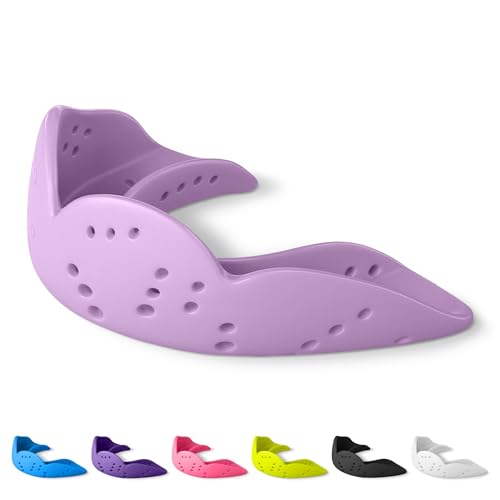
Aero Medium Mouthguard, Lucky Lavender - 1.6mm Thin - Custom-Molded Fit - Slim Design - Remoldable Up to 20 Times - for Team Sports - Non Toxic
$19.99 as of Jun 22, 2026
★★★★☆Our rating· In Stock
At 1.6mm, the SISU is the thinnest mouthguard that still protects. You can talk, breathe, and drink water without removing it, which you cannot do with a standard boil-and-bite. Worth the upgrade once you're training more than twice a week.
What we like
1.6mm profile lets you talk, breathe, and drink without removing it
Still protective at this gauge; thin doesn't mean less coverage
What to know
Overkill for casual beginners in their first month
Precise fit process; instructions matter more than with standard boil-and-bite
F5 Tornado Wrestling Headgear - Black/Columbia Blue
$$
★★★★☆Our rating
Cauliflower ear is permanent: the cartilage fills with blood, hardens, and stays that way. Wrestling headgear prevents it. Cliff Keen's Tornado is the lightest option and what most BJJ athletes who wear headgear choose. You don't need it day one, but act fast if your ears start feeling sore after drilling.
What we like
Lightest wrestling headgear available; barely noticeable during a roll
Prevents cauliflower ear, which is permanent once it sets
What to know
Some academies discourage it in sparring; check with your instructor first
Doesn't eliminate all cauliflower risk; fit and timing still matter
You need something large enough to fit a wet gi without forcing it. A gi is surprisingly bulky when damp, and it smells, so keeping it in a separate gym bag means your work laptop doesn't share the experience. Look for a vented compartment or a mesh panel that lets the gi breathe in transit.
Best starter
Venum
Trainer Lite Evo Sports Bag
$$
★★★★★Our rating
Large main compartment fits a wet gi without drama, dual zip pockets keep your mouthguard from disappearing, and the build quality holds up to daily abuse. Popular at academies because the size is right, big enough to matter, not so big it's a burden.
What we like
Main compartment fits a wet gi plus shoes and gear without forcing it
Dual zip pockets keep mouthguard and small items from getting lost
What to know
No dedicated wet/dry separation; wet gi and dry clothes share the main space
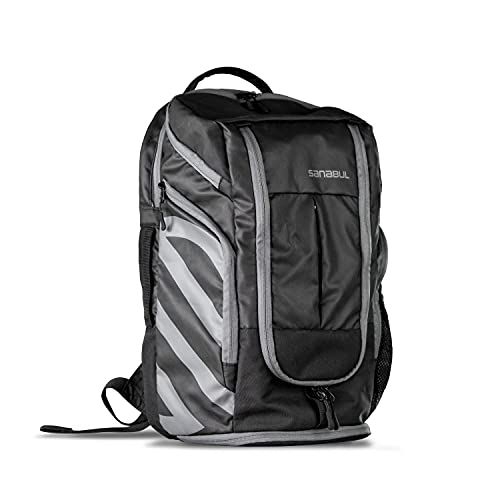
If you commute or bike to the gym, a backpack is more practical than a duffel. Sanabul's holds a full gi plus no-gi gear, and the ventilated shoe compartment at the bottom keeps your flip flops away from everything else.
What we like
Ventilated bottom compartment keeps flip flops separate from gear
Fits a full gi plus no-gi gear in a commuter-friendly format
What to know
Smaller capacity than a duffel; less room for extra gi or bulky items
BJJ mats are a known source of skin infections: ringworm, staph, and impetigo are all real. Two habits prevent nearly all of it: shower within an hour of training, and never walk barefoot from the mat to the bathroom or street. Flip flops are gym equipment, not optional. Budget about $20 for sandals and a bar of Defense Soap.
Best starter
Defense Soap
Tea Tree Bar Soap (3-Pack)
$22.99 as of Jun 22, 2026
★★★★★Our rating· In Stock
Defense Soap is the combat-sports standard: eucalyptus and tea tree oil, both shown to reduce staph and ringworm risk. Use it post-training as your regular body wash. Grapplers who use it consistently have noticeably fewer skin issues than those who use regular soap.
What we like
Eucalyptus and tea tree oil actively reduce staph and ringworm risk
Well-proven across combat sports; this isn't marketing, it works
What to know
Strong eucalyptus scent is polarizing; noticeable at work or in public
Just buy a pair of rubber sandals before your first class. These are the ones you'll wear at the gym for years. The brand matters less than the habit: shoes off on the mat, sandals on everywhere else in the facility.
What we like
Rubber sole withstands constant gym floor use and disinfectant sprays
Durable enough to be gym-specific footwear for years
What to know
No ankle support; fine for a gym locker room, not for walking long distances
Most beginners spend their first weeks lost in a fog of technique names and don't know what to focus on. Here's what the first month actually looks like, week by week, and what to do when it starts to click.
There’s a term in BJJ for what happens to everyone in their first month: “surviving.” You’re not winning rounds. You’re not executing techniques. You’re trying not to get tapped out in the first ten seconds. This is completely normal, and it’s actually the point.
BJJ has a steeper early learning curve than almost any other martial art because there are no punches. That sounds backwards, but it means the game starts on the ground immediately, in positions your body has never been in, with someone trying to apply a joint lock or choke you into submission. The first month is about building a map of that unfamiliar territory. You won’t have the map yet. You’re drawing it.
Week 1: Show up and survive
Before you walk into your first class, one rule: tap early and often. The tap (slapping the mat or your partner twice, or saying “tap”) is how you submit, meaning you say “you got me, let’s reset.” Tapping is not losing. In BJJ, the tap is the entire safety mechanism of the sport. You tap before it hurts. You never try to “tough out” a joint lock.
The first class will probably involve:
A warmup with movements you haven’t done before (hip escapes, forward rolls, technical stand-ups)
Drilling a technique, slowly, with a partner, maybe five to ten times each side
Positional sparring or “rolling” (live grappling with a partner)
The warmup movements feel awkward. That’s expected. The hip escape (shrimping), where you lie on your back and push your hips away while turning onto your side, is the foundational movement of BJJ and most beginners find it bizarre the first time. Do it badly. Do it fifty times. It gets natural.
For drilling: slow is right. You are teaching your nervous system a new motor pattern. Doing it wrong ten times fast is worse than doing it right twice slowly. Ask your partner to go even slower if you need it. Nobody minds.
For rolling: tap when you feel trapped. Don’t wait for pain. The point is to learn, not to win.
By week two, the fog lifts slightly. You recognize a few words. You’ve tapped from guard, mount, back mount, and probably an armbar you didn’t see coming. This is when you start learning where you are, not just that you’re somewhere uncomfortable.
Two positions to start building your mental model around:
Mount: your opponent is sitting on top of your chest, knees on the ground on either side of your torso. This is a dominant position for them. Your instinct will be to push them off. That rarely works against anyone with experience. The correct answer is to survive (don’t get choked), work to trap one of their legs with your leg, and “bridge and roll,” a leverage movement that reverses the position. Your instructor will show you this. Watch it carefully.
Guard: your opponent is between your legs, which are wrapped around their waist. This is a defensive position for you but one where you can still attack. It’s also the position most beginners spend the most time in while being passed. From guard, the goal is to off-balance your opponent, control their posture, and eventually sweep them (reverse to a top position) or submit them.
You won’t master either of these in a month. You shouldn’t expect to. The goal is to recognize which position you’re in and have a rough idea of what you’re trying to do. That alone separates a total beginner from someone who has trained for a few weeks.
Week 3: Start asking questions
By week three, you’ve rolled enough times that specific things keep happening to you. Someone keeps passing your guard the same way. You keep getting armbarred from the same position. This is when training gets interesting: you’re accumulating a problem set that you can bring to your coach.
Ask after class, not during. After a class or rolling session, find your instructor or a more experienced student and say: “I keep getting caught in X. What’s the basic defense?” Most BJJ people love this question. The sport has a culture of teaching.
Some patterns you’ll probably encounter in week three:
The americana: your arm gets pinned to the mat and bent in a figure-four grip, putting pressure on your shoulder. Tap early. The defense is to keep your elbow tucked to your side so it can’t be isolated.
The rear naked choke: your opponent gets behind you, wraps an arm across your throat, and locks it with the other arm. The defense is to tuck your chin and work to remove the arm before it’s locked. Tap the moment it’s locked; this choke is fast.
The triangle: your opponent traps your head and one arm inside their legs while applying a figure-four leg lock around your neck. Unusual-feeling, very effective. The defense involves posture control; your instructor will show you.
Week 4: Something clicks
Around week four, something shifts. It might happen mid-roll: you recognize a position, you remember what to do, and you execute it. Maybe just for a second. Maybe you actually swept someone. Whatever it is, you’ll feel it.
This is the moment BJJ people talk about when they explain why they’ve been training for ten years. The sport is a physical puzzle that updates continuously. You solve one piece and the game changes. There is no end state, only a longer, more interesting problem set.
A few things that improve your trajectory after month one:
Drilling outside class. Even twenty minutes alone, practicing the hip escape, the technical stand-up, the basic armbar defense, builds the motor memory that class time doesn’t quite have space for. No partner required for movement drilling.
Watch instructionals from your own guard position. Once you know what position you spend the most time in, find fifteen minutes of YouTube on exactly that. The free content from Bernardo Faria, John Danaher’s introductions, or your gym’s affiliated instructors is genuinely good.
Find a regular training partner at your level. Two white belts who show up consistently and drill together improve faster than either would alone. The academy will connect you, just ask.
These are the universal first-month mistakes. You’ll make some of them. That’s fine:
Using too much strength. Beginners use strength to escape and attack. It works against other beginners and fails completely against anyone with technique. Train as if you have no strength. It forces you to learn leverage, which is the whole sport.
Holding your breath. You’ll notice this when you feel suddenly exhausted in minute two of a five-minute roll. Breathe continuously. It sounds obvious and is harder than it sounds.
Not tapping fast enough. Tapping late is how beginners get injured. Tap early, tap often, tap preemptively when you feel someone setting something up. Nobody will judge you. Everyone will respect you for it.
Skipping class when you feel too tired. The fog of exhaustion after class one fades quickly. By week three you’ll feel energized after training. Push through the first two weeks.
Buying equipment before you’ve committed. Don’t buy a second gi or a bag full of accessories until you’ve been training for a month. Make sure it sticks first.
What to do at month two
Month two is when BJJ shifts from surviving to building. A few changes worth making:
Start a position focus. Pick one guard (closed guard is the classic beginner choice) and one passing style (pressure passing or knee slice). Work those exclusively for a month. Depth beats breadth early.
Consider one private lesson. After a month of group classes, you have enough context to know what questions to ask a coach privately. An hour of targeted instruction at this stage is worth more than ten hours of unfocused rolling.
Start watching competition footage. Gordon Ryan, Mikey Musumeci, or the ADCC archives on YouTube. Watching high-level grapplers makes the positions you’ve drilled legible in a way that’s hard to explain until it happens.
You’re not a beginner anymore at month two. You’re a white belt with context, which is a much more interesting thing to be.
Save your money
What you don't need yet
Beginners get pressured to buy a lot of stuff that doesn't help them play
better. Here's what we'd skip on day one.
A second gi — Train three times a week and you'll need to wash your gi twice a week, and one is fine. Wait until month two before buying a second.
Knee pads — Some people swear by them after years of hard training. In your first month you won't notice the difference.
Spats (compression tights) — Nice for no-gi or under your gi, but grappling shorts are sufficient. Add them once you're training regularly.
A competition gi — IBJJF competition-legal gis have specific color and patch rules. Don't worry about this until you've registered for a tournament.
Finger tape by the roll — You'll want it eventually: BJJ is hard on finger joints. Buy a single roll in month two when you actually need it.
First week
Your first seven days
A short, real plan to get from gear-on-doorstep to actually playing.
Find an academy with a verified black belt instructor or a credible affiliation (Gracie Barra, Alliance, Checkmat, SBG). Legitimacy matters more than location. · Action
Take the free trial class in shorts and a t-shirt. Most gyms provide loaner gis. · Action
Order your starter gi after the trial class, not before. · Buy
Cut your fingernails and toenails short. This is gym etiquette, not optional. · Action
Aim for two to three classes in your first week. The techniques are sequential: skipping early classes means missing context. · Action
FAQ
Common questions
How much does it cost to start BJJ?
Gear runs $100–175: a starter gi ($50–80), a rashguard ($25–50), and a mouthguard ($15–25). Academy dues run $100–200/month depending on location. The gear is a one-time investment; the monthly dues are the real recurring cost.
Should I start with gi or no-gi?
Start with gi. Gi training builds a deeper technical foundation: slower, grip-oriented, methodical. Most academies emphasize gi for beginners. Once you have the basics, add no-gi classes; you'll find much of what you learned transfers directly.
What size gi should I buy?
BJJ gis use A-sizes (A0–A5, with A1F and A2F for shorter/broader frames). Measure your height and weight against the brand's specific chart; don't guess. Most gis shrink slightly in the first wash, so size up if you're between sizes. The jacket should reach your wrists with arms extended.
Is BJJ safe for complete beginners?
Yes, with caveats. Reputable academies have a structured approach to beginners, and the culture around 'tapping' (submitting) is taken seriously. Injuries happen, but they're mostly minor (soreness, occasional joint strain) if you train at a legitimate gym and tap when you should.
How long does it take to get a blue belt?
Two to four years of consistent training for most people. BJJ promotions aren't standardized: your instructor promotes you when they think you're ready, and different academies have different standards. Don't focus on the belt. Focus on the next technique.
Do I need to be in shape to start BJJ?
No, and this is the most common reason people delay. BJJ will get you in shape. Your first month is exhausting regardless of fitness level, the positions are unfamiliar and your muscles don't know what to brace. Just show up and survive. The conditioning follows.
r/bjj — The largest English-language BJJ community online. Good for gear questions, technique threads, and the wiki. The honest pulse of the sport.
BJJ Fanatics (YouTube) — The largest BJJ instructional library online, with free content from world champions. Browse for technique after you have fundamentals from class.
IBJJF — The International Brazilian Jiu-Jitsu Federation, the main governing body for competition. Relevant once you want to compete.
Gracie University — Rener and Ryron Gracie's online curriculum. The Gracie Combatives program is well-structured for complete beginners and respected across academies.
The Grappling Academy (YouTube) — Clear, beginner-accessible technique videos. A better starting point than most paid instructionals for your first six months.
As an Amazon Associate, JustBeginning earns from qualifying purchases.
We may also earn commission from other affiliate programs linked on this
page. Editorial recommendations are independent; we don't choose
products based on commission rates.
Product prices and availability are accurate as of the date and time
indicated and are subject to change. Any price and availability
information shown on Amazon at the time of purchase will apply.

 Best starter