Mat pilates is the rare fitness practice that improves posture, core strength, and flexibility at once — no equipment required beyond a mat. It's also one of the few workouts physical therapists actively recommend. Here's what to buy to start, and what you can skip for now.
By Colin B. · Published May 23, 2026 · Last reviewed June 5, 2026
A decent mat and a resistance band set gets you started for under $50. Full setup — mat, magic circle, grip socks, and bands — runs $120–$160. Everything here lasts years.
We earn commission on qualifying Amazon purchases — see our
affiliate disclosure.
Price tiers and budget totals shown above are editorial estimates;
actual Amazon prices vary.
At a glance
Our top pick in each category
The fastest path through this guide — each best-starter pick by category.
Scroll for the budget and upgrade alternatives.
Don't start with a reformer. The reformer (the sliding machine you've seen in studios) is powerful but expensive ($2,000–$5,000) and requires qualified instruction to use safely. Mat pilates teaches the same foundational principles — neutral spine, core engagement, scapular stabilization — without any of that cost. Many serious practitioners prefer mat over reformer for daily practice precisely because it requires more muscular control without spring assistance.
A mat is not optional. The floor is too hard and too slippery. A yoga mat works as a short-term stand-in, but a pilates mat is thicker (6–8mm vs. the 3–4mm yoga mat) because pilates involves more rolling exercises, spinal articulation, and lying on your back — all of which punish a thin mat more than yoga poses do. Use what you have to test pilates first, then upgrade once you're convinced.
Pick a structured program before free-forming it. Pilates technique is more precise than it looks on video. The exercises have specific breath cues, muscle engagement sequences, and movement patterns that benefit from instruction. YouTube has excellent free options, but follow a program — randomizing exercises without a structure is the fastest way to stall.
The gear
What you actually need
Pilates Mat
The most important purchase in mat pilates is the mat itself. Thickness determines how comfortable rolling exercises feel on your spine and knees; texture and material determine whether you slide. Most yoga mats are 3–4mm — fine for standing poses, miserable for Pilates Hundred, Single Leg Circles, and Rolling Like a Ball. A pilates mat runs 6–8mm: enough cushioning for spinal articulation without so much squish that balance exercises become unstable. Material matters too — PVC/NBR grips well and cleans easily; natural rubber grips better but runs heavier. Start with PVC. Upgrade to rubber once you know you'll practice several times a week.
Pilates Mat — what's the difference?
A few common shapes, each making a different trade.
Travel / Thin (3–4mm)
Lightweight, packs flat. Fine for travel; too firm for regular rolling exercises.
Thickness
3–4mm
Weight
1–2 lbs
Best for
Studio classes where mats are provided
Best for Students attending a studio that provides mats; occasional travel practice
Tradeoff Spine and knees feel the floor during extended floor work
Standard (6–8mm)
The pilates sweet spot. Enough cushion for rolling, firm enough for balance work.
Thickness
6–8mm
Weight
2–3 lbs
Best for
Regular home practice, all mat exercises
Best for Most beginners — the right tool for the full range of mat pilates
Tradeoff Heavier than travel mats; takes more storage space when rolled
Maximum cushioning. Better for yoga or floor workouts; too squishy for pilates balance work.
Thickness
10–15mm
Weight
3–4 lbs
Best for
Workouts prioritizing joint comfort over precise alignment
Best for Practitioners with acute knee or hip issues; restorative stretching only
Tradeoff Unstable underfoot for balance exercises — compresses and throws off alignment
Best starter
Retrospec
Solana Yoga + Pilates Mat
$
★★★★★Our rating
The Solana hits the pilates-specific sweet spot: 1/4 inch (6.35mm) thickness cushions rolling and floor work without turning soft under balance exercises. The NBR foam surface grips reliably without a sticky texture that collects lint. The standard beginner pilates community pick — good for a year of practice without committing to a premium mat upfront.
What we like
6.35mm is the pilates sweet spot — cushioned but stable underfoot
NBR foam grips reliably; no sliding during rolling exercises
Under $35 — low commitment for testing the practice
What to know
Absorbs sweat; needs wiping after every session
Heavier and bulkier than travel options at 2.5 lbs
If $35 is still too much before your first class, the Gaiam Essentials gets you started honestly. Thick enough to be comfortable, cheap enough to feel like a no-risk trial. The downsides are real — 10mm is too squishy for serious balance work and the grip is less precise — but for your first two weeks of beginner videos, it does the job.
What we like
Thick foam is forgiving on hard floors for absolute beginners
Under $25 — zero-commitment way to test the practice
What to know
Too squishy at 10mm for precise balance exercises
Surface grips less predictably than NBR or natural rubber
The PRO is the mat serious practitioners buy once and keep for fifteen years. At 6mm thickness with closed-cell PVC that never absorbs moisture, it grips better the more you use it (needs a break-in period), cleans completely, and comes with a lifetime guarantee. If you've practiced three months and know it's your thing, this is the last mat you'll buy.
What we like
Lifetime guarantee — genuinely the last mat most people ever buy
Closed-cell surface never absorbs moisture or bacteria
6mm thickness is correct for both pilates and yoga practice
What to know
Slippery until broken in — takes 3–5 sessions
At $120+, a significant spend before the habit is established
The magic circle (also called a pilates ring) is the one piece of equipment besides a mat that's genuinely pilates-specific. It's a flexible metal or fiberglass ring about 13 inches in diameter with padded handles on both sides. Squeeze it between your thighs, hands, ankles, or arms to add resistance to core and inner thigh exercises — and it changes them completely. The Pilates Hundred with ring between your knees forces inner thigh engagement that no other prop replicates. You don't need one on day one, but by week three most people want one. They cost $25–$40; there's no reason to spend more.
Best starter
Balanced Body
Ultra-Fit Circle Pilates Ring
$$
★★★★★Our rating
Balanced Body is the studio equipment brand — this is what you squeeze in an actual pilates studio. The steel core gives the right resistance without collapsing under pressure, the foam pads are comfortable for extended holds, and the 13-inch diameter works for both inner thigh and upper body exercises. It outperforms anything at the same price. Buy this one.
What we like
Studio-grade steel core with the right flex-to-resistance ratio
Foam pads comfortable for thigh, ankle, and wrist placements
Works equally well for upper and lower body exercises
What to know
Slightly heavier than fiberglass rings — minor for home storage
No instruction included; follow a video for first use
Gaiam's pilates ring is the budget alternative. The resistance is slightly lighter — noticeably so on inner thigh squeezes — and the foam pads compress faster over time. It works. If you're uncertain whether you'll use a magic circle regularly, this lets you find out without the Balanced Body commitment.
What we like
Under $20 — cheapest way to try magic circle work
Light enough to travel with easily
What to know
Lighter resistance caps progression faster than studio rings
Foam pads compress and lose shape with regular use
Resistance bands belong in every mat pilates practice. Loop bands (circular, no ends) work for leg exercises — hip circles, side-lying leg work, clamshells — and add challenge to standard pilates moves as you advance. Long therapy bands (flat, with ends) handle upper body work like the Pilates Rowing series, chest expansion, and arm spring exercises. A set of five loop bands in different resistance levels is the most versatile starting point: use lighter bands for mobility work, heavier ones as you build strength. The whole set costs under $20 and lasts years.
Best starter
Fit Simplify
Resistance Loop Exercise Bands
$9.98 as of Jun 22, 2026
★★★★★Our rating
This set of five loop bands in graduated resistance is the pilates community's default recommendation. The latex holds up through years of regular use without snapping or rolling up mid-exercise. Resistance progression from light to X-heavy covers beginner through advanced mat work, and the included carry bag means they travel with you. Hard to improve on for $15.
What we like
Five resistance levels covers beginner through advanced practice
Durable latex doesn't roll up or snap during exercises
Fits in a pocket — ideal for travel or studio sessions
What to know
Latex can irritate sensitive skin with prolonged direct contact
Fixed resistance — you'll use multiple levels as you progress
TheraBand is what physical therapists prescribe, and for good reason — the resistance is calibrated precisely, the band won't snap under load, and the long-flat format opens up the full Pilates Rowing series, chest expansion, and arm spring exercises that loops can't replicate. Get yellow (lightest) for upper body and green (medium) for lower body. Both will outlast several cheaper sets.
What we like
PT-standard — the resistance level pilates teachers train to
Flat format enables rowing and arm spring work that loops can't
Precisely calibrated from yellow (lightest) through gold
What to know
Longer and bulkier to store than loop bands
Requires anchoring technique — less intuitive than loops at first
Grip socks are non-negotiable for in-studio mat pilates — most studios require them for hygiene, and bare feet slide on certain mat surfaces at exactly the wrong moment. For home practice they're optional but useful: the grippy nubs engage your feet differently than bare skin, and toe-separation styles improve proprioception during footwork sequences. Pilates socks differ from yoga socks — look for individual toe pockets (ToeSox) or full-sole grip nubs (Tavi Noir), not just light grip on the heel. Budget $12–$25.
Best starter
ToeSox
Non-Slip Half Toe Grip Socks
$18.00 as of Jun 22, 2026
★★★★★Our rating
ToeSox is what you see in 90% of serious pilates studios. The half-toe design (toes exposed) keeps your foot connected to the mat while the grip sole prevents sliding. Individual toe pockets improve balance and proprioception during footwork, and the light compression holds the sock in place during dynamic exercises. They wash well and hold up for over a year of regular studio use.
What we like
Individual toe pockets improve balance and foot proprioception
Half-toe keeps skin contact with mat for better tactile feedback
Grip sole works on all mat surfaces including slippery studio floors
What to know
Toe pockets take a few sessions to feel normal
At $18–22 per pair, pricier than basic grip sock options
★★★★☆Our rating· Only 4 left in stock - order soon.
LA Active's grip socks are the budget entry to non-slip footwear for pilates and studio classes. Full-sole rubber nubs prevent sliding on mats and studio floors reliably, and the price is low enough to buy without committing to a pilates habit. No toe pockets — but that's the expected tradeoff for half the price of ToeSox.
What we like
Full-sole grip nubs prevent sliding on mats and studio floors
Budget-friendly entry — under $15 for the no-risk test
What to know
No toe separation — less foot awareness during footwork
Rubber nubs wear faster than ToeSox under heavy regular use
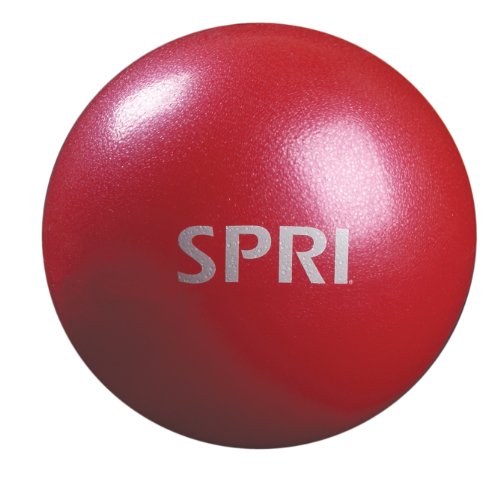
The pilates mini ball (a soft, partially inflated 9-inch ball) is the secret weapon of mat pilates. Placed under your lower back, it provides proprioceptive feedback that makes neutral spine engagement dramatically more precise. Placed between your knees for bridges and the Hundred, it cues inner thigh activation that the exercise alone doesn't force. A foam roller serves double duty: balance challenge for plank variations, and post-practice thoracic spine release. Neither is day-one necessary — add them after you've mastered the basics without props.
Best starter
SPRI
Spongeball 9-Inch Mini Exercise Ball
$
★★★★★Our rating
The SPRI mini ball is the studio-standard mat pilates prop. At 9 inches inflated to pilates softness (about 70% full), it provides exactly the proprioceptive feedback lower back and inner thigh exercises need without bouncing or shifting under load. Pump included. Used in virtually every intro-level class at Balanced Body-affiliated studios.
What we like
9-inch soft ball activates neutral spine awareness during floor work
Works for inner thigh activation, lower back support, and arm circles
Pump included; firmness adjustable for different exercises
What to know
Deflates slowly — needs a quick pump every few weeks
Not needed until you've built foundational pilates without props
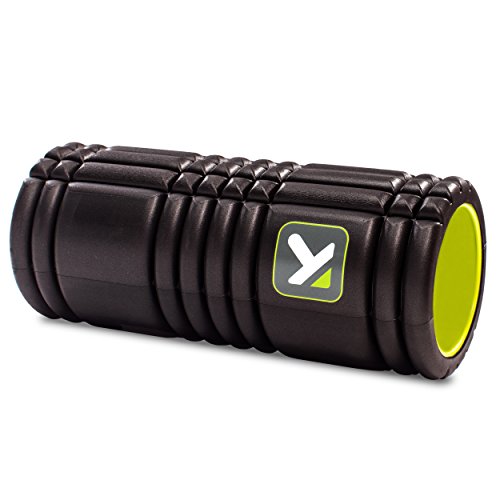
After a pilates session, a foam roller is the fastest way to release the hip flexors and thoracic spine that intensive core work tightens. TriggerPoint's GRID design gives three surface textures in one roller — flat sections for broad pressure, ridges for deeper release, knobs for pinpoint work. The 13-inch length handles thoracic rolling without falling off.
What we like
Multi-surface GRID delivers targeted or broad pressure as needed
Hollow core holds firmness under body weight over time
Doubles as balance prop for advanced plank and pike variations
What to know
13" shorter than full rollers; thoracic rolling requires repositioning
A luxury — most beginners don't need this in the first two months
Mat pilates rewards consistency more than intensity. The first session will surprise you — not because it's hard, but because you'll discover muscles you've never consciously used. Here's what to expect across the first month.
The first thing most people notice in mat pilates isn’t the burn — it’s the silence. You’re lying on a mat, doing what looks like slow, controlled movement, and then the instructor says “engage your deep abdominals” and suddenly nothing is easy. That gap between how it looks and how it feels is what makes pilates work.
Session one will leave you sore in places you didn’t know you had. Session ten will feel like a different body. Here’s what happens in between.
Week 1: Learning to feel what’s already there
Before you can strengthen anything, you have to learn to find it. This is week one’s entire job.
Neutral spine is the foundation of everything in mat pilates. Lie on your back with knees bent. Your lumbar spine has a natural curve — a small gap between your lower back and the floor. That’s neutral. Not pressed flat, not arched up. Just the natural S-curve of your spine, unsupported by the floor. You’ll return to this position in every single exercise for the rest of your pilates life.
Imprinted spine is the other position you’ll hear about — actively pressing your lumbar spine toward the mat. Some exercises use this position, particularly anything that loads the legs. Knowing the difference between the two, and being able to switch deliberately, is week one’s technical skill.
Scapular stabilization is the upper-body equivalent. Before any arm movement, you’re supposed to “set” your shoulder blades — drawing them slightly down and together without shrugging, creating a stable base. It sounds minor. The first time you try arm circles without doing this, you’ll feel the difference immediately.
Don’t worry about the exercises yet. Week one is about building the vocabulary your body needs to understand the cues.
By week two, the basic positions feel less foreign. This is when you start the foundational exercises that define the method.
The Hundred is the most iconic pilates exercise — and the first real test of what you learned in week one. You lie on your back, lift your head and shoulders into a chest-lift, extend your legs to a 45-degree angle (or keep knees bent to start), and pump your arms up and down in small controlled beats for 100 counts. The breath is five beats in, five beats out. It’s harder than it sounds. The first time you do it correctly — with genuine abdominal engagement, not just holding your breath — you’ll know.
Single Leg Circles teach you to stabilize your pelvis while one leg moves — the definition of the “core” in a functional context. Hold the mat with your arms. Let one leg reach toward the ceiling. Circle it. The goal: your pelvis doesn’t move. If it rocks, your circles are too big. Make them smaller.
Rolling Like a Ball is where people either love or hate pilates. Sit on your mat, hold your shins, curve your spine into a C-shape, and roll back to your shoulder blades (never to your neck), then roll back up. The challenge is using your abdominals to control the momentum rather than just flopping. When you get it right, the motion feels effortless. That’s the point.
Most beginners need two to four weeks before these exercises feel coordinated rather than awkward. That’s normal.
Week 3: Building the series
Pilates classically has a “mat order” — a sequence of exercises designed to warm up, challenge, and cool down the body systematically. By week three, a well-structured beginner class introduces more of this sequence:
The Roll-Up is a slow, segmental forward flex from lying flat to a full forward fold. Every vertebra peels off the mat one at a time. It sounds like a sit-up. It is nothing like a sit-up. Beginners often find they can’t do a full Roll-Up for weeks — the hip flexors compensate before the abdominals are strong enough to take over. That’s fine. Bend your knees, use a band around your feet for assistance, and work toward the full version.
The Plank and Leg Pull sequence introduces front-body loading. Unlike the earlier exercises, these are more familiar — but pilates plank cues are specific. Your hips align with your shoulders. Your abdominals actively lift toward your spine. You breathe. You don’t hold your breath and pray.
Side-lying leg work is often where the magic circle or resistance bands first appear — adding resistance to inner thigh and outer hip exercises that otherwise rely entirely on muscular endurance.
By week four, you stop having to consciously think about neutral spine before every exercise — you just find it. The exercises start connecting into something that flows. This is when pilates starts being interesting rather than just instructional.
A few things shift in this phase:
The breathing becomes automatic. Pilates breath — inhale to prepare, exhale to exert — stops being a cue you have to follow and starts being what your body wants to do. This is a significant moment. The breath is what distinguishes pilates from generic core exercises.
You notice the transfer. Things outside the studio start feeling different. Sitting at a desk, you notice whether you’re in neutral spine or not. Carrying groceries, you engage your scapular stabilizers without being reminded. Climbing stairs, your hip flexors feel loose in a way they didn’t before. This carryover is the actual goal of the practice.
You start to have preferences. Some exercises click immediately; others still feel impossible. Rolling Like a Ball comes naturally to people with flexible hips; the Teaser (a full V-sit balance hold) takes months for most beginners. Start noticing which categories are challenging — they’re pointing at the patterns your body needs the most work on.
The classic Pilates progression formula — ten sessions to feel it, twenty to see it, thirty to transform — holds up pretty well. What it misses is that around week four, most people stop treating pilates as a trial and start treating it as a practice. The mat stops feeling like a piece of equipment and starts feeling like a destination.
Save your money
What you don't need yet
Beginners get pressured to buy a lot of stuff that doesn't help them play
better. Here's what we'd skip on day one.
A reformer — Reformers cost $2,000–$5,000 and require qualified instruction to use safely. Mat pilates teaches the same principles — neutral spine, core engagement, scapular stabilization — without any of that cost. Many dedicated practitioners prefer mat for home practice even after years on the reformer.
Pilates Cadillac or Wunda Chair — Studio-only equipment. For home practice at any level, the mat plus the props in this guide is the complete picture.
A thick exercise mat (10mm+) — Counter-intuitive, but a 10mm+ mat works against you in pilates. The squishy surface destabilizes balance exercises and throws off the precise alignment cues the practice depends on. Stick to 6–8mm.
A full stability ball (55cm+) — Large stability balls are useful for yoga and general fitness, not for pilates. Mat pilates specifically uses the 9-inch mini ball — a different tool for different exercises.
Pilates-branded activewear — Fitted leggings and a snug top are all you need. Pilates studios are full of people in Lululemon, but the practice itself doesn't care. Don't spend $120 on pilates-branded tights before your third class.
First week
Your first seven days
A short, real plan to get from gear-on-doorstep to actually playing.
Watch a beginner-specific intro video before your first session. Don't go in cold — the breathing patterns and muscle cues are specific and worth five minutes of instruction upfront. · Learn
Pilates Anytime — YouTube · The largest free pilates video library online. Start with the 10-minute beginner mat series.
Move With Nicole — YouTube · Clear cueing, progressive beginner videos. Popular with new practitioners for its approachable 20–30 minute format.
Order a mat and try one beginner session on whatever you have at home first — YouTube is free, equipment is not. · Buy
Learn to find neutral spine before anything else. Lie on your back with knees bent and let your natural lumbar curve exist — not flattened, not arched. You'll return to this position in virtually every pilates exercise. · Action
Do your first session at 50% effort. Pilates uses muscles you've never consciously engaged. The soreness after session one is real — inner thighs, deep abdominals, and hip flexors are the usual suspects. · Action
Practice three times in the first week, even if sessions are only 20 minutes. Frequency matters more than length for building the neuromuscular patterns pilates trains. · Action
FAQ
Common questions
Is mat pilates enough on its own, or do I need reformer classes too?
Mat pilates is a complete practice in itself — not a beginner level you graduate out of. Joseph Pilates developed the entire method on the mat; the reformer came later. Many elite practitioners prefer mat for home practice because it demands more muscular control without spring assistance. Take reformer classes if you have access and enjoy them, but you don't need them to progress.
Can I learn pilates at home without a studio?
Yes. YouTube and apps have excellent beginner mat pilates content for free. The caveat: if you have lower back issues or injuries, an in-person instructor's eyes on your alignment are worth the session cost to establish correct patterns before going independent. After that, home practice is fine.
How is pilates different from yoga?
Both work on a mat, both emphasize breath — but the goals differ. Pilates is biomechanical: it targets core stability, spinal health, and functional movement with specific precision. Yoga is broader: flexibility, balance, and varying degrees of meditative practice. Pilates cues are more technical ('stabilize your scapula,' 'find neutral spine') and the exercises repeat the same movement patterns with intent. Most people who try both keep both.
Will pilates help with back pain?
Often yes, but proceed carefully. Mat pilates is one of the few fitness practices physical therapists actively recommend for non-specific lower back pain because it builds the deep core stabilizers that support the lumbar spine. However, some exercises — double leg stretch, full roll-up, prone extensions — can aggravate certain conditions. If you have a diagnosed disc issue or specific injury, get clearance from your physical therapist first.
How quickly will I see results?
The classic Pilates quote — 'in ten sessions you'll feel the difference, in twenty you'll see the difference, in thirty you'll have a new body' — is roughly accurate. Posture improvements are often the first thing people notice (weeks 3–4). Core strength that affects other workouts shows up around six weeks. Visible body composition changes take two to three months of consistent practice.
What should I wear to mat pilates?
Fitted clothes — leggings and a fitted top or tank. Nothing baggy enough to fall over your head during inversion exercises or obscure your alignment enough that you can't self-correct. Grip socks for studio classes (most require them). Bare feet or grip socks at home are both fine.
Balanced Body Education — Balanced Body is the largest pilates teacher training organization. Their beginner content is technically accurate, well-explained, and free.
Pilates Anytime — YouTube — The largest free pilates video library — over 4,000 classes from beginner through advanced. Start with the beginner mat series.
Pilates Method Alliance — The main certifying body for pilates instructors. Useful for finding qualified local instruction if you want in-person guidance.
Physiopedia — Clinical Pilates — Evidence-based overview of the research behind pilates for back pain, posture, and rehabilitation. Good starting point for the 'does it actually work?' question.
Move With Nicole — YouTube — Approachable, progressive beginner pilates series popular with Gen Z practitioners. Clear cueing and 20–30 minute formats that fit real schedules.
As an Amazon Associate, JustBeginning earns from qualifying purchases.
We may also earn commission from other affiliate programs linked on this
page. Editorial recommendations are independent; we don't choose
products based on commission rates.
Product prices and availability are accurate as of the date and time
indicated and are subject to change. Any price and availability
information shown on Amazon at the time of purchase will apply.

 Best starter