Aikido is the one martial art where the answer to 'how do I start?' is almost always 'show up to class.' Most dojos lend wooden weapons for the first month. All you need is a gi and a willingness to fall. Here's what to buy, in order of urgency, and what to skip until your instructor says otherwise.
By Colin B. · Published June 15, 2026 · Last reviewed June 15, 2026
Your gi is the main upfront cost ($50-100). Wooden weapons add another $50-100, but many dojos lend them for the first month.
We earn commission on qualifying Amazon purchases — see our
affiliate disclosure.
Price tiers and budget totals shown above are editorial estimates;
actual Amazon prices vary.
At a glance
Our top pick in each category
The fastest path through this guide — each best-starter pick by category.
Scroll for the budget and upgrade alternatives.
Ask your dojo before buying wooden weapons. Some schools lend bokken and jo for the first month or longer, and dojo-specific sizing or style preferences can vary. Buy once you've confirmed what your teacher recommends.
Any white gi will work at first. Aikido-labeled gi, judo gi, and karate gi are all worn in aikido dojos. The main difference is weight and cut. For your first uniform, a single-weave gi ($50-80) is the right call. Double-weave runs heavy and hot for beginners.
Don't buy a hakama yet. The traditional pleated pants are worn by some students from the first day, but at most schools they're reserved for brown belt or black belt level. Your instructor will tell you when it's time.
The gear
What you actually need
Gi (Uniform)
The gi is the only thing you'll definitely need before your first class. Any white gi works at most dojos, but an aikido-cut gi is slightly roomier in the shoulders and sleeves than a karate gi, which matters for throwing techniques. Start with single weave: it breathes better, dries faster, and costs half what a double-weave runs. You'll know you want a heavier gi after six months of sweating through techniques. Not before.
Gi (Uniform) — what's the difference?
A few common shapes, each making a different trade.
Single Weave
Lightweight, breathable, cheaper. The correct starter choice.
Weight
5-7 oz.
Price
$40-90
Dry time
2-3 hours
Best for Beginners, hot dojos, casual practitioners
Tradeoff Wears out faster under intense daily training
Heavy, durable, warm. For serious daily practice only.
Weight
12-16 oz.
Price
$80-160
Dry time
6-12 hours
Best for Daily practitioners, cold dojos, hard randori training
Tradeoff Hot and heavy; most beginners regret buying this first
Best starter
ProForce
Gladiator Single Weave Judo Gi
$59.99 as of Jun 22, 2026
★★★★★Our rating· Only 1 left in stock - order soon.
Purpose-cut with extra room in the sleeves and shoulders where throws demand it. This ProForce single-weave gi breathes well in a warm dojo, and the reinforced stitching at the collar and sleeves outlasts cheaper imports. ProForce sizes consistently, which is genuinely rare in martial arts uniforms.
What we like
Aikido-cut: roomy sleeves and shoulders handle throwing well
Single weave breathes better than double in a warm dojo
Reinforced collar and sleeve stitching outlasts cheap imports
★★★★☆Our rating· Only 8 left in stock - order soon.
Under $50 and the go-to starter gi at dojos that want a cost-neutral onboarding path. The lightweight cotton is easy on beginners and the judo cut has the shoulder room aikido throws need. Washes easily and holds up for a solid first year.
What we like
Under $50 and legitimately usable at most dojos for a year
Judo cut has the shoulder room aikido throwing needs
What to know
Stitching at the pants drawstring loosens after heavy use
Collar thins under daily hard practice; once-a-week students won't notice
When you've practiced for six months and want a gi that feels serious, Tozando is where most committed aikidoka end up. Better cotton, better collar construction, and a cut made specifically for aikido that senior instructors recognize as belonging to someone who isn't quitting.
What we like
Premium cotton that gets softer with every wash
Cut recognized by senior instructors as a serious practitioner's gi
What to know
Significant price jump over a functional starter gi
Heavier cotton runs hot in summer dojo without air conditioning
Most aikido schools use two wooden weapons: the bokken (wooden sword, about 40 inches) and the jo (wooden staff, about 50 inches). Your dojo may lend them for the first month, but instructors generally want you to have your own for home practice once weapons work begins. Red oak is the traditional material for bokken; for the jo, polypropylene has become an accepted modern alternative in many dojos for its consistency and durability.
Best starter
DEPICE
Red Oak Aikido Bokken
$
★★★★★Our rating
DEPICE makes some of the most consistently reviewed red oak wooden weapons in the European and US aikido communities. The geometry is correct for aikido, the finish is smooth with no splinter risk, and the 101 cm length matches the standard 40-inch aikido bokken. If your instructor doesn't specify a brand, this is a safe choice.
What we like
Red oak with correct aikido geometry, well-reviewed by practitioners
Smooth finish with no rough spots or splinter risk mid-practice
Standard 101 cm length fits most North American dojo curricula
What to know
Confirm your dojo's preferred length before ordering
Red oak can develop hairline cracks if stored in very dry conditions
The no-frills entry for beginners who aren't yet sure they'll stick with weapons practice. Hardwood construction, functional finish, and easy to replace when you're ready to move to a better stick.
What we like
Budget entry point before committing to a premium bokken
Widely available; easy to replace if it splinters
What to know
Lighter than what senior aikidoka prefer for muscle memory work
Finish can develop rough patches over time; light sanding fixes it
E-BOGU is a longstanding Japanese martial arts equipment company and their polypropylene jo is the standard in many modern dojos. Synthetic material means it won't crack, splinter, or change weight with humidity. The 51-inch length covers most North American aikido schools. Some traditional dojos prefer wood, so confirm with your instructor before buying.
What we like
Won't crack, splinter, or change balance with humidity like wood
51-inch length covers most North American dojo curricula
E-BOGU is a trusted Japanese martial arts equipment brand
What to know
Some traditional schools require wooden jo, not synthetic
Slightly different feel underhand vs traditional red oak
You need something to carry your bokken and jo without them rattling loose in your car. A dedicated weapons bag keeps them from scuffing, makes airport security less eventful, and protects the wood from drying in direct sunlight. Don't spend much here — any bag that fits a 50-inch staff will do the job for years.
Best starter
Budo Import
Jo Staff & Bokken Tetron Bag
$
★★★★★Our rating
Made specifically for aikido weapons: fits a bokken and a jo up to 54 inches side by side. Traditional Japanese construction, shoulder strap, and a durable zipper. The bag most often seen at North American aikido dojos.
What we like
Made specifically for aikido weapons: fits bokken and jo together
Japanese construction with a durable zipper and shoulder strap
What to know
No padding; keeps weapons together but won't protect antique pieces
Fits up to 54-inch jo; measure your weapons before ordering
When you're carrying a full set of weapons plus a gi, this is what you want. Fits staffs up to 60 inches, has multiple pockets for smaller gear, and the cordura shell holds up to years of loading in and out of cars. Particularly good for students who carry multiple weapons.
What we like
Fits staffs up to 60 inches plus smaller gear in side pockets
Durable cordura shell survives years of loading in and out of vehicles
What to know
Larger than needed if you only carry one bokken and one jo
No rigid frame; roll-based weapons can shift around
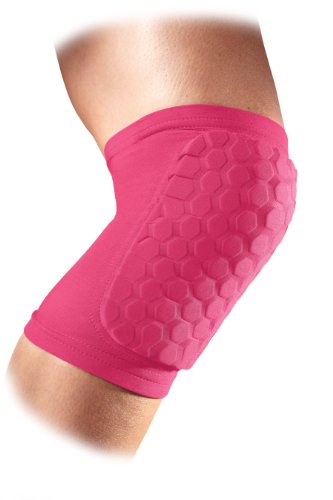
Aikido's floor techniques (suwari-waza) are performed kneeling and sliding on your knees across the mat. For beginners, your knees will complain loudly until the skin toughens and movement becomes smooth. Knee pads accelerate that adjustment. Thin ones work best: thick pads shift your balance and won't fit under hakama later.
Best starter
McDavid
HEX Knee Pads
$$
★★★★★Our rating
Thin enough to fit under a gi without changing your stance, protective enough to handle suwari-waza slides. The hex pad design absorbs kneeling impact without bulk. Volleyball and basketball players use these for the same floor-contact reasons.
What we like
Thin profile fits under a gi without throwing off seiza stance
Hex pad absorbs kneeling impact without adding bulk to the joint
Stays in place during active sliding, not just static kneeling
What to know
Runs snug; size up if you're between sizes
Built for mat surfaces only, not outdoor hard floors
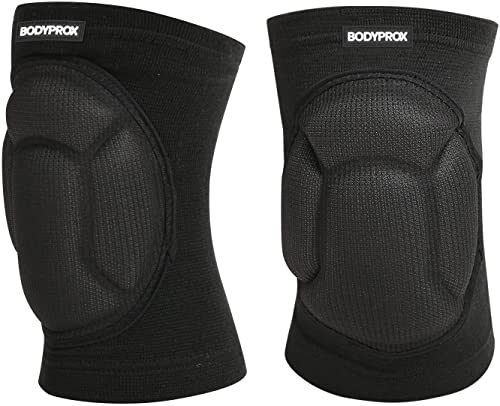
Under $20 and protective enough for the first few months while your knees adjust. Slightly bulkier than the McDavid but still fits under a gi for most students. Replace them when they start feeling thin.
What we like
Under $20, solid protection while your knees build tolerance
Adjustable strap keeps them from slipping mid-practice
What to know
Slightly bulky; may show under a fitted gi on some practitioners
Foam thins out after several months of daily suwari-waza
Aikido doesn't click in a week. The first class feels like being dropped into a formal dance you've never practiced. The first month is mostly learning to fall. By month three, the techniques start to feel less random and more like a conversation.
Aikido has a slower ramp than almost any martial art. That’s not a flaw in the practice — it’s the nature of what you’re learning. The techniques are built on redirecting force and using another person’s momentum against them, which means you need a training partner to do anything real. You can’t shadowbox your way to competence. You need mat time.
Here’s what that mat time actually looks like, in order.
The first class: etiquette before technique
The first thing you’ll notice isn’t a throw. It’s the bowing.
Aikido dojos run on ritual: you bow when you enter the dojo, bow to the shomen (the front of the room), bow to your instructor before and after training, bow to your partner before and after every technique. If you’ve never trained in a Japanese martial art, this can feel simultaneously formal and disorienting.
Don’t overthink it. Watch what the other students do and copy it. Nobody expects perfect etiquette from a new student, and the ritual becomes automatic within a few weeks. The bowing isn’t ceremony for ceremony’s sake — it’s a signal that you and your partner are agreeing to train carefully with each other.
The second thing you’ll notice is that you have no idea what’s happening. Your instructor will demonstrate a technique, it will look fluid and effortless, and then you’ll try it and nothing will work. This is completely normal. The gap between watching aikido and doing aikido is larger than in most arts. It narrows faster than you’d expect, but not in one class.
If there’s a single skill that unlocks aikido for beginners, it’s ukemi — the art of receiving a technique safely. Ukemi means “receiving body” in Japanese, and it’s how you fall, roll, and breakfall without getting hurt.
Most instructors spend the first several weeks drilling ukemi before much else. This isn’t padding the curriculum. You can’t practice throws safely until both the thrower and the receiver know how to move. Learning to roll is the prerequisite for everything else.
Front roll (mae ukemi): You’ll learn to roll forward diagonally across your shoulder and back, coming up smoothly on the opposite side. The common beginner error is trying to roll over the top of your head. You’re not. You’re rolling from your hand to your shoulder to your back, in a diagonal line, then standing.
Back roll (ushiro ukemi): Falling backward, rolling over one shoulder, coming up to kneeling or standing. Harder to trust than the forward roll because you’re going blind.
Breakfall (ukemi): The slapping fall where your arm hits the mat flat to absorb impact. Used when a throw is too fast or at too sharp an angle for a roll.
These feel unnatural for weeks. Then one day they feel obvious. That transition happens on its own if you keep showing up.
Outside of ukemi, your first month is mostly about watching, imitating, and not getting in the way. You’ll practice basic footwork: tenkan (pivoting to redirect an attacker’s momentum) and irimi (entering directly into an attack). You’ll learn your first one or two techniques — probably katate-dori ikkyo, which is taking control of a wrist grab and applying a controlled wrist and elbow pin.
Around the six-week mark, something shifts. The falls stop feeling dangerous. You start to see the geometry of the techniques rather than just mimicking the shape. A throw that looked like magic starts to reveal itself as a specific application of weight and direction.
This is when aikido starts to feel like a language you’re slowly learning rather than a performance you’re copying.
A few things happen in this phase:
You’ll develop a regular training partner. The person you practice with most shapes how your technique develops more than almost anything else. Find someone who’s two to three levels above you, moves carefully, and gives you honest feedback after class.
Suwari-waza will test your knees. The kneeling techniques (performed entirely from seiza, sliding on your knees) are done in most curricula from the beginning. Your knees will be sore until the skin toughens and your movement becomes efficient. Knee pads help. So does learning to move from your hips rather than your knees.
Weapons work may begin. Depending on your school, you’ll start handling bokken (wooden sword) or jo (wooden staff) for basic suburi — solo repetitive strikes that build the same extension and timing used in empty-hand techniques. This is where having your own wooden weapons matters.
The philosophy starts to land. O-Sensei Morihei Ueshiba, who founded aikido in the early twentieth century, embedded a specific worldview in the art: the goal is harmony, not domination. Many practitioners find the philosophy feels abstract at first and concrete after six months of physical practice. You start to feel in your body what it means to move with another person rather than against them.
What to stop worrying about
A few things beginners spend too much time anxious about:
Getting the technique wrong. You will get it wrong, constantly, for months. That’s what the practice is. Your instructor knows this. Your training partner knows this. The goal is to get it slightly less wrong each time.
Being the worst person in the room. You are the newest person in the room, not the worst one. Aikido dojos are unusually welcoming. Senior students remember what it was like to be where you are. Ask questions after class, not during, and you’ll get more help than you can use.
Making your training partner uncomfortable. If you’re ever unsure whether you’re applying a technique too hard, ask. “Too much?” is a complete sentence in any dojo. Mutual safety is assumed.
What to do after month 3
By the end of three months of consistent practice (two to three classes per week), you should have functional ukemi, a few basic techniques you can execute with a cooperative partner, and a sense of the art’s vocabulary. This is not advanced. It’s a foundation.
A few things that pay off in month four and beyond:
Attend a seminar. If a senior instructor from another dojo or the national organization visits, go. Even one day with a different teacher will show you dimensions of technique your regular practice hasn’t surfaced.
Keep a notebook. Not during class, but after. One or two things you noticed or that confused you. You’ll look back in a year and be amazed at what’s changed.
Be patient with the long game. Aikido is one of the slower martial arts to develop usable competence in. That’s by design. The techniques work through timing, positioning, and sensitivity to another person’s movement — things that only develop through thousands of repetitions with real partners. The people who stay with it past year one consistently describe it as one of the most rewarding things they’ve done.
Save your money
What you don't need yet
Beginners get pressured to buy a lot of stuff that doesn't help them play
better. Here's what we'd skip on day one.
Hakama — The traditional pleated pants are reserved for intermediate or advanced ranks at most schools. Your instructor will tell you when it's time. Buying one on day one is getting ahead of yourself.
Iaito (practice sword) — An iaito is the tool for iaido, the art of sword drawing, not aikido. The weapons in aikido are bokken and jo. Don't conflate the two arts.
Wrist braces or hand wraps — Unless you have a pre-existing injury, standard aikido training shouldn't require these. If your wrists are hurting, talk to your instructor about technique before reaching for a brace.
Home practice mat — Your dojo mat is enough for the first year. Home mats are expensive and take real estate. Train at the dojo consistently before investing in home infrastructure.
Ki development or philosophy books — The philosophy makes more sense after six months of physical practice. Prioritize mat time over bookshelf time, especially early on.
First week
Your first seven days
A short, real plan to get from gear-on-doorstep to actually playing.
Find an aikido dojo near you and call or email before showing up. · Action
USAF Dojo Finder · United States Aikido Federation — lists member dojos nationwide
Do I need to buy wooden weapons before my first aikido class?
Usually not. Most dojos lend bokken and jo to beginners for the first month or longer. Call ahead and ask your instructor exactly what to bring and when to buy.
What's the difference between aikido and other martial arts like judo or BJJ?
Aikido focuses on redirecting an attacker's energy and momentum rather than striking or out-muscling them. There's no sport competition in most schools. The philosophy is explicit: use force against itself rather than meet it head-on.
Is aikido practical for self-defense?
Honest answer: aikido takes longer to become functional for self-defense than judo or BJJ, and traditional schools often don't test techniques under full resistance. It's a legitimate art with real depth, but if self-defense is your sole goal, supplement with something more pressure-tested.
How long does it take to earn a black belt in aikido?
Most schools require 4-6 years of consistent practice for shodan (first-degree black belt), some longer. The belt structure varies by organization — some schools only use white and black. The rank matters less than the practice.
Can I practice aikido at home without a partner?
Yes, with limits. Solo weapon suburi (repetitive strikes with bokken or jo) are core to the practice. Footwork patterns (tenkan, irimi) work in any clear space. But most actual techniques and all ukemi (falling) require a partner.
How much does it cost to start aikido?
Budget $80-200 for gear: a gi ($50-100), bokken ($20-40), and jo ($20-35). Monthly dojo fees typically run $60-150 depending on your city. Many dojos offer a free trial class.
Aikido Shugyo (YouTube) — One of the clearest channels for beginners: good camera angles, explains the reasoning behind movements rather than just showing them.
r/aikido — Honest community with practitioners across styles and organizations. Good for beginner questions and the occasional spirited debate about tradition vs. aliveness.
As an Amazon Associate, JustBeginning earns from qualifying purchases.
We may also earn commission from other affiliate programs linked on this
page. Editorial recommendations are independent; we don't choose
products based on commission rates.
Product prices and availability are accurate as of the date and time
indicated and are subject to change. Any price and availability
information shown on Amazon at the time of purchase will apply.
Our top pickProForce Gladiator Single Weave Judo Gi

 Best starter