Boxing is one of the most complete workouts you can build at home, and the starter kit is shorter than you think. Gloves, hand wraps, and something to hit. That's your whole first kit. Here's what actually matters, what you can hold off on, and how to set up a real training space for under $300.
By Colin B. · Published May 23, 2026 · Last reviewed June 3, 2026
Gym-only setup (gloves + wraps): $60–80. Full home setup with a freestanding bag: $200–300. If a gym is near you, go twice before spending anything beyond gloves.
We earn commission on qualifying Amazon purchases — see our
affiliate disclosure.
Price tiers and budget totals shown above are editorial estimates;
actual Amazon prices vary.
At a glance
Our top pick in each category
The fastest path through this guide — each best-starter pick by category.
Scroll for the budget and upgrade alternatives.
If you're training at a boxing gym, your starter list is two items: gloves and hand wraps. The gym has bags, mitts, and everything else. Show up twice before spending a dollar beyond those.
Hand wraps are not optional. Every beginner makes this mistake exactly once — skipping wraps on a bag session and nursing sore knuckles for a week. Wraps cost $8 and protect your joints every single time.
Glove weight matters more than brand. For bag and pad work, 12–14 oz is the right range for most adults. Heavier gloves build endurance; 8–10 oz competition gloves are designed for conditioned pros and will hurt your hands.
The gear
What you actually need
Gloves
Your gloves are the most important purchase and the most over-complicated. For home and gym training, you want a 12–14 oz all-around training glove, not sparring gloves (thicker padding, for partner contact) and not bag gloves (thinner, for speed work). A good all-around training glove handles both jobs well enough, which is exactly what a beginner needs.
Gloves — what's the difference?
A few common shapes, each making a different trade.
All-Around Training (12–14 oz)
Does bags, pads, and light sparring. The right default for most beginners.
Weight
12–14 oz
Padding
Medium-firm
Best use
Bags, mitts, solo drilling
Best for Anyone training alone or at a gym without regular sparring
Tradeoff Not as protective as dedicated sparring gloves for full contact
Extra padding to protect your partner. Required for contact sparring.
Weight
16 oz
Padding
Extra-thick
Best use
Contact sparring only
Best for Gym training once your coach clears you for sparring
Tradeoff Too heavy and slow for bag sessions — most serious boxers own both
Best starter
Everlast
Pro Style Training Gloves
$79.99 as of Jun 22, 2026
★★★★★Our rating
The training glove every boxing gym recommends first. Pre-curved synthetic leather, solid velcro wrist strap, and the right 14 oz weight for bag and mitt work. Not the finest glove in the world, but the best choice for a beginner who doesn't yet know what they want. Durable enough for a year of regular training.
What we like
Trusted by coaches everywhere as the reliable beginner choice
Pre-curved fit reduces hand fatigue during long bag sessions
Velcro closure gives a quick, adjustable wrist fit
What to know
Velcro strap stretches with use and needs regular re-tightening
Synthetic leather won't last as long as genuine leather alternatives
★★★★☆Our rating· Only 4 left in stock - order soon.
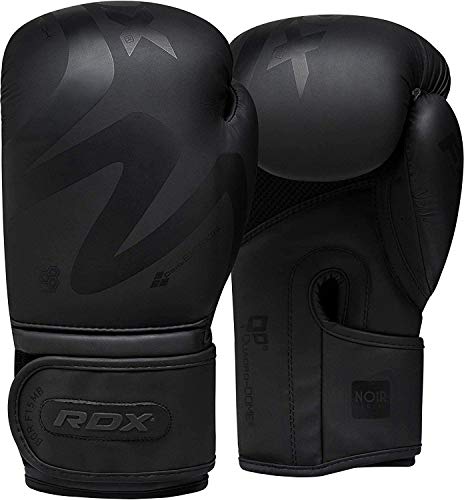
Under $40 and genuinely solid for the price. RDX's gel padding holds up to daily bag sessions, the thumb lock keeps your thumb in a safer position than bare-minimum budget gloves, and the wrist support is better than anything else in this tier. The smart pick if you're not yet sure boxing will stick.
What we like
Gel padding holds up to daily bag work at an under-$40 price
Thumb lock reduces injury risk compared to most budget gloves
What to know
Wrist strap is narrower than pricier gloves, less rigid support
When you're ready to spend real money, Fairtex is the answer. Genuine leather, excellent wrist support, and a fit that breaks in and gets better with use. Coaches use these because they're built to last years, not months. Buy them once you've been training consistently for two to three months.
What we like
Genuine leather breaks in beautifully and improves with heavy use
Outstanding wrist support trusted by serious fighters and coaches
What to know
Runs narrow through the palm; size up if you have wide hands
Premium price only makes sense after 2-3 months of consistent training
Hand wraps go under your gloves, every session. They protect the small bones in your hand, stabilize your wrist, and keep your knuckles from compressing against the glove on impact. A proper wrap takes 60 seconds and is the difference between punching hard for a year and punching hard for three weeks before your hand swells up.
Best starter
Everlast
180-Inch Hand Wraps
$
★★★★★Our rating
The standard. Cotton-poly blend, 180 inches covers most hands with room to spare, and the velcro end actually holds. Buy two pairs: one to wear, one to wash. They last a long time if you air dry them after every session.
What we like
180-inch length fits most hands with room for solid knuckle coverage
Cotton-poly blend dries quickly and holds its shape wash after wash
What to know
Traditional wraps take 60 seconds to apply, slower than quick wraps
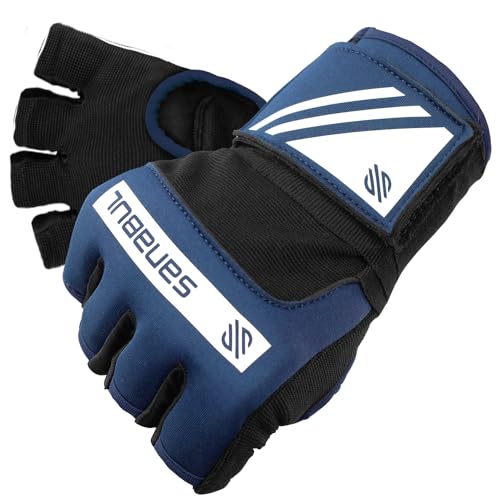
Inner gloves that slip on in ten seconds instead of wrapping. Not as protective as traditional wraps for heavy bag work, but ideal for shadowboxing and cardio-boxing classes where you're not hitting hard. Many beginners keep one of each: wraps for bag sessions, inner gloves for conditioning work.
What we like
Slips on in ten seconds, ideal for cardio boxing and shadow rounds
Knuckle pad adds just enough cushioning for light bag and pad work
What to know
Less protective than traditional wraps for heavy bag sessions
If you're training at a gym, skip this section — you have bags. If you're building a home setup, the bag is your centerpiece. Two options: freestanding bags (water or sand-filled base, no installation) or hanging bags (better feedback, need a beam or bracket). Most beginners start freestanding. Both work — hanging is better once you're serious.
Best starter
Century
Original Wavemaster Freestanding Bag
$199.99 as of Jun 22, 2026
★★★★★Our rating
The most widely owned freestanding bag for good reason. Fill the base with water or sand, adjust the height to your reach, and you're training in 20 minutes with no tools. The vinyl shell survives years of abuse and the base is stable enough that it won't tip on combination work. Perfect for garages, basements, or apartments.
What we like
No ceiling mount needed; set up in 20 minutes in any room
Adjustable height works for boxing, kickboxing, and cross-training
What to know
Slides a few inches on hard hits; a rubber mat underneath fixes this
Slightly less authentic feedback than a hanging bag that swings back
The hanging bag standard. It swings back after you hit it, forces you to move your feet, and makes your training feel more like real boxing than any freestanding bag can. Chain and hardware included. You need a strong ceiling joist, a garage beam, or a dedicated bag stand. Don't skip the mounting.
What we like
Swings back after impact, forcing real footwork and head movement
Chain and swivel hardware included; everything you need to mount it
What to know
Requires a solid beam or joist; drywall mounts will fail under use
A well-made hanging bag at a lower price point, with chains, swivel, and ceiling mount hardware all included. Maya hide leather holds up to consistent training. The smart call if you already have a mounting point and want to put your money into gloves instead.
What we like
Complete kit with chains, swivel, and ceiling mount hardware included
Maya hide leather construction holds up to consistent training loads
What to know
Requires an existing ceiling mount point; no freestanding option
For bag and pad work: just gloves and wraps. The moment you start sparring with a partner, add a mouthguard and headgear. This is not optional — even light sparring is real contact. A mouthguard is a $25 investment. Sparring without one is how you crack a tooth.
Best starter
Shock Doctor
Gel Max Mouthguard
$
★★★★★Our rating
Shock Doctor has been the mouthguard standard in contact sports for 20 years. The Gel Max is their all-around model: boil-and-bite fit, comfortable enough to breathe with through hard rounds, and protective enough for training and light sparring. Buy this before your first sparring session. No exceptions.
What we like
Industry standard in contact sports for 20+ years, trusted design
Boil-and-bite custom fit is comfortable enough to breathe through
What to know
Requires 10 minutes of careful boiling and fitting for the best seal
When your gym clears you for sparring, headgear is required. Ringside's competition model is trusted in gyms worldwide: good cheek coverage, clear sightlines, and a fit that stays on during movement. It reduces (but does not eliminate) impact. Your gym will match you with lighter sparring partners; this protects both people.
What we like
Trusted at gyms worldwide: cheek coverage and clear sightlines
Secure fit that stays in place through movement and combination work
What to know
Reduces but doesn't eliminate impact; no substitute for supervision
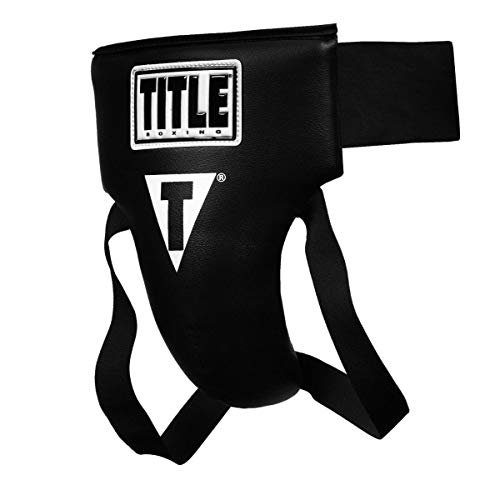
Required for male sparring at most gyms, and reliably forgotten by first-timers. You won't think about it until you need it, at which point it'll be too late. Title's version is comfortable enough to wear through full training rounds without adjusting. Buy it with your mouthguard.
What we like
Comfortable enough to wear through full sparring rounds unadjusted
Required gear at most gyms before any contact sparring begins
What to know
Easy to forget until the moment you actually need it in sparring
For home bag work, your regular athletic shoes are fine. Once you're in a gym doing footwork drills, boxing shoes make a real difference — thin sole, no heel drop, and a design built for pivoting and pushing off the ball of your foot. This is a month-two purchase, not day one.
Best starter
adidas
Box Hog 4 Mens Boxing Shoes
$195.06 as of Jun 22, 2026
★★★★★Our rating· Only 1 left in stock - order soon.
The most common beginner boxing shoe, and for good reason. Thin grippy outsole for pivoting, ankle support that stays out of your way, and a price that doesn't intimidate a new boxer. Adidas has been making boxing shoes for decades and the Box Hog is their reliable workhorse model.
What we like
Thin grippy outsole built for pivoting and pushing off the ball of foot
Decades of Adidas boxing heritage in a dependable, accessible shoe
What to know
Runs slightly small; order half to full size up from your normal size
Wrestling shoes work excellently for boxing: same flat sole, same ankle mobility, at lower prices than dedicated boxing models. Ringside's Diablo is the standing recommendation for gym newcomers on a budget. Same footwork benefits for less.
What we like
Flat sole identical to dedicated boxing shoes at a lower price point
Ankle mobility designed for lateral footwork and pivoting in both sports
What to know
Less brand recognition at boxing gyms than dedicated boxing shoes
The first punch you throw will feel wrong. Everyone's does. Here's what actually happens in your first month — what to focus on, what to ignore, and when it starts feeling like a real skill.
Most people think boxing is about punching hard. The people who get good quickly learn within the first week that it’s about standing correctly, moving your feet, and not getting hit. The punching catches up. The other stuff takes a month to feel natural.
Here’s what your first month actually looks like, week by week, with the things that matter and the things that don’t yet.
Week 1: Stance and the jab
Before you touch a bag, spend your first three sessions shadowboxing. No bag, no partner, no mitts — just you in front of a mirror (or not), working on how you stand.
The stance. Orthodox stance (right-handed): left foot forward, feet shoulder-width apart, left foot pointed at your target, right foot at a 45-degree angle. Weight about 60% on your back foot. Hands up, chin down, elbows tucked. This feels unnatural and you’ll immediately want to drop your hands. Don’t. High hands are the whole game at the beginning.
The jab. Extend your lead hand straight out from the shoulder, rotate your fist just before contact (palm finishes down), snap it back fast. The power comes from the rotation, not from how hard you push. You’ll throw a hundred weak jabs before one feels right. That’s normal — your arm isn’t used to this movement pattern yet.
Here’s the thing nobody tells you: speed is a consequence of relaxation, not effort. The fastest punches come from relaxed muscles that snap. If you’re tensed up and trying to punch hard, you’ll be slower and weaker than if you stay loose and let the technique do the work. Tension is the beginner’s enemy.
By the end of week one, your goal is simple: stand in your stance, throw ten jabbing combinations, and not immediately collapse into a weird posture the moment you add any footwork. That’s it.
Once the jab is starting to feel somewhat natural, add the cross. It’s your power hand — right hand for orthodox fighters — and it comes from rotating your hip and shoulder, not just extending the arm. Plant your back foot, pivot on the ball of that foot, rotate your hip into the punch, extend your arm. The rotation generates the force.
The 1-2 (jab-cross) is the most fundamental combination in boxing and probably 40% of all punching at the beginner level. Get comfortable with it before moving to hooks or uppercuts. The 1-2 is the foundation that everything else builds on.
Footwork. The big beginner mistake is standing still. In real boxing — even bag work — you’re always moving. After you throw, you step. Forward after combos that land, lateral to reset your angle, back when you’re done. The most common beginner pattern is throw-throw-throw-flat-footed-pause. Break it early.
Practice moving in your stance: small steps, staying balanced, always getting back to stance between movements. It feels ridiculous in slow motion. Do it anyway.
This is also the week to start actual bag sessions, if you have a bag. Start short — three rounds of two minutes, with 60 seconds rest. That will feel longer than you expect. Boxing’s cardio demand is front-loaded; you’ll be completely gassed by round two for at least the first week of bag work, regardless of how otherwise fit you are.
By week three, most beginners hit the first real frustration plateau. You can throw the jab. You can throw the cross. But the moment you try to chain them together, add a hook, or move your feet at the same time, everything falls apart.
This is completely normal and it means your nervous system is learning, not that you’re bad at boxing.
The 1-2-3 (jab-cross-hook). Add the lead hook after the cross: pivot on your lead foot, rotate your hip and shoulder, throw the hook with your elbow at about 90 degrees. The elbow position matters — a hook with a dropping elbow is a wide, slow swing; a hook with the elbow parallel to the floor is compact and hard.
The goal for week three is to get this combination to the point where you don’t have to think about what comes next. That’s when combinations start working. Before that — when you’re counting “1, pause, 2, pause, 3” — the pause between punches is the problem. Your goal is no gaps. The combination should flow as one movement.
One useful drill: throw the combination in slow motion first. Agonizingly slow — each punch taking two full seconds. Get the mechanics right at 10% speed before you try it at 100%. Speed comes from doing the correct motion faster, not from guessing at what faster looks like.
Defense. Start thinking about slipping — moving your head off the center line when an opponent throws. Slip to the outside of a jab by moving your head slightly right and bending your knees; the punch goes past your left ear. You won’t be using this in a real situation for a few months, but building the habit of moving your head is something coaches try to install from day one.
Week 4: Finding the rhythm
Around week four, something shifts. You stop consciously thinking through each punch and start reacting. You throw a combination and your hands go where they’re supposed to go without narrating the sequence in your head. For most beginners, this is the first week that bag work feels like boxing rather than a skill drill.
Shadowboxing with intent. By now, shadowboxing should have an opponent in your head — imagined punches coming back at you, distance you’re managing, pressure you’re responding to. Beginners who shadowbox without a mental opponent are just going through motions. Imagine someone in front of you who’s throwing jabs. You slip, counter, move. The mental model is what makes shadowboxing training rather than cardio.
Rounds and conditioning. You should be doing four to five rounds of two to three minutes now, with one minute of rest between rounds. By week four, the cardio is getting less punishing — not easy, but sustainable. If it’s still completely destroying you by week four, your rounds are too long or your rest too short. Adjust down and build back up.
Every boxer at the four-week mark is bad at the same things. You will be too. Don’t take it personally:
Dropping your guard after you punch. The hands should return to guard position the instant each punch lands. Beginners let them drop and hang. It’s a reflex problem, not a knowledge problem. It takes a few months of consistent training to fix.
Flat-footed stance. You’ll forget to stay on the balls of your feet when you’re tired. Your feet go flat, your punches lose power, your movement slows. The fix is rest and lower training volume until the technique holds under fatigue.
Telegraphing punches. Winding up before the cross, dipping before the hook. Very hard to feel yourself doing it; much easier to see on video. Film yourself from the side occasionally — you’ll see things that feel invisible from inside your body.
Holding your breath. Breathing during combinations is a skill. Most beginners hold their breath through the whole round. Exhale sharply with each punch — it syncs your breathing to your punching and forces you not to hold tension.
Nobody watching you cares about any of this. Every person who can box was here for at least a month. They’ve already forgotten what it felt like.
What to do in month two
A few things dramatically steepen the improvement curve once you have basics:
Find a good coach for at least two sessions. Even online video coaching is better than none. At the one-month mark, you have enough context to understand what a coach is telling you and enough bad habits to make a session genuinely valuable. One 60-minute session can identify the two or three things actively limiting your progress.
Start tracking your rounds. A simple timer app (Seconds Pro, Gymboss) running standard 3-minute rounds with 1-minute rest changes the feel of bag work immediately. Knowing when the round ends stops you from quitting when tired; the rest tells your body work is done.
Watch pro fights. Boxing at the professional level looks nothing like what you’re doing right now, and watching it is genuinely educational. The footwork, the jabs as range-finders, the way good boxers create angles — it becomes visible after a month of training in a way it wouldn’t be if you’d never thrown a punch. Roy Jones Jr. and Pernell Whitaker are worth watching for movement; Canelo Álvarez is worth watching for defense.
You’re not a beginner anymore at four weeks. You’re an early-stage boxer with bad habits and a jab that kind of works — which is a much more interesting thing to be.
Save your money
What you don't need yet
Beginners get pressured to buy a lot of stuff that doesn't help them play
better. Here's what we'd skip on day one.
Speed bag — Speed bag work is a separate skill that takes weeks to develop and teaches almost nothing about punching or footwork. Skip until you've been training at least three months.
Double-end bag — A powerful tool for timing and accuracy — once you have fundamentals. Without them, you'll just frustrate yourself. A month-two or month-three purchase at the earliest.
Competition gloves (8–10 oz) — Competition weight. Your hands and wrists aren't conditioned for it yet. Stick to 12–14 oz training gloves for at least six months of consistent training.
A heavy bag stand before choosing your bag — Decide freestanding vs. hanging first, then solve the mounting question. Many beginners buy a stand for a bag type they haven't picked yet.
Branded boxing apparel — Any athletic shorts and a t-shirt work fine. The official brand gear is a real markup for identical performance.
First week
Your first seven days
A short, real plan to get from gear-on-doorstep to actually playing.
Order gloves and wraps before anything else — these are the two items you need whether you train at a gym or at home. · Buy
Find a local boxing gym and go to an intro class. Even one session with a real coach sets your stance and punch mechanics in a way YouTube can't — and bad technique is genuinely hard to unlearn after 200 bag sessions. · Action
Do three 10-minute shadowboxing sessions before your first bag session. Shadowboxing lets you build stance and movement habits without the recoil and bad feedback of hitting something too early. · Action
FAQ
Common questions
Do I need a gym to start boxing?
No, but a gym dramatically accelerates your start. Even two or three sessions with a coach in your first month will set your technique correctly — and bad habits from solo bag training are genuinely hard to unlearn. If a gym is accessible, use it for the first month before investing in home equipment.
What glove size should I start with?
For bag and pad work, 12–14 oz. Under 150 lb, go 12 oz; over 180 lb, go 14–16 oz. 14 oz is the all-around standard for most adults. For sparring, always 16 oz minimum — it's about protecting your partner, not just yourself.
Is boxing safe for beginners?
Bag work and shadowboxing are low-risk. Sparring is a contact sport with real injury potential — including head trauma. Reputable gyms have structured sparring programs with proper supervision and matched pairing. Avoid any gym that puts new people in unsupervised sparring before they're ready.
How much does a home boxing setup cost?
Gloves ($40–50) + wraps ($10) + freestanding bag ($150–250) = about $200–310 all in. Add a rubber mat under the bag for another $30. Gym-only: $60–80 gets you gloves and wraps, which is all you need to start.
Do I need boxing shoes?
Not to start. Regular athletic shoes are fine for bag work. Once you're doing footwork drills and sparring in a gym, a proper boxing shoe helps — low sole, better pivot, more ankle mobility. It's a month-two purchase, not day one.
Can I start boxing at any fitness level?
Yes. Bag work and shadowboxing are accessible at nearly any starting fitness level and scale with effort. Sparring requires a real gym with supervision regardless of fitness. Don't skip the gym out of intimidation — coaches have seen every fitness level and most boxing gyms are more welcoming than you expect.
USA Boxing — National governing body for amateur boxing. Club finder, competition info, and coach certification. The starting point for finding a legitimate gym.
Precision Striking (YouTube) — One of the best technique channels for beginners. Clear fundamentals coaching without gym-specific jargon. Start here for stance and punch mechanics.
FightTips (YouTube) — Shane Fazen's channel. More beginner-accessible than most; covers boxing fundamentals, home gym setup, and cross-training. Good companion to in-gym learning.
Boxing Science — Strength and conditioning content for boxers. Skip the first three months — focus on technique and bag work first, performance training later.
r/amateur_boxing — The most active beginner community on Reddit. Good for gear questions and training tips. Read the wiki early — it covers the most common beginner mistakes in one place.
Sweet Science (Podcast) — Pro boxing analysis. Skip until you've had three to six months of training — the context makes it much more useful once you understand what you're watching.
As an Amazon Associate, JustBeginning earns from qualifying purchases.
We may also earn commission from other affiliate programs linked on this
page. Editorial recommendations are independent; we don't choose
products based on commission rates.
Product prices and availability are accurate as of the date and time
indicated and are subject to change. Any price and availability
information shown on Amazon at the time of purchase will apply.

 Best starter