The clarinet is one of the most rewarding instruments to start, versatile across classical, jazz, and folk, with a tone that's warm and immediately recognizable. The first weeks demand patience while your embouchure develops, but the path from first squeak to first real song is shorter than you think. Here's what to buy and what to skip.
By Colin B. · Published May 24, 2026 · Last reviewed June 14, 2026
A solid student clarinet (Yamaha YCL-255) runs $350-450. Add two boxes of reeds, a care kit, and a method book for around $420 total. Budget plastic clarinets start at $150 but require a mouthpiece upgrade sooner.
We earn commission on qualifying Amazon purchases — see our
affiliate disclosure.
Price tiers and budget totals shown above are editorial estimates;
actual Amazon prices vary.
At a glance
Our top pick in each category
The fastest path through this guide — each best-starter pick by category.
Scroll for the budget and upgrade alternatives.
Rent before you buy if your student is brand-new to band. Most music stores rent student clarinets for $20-30/month with a rent-to-own option. If they stick with it past three months, buy. The Yamaha YCL-255 is the right first purchase if you're buying outright.
Reeds are consumable, so plan for it. A box of ten lasts 2-4 weeks of daily practice. Budget $10-15/month for reeds from the start. Running out mid-week is one of the most common reasons students miss practice.
Every clarinet needs a mouthpiece upgrade. The stock mouthpiece on most student instruments is plastic and uninspiring. Swap it for a Vandoren B45 within the first month. Your tone will improve immediately and it costs about $40.
The gear
What you actually need
Clarinet
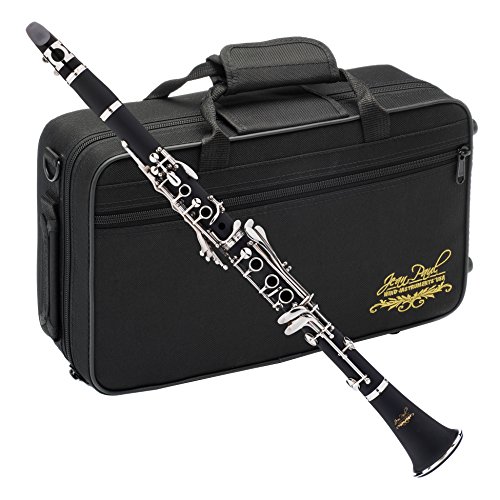
For 95% of beginners, the right clarinet is a plastic (ABS resin) Bb student model in the $300-450 range. Wood clarinets have a warmer tone but crack in dry climates and require careful humidity management, and that's a problem for later. Yamaha and Jupiter are the two most reliably consistent brands at the student level. Avoid no-name instruments off Amazon. The keywork often needs adjusting out of the box, which costs as much as the instrument.
Clarinet — what's the difference?
A few common shapes, each making a different trade.
Plastic (ABS Resin)
Durable, climate-stable, the standard starter choice.
Material
ABS resin
Climate sensitivity
None
Tone character
Bright and clear
Best for School band, beginners, all climates
Tradeoff Slightly brighter tone; lacks the warmth of wood
★★★★★Our rating· Only 5 left in stock - order soon.
Yamaha's student clarinet has been the band director recommendation for decades. The ABS resin body won't crack in dry climates the way wood does, the keywork is correctly proportioned for developing hands, and the intonation is consistent enough to let you actually tell when YOU are out of tune, not the instrument. Ships with a decent case, swab, and ligature.
What we like
Band directors' default recommendation for 30+ years
ABS resin won't crack in dry climates like wood does
Consistent intonation across all registers from day one
What to know
Stock mouthpiece is mediocre; budget $40 for a Vandoren B45 upgrade
More expensive than budget plastic clarinets at ~$380
If you need to see whether clarinet sticks before committing to $400, this is a reasonable entry point. Intonation is less consistent than Yamaha and the keys are stiffer, but both are workable for a semester. Seriously consider renting from a local music store instead. $20/month often makes more financial sense than a $150 clarinet.
What we like
Under $150, reduces risk if the student isn't sure they'll commit
Includes case, reeds, mouthpiece, and cleaning cloth
What to know
Intonation varies unit to unit, less predictable than Yamaha
Upgrade path is harder: trade-in value is low at resale
★★★★☆Our rating· Only 1 left in stock - order soon.
The classic step-up from student to intermediate. The grenadilla wood body produces the warm, dark tone you associate with concert band and chamber music (something plastic can't replicate). This is what serious students buy after 6-12 months. Don't rush it; you need to develop your ear enough to hear the difference.
What we like
Grenadilla wood body produces the warm tone plastic cannot match
Buffet Crampon is among the most respected clarinet makers in the world
Holds resale value significantly better than student plastics
What to know
Wood cracks in dry climates without humidity care
Expensive ($700-900); don't buy until you've committed to the instrument
Reeds are the most important consumable in clarinet playing and the biggest ongoing purchase. The reed, a thin slice of natural cane, vibrates against the mouthpiece and is what actually makes the sound. A good reed makes practice feel easy; a bad one makes everything a fight. Reeds last 2-4 weeks of regular practice before they stop responding. Strength 2 is correct for most beginners; move to 2.5 after 3-4 months. Always have a backup box on hand.
Best starter
D'Addario
Royal Bb Clarinet Reeds Strength 2 (10-pack)
$27.49 as of Jun 22, 2026
★★★★★Our rating· Only 14 left in stock - order soon.
The default recommendation from most school band directors. More consistent cut-to-cut than standard Rico, and easier to get a sound than Vandoren, which matters when you're just building embouchure. Strength 2 is correct for nearly all beginners: enough resistance to build good habits, not so much that you fatigue in 15 minutes. Order two boxes; you'll go through reeds faster than you expect.
What we like
Most consistent beginner reed at this price point
Strength 2 hits the sweet spot for new embouchure development
Every band music store stocks them; easy to replace locally
What to know
Natural cane: 1-2 duds per box are normal, even here
Less tonal complexity than Vandoren; you'll outgrow them
Rico Original Bb Clarinet Reeds Strength 2 (10-pack)
$24.69 as of Jun 22, 2026
★★★★☆Our rating· Only 10 left in stock - order soon.
A few dollars cheaper than Rico Royal, and perfectly workable for a beginner. More variation between reeds in the same box, but at this stage you can't really tell the difference yet. If budget is tight, start here and move up to Royal or Vandoren in a few months.
What we like
Cheapest playable reed option; good for finding out if clarinet sticks
Widely available in music stores and online
What to know
More consistency variation than Rico Royal within the same box
Thin response at the higher end of beginner practice
Traditional Bb Clarinet Reeds Strength 2 (10-pack)
$30.00 as of Jun 22, 2026
★★★★☆Our rating· In Stock
The professional standard that most serious clarinetists graduate to. More complex overtones, better projection, and genuinely more tonal range than Rico. The tradeoff: they demand more from your embouchure. Most players are ready for the switch at 3-6 months. When you make it, you'll immediately understand why everyone eventually ends up here.
What we like
Industry-standard reed for intermediate and professional players
More tonal complexity and projection than Rico at the same strength
What to know
Demands more from embouchure; challenging for first 3 months
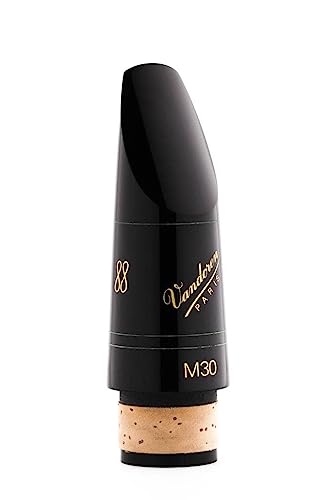
The mouthpiece is where the reed meets the instrument and is the factory of your tone. Most student clarinets ship with a plastic mouthpiece that works but produces a thin, closed sound. A quality mouthpiece upgrade is often the fastest way to improve your tone without years of additional practice. The Vandoren B45 has been the universal first-upgrade recommendation for decades, forgiving enough for beginners and good enough to carry you through years of serious study.
Best starter
Vandoren
B45 Bb Clarinet Mouthpiece
$128.00 as of Jun 22, 2026
★★★★★Our rating· In Stock
The B45 is the most-recommended mouthpiece upgrade for student clarinetists, and has been for decades. Medium-length facing, medium-tip opening, forgiving when your embouchure is still developing, but good enough to last through years of serious study. If your teacher says 'get a better mouthpiece,' this is what they mean. The improvement over the stock plastic mouthpiece is immediate.
What we like
The most-recommended beginner mouthpiece upgrade, and it's earned that reputation
Medium facing suits both developing and advanced embouchures
Noticeable tone improvement over the stock plastic mouthpiece immediately
What to know
Doesn't include a ligature; buy or reuse separately
Requires some embouchure development to unlock its full response
★★★★☆Our rating· Only 1 left in stock - order soon.
For players 1-2 years in who want a darker, more complex sound. Slightly longer facing and a narrower bore produce a rounder, more resonant tone suited to ensemble playing. Not for day one. You need developed embouchure to feel the difference between this and the B45. A good step up before auditions or serious ensemble work.
What we like
Darker, more resonant tone suited to ensemble and solo contexts
Loved by intermediate and advanced players in orchestral settings
What to know
Demands developed embouchure; not for the first 12 months
Less forgiving than B45 on days when your chops aren't warmed up
Clarinet care takes five minutes after every practice session and prevents costly repairs. The bore swab pulls moisture out of the instrument after playing. Skip this and pads start to fail, which costs $60-100 at a repair shop. Cork grease keeps the joints easy to assemble without stressing the tenon. A reed guard keeps your reeds flat and protected between sessions. These aren't optional. Your first teacher will insist on them.
Best starter
Yamaha
Clarinet Maintenance Kit
$21.49 as of Jun 22, 2026
★★★★★Our rating· Only 4 left in stock (more on the way).
Everything you actually need in one box: bore swab, mouthpiece brush, cleaning cloth, and cork grease. Yamaha makes reliable, well-engineered care items. The swab doesn't shred inside the bore, and the grease doesn't dissolve the cork over time. The kit costs about the same as buying each piece separately and makes an easy first purchase alongside the instrument.
What we like
Everything in one kit; no hunting for individual items
Yamaha swab is well-made and won't jam or shred in the bore
Cork grease is the right consistency, not too thick or too watery
What to know
Doesn't include a reed guard; buy separately
Swab wears out after 6-12 months of heavy daily practice
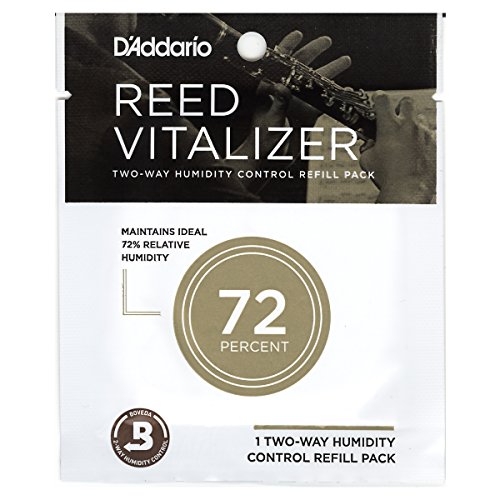
Reeds are sensitive to humidity. Too dry and they crack; too wet and they feel mushy. The Reed Vitalizer slip-in pack maintains 72% relative humidity inside your reed case, extending reed life significantly. Especially useful in dry climates or air-conditioned practice rooms. The 72% pack is for storage; let reeds equilibrate for a few minutes before playing.
What we like
Extends reed life by maintaining consistent humidity in storage
Especially valuable in dry climates or air-conditioned spaces
What to know
Most effective with a sealed reed case, not the basic cardboard holder
A method book gives you a structured path through the instrument that's hard to replicate from YouTube alone. Every note, rhythm, and technique is introduced in the right order, with targeted exercises. School bands typically use Essential Elements or Standard of Excellence, so ask your band director which one and match it. If you're studying privately, Essential Elements Book 1 is the most beginner-friendly option and the one most private teachers start with.
Best starter
Hal Leonard
Essential Elements for Band Clarinet Book 1
$12.99 as of Jun 22, 2026
★★★★★Our rating· In Stock
The most widely used beginning band method in the US, found in school music rooms from Maine to California. Introduces notes, rhythms, and technique in a well-paced progression with access to an online companion with play-along audio. If you're in school band, this is likely what your teacher will assign anyway.
What we like
The most-used beginning band method in US schools
Includes online play-along audio tracks; useful for self-study
Teachers everywhere know this book; easy to ask for help
What to know
Designed for group instruction; solo practice can feel dry
Book 1 goes quickly; you'll need Book 2 within 4-6 months
The classic private lesson companion. More challenging than Essential Elements from the start, better suited to students who want to push ahead of the class or are studying with a private teacher who isn't band-oriented. Rubank has been a trusted name in wind pedagogy for over 70 years.
What we like
More musically challenging than Essential Elements from the start
Preferred by many private teachers for its technical rigor
What to know
No play-along audio; harder to self-teach without a teacher
Moves faster than most school bands; can create misalignment
The clarinet rewards patience more than most instruments. Here's what the first four weeks actually look like: what's hard, what clicks, and how to accelerate past the squeaky stage.
The clarinet has a reputation for being hard to start. That reputation is half true. The first sound is harder to produce than on, say, a piano. You can’t just press a key and hear a note. But the window from “frustrating first squeaks” to “recognizable melody” is measured in weeks, not months. The instrument rewards consistent daily effort more than raw musical ability.
This is what your first four weeks actually look like.
Week 1: Getting a sound, any sound
The first challenge is the embouchure, the way you position your lips, teeth, and jaw to create a controlled vibration with the reed. Most beginners describe the first session as the most discouraging, and the second session as a revelation. That’s normal.
Here’s the basic setup:
Bottom lip rolls in slightly over the bottom teeth, cushioning the reed.
Top teeth rest lightly on the mouthpiece, about a centimeter from the tip.
Corners of the mouth pull firm (not a smile, more like holding in a sigh).
Blow a steady, warm stream of air. Not a burst, more like fogging a mirror.
The goal of week one is a clear, sustained tone on a single note. Start with open G (the middle register, right thumb and three left-hand fingers). It should resonate. If you’re getting squeaks, your embouchure is too loose or your reed is too hard.
Your lips will tire out within 15-20 minutes. That’s correct. Stop when you feel them fatiguing. Pushing through bad embouchure builds bad habits. Daily 15-minute sessions are dramatically more effective than one long practice per week.
Week 2: First notes, first scale
By week two, your embouchure is starting to learn what it’s supposed to do. Now you add notes.
The standard beginner path in most method books:
Open G (thumb + three left fingers) , the week one target
F and E , adding right-hand fingers one at a time
A and B , moving up; introduce the register key for higher octave
The first scale , usually C major or G major
The register key is the small key your left thumb hits to jump an octave. New players often forget it or mash it accidentally. Practice the same note both above and below the register break until the transition feels natural.
This is also the week you’ll notice that some notes sound great and others fight you. That’s partly the reed, partly your embouchure, partly the key (clarinets are inherently uneven: the throat tones, around G4-A4, are the weakest). Don’t chase perfection in week two. Hit the notes; worry about tone later.
About squeaking: Every beginner squeaks. It means the reed and mouthpiece aren’t sealing correctly, usually from loose embouchure. The fix is almost always “firm up the corners of your mouth,” not bite down harder, but tighten horizontally.
Week 3: Putting notes together
This is where it starts sounding like music. Your method book’s first real song, often something like “Mary Had a Little Lamb” or a folk melody, is within reach by week three.
A few things that matter more now:
Breath support is everything. The clarinet is one of the windiest instruments to play well, demanding a lot of air pushed steadily. Beginners run out of air mid-phrase and then push to compensate, which makes the tone thin and sharp. Take a full breath before each phrase. Play through to the phrase end even if you have air left. The habit of planning breath early is worth building now.
Tonguing. To start each note cleanly, your tongue touches the tip of the reed briefly, like saying “tu” or “dah.” Don’t think of it as stopping the air; think of it as releasing the air in controlled bursts. Staccato (short, detached notes) is easier to learn than slurs (connected notes), so most method books start there. Slurs come later.
Posture. Sit up, instrument at about a 45-degree angle from your body. Slumping pinches the diaphragm and your tone will suffer. Band directors are picky about this for a reason.
By the end of week four, you should be able to play 5-8 notes across both registers, navigate simple songs in your method book, and produce a reasonably stable tone on your best notes.
Here’s what’s probably still rough (and that’s fine):
Crossing the register break smoothly. This takes months, not weeks. The throat tones will be the last thing to sound good.
Fast technical passages. Your fingers don’t know the instrument yet. Slow is right. Play at the tempo where you can hit every note cleanly; speed follows accuracy, not the other way around.
Long tones. Your best tone lasts about 15-20 seconds before the embouchure starts to tire. Professional players sustain for a minute without wavering. That’s the gap, and it closes with time.
What’s going well by now: You have a real sound. People can tell what notes you’re playing. You probably have a song you can play recognizably. That is more than most beginners expect in the first month.
How to make the second month better than the first
The biggest leverage points for months two and three:
Upgrade the mouthpiece if you haven’t. The stock plastic mouthpiece that ships with most student clarinets is holding you back. A Vandoren B45 costs about $40 and will improve your tone immediately: more resonance, easier response. Don’t wait another month.
Vary your practice deliberately. Long tones (five minutes) → scales (five minutes) → method book song (five minutes) is a better fifteen minutes than noodling for fifteen. Structured short practice beats unfocused long practice at every stage.
Get a teacher, even a few lessons. One session with a competent teacher in month two will identify the two things actively holding you back, things you can’t see yourself. In the clarinet world, bad habits are sticky, and a teacher catches them early. Monthly lessons are better than none.
The instrument’s character
Part of why the clarinet takes time: it rewards restraint. Fast runs and loud high notes are achievable eventually, but the instrument’s real beauty is in the mid-register, played with a warm, focused tone. Clarinetists spend years chasing that sound. You’ll get a taste of it in month one. That taste is usually what makes people stay.
Save your money
What you don't need yet
Beginners get pressured to buy a lot of stuff that doesn't help them play
better. Here's what we'd skip on day one.
A wood clarinet — Wood sounds warmer but cracks in dry climates and costs 2-3x a student plastic model. Wait until you're six months in and know you're serious.
Upgraded barrel or bell — Barrel swaps are a subtle upgrade beloved by intermediate players. You won't hear the difference yet. Your embouchure is changing faster than your equipment needs to.
Professional-grade reeds (strength 3.5+) — Too stiff for beginners. You'll fatigue before you produce a sound and blame your technique when it's actually the reed. Strength 2 to start, 2.5 at three months.
A standalone metronome — Free phone apps work perfectly for this stage. GuitarTuna, Pro Metronome, or dozens of others do the job. Save your money for reeds.
A second mouthpiece — The Vandoren B45 is your mouthpiece for years. Don't start collecting them. Your teacher will tell you when it's time to experiment.
First week
Your first seven days
A short, real plan to get from gear-on-doorstep to actually playing.
Order your clarinet and two boxes of Rico Royal reeds. · Buy
Practice 15-20 minutes every day. Daily short sessions beat weekend marathons for embouchure development. Your lips need to build up gradually, and there are no shortcuts. · Action
Find a teacher or structured resource. School band class counts. Otherwise: Essential Elements Book 1 plus a quality YouTube channel. · Learn
Don't panic at squeaks. Squeaking is completely normal in week one and has nothing to do with your potential. It means the embouchure is still forming. · Action
Swab out the bore after every session; it takes 30 seconds and prevents expensive pad repairs down the line. · Action
FAQ
Common questions
How long until I can play a recognizable song?
Most beginners can play a simple melody within 2-3 weeks of daily practice. 'Hot Cross Buns' or 'Mary Had a Little Lamb' are usually in week one. Real songs with dynamics and expression take 2-3 months.
Should I rent or buy my first clarinet?
Rent if you're not sure the student will stick with it. Most music stores offer $20-30/month rent-to-own plans. Buy (the Yamaha YCL-255) if you're confident they'll continue, since buying is cheaper after three months and gives you resale value.
What reed strength should I start with?
Strength 2 for almost everyone. It's stiff enough to build correct embouchure without exhausting your face. Move to 2.5 around months 3-4. Most students don't need strength 3 until after a full year of regular practice.
Do I need lessons, or can I self-teach?
Lessons accelerate progress significantly, especially in the first six months when you're building embouchure. Self-teaching is possible with Essential Elements and YouTube, but bad habits are easier to develop alone. Even monthly lessons are better than none.
What's the difference between a Bb and Eb clarinet?
The Bb clarinet (soprano) is what nearly everyone starts on, the standard in school bands and private lessons. The Eb clarinet is smaller, pitched higher, and used in advanced ensemble work. Don't worry about Eb until you've been playing a year or more.
How much should I budget for reeds each year?
At one box every 2-3 weeks, expect to spend $150-200/year on reeds. It's the biggest ongoing cost of the instrument. The Reed Vitalizer humidity pack extends reed life, which helps at the margins.
International Clarinet Association — The global professional organization. Teacher directory, resources, and the annual ClarinetFest conference. Best place to find a local teacher.
Bmore Clarinet (YouTube) — One of the best free clarinet instruction channels for beginners and intermediates. Patient explanations, covers tone production, technique, and repertoire.
Vandoren — The leading reed and mouthpiece manufacturer publishes reed care guides, setup advice, and artist demonstrations. Their reed selection charts are genuinely useful for understanding strength differences.
Clarinet Corner — Detailed gear reviews, setup guides, and buying advice. The mouthpiece reviews are among the most thorough available.
r/Clarinet — Active community. The FAQ wiki has solid advice for common beginner questions about reeds, mouthpieces, and technique.
As an Amazon Associate, JustBeginning earns from qualifying purchases.
We may also earn commission from other affiliate programs linked on this
page. Editorial recommendations are independent; we don't choose
products based on commission rates.
Product prices and availability are accurate as of the date and time
indicated and are subject to change. Any price and availability
information shown on Amazon at the time of purchase will apply.

 Best starter