Mandolin is one of the most rewarding folk instruments you can pick up, and also one of the most confusing to buy. Before you spend money on the wrong body style or a hundred-dollar bag, here's exactly what a new player needs, and what can wait.
By Colin B. · Published May 24, 2026 · Last reviewed June 13, 2026
A Rogue + strings + tuner runs about $115. Step up to the Kentucky KM-150 with strings, tuner, and a gig bag for around $370, and you'll still be playing that instrument three years from now.
We earn commission on qualifying Amazon purchases — see our
affiliate disclosure.
Price tiers and budget totals shown above are editorial estimates;
actual Amazon prices vary.
At a glance
Our top pick in each category
The fastest path through this guide — each best-starter pick by category.
Scroll for the budget and upgrade alternatives.
Don't let the A-style vs. F-style decision paralyze you. A-style (the teardrop shape) plays exactly the same as F-style (the scrolled one with points) at your level. F-style costs more because of aesthetics and brand association with professional bluegrass players, not because it sounds better. Buy an A-style and revisit in a year if you decide you want the look.
Mandolins have 8 strings in 4 paired courses (the same note tuned in unison, doubled). That's what gives mandolin its bright, jangly ring. You tune it like a violin: G, D, A, E from low to high. If you play guitar, the scale length is shorter and the neck feels different, but the skills transfer faster than you'd expect.
Budget mandolins almost always need a basic setup. The nut slots are cut too high, the action is uncomfortable, and the strings are dead from sitting in a warehouse. A local luthier can fix all of this in under an hour for $30–60, and the instrument will play completely differently afterward.
The gear
What you actually need
Mandolins
Every mandolin decision starts with A-style or F-style. The short answer: get an A-style. The teardrop body plays identically to the scrolled F-style. F-style costs more because it looks expensive and is associated with professional bluegrass players, not because it sounds better at beginner level. Buy an A-style now. You can always upgrade after you've played long enough to hear a real difference.
Mandolins — what's the difference?
A few common shapes, each making a different trade.
A-Style
Teardrop body. Same voice as F-style, much more affordable. The right pick.
Body
Teardrop
Price range
$80–400
Best for All beginners, folk, bluegrass, Celtic, old-time
Tradeoff Less stage-flashy than F-style at jams and performances
F-Style
Scroll and points. Striking looks, no tone advantage at beginner level.
Body
Scroll + points
Price range
$250–900+
Best for Experienced players, stage performance, serious bluegrass
Tradeoff Pay $100–300 extra for aesthetics alone as a beginner
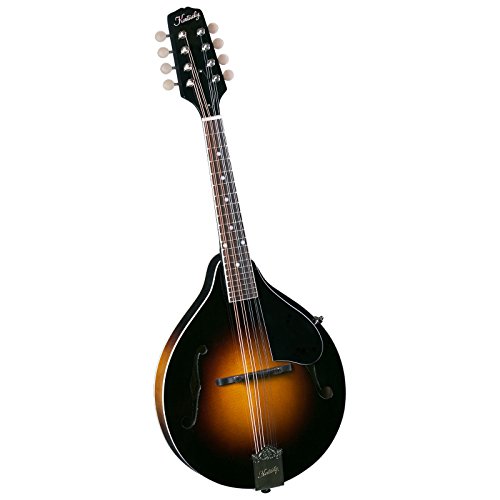
Best starter
Kentucky
KM-150 Standard A-Style Mandolin
$595.00 as of Jun 22, 2026
★★★★★Our rating· Only 4 left in stock - order soon.
Kentucky has been a trusted mandolin brand for decades and the KM-150 is their proven starter. Solid carved spruce top and solid flamed maple back and sides. You'll hear a real difference in clarity and sustain over budget alternatives. Setup quality off the shelf is noticeably better. This is the instrument that carries you through the entire learning curve.
What we like
Solid carved spruce and flamed maple, real tonal improvement over laminate
Kentucky setup quality is better than budget alternatives off the shelf
Carries you through years of intermediate playing
What to know
Real investment: only buy once you've committed to the instrument
If you're genuinely unsure whether mandolin will stick, the Rogue RM-100A is an $80 way to find out. It needs a quick setup to play comfortably. Adjust the bridge saddle height and put on fresh strings. Takes 20 minutes but the result is a playable beginner instrument. Don't judge it out of the box.
What we like
Under $100, a low-risk way to try the instrument
Genuinely playable after a quick bridge adjustment
What to know
Bridge height often needs adjustment before it's comfortable
Tone ceiling is limited. You'll outgrow it if you stick with it.
★★★★☆Our rating· Only 8 left in stock - order soon.
The Loar name carries real weight in American folk and bluegrass circles. The Honey Creek has a carved spruce top and maple back and sides. The combination gives it the bright, projecting tone that the style demands. For players who've committed and want the tonal step up plus the brand recognition at jams.
What we like
The Loar name carries real respect in folk and bluegrass communities
Carved spruce top gives bright, projecting mandolin tone
Noticeably better playability over Rogue-tier instruments
What to know
Factory strings are mediocre. Replace them first thing.
Only marginally different from the Kentucky at a higher price
Mandolin strings are looped under high tension and wear out faster than guitar strings. More importantly, every budget mandolin ships with strings that are either dead or just bad. Your first purchase after the mandolin should be a fresh set of phosphor bronze mediums. The difference between factory strings and a proper set is dramatic. It sounds like a different instrument.
Best starter
D'Addario
EJ74 Phosphor Bronze Mandolin Strings
$9.99 as of Jun 22, 2026
★★★★★Our rating· In Stock
D'Addario EJ74s are the default choice for mandolin players at every level. Medium gauge (.011–.040), phosphor bronze, USA-made. They hold tune reliably and have the bright, full mandolin tone you're expecting. Change them the day your mandolin arrives. Do not wait.
What we like
Industry standard, used by mandolin players at every level
Phosphor bronze delivers bright, authentic mandolin tone
Holds tune reliably after initial stretch-in
What to know
Require 20–30 min of play to stretch in and settle
Medium gauge feels stiff for some complete beginners at first
An ultra-light gauge option (.009–.032) for players who find EJ74 mediums too stiff on smaller hands. Less tension makes fretting easier. Good as a backup option. Buy a multi-pack and swap every month or two at this price point.
What we like
Ultra-light gauge means significantly easier fretting for small hands
Slightly warmer tone than D'Addario mediums
What to know
Less tension reduces brightness and projection noticeably
Less widely recommended than D'Addario in folk communities
Flatpicking is standard mandolin technique: you use a single stiff pick, not fingernails. Mandolin picks run thicker and rounder than guitar picks. Most players land between .73mm and 1.0mm. Tortex (nylon-feel composite, not actual tortoiseshell) is the modern standard: matte surface grips in sweaty hands, consistent tone. Don't use a regular thin guitar pick. It'll feel wrong immediately.
Best starter
Dunlop
Tortex Standard .88mm Picks (12-pack)
$5.76 as of Jun 22, 2026
★★★★★Our rating· In Stock
The .88mm Tortex is what most mandolin teachers hand students on day one. The matte surface doesn't slip when your hands warm up, the gauge works for both strumming and single-note runs, and a 12-pack means you always have one when you lose the current one.
What we like
Matte surface grips well in sweaty hands while playing
12-pack means losing picks stops being a problem
.88mm is the go-to gauge for most folk and bluegrass styles
What to know
Thinner than specialty picks. Some bluegrass players prefer 1.0mm+.
Standard teardrop shape doesn't suit every picking angle
Primetone Standard 1.3mm Sculpted Plectra (12-pack)
$21.26 as of Jun 22, 2026
★★★★☆Our rating· Only 1 left in stock - order soon.
The Primetone is made from Ultex/Grilon, a harder, brighter-sounding material than Tortex. The 1.3mm gauge gives confident attack for bluegrass and flatpicking styles. Popular with players who've moved past the beginner stage and want more clarity and definition from each note.
What we like
Harder Ultex material produces more clarity and note definition
1.3mm gauge gives confident attack for bluegrass flatpicking
What to know
1.3mm may feel too stiff when strumming chords vs. single-note runs
Harder material than Tortex. Takes adjustment if you're used to softer picks.
Mandolin has 8 strings in 4 paired courses (GG, DD, AA, EE). Keeping all eight in tune is the first skill you'll develop, and it takes longer than you'd expect in the early weeks. A clip-on chromatic tuner is non-negotiable. Phone apps work in quiet rooms but fail completely at open jams. A dedicated clip-on costs $15 and is always there when you need it.
Best starter
Snark
ST-2 All Instrument Clip-On Chromatic Tuner
$
★★★★★Our rating
The Snark ST-2 clips to the headstock and reads vibration directly from the wood. Accurate even in noisy rooms. Chromatic mode works for any instrument. The display rotates so you can read it from any angle. It's the tuner in basically every beginner's case, and for good reason.
What we like
Reads wood vibration, works even in loud jam settings
Chromatic mode tunes any stringed instrument
Rotating display reads from any playing angle
What to know
Battery life is modest. Keep a CR2032 spare in your case.
Clip feels flimsy on headstocks with thicker tuner pegs
The Peterson StroboClip is what professional players use when accuracy really matters. Strobe display is far more precise than needle or LED tuners. Overkill for year one, but genuinely excellent once you've committed deeply to the instrument and care about intonation.
What we like
Strobe accuracy is far more precise than standard LED clip-ons
Professional standard trusted by studio musicians
What to know
Strobe display takes time to learn to read confidently
Much more expensive than a Snark that handles 95% of the job
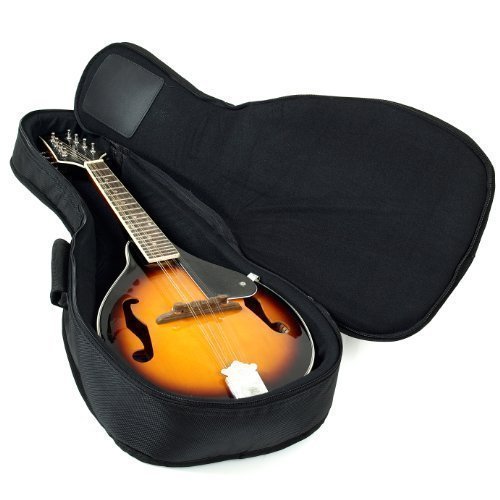
Mandolin tops can crack from temperature swings, a knock from a car door, or just leaning wrong against a wall. A padded gig bag is the minimum. A hard case is the right call for frequent travel or cold climates. Check before buying separately, since some mandolins include a gig bag and some don't.
Best starter
Hola! Music
Hola! Heavy Duty A & F Style Mandolin Gig Bag
$
★★★★★Our rating
15mm thick padding, backpack straps, and explicitly designed to fit both A and F style mandolins. Under $30 and the only gig bag on Amazon built specifically for the instrument. Well-reviewed by mandolin players for fit and durability. A solid baseline case that protects your investment without overthinking it.
What we like
15mm padding, real protection against bumps and drops
Fits both A and F style mandolins, no fitment guesswork
Under $30 with backpack straps for hands-free transport
What to know
Not waterproof. Keep the mandolin away from heavy rain.
No hard-shell protection for drops or being stepped on
★★★★☆Our rating· Only 11 left in stock - order soon.
A hard shell case is the right call if you travel frequently or live somewhere with big temperature swings that crack instrument tops. Shaped plush interior, two latches, and a handle that holds up. Significantly better protection than any gig bag. Verify A-style vs. F-style fit before ordering.
What we like
Hard shell protects against drops and temperature extremes
Shaped plush interior prevents movement gig bags allow
What to know
A-style and F-style cases are not interchangeable. Verify fit.
Heavier and bulkier than a gig bag for everyday carry
Most new mandolin players get overwhelmed by tuning 8 strings before they play a note. Here's how the first month actually goes, and what to focus on week by week.
Mandolin has a reputation as a hard instrument to start. It isn’t, not really. What it has is a steep first week: 8 strings to tune, a short neck that feels unfamiliar, and string pairs that buzz if you don’t press firmly enough. But those problems solve themselves within a week of regular practice, and after that the instrument starts opening up fast.
Here’s what the first month actually looks like, with what to focus on and what to ignore.
Week 1: Just get it in tune
Before you play a single chord, you need to understand what you’re dealing with. A mandolin has 4 courses, each with 2 strings tuned in unison. From lowest to highest: G, D, A, E (the same tuning as a violin, and the same as the top four strings of a guitar in reverse).
Clip your Snark ST-2 onto the headstock and tune every string individually. Pluck each string in a pair separately to check they match. They won’t match on day one. Factory instruments ship detuned and loose. Retune after 10 minutes of playing. Retune again. This is normal; new strings stretch. By the end of week one, tuning will take two minutes instead of ten.
What to play: Learn one chord. Just G. Place your first three fingers on the fretboard in a standard G shape and strum all four courses. It’ll buzz. Press harder and adjust your finger position until the buzz goes away. That’s the whole first week: one chord, no buzz.
Week 2: Three chords and a song
Once G rings clean, add D and A. These three chords cover an enormous percentage of folk, bluegrass, and old-time songs. Learn the shapes from any beginner video (Mandolin Cafe’s free lessons section is good). The transitions between them will feel awkward. That’s normal and it’s temporary.
Your first song target: “Shady Grove” or “Old Joe Clark.” Both use just G, D, and A in patterns simple enough to read at a glance. More importantly, both are staples at open jams. Learning them now means you’ll have something to play when you eventually show up to a session.
One technical thing to focus on this week: your pick angle. Hold the pick so you’re hitting the strings at a slight downward angle, not flat. A flat pick grip produces a scratchy tone; a slight tilt gives you the bright, cutting mandolin sound. This is worth 10 minutes of attention now to avoid fixing later.
What to skip: Tremolo. It’s the signature mandolin technique: rapidly alternating down-up strokes to sustain a note. It sounds incredible when done well, and beginners want to learn it immediately. Don’t. Your picks need to be reliable and your chords need to ring clean first. Tremolo is a week 5 or 6 topic at the earliest.
Week 3: Getting comfortable on the neck
By now you can play three chords and change between them without losing the beat. This week is about getting comfortable in first position (the first four frets, where most folk and bluegrass lives).
Add a fourth chord: Em or C. Em is a single-finger chord (one finger barring two strings) and is surprisingly easy. C is more of a stretch but shows up everywhere in Celtic tunes. Pick whichever fits the songs you’re already playing.
Try a simple melody: Pick out a tune note by note rather than chording through it. “Old Joe Clark” has a pentatonic melody that sits entirely in first position. Playing single notes is how you’ll learn where the notes live on the neck, which matters more for mandolin than for guitar.
A common frustration this week: the strings feel too tight, the frets are too close together, and your fingers refuse to go where you tell them. This is just unfamiliarity. It passes. If the strings genuinely feel painfully stiff, check that your bridge isn’t set too high (common on budget instruments). Adjusting bridge height can transform how the mandolin feels.
Week 4: Your first real session
By week four, you should be able to play three or four chords, pick out a simple melody, and stay roughly in tune for a 30-minute session without stopping to retune every five minutes.
This is the week to find a jam. Bluegrass and old-time jams are everywhere. Search for “open jam + your city” or check the Mandolin Cafe forums for your area. Show up, sit in the back for the first session, and just listen. Nobody expects you to play. Watch how players signal song changes, how the rhythm section interacts, how backup playing differs from lead. You’ll learn more from one jam session than from a week of solo practice.
What you’ll notice: Real mandolin players use the “chop” (a percussive muted strum on the offbeats that acts as the rhythm instrument in bluegrass). It’s unmistakable once you hear it and essential for jam playing. You don’t need it yet, but watching players use it gives you a target for month two.
Buzzing strings. You need to press the strings firmly and position your fingers close to (but not on) the fret wire. Light pressure causes buzz. This is the #1 beginner complaint and it goes away with time.
The paired strings. If your two G strings aren’t in exact unison, chords sound off even when every string is “in tune.” Learn to check pairs individually with your tuner.
Pick tension. Beginners grip the pick too tight and the arm stiffens up. Loosen your grip. The pick should feel like it could fall out of your fingers. Mandolin is played from the wrist, not the arm.
The short scale. Coming from guitar, the frets feel impossibly close. Your fingers will adapt within two weeks. Don’t move the instrument; move your hand.
None of these are problems. They’re the instrument introducing itself.
What changes everything in month two
After you can play three or four chords cleanly and change between them without losing the beat, a few things will unlock the next level of progress:
Learn one full song by heart. Not half a song, not “I kind of know it.” All the way through, from memory, in time. It changes how you think about the instrument.
Find one person to play with. Mandolin is at its best in conversation with another instrument. Even a friend on guitar playing I-IV-V progressions while you practice chords will teach you rhythm awareness that solo practice never will.
Watch one great mandolinist. Bill Monroe (the founder of bluegrass), Chris Thile (modern virtuoso), or Rhiannon Giddens’s band. What they’re doing is far beyond you right now, but watching it calibrates your ear for what the instrument can actually do.
You’re not a month-one player anymore. You’re a mandolinist who’s just getting started.
Save your money
What you don't need yet
Beginners get pressured to buy a lot of stuff that doesn't help them play
better. Here's what we'd skip on day one.
An F-style mandolin — It plays identically to A-style at your level. You're paying for looks, not sound. Buy an A-style and reconsider after a year.
A capo — Unlike guitar, mandolin capo use is limited and rarely needed for learning. Get the fundamentals first.
Fingerpicks or thumb picks — Flatpicking (single flatpick) is the standard mandolin technique. Learn that first. Fingerpicking style comes later if you branch into specific genres.
A mandolin strap — Most mandolin practice happens seated. A strap helps for standing gigs, but don't worry about it until you're actually playing out.
Premium boutique picks — Picks like BlueChip or Wegen are excellent, but you can't tell the difference until you've built real flatpicking technique. Start with Tortex.
First week
Your first seven days
A short, real plan to get from gear-on-doorstep to actually playing.
Order the Kentucky KM-150, the mandolin most teachers recommend once you're serious about learning. · Buy
Learn to tune GDAE. Mandolin is tuned in pairs. Each course is two strings in unison. Tune G first (lowest), then D, A, E. Practice tuning until it takes under two minutes. · Action
Learn three open chords: G, D, and A. Those three cover a massive portion of folk, bluegrass, and country songs. · Learn
Try 'Shady Grove' or 'Old Joe Clark' as your first song. Both are simple, both are staples at jams, and both teach more than scales. · Action
Find your nearest bluegrass or old-time jam. Sit in the back for the first session and just listen. Jams are how mandolin players learn. The community is welcoming to beginners. · Action
FAQ
Common questions
Is mandolin hard to learn compared to guitar?
Mandolin is harder in the early weeks. The neck is shorter, the string pairs require different fretting pressure, and the tremolo technique takes real practice. But the chords are simpler shapes than guitar barre chords, and you can be playing songs at a jam within a month. Guitar players learn faster than absolute beginners because the GDAE tuning overlaps with the top four strings of guitar.
Should I buy A-style or F-style as a beginner?
A-style, no contest. F-style mandolins (with the scroll and points) look stunning but play identically to A-style at a beginner level. The price premium for F-style is entirely about aesthetics. Buy an A-style now, and if you're still playing in a year and want the look, upgrade then.
What music can I play on mandolin?
Bluegrass and old-time American music are the mandolin's core repertoire, but the instrument appears everywhere: Celtic and Irish sessions, Americana, country, singer-songwriter, classical (it has a serious classical tradition), even rock (R.E.M.'s 'Losing My Religion' is a mandolin part). Start with folk; branch out as you get comfortable.
How often do I need to change strings?
For a beginner playing two or three times a week, every two to three months is a reasonable interval. Strings lose brightness and tuning stability as they wear. The bigger urgency: change them immediately when you first receive the mandolin. Factory strings on budget instruments are often dead before you play a note.
Do I need a teacher, or can I self-teach?
You can get surprisingly far with YouTube and the Mandolin Cafe community. But a single in-person lesson around your first month of playing, once you have basic chords and can tune, will identify and fix the one or two technique issues that would otherwise take a year to unlearn. Teachers are more valuable for diagnose-and-fix than for initial instruction.
What's the cheapest way to start playing mandolin?
Rogue RM-100A (~$80) plus a set of D'Addario strings (~$8) and a Snark tuner (~$15) gets you started for around $115. The Rogue needs a basic bridge setup when it arrives. Spend 20 minutes watching a YouTube video on adjusting mandolin action. After that, it's a real learner instrument.
Mandolin Cafe — The central hub of the mandolin community online. Forums, free lessons, gear reviews, and classified ads. The first place to look for any mandolin question.
Mike Marshall on YouTube — One of the most respected mandolin educators. His beginner and intermediate instructional videos are patient, thorough, and genuinely useful.
r/Mandolin — Active subreddit for all levels. Good for gear questions, song recommendations, and jam-finding. The gear advice is reasonably trustworthy here.
Peghead Nation — Subscription-based video lessons from world-class players including Mike Marshall and Brittany Haas. Worth it once you've got the basics. The depth is serious.
Elderly Instruments — Legendary Michigan instrument shop with decades of expertise. Their staff picks are trustworthy, and they carry instruments you won't find on Amazon.
As an Amazon Associate, JustBeginning earns from qualifying purchases.
We may also earn commission from other affiliate programs linked on this
page. Editorial recommendations are independent; we don't choose
products based on commission rates.
Product prices and availability are accurate as of the date and time
indicated and are subject to change. Any price and availability
information shown on Amazon at the time of purchase will apply.
Our top pickKentucky KM-150 Standard A-Style Mandolin

 Best starter