Swing dancing is one of the few hobbies where showing up is most of the hobby. The community is magnetic, the music makes you move, and you'll be social dancing with near-strangers after your very first class. Here's what you actually need, and why real dance shoes are the one purchase you should never skip.
By Colin B. · Published May 23, 2026 · Last reviewed June 7, 2026
Dance shoes run $60-90 and are the one non-negotiable purchase. Add a beginner class pass and a circle skirt and you're in for under $200.
We earn commission on qualifying Amazon purchases — see our
affiliate disclosure.
Price tiers and budget totals shown above are editorial estimates;
actual Amazon prices vary.
At a glance
Our top pick in each category
The fastest path through this guide — each best-starter pick by category.
Scroll for the budget and upgrade alternatives.
Go to at least one social dance before spending anything. Most swing scenes run weekly drop-in nights where total beginners are genuinely welcome. Five minutes on the floor in street shoes will tell you whether this is for you, and if it is, you'll know immediately why dance shoes matter.
The community is the product. Swing dancing without the social element is just an exercise class. Find your local swing club first. A good scene is worth relocating a practice schedule for.
Don't buy instructional videos before you've taken a live class. Footwork looks simple on video and feels completely different in your body. One class with corrections from a real teacher is worth six hours of solo video study.
Swing dancing in rubber-soled sneakers is like paddling a kayak with a tennis racket: it technically works, but you're fighting your equipment constantly. Real dance shoes have suede or leather soles that slide predictably on wood floors, letting you pivot, spin, and shift weight without catching. The improvement is immediate and dramatic. Budget $60-90 for a first pair and treat them as dance-only: the suede sole wears out fast on sidewalks.
Dance Shoes — what's the difference?
A few common shapes, each making a different trade.
Suede sole
The swing dancer's standard. Slides on wood, pivots easily, the default choice.
Floor slide
High (ideal)
Best on
Wood, sprung floors
Pivot feel
Effortless
Best for All social dances, most venues, beginner through advanced
Tradeoff Too slippery on outdoor concrete or unfinished floors
More durable and slightly more grip. Traditional and long-lasting.
Floor slide
Moderate
Best on
Hardwood, studio floors
Pivot feel
Controlled
Best for Traditional venues, rough-textured dance floors
Tradeoff More resistance than suede: footwork feels heavier on slicker floors
Rubber sole (avoid for dancing)
Street shoes. Fine for watching. Wrong for any actual swing footwork.
Floor slide
None
Best on
Outdoors only
Pivot feel
Dangerous
Best for Outdoor street festivals on pavement
Tradeoff Catches on wood floors and stresses ankles on turns: real injury risk
Best starter
Aris Allen
Women's 1940s Heeled Wingtip Mary Jane Swing Shoe
$$
★★★★★Our rating
Aris Allen is the dominant brand in American swing scenes for a reason: suede leather soles, a classic silhouette, and a price that doesn't demand commitment. The Mary Jane strap secures your foot better than a slip-on for spins. Available in a wide size range, sizes true, and every dancer in your local scene probably owns a pair. Men's spectator oxfords in the same line are equally solid.
What we like
Suede leather sole: the swing dance floor standard
Mary Jane strap keeps the shoe planted through spins and fast footwork
Wide size range; fits true with multiple width options
What to know
Dance-only: suede sole wears through on sidewalks fast
Suede needs occasional brushing to maintain the right slide
If you want to test the waters before committing to a real swing shoe, Capezio's leather-soled ballet flat costs under $40, slides decently on wood floors, and is available in virtually every size. It's not a swing shoe: the heel is flat where swing shoes have a modest Cuban heel, but it's a legitimate entry point until you're sure you'll stick with the hobby.
What we like
Under $40 with a leather sole that actually slides on wood
Available in nearly every size with reliable Capezio sizing
What to know
Flat heel limits technique on turns and aerials
Less ankle support than an Oxford-style swing shoe
Men's 1930s Black and White Spectator Wingtip Dance Shoe
$$
★★★★☆Our rating
When you're ready for a second pair, or a man wanting something more authentic than a ballet flat: the two-tone spectator wingtip is the classic swing silhouette. Suede/leather split sole lasts longer, the heel height is tuned for swing technique, and the black-and-white colorway makes your footwork visible to partners. These are the shoes you keep for years.
What we like
Classic two-tone silhouette: signals you know the culture
Split sole lasts longer and flexes better than single-sole
Correct heel height for Lindy Hop and Balboa technique
What to know
Some colorways run narrow: measure before ordering
More expensive than the entry model; buy after you're committed
Live classes are irreplaceable: a teacher watching your footwork in real time catches things no video ever will. But the right book or structured video series accelerates your improvement dramatically between classes. The swing community has been producing instructional materials since the 1990s revival, and the best ones have been refined over decades of teaching beginners. Two focused resources beat a playlist of twenty mediocre ones.
Best starter
Temple University Press
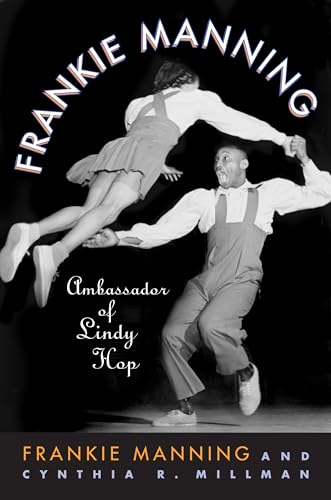
Frankie Manning: Ambassador of Lindy Hop
$62.05 as of Jun 22, 2026
★★★★★Our rating· Only 1 left in stock - order soon.
Frankie Manning co-invented the Lindy Hop aerial and is the single most important figure in the swing revival. This autobiography isn't just history: it's the cultural primer the swing scene treats as required reading. Understanding where Lindy Hop came from changes how you dance it, how you engage with the music, and how you connect with the community. Read it in your first month.
What we like
Cultural foundation the swing community treats as essential reading
Written in Frankie's own voice: approachable, warm, funny
Paperback under $20; cheap for what it teaches
What to know
Memoir not technique guide: won't teach you footwork
Dense Harlem history in early chapters; skip ahead if you want swing era content
Swing Dance Basics: The Complete Step-by-Step Guide to Lindy Hop, Charleston, and Social Dance Confidence
$19.99 as of Jun 22, 2026
★★★★☆Our rating· In Stock
A structured breakdown of Lindy Hop's foundational moves, patterns, and partner connection concepts. Not as good as a live class, but better than most YouTube tutorials for systematic beginners who need reference material they can return to between sessions. A practical complement to the Frankie Manning biography for self-studiers.
What we like
Structured move breakdown you can re-read between classes
Covers both Lindy Hop and Charleston basics in one volume
Under $18: the cheapest structured curriculum available
What to know
Written instruction can't show movement: pair with YouTube tutorials
Newer title; less community track record than Frankie Manning bio
The dress code at most swing events is 'vintage-inspired but not required.' Your regular clothes work for your first few sessions. But swing dancing has an aesthetic for good reason: full circle skirts, 1940s silhouettes, and two-toned shoes evolved alongside the dance form. Dressing the part signals that you're in on the culture, and a full circle skirt that flares when you spin is genuinely better than jeans for partnered dancing. Men have it easier: fitted trousers and a collared shirt work everywhere.
Best starter
Hey Viv
! Full 50s Style Circle Skirt
$24.00 as of Jun 22, 2026
★★★★★Our rating
A full circle skirt is the most functional clothing item a swing dancer can own. It flares on spins, gives your partner visual feedback, and signals you know the culture. Hey Viv's 50s-style circle skirt comes in multiple colors and lengths, holds its shape through a full evening, and pairs with any fitted top and your dance shoes.
What we like
Full circle cut flares dramatically on spins: looks and functions great
Gives partners visual cues on your movement and timing
Available in many colors; holds shape through a full evening
What to know
Sizing runs large: check the chart and consider going down a size
Longer lengths (below knee) can catch on heels during dips
For under $40, this polka-dot vintage-style dress covers the full swing aesthetic: A-line skirt, fitted bodice, period-appropriate print. It's not bespoke, but it photographs well at events and reads correctly on the dance floor. A solid choice if you'd rather wear a dress than a separate top and skirt.
What we like
Under $40 and reads correctly as vintage swing aesthetic
A-line skirt gives enough flare for spins and social dancing
What to know
Lightweight fabric: cold for outdoor venues or cool ballrooms
Prints vary by batch; color accuracy differs from product photos
Men's swing attire is simpler: slim-fit trousers, a collared shirt, suspenders if you're feeling it. Haggar's slim khakis hit the right silhouette without requiring vintage tailoring: they're tapered enough to look intentional and relaxed enough to move in. High-rise styling is more accurate to the era; these aren't quite there, but they're the practical everyday entry point.
What we like
Slim taper reads intentionally vintage without full costume commitment
Wrinkle-resistant: looks good after a full evening of dancing
What to know
Not a true high-rise 1940s silhouette: more modern than period-accurate
Khaki only; serious dancers eventually want pleated wide-leg options
Three things make home practice significantly better: something to play music, something to protect your feet in early sessions, and a way to carry your dance shoes without destroying them. None of these are urgent: wait until you've attended a few social dances and know you're sticking with it.
Best starter
JBL
Clip 4 Portable Bluetooth Speaker
$54.95 as of Jun 22, 2026
★★★★★Our rating· In Stock
Solo practice requires music while you move: a portable speaker beats your phone every time. The Clip 4 clips to anything, runs eight hours on a charge, and produces clear enough sound for big band arrangements without distortion. Small enough to clip to your dance bag for outdoor practice sessions.
What we like
Clips to anything: dance bag, chair, curtain rod during home practice
8-hour battery and IP67 waterproofing for outdoor practice sessions
What to know
Tops out at moderate volume: not enough for a large studio or garage
Mono speaker; stereo separation matters for some big band recordings
The rule in swing dancing is simple: don't walk outside in your dance shoes. A dedicated shoe bag keeps them separate from your street shoes and extends the life of the suede sole. This mesh drawstring bag costs under $15, fits in any gym bag or tote, and does exactly what it needs to.
What we like
Keeps suede soles away from street shoes: the primary reason to own one
Under $12 and fits any gym bag or tote without bulk
What to know
Drawstring bag, not a structured case: shoes can get scuffed inside
No ventilation; air out shoes before bagging if they're damp
Swing dancing has a reputation for being welcoming, and it earns it. But there's a specific learning curve: here's what your first month actually looks like, from your first nervous class to your first real social dance.
Swing dancing has an entry point that almost no other partner dance can match: you can go to your first social dance the same night you take your first beginner class, dance with ten different partners, and have a genuinely good time doing it. The learning curve exists, but it doesn’t lock you out of the fun while you’re climbing it.
This is what your first month actually looks like: what to expect, what to practice, and what to stop worrying about.
Week 1: Show up before you’re ready
The single best advice anyone gives a new swing dancer is also the hardest to follow: go to a social dance before you feel ready.
Most swing scenes run a beginner lesson in the first hour of a social night, followed by open dancing. The beginner lesson covers a basic six-count or eight-count pattern: step-step-triple-step, or rock-step-triple-step depending on the style, and then everyone goes on the floor together. You’ll rotate partners every few minutes. The experienced dancers are used to beginners and are genuinely patient.
What you need to know on day one:
Lead and follow roles. Swing is a partnered dance; someone leads (traditionally a man, but many scenes are role-flexible) and someone follows. You’ll choose a role at the start and stick with it for your first few months. Don’t try to learn both simultaneously.
The basic rhythm. Six-count Lindy Hop goes: step-step, triple-step, rock-step, triple-step. Hear it in the music. Count it out loud at home. This is the foundation everything else is built on.
Connection. The physical link between lead and follow (a handhold, a frame) is where communication happens. Keep it firm but not stiff. If you’re gripping tight enough to feel your knuckles, loosen up.
You don’t need to know anything else. Go to the class, rotate partners, stay after for the social. That’s week one.
Between your second and fourth week, you’ll hit the first real plateau. The basic pattern feels comfortable, but adding turns or anything with footwork variation suddenly breaks everything.
This is normal, universal, and temporary.
The thing that’s happening is the classic split-attention problem: while your brain is managing the pattern, it can’t also manage the lead/follow communication, the music, and your partner’s movements. Each element has to become automatic before you can stack another on top of it.
A few things that help:
Practice the basic alone, to music. Five minutes a day in your living room, to actual swing music (Benny Goodman, Count Basie, Ella Fitzgerald), will build muscle memory faster than one weekly class. It sounds tedious. It works.
Listen to the music differently. Swing music has a pulse in the brass and rhythm sections that’s easy to count, and feeling that pulse in your body changes how you dance. Most beginners follow the melody. Follow the drums and bass instead.
Stay until the end of the social. The last hour of a swing night is when the floor clears out and the better dancers are more visible. Watch what they do with their weight: it’s almost always quieter and more grounded than you expect.
What you’re not ready for yet: spins and dips. They look great. Your lead isn’t precise enough and your follow isn’t grounded enough. Wait. They’ll appear naturally in weeks four through six.
Week 4: The first real dance
Around week four, something shifts. The basic stops requiring active thought. You stop counting. You start actually hearing the music while you’re dancing.
This is when the feedback loop that makes swing dancing addictive kicks in. You’re no longer managing mechanics: you’re dancing with another person to a song. The entire room becomes information: where they’re shifting weight, what the music is doing, where there’s space in the beat to add a little something.
A few milestones that usually happen in this window:
Your first improvised variation. Not a taught move, just something you felt in the music and your partner responded to. This is the actual point of the dance.
Reading connection. Follows start to feel the difference between a clear lead and a muddy one. Leads start to feel when a follow is behind the beat or ahead of it. The physical conversation becomes real.
The community hook. You know three or four regulars at your local scene by name. There’s a Tuesday night or a Saturday social you now put in your calendar. This is how swing dancers stay for decades.
What to practice and what to ignore
The internet and YouTube are full of swing dance tutorials. Most of them are premature for a beginner in the first month. A few things to deliberately not chase yet:
Aerials. The flashy lifts and flips. These require years of trained technique and a partner you trust implicitly. Scenes with a good culture don’t allow aerials on crowded social floors anyway. You’ll get there eventually. Not now.
Charleston and Balboa. Related swing styles with their own vocabularies. Both are excellent. Both become accessible faster once Lindy Hop basics are solid. One style first.
Lead-follow role switching. Some dancers do both. Most don’t, and the ones who do learned both separately after getting solid at one. Pick a role and commit for your first six months.
What to actually practice:
The basic pattern, alone, to music, every day
Timing: staying with the beat, not behind it
Frame: light but present, not loose, not rigid
Going to social dances. This is where you improve fastest.
Every beginner worries about the same handful of things. They’re all worth letting go:
“I’ll step on my partner’s feet.” You will. So does everyone. Partners at a swing social have had their feet stepped on a thousand times and think nothing of it.
“I don’t know enough moves to dance for a whole song.” You don’t need moves. You need a basic pattern and a willingness to respond to your partner. Three and a half minutes of the basic pattern with genuine connection is better than three and a half minutes of mediocre moves.
“I’m the worst dancer in the room.” You are, briefly. The good dancers remember being exactly where you are. They enjoy dancing with beginners because it’s a reminder of why the dance is fun.
“I don’t have the right clothes.” Regular athletic wear is fine for your first month. The vintage aesthetic is real and meaningful in the community, but it’s invited participation, not a membership requirement.
Save your money
What you don't need yet
Beginners get pressured to buy a lot of stuff that doesn't help them play
better. Here's what we'd skip on day one.
A full vintage costume collection — Regular clothes work for your first months. Buy a circle skirt and good shoes; the rest can wait.
Private lessons — Group classes teach faster and cheaper for beginners: private lessons pay off once you have specific technique problems to fix.
Multiple pairs of dance shoes — One well-maintained pair of suede-sole shoes covers everything in your first year.
A dance competition entry — Competitions are fun, but most swing scenes have informal in-scene contests that are a better first step than open competitions.
A home dance floor — Most people practice on carpet or wood floors. A dedicated sprung floor is a multi-year investment, not a beginner purchase.
Swing dance videos before your first class — Learning footwork from video without any live correction builds bad habits. Class first, supplementary video later.
First week
Your first seven days
A short, real plan to get from gear-on-doorstep to actually playing.
Find your local swing community: most cities have a weekly social dance or regular beginner class. · Action
Build a starter swing playlist. Spotify's 'Swing & Big Band' genre is a solid starting point; ask instructors for their favorite recordings. · Action
Practice the 6-count basic step at home with music every day this week: five minutes is enough. · Action
FAQ
Common questions
Do I need to bring a partner to swing dance classes?
No, and this is one of swing dancing's biggest selling points. Classes rotate partners continuously, and most scenes have roughly equal numbers of leads and follows. Show up solo and you'll dance with ten people in your first class.
What style of swing should I learn first: Lindy Hop or East Coast Swing?
Lindy Hop is the original and what most serious swing scenes teach. East Coast Swing is simpler and more common in beginner ballroom classes. If you're joining a local swing scene, ask what they primarily dance, then learn that. Lindy Hop knowledge transfers to most other swing styles.
Do dance shoes really make that much difference?
Yes, immediately and dramatically. Suede soles slide on wood floors in a way that rubber soles simply don't. Your pivots become effortless, spins stay on axis, and your ankles stop fighting your footwork. It's the highest-return purchase in swing dancing by far.
How long before I can social dance?
Most people can participate in a social dance after one or two beginner classes: a basic 6-count pattern and some sense of leading or following is enough to have fun. The ceiling is years away, but the floor is much closer than people expect.
Is there a dress code at swing dances?
Most social dances are 'vintage-inspired but not required.' Regular clothes work fine for your first sessions. As you get more involved, the aesthetic matters culturally: circle skirts and two-toned oxfords aren't cosplay, they're participation in the tradition.
Are classes strictly necessary, or can I learn from YouTube?
You can get the basics from YouTube, but you'll build subtle technique errors that are hard to unlearn without live feedback. One class a week for a month, supplemented by video practice at home, is dramatically more effective than video alone. Strongly recommended, especially at the start.
Frankie Manning Foundation — Nonprofit preserving Frankie Manning's legacy. Hosts camps, workshops, and maintains an archive of original swing era footage.
SwingMap — Community-maintained directory of swing dance scenes worldwide. Best starting point for finding your local community.
Nick and Emery (YouTube) — Clear, patient Lindy Hop tutorial channel. Well-structured beginner content with distinct lead and follow breakdowns.
ALHOA Swing Dance (YouTube) — Free online Lindy Hop lessons from a well-regarded teaching couple. Comprehensive beginner series.
r/SwingDancing — Active community. Good for scene-finder help, beginner questions, and gear recommendations. Welcoming to newcomers.
Savoy Style (YouTube) — Historical footage and modern interpretations of the original Harlem Lindy Hop. Essential viewing for understanding what the dance looks like at its best.
As an Amazon Associate, JustBeginning earns from qualifying purchases.
We may also earn commission from other affiliate programs linked on this
page. Editorial recommendations are independent; we don't choose
products based on commission rates.
Product prices and availability are accurate as of the date and time
indicated and are subject to change. Any price and availability
information shown on Amazon at the time of purchase will apply.
Our top pickAris Allen Women's 1940s Heeled Wingtip Mary Jane Swing Shoe


 Best starter