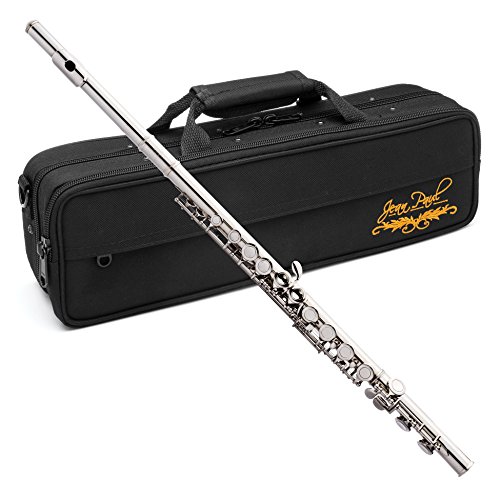
Welcome to one of the most portable, versatile instruments around. A solid beginner flute costs less than you might expect, you can be making real music within a month, and the gear path is refreshingly simple. Here's exactly what you need, and just as importantly, what can wait.
By Colin B. · Published May 24, 2026 · Last reviewed June 14, 2026
A student flute plus the essentials (cleaning kit, stand, method book) runs $180–$300. Rent first if you're buying for a child who hasn't fully committed.
We earn commission on qualifying Amazon purchases — see our
affiliate disclosure.
Price tiers and budget totals shown above are editorial estimates;
actual Amazon prices vary.
At a glance
Our top pick in each category
The fastest path through this guide — each best-starter pick by category.
Scroll for the budget and upgrade alternatives.
Rent before you buy if this is for a child just starting school band. Most music shops offer rent-to-own programs starting around $20/month. After 6–12 months you'll know whether to own the instrument or move on. Rental instruments are professionally maintained.
Avoid anything labeled 'flute' under $100 on Amazon. Cheaply made instruments go out of adjustment instantly, play out of tune, and actively make learning harder. The $150–$250 student tier (Yamaha, Jean Paul, Gemeinhardt) is the real floor.
Closed-hole (plateau key) flutes are what every teacher will tell you to buy. They're easier to cover the tone holes, produce a fuller sound with less effort, and are standard for students under 16. Open-hole flutes look cooler but are harder for beginners.
The instrument itself is the only non-negotiable purchase. Student flutes are purpose-built: the key mechanisms are robust, the tone holes are sized for smaller hands, and the tuning is more forgiving. Every reputable music teacher will recommend starting with a closed-hole (plateau) student flute in the $150–$300 range. The differences between budget and mid-tier student flutes are real but smaller than the gap between any student flute and a toy.
Flute — what's the difference?
A few common shapes, each making a different trade.
Closed-hole / Plateau keys
Pads cover holes fully, the starting point for every beginner.
Difficulty
Easier
Common for
Students, beginners
Price range
$150–$350
Best for All beginners, children, school band students
Tradeoff Can't do certain extended techniques later; most players never need them
Open-hole / French keys
Holes in the keys require precise finger placement.
Difficulty
Harder
Common for
Intermediate to advanced
Price range
$300+
Best for Players with 1–2 years of lessons ready to transition
Tradeoff Requires excellent hand position; not for beginners without a strong teacher
Best starter
Yamaha
YFL-222 Student Flute
$592.00 as of Jun 22, 2026
★★★★★Our rating· Only 20 left in stock - order soon.
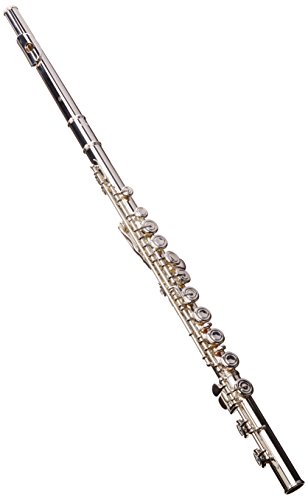
Yamaha makes the most recommended student flute on the market, full stop. The YFL-222 has a bright, centered tone, mechanics that hold adjustment for years, and a reputation for surviving whatever a middle schooler puts it through. Music teachers specify this model by name. If you're buying one flute for a beginner, this is it.
What we like
Music teachers recommend this model by name, the category default
Mechanics hold adjustment through years of regular use
Bright, centered tone that projects well in ensemble settings
What to know
Comes with a basic case only; no stand included
Budget models exist but cost more in repairs and frustration
★★★★☆Our rating· Only 19 left in stock - order soon.
The best student flute under $200. Jean Paul has quietly built a reputation for instruments that play in tune out of the box, more consistently than most budget competitors. The offset G key is ergonomically easier on smaller hands. Worth it if the Yamaha budget is tight.
What we like
Plays in tune out of the box, rare at this price point
Offset G key is more comfortable for smaller or younger hands
Complete kit often includes cleaning rod and cloth
What to know
Mechanics need professional adjustment sooner than Yamaha
Silver-plated finish shows fingerprints and wear faster
Gemeinhardt has been making school band flutes since 1948, and the 2SP is their core student model: silver-plated body, reliable mechanism, and the tone of a step-up instrument. A great choice for a student who's played a year and wants an instrument that rewards better technique.
What we like
Silver-plated body produces fuller tone than silver-plated keys only
75-year reputation in school band, trusted by teachers nationwide
Holds tuning well as a player develops stronger air support
What to know
Slightly heavier than Yamaha, which fatigues younger players' left hand
A flute's pads (the felt-and-leather discs that seal each key) are the most failure-prone component. Moisture from breath destroys them prematurely. Swabbing the inside of the flute after every session with a cleaning rod and cloth is the single maintenance step that adds years to the instrument's life. This takes 90 seconds. Do it every time.
Best starter
Yamaha
YACFLMKIT Flute Maintenance Kit
$19.95 as of Jun 22, 2026
★★★★★Our rating· In Stock
Yamaha's cleaning kit bundles the rod, cleaning cloth, and mouthpiece brush: everything the manual recommends. The cloth threads properly through the rod eye and won't scratch the bore. Buy this at the same time as the flute; you'll need it after the very first session.
What we like
Rod + cloth + mouthpiece brush, complete in one purchase
Yamaha cloth is sized specifically for flute bore dimensions
Under $15 and the kit lasts years with proper care
What to know
Cloth eventually needs replacing; not sold separately in all markets
BG France makes the swab that professional players actually use. The microfiber body pulls moisture more completely than a standard cleaning cloth, and the weighted end feeds through the bore cleanly without a rod. Overkill for a first-year student, but a meaningful upgrade once you're playing daily.
What we like
Microfiber pulls more moisture than cotton cloths, better pad protection
Weighted end feeds through bore without threading a rod
What to know
Pull-through technique differs from a rod; takes one session to learn
Never lay a flute on a flat surface; it rolls. Every teacher in every school band will tell you this, and every student ignores it until they watch their flute roll off a desk. A $10–15 desktop stand pays for itself the first time it prevents a bent key or cracked pad. This is the cheapest insurance in the hobby.
Best starter
König & Meyer
K&M 15232 Professional Flute Stand
$20.99 as of Jun 22, 2026
★★★★★Our rating· In Stock
K&M is the instrument stand brand. This desktop stand is compact, folds flat, and the notch is the right width for flute bodies without pressing on the keys. Used in music classrooms, rehearsal halls, and touring rigs worldwide. Just buy this.
What we like
Folds flat and fits in most flute cases; take it everywhere
Holds the flute securely without pressing on any keys
Under $15 and nearly indestructible
What to know
Desktop only; not stable enough as a freestanding floor stand
Can tip on uneven surfaces; use on a flat desk or music stand tray
Hercules's floor stand is for students who want to put the flute down during a rehearsal without hunting for desk space. Heavier and more stable than a desktop stand, with better protection if someone bumps it. Overkill for home practice, but the right call for orchestra pit or large ensemble settings.
What we like
Floor-standing stability; won't tip if bumped in a crowded rehearsal
Folds down to a compact size for transport between settings
What to know
Bulkier than a desktop stand; won't fit inside a flute case
Overkill for home practice; only worth it in ensemble settings
Self-teaching flute is doable but slow. A proper method book gives you a structured path from holding the instrument to reading music to playing real songs, in an order that makes physiological sense for building embouchure and breath support. If you have a teacher, they'll assign a book. If you're self-teaching, start with Essential Elements.
Best starter
Hal Leonard
Essential Elements for Band — Flute Book 1
$9.98 as of Jun 22, 2026
★★★★★Our rating· In Stock
The most widely used beginning band method in the United States. If your child is starting school band, this is almost certainly what their teacher will assign. Clear instruction, progressive exercises, and familiar songs for motivation. Buy it before the first lesson.
What we like
Used in 90% of US school band programs; teachers know it cold
Online play-along access included, makes home practice more engaging
Progresses logically from first notes to full ensemble playing
What to know
Online access code only works once; buy new, not used
Designed for classroom use; solo self-teachers may want a different method
Trevor Wye Practice Books for the Flute — Volume 1
$14.99 as of Jun 22, 2026
★★★★☆Our rating· In Stock
Trevor Wye's practice books are what serious flute students move to after their first year. Volume 1 covers tone production in more depth than any school band method; the exercises are demanding, but the payoff in sound quality is enormous. Your teacher will probably introduce these around year two.
What we like
The tone-production reference for serious students, cited by teachers worldwide
Six volumes cover every technical challenge systematically
What to know
Not for absolute beginners; requires at least one year of prior study
Text-heavy; most effective when a teacher guides interpretation
Intonation (playing in tune) is the technical problem beginners don't notice in themselves but that teachers catch immediately. A chromatic tuner gives you real-time pitch feedback, and flute players need it more than most because embouchure changes shift pitch significantly. A metronome is equally essential: consistent tempo is more impressive to a teacher than fast playing. Get both in one device.
Best starter
KLIQ
MetroPitch Metronome Tuner
$28.49 as of Jun 22, 2026
★★★★★Our rating· In Stock
Combines a chromatic tuner and a metronome in one compact unit. Accurate, easy to read, and runs on a single AAA battery for months. This is what most private lesson teachers recommend for at-home practice: everything in one pocket-sized device.
What we like
Chromatic tuner + metronome in one unit; no second device needed
Large backlit display reads clearly in low light or rehearsal halls
Accurate to ±1 cent, precise enough to build real intonation habits
What to know
Clip doesn't mount to flute; prop it on a stand instead
When you need just a tuner in a noisy environment, the Snark SN-5X reads pitch via body vibration rather than microphone, so it works in loud rehearsals. Great for orchestra or band settings where a free-standing tuner can't isolate your instrument over the ensemble.
What we like
Reads via body vibration; works in loud rehearsal environments
360° rotating display; adjust the angle without moving the clip
What to know
Tuner only; you'll need a separate metronome for practice sessions
Clip fit on flute body is workable but not purpose-designed
Most beginners expect the fingering to be the hard part. It isn't. Here's what actually happens in your first four weeks, and how to get through it faster.
Flute has a reputation for being accessible. It’s the instrument parents buy for kids starting school band, and rightly so. But there’s a specific hard part that almost nobody warns you about, and knowing it in advance will save you a week of frustration.
The hard part isn’t the fingering. The hard part is the embouchure.
An embouchure (say it: AHM-buh-shure) is how you shape your mouth and lips to produce sound. On flute, you’re blowing across a tone hole, not into it (the way you’d blow across the top of a bottle). Getting a consistent, full tone takes most beginners two to four weeks of deliberate practice. After that, the rest of the instrument opens up fast.
Here’s what the first month looks like, week by week.
Week 1: Your first sound
Don’t pick up the whole assembled flute on day one. Start with just the headjoint (the top third of the instrument, the piece with the mouthpiece hole).
Hold the headjoint horizontally and cover the open end with your palm. Place the embouchure hole against your lower lip, just below the lip. Now blow a narrow, focused stream of air across the hole, not into it. Angle slightly downward. You’re aiming for the far edge.
Most beginners produce a breathy hiss first. That’s the air finding the right path but not the right angle. Adjust. When you hear a clear, ringing tone, you’ve got it. It will feel surprising, like you did something simple that you couldn’t figure out how to do.
Don’t rush to assemble the full flute. Spend your first two or three sessions working only on headjoint tone. Getting a clear, consistent sound on the headjoint is the foundation everything else is built on. Skipping this step causes problems for months.
When you’re consistently producing a clean tone on the headjoint, assemble the full instrument. Your first fingered notes will be B, A, and G; these three notes form most of the songs in the first two pages of your method book.
Week 2: The first notes and the first frustrations
By week two, you’re producing some tones on the full instrument and starting to work through the method book. A few things will frustrate you:
Airy tone. Your sound might be more air than note. This is normal. The embouchure muscle is new; it hasn’t built the control that filters air efficiently into tone. The fix is practice, specifically long tones. Hold each note for four slow counts, focusing on keeping the sound as clear as possible. Your tone will improve faster than you expect over the next few weeks.
Covering the holes. On a closed-hole (plateau) flute, each key has a pad that seals the tone hole completely. Even so, you have to place your fingers precisely, not just resting on the keys, but pressing with the pad of your finger. If you hear a “leak” (a fuzzy, squeaky, or incomplete note), one of your keys isn’t sealing. Check your left hand first; the index finger is the most common culprit early on.
The left hand position. The left thumb controls a key on the back of the instrument. The left index finger covers a side key near the base of the headjoint. Both of these feel unnatural for weeks. They will become automatic, but for now, slow practice is the only fix.
In week two, focus on getting clean tones on your first five notes (B, A, G, C, D) and reading them off the staff in the method book. Speed is irrelevant. Clean is everything.
Week 3: Starting to sound like music
Around week three, something shifts. You’ve built enough embouchure control that your tone is recognizably a flute tone, not just a sound-adjacent noise. Songs in the method book start to sound like the songs they’re supposed to be.
Introduce the metronome. Even if you’ve been counting out loud, the metronome tells you the truth. Most beginners discover they’re rushing: speeding up on familiar passages, slowing down on hard fingering. The metronome is humbling and necessary. Practice at a tempo where you can play cleanly, even if that’s slower than you’d like. Slow and clean is faster progress than fast and sloppy.
Start checking your tuning. Pull up a chromatic tuner (the KLIQ MetroPitch works well). Play a B (your first note) and hold it. You’ll probably see the needle wavering. This is your embouchure not yet holding the note steady. Over time, as your air support develops, the needle will steady. You don’t need to fix intonation problems in week three. Just start noticing them.
Posture check. Flute is held horizontally to the right. The tendency is to drop the right elbow or roll the instrument inward as it gets tiring. Both hurt your sound and, over time, your wrist. Check in a mirror occasionally: instrument level, right elbow up and out (not tucked against your body), head and neck relaxed.
By week four, you’re playing recognizable melodies and starting to understand the instrument as a thing you control rather than a thing that controls you. This is when the practice starts being genuinely enjoyable.
A few things to try in week four:
Play something you actually want to play. The method book is for technique; you also need something emotionally rewarding. Search YouTube for sheet music of a simple song you love: folk melodies, hymns, game music, pop songs, and spend 10 minutes each session working on it. The motivation this provides is real and worth the detour from the structured program.
Record yourself. Even a voice memo on your phone. You hear yourself differently recorded than you do while playing. You’ll hear the airy tone before the clear tone, the places where your tempo drifts, the notes you’re pitching slightly sharp. Don’t evaluate harshly. Just notice. Improvement is faster when you can hear what you’re actually producing.
Consider a first lesson. If you’ve been self-teaching, month one is the ideal time for a professional assessment. You’ve built enough context to know what to ask, but bad habits haven’t fully solidified yet. One 30-minute lesson with a local flute teacher will identify the two or three things most actively limiting your progress. That’s more useful than six more method book pages.
Things beginners get wrong
The same mistakes show up in every beginner, regardless of age. You’ll probably make some of these too:
Blowing too hard. More air does not equal better tone on flute. A focused, moderate stream of air beats a high-pressure blast. If your cheeks are puffing, you’re blowing too hard.
Rolling the instrument in or out to fix squeaks. Rotating the flute changes the embouchure angle and can fix a squeak temporarily, but it changes the fundamental setup and creates new problems. Fix squeaks by checking finger position, not flute angle.
Practicing through pain. Flute engages the small muscles of the embouchure and hands in ways most people aren’t used to. Ten minutes of focused practice is more productive than forty minutes of tired practice. Short sessions daily beat long sessions weekly at every stage of learning.
Skipping the cleaning step. The pads are expensive to replace. Swab the inside of the instrument after every single session. It takes 90 seconds. The flute you’re playing in ten years will thank you.
What a month of work actually gets you
At month one, a student who’s practiced 15–20 minutes daily can typically:
Produce a clear, consistent tone across the low and middle octave
Play 8–12 notes accurately and name them
Read simple one-to-two measure phrases off the staff
Play recognizable simple songs slowly and cleanly
That’s a real foundation. It doesn’t feel like much until you hear a recording from day one. The gap is enormous.
Month two is when the first and second octaves connect, breath support becomes more natural, and the instrument starts to feel like an extension of you rather than a contraption you’re wrestling with. That’s worth working toward.
Save your money
What you don't need yet
Beginners get pressured to buy a lot of stuff that doesn't help them play
better. Here's what we'd skip on day one.
Open-hole (French key) flute — Teachers universally recommend closed-hole for the first two years. Open-hole looks professional and sounds no better for a beginner.
A B-foot flute — Most student flutes have a C foot joint. The B foot adds one low note you won't need for years.
Silver or gold headjoint upgrade — A solid-silver headjoint on a student body is a common upsell. Save it for after year one; you can't hear the difference yet.
A piccolo — Fun instrument, but harder to tune and more demanding on finger placement than flute. Learn flute first.
Professional sheet music collections — You'll spend months on the method book before any of those solo repertoire collections are useful.
A dedicated case humidifier — Those are for wooden instruments. Metal flutes don't need humidity control.
First week
Your first seven days
A short, real plan to get from gear-on-doorstep to actually playing.
Order the flute. The Yamaha YFL-222 ships fast and arrives ready to play. · Buy
Get your first sound on the headjoint alone. Cover one end with your palm and blow across the embouchure hole until you hear a tone. This alone can take 15–30 minutes on day one; that's normal. · Action
Swab the inside of the flute after every session without exception. 90 seconds. Every time. It extends pad life by years. · Action
Book a first lesson, even if you're primarily self-teaching. One 30-minute session corrects embouchure mistakes before they harden into habits. · Action
FAQ
Common questions
How much does it cost to start playing flute?
Budget $180–$300 for essentials: a student flute ($150–$250), cleaning kit (~$12), stand (~$12), and a method book (~$10). You can also rent a flute for $15–$25/month from most music shops if you want to try before committing.
Should I buy or rent a flute for a beginner child?
Rent for the first year. Most music shops offer rent-to-own at $15–$25/month; you're not out much if they quit after a semester, and the rental instrument is professionally maintained. At month 12, if they're still playing, apply your payments toward a purchase.
Closed-hole or open-hole flute for a beginner?
Always closed-hole for beginners. Open-hole (French) keys require precise finger positioning that takes months to develop. There's no tonal advantage for a beginning player. Most teachers won't consider moving a student to open-hole before year two.
Is flute hard to learn?
Getting the first sound out is the hardest part: the embouchure (how you shape your mouth) is unlike any other instrument. Most beginners get a stable tone within a few sessions. After that, flute is moderately challenging: easier than violin, harder than ukulele. With lessons, most students play simple songs within 4–8 weeks.
Do I need a teacher, or can I self-teach flute?
A teacher is strongly recommended for the first few months. The embouchure is almost impossible to self-correct from a video; bad habits set fast and are very hard to undo later. If in-person lessons aren't accessible, online lessons via Zoom work well for flute.
What's the difference between a student flute and a step-up flute?
Student flutes ($150–$300) have closed holes, a C foot joint, and mechanics built for durability. Step-up flutes ($500–$1,500) typically have open holes, a solid-silver headjoint, and better key action. Most students don't need a step-up flute until they're playing in a serious ensemble or taking advanced private lessons.
National Flute Association — The US professional organization for flutists. Member resources, competition info, and a teacher directory.
FluteWorld — The most respected specialist flute retailer in the US. Their instrument comparison guides cover the full student-to-professional range honestly.
The Flute Examiner — Independent review site with detailed comparisons of student and intermediate flutes. Particularly strong on the $150–$600 range.
The Flute Coach (YouTube) — One of the best free resources for self-teaching adults: clear technique videos, weekly exercises, and honest beginner guidance.
r/flute — Active community. Search before asking; instrument recommendations and teacher-finding questions are answered in detail in the wiki.
As an Amazon Associate, JustBeginning earns from qualifying purchases.
We may also earn commission from other affiliate programs linked on this
page. Editorial recommendations are independent; we don't choose
products based on commission rates.
Product prices and availability are accurate as of the date and time
indicated and are subject to change. Any price and availability
information shown on Amazon at the time of purchase will apply.


 Best starter