Bagged tea is fine. Loose-leaf tea is better — fresher, more nuanced, and honestly more fun once you know what you're doing. The good news: you don't need expensive gear or a degree in Chinese tea history. You need a kettle with temperature control, something to brew in, and some leaves worth drinking. Here's where to start.
By Colin B. · Published May 22, 2026 · Last reviewed June 3, 2026
Finum Brewing Basket
— The right infuser lets you pull the leaves the moment the steep is done — simple, effective, easy to clean.
Budget total
$40
Typical total
$90
You can start properly for under $50: a variable-temp kettle, a mesh infuser basket, and a sampler of leaves. Most people spend $80–100 once they add a teapot they love.
We earn commission on qualifying Amazon purchases — see our
affiliate disclosure.
Price tiers and budget totals shown above are editorial estimates;
actual Amazon prices vary.
At a glance
Our top pick in each category
The fastest path through this guide — each best-starter pick by category.
Scroll for the budget and upgrade alternatives.
Temperature control is the single most important thing in loose-leaf tea, and it's not obvious until you ruin a cup of green tea with boiling water. Green, white, and oolong teas need water between 160°F and 200°F — boiling scorches them and turns the cup bitter. A variable-temperature kettle isn't a luxury; it's the gear that makes the hobby work.
Start with a sampler before you buy a large tin of anything. A 2-ounce bag of loose-leaf tea makes 20–30 cups. If you don't like it, that's a lot of tea to get through. Order a variety sampler first, figure out which family — black, green, oolong, herbal — you reach for most, then invest in a larger supply.
Your first brew will probably be slightly off, and that's fine. Loose-leaf tea rewards attention: water temperature, steep time, and leaf quantity all matter. Keep a quick note of what you brewed and what it tasted like. One month of tracking and you'll have dialed in your two or three favorites without wasting a single tin.
This is the actual product — the leaves — and it's the most important choice you'll make. Don't buy a large quantity of any single tea until you've brewed it. Start with a well-curated sampler from a reputable source: Vahdam, Rishi, and Harney & Sons all source and package reliably. Once you know whether you're a black tea, green tea, or oolong person, then go deep.
Loose-Leaf Tea — what's the difference?
A few common shapes, each making a different trade.
Black Tea
Bold, tannic, the most forgiving to brew.
Water temp
212°F (full boil)
Steep time
3–5 min
Caffeine
High
Best for Coffee drinkers new to tea, afternoons, pairing with milk
Tradeoff Can turn bitter if over-steeped, but very forgiving of temperature errors — great first tea
Anywhere between black and green — complex and worth exploring.
Water temp
185–205°F
Steep time
2–5 min (multiple steeps)
Caffeine
Medium to high
Best for Adventurous beginners, multiple-steep sessions, floral and toasty flavor profiles
Tradeoff Wide variation between styles — a light green oolong and a roasted dark oolong taste almost nothing alike
Herbal / Tisane
Not technically tea, but where many beginners start.
Water temp
212°F (full boil)
Steep time
5–7 min
Caffeine
None (typically)
Best for Evening drinking, caffeine-free households, curious beginners
Tradeoff Quality varies wildly by brand — buy from a dedicated tea company, not a grocery store shelf
Best starter
Vahdam Teas
Vahdam Assorted Tea Sampler (15 Teas)
$11.99 as of Jun 22, 2026
★★★★★Our rating· In Stock
Vahdam sources direct from Indian tea gardens, and their sampler is the most sensible intro to the category: black, green, white, oolong, and herbal across 15 teas. The bags are resealable, the teas are fresh, and you'll know within a week which direction you want to go deeper.
What we like
15 teas across 5 families lets you find your preference before committing to a tin
Sourced direct from Indian gardens — fresher than grocery store tea
Resealable bags keep tea fresh through the whole tasting process
What to know
Heavily weighted toward India — no Japanese or Taiwanese teas in the mix
If you already know you like black tea and want to start simple, this is the most reliable value. Harney is consistently good, widely available, and their English Breakfast is a bold, satisfying cup that works with or without milk. Forgiving to brew, great every day.
What we like
Bold and satisfying at full boil — no temperature precision needed
One of the most consistent and widely available everyday black teas
What to know
Single style — try a sampler first if you're not sure you like English Breakfast
Once you're comfortable brewing, Jade Cloud is the green tea that converts skeptics. A full-leaf Chinese green with a sweet, vegetal character — not the grassy bitterness most people associate with green tea. Brewed at 170°F for 2 minutes, it's a completely different product from anything in a bag.
What we like
Sweet, vegetal flavor converts people who swore off bitter green tea
Certified organic; Rishi has unusually strong direct sourcing relationships
What to know
Unforgiving of wrong water temperature — needs a variable kettle to shine
A standard electric kettle only boils to 212°F. That's fine for black tea and herbal infusions, but it ruins green, white, and most oolong teas. A variable-temperature kettle costs $10–30 more than a basic one and it's the upgrade that matters most. Every other piece of gear is optional; temperature control is not.
Best starter
Cuisinart
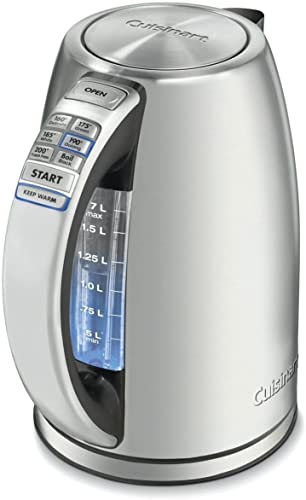
CPK-17P1 PerfecTemp Cordless Kettle
$105.67 as of Jun 22, 2026
★★★★★Our rating· In Stock
Six preset temperature settings — 160°F, 175°F, 185°F, 190°F, 205°F, and boiling — covering every tea type. The keep-warm function holds temperature for 30 minutes. It's been the reliable mid-tier choice in tea and coffee circles for years, and the price is fair for what you get.
What we like
Six presets cover every tea type from delicate white to full-boil black
30-minute keep-warm holds temperature between cups without re-boiling
What to know
Standard spout, not gooseneck — won't work well for precision pour-over coffee
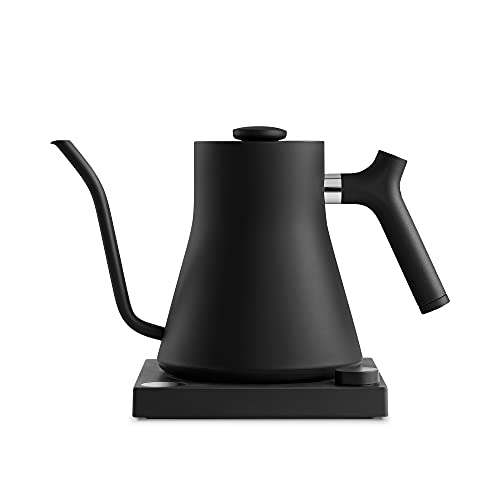
Under $40 and genuinely capable. Five temperature presets, a gooseneck spout for precise pouring, and a clean one-button interface. The gooseneck is a bonus if you also make pour-over coffee. A solid entry that doesn't compromise on the feature that actually matters.
What we like
Gooseneck spout handles both tea and pour-over coffee without compromise
Temperature presets and real precision under $40 — best value in this category
What to know
Fewer presets than the Cuisinart; some intermediate temperatures need manual estimation
Precise to 1°F, holds temperature for 60 minutes, and the gooseneck pour gives you total control over water placement. The Stagg EKG is the last kettle most serious tea and coffee drinkers ever buy — the build quality is exceptional and the precision is real.
What we like
Precise to 1°F — the only kettle that genuinely matters for finicky whites and greens
60-minute hold keeps water at temperature through multiple steeping sessions
What to know
Expensive — the Cuisinart gets 90% of results for tea at less than half the price
The job of your brewing vessel is simple: hold the leaves in hot water for the right amount of time, then get them out cleanly. A $10 mesh infuser basket does this perfectly. You don't need a teapot on day one — your best mug and a good infuser will make excellent tea. Upgrade to a teapot when you want to brew more than one cup at a time, or when the ritual matters as much as the cup.
Best starter
Finum
Brewing Basket
$15.65 as of Jun 22, 2026
★★★★★Our rating· In Stock
A fine-mesh basket that sits in your mug and holds leaves away from the water. When steep time is up, pull the basket out — done, no second-guessing. The fine mesh handles small-leaf teas without particles in your cup. Durable, easy to clean, and more effective than a ball infuser.
What we like
Fine mesh handles even small-leaf teas without particles in your cup
Pull basket out when time's up — the cleanest way to stop a steep
What to know
Basket style doesn't fit every mug shape — measure your mug diameter before buying
Stainless steel mesh ball infusers — the classic cheap option, and they work. Not as easy to clean as a basket, and the ball shape doesn't let leaves expand as fully, but for someone who isn't sure yet, a $10 two-pack is a low-risk start.
What we like
Two infusers for under $10 — the lowest-risk way to try loose-leaf tea
Stainless steel, easy to rinse, works fine for coarser black teas
★★★★☆Our rating· Only 17 left in stock - order soon.
A ceramic teapot with a removable fine-mesh infuser and a famously drip-free spout. Brews two generous cups at once. When the steep is done, pull the infuser — the tea holds without over-steeping. FORLIFE's drip-free design is the real differentiator; most cheap teapots dribble everywhere.
What we like
Drip-free spout is the real differentiator — most teapots at this price dribble
Removable infuser pulls out cleanly; tea holds without over-steeping in the pot
What to know
Ceramic — hand wash only and keep it away from the edge of the counter
Loose-leaf tea's enemies are light, moisture, and strong odors. Store your teas in opaque, airtight tins away from the spice rack — the paper pouches most teas ship in aren't enough for more than a couple of weeks. Beyond that, a timer (your phone works fine) is all you need. A scale and thermometer are nice-to-haves for later.
Best starter
Yesland
Tea Tin Canister Set (6 Pack)
$18.69 as of Jun 22, 2026
★★★★★Our rating· In Stock
Six round metal tins with airtight double lids — keeps your sampler collection organized, fresh, and away from light. Label them, fill them from your sampler pouches, and your collection is properly stored from day one. Once you settle on favorites, consolidate into larger tins.
What we like
Six tins organize a full sampler collection — one tin per tea, properly sealed
Airtight double lids block light and odor, the two things that degrade tea fastest
What to know
Label them immediately — identical tins with no labels become confusing fast
A double-walled insulated stainless tumbler with a removable mesh infuser. Brew loose-leaf at your desk without a separate mug and strainer — fill the infuser, add hot water, steep, and remove when done. The insulation keeps your cup warm long enough for a second steep. Buy it once loose-leaf is a daily habit.
What we like
Brew loose-leaf at your desk with no separate mug, infuser, or counter space
Double-wall insulation keeps tea warm through a second steep
What to know
Narrow opening makes filling the infuser and cleaning the body slightly fiddly
Most people discover loose-leaf tea gradually — a tin from a gift shop, a pot at a nice restaurant, a friend who cares too much about water temperature. The jump from bags to leaves is smaller than it looks, and the rewards are immediate. Here's what the first month actually looks like.
Loose-leaf tea has a reputation for being fussy. It isn’t — but that reputation exists for a reason. There are a handful of things that genuinely matter (water temperature, steep time, leaf quantity), and a much longer list of things that don’t matter at all yet (scales, gaiwans, water hardness, brewing ratios down to the gram). The trick in the first month is knowing which is which.
This is what the first month actually looks like, assuming you have a variable-temperature kettle, a mesh infuser, and at least a sampler of leaves to work with.
Week 1: Get the basics right, then brew obsessively
Day one is about setup. Fill your kettle with fresh cold water — filtered if your tap water tastes strongly of anything, tap if it doesn’t. Boil it once and let it cool to your tea’s recommended temperature (black: 212°F, green: 160–175°F, oolong: 185–205°F). Add your leaves to the infuser — a heaped teaspoon per 8 oz of water. Steep for the minimum time on the package. Drink it.
That’s the whole process. It takes four minutes. The entire month is variations on this.
The most important thing you can do in week one: brew the same tea twice. Once at boiling, once at the recommended lower temperature. Taste them side by side. The difference is so obvious that it answers every question about why temperature control matters — no amount of reading explains it as well as that one experiment.
What you’ll notice: Green tea brewed at boiling tastes bitter and flat. The same leaves brewed at 170°F taste sweet, complex, and clean. Black tea is forgiving either way, which is why most people start there. White tea, treated carelessly, tastes like warm water — treated correctly, it tastes like something you’ll pay $30 for.
In week one, brew something every day. You don’t need to be precious about it. Speed is fine. Getting familiar with the process — kettle to cup in four minutes — matters more than perfect precision.
By week two you’ve probably brewed three or four different teas from your sampler. This is the right time to start thinking about which family you’re drawn to.
The four families each have a distinct character:
Black tea is the most familiar and the most forgiving. Brewed at boiling for 3–5 minutes, it’s bold and tannic — the base of English Breakfast and the reason tea holds up with milk. Over-steep it and it’s astringent. Under-steep it and it’s watery. The window is wide.
Green tea is where most beginners have their revelation. Done right — 165°F, 2 minutes — it’s sweet, vegetal, and surprisingly complex. Japanese greens (sencha, gyokuro) taste different from Chinese greens (dragon well, jade cloud), and both taste completely different from the bitter green-tea experience most people have had from a bag. The main mistake is using water that’s too hot. Fix that and it clicks.
Oolong is the most interesting category and the hardest to summarize. A light green oolong from Taiwan tastes floral and almost buttery. A heavily-roasted dark oolong tastes toasty and mineral. They’re made from the same leaf with different processing. Most beginners start with a medium oolong — something like a Ti Kuan Yin — and work outward from there.
Herbal tisanes aren’t technically tea (no Camellia sinensis in them), but they’re where many beginners start because there’s no caffeine and the flavor range is huge. Peppermint, chamomile, hibiscus, rooibos — each one requires boiling water and a long steep, making them the most forgiving to brew. Quality varies wildly; buy from a dedicated tea company.
By the end of week two you should have a rough answer to the question: “Am I a black tea person, a green tea person, or something else?” That answer guides everything you buy next.
Week three is about paying attention. Every time you brew:
Note the temperature. Did you use the right preset? Green tea brewed 10°F too hot is noticeably worse. Black tea brewed 20°F too cool is thin and flat.
Note the steep time. The minimum on the package is a starting point, not a rule. Some teas you’ll prefer at 2 minutes; some at 4. Your palate is the judge, not the package.
Note the quantity. A heaped teaspoon is a starting point. For tightly rolled oolongs, that’s more leaves than for an airy herbal blend. If your cup is too strong, use fewer leaves and steep longer; too weak, more leaves for a shorter steep. These two variables are in tension, and playing with them is where preference develops.
By week three, most people have one or two teas they reach for automatically. That’s the sign the hobby is taking hold: you stop brewing “tea” and start brewing a specific tea, because you know what you want.
Re-steeping: This is where loose-leaf pulls decisively ahead of bags. Most whole-leaf teas — especially oolongs and larger-leaf greens — can be steeped twice, sometimes three times. The second steep often has a slightly different character: lighter, smoother, sometimes more complex. Try it with your best oolong. Reduce the steep time by about 30 seconds on subsequent steeps.
Week 4: Build the ritual
By week four you have preferences, you have a process, and you probably have a first cup that you’d unhesitatingly call good. This is when the ritual starts to matter as much as the cup itself.
Loose-leaf tea is slower than a pod or a bag. That’s not a bug. The four minutes of kettle-to-cup — setting the temperature, measuring the leaves, watching the color develop in the water — become the signal that whatever comes next is going to be better. Most serious tea drinkers describe it as a daily reset: a four-minute moment that’s genuinely theirs.
If you want to formalize it, do. A specific mug, a specific time of day, a specific spot. The routine itself becomes part of why the cup tastes good.
Which tea family you actually prefer (most people are surprised — they went in thinking they liked black tea and discovered oolong)
That temperature matters more than any other variable
That “over-steeped” and “wrong temperature” cause 90% of bad cups
That re-steeping is real and genuinely different, not just thrift
That four minutes of focused attention on something simple is actually pleasant
Things you’ll fail at — and that’s normal
Forgetting the steep is running. Everybody over-steeps something in the first week. Set a phone timer. The habit takes two days to form.
Using water that’s too hot for green tea. The instinct is to brew everything the same way. It’s the wrong instinct. Your kettle’s presets exist for this reason — use them.
Buying too much of one thing. A new tea looks appealing online. You order 4 ounces. It arrives and it’s fine, not amazing. You now have 4 ounces of fine tea to get through before you can try something more interesting. Buy small until you know what you love.
Ignoring the smell. Before you steep, smell the dry leaves. After you steep, smell the wet leaves. Your nose tells you things about a tea’s character that the cup will later confirm. Beginners skip this. Don’t.
What comes next
Once you have your two or three daily teas dialed in, a few rabbit holes open up that are genuinely rewarding:
Go deeper on one origin. Japanese greens are a world unto themselves: sencha, gyokuro, hojicha, genmaicha. Taiwanese oolongs cover a range from floral to deeply roasted. Pick one regional tradition and spend two months in it — you’ll learn faster than sampling widely.
Try gongfu brewing. Multiple short steeps from the same leaves, in a small vessel (a gaiwan or a small clay teapot). The same oolong that you’ve been steeping for 3 minutes tastes different steeped five times for 30 seconds each. It’s a different drinking experience, and it’s worth learning once you’ve mastered the basics.
Get your water right. If your tap water is heavily chlorinated or mineral-heavy, it affects the cup more than you’d expect. A simple Brita filter helps most situations. This is a week-two concern, not a day-one one.
Save your money
What you don't need yet
Beginners get pressured to buy a lot of stuff that doesn't help them play
better. Here's what we'd skip on day one.
A gaiwan — Essential for gongfu-style brewing — a real rabbit hole worth going down eventually. In your first month it adds complexity without payoff. Get one once you're doing multiple short steeps on purpose.
A tea thermometer — Your variable-temp kettle handles this. A separate thermometer is redundant and usually slower to read.
A tea scale — A heaped teaspoon per cup gets you to a good result without measuring anything. Scale later once you want to dial in exact ratios.
A complete Japanese or Chinese tea ceremony set — Beautiful, and you'll want one eventually. Wait until you know which tradition you're drawn to — they're not interchangeable, and buying the wrong one is an easy $60 mistake.
High-grade ceremonial matcha — Matcha is a different hobby with different equipment: a chasen whisk, a bowl, a bamboo sifter. It's worth doing — just separately from learning loose-leaf.
First week
Your first seven days
A short, real plan to get from gear-on-doorstep to actually playing.
Order a variety sampler so you can explore different tea families before committing to a tin of anything. · Buy
Brew the same tea twice — once at boiling and once at the recommended lower temperature. Taste both side by side. This single experiment explains why temperature control matters. · Action
Steep for the minimum recommended time first, not the maximum. Over-steeping is the most common beginner mistake and makes almost every tea taste worse. · Learn
Find your tea community. · Action
r/tea · Active, helpful community. The wiki covers brewing parameters better than most books.
TeaDB (YouTube) · Methodical, serious reviews — the best video resource for beginners going deeper.
FAQ
Common questions
How much does it cost to get started with loose-leaf tea?
Realistically $40–60 to start properly: a variable-temp kettle (the most important purchase), an infuser basket, and a sampler. Once you know what you like, a tin of quality loose-leaf costs $12–25 and makes 30–50 cups — far cheaper per cup than a café.
Why is my green tea bitter?
The water was too hot. Green tea brewed at boiling (212°F) extracts bitter compounds that dominate the cup. Brew green tea at 160–175°F and it's a completely different flavor. A variable-temperature kettle is the fix — this is exactly what it's for.
How much loose-leaf tea do I use per cup?
The standard starting point is 1 heaped teaspoon per 8 oz of water. From there, adjust to taste — more leaves means stronger flavor, a shorter steep means lighter. After a week you'll develop an intuition for it without measuring.
Can I re-steep loose-leaf tea?
Most loose-leaf teas — especially oolongs and whole-leaf greens — can be steeped two or three times. The second steep often has a slightly different character: sometimes more delicate, sometimes more complex. Shorten each subsequent steep by about 30 seconds. Herbal tisanes typically don't re-steep well.
What's the difference between loose-leaf and bagged tea?
Bagged tea is usually made from CTC (cut-tear-curl) processed leaves — tiny particles that brew fast and strong but lack nuance. Loose-leaf uses whole or larger-cut leaves with more intact oils and aromatics, which means more complex flavor and usually fresher stock.
Where should I buy loose-leaf tea?
Online from dedicated tea companies — Vahdam, Rishi, Harney & Sons, Adagio — gives better selection and fresher stock than grocery stores. Once you know what you like, a local tea shop offers the best freshness and the ability to smell before buying.
r/tea — The most active English-language tea community. Start with the wiki — it covers water temperature, steep time, and sourcing better than most books.
TeaDB (YouTube) — James and Denny's long-running channel. Serious, methodical reviews focused on Chinese and Taiwanese teas. The best beginner video resource for anyone going deeper.
Mei Leaf (YouTube) — Don Mei's channel covers Chinese tea culture, gongfu brewing, and high-quality sourcing. Engaging and knowledgeable — the place to go once you want the cultural context.
The Tea Guardian — Reference site for tea education — processing methods, cultivar information, regional origins. More encyclopedia than community, excellent for curious readers.
Adagio Teas — Well-organized online retailer with strong educational content. Their category pages and flavor-profile guides are good for beginners trying to understand the landscape before buying.
Global Tea Hut — Monthly magazine centered on traditional tea culture. More meditative than practical, but beautiful writing on the world behind the cup.
As an Amazon Associate, JustBeginning earns from qualifying purchases.
We may also earn commission from other affiliate programs linked on this
page. Editorial recommendations are independent; we don't choose
products based on commission rates.
Product prices and availability are accurate as of the date and time
indicated and are subject to change. Any price and availability
information shown on Amazon at the time of purchase will apply.


 Best starter