Making cocktails at home is one of the most rewarding skills you can pick up, and you don't need a full bar setup to do it well. A shaker, a jigger, a bar spoon, some bitters, and the right glass are all you need to make drinks that beat most bars.
By Colin B. · Published May 15, 2026 · Last reviewed August 7, 2026
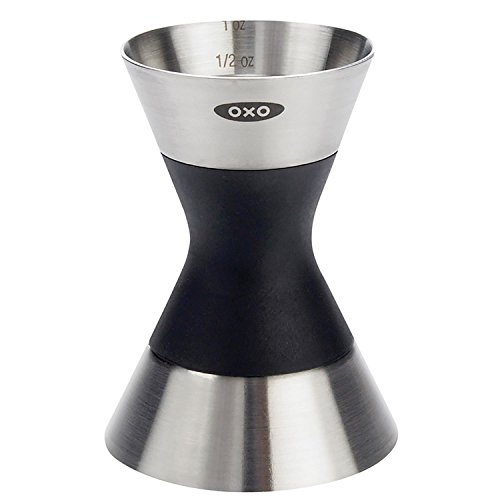
OXO SteeL Double Jigger
— The OXO double jigger. Eyeballing measurements is the number one beginner mistake — this fixes it.
Angostura Aromatic Bitters, 4 oz
— Angostura bitters. One bottle unlocks a dozen classic cocktails and costs less than a single bar drink.
Budget total
$75
Typical total
$130
Your first cocktail kit should cost about $75-130. Everything here lasts for years — unlike spirits, which you'll keep restocking forever.
We earn commission on qualifying Amazon purchases — see our
affiliate disclosure.
Price tiers and budget totals shown above are editorial estimates;
actual Amazon prices vary.
At a glance
Our top pick in each category
The fastest path through this guide — each best-starter pick by category.
Scroll for the budget and upgrade alternatives.
Don't buy a starter kit. The 'complete home bar sets' on Amazon look great and mostly disappoint. The shaker seizes up, the jigger is too small to read, the glasses are wrong. You're better off picking five specific pieces that are actually good. It costs about the same and works far better.
Start with two or three cocktails, not a whole menu. Master the Old Fashioned, the Daiquiri, and the Gin & Tonic. Those three cover all the foundational techniques — stirring, shaking, and building — and once you own them, everything else comes fast. Buying gear for 20 cocktails at once means 17 bottles gathering dust.
Your spirit spend will always dwarf your gear spend. A bottle of decent bourbon is $30-45. A bottle of good gin is the same. Plan your first $100 of liquor budget alongside your gear budget — the gear is almost incidental by comparison, and it lasts forever.
The gear
What you actually need
Cocktail Shaker
The cobbler vs. Boston debate is the first thing beginners trip over, and the honest answer is: start with a cobbler, upgrade to Boston later. A cobbler shaker has a built-in strainer in the cap — you shake and pour, no extra tools needed. A Boston shaker (two tins) is what every professional bartender uses because it's faster to separate, easier to clean, and seals more reliably at high volume. But it also needs a separate Hawthorne strainer and a bit of wrist coordination to crack open. For your first six months, the cobbler is better. You'll know when you want to switch.
Cocktail Shaker — what's the difference?
A few common shapes, each making a different trade.
Cobbler (3-piece)
Built-in strainer. Just shake and pour. The beginner's natural starting point.
Pieces
3 (tin, strainer cap, lid)
Separate strainer needed?
No
Common issue
Cap can seize when cold
Best for Beginners, home use, casual entertaining
Tradeoff Cap can get stuck after vigorous shaking with ice; warm the tin in your hand first
OXO's cobbler shaker has two silicone gaskets for a genuinely leakproof seal — the problem other cobblers have where the cap seizes or leaks. Built-in strainer, ergonomic grip, 24 oz capacity. It's the only cobbler shaker we've tried that we'd actually recommend to a friend.
What we like
Silicone gaskets prevent the leaky cap problem common to most cobblers
Built-in strainer means one less tool to buy
Ergonomic grip and 24 oz capacity handle most home recipes
What to know
Cap can seize when very cold — run warm water to loosen it
Slower to separate than Boston tins once you're making rounds for guests
The Koriko tins are what serious home bartenders and professionals use. The weighted base makes them stable, the fit between the 18oz and 28oz tins is precise enough to seal reliably without being impossible to separate. Once you're making drinks a few nights a week, you'll understand why every bar uses these.
What we like
Weighted base gives professional-grade stability and balance
Precise tin-on-tin fit seals reliably without being impossible to crack
Easiest to clean of any shaker style — just two pieces, no cap
What to know
Requires a separate Hawthorne strainer to use
Seal technique takes a few practice sessions to click
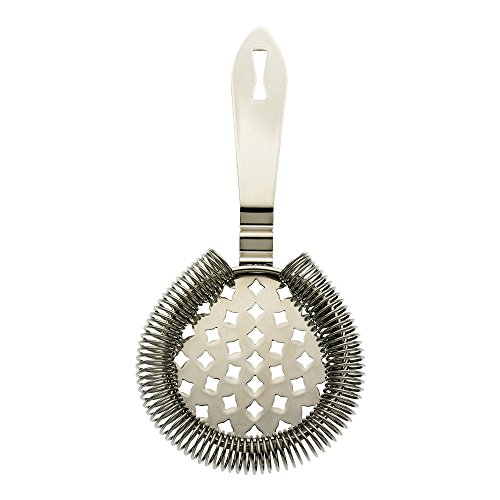
If you upgrade to Boston tins, you need a Hawthorne strainer. The Barfly is the standard choice — full-circle spring, perforated head, fits both 18oz and 28oz tins. Pair it with a fine mesh strainer underneath for a 'double strain' that removes any ice chips or citrus pulp from shaken drinks.
What we like
Full-circle spring gives a tight, consistent strain every pour
Fits both 18oz and 28oz tins without modification
What to know
Only useful with Boston tins — don't buy before you upgrade
Measurement is the most underrated part of bartending. Professional bartenders measure every pour, every time — not because they're fussy, but because the difference between a balanced cocktail and a bad one is often a quarter-ounce. The classic double-sided jigger measures 1.5oz on one side and 0.75oz (or 1oz) on the other. That covers 90% of recipes. Upgrade to an angled jigger once you find yourself frustrated by having to look straight down at the markings — the angled design lets you read measurements from above while you pour.
Best starter
OXO
SteeL Double Jigger
$13.95 as of Jun 22, 2026
★★★★★Our rating· In Stock
Laser-etched measurements that won't wear off, a soft grip so it doesn't slip, and both sides clearly marked. The classic double jigger shape measures 1.5oz and 0.75oz with interior markings for smaller increments. Sturdy, dishwasher-safe, and exactly what it needs to be.
What we like
Laser-etched markings won't wear off after years of washing
Soft grip prevents slipping when your hands are wet
Dishwasher-safe and measures 1.5oz and 0.75oz with sub-markings
What to know
Must look straight down to read — the angled model is more ergonomic
The angled interior lets you read measurements from above while you pour — no need to stop and look straight down at the markings. Measures in 0.5oz, 0.75oz, 1oz, 1.25oz, 1.5oz, and 2oz. Once you're making drinks with more precise recipes (or pouring for more than two people), you'll never go back to the classic shape.
What we like
Read measurements from above while pouring — a genuine workflow upgrade
Six increments from 0.5oz to 2oz covers nearly every cocktail recipe
The glass matters more than you think — not for snobbery, but for function. A rocks glass (short and wide) gives you room for ice and a big orange peel. A coupe (stemmed, wide bowl) keeps a chilled shaken drink cold without a straw. A highball (tall and narrow) is for ice-filled long drinks like gin and tonics or mojitos. You don't need all three on day one. Buy a set of rocks glasses first — they work for the most drinks. Add coupes when you start making Daiquiris or Whiskey Sours up, and highballs when you're doing tall drinks regularly.
Glassware — what's the difference?
A few common shapes, each making a different trade.
Rocks / Old Fashioned
Short and wide. Works for spirit-forward stirred cocktails and anything on the rocks.
Volume
8–12 oz
Best for
Old Fashioned, Negroni, Whiskey Sour on the rocks
Ice
Single large cube or standard ice
Best for The most versatile beginner glass — start here before buying anything else
Tradeoff Too short for long drinks (gin & tonic, mojito) — you'll need a highball eventually
Best for Any drink with a significant mixer component — tonic, soda, ginger beer
Tradeoff Too tall for stirred cocktails and anything without a mixer
Best starter
Libbey
Craft Spirits Whiskey Glasses, Set of 4
$39.30 as of Jun 22, 2026
★★★★★Our rating· Only 20 left in stock - order soon.
Libbey is the standard for commercial glassware, and this set is exactly right for a home bar. Heavy base, wide enough mouth for a proper orange peel expression, and dishwasher-safe. The weight feels expensive without being precious — you're not afraid to set them down hard.
What we like
Heavy base and wide mouth handle a proper orange peel expression
Dishwasher-safe and built for daily use without babying
Substantial weight feels expensive without being fragile
What to know
Only 4 glasses — entertaining more than two people means a second set
Bar Essentials Double Old Fashioned Glasses, Set of 6
$24.57 as of Jun 22, 2026
★★★★☆Our rating· In Stock
Six glasses for the price of four. The Bar Essentials line isn't fancy — thinner walls, simpler shape — but they're made by Libbey and they work fine. Good answer if you're entertaining regularly and want extras, or if you'd rather spend the money on better spirits.
What we like
Six glasses for the price of four — better for casual entertaining
Genuine Libbey quality at a noticeably lower per-glass price
What to know
Thinner walls feel less substantial than the premium Craft line
★★★★☆Our rating· Only 17 left in stock (more on the way).
The Capone coupe has a classic speakeasy shape — substantial bowl, sturdy stem, and a diamond-cut pattern that catches light well. 8.6 oz is the right size for a proper Daiquiri or Sour. Once you're making shaken drinks regularly, coupes make the finished drink feel noticeably more deliberate.
What we like
Classic speakeasy bowl shape holds a proper Daiquiri or Sour portion
Diamond-cut pattern catches light well — looks deliberate on any table
8.6 oz capacity is right-sized for shaken cocktails served up
What to know
Wide mouth makes spills easier than a rocks glass — handle with care
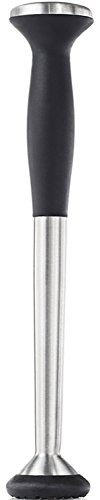
Two tools that beginners skip and then immediately wish they had. A bar spoon (long-handled, twisted stem) is for stirred cocktails — you can stir a Negroni or Manhattan with it in a mixing glass or directly in the serving glass, keeping the drink silky and cold without diluting it with the aeration that shaking introduces. A muddler is for pressing herbs and citrus — Mojitos, Old Fashioneds with orange peel, and anything built around a fresh ingredient. The OXO muddler's nylon head is important: metal or wooden muddlers tear the herbs and release bitter chlorophyll. The nylon head bruises gently and gets you a cleaner result.
Best starter
OXO
SteeL Muddler
$19.94 as of Jun 22, 2026
★★★★★Our rating· In Stock
The nylon head is the key detail here. Unlike bare metal or wood, nylon bruises herbs and citrus gently without tearing and releasing bitterness. Non-slip grip, 9.5 inches, and heavy enough to do the job. The best muddler for a home bar by a meaningful margin.
What we like
Nylon head bruises herbs without tearing — cleaner flavor every time
Non-slip grip and 9.5-inch length give proper leverage
What to know
Pricier than a bare wooden dowel, though the nylon head is what matters
A proper bar spoon is long enough to reach the bottom of a mixing glass or tall glass without your hand going in. The twisted stem lets you spin it between your fingers for even stirring — a small thing that makes stirred cocktails considerably smoother. Hiware's stainless set of two is well-made and costs almost nothing. Toss one in the utensil drawer and keep one at the bar.
What we like
Twisted stem lets you spin smoothly for even, consistent stirring
12-inch length reaches the bottom of any mixing glass
Comes in a set of two for just a few dollars — keep one in reserve
What to know
Lightweight feel is noticeable compared to heavier spoons
Bitters are the seasoning of cocktails — a few dashes transform a drink the way salt transforms food. Angostura is the one you need first. It's in Old Fashioneds, Manhattans, Champagne Cocktails, and Trinidad Sours, and a single 4oz bottle lasts months. Peychaud's is the second bottle worth having — lighter and more floral, with anise notes, it's the signature bitter in a Sazerac and works anywhere Angostura reads too heavy. Most beginners who buy a bitters 'variety pack' end up using two of the bottles and wondering what to do with the rest. Start with Angostura. Add Peychaud's when you start making Sazeracs. Branch out from there.
Best starter
Angostura
Aromatic Bitters, 4 oz
$12.99 as of Jun 22, 2026
★★★★★Our rating
The most important bottle in home bartending. Two dashes in an Old Fashioned, a dash in a Manhattan, three dashes on a Pisco Sour foam — Angostura is irreplaceable in dozens of classics. The oversized label is intentional; it's been that way since 1876. A bottle at this price point will last you six months to a year of regular use.
What we like
Required ingredient in the Old Fashioned, Manhattan, and dozens more
One bottle lasts 6-12 months of regular use at under $12
Works across bourbon, rye, rum, and gin cocktails equally
What to know
The famously oversized label obscures the liquid level — cosmetic only
Lighter and more floral than Angostura, with a distinctive anise and cherry note. The essential ingredient in a Sazerac and a useful alternative in any recipe that calls for Angostura but benefits from something less assertive. The second bottle most serious home bartenders buy, and probably the last one that's truly essential.
What we like
Lighter and more floral than Angostura — opens up a different register
The essential ingredient in a Sazerac; useful across whiskey cocktails
What to know
Buy Angostura first — this is your second bottle, not your first
Anise note in the finish doesn't suit every palate
Once you've worked through Angostura and Peychaud's, this three-bottle set adds Regan's Orange No. 6 — the standard orange bitter that goes in Manhattans and most whiskey cocktails that call for 'orange bitters.' Buying all three at once makes sense once you've committed to the hobby and know you'll use them.
What we like
Adds Regan's Orange No. 6 — the standard orange bitter for Manhattans
Buying three at once is cheaper per bottle than ordering separately
What to know
Bottles can expire before you finish them if you're not drinking weekly
Don't buy on day one — wait until you've finished a bottle of Angostura
You don't need a full bar setup or a bartender's resume. You need five tools, three bottles, and a willingness to make the same drink twice.
The mistake most beginners make is scope. They buy twelve bottles because every cocktail calls for something different, they pick up a kit with eight tools they’ve never heard of, and they try to make a Corpse Reviver No. 2 for the first time with guests arriving in twenty minutes. Then they wonder why it’s harder than it looked.
Home bartending is actually quite simple if you narrow it. Start with three cocktails. Own them. Then build outward.
Here’s what your first month actually looks like.
Week 1: Pick one drink and make it five times
The fastest path into cocktails is specificity. Choose one drink, understand it completely, and make it until it’s automatic. The three best options for a first cocktail:
The Old Fashioned — bourbon (or rye), sugar, bitters, a fat ice cube, an orange peel. It teaches stirring technique, how dilution changes a drink over time, and why quality spirits matter more than anything else. It’s also the drink most likely to impress someone immediately.
The Daiquiri — white rum, fresh lime juice, simple syrup. Don’t let the name fool you: this is a serious bartender’s drink, not a slushy. It teaches shaking, the three-part balance of spirit/sour/sweet, and why fresh citrus is non-negotiable. If it’s sour, add more syrup. If it’s flat, add more lime. If the spirit disappears, use better rum.
The Gin & Tonic — gin, tonic water, ice, a lime. This one teaches building (pouring directly into the glass, no shaker), and more importantly, it teaches you how dramatically the tonic water quality matters. Fever-Tree tonic makes the same gin taste twice as good as generic grocery-store tonic.
Every cocktail technique is a variation of two things: shaking and stirring. Understanding why you use each one matters more than memorizing which recipe calls for what.
Shake when there’s citrus, egg, or dairy. These ingredients need aggressive agitation to combine fully and create the right texture. A shaken Daiquiri is cloudy, lively, frothy at the edges. A stirred Daiquiri is wrong — you’d get separation and a strange mouthfeel. Shake for 12-15 seconds with ice, hard enough that the tin gets uncomfortably cold in your hand. That’s the right dilution.
Stir when the drink is all spirit. Old Fashioneds, Manhattans, Negronis, Martinis — these are spirit-forward drinks where aeration would make them harsh and muddy. Stirring chills and dilutes gently, keeping the drink silky and clear. Thirty rotations in a mixing glass (or directly in the serving glass) is the standard. The bar spoon’s twisted stem helps you do this smoothly.
The common beginner error: shaking spirit-forward drinks because it seems more impressive. It makes them cloudy, over-diluted, and slightly harsh. When in doubt: citrus = shake, no citrus = stir.
Week 3: Build the bar, three bottles at a time
You don’t need twenty bottles. You need a coherent starting lineup where every bottle earns its shelf space in multiple drinks.
The essential first three:
A good bourbon ($30-45) — Old Fashioned, Manhattan, Whiskey Sour, Paper Plane. Mid-shelf picks from Elijah Craig, Buffalo Trace, or Wild Turkey 101 outperform budget bottles in cocktails significantly. Cheap whiskey makes cheap-tasting drinks.
A versatile gin ($25-35) — Gin & Tonic, Negroni, Tom Collins, Bee’s Knees. For mixing (as opposed to sipping), a London Dry style like Tanqueray, Beefeater, or Bombay Sapphire gives you a clean, reliable base that doesn’t fight with other ingredients.
A sweet vermouth ($12-18) — Manhattans, Negronis, Martini variations. Vermouth is a fortified wine, not a spirit; it opens after 4-6 weeks in the fridge. Buy a smaller bottle (375ml) if you’re not making drinks weekly, and actually refrigerate it.
White rum for Daiquiris and Mojitos. Plantation 3 Stars or Bacardi Superior are solid starting points.
Fresh citrus from the grocery store, not a bottle. Bottled lemon and lime juice make noticeably worse cocktails. A hand squeezer costs $5 and takes 30 seconds. This is the highest-ratio improvement in home bartending.
Simple syrup — equal parts sugar and hot water, stirred until dissolved. A jar in the fridge lasts two weeks and costs pennies. Almost every cocktail with a sweetener calls for simple syrup or a variation.
The five drinks that teach everything
Once you’ve owned your first cocktail and understand the two core techniques, these five drinks cover the full range of what you’ll want to make:
Old Fashioned — stirred, spirit-forward, built in the glass. The benchmark.
Daiquiri — shaken, citrus-forward, perfectly balanced. The most teachable cocktail there is.
Negroni — equal parts gin/Campari/sweet vermouth, stirred. Teaches how bitter ingredients work.
Whiskey Sour — shaken sour with the egg-white option. Teaches foam, sour balance, and how a garnish changes perception.
Mojito — muddled, built, effervescent. Teaches muddling technique and the highball build.
Master these five and you understand the full vocabulary of cocktails. Everything else is a variation.
Month checkpoint: What changes
By the end of your first month, a few things will be different:
You’ll be measuring obsessively — and it will feel automatic rather than laborious. Good bartenders measure every pour. You will too, because you’ll have felt the difference between a balanced drink and one where you eyeballed a quarter-ounce too much of something.
You’ll care about ice. Standard freezer ice is fine, but you’ll start noticing how quickly it melts, how it can add off-flavors, and how a single large cube in an Old Fashioned melts slower and dilutes more slowly than four small cubes. A silicone ice cube mold for 2-inch cubes is a worthy month-two purchase.
You’ll have an opinion about tonic water. This seems minor. It isn’t. The difference between Fever-Tree and generic tonic is significant enough to taste blindfolded. Once you’ve made the comparison, you won’t go back.
You’ll want more cocktail books. The rabbit hole is real. Death & Co: Modern Classic Cocktails is the best single reference for home bartenders who want to go deep — technique, theory, and hundreds of original recipes from one of the most influential bars of the last twenty years.
Save your money
What you don't need yet
Beginners get pressured to buy a lot of stuff that doesn't help them play
better. Here's what we'd skip on day one.
A 20-bottle bar cart — You'll use 4-6 bottles for your first six months. Start with bourbon, gin, and a bottle of good sweet vermouth — that's three cocktails right there. Add spirits as you learn the drinks that need them.
An electric cocktail mixer or shaker — These exist for speed and novelty. Manual shaking is the right technique and takes 10 seconds. The electric versions produce more dilution, less control, and are one more thing to clean.
Cocktail ice molds (before you care about ice) — Large clear ice cubes are beautiful and genuinely improve spirit-forward drinks. But your freezer's regular ice will work fine for your first dozen sessions. Buy the molds when you find yourself annoyed at cloudy ice — not before.
A mixing glass — A pint glass or any wide glass works perfectly for stirred cocktails. A crystal mixing glass is a lovely eventual purchase, not a day-one necessity.
Citrus juicer (more than a hand squeezer) — Fresh citrus is essential for Daiquiris, Margaritas, and most sour-family drinks — use fresh juice, always. But a cheap hand squeezer or reamer ($5) handles everything a home bartender needs. A fancy electric juicer is only worth it when you're making drinks for 10+ people regularly.
First week
Your first seven days
A short, real plan to get from gear-on-doorstep to actually playing.
Pick one cocktail to master first. The Old Fashioned (bourbon, sugar, bitters) teaches stirring. The Daiquiri (rum, lime, sugar) teaches shaking and balance. The Gin & Tonic teaches building. Pick one and make it five times before moving on. · Action
Order a shaker and a jigger — the two tools that make or break beginner cocktails. · Buy
Read one reliable cocktail recipe source. Difford's Guide (diffordsguide.com) is the best free database — precise ratios, detailed descriptions, and honest quality ratings. · Learn
Difford's Guide · The best free cocktail recipe database. Professional-grade ratios and tasting notes.
Make your chosen cocktail twice back-to-back. Taste the difference between your first attempt and your second — you'll already be improving. · Action
FAQ
Common questions
Do I need a shaker to make cocktails at home?
For shaken drinks (Daiquiri, Margarita, Whiskey Sour), yes — shaking combines and chills the ingredients in a way stirring can't replicate. For built drinks (Gin & Tonic, Whiskey & Soda) or stirred drinks (Old Fashioned, Negroni, Manhattan), no shaker needed. A $25 cobbler shaker handles everything a beginner needs.
What's the difference between shaking and stirring a cocktail?
Shaking aerates and dilutes more aggressively — it's the right technique for drinks with citrus juice, egg white, or cream, where you want a cloudy, lively texture. Stirring is gentler — it chills and dilutes without aeration, keeping spirit-forward drinks (Manhattans, Negronis) silky and clear. The recipe tells you which to use; it's not a preference, it's chemistry.
What spirits should a beginner home bartender buy first?
Start with one good bourbon ($30-45), one gin ($25-35), and one bottle of sweet vermouth ($12-18). Those three unlock the Old Fashioned, Manhattan, Negroni, Gin & Tonic, and Martinez — more than enough for your first month. Add rum when you're ready for Daiquiris.
How much should I expect to spend getting started?
Gear runs $75-130 for everything you need: shaker, jigger, bar spoon, muddler, rocks glasses, and bitters. Your spirits budget will be more — a decent starting bar is another $80-120. The gear lasts forever; you'll only restocking spirits and fresh citrus.
Are bitters worth buying, or can I skip them?
Buy the Angostura. A bottle costs under $12 and lasts months, and it's a required ingredient in the Old Fashioned, Manhattan, and dozens of other classics. Cocktails without bitters often taste flat and one-dimensional. It's the lowest-cost, highest-impact purchase on this list.
What's the best cocktail to start with as a complete beginner?
The Old Fashioned. It teaches stirring technique, the importance of ice and dilution, and how three ingredients can taste extraordinary when balanced correctly. Once you can make a good Old Fashioned — the right bourbon, the right sweetness, a clean orange peel — you understand what cocktail balance means, and everything else gets easier.
Difford's Guide — The most comprehensive free cocktail database. Professional ratios, ingredient encyclopedias, and honest star ratings. The first place to look up any recipe.
Death & Co: Modern Classic Cocktails (book) — The best single cocktail book for serious home bartenders. Technique, theory, and 500+ recipes from one of the world's most influential cocktail bars. Skip if you're purely casual; essential if you're genuinely curious.
Cocktail Chemistry (YouTube) — The most educational cocktail channel on YouTube. Recipe deep-dives, technique explainers, and honest reviews of home bar gear. Start with his 'Essential Classic Cocktails' series.
How to Drink (YouTube) — Entertaining and educational. Good balance of beginner-friendly content and deep dives. The host's enthusiasm is genuine and the technique is solid.
The Flavor Bible (book) — Not a cocktail book — a reference for flavor pairings across food and drink. Invaluable once you start riffing on classic recipes and wondering what to add. Read after six months, not before.
r/cocktails — Active and knowledgeable subreddit. Good for getting feedback on your builds, exploring obscure ingredients, and finding recipe recommendations by spirit. The wiki has a solid beginner's guide.
As an Amazon Associate, JustBeginning earns from qualifying purchases.
We may also earn commission from other affiliate programs linked on this
page. Editorial recommendations are independent; we don't choose
products based on commission rates.
Product prices and availability are accurate as of the date and time
indicated and are subject to change. Any price and availability
information shown on Amazon at the time of purchase will apply.
Our top pickOXO Steel Single Wall Cobbler Cocktail Shaker

 Best starter