Triathlon is three sports bolted together, which means three gear lists. The good news: most beginners overspend on the wrong things. You don't need a $3,000 tri bike for your first sprint race. You need a solid road bike, a legal wetsuit, and the confidence to show up at the start line. Here's what actually matters, what you can skip, and what order to buy it in.
By Colin B. · Published May 24, 2026 · Last reviewed June 12, 2026
Triathlon is expensive to enter. Budget $800 minimum with a used bike; $1,500 is more realistic for a new starter kit across all three disciplines.
We earn commission on qualifying Amazon purchases — see our
affiliate disclosure.
Price tiers and budget totals shown above are editorial estimates;
actual Amazon prices vary.
At a glance
Our top pick in each category
The fastest path through this guide — each best-starter pick by category.
Scroll for the budget and upgrade alternatives.
Don't buy a triathlon-specific bike for your first race. A road bike with clip-on aerobars is smarter, cheaper, more versatile for training, and won't cost you a race you're not competitive in yet. Buy the tri bike in year two, when you know you're hooked and you've developed the fit and fitness to use the position.
Wetsuit buoyancy matters more than wetsuit speed for beginners. An entry-level suit like the Xterra Vortex adds real buoyancy that makes a bad swimmer faster and a good swimmer noticeably so. Skip the $400 suit until you've done a few open-water swims and know what fit feels like on your body.
Sign up for a race first, then buy gear. Picking a specific date (even if it's four months out) changes every gear decision. Sprint distance for your first race: 400-750m swim, 12-20km bike, 5km run. You don't need to be an athlete; you need a bike, a helmet, and a pair of running shoes.
The bike leg takes up roughly half of a triathlon's total time, which is why it dominates the gear conversation. For your first race, a road bike with clip-on aerobars is smarter than a dedicated triathlon bike, it's cheaper, more versatile for training, and won't cost you a race you're not competitive in yet. A road bike in the $800–1,200 range is genuinely all you need for a sprint or Olympic-distance finish. Buy the tri-specific setup in season two, after you know you're committed.
Bike — what's the difference?
A few common shapes, each making a different trade.
Road Bike
Versatile trainer and racer. Add aerobars when ready for race pace.
Position
Endurance/sport
Aerobars
Compatible (clip-on)
Best for
First 1–2 seasons
Best for First-time triathletes, training versatility, budget-conscious entry
Tradeoff 3–5 min slower per 40km than a tri bike in aero position
Purpose-built aero. Buy from a local dealer in season two.
Position
Aggressive aero
Aerobars
Integrated
Best for
Season 2 and beyond
Best for Committed racers, Olympic and 70.3 distances, aero gains matter
Tradeoff Not comfortable for group rides or long training blocks without fit work
Gravel / Endurance Road
Relaxed geometry. Great for long training miles, slower at the finish.
Position
Relaxed / upright
Aerobars
Compatible (varies)
Best for
Mixed terrain training
Best for Athletes doing off-road training or hilly terrain between races
Tradeoff Slower on flat race courses than a road bike with aerobars
Best starter
Giordano
Aversa Aluminum Road Bike 700c
$$$
★★★★★Our rating
The Aversa is a solid entry aluminum road bike available on Amazon, no dealer visit required. Aluminum frame, Shimano 21-speed drivetrain, and a geometry comfortable for 90-minute training rides. Add clip-on aerobars for race day and you have a legal, competitive triathlon setup for under $450 total. Giordano ships it nearly assembled.
What we like
Available on Amazon, ships to your door, no dealer visit required
Shimano 21-speed drivetrain shifts reliably through every training ride
Accepts clip-on aerobars for race day without buying a new bike
What to know
Ships partially assembled, plan 30 min for setup or a bike shop visit
Entry-level components won't last 5+ years of serious training
Aerobars bolt onto your road bike's handlebars and let you hold the low, arm-supported aero position of a proper tri bike. They add measurable speed on the bike leg for about $70, and transform a road bike into a race-day tool. If you already own a road bike, these are the highest-ROI upgrade in triathlon.
What we like
Transforms any road bike into a legal race setup for under $70
Adjustable pad width and extension fits most handlebar setups
Measurable speed improvement on flat race courses
What to know
Aero position requires practice, first rides feel awkward and unstable
Not compatible with all handlebar shapes, measure before ordering
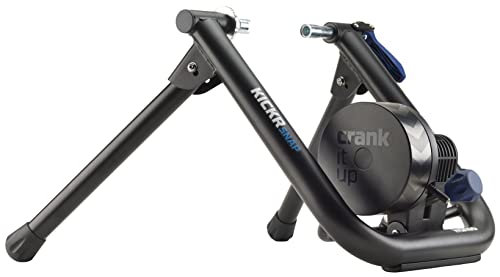
Once you're serious about triathlon training, a smart trainer mounts your road bike and connects to Zwift, TrainerRoad, or TrainingPeaks for structured interval sessions. The KICKR SNAP is wheel-on (no wheel removal needed), and accurate enough for power-based training. When weather cuts your riding weeks, this keeps your bike fitness intact.
What we like
Mounts your current road bike, no new wheel or cassette swap required
Connects to Zwift, TrainerRoad, and TrainingPeaks for structured intervals
Keeps bike fitness through winter when outdoor riding isn't possible
What to know
Wheel-on design is less accurate than direct-drive, calibrate before each ride
Requires a quick-release rear axle, thru-axle bikes need an adapter
A helmet is not optional, USA Triathlon requires one for the bike leg, and you must put it on before touching your bike in T1. Beyond compliance, a helmet that fits is one you'll actually wear on 2-hour training rides without discomfort. MIPS matters for rotational impact protection; vents matter for keeping cool on the ride out of T2. Aero shape doesn't, at beginner speeds. Budget $50–120 here.
Best starter
Giro
Register MIPS
$$
★★★★★Our rating
A solid entry-level MIPS helmet from one of cycling's most trusted brands. Sixteen vents keep you cool through the run out of T2, the retention system dials in without tools, and MIPS protection is worth having at any price point. Giro sizing runs true to their chart, don't guess.
What we like
MIPS rotational protection at an entry-level price point
16 vents keep airflow high, important for the run out of T2
Retention system adjusts in seconds without removing the helmet
What to know
No aero design, a small time penalty at race pace
Basic straps compared to premium helmets, check fit carefully
Under $60 and MIPS-equipped, which makes it a better safety bet than some more expensive options without it. Fourteen vents, an in-mold shell, and a retention system that holds position on long rides. Bell's fit is generous for rounder head shapes, so worth trying if Giro runs snug.
What we like
Under $60 with MIPS, the safety math works in its favor
Generous round-head fit that works for riders Giro leaves out
What to know
Retention system is less precise than Giro's, verify fit before race day
What you move to when you're serious about staying cool and looking the part. Twenty vents, a lighter shell, and a more ergonomic Roc Loc retention system that stays put on hard out-of-saddle efforts. The extra ventilation matters on long race days in heat.
What we like
20 vents run noticeably cooler than entry helmets on summer rides
Lighter shell reduces neck fatigue on multi-hour training rides
MIPS plus improved retention, better protection and better fit
What to know
Overkill for a first season, save the upgrade once you're committed
More ventilation means less cold-weather comfort in fall months
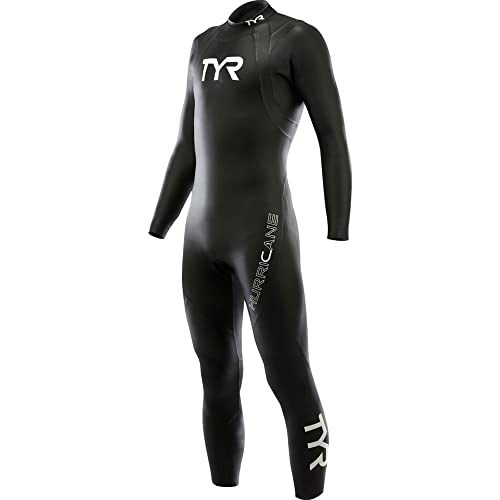
A triathlon wetsuit does two things: adds buoyancy so you float higher and swim faster with the same effort, and adds warmth in cold lakes. It's legal in almost every triathlon when water is below 78°F, which covers most US races before August. A beginner wetsuit will make a mediocre swimmer measurably faster. You can skip it if your race is a heated pool sprint, but for any open-water event, it's essential.
Best starter
Xterra
Vortex Triathlon Wetsuit
$309.00 as of Jun 22, 2026
★★★★★Our rating
The standard beginner wetsuit recommendation for a reason: USAT-legal thickness, SCS coating on the arm panels to reduce drag at the catch point, and a buoyancy profile that lifts your hips into proper race position. Easy-off back zipper cord is fast enough for most T1s. A genuine performance tool at an entry-level price.
What we like
USAT-legal and genuinely buoyant, easier to swim in cold water
SCS coating on arm panels reduces drag at the catch point
Easy-off back zipper cord pulls fast under race-day pressure
What to know
Fit is critical, a loose neck floods immediately, size carefully
Not as flexible through the shoulders as higher-end suits
TYR's entry wetsuit at around $130 gets you into open-water racing legally and buoyantly without a painful upfront cost. Reliable construction won't delaminate in the first season, and TYR's sizing is well-documented. The shoulders are stiffer than the Xterra, which slows your stroke slightly, but it's adequate for a sprint triathlon swim.
What we like
Under $150 and USAT-legal, the true budget entry to open-water racing
TYR build quality holds up through a full first season without issues
What to know
Stiffer shoulders than the Xterra, noticeable on swims over 500m
Budget price shows in fit precision, try before race day
When you're ready to pay for a proper suit, the Athlex Float is where most age-groupers land. Ultra-buoyant hip panels lift your legs into race position automatically, the 39-cell neoprene is far more flexible than budget suits, and forearm catch panels add propulsion mid-stroke. Real speed improvement over entry-level suits.
What we like
Ultra-buoyant hip panels lift your body position automatically
39-cell neoprene is noticeably more flexible than entry-level suits
Forearm catch panels add propulsion power mid-stroke
What to know
At $350+, confirm you're committed to the sport before buying
High buoyancy can feel restrictive for strong, high-body-position swimmers
The run leg is the last thing you do when you're already exhausted from swimming and cycling, which means shoe comfort matters more than shoe performance. You need a well-cushioned daily trainer, not a racing flat, not a minimalist shoe. Whatever you run in for a standard 5K or 10K training run is probably fine. The main mistake is skimping on shoes after spending $1,000 on a bike.
Best starter
Brooks
Ghost 15
$$
★★★★★Our rating
The Ghost is the default recommendation from running shops for a reason: it fits a wide range of foot shapes, offers enough cushion for triathlon training (long runs and brick workouts) and holds up over high mileage. Not the fastest shoe, but the most forgiving. That matters when you're six miles into a brick run on already-tired legs.
What we like
Accommodates a wide range of foot shapes, most beginners fit fine
DNA Loft midsole cushions long run segments on already-fatigued legs
Runs true to size, fewer return headaches than technical shoes
What to know
Heavier than plated race shoes, not ideal for aggressive run splits
Neutral only, significant overpronators need a stability shoe instead
Under $110 most of the year and surprisingly well-cushioned. The Fresh Foam midsole handles long training runs and the upper breathes well in warm weather. A smart choice if you're uncertain about the sport and don't want to commit to premium running shoes yet.
What we like
Under $110 most of the year, the true budget training shoe for triathletes
Well-padded heel collar comfortable in T2 when socks are optional
What to know
Midsole breaks down noticeably after 400+ miles, track mileage carefully
Less responsive than the Ghost on tired brick-run legs
A nylon-plated trainer one tier below a race shoe, it rewards fast turnover without demanding it. PWRRUN PB foam returns energy noticeably more than standard cushion, and the wide forefoot is comfortable on tired, swollen race-day feet. It will make your run split faster once you've built the base to use it.
What we like
Nylon plate and PWRRUN PB foam deliver real energy return on tired legs
Wide forefoot stays comfortable on swollen race-day feet
Works for race day and tempo training, not just a competition shoe
What to know
The plate amplifies poor form, build your base in a cushion trainer first
Premium price, not worth it until you're serious about your run split
A multisport GPS watch is genuinely useful for triathlon, not just for pacing on race day, but for structuring interval sessions, brick workouts, and swim training. A basic running watch won't work: you need one that handles swim, bike, and run modes and can display the right metrics in each. Garmin owns this category for good reason. Anything in the Forerunner lineup knows what a triathlon is.
Best starter
Garmin
Forerunner 265
$346.95 as of Jun 22, 2026
★★★★★Our rating
The sweet spot in Garmin's triathlon lineup: multisport mode that handles swim-to-bike-to-run transitions, an AMOLED display readable in bright sunlight, and a training load model that tells you whether you're recovering properly. Built for triathletes, priced for athletes who are getting serious without going all-in yet.
What we like
AMOLED display is sharp and readable in direct sunlight on the bike
Full multisport mode handles swim→bike→run discipline transitions
Training load recovery tracking flags overtraining before it happens
What to know
At $350-400, it's real money, the 165 covers a first season for less
AMOLED shortens battery in always-on mode, manage display settings
Garmin's entry multisport watch handles swim, bike, and run without the premium price tag. GPS accuracy is solid, the battery lasts through a full Olympic-distance race with room to spare, and the interface is identical to every other Garmin. A real triathlon watch for around $250.
What we like
Handles swim, bike, and run tracking in a single multisport session
7-day battery covers a full week of training without charging anxiety
Same Garmin interface as the premium line, no relearning if you upgrade
What to know
No optical heart rate during swimming, stroke rate and pace only
Basic display vs. AMOLED on the 265, still very readable outdoors
The serious age-grouper's watch: solar-assisted battery lasting multiple days, full training load analysis, race predictor, and auto-multisport detection that senses T1 and T2 transitions without button presses. A proper coaching tool for athletes who've committed to the sport and want data-driven training.
What we like
Solar charging extends battery to days, no mid-race power anxiety
Auto-multisport detects T1 and T2 transitions without button presses
Full training load analysis and race predictor for data-driven training
What to know
At $600, it costs more than many beginner bikes, wait until season two
Feature depth creates a learning curve, most beginners use 20% of it
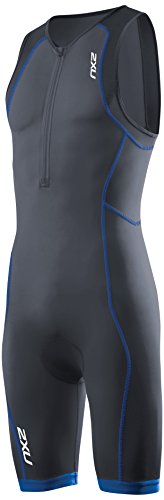
A trisuit lets you swim, bike, and run in one garment, lightly padded for the bike leg, quick-drying for the swim exit, and comfortable enough for the run. Add a race belt so your number clips on in under five seconds instead of getting pinned through your suit, and a pair of swim goggles that seal reliably in choppy open water. These three items together are your race-day uniform.
Best starter
2XU
Men's G:2 Active Trisuit
$$
★★★★★Our rating
Changing clothes in transition costs 2–3 minutes and mental energy you'd rather spend racing. The 2XU Active is one-piece, lightly padded, quick-drying, and has a full front zipper for easy putting on in T1. It's what most age-groupers wear for their first decade of racing.
What we like
Lightly padded for the bike leg without slowing you in the water
Full front zipper opens for ventilation and quick donning in T1
Quick-drying fabric transitions from swim to bike to run without bulk
What to know
Compression runs small, measure carefully and size up if between sizes
Chamois is thinner than cycling bibs, not ideal for 4+ hour ride legs
Your race number has to go somewhere, and safety-pinning it through a trisuit damages the fabric and costs you seconds in T2. A race belt clips your number on in under five seconds. Nathan's Fast and Light belt is the standard: wide elastic, reliable clips, and under $15. Buy two in case you lose one.
What we like
Clips race number on in under 5 seconds, a real T2 time saver
Ultra-light elastic, no drag, no bounce while running
What to know
Elastic stretches over seasons, replace when tension loosens
Clips can be fiddly with cold, wet hands in T1, practice before race day
Open-water racing demands goggles that seal without constant adjustment. The Vanquisher 2.0 has a soft silicone gasket that creates a real seal on most face shapes, anti-fog coating that holds up in cold water, and a two-strap retention system that stays put through a mass swim start. Race-ready for $20.
What we like
Dual silicone gasket seals on most face shapes without adjustment
Anti-fog coating holds up in cold open water, not just pool sessions
What to know
Seal is face-shape-dependent, test in water before race day
Tinted lens versions sell out before summer races, order early
Sprint triathlon is completable with 8–12 weeks of honest preparation. Here's what those weeks actually look like, and what the race day experience will throw at you.
Most people who sign up for their first triathlon do it before they feel ready. That’s the right call. The race is a deadline that structures your training, and the format is far more approachable than it looks from the outside. A sprint triathlon, 400–750m swim, 12–20km bike, 5km run, is not an elite event. It’s a Tuesday morning workout stretched to race format, done in sequence.
What makes triathlon feel complicated isn’t the fitness. It’s the logistics: gear across three disciplines, two transition areas, rules you’ve never heard of, an open-water swim that feels nothing like a pool. This guide is about that learning curve, what to prioritize, what to ignore, and what race day will actually feel like.
Weeks 1–4: Building the base in all three sports
The first month is about assessment. You need to know where you actually are in each of the three disciplines, honestly, not aspirationally.
Swimming is where most beginners are furthest from ready. If you can’t swim 400m continuously without stopping, that’s your most urgent training focus. Not because it’s the biggest part of the race (it isn’t) but because it’s the one you can’t fake with fitness. A 5km run on tired legs is painful but possible; a 400m swim with no technique is a drowning risk.
Join a Masters swimming program if there’s one near you. One session per week with a coach who can tell you your stroke is broken will do more than a month of solo laps. Focus on these two things and nothing else: breathing on a rhythm (every three strokes, or every two if you’re struggling) and not lifting your head to look forward (it sinks your hips and doubles your drag).
Cycling for triathlon is about sustainability, not speed. If you’re new to road cycling, expect your first few rides to feel unstable and your hands to hurt. Both pass within 2–3 weeks. The most important skill to build early: comfort at a consistent effort for 45–60 minutes. Not sprint speed, not climbing technique, aerobic durability at a pace you can hold conversation.
Running is usually the most familiar discipline. If you can run a 5K already, you’re ahead of most beginners on the run leg. The triathlon-specific skill to practice: running when you’re already tired from the bike. That comes from brick workouts, which start in weeks 5–8.
In weeks 1–4, your training week looks something like:
A brick workout is a bike-then-run with no rest between. You finish the ride, rack the bike, and start running, exactly as you will in the race. The first time you do this, the first quarter-mile of the run will feel deeply strange. Your legs have been pushing in circles for an hour, and now they need to remember how to go forward.
This is called dead legs, and it’s normal. The sensation fades after 2–5 minutes. Every brick workout you do before race day reduces the severity of dead legs on race day. By week 8, you’ll barely notice it.
A basic brick workout: ride for 30–45 minutes at moderate effort, then immediately run for 15–20 minutes. Do one of these per week. That’s it. You don’t need elaborate brick sessions to be ready for a sprint, you just need to have experienced the transition and know what it feels like.
Transition practice matters more than most beginners expect. The two transitions, T1 (swim to bike) and T2 (bike to run), are timed. A slow transition is like running slower, and it’s entirely preventable. Practice in your driveway:
T1: Wetsuit off → helmet on → shoes on → run bike to mount line
T2: Rack bike → helmet off → switch to run shoes → go
Time yourself. Aim to get T1 under 3 minutes and T2 under 90 seconds. You’ll probably be slower than this on race day because of nerves, which is why you want faster times in practice.
Also in weeks 5–8: open-water practice. Pool swimming and open-water swimming are different sports in the same way that treadmill running and trail running are different sports. The main differences:
No lane lines. You need to sight, lifting your head briefly every 6–10 strokes to spot the buoy. Practice this in the pool first: three strokes, sight, three strokes, sight.
Cold water. Most open-water races are in water below 70°F. Cold water can trigger a panic response in new swimmers, your breathing goes short and fast, your heart rate spikes, and you want out immediately. The fix is to practice cold-water exposure before race day. Get in the lake or reservoir ahead of your race and swim 100–200 meters a few times. The shock gets smaller each time.
Wetsuit buoyancy. Your wetsuit will make you float higher and swim faster. It will also feel constraining around the shoulders for the first few swims. Put in 3–4 wetsuit swims before race day so the restriction doesn’t feel novel.
Weeks 9–12: Specificity and taper
In the final four weeks, your training shifts from building to specificity, doing workouts that feel like the race.
Your longest brick workout should happen around week 10: ride the full race-distance bike leg, then run the full race-distance run leg, back to back. Not at race pace, at 70–80% effort. The goal is to confirm that you can cover the distance and that your nutrition strategy (gels, water, timing) works on your stomach.
Week 11 is your hardest training week. Week 12 is your taper, volume drops significantly (40–50% of peak), intensity stays present, and your job is to let your body absorb the training you’ve already done. Most beginners overtrain in taper week because they’re nervous. Don’t. The fitness doesn’t grow in week 12; you’re just recovering to express what you’ve already built.
Race week specifics:
Pre-ride the bike course if possible, or at least drive it
Do a race-simulation swim in your wetsuit in open water
Lay out your transition bags the night before with everything labeled and in order
Don’t try any new food, gear, or nutrition the day before or day of
You’ll arrive at transition 60–90 minutes early. The atmosphere will be more casual than you expect, other nervous beginners, experienced athletes setting up equipment, staff directing you to rack your bike. Set up your transition area methodically: bike racked, helmet on the handlebars with the straps open, run shoes at the front of your spot with socks pre-stuffed, race belt clipped to the shoes.
The swim start is when most beginners get surprised. If it’s a wave start (groups of athletes going every 2–4 minutes), seed yourself toward the back of your age group or in a slower wave. If it’s a rolling start, seed conservatively. The first 100 meters will feel chaotic, other swimmers, splashing, no lane lines. Breathe through it. The field thins out after the first turn buoy and it starts to feel like swimming.
Exit the water, run to T1. Pull the wetsuit to your waist while running, then fully off at your bike. Helmet on and buckled before you touch the bike, this is a rule. Shoes on. Roll your bike to the mount line (running with a bike in cleats is harder than it sounds; practice this).
The bike leg will feel fast and wonderful after the swim. You’re warm, the water is gone, and you’re moving. Pace conservatively in the first third, the temptation to hammer out of T1 is real, and it costs you on the run. Aim for steady effort, not sprint effort.
T2 will feel different from your practice runs because you’ll have blood in your legs and adrenaline in your system. Get to it quickly, rack the bike, get your run shoes on, go. Don’t overthink it.
The run is where you find out what the day cost you. First 400 meters: legs feel like cement, breathing is strange. This is the brick effect you’ve practiced. Keep moving. By the half-mile mark, your stride normalizes. At the 2K mark, you start to feel like a runner again. The last kilometer: you can see the finish line, you know you’re going to finish, and the effort becomes something else entirely.
The finish line at a triathlon is genuinely different from a road race. You’ve done three things, not one. You’ve covered disciplines in sequence with transitions between them. Most people who cross a triathlon finish line for the first time register, somewhere around the timing strip, that they want to do it again.
Sign up for the next one within 48 hours, while the emotional memory is fresh and before you talk yourself out of it. That’s how most triathletes end up doing five races in year one.
Write down what went wrong. Transition took too long? Open-water start was overwhelming? Bike fitness held you back? Every race is a diagnostic. The problems that bothered you most in race one are the things to build into the training plan for race two.
Consider an Olympic-distance race as your second event. It’s roughly 2.5x the duration of a sprint, but the skills are the same. Most athletes who finish a sprint find the jump to Olympic more manageable than they expected, the swim and run are longer, but the bike leg is where you make up time if you’ve been training.
One thing doesn’t change: the pre-race nerves. Every experienced triathlete you’ll meet, from first-timer to Ironman veteran, still gets nervous on race morning. The nervousness means you care. That’s the thing that keeps you coming back.
Save your money
What you don't need yet
Beginners get pressured to buy a lot of stuff that doesn't help them play
better. Here's what we'd skip on day one.
A dedicated triathlon or time-trial bike — A road bike with clip-on aerobars is $400–800 cheaper and better for training. Buy the tri bike after your first race, when you know you're committed.
A power meter — A great training tool, but only after you understand pacing by feel. Heart rate and RPE will get you through your first season.
An aero helmet — Saves 30–60 seconds per hour at race pace. Irrelevant in your first race; buy after you're consistently finishing in the top half of your age group.
Compression socks or calf sleeves — Recovery benefits are real but marginal. Focus on sleep, hydration, and not overtraining before adding recovery gear.
Elastic laces — Great idea, but learn your T2 transition first. When you're consistently sub-90 seconds in T2, elastic laces are the right upgrade.
First week
Your first seven days
A short, real plan to get from gear-on-doorstep to actually playing.
Sign up for a sprint triathlon in the next 8–16 weeks. · Action
No. A road bike is legal in every triathlon and is the right choice for most beginners. Add clip-on aerobars (about $70) for race day and you'll be competitive. A dedicated tri bike is a season-two purchase, after you know you're committed and have developed the fitness to use the aero position.
What if I'm not a strong swimmer?
Most beginners are weakest in the swim, and it matters the least, the swim is typically 10–15% of total race time. A wetsuit adds buoyancy that makes a struggling swimmer significantly faster. Join a Masters swimming class for 6–8 weeks before your first race; even modest technique improvements pay large dividends over 400–750m.
Should my first race be a sprint or Olympic distance?
Sprint. A sprint triathlon (400–750m swim, 12–20km bike, 5km run) is completable with 8–12 weeks of honest preparation. An Olympic (1500m swim, 40km bike, 10km run) requires a real base in all three disciplines and 4–6 months of structured training. Do a sprint first, feel the race format, then build toward Olympic.
What is a brick workout, and why does everyone talk about it?
A brick is a bike-then-run workout with no rest between, you get off the bike and start running immediately. The first few minutes feel terrible because your legs have been in one position for an hour and need to relearn running mechanics. Training this sensation is essential: race day brick legs are a real thing, and the only way to make them manageable is to practice.
How scared should I be about the open-water swim start?
First-time open-water starts catch most beginners off-guard, the cold water, the thrashing bodies, the lack of a black lane line to follow. Seed yourself toward the outside of the start field (not directly in the pack), take the first 100m easy until you find your rhythm, and remember that it always feels harder in the first 60 seconds than it does for the rest of the swim.
How much training does a first sprint triathlon actually require?
Realistically, 8–12 weeks of training 3–5 days per week across all three disciplines. A finish is achievable without peak fitness, the distances are approachable. The goal isn't to race fast; it's to learn the format, build your gear setup, and decide if you want to go longer. Most people who finish a sprint triathlon sign up for another one within the month.
USA Triathlon — The national governing body. Official race rules, sanctioned events, club directory, and the USAT membership required for most US races. Start here.
Triathlete Magazine — The main English-language triathlon publication. Gear reviews, training plans, race coverage, and nutrition guides. More beginner-friendly than it looks.
220 Triathlon — UK-based but globally useful. Strong beginner content, gear buyer's guides, and training plan library. Good alternative perspective to Triathlete.
TrainingPeaks — The platform most tri coaches and athletes use for structured training plans. Free plans exist; paid plans are worth it once you're targeting a specific race.
Global Triathlon Network (YouTube) — The best beginner video resource for triathlon. Sprint through their 'How to' series, brick workouts, transitions, open water swimming, and gear guides. Hours of free coaching.
Triathlon Taren (YouTube) — One coach's decade-long journey from beginner to Ironman. The early videos are especially useful, he was a beginner on camera, so you can see the learning curve.
r/triathlon — Active community. Search before posting, 'first sprint' questions have thorough answers in the wiki. Good for gear advice and race reports from your region.
As an Amazon Associate, JustBeginning earns from qualifying purchases.
We may also earn commission from other affiliate programs linked on this
page. Editorial recommendations are independent; we don't choose
products based on commission rates.
Product prices and availability are accurate as of the date and time
indicated and are subject to change. Any price and availability
information shown on Amazon at the time of purchase will apply.
Our top pickGiordano Aversa Aluminum Road Bike 700c