HEMA — Historical European Martial Arts — is sword fighting rooted in historical manuals, not Hollywood choreography. You learn longsword, sabre, or rapier as it was actually taught, then spar with live opponents wearing full-contact protection. The gear is non-obvious (not all masks are HEMA-safe), the community is small and welcoming, and entry costs $550–900 all-in.
By Colin B. · Published June 3, 2026 · Last reviewed June 3, 2026
HEMA has a real entry cost because all the safety gear is mandatory at once — you can't spar with just a mask and sneakers. Budget $550 minimum for the essential four pieces.
We earn commission on qualifying Amazon purchases — see our
affiliate disclosure.
Price tiers and budget totals shown above are editorial estimates;
actual Amazon prices vary.
At a glance
Our top pick in each category
The fastest path through this guide — each best-starter pick by category.
Scroll for the budget and upgrade alternatives.
Find a club before you spend a dollar. Most HEMA clubs have loaner gear for your first few sessions — mask, jacket, gloves, training sword. Walking in with $800 of gear and no technique is both wasteful and a mild red flag to experienced practitioners. Walk in with workout clothes instead.
Not all fencing masks are HEMA-safe. A standard foil or sabre mask is rated 350N for the light forces of sport fencing — not the forces of a longsword strike. For HEMA you need a 350N mask with a rigid back-of-head protector (BHP) at minimum. Without the BHP, a thrust to the rear of the head is unprotected.
The sword comes last. Your club lends them. Spend your first month with their swords while you figure out which weapon system you actually want to study — longsword, rapier, sabre — and whether HEMA fits your life.
The gear
What you actually need
Training Sword
Training swords come in three distinct types with completely different use cases. Nylon wasters are rigid plastic, cheap, and for solo drilling only — contact sparring with them causes injuries. Synthetic longswords are flexible polymer, safe for full-contact sparring in full gear, and what most clubs use. Steel feders are spring-steel training longswords for advanced work and tournaments, requiring a complete 1600N protective kit. Start with a synthetic; most clubs will lend you one while you decide.
Training Sword — what's the difference?
A few common shapes, each making a different trade.
Nylon Waster
Solo drilling only. Rigid, cheap, never for contact sparring.
Material
Nylon / polypropylene
Price range
$20–40
Safe for sparring
No
Best for At-home solo drilling and very slow paired drills
Tradeoff Rigidity causes injuries in full-speed contact — sparring tool it is not
Real weight and feedback. Needs full 1600N kit. Tournament use.
Material
Spring steel
Price range
$250–600
Safe for sparring
Only with full 1600N kit
Best for Advanced sparring and tournaments after 6+ months of training
Tradeoff Requires complete heavy kit and significant technical foundation
Best starter
Cold Steel
Hand and a Half Training Sword
$$
★★★★★Our rating
Cold Steel's synthetic training swords are the de facto standard at American HEMA clubs. Heavy enough to build real muscle memory, flexible enough to be safe for sparring in full gear, and priced at $60–80 where buying the wrong one doesn't sting. Closest to longsword geometry without the feder price tag.
What we like
De facto club standard in US HEMA — partners use this same sword
Flexible enough for safe sparring; heavy enough for real muscle memory
Cross-guard geometry allows proper half-swording and bind drills
What to know
Flex reduces cutting feedback — add a nylon waster for solo form work
Plastic grip degrades in cold; wrap it with overgrip if training outdoors
A nylon waster is the cheapest way to drill at home. The rigid polypropylene gives accurate feedback on cutting mechanics that the flex of a synthetic masks, and the arming-sword length fits most living rooms. Not safe for contact sparring — this is a solo drill tool.
What we like
Under $30 — the lowest-cost path to daily at-home drilling
Rigid feedback teaches cutting mechanics faster than a flexible synthetic
What to know
Never use for contact sparring — rigid impact causes hand and wrist injuries
Shorter than a longsword; solo work won't transfer directly to two-handed technique
The Hanwei Practical Feder is the standard entry-level steel training sword for HEMA. Spring-steel blade, the schilt (cross-guard extension) that catches binds correctly, and weight balanced for historical longsword work. Buy this after 6+ months of synthetic training when your club begins steel sparring — not before.
What we like
The tournament-standard entry steel feder used at most HEMA events
The mask is the single most critical HEMA safety purchase, and the one where beginners make the most dangerous mistake. A standard fencing mask rated 350N is not enough — it protects the face but leaves the back of the head exposed, and the 350N rating assumes sport-fencing forces, not longsword strikes. At minimum, you need a 350N mask with a rigid back-of-head protector (BHP). For steel federing and tournaments, you need 1600N. There is no cutting corners on this.
Best starter
LEONARK Armoury
HEMA Helmet 350N
$$$
★★★★★Our rating
LEONARK Armoury makes some of the most respected HEMA-specific masks available on Amazon, and this 350N model ships with integrated back-of-head protection that makes it HEMA-safe. The extended bib protects the throat, the mesh is heavy stainless, and real HEMA practitioners use this at the beginner-and-intermediate level — it is not a sport-fencing compromise, it is a legitimate HEMA kit piece.
What we like
CE 350N certified — built for HEMA contact, not sport fencing
Integral back-of-head protector covers the critical HEMA exposure point
Extended bib protects the throat; 350N rated for synthetic club sparring
What to know
Not rated for steel federing — you will upgrade this eventually
One of the pricier 350N options; worth it for the protection level
When you graduate to steel federing, 1600N protection is not optional — and LEONARK Armoury is the most accessible brand for HEMA-rated heavy masks on Amazon. Double-layer 800N fencing fabric, 9-mesh stainless, CE EN 13567 Level 1 rated. This is what club steel sparring and tournament federing requires.
What we like
1600N rated for full steel federing and tournament longsword sparring
Double-layer stainless mesh — meaningfully more protection than 350N
What to know
Significantly heavier than 350N — neck fatigue increases in longer sessions
Overkill and unnecessary weight until you actually move to steel sparring
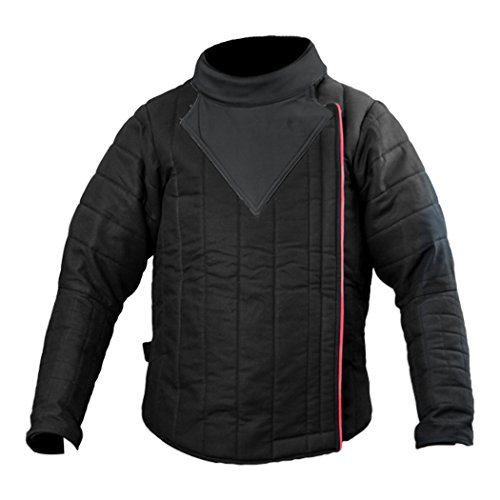
A HEMA jacket (sometimes called a gambeson) covers your torso, arms, and shoulders with rated padding. For synthetic longsword sparring, a 350N jacket is the standard — it absorbs the impact of synthetic strikes without the weight of heavier protection. For steel federing, you need 800N. Most beginners start with 350N and upgrade when they graduate to steel. The jacket is where you feel hits the most prominently, so don't skip it.
Best starter
Red Dragon
HEMA Sparring Jacket
$250.00 as of Jun 22, 2026
★★★★★Our rating
Red Dragon's HEMA jacket is the most widely available beginner option — 350N protection for synthetic sparring, reasonably priced, and sized generously enough for layering. It holds up to club-level longsword and arming sword work without drama. Not glamorous, but effective and actually available.
What we like
350N protection for synthetic longsword club sparring
Arm coverage built in — no separate elbow guards needed at this level
Widely used by North American HEMA clubs; vetted by practitioners
What to know
Runs large — size down one from your normal clothes
Gets hot in summer; plan training in ventilated spaces
If the Red Dragon jacket runs too large or the cut does not fit your body type, ASAki is the other 350N HEMA jacket reliably available on Amazon. Both are 350N rated for steel sparring practice; this one runs a slightly trimmer profile and suits practitioners who find the Red Dragon jacket too bulky. Same protection level, different fit — worth trying if the Red Dragon is wrong for your frame.
What we like
Trimmer profile vs Red Dragon — fits practitioners who prefer a closer cut
350N stab-proof fabrics; compatible with steel sword sparring practice
What to know
Same 350N rating as the Red Dragon — buy this for fit, not extra protection
Less community feedback than Red Dragon; sizing may require exchange
Hands are the most-hit target in longsword sparring — your opponent is actively trying to cut your sword hand, and even with synthetics, unprotected knuckles bruise fast and badly. HEMA-specific gloves have articulated finger protection and long gauntlet cuffs that standard hockey gloves don't, and they're designed to handle the wrist thrust that hockey gloves completely ignore. This is not the category to substitute with sport equipment.
Best starter
Red Dragon Armoury
HEMA Sparring Gloves
$103.59 as of Jun 22, 2026
★★★★★Our rating· Only 20 left in stock - order soon.
The most widely used entry-level HEMA gloves in North American clubs. Articulated finger protection, thick metacarpal padding, and a long gauntlet cuff that closes the wrist gap. They hold up to synthetic longsword sparring and are actually available on Amazon at a price that doesn't require a second job.
What we like
Articulated finger protection catches the thrusts hockey gloves completely miss
Long gauntlet cuff closes the wrist gap — a critical exposure point
Well-reviewed by the North American HEMA community; proven in club sparring
What to know
Runs small — size up from your normal glove size
Reduced grip feedback vs bare hands; 2–3 sessions to adapt your grip
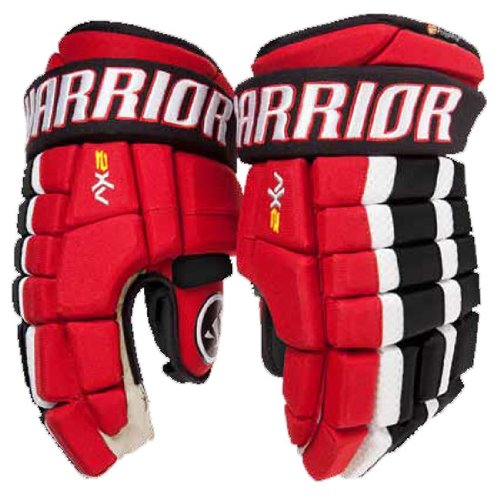
The Warrior Dynasty AX2 is the hockey glove most often recommended in HEMA communities as a stopgap when proper HEMA gloves are backordered. Real knuckle and metacarpal protection, widely available, and available at most sporting goods stores too. Good for one or two sessions of light synthetic sparring while you wait for proper gear.
What we like
Real protection for knuckles and metacarpals in a pinch
Available at any sporting goods store — no specialty shipping wait
What to know
No finger articulation; fingers remain exposed to thrusts and cuts
Wrist gap is a real exposure in HEMA — not a permanent substitute
When you are doing regular steel longsword work and the Red Dragon gloves are no longer enough, a cowhide articulated gauntlet with individual finger protection is the next level. This unbranded gauntlet provides a hard back-of-hand plate and articulated finger coverage — what tournament-level practitioners move to. Check sizing carefully as these are leather and do not stretch.
What we like
Articulated finger protection — thrusts that padded gloves absorb imperfectly
Hard back-of-hand plate stops edge cuts completely
What to know
Leather sizing is fixed — no stretch, measure carefully before ordering
Unbranded; batch quality varies — read recent reviews before buying
A gorget protects your throat — the most dangerous target in longsword sparring. Your mask bib covers the front of your neck, but a proper gorget covers the sides and back, and provides rigid protection against a direct thrust. Many beginners skip this because it doesn't feel exciting to buy. That's the wrong call. At $30–60, it's the cheapest piece of HEMA protective gear relative to what it actually protects.
Best starter
ASAki
Hema Gear Throat Protector/Fencing Gorget with Rigid Protection Plate, Black
$
★★★★★Our rating
A rigid gorget that fits over your jacket collar and under your mask bib. Covers the throat, sides, and back of the neck — the gaps your mask leaves exposed. Standard gear at HEMA clubs and inexpensive enough that skipping it makes no sense on a safety basis.
What we like
Covers the throat gap your mask bib leaves — the highest-injury-risk target
Cheapest piece of protective gear relative to what it protects
What to know
Adds mild head-turn restriction — takes one session to feel natural
Sizing varies by brand; measure neck circumference before buying
A lacrosse throat guard is the field-expedient gorget used at clubs when specialty gear is backordered. It covers the front throat with rigid protection and is available at any sporting goods store. Not a full gorget — sides and back of neck are still exposed — but adequate for one or two light sessions while you wait for the real thing.
What we like
Available at any sporting goods store — no specialty shipping needed
Rigid front-throat protection at a fraction of the gorget price
What to know
Covers front only — sides and back of neck remain exposed to thrusts
Not a HEMA gorget substitute; use only until your proper gorget arrives
HEMA has a longer on-ramp than most martial arts — you need a club, borrowed gear, and some patience before the sword work makes sense. Here's what actually happens in the first six weeks.
HEMA has a longer runway than most hobbies. You don’t show up, pick up a sword, and start fighting on day one — there’s a club to find, gear to understand, footwork to absorb, and a set of concepts from 15th-century German fighting manuals to wrap your head around. Six weeks is about how long it takes to get to the point where all of it starts connecting. This is what those six weeks actually look like.
Week 1: Find a club, then show up empty-handed
The biggest mistake people make with HEMA is buying gear before setting foot in a club. Most clubs have loaner equipment — mask, jacket, gloves, training sword — specifically so newcomers can try the art before committing $700 to protective equipment. Walk in wearing athletic clothes. Ask if they have loaner gear. Almost every club will say yes.
When you arrive, don’t perform expertise you don’t have. The HEMA community is small and honest — practitioners will notice if you’re overselling your background, and they won’t mind at all if you’re genuinely new. What they notice and appreciate is someone who listens, asks good questions, and doesn’t get frustrated when something is hard.
Your first session will probably involve:
Footwork patterns: how to advance and retreat without crossing your feet, how to move obliquely, how to keep your weight centered while in motion.
Basic guard positions: the Liechtenauer tradition (what most clubs teach) has four primary guards — vom Tag, Pflug, Ochs, Alber. You won’t retain them in session one, but you’ll hear the names and see the shapes.
Paired slow-work: with a synthetic training sword, doing the movements at quarter-speed with a partner, working on contact and blade control rather than speed.
You will feel clumsy. That’s the correct starting state.
Weeks 2–3: Footwork becomes automatic, cuts start to develop
By week two, footwork starts to click — not perfectly, but reliably. The advance and retreat feel less like conscious decisions and more like reactions. This is when instructors typically introduce the offensive material: the basic cuts (Oberhau, Unterhau, Mittelhau — high, low, and horizontal cuts), thrusts, and simple combinations.
This period tends to have a predictable frustration point: the gap between what you understand and what you can do. You understand the Oberhau — strike from the shoulder, edge-aligned, driving through the target. You’ve seen it demonstrated clearly. Then you try it, and it’s a mess of twisting elbows and uncertain footwork. This is normal. This is what the first 20 sessions are for.
The thing to hold onto here is that HEMA technique is built from principles, not memorized sequences. The Liechtenauer tradition is organized around concepts like Vor (initiative, acting before your opponent) and Nach (response, acting after), Indes (in the instant of contact), and the principle that every position should be simultaneously an attack and a defense. Understanding these concepts won’t make your cuts clean immediately, but it changes how you interpret everything you’re learning — you’re not memorizing a choreography, you’re learning a logic.
Spend five minutes at the end of each session looking at one primary source text. The Wiktenauer has English translations of Liechtenauer, Ringeck, and other masters. You don’t need to understand everything — just reading the structure of how a technique is described changes how you think about training it.
Weeks 4–5: Drilling with resistance, taste of sparring
Around week four, something shifts: slow-work with a cooperative partner starts feeling too easy. Your cuts are landing where you intend them, your footwork is holding up, and you’re starting to notice openings in your partner’s position. This is when clubs typically introduce resistance drilling — the same techniques, but with a partner who isn’t fully cooperative, who moves and defends and forces you to adapt.
Resistance drilling is where HEMA gets uncomfortable and interesting at the same time. The techniques that worked in slow cooperative work start breaking down — you discover your Zornhau (wrath cut) has a timing problem, your bind responses are a half-second late. This is valuable information. You’re learning something real about where your technique actually stands versus where you thought it stood.
At this stage, many clubs also introduce light sparring: not full free-play, but a constrained version — one person attacks from a set starting position, the other responds, then they switch. It’s sparring with training wheels, and it’s the right tool for this point in the learning curve.
What you’ll notice in light sparring is that the initiative problems are much harder than the technique problems. Knowing which cut to throw is easy when it’s telegraphed in a drill. Knowing when to throw it — and committing without hesitation — is a different skill entirely. The Vor/Nach concepts you read about start making physical sense.
Week 6: First real sparring
By week six, most clubs have you in some form of supervised free sparring — two practitioners in full gear, no predetermined roles, playing the game as it’s actually meant to be played. It will feel chaotic. You’ll notice yourself abandoning technique under pressure: swinging instead of cutting, pulling back when you should be entering, freezing when you’re surprised.
This is exactly right. Sparring pressure doesn’t destroy your technique — it reveals what you’ve actually learned versus what you’ve only understood intellectually. Your footwork may be cleaner than you expected (footwork tends to hold up under pressure because it’s learned earlier and practiced more). Your offensive timing will be worse than you expected.
After your first sparring session, you’ll have a very specific list of things to fix. That list is worth more than six months of drilling without sparring ever could be. HEMA is a partner art — the feedback only comes from a live opponent, and the six-week on-ramp exists to make sure you can receive that feedback safely and productively.
Things you’ll fail at — and that’s fine
Winding: entering the bind and adjusting to a different line of attack. Conceptually simple. Physically, most people feel like they’re wrestling a fire hose for the first two months.
Committing to an attack: the impulse is to hedge, to do a half-committed strike that can be pulled back. HEMA technique depends on commitment — a half-committed Zornhau is just a bad miss.
Remembering guard names under pressure: your brain is busy. The guards will come eventually. Don’t let the terminology slow you down in the first month.
Tracking the bind: what your blade and your opponent’s blade are doing in contact is a sixth sense that takes time to develop. You’ll lose the thread constantly early on. So does everyone.
What changes at week seven
Once you’ve had your first real sparring sessions, your learning accelerates sharply. You know which problems are real because you’ve felt them. You have questions for your instructor that are specific rather than general. You understand which drills to prioritize.
A few things will make the months after this inflection point more productive:
Record your sparring occasionally. Video is brutal and invaluable. The thing you think you’re doing and the thing you’re actually doing are often completely different, and video shows you the gap instantly.
Find a regular training partner at your level. A committed pair who trains together outside of club hours will improve faster than either would training with the broader group alone. You’ll develop patterns, correct each other, and build the specific rhythm that makes a sparring pair.
Read one more historical manual. After six weeks in the Liechtenauer tradition, pick up Joachim Meyer’s Gründtliche Beschreibung der Kunst des Fechtens, or George Silver’s Paradoxes of Defence if you’re interested in the English tradition. The historical masters are not just historical curiosity — they’re still the most concentrated technical writing on these weapons in existence.
You’re not a beginner at week seven. You’re someone with six weeks of genuine training and a clear sense of what needs work. That’s a much more interesting thing to be.
Save your money
What you don't need yet
Beginners get pressured to buy a lot of stuff that doesn't help them play
better. Here's what we'd skip on day one.
A steel federing sword — You need six months of synthetic sparring and a complete 1600N kit before a steel feder. Buying it day one is dangerous and wasteful — you can't use it safely yet.
Full plate or historical armor — Period armor is for reenactment, not HEMA sparring. Modern protective gear — mask, jacket, gloves, gorget — is safer and designed for actual movement.
Leg armor — Most beginner clubs don't permit leg strikes in sparring until you've established control. Padded trousers or fencing breeches protect adequately to start.
Multiple weapon systems — Pick one — longsword, rapier, sabre — and commit for at least six months. Jumping between weapons before learning fundamentals in any of them is a classic beginner mistake.
A sharp sword — You will never need a sharp edge for HEMA sparring. Sharp swords are for solo cutting practice on targets only — they have no place in partnered sparring.
Custom-fitted armor pieces — Custom pauldrons, vambraces, and articulated armor are for competitive practitioners who spar daily. Off-the-shelf gear handles the first year without compromise.
First week
Your first seven days
A short, real plan to get from gear-on-doorstep to actually playing.
Find a HEMA club near you before buying any gear. · Action
HEMA Alliance · Main North American HEMA organization — has a club finder by state and region
Attend your first session in workout clothes. Borrow their gear. Don't buy anything yet. · Action
Ask your instructor which weapon system the club focuses on before spending money on gear. · Action
After your second or third session, order your personal protective kit: mask with BHP, jacket, gloves, and gorget. These four pieces let you spar with your own equipment. · Buy
Use the club's synthetic training swords for your first month. Buy your own after you've settled on the weapon system. · Action
Browse the historical manuals at Wiktenauer — even reading a summary of Liechtenauer's principles will change how you see every technique you learn in class. · Learn
Wiktenauer · The definitive digital library of HEMA primary sources — start with the Liechtenauer tradition
Watch a full HEMA tournament bout on YouTube to understand where the training is leading. · Learn
Budget $550–900 for your essential kit: a HEMA-rated mask with BHP ($200–350), jacket ($150–250), gloves ($80–150), gorget ($30–60), and a synthetic training sword ($60–100). All of this is mandatory at once — you can't safely spar with only part of the protective kit in place.
Can I do HEMA without a club?
You can learn solo drilling from YouTube, but you cannot spar safely without experienced instruction and a trained partner. HEMA is fundamentally a partner art — technique only develops under live pressure, and sparring safely requires both parties to understand what they're doing. Find a club first.
Is HEMA dangerous?
HEMA sparring with proper equipment and experienced instruction is no more dangerous than boxing or wrestling — bruises and occasional minor injuries, nothing worse under normal conditions. The danger comes from sparring without proper gear or without structured training. The protective kit exists for a reason; use all of it.
What weapon should I start with?
Longsword is the most common entry point — it's the most documented historical system and most clubs offer it. If your club offers multiple weapons, ask your instructor what they teach best. The quality of instruction matters more than which weapon you choose.
Do I need to be athletic or physically strong?
Not especially. HEMA is a technical martial art where structure and leverage matter more than raw strength. Women, older practitioners, and people without martial arts backgrounds routinely train alongside athletes. The fitness comes from training, not before it.
How long until I can spar?
Most clubs introduce supervised sparring after 4–8 weeks of footwork, structure, and paired drills. You won't be technically good — but you'll be safe and learning. The real improvement comes from dozens of sparring sessions, not the first one.
HEMA Alliance — Main North American HEMA organization. Club finder, event listings, and safety standards documentation.
Wiktenauer — The definitive digital library of historical European martial arts primary sources. Every significant historical manual is here, many with English translation.
r/wma (Reddit) — The main HEMA Reddit community. Good for gear questions, club recommendations, technique debates, and the genuinely esoteric corners of historical combat.
Scholagladiatoria (YouTube) — Matt Easton's channel — the most respected HEMA educator on YouTube. Clear, authoritative, historically grounded. Start here for context before class.
Skallagrim (YouTube) — Longer-form historical weapons content. Not strictly instructional, but excellent for cultural context and weapon comparisons that inform your training.
HEMA Scorecard — Tournament results and rankings database. Useful for finding which clubs compete actively near you and what the competitive landscape looks like.
As an Amazon Associate, JustBeginning earns from qualifying purchases.
We may also earn commission from other affiliate programs linked on this
page. Editorial recommendations are independent; we don't choose
products based on commission rates.
Product prices and availability are accurate as of the date and time
indicated and are subject to change. Any price and availability
information shown on Amazon at the time of purchase will apply.
Our top pickCold Steel Hand and a Half Training Sword

 Best starter