Obstacle course racing is one of the rare endurance sports where the beginner event — a Spartan Sprint — is legitimately fun without months of training. Mud, rope climbs, cargo nets, and a community that cheers everyone across the finish. Here's the gear that makes a real difference and everything you can skip for your first race.
By Colin B. · Published May 30, 2026 · Last reviewed August 7, 2026
Reebok All Terrain Extreme
— The OCR shoe with drainage ports and mud-specific lugs — what the Spartan community keeps coming back to.
Mechanix Wear M-Pact Gloves
— Palm-grip protection for rope climbs and wall traverses without losing the dexterity you need.
Nathan Pinnacle Race Vest 4L
— A hydration vest that bounces less and holds more than a handheld — essential past 5 miles.
Budget total
$150
Typical total
$400
Budget shoes and gloves alone get you to the start line for under $200. Add a hydration vest and compression gear and you're at $350-400 — affordable for a sport with $150+ race entry fees.
We earn commission on qualifying Amazon purchases — see our
affiliate disclosure.
Price tiers and budget totals shown above are editorial estimates;
actual Amazon prices vary.
At a glance
Our top pick in each category
The fastest path through this guide — each best-starter pick by category.
Scroll for the budget and upgrade alternatives.
Sign up for a race before you buy any gear. The registration deadline gives you a real training target, and the gear list is shorter than you think. A Spartan Sprint — 3-5 miles — needs shoes, gloves, and water. That's the whole story for your first race.
OCR shoes matter more than almost anything else. Standard trail running shoes drain slowly and their soles can be slippery on rope obstacles. A purpose-built OCR shoe with drainage ports costs $120-160 and is worth every dollar if you plan to race more than once.
Don't over-gear your first race. The Spartan and Tough Mudder communities have a culture of finishing no matter what — in cotton shirts and old running shoes. Do the race in whatever you have, see if you love it, then upgrade for race two.
The gear
What you actually need
OCR Shoes
Your shoes are the single most important gear decision in OCR. Running shoes drain slowly, lose traction in mud, and turn rope climbs into a grip nightmare with slick soles. OCR shoes have two defining features: aggressive rubber lugs for grip in mud and drainage ports for quick water evacuation. Trail running shoes work for beginner races on drier courses. OCR-specific shoes add drainage and are worth it if you plan to race more than twice. Either way, lace them tight — you will lose a shoe in deep mud suction if you don't.
OCR Shoes — what's the difference?
A few common shapes, each making a different trade.
Trail Running Shoe
Works for most beginner races — slower drainage but better everyday value.
Drainage
None / slow
Lug depth
5–7mm
Best for
Sprint races, drier courses
Best for First-time racers, drier conditions, dual-use trail runners
Tradeoff Shoes stay waterlogged and heavy after water obstacles all race long
The Reebok All Terrain Extreme is the closest thing OCR has to an official shoe — Spartan Race has partnered with Reebok for years, and for good reason. Drainage ports expel water instantly, the lug pattern grips mud without clogging, and the rope-climb outsole rubber actually grips ropes. Most OCR veterans at the start line are wearing these.
What we like
Drainage ports expel water in seconds — no waterlogged feet
The Salomon Speedcross 5 is the most popular trail shoe in the OCR community among racers who want a shoe that works both on race day and during training runs. The chevron lug pattern grips mud well, the build quality is excellent, and these double as legitimate training shoes on dirt. No drainage ports, but for a first Sprint race on a drier course, they're more than adequate.
What we like
Chevron lug pattern grips mud as well as any trail shoe
Legitimate everyday trainer — doubles as race shoe and training shoe
Salomon build quality survives 500+ trail miles
What to know
No drainage ports — expect wet, heavy feet after water obstacles
Aggressive lug wears faster on pavement during road sections
Inov-8 makes the most specialized OCR footwear on the market. The X-Talon Ultra 260 V2 has a graphene-infused outsole — the hardest-wearing rubber available — drainage ports throughout, and a snug fit that resists pulling off in deep suction mud. The brand that elite OCR athletes choose when they're serious about the sport.
What we like
Graphene outsole is the most durable OCR-specific rubber available
Drainage ports plus snug fit resists deep-mud suction pullout
Grip gloves exist for rope climbs, monkey bars, and wall traverses — the obstacles that separate finishers from people who take burpee penalties. Mud and cold water destroy bare-hand grip within the first half mile. OCR gloves need palm protection without sacrificing the dexterity to open gel packets, adjust your vest, or grip a rope at an odd angle. Thin silicone-palm or reinforced palm designs both work; thick work gloves are too clumsy.
Best starter
Mechanix Wear
M-Pact Gloves
$$
★★★★★Our rating
The Mechanix M-Pact is the OCR community's default glove — lightweight, palm-reinforced, and dexterous enough to open gel packs and work latches mid-race. The thermoplastic rubber palm absorbs rope friction without bunching. Designed for mechanics and construction workers, which means they take the abuse running-specific gloves can't handle.
What we like
Palm-reinforced thermoplastic rubber survives rope climbs in mud
Dexterous enough to open gel packets and adjust gear mid-race
Construction-grade durability — won't shred on the first wall traverse
What to know
Slightly warm for hot summer races — hands will sweat
No drainage holes; takes a few seconds to wring out after water obstacles
Under $20 and capable enough for a first race. Harbinger's training gloves have an open-back design for breathability and silicone-dotted palm patches that grip wet ropes better than bare skin. They won't last a full season, but they're the right call if you're not sure OCR will stick.
What we like
Under $20 — smart trial buy before committing to premium gloves
Open-back design keeps hands cool in summer heat
Silicone palm dots grip wet ropes better than bare skin
What to know
Palm patches wear through after 4-6 race uses
Less protection than Mechanix on heavy rope friction obstacles
MudGear makes gloves specifically engineered for OCR — the grip pattern is calibrated for monkey bars, rope climbs, and rig obstacles. Unlike general-purpose work gloves, the palm silicone is optimized for wet rope grip, and the fit stays secure through full submersion. The go-to specialty glove for racers who want purpose-built OCR gear.
What we like
Palm silicone specifically optimized for wet rope and monkey bar grip
Stays secure through full water submersion — no slip after obstacles
Purpose-built for OCR, not repurposed from another sport
What to know
Runs small — size up one from normal glove size
Less dexterous than thinner work gloves for fine grip tasks
For a Spartan Sprint (3-5 miles), aid stations are usually enough. For a Spartan Super (8-10 miles) or Tough Mudder Classic (10-12 miles), a hydration vest moves from nice-to-have to essential — you can't stop every mile to drink when you're mid-obstacle. OCR vests need to bounce less than running vests and stay secure on vertical obstacles. Look for front soft flasks rather than a rear bladder — bladders get compressed and soaked on walls and under cargo net crawls.
Best starter
Nathan
Pinnacle Race Vest 4L
$$$
★★★★★Our rating
Nathan's Pinnacle vest is one of the most OCR-recommended hydration options for intermediate distances. The two front soft flasks are accessible mid-obstacle, the rear pocket holds nutrition and a phone, and the chest straps cinch tight enough to eliminate bounce on descents. Less expensive than Salomon, more purpose-built than a casual running vest.
What we like
Front soft flasks accessible without removing the vest mid-obstacle
Tight chest cinch eliminates bounce on descents and wall climbs
4L rear capacity holds nutrition, phone, and a thin extra layer
What to know
Front pockets run narrow — pre-open gel packs before the start
No integrated rain cover; carry a lightweight layer separately
CamelBak's trail vest under $100 is the right budget call for your first longer race. The Crux 2L reservoir drains fast and the harness works for most body shapes. It will slosh more than a front-flask vest on obstacles, but for a first Super or Mudder it's more than adequate.
What we like
Under $100 from the most trusted hydration brand in running
Crux reservoir drains fully — no stale water taste mid-race
2L gets you through 10-mile events with aid station top-ups
What to know
Rear bladder compresses on crawl obstacles — remove or accept it
Bounces more than front-flask designs on uneven terrain
The vest that elite OCR athletes and trail runners use when gear has to disappear from your awareness. Skin-tight SensiFit harness with dual soft flasks and 5L capacity. After a race in a cheaper vest, you'll understand why the Salomon is the upgrade everyone eventually makes.
What we like
SensiFit harness eliminates all bounce even on technical descents
Dual front soft flasks with 5L total — no sacrifice on capacity
The vest elite OCR and ultrarunners actually race in
What to know
Runs small — size up and test on before race day
Premium price is hard to justify for one or two races per year
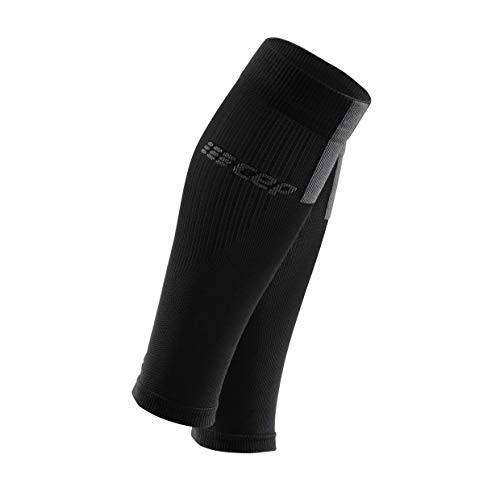
Compression sleeves and shorts serve two roles in OCR: protecting skin from barbed wire crawls and cargo net abrasion, and reducing muscle fatigue during repeated climbs and descents. Bare legs on a Spartan barbed wire crawl are a poor choice — the scratches are minor but numerous. Calf sleeves also reduce the late-race cramping that hits around mile 8 on longer courses. For a Sprint you can skip this entirely; for a Super or longer, calf sleeves alone are worth it.
Best starter
CEP
Compression Calf Sleeves 3.0
$$$
★★★★★Our rating
CEP makes the compression sleeves you'll see on almost every OCR veteran at the start corral. Medical-grade 20-30 mmHg compression reduces calf fatigue on uphill sections, stabilizes the ankle in uneven mud, and the material survives repeated barbed wire contact without shredding. They rinse clean in seconds.
2XU's compression shorts protect upper legs and hips from barbed wire crawls and reduce quad fatigue on longer events. Lighter-weight than the full 2XU performance lineup but still a meaningful step up from standard shorts on an 8-10 mile course. Layer under regular shorts for obstacle racing.
What we like
Protects upper legs from barbed wire without heavy apparel
Quad compression reduces muscle oscillation on long downhills
What to know
Size down from normal — intended compression requires a tighter fit
Adds slight warmth; uncomfortable for very hot summer races
OCR is as much about upper body strength as cardio endurance — specifically grip strength, pull-up capacity, and carrying awkward loads. Rope climbs, monkey bars, and the Hercules Hoist obstacle will expose any weakness in your pulling muscles within the first two miles. You can train for all of these at home with a pull-up bar and a sandbag. No gym required. No specialty equipment needed until you're racing several times per year.
Best starter
Brute Force
Training Sandbag
$$
★★★★★Our rating
The Brute Force sandbag is the most OCR-specific training tool you can own. Sandbag carries simulate the Spartan bucket carry and sandbag carry obstacles almost exactly — same shifting weight, same awkward grip, same cardiovascular demand. Adjustable filler bags inside mean it grows with your strength. No gym required.
What we like
Adjustable filler bags go from 20 to 80+ lbs as you get stronger
Simulates Spartan sandbag and bucket carry obstacles accurately
Doubles as general strength training — no gym membership needed
What to know
Takes time to fill and calibrate; not a quick grab-and-go setup
Sand leaks from inner filler bags eventually — check seams monthly
XL Doorway Pull Up Bar with Elevated Bar & Adjustable Width
$
★★★★☆Our rating
Every upper-body obstacle in OCR — rope climbs, monkey bars, walls — rewards people who can do pull-ups. A doorframe pull-up bar is the cheapest investment for race-specific prep. No permanent installation, stores flat, and trains the exact pulling muscles that OCR demands. If you can do 5 pull-ups, you can do a rope climb.
What we like
No permanent installation — fits standard doorframes, stores flat
Trains the exact pulling strength rope climbs and walls require
Under $30 — the highest-ROI training purchase for a new OCR racer
What to know
Requires standard doorframe width — measure before ordering
No grip simulation; pair with gloves to replicate race conditions
Grip strength is the limiting factor for most OCR beginners on monkey bars and rope climbs. These finger extension bands train the antagonist muscles to your grip — preventing overuse injury and building complete hand strength that rope work demands. Cheap, pocketable, and more effective than most dedicated grip trainers.
What we like
Trains grip antagonists — prevents the forearm burnout OCR causes
Pocketable; use during commute or between training sets
Under $20, backed by decades of grip-sport athlete use
What to know
Deceptively intense — don't underestimate the lightest band
A complement to grip training, not a replacement for pull-ups
Most people sign up for their first Spartan Race on a dare or after a promo video gets them excited. Then race day is eight weeks out and the training feels murky. It isn't complicated. Here's the week-by-week path from baseline fitness to the start corral.
Obstacle course racing has a reputation for being intense. The race itself — a Spartan Sprint or a Tough Mudder Classic — is intense in the best possible way: mud, cold water, rope climbs, and strangers cheering you over walls you didn’t think you could get over. The training, though, is more straightforward than you’d expect. Here’s what the first eight weeks actually look like.
Week 1: Sign up, then assess
Sign up first. Without a race date on the calendar, the training is optional by definition. Once you’ve registered, do this assessment:
Run 3 miles at a conversational pace. If you can’t finish it or need to walk significantly, add 2 weeks of base running before starting the plan below.
Max pull-ups in one set. Zero means prioritize upper body work heavily. Five means you can do a rope climb with technique. Ten means upper body isn’t your limiter.
Max push-ups in one set. This tells you your baseline pressing strength for wall climbs and carrying obstacles.
Write the numbers down. You’ll use them to pace the next seven weeks.
The OCR beginner’s fatal mistake is treating this like marathon training — piling on the running mileage and ignoring the upper body. A Spartan Sprint has 20+ obstacles. About half of them require pulling strength, grip, or awkward carrying. Running gets you to the obstacles; your upper body determines how you do once you’re there.
Two runs and two strength sessions per week. That’s it. You don’t need more.
Running sessions:
One tempo run: 3-5 miles at a pace that’s hard but sustainable. Add a hill circuit if you can — OCR courses are almost never flat.
One longer run: 4-7 miles at easy pace. This builds the aerobic base that keeps you moving between obstacles.
Strength sessions (home or gym):
Pull-ups and dead hangs: 5 sets. If you can’t do pull-ups yet, use a resistance band for assistance or do inverted rows under a table.
Push-ups and dips: 4 sets.
Sandbag carries: 3 sets of 60-second carries at an awkward grip. This directly trains the bucket carry and sandbag carry obstacles that most beginners underestimate.
Grip hangs: 30-60 second dead hangs from a pull-up bar. This is your rope climb training.
The grip endurance issue: Most beginners run out of grip strength on the monkey bars and rope climbs before they run out of any other resource. Your hands fatigue faster than your legs because they’re not conditioned for this kind of sustained gripping. Build up your dead hang time every week — from 30 seconds to 90 seconds over the training block. That alone is the difference between clearing monkey bars and hitting the mud for burpees.
By week 5, your weekly long run should be at or near your race distance. For a Sprint, that’s 4-5 miles. For a Super, aim for 7-8 miles.
In week 6, do one simulation run: your target race distance, with a set of 10 burpees every mile to simulate obstacle failures. This sounds punishing and it is — it’s also the most accurate preview of race day effort you can get without actually racing.
Week 7 is a taper week. Cut volume by 30-40%. Keep intensity. Let your body consolidate the training. A lot of first-time OCR athletes overtrain the week before and arrive tired to the start line.
Gear logistics this week:
Break in your OCR shoes on at least two runs before race day. Racing in brand-new shoes causes blisters, and OCR shoes can feel odd if you’re used to trail shoes.
Run at least one session in your gloves. The reduced fingertip sensitivity is surprising at first — better to discover it in training than mid-monkey-bar.
If you’re doing a Super or longer and you have a hydration vest, fill it and run with it for 45 minutes. Bouncing vests are immediately obvious and adjustable — fix it before race day.
Race day: What to expect
Before the start:
Apply anti-chafe balm or Body Glide to your inner thighs and underarms without exception. The first mile of a wet race is fine. Mile 4 of chafing is miserable. If you’re not using compression shorts, this is more important, not less.
Eat a normal pre-workout meal 90 minutes before the race. Nothing experimental. Bananas, toast, peanut butter — food you’ve eaten before a training run. Race mornings are not the time for a protein bar you’ve never tried.
On course:
The early miles are adrenaline-fueled and fast. Slow down deliberately. You will pass people in the second half who sprinted the first half and are now walking every hill.
At every obstacle, take 5 seconds to look at it before attempting. Most obstacles have an obvious approach that beginners miss. A rope climb has optimal foot position. Monkey bars have a rhythm. The bucket carry has a shoulder height that’s easier than the arms-extended version everyone defaults to.
Spartan-specific: You must attempt every obstacle or take 30 burpees. The burpee penalty is designed to be slower than finishing the obstacle. A failed monkey bar attempt followed by 30 burpees takes longer than a slower, second attempt at the bars. When in doubt, try the obstacle.
Tough Mudder-specific: There is no penalty for obstacle failures. The culture is explicitly team-based — strangers will boost you over walls, pull you through mud, and cheer every person across every finish line. Take the help.
Rope climbs: It’s all in the foot technique. Wrap one foot around the rope and step on it with the other — this gives you a rest platform to push from. Without foot technique, it’s a pull-up to the top. With it, it’s a series of steps. Practice the S-wrap and J-hook foot locks before race day.
Monkey bars: Grip the bar, not the gap. Swing with your hips, not just your arms. Momentum carries you; death-gripping kills grip endurance. If you feel your grip failing, commit to the next bar faster.
Barbed wire crawl: Stay flat. The wire is closer to the ground than you think, and the instinct is to lift your head to look forward. Don’t. Face down, elbows out, pull with your forearms. It’s slower than it looks and muddier than any crawling you’ve done.
Hercules Hoist: A weighted bag on a pulley. You pull it up, then lower it controlled. Use your body weight — lean back and pull hand-over-hand rather than arm-curling it up. It’s a system, not a feat of strength.
Walls (6-8 foot): One good run-up and a high step gets most people over. If you can’t do it alone, ask for a boost — strangers will provide one without being asked. This is the part of the culture that surprises most first-timers.
After your first race
You will finish muddy, tired, and immediately start looking at what the next race is. This is universal.
A few things to do in the week after:
Active recovery only — easy walks, light stretching. Your grip and forearms need a week to recover even if your legs feel fine.
Note which obstacles felt limited by strength vs. technique. Strength gaps close with training. Technique gaps close with repetition — watch instruction videos for the specific obstacle that gave you trouble.
Consider a race club. Most cities have OCR-specific training groups. They train for this specifically, know the obstacles, and will push your fitness faster than solo training ever will.
The progression from Sprint to Super to Beast is genuinely satisfying — the distance increases but the skills compound. Most people who do one race do many.
Save your money
What you don't need yet
Beginners get pressured to buy a lot of stuff that doesn't help them play
better. Here's what we'd skip on day one.
Heart rate monitor — Race day is organized chaos — you won't have time to watch a wrist screen, and the data won't change how you run your first race.
Gaiters — Course designers know mud gets into shoes. It happens to everyone. Gaiters slow transitions and don't fully prevent it.
OCR-specific branded apparel — Any moisture-wicking athletic wear works. Avoid cotton — it stays wet and causes chafing by mile 3. That's the only rule.
Trekking poles — Most OCR events prohibit them on course. Check specific race rules before buying.
Race belt and bib clips — OCR races use chip timing on your bib pinned to your clothes. A race belt is for triathlon transitions, not OCR.
First week
Your first seven days
A short, real plan to get from gear-on-doorstep to actually playing.
Sign up for a race before anything else. Without a registration date, the training stays optional. · Action
Spartan Race · World's largest OCR brand — Sprint races ideal for beginners
Tough Mudder · Team-focused, slightly longer courses, no burpee penalty for failed obstacles
Do 3 sets of max pull-ups today. Your result tells you exactly how much upper body prep your race needs. · Action
Order OCR shoes — they need at least one break-in run before race day. Don't race in them straight from the box. · Buy
Do I need to train before my first Spartan Sprint?
You should be able to run 3-4 miles without stopping and do at least 5 consecutive pull-ups. Below that, you'll struggle on rope climbs and take a lot of burpee penalties. A Spartan Sprint is 3-5 miles; plan 6-8 weeks of running and pulling work before your first race.
Can I use regular trail running shoes instead of OCR-specific shoes?
For a drier Spartan Sprint: yes. For any race with river crossings or prolonged mud fields — like most Tough Mudders or Spartan Beasts — no. Trail shoes stay soaked and heavy after water obstacles. OCR-specific shoes with drainage ports are worth the investment once you commit to more than two races per year.
What happens if I can't complete an obstacle?
At Spartan Races, you do 30 burpees for each failed obstacle — then continue the race. Tough Mudder doesn't penalize; you can skip or attempt anything without consequence. Both brands have staff helping at every obstacle, and no one judges a failed attempt.
What should I eat and drink during a race?
For a Sprint (3-5 miles): water from aid stations is usually enough. Bring 1-2 gels for energy if you're slow on hills. For a Super (8-10 miles) or longer: a hydration vest with 1.5-2L plus gels every 45 minutes. Most courses have aid stations with water and bananas at regular intervals.
Is obstacle course racing safe for beginners?
Safer than it looks. Race organizers staff every obstacle and all obstacles have a bypass option. The most common injuries are ankle rolls (preventable with proper OCR shoes) and forearm overuse from grip-heavy obstacles. Barbed wire crawls look alarming and leave zero permanent marks — the wire is a full foot above the ground.
What clothing should I wear for a race?
Moisture-wicking athletic shorts and a technical shirt. No cotton — wet cotton causes bad chafing by mile 3. Compression shorts under athletic shorts are optional but appreciated on barbed wire crawls. Apply Body Glide or anti-chafe balm to inner thighs and underarms before the start corral.
Spartan Race — World's largest OCR organization. Race finder, training content, and the official distance breakdown (Sprint / Super / Beast / Ultra).
Tough Mudder — Team-focused events with no burpee penalty culture. A great first race for people who want a supportive community atmosphere over competitive timing.
Mud Run Guide — Independent race calendar, reviews, and beginner guides across all OCR brands. The best neutral source for comparing Spartan, Tough Mudder, and regional events.
OCR World Championships — The sport's governing body for elite competition. Useful for understanding the full spectrum of events and where competitive OCR is heading.
r/spartan — Active community for all skill levels. Beginner race questions get thorough answers and the gear advice is generally honest — not brand-sponsored.
OCR Underground (YouTube) — Race POV footage, training tips, and gear reviews from experienced OCR athletes. Watch before your first race to visualize obstacles you haven't seen.
As an Amazon Associate, JustBeginning earns from qualifying purchases.
We may also earn commission from other affiliate programs linked on this
page. Editorial recommendations are independent; we don't choose
products based on commission rates.
Product prices and availability are accurate as of the date and time
indicated and are subject to change. Any price and availability
information shown on Amazon at the time of purchase will apply.

 Best starter