Most people walk into a fencing club with no idea which weapon to pick, and nobody explains it up front. Foil is the right starting point for 80% of beginners: small target area, structured rules, and the footwork foundation that carries over to every other weapon. Here's what you need, and what you can borrow from your club.
By Colin B. · Published May 24, 2026 · Last reviewed June 14, 2026
Most clubs lend gear for your first few lessons; hold off buying anything until you know you're committed. A complete independent setup (weapon + mask + jacket + glove + plastron) runs $250–400. Add $80–150 for electric gear (lame + body cord) when your club requires it for bouts.
We earn commission on qualifying Amazon purchases — see our
affiliate disclosure.
Price tiers and budget totals shown above are editorial estimates;
actual Amazon prices vary.
At a glance
Our top pick in each category
The fastest path through this guide — each best-starter pick by category.
Scroll for the budget and upgrade alternatives.
Borrow your club's gear first. Nearly every fencing club provides masks, jackets, and weapons for beginners. You'll fence in loaner kit for your first 4–8 weeks at no extra cost. Don't spend money on your own gear until you're sure you're staying.
Foil first, almost always. Unless your coach explicitly teaches épée or sabre from day one, start with foil. The right-of-way rules feel arbitrary at first but they train the tactical thinking that transfers to every other weapon. Skipping to épée too early is the most common beginner shortcut that costs you later.
Masks are safety equipment, not a place to save $20. The minimum safe mask is 350 Newtons (350N), USA Fencing's minimum for club and competition use. Cheaper masks below this rating exist on Amazon. Don't buy them.
The club matters more than the gear. A coach who teaches proper footwork and bladework from week one will do more for your progress than any equipment upgrade. Visit twice before committing to a membership.
Your weapon is the most personal piece of gear in fencing, and the choice shapes everything that follows. The honest recommendation: start with a foil. Foil has the smallest valid target area (the torso only), the most structured rules, and teaches the footwork and bladework that transfers to any weapon you try later. Épée removes right-of-way rules and scores anywhere on the body, more forgiving in theory, but it rewards patience over the explosive tactical game that makes fencing addictive. Sabre is the fastest and most dramatic weapon and has the steepest learning curve. Pick foil unless your coach specifically teaches otherwise.
Weapon — what's the difference?
A few common shapes, each making a different trade.
Foil
Narrow torso target, right-of-way rules. The standard first weapon for beginners.
Valid target
Torso only
Scoring
Point only
Right-of-way
Yes
Tempo
Medium
Best for Most beginners; teaches fundamentals that transfer to all weapons
Tradeoff Right-of-way rules add complexity in the first few months
Whole body is the target, no right-of-way. Deliberate pace; forgiving ruleset.
Valid target
Entire body
Scoring
Point only
Right-of-way
No
Tempo
Deliberate
Best for Methodical thinkers who prefer clear rules and patient fencing
Tradeoff Rewards patience over explosiveness, can feel slow early on
Sabre
Cuts and thrusts score above the waist. Fast, dynamic, steep learning curve.
Valid target
Above waist
Scoring
Point + cut
Right-of-way
Yes (strict)
Tempo
Very fast
Best for Athletes who want the most dynamic weapon, after mastering basics
Tradeoff Fastest tempo in fencing with the most complex right-of-way calls
Best starter
Absolute Fencing Gear
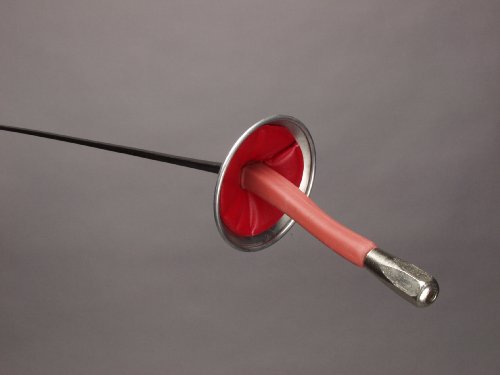
Complete Electric Foil
$65.50 as of Jun 22, 2026
★★★★★Our rating· In Stock
Absolute Fencing Gear is the largest fencing retailer in North America and the brand most US clubs trust for student equipment. Their economy electric foil arrives properly assembled, uses standard parts, and is competition-legal. It will take you through your first year of tournaments without requiring an upgrade. When the blade eventually breaks, replacements are cheap and easy to find.
What we like
Made by the largest and most trusted fencing retailer in North America
Competition-legal from day one, no need to upgrade for early tournaments
Standard parts mean blade replacements are cheap and easy to find
What to know
Economy grip is functional but not shaped to any particular hand style
Blade needs replacing every 6–12 months of active training
A non-electric foil is not valid for club bouts with a scoring machine, but it's a smart $25–35 tool for drilling footwork, bladework, and wall-target practice at home. If you're still in the "trying it out" phase, starting here is lower risk than buying a full electric kit you might not use.
What we like
Half the cost of an electric foil, smart if you're still deciding
Identical weight and feel to an electric foil for home drilling
No electronics means nothing to break during dry practice
What to know
Cannot be used in electric bouts at the club. You'll need to upgrade
No scoring feedback; you're drilling technique, not competing
Physical Chess makes competition-legal electric foils built to outlast the economy-grade aluminum in student weapons. The French grip on this version teaches better blade technique than a pistol grip, and most coaches recommend learning on a French grip before switching styles. A real step up once you're competing at regional events, not something to buy on day one.
What we like
Competition-legal for USA Fencing sanctioned tournaments
French grip builds better blade technique than pistol alternatives
More durable construction than economy-grade student foils
What to know
French grip requires more technique; verify preference with your coach
A meaningful spend before you've competed in your first tournament
The mask is where you cannot compromise. The minimum safe rating for any certified fencing event is 350 Newtons (350N), a force measurement for how much the bib and mesh withstand before collapsing. Cheap masks below this rating exist on Amazon. Do not buy them. A legitimate 350N mask from AF, Negrini, or Leon Paul runs $60–95, is competition-legal at virtually any club, and will last for years of regular training.
Best starter
Absolute Fencing Gear
350N Club Foil/Epee Mask
$$
★★★★★Our rating
AF's standard 350N foil/épée mask is the most common mask at US fencing clubs for good reason: it meets all USA Fencing safety requirements, fits most head sizes comfortably, and holds up to years of club use. If you're starting with foil or épée (you probably are), this is the mask to buy.
What we like
Meets USA Fencing 350N minimum, valid for clubs and sanctioned events
Trusted by US clubs as the standard student mask for decades
Comfortable padding holds up through multi-hour training sessions
What to know
Not compatible with sabre. Sabre needs its own full-bib mask
Ventilation is limited during intense bouts in warm gyms
Sabre fencing requires a different mask from foil and épée: the entire head is a valid target in sabre, so the mask needs a full conductive bib that connects to the scoring machine. If your coach puts you on sabre from day one, this is the right mask. If you're on foil or épée, skip it entirely.
What we like
Required for sabre. No other mask type passes for sabre events
Conductive bib integrates with electric scoring machines
AF quality at a fair price point for an essential sabre item
What to know
Useless if you fence foil or épée. Don't buy the wrong version
Slightly heavier than foil/épée masks due to the full bib assembly
LEONARK's 350N mask is a concrete step up from the basic student mask: nine-ply stainless steel mesh, denser temple padding, and an adjustable strap that fits a wider range of head sizes. Not Leon Paul tier, but genuinely better-built than the entry-level AF mask and priced fairly for active club fencers. Worth buying once you're training three or more times a week.
What we like
Nine-ply stainless mesh is heavier-gauge than most student masks
Dense temple padding noticeably better than entry-level options
Adjustable strap fits a wider range of head sizes comfortably
What to know
Not affiliated with Leon Paul, mid-tier quality, not premium brand
Fencing jackets are built to absorb blade hits to the torso and weapon arm while allowing full lunge extension. Look for a 350N-rated jacket (the same force standard as the mask). The fit should be snug but not restrictive: the jacket should allow you to fully extend your weapon arm overhead without the back riding up. Buy the smallest size that fits; a loose jacket creates excess fabric that catches blades and looks sloppy.
Best starter
LEONARK
350N Complete Fencing Uniform
$$
★★★★★Our rating
AF's jackets aren't on Amazon, but LEONARK's complete uniform set is the closest thing: CE 350N-certified jacket, knickers (padded short pants), and vest in one purchase. Buying the full set is simpler and cheaper than assembling pieces separately. Dual-security closure and sizes from youth to adult XL. The right buy for anyone who needs to outfit themselves from scratch.
What we like
CE 350N certified throughout, meets USA Fencing minimums
Complete set (jacket + knickers + vest) eliminates piecemeal buying
Dual-security closure and sizes from youth through adult XL
What to know
Full set: if you already have knickers, you're paying for extras
LEONARK sizing can run small; measure chest carefully before ordering
USA Fencing and most sanctioned tournaments require all-white uniforms for competition. This LEONARK 350NW set is specifically all-white and competition-compliant, the version to buy when you're ready to compete in official events. The 350NW rating (washable) means it holds up to the repeated laundering competition-level fencing demands.
What we like
All-white competition-compliant, required for USA Fencing sanctioned events
350NW (washable) rating holds up to frequent laundering
Complete set keeps competition prep simple, one order for the full uniform
What to know
White shows stains immediately, requires careful post-bout care
Specialty purchase, only needed once you're competing in sanctioned events
Two inexpensive pieces that fill the coverage gaps your jacket leaves. The fencing glove covers your weapon hand and wrist, a target area not covered by the jacket sleeve. The plastron is a half-jacket worn under the main jacket, doubling the protection on your weapon-arm side (the side that absorbs the most hits). Both are required at most clubs before you can fence, both cost under $35, and both last for years.
Best starter
Absolute Fencing Gear
Foil/Epee/Sabre Fencing Glove
$26.50 as of Jun 22, 2026
★★★★★Our rating
A well-padded glove for your weapon hand is required at virtually every club, and AF's version covers the essentials: padded back, reinforced cuff, and a snug fit that won't slip during a bout. Buy one size smaller than you think you need; gloves stretch with use.
What we like
Padded back and reinforced cuff cover the weapon hand completely
Snug fit doesn't create slack at the wrist that could catch a blade
Affordable, one of the cheapest required pieces of fencing gear
What to know
Sizing runs large. Order one size down from your normal hand size
Padding thins at the palm over time; replace annually if training hard
The plastron is the unglamorous piece of gear that protects the inside of your weapon arm and armpit (the side most exposed to blade hits). It's worn under the jacket, doubles your protection in the highest-hit zone, and is required at all certified clubs. At $20–30, it's one of the best value-per-protection purchases in fencing.
What we like
Doubles the protection on your weapon-arm side, the most-hit zone
Required at virtually every certified fencing club
Inexpensive and lasts years with normal use
What to know
Adds a layer of warmth under the jacket, noticeable in hot gyms
Must be worn correctly under the jacket or it doesn't protect
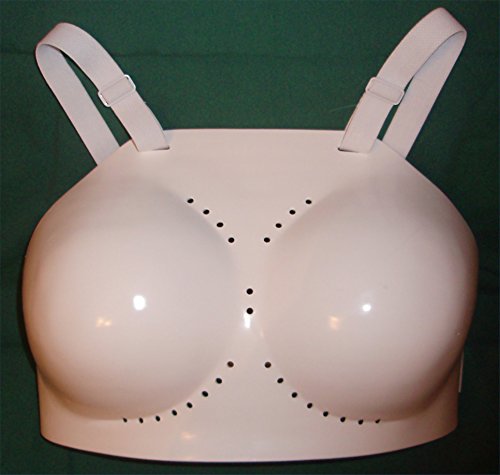
A hard plastic chest protector worn under the jacket. Required protective equipment for female fencers at most clubs and competitions, and strongly recommended for anyone who prefers additional chest protection. Lightweight and low-profile under a jacket.
What we like
Required for female fencers at most certified clubs and competitions
Lightweight hard plastic that sits invisibly under the jacket
Provides meaningful chest protection for any fencer who wants it
What to know
Size independently from your jacket. Measure chest circumference
Can shift during explosive footwork if not fitted correctly
Fencing weapons are 90–110 cm long and rigid. They don't fit in any normal sports bag. A proper fencing bag has a long tube or sleeve for the weapons plus separate compartments for the mask (the mesh bib crushes easily in a crowded bag) and clothing. Not essential on day one when you're using club loaner gear, but once you own your own kit and train twice a week, fumbling with loose gear gets old fast.
Best starter
Absolute Fencing Gear
Advanced Fencing Bag
$$
★★★★★Our rating
AF's standard fencing bag fits two to three weapons in the dedicated tube, has a mask compartment with enough room to avoid crushing the bib, and separates clothing from equipment. Durable enough for daily club travel, simple enough that nothing goes wrong.
What we like
Dedicated weapons tube prevents blades from bending in transit
Separate mask compartment keeps the mesh bib from getting crushed
Fits a full kit: jacket, mask, weapons, glove, and accessories
What to know
Larger than a backpack, awkward on public transit
No wheels on the standard version; heavier than it looks when fully packed
A no-frills sling bag made specifically for fencing swords: 1680D Oxford cloth, long enough to hold foils, épées, and sabres without disassembly. Under $35 and the right answer if you're not yet ready to spend on a full fencing bag but need something that actually fits your weapon.
What we like
1680D Oxford fabric, tougher than typical sport bags at this price
Long enough for full-length foils and épées without disassembly
Under $35, minimal spend while you're deciding on the sport
What to know
No mask compartment. The bib sits against other gear and can get crushed
Sling design holds one or two weapons max; not for carrying a full kit
Everyone starts fencing confused about the same things. Here's what the first four weeks actually look like, and what to stop worrying about.
Fencing has a reputation for being complicated. It isn’t, but it is specific. There are rules that feel arbitrary until they aren’t, movements that feel unnatural until they’re automatic, and a sequence of things to learn that rewards patience over rushing.
This is what your first four weeks actually look like, and what matters versus what you can ignore for now.
Week 1: The footwork comes first
You will not hold a weapon on your first day at most clubs. You’ll be taught on-guard, advance, and retreat: the three movements that everything else in fencing is built on.
On-guard is the ready stance: feet perpendicular, knees bent, weight centered, weapon arm extended forward. It feels strange at first. Your back knee will want to straighten. Your front foot will want to turn. Resist both.
Advance is a step forward: front foot leads, back foot follows the same distance. The feet stay perpendicular throughout.
Retreat is the reverse: back foot leads, front foot follows.
These sound simple. They’re not simple at the speed and coordination fencing requires. Spend week one doing them slowly and correctly rather than quickly and wrong. Bad footwork habits are the hardest thing to unlearn in this sport.
The other thing to absorb in week one: the three weapons and which one you’re starting with. Your coach will probably tell you. If they don’t, ask. The answer shapes which gear you’ll eventually buy. Foil is the right answer for most people, but it’s not the only answer.
Week 2: The blade enters
By the second week, most beginner classes introduce the weapon itself and basic blade movements: how to hold it (thumb and index finger on the grip, other fingers supporting), how to extend toward the target, and the basic parries (the defensive deflections that block incoming attacks).
The extension is the single most important technical element in foil and épée: extending your weapon arm directly toward the target before your feet move. Beginners want to move their body first and their arm second. Do it the other way. Arm extends, then lunge. This is hard-wired into beginner instincts in the wrong direction, and correcting it is most of what intermediate coaching does.
The lunge follows the extension: front foot shoots forward, back leg drives the push, weapon arm stays extended toward the target. You’ll wobble. You’ll miss. That’s normal. The mechanics become automatic only through repetition.
A note on the rules: right-of-way (or priority) is the concept that confuses foil and sabre beginners most. It’s the rule that decides which fencer scores when both are hit at the same time. The honest advice is to not worry about understanding it deeply in week two. Just extend first and attack cleanly, and you’ll have right-of-way more often than not. The nuances come later.
Week 3: First sparring
By the third week, most beginner classes introduce light sparring (sometimes called “bouting”). This is where fencing stops being a set of drills and starts being a sport.
A few things will happen in your first bouts that nobody tells you about:
Distance will feel wrong. The fencing measure (the distance from which a single lunge can reach your opponent) is further than it looks, and closer than you expect when you’re in it. You’ll rush in too close and get tagged from further out than you thought possible. This corrects itself through sparring repetition. You can’t learn measure from reading about it.
Your attack timing will be off. You’ll attack when you shouldn’t, hesitate when you should attack. The tactical rhythm of fencing (provoke, respond, counter) takes months to develop. In week three, just focus on clean extensions and controlled lunges. Tactics come later.
You’ll lose the point and not know why. Right-of-way, simultaneous actions, blade work you didn’t feel. Fencing points are sometimes confusing, even to experienced fencers. Ask your coach after the bout, not in the middle of it.
Around week four, something shifts. You start reading your opponent slightly. You notice when they’re about to attack before they move. You recognize the distance and timing of a lunge that could reach you.
This is fencing starting to click. The individual movements you’ve been drilling start combining into sequences. Your parries land more cleanly. Your attacks feel less random.
A few things are worth paying attention to around week four:
The fleche. A fleche is a running attack, a burst forward rather than a static lunge. You won’t be using it yet, but you’ll start seeing it in club bouts and wondering what it is. It’s spectacular when it lands, dangerous to attempt without solid footwork fundamentals, and irrelevant for month one.
Your second-intention game. Second intention means attacking with the plan to miss, provoking a parry, then attacking again on the response. This is one of the core tactical concepts in fencing. You won’t be doing it intentionally in week four, but you’ll occasionally stumble into it and feel the result. Notice it when it happens.
What to buy and when
Most clubs provide loaner gear for beginners. Use it through week three before spending anything. By week four, if you’re committing, here’s the sequence:
Mask first. A 350N mask from AF or a similar certified brand. This is non-negotiable for safety and clubs often run short on loaners.
Weapon second. An economy electric foil if your club uses electric scoring; a non-electric training foil if you’re still on dry fencing. Match the type your club uses.
Jacket, glove, and plastron once you’re going three times a week. These last for years, so buy them properly the first time.
Hold off on a lame (the electric scoring vest) and body cord until you’re doing club bouts regularly. Your club will have them.
Scoring machine operation. The club handles this. You just fence.
Left-handed tactics. Yes, lefties fence differently and create unusual angles. You’ll face one eventually. Not something to study now.
Competition rules in detail. The rulebook for USA Fencing is long and technical. You need the basics: valid target area, what a touch is, how right-of-way works in principle. The edge cases come with experience.
Expensive equipment. No gear you buy in month one will matter by month six. Your game will change too much for early gear choices to matter.
Fencing rewards patience more than most sports. The footwork has to be automatic before the bladework can be skilled. The bladework has to be skilled before the tactics can be executed. You’re building in layers, and month one is the foundation.
Save your money
What you don't need yet
Beginners get pressured to buy a lot of stuff that doesn't help them play
better. Here's what we'd skip on day one.
Lame (electric scoring vest) — Required for electric foil and sabre competition, but clubs lend lames to beginners. Buy one after you've competed in your first tournament.
Body cord — Connects your weapon to the scoring machine. Clubs provide these for beginners. Worth buying your own once you're competing regularly ($25–40).
Pistol grip upgrade — The angled pistol grip is faster but discourages proper finger placement. Most coaches require beginners to learn on a French or orthopedic grip first.
A spare weapon — Serious competitors carry a backup in case a blade breaks mid-tournament. Irrelevant until you're competing (which won't be day one).
Electric scoring machine — Your club has one. Machines run $300–1,000+. Unless you're coaching or training without a club, this is never a personal purchase.
First week
Your first seven days
A short, real plan to get from gear-on-doorstep to actually playing.
Find a fencing club with an actual coach, not just open fencing nights. Group beginner classes are how the sport is taught properly. · Action
Sign up for a beginner's class, not open fencing. Open fencing sessions assume you already know the rules and safety protocols. · Action
Wear athletic clothes to your first 3–4 lessons. Long sleeves and athletic pants are fine. Club loaner gear goes over your clothes. · Action
Ask your coach which weapon they teach before buying anything. Most teach foil, but some clubs are épée- or sabre-first. Match your purchase to their answer. · Learn
Order your mask and foil after your third or fourth lesson, once you know you're committing. · Buy
No. Most fencing clubs provide loaner masks, jackets, and weapons for beginners during their first several lessons. Hold off buying anything until after lesson 3 or 4, when you know you're sticking with it.
Which weapon should I start with: foil, épée, or sabre?
Foil, in almost every case. Foil teaches the footwork, distance management, and tactical thinking that transfers to every other weapon. Épée removes right-of-way rules, which sounds simpler but actually rewards a patient, methodical style that beginners don't yet have. Sabre is fast and flashy but has the steepest learning curve. Default to foil unless your coach specifically teaches otherwise.
Is a 350N mask really necessary, or can I buy a cheaper one?
Yes, 350N is necessary. That number is a force rating that measures how much impact the mask withstands before deforming. Cheaper masks exist; they are not safe for fencing. Every certified club and USA Fencing event requires 350N minimum. The price difference between a 350N mask and a non-rated one is about $30–40. It's not worth the risk.
Can I learn fencing without joining a club?
Not really. Fencing requires a partner, a scoring machine, and live bladework that YouTube can't replicate. You can drill footwork and blade technique solo against a wall target, but actual fencing (learning to read an opponent, manage distance, and score in motion) happens only in bouts with other people. Find a club.
How expensive is fencing compared to other sports?
Mid-tier. The starter kit (weapon + mask + jacket + glove + plastron) runs $250–400 once you own it, but most clubs provide loaner gear for the first few weeks so there's no day-one commitment. Ongoing costs are low: blade replacements ($25–40 every 6–12 months), club membership ($50–200/year), and competition fees if you go that route.
Is fencing dangerous?
Less than it looks. Modern fencing equipment is specifically designed to prevent the injuries the sport's appearance implies: blades flex rather than pierce, masks stop 350N+ of force, and jackets absorb the rest. The most common injuries in fencing are ankle sprains from footwork drills and occasional bruises from blade hits through thin spots in equipment. Elite fencing sees more serious injuries; club-level beginner fencing is quite safe.
USA Fencing — The national governing body for competitive fencing in the US. Official rules, member clubs, sanctioned tournaments, and the national ranking system. The place to start for everything official.
AskFRED — The tournament registration and results database used by almost every US fencing event. Find local tournaments, look up results, and see who's competing near you.
Peter Westbrook Foundation — NYC-based fencing nonprofit that produces more US Olympic fencers than almost any other program. Excellent resource on the sport's culture and community, even if you're not in New York.
r/Fencing — Active community with genuine expertise. Good for gear questions, club recommendations, and technique discussions. Search before posting. Most beginner questions have thorough existing threads.
Leon Paul YouTube — Technique breakdowns and footwork videos from one of the sport's premium brands. Useful regardless of whether you buy their equipment. Their coaching content is genuinely good.
Fencing.net Forums — Long-running fencing community forum. Slower cadence than Reddit but deeper threads on equipment, technique, and club culture from experienced fencers.
As an Amazon Associate, JustBeginning earns from qualifying purchases.
We may also earn commission from other affiliate programs linked on this
page. Editorial recommendations are independent; we don't choose
products based on commission rates.
Product prices and availability are accurate as of the date and time
indicated and are subject to change. Any price and availability
information shown on Amazon at the time of purchase will apply.
Our top pickAbsolute Fencing Gear Complete Electric Foil


 Best starter