Whether you played in your school band twenty years ago or you're starting from scratch, the trumpet is one of the most satisfying instruments to learn. The first few weeks of squeaky, airy frustration are real, but you get past them. Here's what you actually need to buy, and just as importantly, what to skip until you know you're sticking with it.
By Colin B. · Published May 24, 2026 · Last reviewed June 13, 2026
A decent student trumpet runs $300–500; add mouthpiece, valve oil, a method book, and a stand, and you're near $600. Rent for the first three months if you're not sure you'll stick with it.
We earn commission on qualifying Amazon purchases — see our
affiliate disclosure.
Price tiers and budget totals shown above are editorial estimates;
actual Amazon prices vary.
At a glance
Our top pick in each category
The fastest path through this guide — each best-starter pick by category.
Scroll for the budget and upgrade alternatives.
Resist the $99 trumpet on Amazon. Chinese no-name horns look like the real thing, but their valves stick, intonation is unreliable, and no repair tech will touch them. The minimum for a usable student trumpet is around $250 new. The $350–500 range is where real instruments live.
Renting is smart for the first three months. Most music stores offer rent-to-own at $20–35/month. If you hate it, you return it. If you love it, your rental payments often apply toward a purchase. Try before you commit $450.
Don't buy a used trumpet without having it assessed. Old valves, stuck slides, and dented bells are common. A technician can check a used horn for $20–30, and it's worth it.
Two decisions matter most: which brand and which bore size. On brand: Yamaha, Bach (Conn-Selmer), and Jupiter are the only student-horn brands worth considering. Everything else is a quality-control gamble. On bore size: student models run around 0.459 inches (less resistance, easier to start on); step-up models run 0.462–0.468 inches (richer sound, more resistance). Start standard. Budget $350–500; anything under $200 new is not a real trumpet.
Trumpets — what's the difference?
A few common shapes, each making a different trade.
Standard bore (0.459")
Less resistance, easier for beginners. The smart start.
Bore
0.459"
Tone
Bright, focused
Resistance
Lower
Best for All beginners, adults returning after years away
Tradeoff Slightly less tonal depth than medium-large bore
If you're not sure trumpet will stick and can't rent, the TR-330 is the budget pick that won't humiliate you. Monel valves, lacquer finish, and a case included. The basics done competently. It lacks the precision of a Yamaha, but it'll function while you decide if you're serious. Plan to upgrade within a year if you play regularly.
What we like
Under $250 with case included, a complete starter kit
Monel valves last longer than cheaper nickel alternatives
Acceptable intonation for a beginner's first year of play
What to know
Looser slide tolerances than Yamaha; tuning slides can slip
Valve action stiffer out of the box; takes weeks to break in
★★★★★Our rating· Only 10 left in stock - order soon.
The YTR-2330 is the student trumpet that repair techs, band directors, and working players all agree on. Yamaha's quality control is exceptional at this price: the valves respond cleanly, the intonation is reliable, and it holds its value when you eventually upgrade. This is the safe, right answer for most beginners.
What we like
Yamaha quality control: valves respond faster and more cleanly
Reliable intonation out of the box; won't fight your developing ear
Strong resale value: holds ~60% after three years of regular use
What to know
Mid-range price; $450 is real money for a 'maybe' hobby
Included mouthpiece is serviceable but not the best starter option
When you're ready to step up, the Bach student line bridges the gap between student horn and the professional Stradivarius. The TR300H2 has a medium-large bore that produces richer, more resonant tone. Most players feel the difference immediately. Worth it after six months to a year of regular practice.
What we like
Bach heritage and build quality (the Stradivarius lineage begins here)
Medium-large bore produces warmer, more resonant tone
Real bridge between student and professional horns
What to know
More resistance than YTR-2330 bore; takes a week to adjust
Higher price; only buy once you've confirmed you're committed
Your trumpet ships with a mouthpiece. If it's a Bach 7C or Yamaha equivalent, start there and don't change it for at least six months. The 7C is the most common student mouthpiece for good reason: its balanced cup depth and comfortable rim work while your embouchure is still developing. The only reason to change early is if a teacher recommends it or your lips swell after playing (silver sensitivity is real). Don't collect mouthpieces trying to fix technique problems. Only practice fixes those.
Best starter
Bach
7C Trumpet Mouthpiece
$54.00 as of Jun 22, 2026
★★★★★Our rating· In Stock
The 7C is the default beginner mouthpiece issued in school band programs around the world. Balanced cup depth, comfortable rim, and enough resistance to build embouchure without fighting the horn. It ships with most Yamaha student trumpets. If yours came with one, start there. If not, buy this before anything else.
What we like
Global standard beginner mouthpiece; teachers know its quirks cold
Balanced cup depth suits beginners and intermediates alike
Available everywhere, cheap to replace if lost or damaged
What to know
Silver plating irritates lips with nickel sensitivity
Won't grow past intermediate (but that's 2+ years away)
The 3C has a larger, slightly deeper cup than the 7C, producing a warmer, darker tone. It's the next natural step for players moving from school-band sound toward jazz or orchestral work. Most players make this transition around 6–12 months in, when the embouchure is strong enough to drive a larger cup consistently.
What we like
Warmer, darker tone, closer to orchestral and jazz sound ideals
Larger cup trains embouchure toward professional range and control
Smooth transition from the 7C; most players adjust within a week
What to know
Requires established embouchure; premature switch causes fatigue
Not a tone fix; bad embouchure sounds bad on any mouthpiece
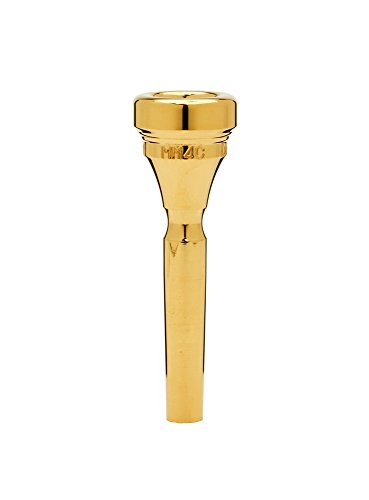
If the standard Bach 7C irritates your lips (a real issue for players with silver sensitivity), the Denis Wick gold-plated equivalent solves it. Gold plating is hypoallergenic and feels slightly warmer against the lips. Virtually the same dimensions as the Bach 7C, so there's no learning-curve adjustment.
What we like
Gold plating is hypoallergenic; eliminates lip irritation from silver
Virtually identical dimensions to Bach 7C; no learning curve
Denis Wick build quality matches Bach at a comparable price
What to know
Only worth the premium if you have verified silver sensitivity
Gold plating wears slowly over years; cosmetic, not functional
Trumpet maintenance is simpler than it sounds but must happen regularly. Valve oil goes on every time you play. Dry valves stick and impact can dent the valve casings. Slide grease keeps the tuning and main slides moving smoothly. A full cleaning once or twice a month (disassemble, soak in warm soapy water, snake through the tubing) keeps the horn in tune and smelling less catastrophic. None of this takes more than ten minutes with the right supplies.
Best starter
Yamaha
Trumpet/Cornet Maintenance Kit
$25.98 as of Jun 22, 2026
★★★★★Our rating· In Stock
The complete maintenance package: valve oil, slide grease, a pull-through cleaning cloth, and a soft polishing cloth. Everything a new trumpet player needs in one box, made by the same brand as most student trumpets. Cheaper than buying the parts separately and nothing incompatible.
What we like
Complete kit: oil, grease, snake, polishing cloth in one box
Made by Yamaha, formulated for the tolerances of their horns
Cheaper than buying each component separately
What to know
Shorter snake than aftermarket options; tight bell curves
Valve oil quantity small; you'll refill separately within a month
Al Cass has been the standard valve oil in American school band programs for fifty years. Light, fast-acting, and a 1.5 oz bottle lasts months of regular practice. Available at every music store when you need a refill. The default choice for a reason: consistent, cheap, and works.
What we like
Fifty-year track record in school band programs; proven formula
Fast-acting and light; valves move immediately after oiling
Available at every music store; easy to grab when running low
What to know
Evaporates faster than premium oils; daily practice needs daily oiling
Petroleum smell is noticeable; ventilate when applying
Hetman's piston valve formula is the upgrade oil. Lighter than most, longer-lasting between applications, and less prone to gumming if the horn sits between sessions. Players who practice daily and hate stopping to re-oil mid-session make the switch. The bottle runs about $12 and lasts months.
What we like
Longer-lasting than Al Cass; less frequent re-oiling mid-session
Less gumming on valves if the horn sits for a few days
Very light viscosity; valves feel noticeably faster
What to know
Pricier than Al Cass for similar volume
Can feel too light on older horns with looser valve tolerances
Three things meaningfully improve your practice: a tuner (so you know what in-tune sounds like before your ear can judge it), a metronome (rhythm is the first thing beginners sacrifice when a passage gets hard), and a practice mute (for when the neighbors aren't on your side). A combo tuner/metronome is the efficient buy. The Korg TM-60 has been the standard in practice rooms for years. The mute is optional but genuinely valuable if you practice in an apartment.
Best starter
Korg
TM-60 Clip-On Tuner and Metronome
$$
★★★★★Our rating
The TM-60 has been the standard in music practice rooms for years. Tuner and metronome in one clip-on device; you don't need two gadgets. The needle display is easier to read than flashing lights when you're trying to match pitch while playing. Runs on two AAA batteries that last months.
What we like
Tuner and metronome in one clip-on device, one less thing to carry
Needle display is easier to read mid-phrase than LED flash tuners
Clips to music stand or bell; always in your sightline while playing
What to know
Small screen can be hard to read in bright outdoor light
Clip mechanism wears over time; handle with some care
If you already have a metronome app on your phone you like, the Snark is the fast, cheap clip-on tuner to throw in your case. Small, accurate, and bright enough to read in outdoor sunlight. Works on any brass or woodwind instrument.
What we like
Fast, accurate, and under $15. No reason not to own one.
Bright color display is readable in sunlight unlike many competitors
Works on any brass or woodwind, not trumpet-specific
What to know
No metronome; you'll need an app for rhythm work
Clip can loosen with heavy use; check tightness before each session
A practice mute drops your trumpet's volume from 'angry neighbor' levels to something you can play at 11pm in an apartment. The Denis Wick straight mute is the gold standard. It changes resistance and timbre slightly, so you shouldn't rely on it exclusively, but it's far better than not practicing at all.
What we like
Drops volume enough for apartment practice at any hour
Denis Wick build quality; fits securely without slipping mid-phrase
Standard straight mute shape; no learning curve for tone production
What to know
Adds resistance and changes tone; not identical to open horn feel
Still audible through walls at close range; not a silence solution
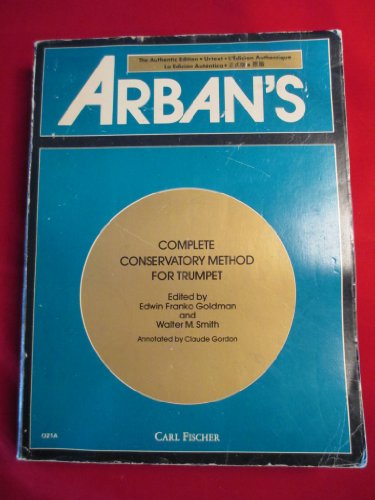
Arban's is the trumpet curriculum, published in 1864 and still the definitive resource because nothing better exists. It contains exercises for every technical challenge the instrument presents, from beginner to professional level. Most serious teachers assign it. The other books here serve different purposes: Rubank gives you a gentler on-ramp in the first month or two, and Clarke is the pure technique supplement you'll reach for after a year.
Best starter
Carl Fischer
Arban's Complete Conservatory Method for Trumpet
$44.99 as of Jun 22, 2026
★★★★★Our rating· In stock
Arban's Complete Conservatory Method is the trumpet curriculum. Published in 1864 and still in use because there's nothing better. It covers every technical challenge in sequence, from first notes to professional-level études. Your teacher will assign it. Buy a copy and work ahead.
What we like
The definitive trumpet method; 150+ years of classroom use
Comprehensive: scales, arpeggios, études, cornet solos all in one
Any teacher you work with will know exactly how to assign from it
What to know
Dense and demanding; not the easiest first-week read
No audio recordings included; you'll need YouTube for tempo reference
★★★★☆Our rating· Only 1 left in stock - order soon.
A gentler on-ramp for the first month or two before you're ready for Arban's full depth. The Rubank Elementary Method uses the school-band approach: simple melodic exercises in sequence, with fingering charts and key signatures introduced gradually. Under $10 and a useful bridge for the absolute beginner.
What we like
Gentler pacing than Arban's; less overwhelming in week one
Clear fingering charts and key signature introductions throughout
Under $10; no financial commitment to justify trying it
What to know
Outgrown quickly; most players graduate in 2-3 months
Not comprehensive enough for self-teaching past beginner level
★★★★☆Our rating· Only 1 left in stock - order soon.
Clarke's Technical Studies is what you assign yourself after Arban's starts to feel familiar. Pure technique: scales, slurs, lip flexibility, and interval studies at every tempo. Every professional trumpet player has worked through this book. It's a serious long-term companion, not a beginner read.
What we like
Pure technique focus: scales, slurs, flexibility at every tempo
Used by every professional player in their formative years
Compact and reusable; you'll return to the same études for years
What to know
Not for beginners; requires established embouchure and fundamentals
Supplemental only; pair with Arban's for a complete curriculum
The first sound you make on a trumpet will probably embarrass you. That's fine. Everyone starts there. Here's the honest arc from squeaky buzzing to actually playing music.
The trumpet is one of the hardest beginner instruments to make a sound on and one of the most satisfying to play well. That gap (between first contact and “this is actually music”) is the subject of this guide.
Three months is the right frame. Not because you’ll be great at three months (you won’t), but because that’s when the instrument stops feeling foreign. The valves become automatic. The embouchure starts holding. You have a real repertoire of a few songs. You want to keep going.
Here’s what that arc actually looks like.
Weeks 1–2: Making your first sounds
Before you play a single note, learn this: the trumpet doesn’t make sound because air pushes through it. It makes sound because your lips vibrate, and the instrument amplifies and shapes that vibration. This distinction matters because it tells you where the work lives: in your face, not in how hard you blow.
The foundational skill is called the embouchure (OM-boo-shur), the muscle configuration of your lips, cheeks, and jaw that produces a consistent, centered buzz. It takes weeks to develop and months to strengthen. There’s no shortcut.
In week one, spend at least half your practice time just buzzing on the mouthpiece alone. Put the mouthpiece to your lips, take a full breath, and push air through while keeping your lips together enough to vibrate. The sound should be a buzzing pitch, not a raspberry, not an airy hiss, but a focused buzz. This is uncomfortable. It feels silly. Do it anyway for ten minutes before you pick up the horn.
When you do play on the horn:
Start with middle G (all three valves open, second line from bottom of staff). It’s the easiest note on most beginners’ embouchures.
Keep your air stream steady. Think “cold fog” not “blow out a candle.”
Don’t puff your cheeks. Air pressure should come from your diaphragm, not your face.
Rest as much as you play. The embouchure muscles fatigue fast and need time to recover.
You will make bad sounds in week one. Squeaky, airy, cracked sounds. That’s normal. You’re building brand-new muscles that most adults have never used. Give it two weeks before judging.
By week three, the mouthpiece buzz is getting easier and the C, D, and G on the horn are becoming reliable. This is when you start the first scale: C major. Five notes in the staff (C, D, E, F, G), then back down. Play it slowly enough that every note sounds clean. Speed is the enemy of quality at this stage.
A few things to work on in this window:
Tonguing. Start each note with a “tu” or “du” sound: the tip of your tongue briefly touches the roof of your mouth behind your teeth, then releases. Most beginners forget to tongue and try to start notes with air pressure alone, which produces a sluggish, indistinct attack. Tongue every note deliberately until it’s automatic.
Reading fingerings. The trumpet only has three valves but the combinations produce a full chromatic scale. In the first month, you’re mostly working the open (G), first valve (F/F#), second valve (A/Bb), first and second (E/Eb), etc. You don’t need to memorize these; they come through repetition. But a fingering chart on your music stand helps.
The tuner. Play long tones (hold each note for four to eight counts) and watch your tuner. Trumpet intonation is notoriously tricky even for advanced players. The goal right now isn’t perfection; it’s awareness. If you can hear when you’re flat or sharp, your ear is developing alongside your embouchure.
Resting. A common beginner mistake is playing through fatigue. When your lip starts to feel rubbery and your tone goes fuzzy, stop and rest for five minutes. Playing on a fatigued embouchure builds bad compensation habits that take months to unlearn.
Month 2: Expanding range and tonguing patterns
Month two is when the horn starts to feel like an instrument instead of a puzzle. The lower register (from low F# up through middle G) is becoming reliable, and you’re starting to reach into the upper register: middle A, B, and high C.
The upper register is where most beginners hit their first real wall. The physics: higher notes require faster air speed and a firmer embouchure center. If you overblow trying to get high notes, you’ll crack and strain. If you squeeze too hard, you’ll get a tight, pinched sound. The answer is more efficient air, not more pressure against your lips.
Two exercises that help:
Lip slurs. Moving between notes without tonguing, just changing the air speed and embouchure. Go from G up to C and back, then G up to E and back. Your lips should be doing most of the work. Slurring reveals embouchure weaknesses fast.
Long tones on upper notes. Take a breath, play the highest reliable note you have, and hold it steady for as long as you can without the tone breaking. This builds the embouchure muscle specifically needed for higher playing.
Tonguing patterns become more interesting in month two: single tongue (tu-tu-tu), double tongue (tu-ku-tu-ku for fast passages), and the basic articulation markings in your method book. Don’t try to rush the double tongue. It comes when the single tongue is fast enough that it becomes the ceiling.
By month three you have a C major scale that’s reliable, probably a D and G major scale, and a range from low G to high C (some days better than others). This is when you stop working on components and start playing through short pieces.
A few milestones in month three:
Simple songs, played well. “Ode to Joy,” “When the Saints Go Marching In,” and “Danny Boy” are the traditional beginner pieces because they sit comfortably in the first octave, use common fingerings, and have recognizable melodies that give you feedback when something’s wrong. Playing a complete song badly is fine. Playing it in time, with good tone, even if slowly, is the goal.
Listening to trumpet. This sounds obvious but most beginners skip it: listen to real trumpet players. Miles Davis’s Kind of Blue, Chet Baker’s Let’s Get Lost, Clifford Brown’s Study in Brown, or just Louis Armstrong’s What a Wonderful World. Pick one recording and listen to it a lot. Your ear is learning what the instrument is supposed to sound like, and it needs reference material.
Working with a teacher. If you haven’t found a teacher yet, month three is the best time to start. You have enough context to know what questions to ask, and a teacher can see the bad habits you can’t feel: a jaw dropping on high notes, too much mouthpiece pressure, a cheek puffing. A single 45-minute lesson in month three is worth more than ten YouTube videos.
Maintenance habits. By now you should be oiling your valves before every single session and running a pull-through through the horn after practice once a week. The horn should also have been disassembled and cleaned at least once: warm water bath, snake through all the tubes, dry carefully. A clean horn plays in tune. A gunked-up horn fights you.
Too much mouthpiece pressure. Pressing the mouthpiece hard into your lips is a crutch for reaching high notes that cuts off blood flow and fatigues the embouchure rapidly. If you feel red ring marks on your lips after practice, you’re pressing too hard.
Skipping rest. The embouchure is a muscle. Muscles grow during recovery, not during work. Practice for 20–30 minutes with rests built in; don’t try to practice for two hours straight in week one.
Only practicing what’s easy. It feels better to play things you can already do. But improvement comes from working the hard spots: the high notes, the fast passages, the shifts. Find what’s hard and spend ten minutes there every session.
Giving up the buzz. Students who stop doing mouthpiece-only buzzing exercises after week one often stagnate. The buzz is the foundation of everything on the trumpet. Keep doing it.
At the end of month three, you’re not a trumpet player yet, but you’re on the way. The air control, the embouchure strength, and the ear for pitch that you’ve built are the hardest parts. From here, it’s practice, a teacher who challenges you, and time.
Save your money
What you don't need yet
Beginners get pressured to buy a lot of stuff that doesn't help them play
better. Here's what we'd skip on day one.
A professional mouthpiece — Monette, Bob Reeves, and Warburton mouthpieces cost $100–400 and are for players with established technique. Your embouchure isn't settled enough for these to help.
A second trumpet — C trumpets, piccolo trumpets, and cornets are specialty instruments for specific repertoire. Learn on a standard Bb first. Buy specialty horns when a piece actually requires them.
A flugel horn — Gorgeous instrument. For jazz players after a few years. Not your first horn.
Lead or jazz mouthpieces — Shallow-cup mouthpieces for high-note lead playing can actively damage your embouchure development in the first year. Don't go near them until your teacher signs off.
A music stand light — Your phone's flashlight or a nearby lamp handles this for home practice. Buy only if you're regularly playing in dim rehearsal rooms.
First week
Your first seven days
A short, real plan to get from gear-on-doorstep to actually playing.
Decide: rent or buy. If you're not sure you'll stick with it, rent-to-own from a local music store at $20–35/month. Most apply payments toward purchase. · Action
Order a Yamaha YTR-2330, or set up a rental at a local music store. · Buy
Spend 10 minutes every day just buzzing on the mouthpiece alone, away from the horn. This builds embouchure faster than anything else in the first month. · Action
Find a teacher for at least one lesson per month in the first three months. The embouchure learning curve is genuinely steep, and bad habits formed now are hard to unlearn. · Action
TakeLessons · Search for local and online trumpet teachers
Order your method book and work through the first few pages before your first lesson. Even just knowing the fingerings for the first five notes changes everything. · Buy
Most beginners can play a simple melody ('Hot Cross Buns,' 'Mary Had a Little Lamb') within the first two or three sessions once you have basic fingerings down. Playing it well, in tune, with good tone? That's a few weeks of consistent practice. The gap between 'making sounds' and 'sounding good' is where the work lives.
Is trumpet hard to learn?
It's one of the harder beginner instruments. Getting any sound at all takes a few sessions of building embouchure (the muscle control of your lips). Getting a good, in-tune sound consistently takes months. The upside: once it clicks, the instrument is incredibly expressive and the community of players is deep.
Can I teach myself, or do I need a teacher?
You can get started alone. YouTube has excellent beginner trumpet series. But a teacher accelerates the embouchure development dramatically and catches bad habits before they calcify. We recommend at least one lesson per month for the first three months, even if you're largely self-teaching between sessions.
Should I rent or buy a trumpet to start?
Rent if you're not sure you'll stick with it. Rent-to-own programs at music stores typically run $20–35/month, and payments often apply toward a purchase. Buy if you've already played before or you're confident: the Yamaha YTR-2330 holds resale value well, so the financial risk is lower than it looks.
What's the difference between a cornet and a trumpet?
The cornet is slightly smaller and more conical in bore, producing a mellower, rounder tone. The trumpet is brighter and more projecting. They use the same fingering system and the same mouthpiece format. For most beginners, a standard Bb trumpet is the right choice: more repertoire, more teachers, more resources.
How do I know if a used trumpet is any good?
Check three things: do the valves move freely and return up smoothly after being pressed? Do all the slides move (tuning slides and third-valve slide)? Is the bell dent-free and the leadpipe (the front tube) straight? If any valve sticks or a slide is frozen, factor in a $50–100 repair. Have a music store tech assess it before buying if you're unsure.
International Trumpet Guild — The professional organization for trumpet players. ITG Journal is the most rigorous publication on the instrument, covering technique, history, and gear reviews. Worth the membership fee once you're serious.
TrumpetHerald — The main forum for trumpet players at every level. Decades of archived discussions on mouthpieces, horn comparisons, practice techniques, and equipment repair. Search before posting; most questions have been answered.
r/trumpet — Active beginner-friendly community. Good for gear questions, encouragement, and video feedback on your playing. More welcoming than TrumpetHerald for absolute beginners.
Charlie Porter Trumpet (YouTube) — One of the most-watched trumpet educators on YouTube. Clear, patient beginner content through intermediate technique. Start here for structured video instruction.
Bruce Chidester's Trumpet Blog — A retired professional's no-nonsense blog covering technique, gear, practice strategies, and common beginner mistakes. Dense, opinionated, and genuinely useful.
TakeLessons: Trumpet — Directory of local and online trumpet teachers. Useful for finding someone in your area or a good online teacher if you're in a smaller market.
As an Amazon Associate, JustBeginning earns from qualifying purchases.
We may also earn commission from other affiliate programs linked on this
page. Editorial recommendations are independent; we don't choose
products based on commission rates.
Product prices and availability are accurate as of the date and time
indicated and are subject to change. Any price and availability
information shown on Amazon at the time of purchase will apply.


 Budget pick