The rowing machine — the erg — is one of the only pieces of home gym equipment that serious athletes and beginners use identically, often with the same machine. Full-body, low-impact on joints, brutal on cardio. The industry has a rare consensus pick. Here's what you need to start, and the one machine question that trips everyone up.
By Colin B. · Published May 24, 2026 · Last reviewed June 9, 2026
A budget magnetic rower starts around $300-350. The Concept2 RowErg — what most people should buy — runs $900-$1,050. Add a mat and seat cushion for another $75.
We earn commission on qualifying Amazon purchases — see our
affiliate disclosure.
Price tiers and budget totals shown above are editorial estimates;
actual Amazon prices vary.
At a glance
Our top pick in each category
The fastest path through this guide — each best-starter pick by category.
Scroll for the budget and upgrade alternatives.
Try one before you spend $900. Most commercial gyms and CrossFit boxes have Concept2 RowErgs. Log 3-5 sessions on someone else's machine before committing — you'll know immediately if rowing is for you.
Air resistance is louder than magnetic. If you live in an apartment with shared walls, the Concept2's fan sounds like a hair dryer at high intensity. A magnetic rower runs nearly silent. Check your situation first.
Rowing is harder than it looks. The machine is easy to operate but technique — catch angle, leg drive sequence, finish position — takes real coaching. Ten minutes of YouTube instruction before your first session will save you months of bad habits and possible lower back pain.
The gear
What you actually need
Rowing Machine
The erg is the only thing you really need for indoor rowing. The Concept2 RowErg is the overwhelming consensus pick: every university rowing program, CrossFit gym, and cardiac rehab clinic buys this machine. Air resistance (fan flywheel) feels like real water rowing — harder pull equals more resistance. The PM5 monitor tracks split time, watts, and meters and connects via Bluetooth to training apps like ErgData and Concept2 Logbook. It folds in half for apartment storage. If you are serious about rowing, buy the Concept2. If you are not sure whether rowing will stick, a budget magnetic rower is a reasonable proof-of-concept at a third of the price.
Rowing Machine — what's the difference?
A few common shapes, each making a different trade.
Concept2 RowErg
Full rowing stroke. The machine everyone means when they say 'erg.'
Resistance
Air (fan flywheel)
Muscle pattern
Full body — legs, back, arms
Folds
Yes, upright storage
Best for Most beginners. The sport of rowing, CrossFit training, general fitness.
Tradeoff Fan noise is significant — not for thin-walled apartments at 5am
Air-resistance bike. Same PM5 monitor, lower-back friendly alternative.
Resistance
Air (fan flywheel)
Muscle pattern
Legs, some core
Folds
No
Best for Lower-back issues, cycling cross-training, rehab situations.
Tradeoff No upper-body rowing drive — a different workout than the RowErg
Concept2 SkiErg
Ski-pull motion, wall-mount or floor stand. Upper body and core.
Resistance
Air (fan flywheel)
Muscle pattern
Upper body, core
Mounting
Wall or floor stand (sold separately)
Best for Nordic ski cross-training, upper-body cardio, small floor footprint.
Tradeoff Steeper technique curve than the RowErg — coordination takes weeks
Best starter
Concept2
RowErg
$1,299.99 as of Jun 22, 2026
★★★★★Our rating
The Concept2 is the clearest consensus pick in home fitness. Every serious gym and rowing program owns one. The PM5 monitor tracks split time, watts, and meters and connects via Bluetooth and ANT+ to apps like ErgData and Concept2 Logbook. Air resistance gives you real rowing feel. Folds in half for storage and holds resale value better than almost any fitness equipment.
What we like
The gym-grade standard used by every serious rowing program worldwide
PM5 monitor tracks watts and split time — connects to ErgData app
Folds in half for storage; strong resale value if you move on
What to know
Fan is loud — not ideal for shared walls or early-morning sessions
$900-$1,050 is a real commitment before you know rowing will stick
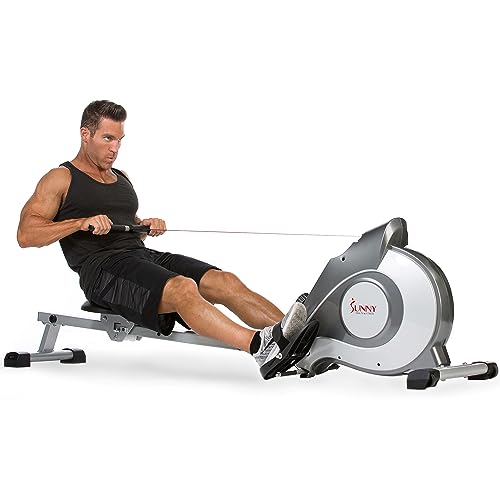
At around $300, this lets you test whether indoor rowing will stick without betting $900 on it. Magnetic resistance is smooth and nearly silent — great for apartments. The monitor is basic (time, count, calories — not split time or watts), so you will outgrow it quickly if you get serious. But as a proof-of-concept machine, it's a reasonable starting point.
What we like
Under $350 — a low-risk way to test if rowing will become a habit
Magnetic resistance is nearly silent, safe for apartment living
Compact footprint and simpler storage than air-resistance ergs
What to know
No split-time or wattage data — limits training precision
Resistance ceiling is low; serious rowers outgrow it in months
The WaterRower uses a water flywheel — actual water in a tank creates self-regulating resistance that scales naturally with your effort. Made from solid black walnut and handsome enough to keep in a living room. The S4 monitor is capable. If aesthetics matter and you have the budget, this is the premium alternative to the Concept2.
What we like
Solid walnut construction — looks like furniture, not gym equipment
Water resistance self-regulates with effort, closest feel to real rowing
Quieter than air resistance at moderate and low effort levels
What to know
S4 monitor incompatible with Concept2 apps and most fitness platforms
Water tank requires occasional purification tablet maintenance
A rowing machine will dent hardwood floors and transmit vibration through concrete to neighbors below. A proper mat — at least 3/4 inch thick, long enough to cover the full slide — solves both cheaply. Rubber grips better than foam and does not compress over years of use. The Concept2 RowErg needs coverage for the full slide length — about 8 feet — so a mat designed specifically for rowing machines beats a yoga mat pieced together.
Best starter
Powr Labs
Rowing Machine Mat
$49.99 as of Jun 22, 2026
★★★★★Our rating· In Stock
The top-rated rowing machine mat on Amazon, compatible with Concept2, Hydrow, and other rowers. Covers the full slide length and has a non-slip base that grips hardwood floors without shifting. Thick enough to protect floors and dampen vibration without compressing under the machine's feet.
What we like
Custom-fit dimensions for the RowErg's full slide length
Thick rubber stays put and won't compress under the erg over time
What to know
Only fits Concept2 properly — awkward sizing for other machines
More expensive than generic rubber mats of comparable thickness
A thick, grippy foam mat that works under any rower and costs under $30. Not as durable as rubber, but adequate for protecting hardwood and dampening noise in a second-floor room. Use two overlapped if you need full RowErg slide coverage.
What we like
Under $30 and available in multiple sizes for different machines
Non-slip surface on both sides — won't slide during intense rows
What to know
Foam compresses under heavy machine feet over months of use
May not cover full RowErg slide length — you might need two mats
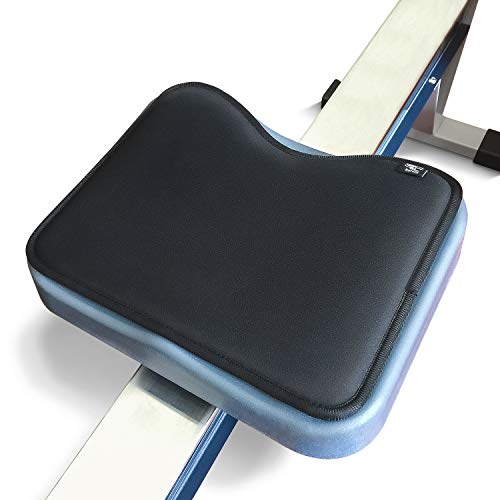
Rowing seat pain is real. The hard plastic seat on any rowing machine — including the Concept2 — is designed for performance rowing where you are moving fast enough that cushioning is a liability. For 20-60 minute beginner rows, your sit bones will protest within the first two weeks. A gel seat cushion adds meaningful comfort until you adapt. Make sure it is designed for rowing machine seats — narrower than a bike seat — so it does not shift during the stroke. Most rowers stop using one within a few months, but it is genuinely useful while you build up conditioning.
Best starter
Hornet Watersports
Rowing Machine Seat Cushion
$19.99 as of Jun 22, 2026
★★★★★Our rating· In Stock
Purpose-built for rowing machines, including Concept2. The non-slip base grips the plastic seat so it stays put through the full rowing stroke. Thick enough to meaningfully reduce sit bone discomfort in your first weeks before calluses develop, thin enough that it doesn't alter your leg drive angle significantly.
What we like
Purpose-built for the Concept2 seat with a non-slip base that holds during strokes
Enough padding to meaningfully reduce sit bone soreness in early weeks
What to know
Slightly oversized for some non-Concept2 machine seats
Most rowers stop using it within 2-3 months as they adapt
A budget-friendly memory foam seat pad designed for the Concept2 Model D and E, also compatible with WaterRower and NordicTrack. Memory foam conforms to your sit bones more than basic gel. A practical cheaper alternative to the Hornet Watersports cushion if you are just getting started.
What we like
Memory foam conforms to sit bones better than generic gel pads
Compatible with Concept2 and most other rowing machine seats
What to know
Memory foam compresses over time and may need replacing in a few months
Less structured than molded gel options — shifts more during strokes
Rowing intensity is notoriously easy to misjudge — the machine can feel brutally hard even at moderate effort, and easy sessions can sneak up on you. A chest-strap heart rate monitor gives you real data. The Concept2 PM5 accepts both Bluetooth and ANT+ heart rate straps and displays your HR live on screen, turning every row into a proper training session with real targets. Chest straps are more accurate than wrist-based monitors for rowing — wrist sensors lose signal during the sliding stroke.
Best starter
Polar
H10 Heart Rate Monitor Chest Strap
$$
★★★★★Our rating
The Polar H10 is widely considered the most accurate consumer heart rate monitor available. Broadcasts both Bluetooth and ANT+, so it connects to the Concept2 PM5 monitor, ErgData, and any smartwatch simultaneously. Accurate enough to trust for interval training. Battery lasts roughly 400 hours. This is the one to buy if you care about training data.
What we like
Dual Bluetooth + ANT+ — pairs with PM5 and any fitness app at once
Clinical-grade accuracy trusted by coaches and sports researchers
~400-hour battery life — you won't think about batteries for months
What to know
Strap must be moistened each session or readings drop at the start
More expensive than generic straps that work fine for casual rowing
A solid Bluetooth and ANT+ chest strap at about a third of the Polar's price. Pairs cleanly with the Concept2 PM5 and most fitness apps. Accuracy is slightly behind the Polar at very high intensities but more than sufficient for steady-state and interval training.
What we like
Bluetooth + ANT+ at roughly a third of the Polar H10's price
Pairs with Concept2 PM5 and ErgData app out of the box
What to know
Accuracy drops slightly above 185 bpm — minor for most sessions
Strap material is less comfortable on long steady-state rows
The HRM-Dual pairs with both Bluetooth and ANT+ and offers top-tier accuracy with Garmin's ecosystem integration. If you already use a Garmin watch or plan to, this keeps all your data in one place. Battery lasts approximately 3.5 years at one hour per day.
What we like
3.5-year battery at typical usage — essentially maintenance-free
Deep Garmin Connect integration if you use a Garmin watch or app
What to know
No accuracy advantage over the Polar H10 for rowing-specific use
Overkill if you are not already in the Garmin ecosystem
Two small purchases that meaningfully improve long rowing sessions: a phone or tablet holder so you can watch video during steady-state rows (a 45-minute row goes by fast with a show; without one it can feel endless), and rowing gloves for the first few weeks before your hands develop calluses. The blister problem is real — your palms will surprise you after the first week of daily rowing.
Best starter
Falezern
Phone Tablet Holder for Rowing Machine
$
★★★★★Our rating
Metal adjustable clamp mount designed specifically for rowing machines, including the Concept2 RowErg, SkiErg, and BikeErg. Holds phones and tablets up to 11 inches at eye level. The metal construction does not flex or rattle the way plastic holders do during high-intensity strokes.
What we like
Transforms long steady-state rows — watch anything while you train
Clamp fits most round or square tube frames on any rowing machine
What to know
Vibration can loosen the clamp — check tightness before each session
Designed for phones; tablets need a larger arm or separate stand
Your palms will blister within the first two weeks of daily rowing. These rowing-specific gloves have extra padding on the grip contact points and an open-back design that does not trap heat. Use them for 4-6 weeks until calluses form, then retire them — they are a transitional tool, not a long-term necessity.
What we like
Prevents blisters during the first weeks before calluses develop
Open-back design keeps hands cool during high-intensity intervals
What to know
Slightly alters grip feel — can interfere with technique feedback
Most rowers stop using them within 6-8 weeks as calluses form
The rowing machine is harder than it looks and more rewarding than you expect. Here's what actually happens in your first month — the technique that matters, the mistakes everyone makes, and when it starts to click.
Rowing machines sit unused in more garages than almost any other fitness equipment. Not because they don’t work — the erg is genuinely one of the best full-body cardio tools available — but because most people start without any technique guidance, hurt their lower back, and quietly give up.
That doesn’t have to be you. Here’s what your first 30 days actually look like, what to focus on, and what to ignore until later.
Week 1: Learn the stroke before you worry about intensity
Every coaching resource agrees on this: the biggest mistake new rowers make is treating the erg like a cardio machine and ignoring technique. They sit down, row hard, and wonder why their lower back hurts by session three.
The rowing stroke has four phases, in this exact order:
The catch — shins vertical, arms straight, body leaning slightly forward. This is where you start each stroke. Think of it as coiling a spring.
The drive — push with your legs first. Not your arms, not your back — your legs. The sequence is legs → body swing → arms. This is the most important thing to internalize.
The finish — legs flat, body leaning back slightly, hands pulled to your lower ribs. Hold this position cleanly for one beat.
The recovery — arms out, body over, then bend your knees and slide forward. This is the reverse of the drive. Arms → body → legs.
The phrase every rowing coach uses: “Legs, body, arms — arms, body, legs.” Say it while you row for your first few sessions. It helps.
Watch the Concept2 technique videos before your first session — they’re short (under 10 minutes total) and specific. Fifteen minutes of preparation will save you weeks of bad habits.
First-week workout: 10 minutes at a comfortable pace, around 20 strokes per minute. You should be able to hold a conversation. Stop when you feel form breaking down, not when you’re exhausted. The goal is repetitions of correct movement, not a workout yet.
Week 2: Build time, not intensity
If your lower back is sore after week one, the cause is almost certainly rounding during the drive — your back is doing work that your legs should be doing. Fix this before adding time or intensity.
In week two, extend to 15-20 minute sessions. Keep the pace easy. You are building a movement pattern, not fitness — fitness comes later. The erg will humble you regardless.
Stroke rate matters: Beginners almost always row too fast. Twenty strokes per minute (abbreviated 20 s/m or r20) feels slow. It is not slow. Elite rowers race at 36-40 s/m. Beginners should stay at 18-22 s/m for easy rowing. Going faster than that usually means sacrificing the catch — your best power position — for more strokes, which is the opposite of what you want.
Watch your monitor. On the Concept2 PM5, the stroke rate is displayed prominently. If it climbs above 24, slow down.
The PM5 monitor: Don’t get distracted by all the metrics in week two. The two numbers that matter right now are stroke rate (keep it in the 18-22 range) and your split time (shown as pace per 500 meters, e.g. 2:30/500m). The split tells you how fast you’re going. Don’t worry about what split you “should” have — learn what your easy pace feels like and what a harder effort does to it.
Week 3: Your first real workout
By week three, the stroke should feel like a movement, not a puzzle. This is when you introduce your first actual workout structure.
Simple intervals to start:
Row 500 meters at a challenging but sustainable effort (you can talk, but you choose not to)
Rest for 90 seconds — fully stop or paddle lightly
Repeat 4 times
Cool down with 5 minutes easy
This is it. Four 500-meter pieces. It sounds simple and it is not simple. The third and fourth pieces will surprise you.
Note your split time on each piece. Your first interval is typically 10-15 seconds per 500m faster than your easy pace. By the fourth, you may be slower than the first. That gap — and narrowing it over weeks — is how you measure progress on the erg.
The biggest risk in month one is doing too much too fast. Indoor rowing uses your hip flexors, lats, and posterior chain in ways that nothing else does. These muscles need time to adapt.
Aim for three sessions per week in week four, not five. Each session should be one of these:
A longer easy row (25-30 minutes at r20, conversational pace)
A short interval session (the 4x500m you know, or try 8x250m with 60 seconds rest)
The Concept2 Logbook: If you have a Concept2, connect the ErgData app and start logging every session. The Logbook tracks cumulative meters — seeing 20,000 meters at the end of your first month is more motivating than it sounds. The Concept2 community ranks challenges by total meters, and month-one numbers give you a baseline.
When it starts to click: For most people, it’s around week 3-4. The stroke becomes automatic. You stop thinking “legs, body, arms” and start thinking about where you’re looking, how your breathing matches the stroke, how the power curve feels. That’s the moment the erg stops being a machine and starts being a sport.
Common mistakes — and how to fix them
Pulling with your arms first: The most universal beginner error. Your biceps will fatigue long before your legs, which is exactly the wrong priority. Fix: before every drive, consciously delay the arm pull until your legs are almost fully extended.
Shooting the slide: Your hips rise before your shoulders during the drive, so you’re essentially doing a deadlift followed by a row rather than an integrated movement. Fix: engage your core at the catch and think about keeping your body angle constant as your legs push.
Going too hard too soon: The erg is deceiving. A 2:00/500m split feels manageable for 200 meters and catastrophic for 500. Start easier than you think you need to.
Ignoring the recovery: The return to the catch position matters as much as the drive. Sloppy recovery means a bad catch, which means a weak drive. Think of the recovery as setting up your next stroke, not resting between strokes.
After 30 days, you can row. Now it’s time to get better:
Add structure with Pete Plan or Concept2’s built-in plans. The Pete Plan (thepeteplan.com) is the most popular free rowing program. It scales from beginner to competitive, structured 3-4 days per week. Follow it for 12 weeks and your fitness and technique will both be unrecognizable.
Find a community. The r/Rowing subreddit is active and unusually helpful. Post your stroke for critique; people will give you real feedback. Monthly challenges (the annual Concept2 Holiday Challenge, October team challenges) are genuinely motivating.
Consider one technique session. If you have access to a rowing club or a CrossFit coach who rows seriously, one hour of in-person feedback will compress months of self-directed improvement. The difference between rowing by feel and rowing with a coach watching is significant.
You now know what the erg is actually like — not the vague “great full-body workout” marketing description, but the specific, technical, demanding thing it actually is. Whether you continue or set it aside, that knowledge is worth more than the machine.
Save your money
What you don't need yet
Beginners get pressured to buy a lot of stuff that doesn't help them play
better. Here's what we'd skip on day one.
A rowing subscription app (Hydrow, iFIT) — The free Concept2 Logbook and ErgData app offer more training data than you'll use in your first year. Don't pay a monthly fee before you've outgrown free tools.
Rowing-specific shoes — Regular athletic shoes work perfectly in the foot stretchers. Specialized rowing shoes are for competitive athletes who care about every watt.
A smartwatch with rowing mode — A $40 chest strap paired to the PM5 is more accurate and costs a fraction of most rowing-capable watches. Buy the strap first.
A smart rower with live classes (Hydrow, NordicTrack RW900) — They cost $1,500-$2,500 plus a monthly subscription. The Concept2 with free ErgData does more for less — and holds its value.
RowErg leg height conversion kit — The standard-leg RowErg works for almost everyone. Only matters if you have specific ergonomic needs your physical therapist identifies.
A foam roller (yet) — Buy one by month two, not day one. Learn which muscles actually get sore from rowing — hip flexors and lats are the culprits — before investing in recovery gear.
First week
Your first seven days
A short, real plan to get from gear-on-doorstep to actually playing.
Try a rowing machine at a gym before ordering anything — a few sessions on someone else's machine confirms whether rowing will stick. · Action
Watch a 10-minute beginner technique video before your first session. · Learn
Row three times your first week. Keep sessions under 20 minutes. You will be more sore than you expect — the erg uses muscles that nothing else touches. · Action
FAQ
Common questions
Is the Concept2 RowErg worth the price for a beginner?
Yes, if you're serious about making rowing a regular habit. The Concept2 holds its resale value better than almost any fitness equipment — you can sell it for 70-80% of purchase price after years of use. A $300 magnetic rower makes sense if you're not sure rowing will stick, but plan to upgrade if it does.
How loud is the Concept2 RowErg?
Noticeably loud — the air resistance fan sounds like a hair dryer at high intensity. At full effort, neighbors in adjacent apartments will hear it. At easy pace (a slow 20-minute row), it's more tolerable. If noise is a concern, a magnetic rower runs nearly silent.
How much space does a rowing machine take up?
The Concept2 RowErg is 8 feet long in use and folds to about 4 feet tall for upright storage. You need roughly 4x9 feet of clear floor while rowing. It fits in most spare bedrooms, basements, or garage corners.
Is indoor rowing hard on your back?
With good technique, rowing is excellent for back health — it builds the posterior chain in ways few cardio machines do. With poor technique (rounded lower back on the drive), it will hurt your back. Watch the Concept2 technique videos before your first long session. The catch position is the one to get right first.
What's the difference between the Concept2 RowErg, BikeErg, and SkiErg?
The RowErg is the standard rowing machine — full-body, the one most people mean when they say 'erg.' The BikeErg is an air-resistance exercise bike using the same PM5 monitor — good for lower-back issues or cross-training. The SkiErg is a ski-pull motion machine that mounts to a wall or floor stand, focusing on upper body and core. Most beginners want the RowErg.
What workouts should I do as a beginner?
Start with easy steady-state rowing at a conversational pace (around 20 strokes per minute) for 10-20 minutes. Add 5 minutes per week. Once you can row 30 minutes comfortably, introduce simple intervals: 500 meters at hard effort, 90 seconds rest, repeat 4-6 times. Don't obsess over your split time for the first month — focus on technique.
Concept2 Technique Videos — The manufacturer's official technique guide. Watch this before your first session — short videos that will save you months of bad habits.
Dark Horse Rowing (YouTube) — The best beginner technique channel on YouTube. Patient, thorough coaching. Watch 'How to Row' first.
Concept2 Logbook — Free online workout tracker that syncs with ErgData. The global rowing community uses it — you can track your meters against millions of other rowers worldwide.
ErgData (App) — Concept2's official iOS/Android app. Connects to the PM5 over Bluetooth, provides real-time data, and saves workouts to your Logbook automatically.
Pete Plan — The most popular free indoor rowing training plan. Structured 3-4 days per week, scales from beginner to competitive. Start here once you can row 30 minutes without stopping.
r/Rowing — Active community covering indoor rowing, on-water rowing, and technique. The wiki has a solid beginner FAQ and programming recommendations.
As an Amazon Associate, JustBeginning earns from qualifying purchases.
We may also earn commission from other affiliate programs linked on this
page. Editorial recommendations are independent; we don't choose
products based on commission rates.
Product prices and availability are accurate as of the date and time
indicated and are subject to change. Any price and availability
information shown on Amazon at the time of purchase will apply.

 Best starter