Autograph collecting is personal in a way that few hobbies are. Every signed piece is a frozen moment: you were there, or someone was. The good news is the gear side is simple and cheap. The expensive part is the autographs themselves, which is exactly how it should be. Here's what you actually need to protect, display, and start chasing signatures.
By Colin B. · Published June 5, 2026 · Last reviewed June 5, 2026
The gear is cheap. Protectors, pens, and a display frame will run you $40-60. The autographs themselves are the real expense.
We earn commission on qualifying Amazon purchases — see our
affiliate disclosure.
Price tiers and budget totals shown above are editorial estimates;
actual Amazon prices vary.
At a glance
Our top pick in each category
The fastest path through this guide — each best-starter pick by category.
Scroll for the budget and upgrade alternatives.
Pick a focus before you spend anything. Sports, entertainment, music, historical, books: autograph collecting goes deep in any direction. A focused collector builds a meaningful collection faster than someone who grabs everything.
Get your protectors first. A signed 8x10 without a sleeve is waiting to get creased, smudged, or faded. Order sleeves before you order anything else, and sleeve everything immediately upon arrival.
Learn the difference between in-person signings, TTM (Through The Mail) requests, and secondary market purchases. TTM is free other than postage. In-person is the most authentic. Secondary market is the fastest way to build a collection but the hardest to verify.
Authentication matters once you're spending real money. PSA and JSA are the two major services. For pieces under $50, the fee doesn't make sense. For pieces over $100 you plan to keep or resell, a certification changes the math.
The gear
What you actually need
Photo Protection
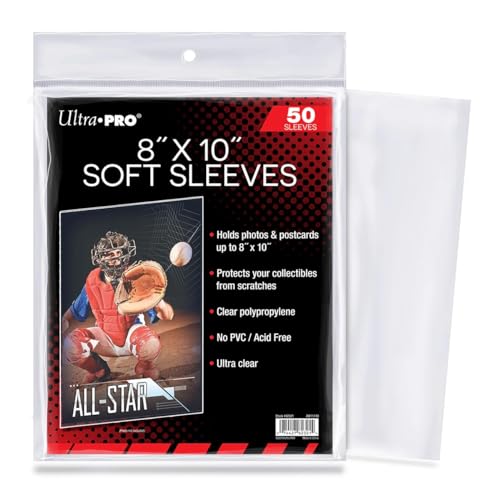
The most common autograph format is the signed 8x10 photograph, and the most important thing you can do is protect it the moment it arrives. Ultra Pro's photo sleeves are the industry standard: acid-free, archival-safe, and cheap enough that you should sleeve everything without thinking about it. The choice is between soft sleeves (best for bulk storage in a binder), rigid toploaders (best for individual display-ready pieces), and portfolio albums (best for showing your collection to others). Start with a 100-pack of soft sleeves and a box of rigid toploaders.
Photo Protection — what's the difference?
A few common shapes, each making a different trade.
Soft sleeves
Thin, flexible archival storage. Best for binder bulk use.
Thickness
2 mil
Best for
Bulk binder storage
Cost per sleeve
~$0.10
Best for Storing large volumes organized in a three-ring binder or archive box
Tradeoff No protection against bending, needs to live in a rigid container
Stiff plastic holder. Better protection for individual pieces.
Thickness
3-4 mil
Best for
Individual display
Cost per holder
~$0.50
Best for Your best pieces that need protection and can be handed to someone to look at
Tradeoff Bulkier to store than soft sleeves, not practical for a 200-piece collection
Best starter
Ultra Pro
8 X 10 Soft Sleeves
$8.99 as of Jun 22, 2026
★★★★★Our rating
Ultra Pro is the industry standard for collectibles protection, and these photo sleeves are the first thing every autograph collector needs. Acid-free, archival-safe polyethylene holds your signed 8x10s without yellowing. Buy the 100-pack and use them without thinking, every signed photo goes straight into a sleeve the moment you get it.
What we like
100-count pack covers your whole starting collection for under $10
Acid-free, archival-safe material won't yellow or damage photos
Industry standard used by serious collectors worldwide
What to know
Soft-sleeve only, no protection against bending or crushing
Clear material shows fingerprints easily when handling
When you have a signed photo that really matters, a soft sleeve is not enough. BCW's rigid toploaders are thick, stiff polypropylene that resists bending. Use these for your best pieces, your TTM successes from major players, anything you'd be upset to find creased.
What we like
Rigid construction actually prevents bending on valued pieces
25-pack is the right quantity to start with for key singles
What to know
Bulkier than soft sleeves, awkward to store in large quantities
Photo can shift inside and pick up micro-scratches if too loose
Once you have a dozen or more signed photos, you want to show them off without pulling each from an individual sleeve. Itoya's portfolio albums have polypropylene sleeves built into bound pages, with a dark backing that makes every photo pop. Collectors use these for TTM displays at shows and conventions.
What we like
Polypropylene sleeves on every page protect and display simultaneously
Dark backing makes signatures and photo details stand out clearly
What to know
Fixed layout means you can't reorganize without re-sleeving later
Higher cost per slot than individual sleeves in a standard binder
Most collectors pick one or two pieces to frame and display at any given time. A matted frame turns a signed 8x10 into a real wall piece and is the fastest way to show off your best signature. For memorabilia like signed balls or small objects, a shadow box display case does the job. Don't overthink the frame choice early on. A clean mat with standard glass protects and presents well at any price point, and you can always upgrade a favorite piece later.
Best starter
Malden
International Designs Matted Picture Frame 11x14
$89.99 as of Jun 22, 2026
★★★★★Our rating· Only 1 left in stock (more on the way).
A clean, simple frame with a mat opening sized for 8x10 photos, exactly what you need for your best signed piece. Black frame, white mat, real glass. Looks professional on a wall without looking like a trophy case. Under $20 and reliable.
What we like
Mat opening sized for standard 8x10 signed photos
Black frame reads as gallery-quality without the cost
Under $20, no-hassle option for your first framed piece
What to know
Standard glass, not UV-protective, keep away from direct sunlight
White mat is not acid-free buffered, swap it for archival mat on keepers
11x14 Shadow Box Frame with Shatter-Resistant Glass - Silhouette Collection - Large Shadow Box Display Case for Tabletop and Wall Display - Black with Soft Felt Back
$19.12 as of Jun 22, 2026
★★★★☆Our rating· In Stock
Shadow boxes are what you need when you want to display a signed ball, a trading card, or a flat photo alongside the program from the night you got it signed. The extra depth fits three-dimensional objects and lets you tell the full story of a piece. Great for a signed baseball, puck, or mini-helmet.
What we like
Depth fits baseballs, pucks, cards, and flat photos in one display
Black interior backing makes objects and signatures stand out clearly
What to know
Needs proper wall anchors, not just a picture nail
Objects can shift inside unless secured to the backing board
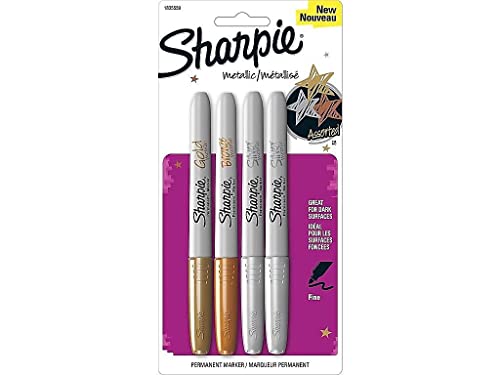
If you go to in-person signings, training camps, or card shows, bring your own pen. Signing tables move fast and you can't rely on someone else having the right marker. Fine-tip Sharpies are the universal choice for flat photos and glossy surfaces. For darker items like baseballs, bats, helmets, or black jerseys, silver and gold metallic markers make signatures readable. Blue or black ballpoint ink is preferred for signed flat paper items like index cards and programs, because pen pressure on paper is very hard to fake convincingly.
Best starter
Sharpie
Fine Point Permanent Markers Assorted (12-Pack)
$7.97 as of Jun 22, 2026
★★★★★Our rating· In Stock
The standard signing pen at every major show, camp, and event. Fine point for clean signatures, permanent on photos, programs, cards, and most flat surfaces. The 12-pack means you always have a fresh one. Bring a new Sharpie to every signing.
What we like
The standard signing pen, athletes and celebrities know how to use it
Fine tip gives clean, legible signatures on photos and glossy surfaces
12-pack keeps you stocked and ready for multiple events
What to know
Black ink disappears on dark jerseys, helmets, and equipment
Tips dry out if left uncapped, replace between events
Metallic Permanent Markers Silver and Gold (4-pack)
$14.86 as of Jun 22, 2026
★★★★☆Our rating· Only 3 left in stock - order soon.
For dark items, metallic ink is the only choice that produces a readable signature. Silver on a black jersey or dark helmet is the standard. Gold on burgundy or green equipment looks sharp. Bring both and let the signer choose which reads better on their item.
What we like
Silver and gold ink readable on dark surfaces where black ink disappears
Same Sharpie quality familiar to signers at events and shows
What to know
Takes 30+ seconds to dry fully, smears if you rush to sleeve it
Less vivid on white or light-colored items, stick with standard black there
Ballpoint or rollerball ink on paper is the authentication baseline for signed index cards, letters, and documents. The pressure variation from a real pen stroke is very hard to fake. Pilot's V5 extra-fine tip gives crisp, clean lines on index cards and programs, and blue ink reads as unmistakably original.
What we like
Pen pressure variation on paper is very hard for forgers to replicate
Ultra-fine tip gives clean signatures on index cards and programs
What to know
Doesn't work on glossy photos or plastic surfaces
Some signers prefer to use their own pen, bring it as a backup
You don't need professional authentication for every piece, but you do need basic verification tools before spending real money on the secondary market. A UV blacklight reveals pen substitutions, erasures, and paper treatments invisible in normal light. A magnifier lets you examine pen strokes and pressure patterns at the detail level that separates real signatures from printed or stamped reproductions. Together these cost under $30 and catch the most common retail-level forgeries immediately.
Best starter
GLOSSDAY
UV Blacklight Flashlight (100 LED)
$17.99 as of Jun 22, 2026
★★★★★Our rating· In Stock
UV light reveals pen substitutions, paper treatments, and ink inconsistencies invisible to the naked eye. It won't replace professional authentication, but it catches obvious fakes fast. A standard first tool for any collector spending money on secondary-market pieces.
What we like
Reveals pen substitutions and paper treatments invisible in normal light
Wide-beam UV covers a full 8x10 photo evenly in one pass
Under $15 and catches common retail-level forgeries immediately
What to know
Skilled forgeries using UV-safe inks will pass this test
Requires knowing what a normal UV response looks like to interpret
Signatures under magnification reveal whether pen strokes show genuine pressure variation or the flat, uniform impression of an autopen or rubber stamp. The MicroBrite's 60-120x range is right for examining signatures without a microscope. Pocket-sized for shows and dealers.
What we like
60-100x reveals pen pressure variation that autopens can't replicate
Pocket-sized, easy to carry to card shows and dealer tables
What to know
Requires comparison reference examples to interpret what you see
Not a substitute for expert examination on high-value pieces
Signed trading cards need different protection than flat photos. The card is smaller and more rigid, but the signature sits on a glossy surface that scuffs easily. A One-Touch magnetic holder is the gold standard for display-worthy signed cards. Toploaders are the bulk-storage equivalent for collectors with many signed singles. Always pair a penny sleeve inside a toploader for double protection on any card you actually care about.
Best starter
Ultra Pro
One-Touch Magnetic Card Holder 35pt (25-pack)
$57.50 as of Jun 22, 2026
★★★★★Our rating· Only 6 left in stock - order soon.
The standard display holder for signed trading cards. Magnetic closure protects the card without tools, and the rigid acrylic prevents bending and surface damage. Every serious card collector keeps a stack of these for their best signed singles. The format every dealer and show table uses.
What we like
Magnetic closure opens and closes without tools or risk of card damage
Rigid acrylic protects signed surface from bending and scratching
The universal standard seen at shows, dealers, and online marketplaces
What to know
Only fits standard 35pt cards, thick relics need a different holder size
Magnetic closure can snag on other cases when stacked loosely
For signed cards you want protected but not necessarily displayed, toploaders are cheaper than One-Touches and stack neatly in storage boxes. Pair with a penny sleeve inside for double protection on any card you care about. Buy a box for general use.
What we like
Rigid protection at a fraction of the cost of magnetic holders
Stacks neatly in storage boxes for bulk signed card collections
What to know
No closure mechanism, cards can slide out if stored horizontally
Less display-worthy than a One-Touch for pieces you want to show
Autograph collecting is easy to start and surprisingly easy to do badly. Here's what the first year actually looks like, from your first sleeve to your first real authentication call.
Most people start autograph collecting the wrong way: they buy something on eBay without knowing what to look for, it arrives in a paper envelope with no protection, and they put it in a drawer. That’s not collecting. That’s acquiring.
Real autograph collecting starts with a decision: what do you actually care about? The rest follows from that.
Month 1: Pick your focus and get your supplies
The scope of autograph collecting is enormous. Sports (by sport, by era, by team), entertainment (film, TV, music), historical (presidents, scientists, literary figures), authors. Some collectors specialize tightly (only Hall of Fame shortstops from the 1970s), others go broad. Neither is wrong, but the tight collector almost always builds a more meaningful collection faster.
Before you spend anything on actual autographs, get your protective supplies. This sounds backward, but it matters: every signed photo or card you receive unprotected is at risk until you sleeve it. Order a 100-pack of 8x10 photo sleeves and a box of rigid toploaders. They cost under $15 combined. Sleeve everything the moment it arrives.
The next decision is how you’ll acquire autographs:
In-person signings are the most authentic and the most fun. Card shows, public appearances, spring training, convention celebrity signings, minor league ballparks. You know it’s real because you watched it happen.
TTM (Through The Mail) is the collector tradition of sending a flat item, a polite letter, and a self-addressed stamped envelope to a player’s fan mail address. Many players, especially retired athletes and minor leaguers, sign and return them. It’s free other than postage and the occasional $5-8 request fee for some celebrities.
Secondary market (eBay, sports memorabilia dealers, Heritage Auctions) is the fastest way to build a collection, but the hardest to verify. Lots of fakes exist. This is where your authentication skills matter most.
TTM success varies wildly by signer. A popular Hall of Famer might have a 20% response rate; a minor league pitcher might respond to nearly everyone. Before sending anything, look up the signer on sportscollectors.net (for athletes) or community threads on r/autographs.
The standard TTM package:
Your item (usually an 8x10 photo, index card, or trading card)
A short, polite letter (one paragraph: who you are, why you admire them, one specific thing about their career)
A self-addressed stamped envelope (SASE) with enough return postage
Never send anything irreplaceable on a first TTM
Some collectors include a second item in case the player wants to keep one. Never send cash. Address the outer envelope to the fan mail address (teams publish these, or check community databases), not to a personal address.
Response times range from two weeks to two years. Some signers are backed up; some respond sporadically. Keep a log of what you sent, when, and to where. When something comes back, sleeve it immediately and mark it in your log.
A note on what to get signed: glossy 8x10 photos look great framed. Index cards are popular with serious collectors because they’re uniform and easy to organize. Licensed trading cards (Topps, Panini) are popular for sports, especially if you want value. Choose based on what you actually want to display or keep.
Your first in-person signing is different from TTM in one important way: you watch it happen. That’s the whole point for most collectors. The autograph is a record of proximity to someone whose work you admire.
What to bring to a signing event:
A fresh fine-point Sharpie (black for light surfaces, silver for dark)
Your item stored flat and protected so it arrives clean
A rigid sleeve or toploader ready to slip the item into immediately after signing
Realistic expectations about signing quality under time pressure
Signers at busy events move fast. You’ll get a few seconds. Hand the item, say the person’s name and a single honest thing (“I watched you pitch in 2009, you were incredible”), and get clear quickly. Don’t ask for a photo unless you’re explicitly told it’s allowed and there’s no line behind you.
The signature you get in 30 seconds at a table may look nothing like examples you’ve seen from the same person in their prime. That’s not a fake, that’s a signing-table signature. Volume signers often develop abbreviated versions of their full signature. Know what to expect before you get there.
Month 6-12: Learning to verify (and when not to trust yourself)
The first time you buy something on the secondary market, run it through your basic checks before deciding it’s real:
Compare to verified examples. PSA’s signature population report and database has reference examples for many athletes. Beckett does too. Look at the pressure points, the starting stroke, the end flourish. You’re not doing forensic analysis, you’re looking for obvious divergence.
UV light check. Under a blacklight, pen ink fluoresces differently than paper. Substitutions (someone signing over a printed signature) and paper treatments sometimes show up clearly. This doesn’t prove authenticity, but it catches the most obvious retail-level fakes.
Magnification check. Signatures under 60-100x magnification should show real pressure variation in the pen stroke. Autopens and rubber stamps leave a flat, even impression. The difference is often obvious once you know what to look for.
These checks catch common fakes. They don’t catch everything. For pieces over $100, submit to PSA or JSA. An opinion letter costs $20-40 and adds significant value and peace of mind at resale. A graded slab costs more but makes the piece much more liquid on the secondary market.
What most beginners get wrong
Overvaluing condition on pieces they plan to keep. Condition matters enormously for resale. For pieces you’re keeping because they matter to you, a small crease doesn’t change what it is.
Buying first, learning later. Every collector has a piece they bought early that turned out to be a fake or a reproduced print-signature. Almost everyone. It’s tuition. The lesson is: learn the basics before you spend serious money, not after.
Chasing celebrity over personal meaning. A signed index card from someone whose career meant something to you is worth more, as a collection, than a signed photo of whoever was famous this year. Build what you’d be proud to show someone in 20 years.
Neglecting the records. Keep a simple log: what you have, when and how you got it, what you paid. This matters if you ever sell, but mostly it turns a pile of stuff into an actual collection with a story.
Save your money
What you don't need yet
Beginners get pressured to buy a lot of stuff that doesn't help them play
better. Here's what we'd skip on day one.
PSA or JSA graded slabs — Authentication adds $20-80 per item and takes weeks. Only makes sense for pieces worth $100+ or ones you plan to resell. Start with your own verification tools.
Autopen detection software — Autopens are real, but you'll encounter them mostly at the institutional or political-memorabilia level. Learn to read signatures by eye first using a basic magnifier.
Custom archival framing — Standard frames from a home store look great for your first pieces. Save the $150 custom-frame budget for when you know exactly which piece deserves it.
Printed autograph price guides — eBay sold listings are more current and more accurate than any printed guide. Search by signer name, filter to sold items, and you have real market pricing instantly.
Acid-free archival storage boxes — Your first collection can live in sleeved binders. Archival boxes make sense once you have 50+ items and need long-term organized storage.
First week
Your first seven days
A short, real plan to get from gear-on-doorstep to actually playing.
Pick your focus area. Sports, entertainment, music, historical, books. You don't have to stay there forever, but a direction makes your first purchases feel intentional. · Action
Order photo sleeves first. They protect every signed 8x10 the moment it arrives. · Buy
Browse eBay sold listings for signatures from people you actually care about. It calibrates real costs and shows what your budget can realistically get. · Action
Look up TTM success rates for your favorite athletes or celebrities and send your first Through The Mail request with a self-addressed stamped envelope. · Action
SportCollectors.net · Tracks TTM success rates, addresses, and return times by player
Join r/autographs to find TTM success threads and get honest feedback on authenticity questions. · Action
r/autographs · Reddit: active autograph collector community
Order Sharpies and a box of rigid toploaders so you're ready before your first in-person signing or TTM return arrives. · Buy
For pieces acquired in person, you know because you were there. For secondary market pieces, compare the signature to verified examples, check under UV light for ink anomalies, and examine pen pressure under magnification. For anything over $100, a third-party opinion letter from PSA or JSA is worth the cost.
What is TTM autograph collecting?
Through The Mail (TTM) means sending a flat item, a polite letter, and a self-addressed stamped envelope to an athlete's or celebrity's fan mail address. Many players sign and return TTMs, especially minor leaguers, retired athletes, and authors. Sites like sportscollectors.net track success rates and response times by signer.
Do I need to get my autographs authenticated?
Not for most pieces, especially ones you got in person. Authentication through PSA or JSA makes sense when the piece is worth over $100, you plan to resell it, or you bought it on the secondary market without clear provenance. Below that, the authentication fee often exceeds the added value.
What should I bring to an in-person signing?
A fresh fine-point Sharpie, a metallic marker if your item is dark-colored, a rigid sleeve ready to protect the item immediately after signing, and your item stored flat in a stiff sleeve so it arrives uncreased. Having your own pen matters: signing lines move fast and tables run out.
How should I store signed cards versus signed photos?
Signed cards go in a penny sleeve first, then a rigid toploader or One-Touch holder. Signed photos (8x10) go in soft photo sleeves for bulk storage, or rigid toploaders for pieces you might hand someone. Never store anything loose or in direct sunlight. Flat, dry, away from heat and humidity is all you need.
What's the difference between a PSA opinion letter and a graded slab?
An opinion letter (LOA) is a paper certification that an expert reviewed the signature. A graded slab encases the item in a tamper-evident plastic holder with a grade and serial number. Slabs cost more but carry more weight at resale. Both come from the same major authentication companies.
Professional Sports Authenticator (PSA) — The largest third-party authentication and grading service. Their population report and signature reference database is useful even if you never submit a piece.
James Spence Authentication (JSA) — The other major authentication company, particularly strong for entertainment and non-sports autographs. Accepted by most serious buyers and auction houses.
SportCollectors.net — The most complete TTM success and failure database for sports athletes. Tracks response rates, current addresses, and return times. Essential for TTM collectors.
r/autographs — Active community for all autograph collectors. Good for TTM reports, authentication questions, and show reviews. Search before posting common questions.
Universal Autograph Collectors Club (UACC) — The oldest and largest autograph collector organization. Publishes the Pen and Quill magazine, maintains a registered dealer list, and sets ethical standards for the hobby.
Beckett Autographs — Beckett's authentication arm, strong in sports autographs. Their signature reference database is useful for comparisons across different time periods of a signer's career.
As an Amazon Associate, JustBeginning earns from qualifying purchases.
We may also earn commission from other affiliate programs linked on this
page. Editorial recommendations are independent; we don't choose
products based on commission rates.
Product prices and availability are accurate as of the date and time
indicated and are subject to change. Any price and availability
information shown on Amazon at the time of purchase will apply.

 Best starter