Fountain pens have a reputation for being fussy and expensive. Neither is quite true. A $22 Pilot Metropolitan writes beautifully straight out of the box, and setup takes five minutes. The real secret is that the pen matters less than the ink and paper you pair it with, and those cost almost nothing to get right.
By Colin B. · Published May 23, 2026 · Last reviewed June 3, 2026
A great starter setup (pen, ink, and good paper) runs $45–80. The pen is a one-time buy; ink and paper are the recurring spend.
We earn commission on qualifying Amazon purchases — see our
affiliate disclosure.
Price tiers and budget totals shown above are editorial estimates;
actual Amazon prices vary.
At a glance
Our top pick in each category
The fastest path through this guide — each best-starter pick by category.
Scroll for the budget and upgrade alternatives.
Don't start with a vintage or expensive pen. A $25 Pilot Metropolitan writes as well as a $100 pen for most daily tasks; the difference only becomes perceptible after months of daily writing when you know what you're chasing. Spend $25, earn your upgrade.
Nib size is the choice that actually matters in year one. Fine nibs are thinner, drier, and more forgiving on cheap paper. Medium nibs are wetter, smoother, and more expressive, but they shred grocery-store printer paper. Start with Medium if you're buying good notebooks; start with Fine if you're not sure.
Paper is not optional. Running a fountain pen over cheap copy paper is the fastest way to hate fountain pens. The ink feathers, bleeds through to the back of the page, and the nib feels scratchy instead of smooth. Spend $12 on a Rhodia pad and the experience transforms completely.
The gear
What you actually need
Starter Pens
The fountain pen world has a tier problem: the difference between a $25 and a $150 pen is real but subtle, while the difference between a $25 pen and a ballpoint is enormous. Start at the $25 tier. The Pilot Metropolitan has been the unanimous beginner recommendation for twenty years for a reason: the nib is smooth from day one, the build feels substantial, and it takes either cartridges or a converter for bottled ink. Write with it for three months, then decide what you actually want.
Starter Pens — what's the difference?
A few common shapes, each making a different trade.
Fine (F) Nib
Thin, dry line: the cautious choice for mixed paper situations.
Line width
~0.3–0.4mm
Ink flow
Drier
Paper tolerance
High
Best for Journal writers, work notes, uncertain paper quality, small handwriting
Tradeoff Less expressive; can feel slightly scratchy compared to medium
For confident writers who already know they love wet pens.
Line width
~0.7–1.0mm
Ink flow
Very wet
Paper tolerance
Low; premium paper only
Best for Large handwriting, signatures, people who tried medium and want more
Tradeoff Requires quality paper; slower drying; not recommended as a first nib
Best starter
Pilot
Metropolitan Fountain Pen
$24.15 as of Jun 22, 2026
★★★★★Our rating· Only 1 left in stock - order soon.
Twenty years as the unanimous first recommendation, and it earns it every time. The steel nib is smooth out of the box, the weight feels right in hand, and it accepts Pilot cartridges or a converter for bottled ink. Available in fine and medium nibs; medium is what most people want for everyday writing. Under $25, and it'll last indefinitely if you rinse it occasionally.
What we like
Smooth steel nib out of the box, consistent from unit to unit
Accepts cartridges or CON-70 converter for bottled ink
Substantial feel in hand for under $25
What to know
Included cartridge is tiny; CON-70 converter sold separately for ~$8
Looks like a children's pen (triangular grip, bright colors) but shares the same nib system as the Metropolitan and writes identically. Under $16, available from extra-fine to medium. Buy it if you want to try fountain pens before committing to anything, or want a spare pen to lend without worry.
What we like
Same smooth nib system as the Metropolitan at half the price
Triangular grip helps beginners hold the pen at the right angle
What to know
Looks like a children's pen; some adults find the styling off-putting
★★★★☆Our rating· Only 8 left in stock - order soon.
The graduation pen most Metropolitan users reach for at the three-to-six month mark. Piston-fill mechanism: screw the bottom to draw ink directly from a bottle, no cartridges or converter needed. Demonstrator body so you can see the ink level. Nib that's noticeably smoother than its ~$33 price suggests. Buy it when you know you're staying.
What we like
Built-in piston fills directly from any bottle, no converter needed
Clear body shows ink level; smooth nib outperforms its ~$33 price
What to know
Requires periodic disassembly to clean, more involved than cartridge pens
Overkill as a first pen; earn it after three months with a Metro
This is where the hobby becomes a rabbit hole. There are hundreds of fountain pen inks (shading, sheen, shimmer, waterproof, iron gall, flexi-only). For your first three months, ignore all of it. Buy one bottle of something well-behaved: flows smoothly, dries in seconds, rinses out of the pen cleanly. Diamine and Pilot make the most beginner-friendly inks. Once you want to explore, ink sample services let you try vials before committing to full bottles.
Best starter
Diamine
Ink 80ml Bottle
$21.24 as of Jun 22, 2026
★★★★★Our rating· Only 2 left in stock - order soon.
Diamine makes some of the most well-behaved inks in the hobby. Quick-drying, wide color selection, consistent flow, and 80ml lasts a year of daily writing. Oxford Blue is the classic starter color. Prussian Blue and Midnight are the other common first picks. Choose the color you'd actually enjoy looking at; it matters more than you think.
What we like
Quick-drying and consistent, rarely skips or feathers on good paper
80ml bottle lasts a year of daily writing for most people
Wide color selection; Oxford Blue and Midnight are the best starters
What to know
Not waterproof; use Noodler's Bulletproof for permanent records
★★★★☆Our rating· Only 2 left in stock - order soon.
The benchmark premium ink. Iroshizuku bottles are beautiful objects, and the inks are unusually clean: minimal dry-out, easy to rinse from pens, and colors that shade dramatically depending on your nib width. Ku-Jaku (peacock teal-green) is the most-loved color in the range. Around $25 per bottle. Graduate to these once you know what you're looking for.
What we like
Unusually clean ink: minimal dry-out, easy to rinse, vibrant shading
Ku-Jaku (peacock teal-green) is one of the most beloved colors in the hobby
What to know
Around $25 per bottle, a steep step up from Diamine for a beginner
★★★★☆Our rating· Only 19 left in stock - order soon.
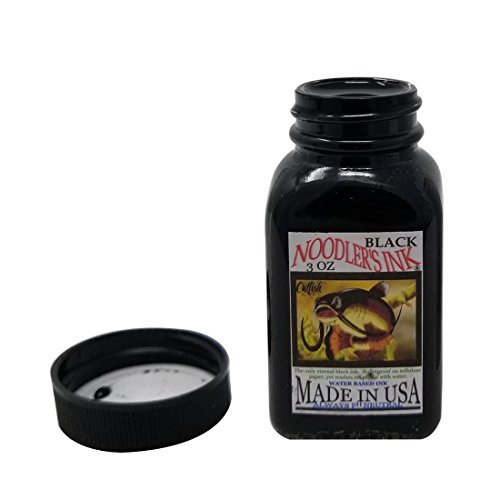
The only truly waterproof, archival-grade black ink most beginners should know about. Bonds to cellulose in the paper and won't wash off, right for permanent notes, official documents, labels, important signatures. The tradeoff is that it's harder to clean out of a pen than standard inks. Dedicate one pen to it and flush monthly.
What we like
Truly waterproof and archival: bonds to paper, won't wash out
The go-to black ink for official documents and permanent notes
What to know
Harder to clean out of a pen; flush monthly or it can stain internals
Dedicate one pen to it; mixing with other inks is not recommended
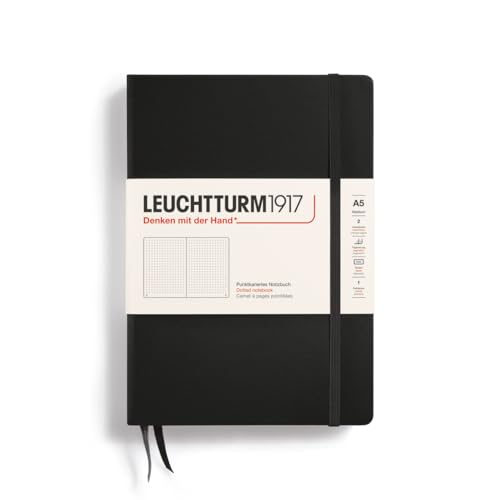
Cheap paper ruins fountain pens. The ink feathers (spreads outward along the fibers), bleeds through to the back of the page, and the nib drags instead of gliding. The fix costs $12–25 and is non-negotiable. Leuchtturm1917 and Rhodia are the two brands that come up every time someone asks for a recommendation, and they earn it. Once you know what you're doing, Midori MD paper is the upgrade that makes you understand why people in this hobby obsess over paper.
Best starter
Leuchtturm1917
A5 Hardcover Notebook
$25.75 as of Jun 22, 2026
★★★★★Our rating· Only 1 left in stock - order soon.
The most popular fountain-pen-friendly notebook for good reason. 120gsm paper minimizes bleed-through, numbered pages, a front index, and a back pocket. Dot-grid is the community favorite but it comes in plain, ruled, and squared. The A5 size (5.7 × 8.3 in) is the sweet spot between portable and spacious. Around $24.
What we like
120gsm paper resists bleed-through from most fountain pen inks
Numbered pages, front index, and back pocket add real utility
Available in dot, ruled, plain, and squared; A5 size is the sweet spot
What to know
Paper not as silky as Rhodia or Midori MD; very wet inks may ghost faintly
Rhodia uses Clairefontaine paper: silky smooth, made in France, and genuinely among the best paper in the world for fountain pens. The No. 16 is an A5 staple-bound pad with perforated pages that tear out cleanly. Under $13. This is the best paper for testing new inks: the smoothness and whiteness reveal shading and sheen better than almost anything else.
What we like
Clairefontaine paper: the smoothest fountain-pen surface at this price
Perforated pages tear out cleanly; excellent for testing new inks
What to know
Staple-bound pad, not a stitched notebook; no index or page numbers
Midori's MD paper is a benchmark in the hobby: cream-colored, very smooth, minimal ghosting even with wet inks, and a tactile feel hard to describe but immediately perceptible. The stitched binding lays flat. Around $22, roughly Leuchtturm's price, but the paper experience is noticeably better. Switch here when you've moved from testing to serious daily journaling.
What we like
Cream-colored MD paper is smooth, minimal ghosting even with wet inks
Stitched binding lays perfectly flat, even in the middle of the notebook
What to know
No index or page numbers; purely utilitarian compared to Leuchtturm
Three things you actually need beyond pen and ink: a converter (so cartridge pens can use bottled ink), a blunt-tip syringe (for cleaning and ink filling), and eventually a pen roll if you carry more than one pen. Everything else (pen stands, nib smoothing tools, specialty lubricants) is second-year territory.
Best starter
Pilot
CON-70 Converter
$8.74 as of Jun 22, 2026
★★★★★Our rating
The piston converter for Pilot pens (Metropolitan, Kakuno, and most other Pilot models). Replaces the cartridge and lets you draw ink directly from any bottle by twisting the knob. This is how most fountain pen people use their pens once they realize how much better bottled ink is. Under $10, lasts indefinitely. Add it to your first order.
What we like
Piston fill: dip nib, twist, done. Draws ink from any bottle
Fits all Pilot pens that accept cartridges; lasts indefinitely
What to know
Pilot-only; Lamy, TWSBI, and other brands need their own converters
The cleaning tool you don't know you need until you want to switch inks. Blunt-tip needles (no cutting edge, safe) with a 1ml syringe body let you flush water through a converter or directly into the nib section, clearing dried ink with minimal effort. Also useful for filling converters from a bottle without dunking the whole pen. Around $8 for a 10-pack from BSTEAN.
What we like
Blunt tip is completely safe; lets you flush water directly through the feed
10-pack for ~$8; useful for both cleaning and filling converters from a bottle
What to know
Replace when syringes get stiff or ink-stained after heavy use
Once you're carrying two or three pens, rolling them loose in a bag is how nibs get bent. A leather pen roll holds six pens in felt-lined pockets, rolls into a compact bundle, and keeps nibs safe in transit. Leather versions last years; canvas ones are fine at half the price. Upgrade to this when your second pen arrives.
What we like
Felt-lined pockets protect nibs from bending in bags and pockets
Genuine leather holds up for years; rolls into a compact bundle
What to know
More than you need for your first pen; buy when pen two arrives
Most people think the pen is the hard part. It isn't. Here's what the first month of fountain pen writing actually looks like, and what clicks when.
The fountain pen has a reputation for being a fussy, high-maintenance tool that rewards obsessive tinkering. Some of that reputation is earned: there are people in this hobby who spend more time cleaning pens than using them. But it doesn’t have to be you, and it definitely shouldn’t be you in month one.
Here’s what the first thirty days of fountain pen writing actually looks like: what to do, what goes wrong, and when it stops feeling like a performance and starts feeling like writing.
Week 1: Filling and writing
The first thing you do with a new fountain pen is put ink in it. If you bought a Pilot Metropolitan and a CON-70 converter, the process takes ninety seconds: screw the converter onto the grip section, dip the nib into a bottle of ink, and twist the piston knob counterclockwise until the converter fills. Wipe the nib on a paper towel. Write.
That’s it. There’s no priming, no soaking, no break-in period for a modern pen.
What you’ll notice immediately: you’re holding the pen differently. Fountain pens write at a shallower angle than ballpoints (roughly 40–55 degrees instead of 60–90). And you’re pressing almost nothing. The weight of the pen itself is most of the writing pressure you need. If you’re pressing hard enough to indent the paper, you’re pressing too hard.
The pen will feel foreign for the first few days. Your hand is used to fighting through cheap ballpoint resistance. With a fountain pen, the ink flows onto the page with almost no effort, which feels wrong at first. By day four or five, it starts feeling natural. By day ten, writing with a ballpoint starts feeling like dragging a nail across sandpaper.
At some point in week two (probably when you use the pen on an index card, a Post-it, or a cheap notebook) you’ll understand why everyone talks about paper.
Cheap paper (anything under ~80gsm with significant wood pulp content) does two things to fountain pen ink: it feathers (the ink wicks outward along the paper fibers, making your writing look fuzzy and wide) and it bleeds through (you can see your writing on the back of the page). Neither is a pen problem. It’s entirely a paper problem.
Swap to a Rhodia pad or a Leuchtturm1917 notebook and both problems disappear. The ink sits on top of the paper instead of soaking in. The line is clean and sharp. The nib glides instead of dragging. This is what the pen was supposed to feel like.
Some people discover they prefer cheaper paper and fine nibs, which are drier and more forgiving. Some people become obsessed with the smoothest possible paper and wettest possible nib. You won’t know which you are until you try both. Week two is when you start finding out.
Most beginners use one ink for the first few weeks, then get curious. This is normal. The ink is the part of this hobby where choice is most visible: it changes the color, the sheen, the dry time, and the feel on paper.
Switching inks requires cleaning the pen first. Here’s the fastest method for a converter pen:
Remove the converter and empty it.
Fill the converter with room-temperature water and flush it through the nib section twice.
Repeat until the water runs clear (usually 2–4 cycles).
Let the pen air-dry for a few minutes, or press the nib gently against a paper towel to absorb remaining water.
Fill with new ink.
The whole process takes five minutes. Dried or stubborn ink can be soaked in water for 30–60 minutes, which loosens almost everything.
This is also the week most people discover they want a second pen. Having two pens means keeping two different inks loaded simultaneously: a practical blue-black for daily notes and something more expressive for journaling, for instance. This is a completely reasonable position that you are already being set up for by the hobby.
By week four, something has usually shifted. The pen isn’t a novelty anymore; it’s just your pen, the one you reach for when you need to write something down. At that point, you’ll notice you have opinions about things you didn’t know you had opinions about.
Ink color. You started with one bottle of Diamine Oxford Blue or Midnight. You’re already looking at the color swatches on the Goulet Pens website wondering what Pilot Kon-Peki looks like on your paper, or what a shading ink means and whether you’d notice.
Nib feedback. You know if you like the slight resistance (called “feedback”) of your current nib, or if you want something smoother. You know if you prefer drier ink or wetter ink. These are real preferences, not abstract concepts.
Paper. You’ve written on at least two different papers. You probably have a preference.
None of this means you need to buy anything. A single pen, one or two inks, and a good notebook is a complete system for years. But if the curiosity is pulling you toward a second pen or a different ink, that’s exactly what the TWSBI Eco and Pilot Iroshizuku are for.
Cleaning: the thing people worry about but shouldn’t
Every week or two, or whenever you switch inks, rinse the pen. This is the entire maintenance schedule for a modern fountain pen.
The only situation that requires more attention: you left the pen uncapped or unused for several weeks and the ink dried in the nib. In that case, soak the nib section in a cup of room-temperature water for 30 minutes. The dried ink will soften and flush out cleanly. No damage, no drama.
Don’t use hot water (can warp some materials). Don’t use soap (leaves residue that can gum up feeds). Don’t use anything other than water for routine cleaning. The pen doesn’t need to be perfect-clean between every ink switch; a slight color bleed from the previous ink into the new one for the first few strokes is normal and harmless.
What to do at month two
If you’re still writing with the pen daily at the end of month one (not because you’re trying to, but because it’s just what you reach for) you’re a fountain pen person. Accept it.
A few things change the slope of your experience at this point:
Try one more ink. Pick something with a different character from your first bottle. If you started with a blue-black, try a warm brown or a teal. The difference will be immediately obvious and will tell you something about what you actually like.
Look at the TWSBI Eco. Not to buy necessarily; just to understand what a piston-fill pen feels like. Many pen stores have demo units. A five-minute test tells you whether the convenience of built-in filling is worth it to you.
Read the r/fountainpens wiki. It’s well-written, not overwhelming, and answers the questions that come up naturally in week four.
The hobby has depth if you want it. A dozen pens, a wall of ink bottles, a serious paper collection. But it’s also perfectly satisfying with one pen, one ink, and a good notebook. Month one is how you find out which kind of person you are.
Save your money
What you don't need yet
Beginners get pressured to buy a lot of stuff that doesn't help them play
better. Here's what we'd skip on day one.
A $100+ pen — The jump from $25 to $100 is real but subtle. You need months of daily writing before you know what you're actually chasing. Spend $25 first.
Shimmer or sheening specialty inks — Beautiful, but demanding. Shimmer inks clog if you don't flush pens weekly; sheen inks need very wet nibs and premium paper to perform. Learn with a standard ink first.
Nib smoothing tools or grinder — Modern production nibs from Pilot and TWSBI are consistently well-tuned. Nib tuning is second-year territory, and you shouldn't need to fix what isn't broken.
A pen display or collection stand — Perfectly reasonable once you have five pens. On pen one, it's premature decoration.
Vintage pen restoration kits — Vintage pens are a great rabbit hole within the hobby. Start with a modern pen that works without intervention so you know what 'correct' feels like before fixing broken things.
First week
Your first seven days
A short, real plan to get from gear-on-doorstep to actually playing.
Order the Pilot Metropolitan in medium nib and a bottle of Diamine ink. · Buy
Write something every day this week. The pen feels foreign at first; you're holding it more loosely and pressing less hard than you're used to. By day four it stops feeling strange. · Action
Browse r/fountainpens and post a photo of your first ink-fill. The community is unreasonably welcoming to new people. · Learn
r/fountainpens · Reddit · 200k+ members, very welcoming to beginners
FAQ
Common questions
How much do I need to spend to start?
About $45–55 covers a Pilot Metropolitan ($22–25), a bottle of Diamine ink (~$12), and a Rhodia pad (~$12). That's the full beginner kit. The pen is a one-time buy; ink and paper are ongoing and inexpensive.
Do I really need special paper?
Yes. Cheap printer paper makes fountain pens feather and bleed; it's the fastest way to hate a pen that's actually good. Rhodia pads are $12 and the paper is excellent. Non-negotiable upgrade.
How do I clean a fountain pen?
Run room-temperature water through it until it runs clear. For cartridge-converter pens: remove the cartridge or converter, fill the converter with water, flush it through the nib section a few times. For stuck or dried ink: soak the nib section in water for 30 minutes. That covers 95% of cleaning situations.
Can I use any ink in any fountain pen?
Generally yes, with one exception: never use India ink or acrylic-based inks in fountain pens. They dry in the feed and are nearly impossible to clean out. Stick to water-based fountain pen inks. Everything on this page is safe.
Fine or medium nib?
Medium if you're buying good paper (Leuchtturm, Rhodia, Midori MD). Fine if you're writing in work notebooks or uncertain about your paper. Medium nibs are smoother and more satisfying; fine nibs are more forgiving.
When do I know I'm hooked?
When you start buying ink before you need it, just to have the color around.
r/fountainpens — The main beginner community: 200k+ members and very welcoming to new people. Start with the wiki; it answers the most common questions well.
Goulet Pens — The best specialty retailer for beginners. Excellent website with ink-swatch databases, pen comparisons, and beginner guides. Even if you buy on Amazon, browse here for research.
Goulet Pens (YouTube) — Brian Goulet's channel covers every beginner topic: how to fill, clean, and choose a pen. The ink review videos are the benchmark for the hobby.
The Pen Addict Podcast — Brad Dowdy's long-running podcast on pens and stationery. Heavy on enthusiast perspective; skip until you're a few months in, then listen to understand what the community is excited about.
JetPens — Japanese pen and stationery retailer with outstanding product guides and a huge ink-sample selection. Excellent for buying ink samples before committing to full bottles.
Fountain Pen Network — The original fountain pen forum, active since 2003. Deep archives of nib reviews, repair guides, and vintage pen discussion. More technical than Reddit; useful once you're past the basics.
As an Amazon Associate, JustBeginning earns from qualifying purchases.
We may also earn commission from other affiliate programs linked on this
page. Editorial recommendations are independent; we don't choose
products based on commission rates.
Product prices and availability are accurate as of the date and time
indicated and are subject to change. Any price and availability
information shown on Amazon at the time of purchase will apply.

 Best starter