Saltwater fishing is the third-largest recreational sport in the U.S. by license holders, and genuinely accessible from day one. You can catch fish on your first trip without expensive gear. The gear that's distinct from freshwater (corrosion-resistant reels, heavier line, different terminal tackle) is easy to account for once you know what to look for. Here's what you need first.
By Colin B. · Published May 23, 2026 · Last reviewed June 7, 2026
Ugly Stik GX2 Spinning Rod 7ft Medium
— The Ugly Stik GX2 is the default first saltwater rod, proven tough, corrosion-resistant, and right for most beginners.
Penn Wrath II Spinning Reel 2500
— The Penn Wrath II is the reel most anglers recommend for beginners, real saltwater resistance at an honest price.
A solid saltwater spinning setup (rod, reel, line, and a starter pack of tackle) runs $120–200. You can fish for less, but corrosion-resistant gear lasts years while cheap gear rusts by fall.
We earn commission on qualifying Amazon purchases — see our
affiliate disclosure.
Price tiers and budget totals shown above are editorial estimates;
actual Amazon prices vary.
At a glance
Our top pick in each category
The fastest path through this guide — each best-starter pick by category.
Scroll for the budget and upgrade alternatives.
Decide where you'll fish first: pier, surf, or inshore bay. The rod length and power you need is different for each. Pier and inshore fishing works with a 7–8 ft medium spinning rod; surf fishing rewards a 9–11 ft rod to cast through the breakers. Pick one scenario to start, gear for both is only one or two sessions away.
Spinning reels are the right choice for almost every saltwater beginner. Conventional (baitcasting) reels have real advantages at higher skill levels but a learning curve that costs beginners fishable time on every cast. Nearly every experienced saltwater angler tells beginners: start spinning, fish more, switch later if you want.
Check your state's regulations before you go. Most states require a saltwater fishing license (often separate from your freshwater license), and most species have size and bag limits. The NOAA FishRules app has every state's current regulations in one place and takes five minutes to set up.
The first rod decision is where you'll fish: pier or inshore (7–8 ft, medium to medium-heavy action) versus surf (9–11 ft to reach over the breakers). Either way, you need a rod explicitly rated for saltwater, the reel seat, guides, and blank all need to resist corrosion, and most freshwater rods aren't built for it. Don't over-buy power. A 7-foot medium spinning rod handles 90% of the pier and inshore scenarios a beginner will encounter, from flounder to redfish to striped bass.
Rods — what's the difference?
A few common shapes, each making a different trade.
Inshore / Pier Rod
7–8 ft, medium action. The versatile all-around starter.
Length
7–8 ft
Action
Medium
Power
Medium
Best for Pier fishing, bay fishing, inshore species: flounder, redfish, snook, stripers
Tradeoff Won't cast far enough to clear the surf zone from a beach
The Ugly Stik GX2 has been the default beginner saltwater rod for decades, and it earns it. The fiberglass/graphite construction shrugs off saltwater; the stainless steel guides and reel seat resist corrosion; and the clear tip design gives you real sensitivity without sacrificing strength. The 7-foot medium is the right starting length for most pier and inshore fishing.
What we like
Fiberglass/graphite blank shrugs off saltwater and rough handling
Stainless steel guides and reel seat resist corrosion reliably
7' medium length handles most inshore and pier scenarios
What to know
Heavier than a comparable graphite rod, tires arms on long sessions
Not the right tool for surf fishing, which needs 9–11 ft
If you're fishing the surf (casting from the beach through breaking waves), you need the extra length. The Penn Battalion II is purpose-built: Alconite guides that handle braid without grooving, a comfortable EVA grip for long casting sessions, and Penn's proven blank construction. Start with the 10-foot medium-heavy for most surf applications.
What we like
10-ft length clears the surf zone for proper bait presentation
Alconite guides handle braid line without grooving over time
EVA grip stays comfortable through multi-hour beach sessions
What to know
Useless for pier and inshore fishing, purpose-built for beach surf only
Storing and transporting a 10-ft rod takes real planning
When you're ready to upgrade, St. Croix is where most serious inshore anglers land. The Mojo Salt uses SCII graphite blanks built specifically for saltwater: lighter than fiberglass, noticeably more sensitive, and strong enough for redfish and snook. Once you've been fishing a season and know what you like, this is the step that changes how fishing feels.
What we like
SCII graphite is noticeably lighter and more sensitive than fiberglass
Fuji K-Frame guides handle any line type without grooving
Made in the USA, real warranty support if something breaks
What to know
Costs nearly 3x the Ugly Stik, only worth it once you're committed
Graphite feels less forgiving than fiberglass for beginners who muscle casts
Spinning reels are the right starting point for almost every saltwater beginner. A spinning reel hangs below the rod, the bail opens to cast and closes to retrieve, and the system is forgiving of imperfect technique. Conventional (baitcasting) reels have advantages at advanced levels but require thumb pressure management on every cast, something that takes real practice to avoid backlash. Your reel must be explicitly rated for saltwater. A freshwater reel will corrode inside within a season of salt exposure, even if it looks fine outside.
Best starter
Penn
Wrath II Spinning Reel 2500
$$
★★★★★Our rating
Penn has been making saltwater reels since 1932, and the Wrath II puts that expertise at an accessible price. Full metal body, HT-100 carbon fiber drag system, sealed bearings, this is actual corrosion resistance, not a marketing claim. The 2500 size handles most pier and inshore targets, from flounder to redfish. It's the reel most experienced anglers tell beginners to start with.
What we like
Full metal body, won't flex under pressure the way graphite bodies do
HT-100 carbon fiber drag is smooth and consistent across the range
Penn's 80-year saltwater pedigree backs every component choice
What to know
Heavier than comparable reels with graphite bodies
Budget handle knob loses grip if not rinsed after every saltwater trip
The Stradic is the reel most serious inshore anglers wish they'd started with. Hagane cold-forged aluminum body, X-Shield water resistance, and a retrieve so smooth it feels different in your hand the first time you pick it up. If you know you'll fish more than a dozen times a year, the step up from $80 to $200 is worth considering from the start.
What we like
Hagane cold-forged body eliminates flex under load, noticeably stronger
X-Shield water resistance outperforms most reels in its class
Retrieve smoothness is a genuine step up you'll feel every cast
What to know
Premium price, hard to justify unless you're sure you'll fish regularly
Requires careful post-trip rinsing; neglect shortens its lifespan
If you're not sure saltwater fishing will become a habit, the Sharky III is the smart hedge. Waterproof drag, 10+1 shielded bearings, and enough corrosion resistance to survive a season of regular fishing. When you're ready to upgrade, you won't be heartbroken handing this down or putting it on a second rod.
What we like
Waterproof carbon drag handles most inshore species without slipping
10+1 bearings for the price, outperforms the spec for the cost
Smart hedge if you're still deciding how often you'll fish
What to know
Corrodes faster than Penn or Shimano if not rinsed diligently
Handle and bail feel noticeably cheaper than premium reels
Braided line is the modern standard for saltwater fishing. Thinner diameter means longer casts and you can fit more on the spool; zero stretch means you feel every bite; and it doesn't break down in salt the way monofilament does. The trade-off: braid is visible to wary fish in clear water, so you'll want to tie on a short section of fluorocarbon or monofilament leader. Monofilament alone (the classic saltwater choice) is cheaper, more forgiving of casting mistakes, and fine for beginners who aren't ready to learn braid-specific knots yet.
Best starter
Power Pro
Spectra Braid 20lb 150yd
$22.54 as of Jun 22, 2026
★★★★★Our rating· Only 9 left in stock - order soon.
Power Pro is the benchmark against which every other saltwater braid is measured. Smooth through the guides, holds knots reliably, and comes in enough line weights to match any target species. Buy 20 lb test for most pier and inshore use. Spool with 10–15 yards of monofilament backing first to keep it from slipping on the spool, then add 6–12 inches of fluorocarbon leader at the business end.
What we like
Zero stretch, you feel light bites that mono would absorb
Thinner diameter fits more line and casts farther than same-lb mono
Lasts years without breaking down from salt exposure
What to know
Requires learning braid-specific knots before your first trip
Visible in clear water, always pair with a fluorocarbon leader
If you're not ready to learn braid-specific knots yet, Trilene Big Game monofilament is a legitimate choice. It's forgiving of casting errors that would cause braid to dig into the spool, it's visible enough to track your line in the water, and any basic fishing knot you learned growing up will hold. Replace it at the start of each season, mono degrades in salt over time.
What we like
Forgiving of casting errors, far fewer line-management problems
Any standard fishing knot (improved clinch, uni) holds reliably
Cheaper per spool than braid, easy to replace at season's start
What to know
Absorbs water and weakens in salt, replace annually without exception
More stretch means you feel less of what's happening at the hook
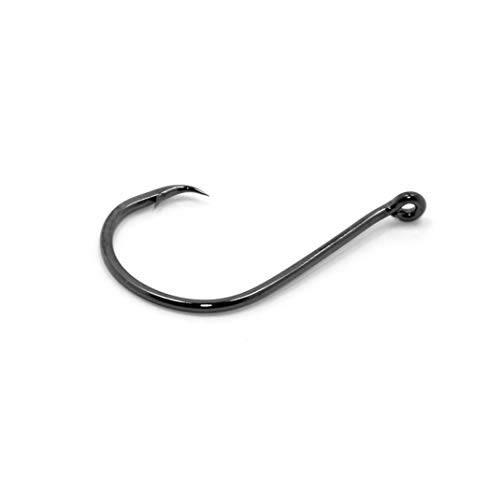
Terminal tackle is everything between your line and the fish, hooks, sinkers, swivels, and leaders. It's also what you'll burn through fastest. Circle hooks are the right hook for most saltwater bait fishing: they set in the corner of the mouth almost automatically (no forceful hookset required), and they're legally required for some species. For leader material, fluorocarbon is nearly invisible underwater and far more abrasion-resistant than mono, 12–18 inches of 20 lb fluorocarbon between your main line and your hook makes a real difference on wary fish in clear water.
Best starter
Gamakatsu
Circle Offset Hook 25-Pack 2/0
$
★★★★★Our rating
Circle hooks are the right hook for most saltwater bait fishing, and Gamakatsu is the brand every serious angler trusts for sharpness. The circle design sets in the corner of the mouth with minimal effort, just reel when you feel weight. Start with size 2/0, which covers most inshore species from flounder to redfish. Buy a couple of packs in sizes 1/0 through 3/0 to cover the full range.
What we like
Gamakatsu sharpness is best-in-class, hooks that actually penetrate
Circle design sets itself; no forceful hookset means fewer lost fish
Assortment covers the size range for most inshore saltwater species
What to know
Requires unlearning the snap-hookset reflex, takes a few sessions
Circle hooks aren't ideal for artificial lures, only natural bait
Sinkers are consumables, you'll lose them to snags, rocks, and crabs on every trip. An assortment in the 1/2 to 3 oz range covers most pier and surf applications without overthinking it. Buy a kit, see what your local conditions require, and replenish whichever sizes you use most.
What we like
Assortment covers the weight range for most pier and beach applications
Consumable enough that buying in bulk makes sense from the start
What to know
Lead sinkers are regulated or banned in some states, check first
Heavier sizes need separate purchase if surf fishing in strong current
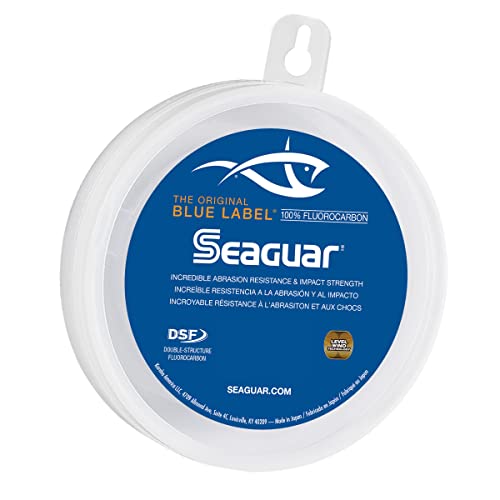
Fluorocarbon is nearly invisible underwater and much more abrasion-resistant than monofilament, critical when you're fishing around structure, oyster bars, or rocks where line contact is constant. Twelve to eighteen inches of 20 lb Seaguar Blue Label tied to your main line with an Alberto or Albright knot makes a real difference on educated fish in clear water.
What we like
Near-invisible underwater, spooky fish in clear water can't see it
Abrasion-resistant against oyster bars, rocks, and dock pilings
Seaguar Blue Label is the leader material most guides use
What to know
Stiffer than mono, requires proper wet-knot technique or it fails
Artificial lures belong in every saltwater beginner's box, even if you mostly fish bait. A few versatile designs cover most situations: soft plastics (the most forgiving category, scent, action, and color all help, and technique matters less), spoons (fast and productive for bluefish, Spanish mackerel, and stripers that are actively feeding), and slow jigs (for targeting structure). Start with soft plastics on jig heads. Bait-and-switch: match the size and color to the local forage you see, mullet, shrimp, or crabs depending on your region.
Best starter
Berkley
Gulp! Saltwater Swimming Mullet
$
★★★★★Our rating
Gulp! baits are the most consistently productive artificial bait in saltwater. The scent-infused soft plastic produces genuine strike-triggering scent in the water, closer to live bait than any synthetic. The swimming mullet on a 1/4 oz jig head catches flounder, redfish, snook, stripers, and most other species that swim in salt. Drag it slowly near the bottom.
What we like
Scent-infused plastic triggers bites even without perfect presentation
Catches the widest range of saltwater species of any soft plastic
Beginner-friendly, slow retrieve near the bottom covers most scenarios
What to know
Dries out if container is left open, seal it immediately after use
More expensive per bait than unscented soft plastics
The Got-Cha is the most famous pier fishing lure series in the Southeast, and for good reason, it's been catching bluefish, Spanish mackerel, and jack crevalle for 50 years. Cast it past a visible school of fish, retrieve fast, and it flutters and flashes through the water column. Under $5 and effective enough that experienced pier regulars won't be embarrassed to have it on their line.
What we like
50-year track record on piers, not a gimmick, it genuinely catches fish
Fast retrieve through a school is one of the most exciting scenarios in fishing
Under $5, losing one to a snag or bluefish bite-off doesn't hurt
What to know
Specialized for pelagic pier species, not a bottom-fishing tool
Treble hooks create extra hassle unhooking fish and risk to fingers
★★★★☆Our rating· Only 4 left in stock - order soon.
A weedless gold spoon is one of those lures that catches fish at every skill level. The Johnson Silver Minnow in gold has been landing redfish in shallow grass flats for over 70 years. Cast it into water one to three feet deep, let it settle for a moment, then retrieve slowly with occasional pauses. The weedless hook means you can throw it into grass without constantly cleaning weeds.
What we like
Weedless design lets you fish grass flats that would hang other lures
70-year redfish track record, one of the most proven inshore lures made
Slower is always better, beginner-friendly retrieve style
What to know
Weedless hook means occasional fish will throw the lure on the run
Less effective in deeper water than near-surface grass flats
Three things that make every saltwater fishing trip better: an organized tackle box (it sounds obvious until you're digging through a pile of tangled hooks in the dark), corrosion-resistant pliers (you'll use them every trip to remove hooks, cut line, and crimp leaders, cheap pliers rust orange in two trips), and a reel rinse routine. Rinse your reel with fresh water after every single saltwater trip. Everything else is optional.
Best starter
Plano
Pro-Latch Stowaway Utility Box - 2-3701
$
★★★★★Our rating
The Plano 3700 is the universal standard for organizing terminal tackle. Fourteen adjustable dividers, a latching lid that holds reliably, and a price under $10. Buy two: one for hooks, sinkers, and swivels; one for lures. Label them with masking tape and a marker. You will find things in the dark. This is the most practical $20 you'll spend on fishing besides line.
What we like
14 adjustable dividers fit every configuration of hook and lure sizes
Latching lid holds under pressure, doesn't pop open in a tackle bag
Universal standard, fits in every tackle bag and chest on the market
What to know
Not waterproof, lay it flat when the deck is wet or it all shifts
Two boxes are better than one; factor that into the actual budget
Corrosion-resistant pliers are one of those things that seem optional until you're trying to unhook a bluefish with your bare fingers. Stainless construction handles saltwater without rusting, the long nose reaches deep hooks, and the built-in line cutter eliminates the separate fishing scissors most beginners carry. Rinse them with the rest of your gear and they'll last years.
What we like
Stainless construction survives saltwater without the orange rust of cheap pliers
Long nose reaches deeply hooked fish safely and quickly
Built-in line cutter replaces scissors, one fewer thing in the bag
What to know
Still needs a freshwater rinse and occasional oil, not truly maintenance-free
Holster loops are small, won't clip to a wide belt easily
Most beginners show up with the wrong rod, no license, and no idea what tide has to do with anything. Here's how to skip those mistakes and catch fish in your first four outings.
Saltwater fishing has a way of humbling people who fish freshwater, and of surprising people who’ve never fished at all. The fish are bigger, the fights are longer, and the margin for bad gear is smaller. But “harder” and “intimidating” are different things. You can catch fish on your first outing. You probably will.
This is what the first month actually looks like, what to do before you go, what to expect when you get there, and when the sport starts to feel like something you understand rather than something that’s happening to you.
Before your first trip: the non-negotiable setup
Three things need to happen before you put a line in the water.
Get your license. Most states require a saltwater fishing license separate from a freshwater one. In Florida, a recreational saltwater license is $17 for a year. In North Carolina it’s $15. Some states let you fish for free from public piers, but many don’t, and the fines for fishing without a license are not small. The NOAA FishRules app has your state’s current rules in under a minute.
Know what you’re targeting. “Saltwater fishing” covers everything from flounder in a Georgia tidal creek to bluefin tuna 50 miles offshore. Pick a realistic starting scenario: pier fishing is the most beginner-friendly (fish are often concentrated near structure, restrooms exist, and you can walk away if you’re bored), followed by bay and inlet fishing from shore. Leave offshore for later.
Learn two knots. Before your first trip, practice the Palomar knot (for attaching lures and hooks to your line) and the Alberto knot (for connecting your braid main line to a fluorocarbon leader). These two knots cover 95% of what you’ll do in the first year. Tie each one ten times at home, with fishing line, before the trip. Wet knots on a pier while a fish is running is not the time to be figuring it out.
Your first saltwater fishing trip is orientation, not mastery. The goal is to get comfortable with the physical setup, rigging a hook, casting without a tangle, feeling the difference between a snag and a bite.
Fish with bait, not lures. Cut bait (a strip of squid, a chunk of mullet, a piece of shrimp) is more forgiving than artificial lures for a beginner. It smells, it moves in the current, and it attracts fish without requiring perfect technique. You can buy frozen cut bait at any bait shop near the water.
Understand the rig. The basic bottom-fishing rig for a pier is simple: a swivel tied to your line, a 12-18 inch fluorocarbon leader below that, a circle hook at the end. Add a sinker above the swivel to hold the bottom. That’s it. Don’t overcomplicate it. Pre-tied Carolina rigs and fish-finder rigs are available at every bait shop if you’d rather not build your own on the first trip.
The hookset with circle hooks. This is the thing that trips up every beginner. Circle hooks set themselves in the corner of the fish’s mouth, but only if you let them. When you feel a bite, do not yank the rod. Just reel steadily until you feel weight, then lift the rod. The hook does the work. Fighting the instinct to snap-set is the first skill to develop.
Fish a few hours. Note what’s happening around you: what bait the regulars are using, where they’re casting, whether they’re catching anything. Most pier regulars will tell you exactly what to do if you ask. They almost always know more than the internet.
Understanding tide: the single most important variable
Once you’ve been fishing a few times, you’ll notice something: some sessions produce fish and others produce nothing, on the same pier, with the same bait. Tide is often why.
Saltwater fish (especially inshore species like flounder, redfish, snook, and striped bass) move with the tide. On an incoming tide, baitfish get pushed toward structure and into shallow areas; predators follow. On an outgoing tide, baitfish are swept out of estuaries and creeks; predators stack up at the exits.
The practical rule for beginners: fish two hours before and after the tide change. This is when fish are most actively feeding. The slack period in the middle of high or low tide is often slow. You don’t need to understand hydrodynamics, just check a free tide chart app (Tides Near Me, Tideschart, or the NOAA tide chart for your nearest station) and plan your arrival accordingly.
Current is also your friend for bait presentation. Let a bait-rigged bottom rig drift with the current rather than sitting dead. Fish are facing into the current; your bait drifting toward them looks natural.
Most productive saltwater fishing happens around structure. On a pier: the pilings, the bait-cutting station, the edges where the pier meets the water. In a bay: the channels, the drop-offs at low tide, the oyster bars. On the surf: the troughs that form between sandbars, the cuts where water flows through.
Structure concentrates baitfish, and baitfish concentrates predators. Learning to read a body of water (identifying where structure creates current breaks, where the bottom changes depth) is the skill that separates productive anglers from unlucky ones.
You don’t need to understand it all at once. On your second trip, pick one specific spot (a particular piling, a point of land where current converges) and fish it hard. Notice whether you get more bites at that spot than elsewhere. Notice what the tide was doing when you got a bite. Begin building a mental map of your water.
On lures. By trip two or three, try a soft plastic lure on a jig head, a Berkley Gulp! swimming mullet, a DOA shrimp, or anything that looks like what lives in your area. Drag it slowly along the bottom or swim it through structure. The retrieve doesn’t need to be complicated. Slow down until you think you’re too slow, then slow down more. Saltwater fish aren’t chasing things; they’re ambushing them.
Your first catch
When a fish runs with your bait, keep the rod tip up and the line taut. Don’t panic, let the drag do its job. The drag on your spinning reel is set to slip before your line breaks; if the fish wants to run, let it run. When it stops, reel. When it runs again, let it.
Landing a fish with teeth or spines (bluefish, catfish, anything with sharp edges) requires pliers, not bare hands. Grip the fish firmly behind the gill plate with your non-dominant hand and use pliers to back the hook out. Release it quickly or put it on ice immediately if you’re keeping it.
After that first fish, you’ll understand why people do this.
What trips four and beyond look like
Around your third or fourth outing, something shifts. You stop checking the knots five times before you cast. You start reading the water without thinking about it, where the birds are working, where the baitfish are fleeing. You notice the tidal window without looking at an app.
A few things accelerate the curve from here:
Talk to the regulars at your pier or launch. The guy who fishes there every Tuesday morning knows more about that specific piece of water than any guide or YouTube video. Ask what’s biting, what they’re using, and where they’re putting their bait. Most will tell you.
Try one new technique per outing. Topwater lures at dawn (spectacular when it works). A Carolina rig instead of a fish-finder rig. Fishing a different hour of the tide. Each new thing teaches you something even when it doesn’t produce fish.
Keep a log. Date, time, tide stage, wind direction, bait, catch. After fifteen trips, you’ll have a dataset that tells you more about your local water than any fishing report.
Saltwater fishing is big. There’s always a species you haven’t caught, a technique you haven’t tried, a season you haven’t fished. The point of the first month is to get comfortable enough that the sport feels like yours. The rest follows from there.
Save your money
What you don't need yet
Beginners get pressured to buy a lot of stuff that doesn't help them play
better. Here's what we'd skip on day one.
A conventional (baitcasting) reel — Steeper learning curve with no real benefit for the species beginners typically target. Master spinning first, then switch if you want to.
A graphite rod over $150 — The Ugly Stik GX2 at $60 catches just as many fish as a $200 rod. Upgrade once you know what action and length you prefer.
A GPS fish finder — Learn to read tide, current, and structure first. A fish finder before that foundation just tells you fish are somewhere you don't understand.
Wire leader — Necessary for wahoo and certain offshore species, complete overkill for pier, surf, and most inshore fishing. Fluorocarbon handles 95% of what you'll encounter.
A live bait well or aerated cooler — Cut bait and soft plastics like Gulp! are effective and far simpler than managing live bait. Start there; live bait rigs add logistics without proportionate reward early on.
First week
Your first seven days
A short, real plan to get from gear-on-doorstep to actually playing.
Get your state's saltwater fishing license, most states require one, often separate from freshwater. · Action
NOAA FishRules App · Every state's saltwater regulations in one app, updated in real time
Decide where you'll fish first: pier, beach surf, or inshore bay. This determines your rod and reel choice. · Action
Order your starter rod, the Ugly Stik GX2 7-foot medium spinning rod is the default right answer. · Buy
Go fishing, twice if possible. First trip is orientation. Second trip, you'll actually be fishing. · Action
FAQ
Common questions
Do I need a separate saltwater fishing license?
In most U.S. states, yes, saltwater licenses are separate from freshwater licenses and often required even on public piers. A few coastal states (like Florida) include saltwater in a general fishing license. Check the NOAA FishRules app for your state's current rules before you go.
What's the difference between spinning and conventional reels?
A spinning reel hangs below the rod, is forgiving of imperfect technique, and is the right choice for almost every saltwater beginner. Conventional (baitcasting) reels sit on top of the rod, require thumb management on every cast to prevent backlash, and have real advantages for experienced anglers targeting heavy species. Start with spinning.
Can I use my freshwater gear in saltwater?
Not recommended. Freshwater rods and reels aren't built to resist corrosion, the guides, reel seat, and internal reel components will corrode within a season of salt exposure even if you rinse them. Saltwater gear is designed differently from the material up. The cost difference between a freshwater and saltwater setup is not large.
What's the best all-around lure for a beginner in saltwater?
Berkley Gulp! Saltwater soft plastics on a 1/4 oz jig head. Rig it, drag it slowly near the bottom, and it will catch fish across the widest range of species of any artificial bait. When nothing is working and you don't know why, go back to Gulp!.
How much should I spend to start saltwater fishing?
Budget $120–200 for a solid setup: $60–80 for an Ugly Stik GX2 rod, $50–80 for a Penn Wrath II reel, and $30–40 for line and a starter pack of hooks, sinkers, and a couple of lures. You can fish for less, but corrosion-resistant gear that lasts five years is cheaper long-term than cheap gear that rusts by fall.
Do I need to tie my own rigs, or can I buy pre-tied ones?
Pre-tied saltwater rigs work fine and are available at most bait shops. They're how most beginners start. Once you're comfortable, tying your own (with a hook, leader material, and swivel) gives you more control over hook size and leader length. Learn the improved clinch knot for starters, it holds in mono and handles most pre-tied situations.
NOAA FishRules App — Every coastal state's current saltwater regulations in one place, updated in real time. Set your state before your first trip and check size and bag limits for whatever you're targeting.
Salt Strong — The best instructional resource for saltwater beginners online. Their YouTube channel covers knots, technique, species-specific tips, and gear without the bluster of most fishing content.
Saltwater Sportsman — Long-running magazine and website covering gear, species, and destinations. Good for regional coverage once you know what you're targeting.
International Game Fish Association (IGFA) — The governing body for world-record catches and ethical fishing practices. Their fishing rules and world records are useful reference when you start targeting specific species.
Fishbrain App — Social fishing app where local anglers log catches with location, time, bait, and conditions. One of the best ways to find out what's biting near you this week.
The Fishing Wire — Industry news and research worth bookmarking for gear releases and regulation updates as you get more serious.
As an Amazon Associate, JustBeginning earns from qualifying purchases.
We may also earn commission from other affiliate programs linked on this
page. Editorial recommendations are independent; we don't choose
products based on commission rates.
Product prices and availability are accurate as of the date and time
indicated and are subject to change. Any price and availability
information shown on Amazon at the time of purchase will apply.