Bird watching has the most lopsided gear-to-enjoyment ratio of almost any outdoor hobby. You need one good pair of binoculars, a field guide, and somewhere to walk. Everything else comes later, and the 'everything else' people will tell you to buy first is mostly unnecessary. Here's what actually matters.
By Colin B. · Published May 15, 2026 · Last reviewed August 7, 2026
A solid starter kit is binoculars plus a field guide, everything else you probably already own. Budget $130 minimum (entry-level optics + a book); $280 for the setup most experienced birders would call genuinely good.
We earn commission on qualifying Amazon purchases — see our
affiliate disclosure.
Price tiers and budget totals shown above are editorial estimates;
actual Amazon prices vary.
At a glance
Our top pick in each category
The fastest path through this guide — each best-starter pick by category.
Scroll for the budget and upgrade alternatives.
Don't buy an expensive spotting scope or a camera with a telephoto lens. Both are real tools for serious birders, and both are completely wasted on a beginner. You'll spend the first six months learning to find birds with binoculars, and you won't have the patience or the ID skills to use high-powered optics well yet. The spotting scope comes much later.
You don't need camo or special birding clothing. Neutral colors help, but most birds care about movement and sound far more than color. The clothing you take on any outdoor walk is fine. What you do eventually want is layers, you'll be standing still in cool mornings more than you expect.
The Merlin Bird ID app from Cornell Lab of Ornithology is free and shockingly good. It identifies birds by sound in real time. Download it before you buy anything else. It's the fastest way to get your first ten species and understand why you care.
Binoculars are the one piece of gear that determines the quality of your birding experience, and the specs genuinely matter. You want 8x42 as a starter: 8x magnification is forgiving to hold steady (10x wobbles more), and 42mm objective lenses gather enough light for dawn chorus, forest shade, and overcast days. Buy from a real optics company, Vortex, Nikon, Celestron, or similar. The difference between a $70 pair and a $150 pair is real and visible. The difference between a $150 pair and a $400 pair is real but much smaller. Start in the middle.
Binoculars — what's the difference?
A few common shapes, each making a different trade.
8×42 (Standard)
The default for good reason. Forgiving to hold steady, excellent in low light, works everywhere.
Magnification
8×
Objective lens
42mm
Exit pupil
5.25mm
Best for All beginners; forest, feeder, and wetland birding; dawn and dusk use
Tradeoff Less reach than 10× for distant shorebirds or raptors
More reach for open habitats; harder to hold steady without practice.
Magnification
10×
Objective lens
42mm
Exit pupil
4.2mm
Best for Shorebirds, raptors, open grasslands; experienced users or very steady hands
Tradeoff Shakier handheld image; narrower field of view makes tracking fast birds harder
Compact (8×25)
Pocketable and light, but noticeably dimmer where it counts.
Magnification
8×
Objective lens
25mm
Exit pupil
3.1mm
Best for Travel backup, casual use; not a birding-first buy
Tradeoff Small objective lens hurts in forest shade and dawn/dusk, exactly when you most want to watch birds
Best starter
Vortex
Crossfire HD 8x42
$$
★★★★★Our rating
The binoculars most experienced birders would recommend to a friend starting out. Sharp, bright optics for the price, comfortable eye relief, and fully multi-coated glass that makes a visible difference in shade and low light. Vortex's VIP lifetime warranty covers everything including accidental damage, which matters when you're learning rough terrain with binocs around your neck.
What we like
VIP lifetime warranty covers accidental damage, rare at this price
Multi-coated glass makes a visible difference in shade and dawn light
8x42 spec is forgiving to hold steady, ideal for tracking moving birds
What to know
Slow-throw focus requires adjustment if you're used to hunting binoculars
Heavier than compact alternatives, a harness strap helps on long mornings
At around $70, this is the lowest price where binoculars become genuinely useful rather than frustrating. Multi-coated optics, a close-focus distance good enough for butterflies and dragonflies, and twist-up eyecups that work with glasses. Not as bright as the Crossfire HD, but fine for open fields, feeders, and your first park walk.
What we like
Lowest price where binoculars become genuinely useful, not frustrating
Close-focus distance works for butterflies and dragonflies too
Twist-up eyecups fit glasses or bare eyes
What to know
Dimmer than mid-range glass in forest shade and overcast conditions
No lifetime warranty to match Vortex's VIP coverage
The step up most serious birders land on after their first year. The HD glass is a genuine jump, cleaner color rendition, better edge sharpness, more usable light at dawn and dusk when the best birds are moving. If you've been birding for six months and find yourself frustrated by the limits of your current glass, this is the natural upgrade path. VIP warranty for life.
What we like
HD glass delivers a clear jump in color accuracy and edge sharpness
More light at dawn and dusk than entry-level glass, when the best birds move
VIP lifetime warranty still covers accidental damage at this tier
What to know
Significant investment, confirm 8x42 is your preferred spec before committing
Weight difference from entry-level glass is noticeable on long walks
A field guide is your reference: what a bird looks like, where it lives, when to see it. The Merlin Bird ID app (free from Cornell Lab) handles real-time identification and should be on your phone before anything else. But a physical field guide is still worth owning; it builds your mental map of bird families in a way that swiping through app results never quite does. Which edition depends on where you live: the full North American volumes cover everything; Eastern and Western editions are thinner and faster to use in the field.
Best starter
Sibley Guides
The Sibley Guide to Birds, 2nd Edition
$20.83 as of Jun 22, 2026
★★★★★Our rating
The most respected single-volume bird guide for North America. David Sibley's illustrations are more accurate and useful than photos for ID, similar-looking species shown side by side in consistent poses and lighting. The 2nd edition adds hundreds of species and improved flight illustrations. This is the guide that stays on your bookshelf and gets pulled out after a decade of birding.
What we like
Illustrations show similar species side-by-side, faster for ID than photos
Covers all of North America in one volume; no second guide needed
The reference serious birders still reach for after a decade
What to know
Full North American coverage makes it large and heavy for trail use
Full-price copies are expensive for someone still testing the hobby
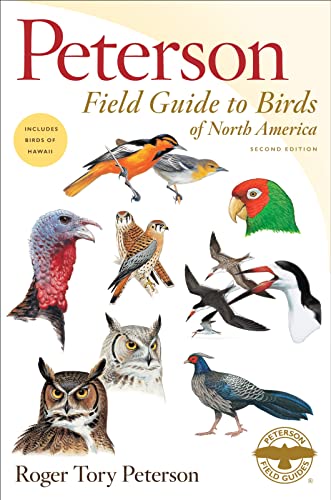
The original field guide that launched modern birding. Peterson's 'field marks' system (arrows pointing to the specific features that distinguish one species from another) is still one of the fastest ways to nail an ID when you have ten seconds before the bird flies. Older than Sibley, less comprehensive, but extremely functional. Often available secondhand for under $10.
What we like
Field marks system with arrows is the fastest ID method when time is short
Often available secondhand for under $10, the lowest-risk first guide
What to know
Less comprehensive than Sibley; some species coverage is thinner
Older illustrations look dated next to modern guides
Birding means standing still outdoors for extended periods, often in early morning when it's cooler than expected. The key isn't special birding clothing, it's layers you can add and remove quietly, in neutral or earthy colors (greens, browns, tans, grays). You don't need camo; birds react to movement, not your jacket color. A lightweight, packable fleece or softshell that compresses into a pocket is the most versatile early purchase.
Best starter
Columbia
Men's Steens Mountain 2.0 Full Zip Fleece
$39.00 as of Jun 22, 2026
★★★★★Our rating· In Stock
A warm, quiet fleece that zips without making noise, important when you're trying not to spook birds at 6am. The polyester pile doesn't catch on brush, zipper pockets keep hands warm, and Columbia's color options include plenty of earthy neutrals. Affordable enough that you won't regret getting it muddy. A great insulating layer for cool mornings or standalone in fall.
What we like
Quiet zipper and soft pile won't spook birds during close approaches
Columbia's earthy color options blend in any outdoor environment
Affordable enough to use hard, get muddy, and not worry about it
What to know
Not waterproof, needs a shell layer when rain is expected
Runs warm on mild mornings; better as a mid-layer than standalone
Ultra Adventure Hat - UPF 50+ Sun Hat for Men & Women with Neck Cape, Adjustable Fit, Breathable, Water-Resistant Design for Hiking, Fishing, or Outdoor Travel
$$
★★★★☆Our rating
When you're craning your neck to look up into a forest canopy all morning, a hat with a serious brim makes a real difference. Wide brim, UPF 50+, a neck cord so it doesn't blow off, and a crushable shape that packs flat. If you bird in open habitats (beaches, grasslands, prairie), this is the piece that makes the difference between a comfortable morning and a squinty, sunburned one.
What we like
Wide brim eliminates squinting when craning up through forest canopy
Neck cord keeps it on in wind; crushable shape packs flat for travel
UPF 50+ protection for open-habitat birding in full sun
What to know
Overkill for shaded park birding where simpler headwear works fine
Wide brim can snag on dense brush in overgrown habitats
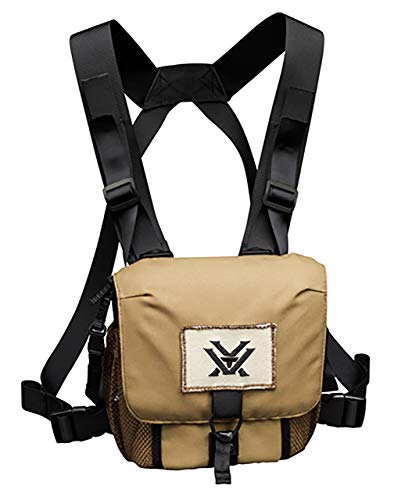
Three small purchases that improve every outing. First: a harness strap. Your binoculars come with a neck strap, which puts two pounds of glass on your cervical spine all morning, bad immediately and worse over time. A chest harness distributes the weight across your shoulders, keeps the binocs from swinging when you walk, and lets you raise them faster. Second: a lens cloth. A $4 microfiber cloth in your pocket for when glass fogs or gets a fingerprint. Third: a pocket notebook. Writing down what you see locks the ID, and the list becomes the record of your birding life.
Best starter
Vortex
Optics GlassPak Binocular Harness
$
★★★★★Our rating
The most universally recommended binocular accessory from experienced birders, and the one beginners most wish they'd bought on day one. Padded shoulder straps, a soft case that protects the optics, and a clip-in system that fits any binoculars. The weight difference from a neck strap after a three-hour morning walk is not subtle.
What we like
Padded shoulder straps move weight off the spine, neck straps hurt by hour two
Soft case protects optics when scrambling rough terrain or wet brush
Fits any binoculars, still works if you upgrade later
What to know
Clip-in system has a small learning curve on the first outing
Slightly bulkier than a neck strap when packed for travel
Weatherproof Side Spiral Notebook, 4.625" x 7", Yellow Cover, Field Pattern (No. 353)
$16.19 as of Jun 22, 2026
★★★★☆Our rating· In Stock
Waterproof paper you can write on in the rain, in wet hands, or when dew covers every surface in a marsh at 6am. Standard paper disintegrates in those conditions. Small enough for a jacket pocket, and your species list and location notes stay legible no matter what the weather does.
What we like
Writes legibly in rain, wet hands, and heavy dew, standard paper falls apart
Pocket-sized and durable; your species list survives any weather
What to know
More expensive than a regular notebook, overkill for dry-weather birding
Some ballpoints smear on the textured pages; bring a pencil as backup
Most beginners go out, see a robin and a crow, and feel like they're doing it wrong. You're not. Here's the actual arc from total beginner to someone who hears a bird and knows what it is.
Birding has a reputation for being a hobby for people with infinite patience who enjoy standing in the cold at 5am, squinting at something brown in a bush. That reputation is partially deserved and entirely beside the point.
The actual experience of getting into birding is nothing like it looks from the outside. The first month is a series of small recognitions (that’s a cedar waxwing, not just a random bird in the tree), and each one is a small hit of something that feels like competence accumulating. By the end of the month, you will have permanently changed how you experience being outdoors.
Here’s how the first month actually goes.
Week 1: Finding birds you didn’t know were there
The first thing that happens to new birders is this: you discover that birds are everywhere you’ve been ignoring them.
The best tool for this is Merlin Bird ID, the free app from Cornell Lab of Ornithology. Before you buy binoculars, before you read a field guide, open Merlin and tap Sound ID. Walk outside and let it listen. It will start naming birds, probably four or five within a few minutes if you’re anywhere near trees or a yard. Each name corresponds to a bird you’ll start scanning for.
This is the first skill: connecting a sound to a bird. Most birding is listening, not looking. The birders who find the most species are the ones who can hear a song from fifty yards and know before they raise their binoculars what they’re going to see.
Your goal in Week 1 is five species you can identify by sight or sound. Not fifty. Not impressive. Just five, reliably.
By Week 2, you’ve seen your five species and feel vaguely competent. Now comes the part that separates birders from people who just notice birds: learning bird families.
Bird families are the organizational structure that makes every subsequent identification faster. Once you know what a warbler looks like as a type (small, active, usually up in the leaves, often brightly colored) you can narrow a mystery bird from “something small and yellow” to “probably a warbler, now I look for field marks.” The same logic applies to sparrows (streaky, brown, ground-level), shorebirds (long legs, probe-y bills, water’s edge), and raptors (broad wings, soaring, patient).
The Sibley Guide’s introductory family pages are worth reading before bed each night in Week 2. The app is good for IDs; the book builds mental structure the app doesn’t.
A useful exercise: at the end of each outing, look up every bird you saw and read the family overview. Five minutes of reading after a ninety-minute walk locks the morning’s birds into a pattern you’ll carry forward.
Something changes around the two-week mark: the birds you’ve already identified feel different from the ones you haven’t. You’re not just seeing a bird anymore. You’re seeing a species, with a name and a behavior and a voice. Everything else is a puzzle you haven’t solved yet.
This is when birding gets genuinely addictive.
By Week 3, most beginners have seen 20–30 species. Not all identified; some will be mystery birds in your notebook. That’s fine. Mystery birds you see again are free learning; mystery birds you never see again were just passing through on migration. Either way, you’re building a mental catalog: the shape of a wren’s cocked tail, the specific rust-red of a house finch, the way goldfinches move in bounding flight.
This is also the week to visit an eBird hotspot you haven’t tried yet. eBird (free at ebird.org) shows you which parks and natural areas near you have the highest species counts. The map will point you toward places experienced birders have been going for years (wetlands, forest edges, lakeshores) that you may have driven past without knowing what they were.
Spring migration (mid-April through May) and fall migration (late August through October) are the two best times to bird in North America. If you’re starting in either window, you’ll see far more variety than any other time of year. Birds that breed in Canada and winter in Central America are passing through your backyard for a few weeks. Make the most of it.
You’ve permanently changed how you hear. You’ll notice birds in places you’d walked through a hundred times before. The oak tree outside your office. The creek behind the grocery store. The weeds at the edge of a parking lot where sparrows forage. This doesn’t go away.
You’ve discovered the value of stillness. Birding rewards patience in a way almost no other hobby does. Stand in one place for ten minutes instead of walking, and you’ll see twice as many birds. This is a skill that transfers.
You’ve found a reason to be outside in the early morning. The dawn chorus (the explosion of bird song in the hour after sunrise) is one of the overlooked wonders of ordinary life. Once you can hear it as music instead of noise, going to sleep at a reasonable hour on a Friday night in spring sounds genuinely appealing.
What to do in Month 2
The sharpest jump in skill comes from going out with someone better.
Most Audubon Society chapters run free beginner bird walks. An experienced guide will stop you in front of birds you’d walk past, name what you’re hearing, and explain behaviors you don’t have words for yet. One two-hour walk with a local birding expert is worth six solo outings in terms of skill transfer.
If you’re ready to invest in better optics, this is also the time. After a month in the field with whatever you started with, you’ll know the actual limitations (whether you’re losing birds in low light, or wishing for more magnification at a distance) and you’ll make a far better gear decision than you could have on day one.
Save your money
What you don't need yet
Beginners get pressured to buy a lot of stuff that doesn't help them play
better. Here's what we'd skip on day one.
A spotting scope — A spotting scope on a tripod is a real tool for shorebirding, hawk-watching, and rare-bird stakeouts. But you'll spend your first year learning to find and follow birds with binoculars. A scope requires a bird you already know is there, stationary, at distance. That's a Year Two problem.
A camera with a telephoto lens — Bird photography is a separate hobby with its own gear stack. A 500mm lens costs more than everything else on this page combined. If you want photos, start with what your phone can do, it's better than you think for feeders and closer birds.
Camouflage clothing — Real camo is for duck hunters in blinds. Neutral colors (tan, olive, gray) are fine for birding. Birds are primarily reacting to your movement and shadow, not your jacket.
Playback devices — Some birders use recorded bird calls to attract species. It's controversial and can stress birds during nesting season. Learn to find birds through patience first, the calls of wild birds are how you'll improve anyway.
Paid birding apps — Merlin (free) and eBird (free) cover 95% of what most birders need for ID and record-keeping. Don't pay for a subscription app until you've been birding for six months and know exactly what gap you're filling.
First week
Your first seven days
A short, real plan to get from gear-on-doorstep to actually playing.
Download the free Merlin Bird ID app from the Cornell Lab of Ornithology. Enable Sound ID and let it listen while you walk outside. · Learn
Merlin Bird ID · Cornell Lab's free ID and sound app, the fastest way to start identifying birds.
Find your nearest birding hotspot on eBird's Explore map, look for a park, wetland, or nature trail with a high species count. · Action
eBird Explore · Find local hotspots with species counts ranked by activity.
Go out within an hour of sunrise. Birds are most active in the first two hours after first light. Move slowly, stop often, and let Merlin name what you hear. · Action
Try to identify five birds by sight or sound in your first week. Write them down. · Action
Order the Sibley Guide to read in the evenings. Study the family overview pages, understanding that a thrush looks different from a warbler is how you narrow a mystery bird in under ten seconds. · Buy
An 8x42 roof-prism binocular from a real optics company in the $100–200 range. Our starter pick is the Vortex Crossfire HD 8x42. Avoid the $30 binoculars at big-box stores, the optics are genuinely bad and will frustrate you. The difference between a $150 pair and a $30 pair is immediately visible the first time you use them in shade.
Do I need expensive equipment to start bird watching?
No. The Merlin Bird ID app is free and excellent. Decent starter binoculars run $70–150, and a field guide costs $20–35. Your total day-one investment can be under $200, and Merlin extends the value of that indefinitely.
What's the best time of day to go bird watching?
Early morning, within two hours of sunrise. This is the dawn chorus, birds are most vocal and most active before the day heats up. A 6am walk in any park will show you far more species than a noon walk on the same path.
How do I find birds to watch near me?
Use eBird's Explore feature to find local birding hotspots, it shows which parks and natural areas near you have the highest species counts. Most cities have at least one major hotspot within 20 minutes. State parks, nature preserves, and wetlands are usually the best starting points.
Can I bird watch in a city?
Yes, and you may be surprised what's there. Urban parks, especially those with trees and water, attract a huge variety of species, particularly during spring and fall migration, when birds passing through use parks as stopover fuel stops. Many dedicated birders find their local city park more productive than far-away wilderness.
Is birding social or solitary?
As social or solitary as you want. Most Audubon Society chapters run free beginner bird walks, joining one is the fastest way to improve, because an experienced guide will point out birds you'd walk past and name what you're hearing. The Audubon Society's website has a chapter finder.
Cornell Lab of Ornithology — The authoritative institution behind Merlin, eBird, and All About Birds. Their free educational resources are the most comprehensive and trustworthy in North American birding.
All About Birds — Cornell's public species guide. Every North American bird with ID tips, range maps, sounds, and behavior. Your first stop for any species you can't identify.
eBird — The world's largest citizen-science bird database. Log your sightings, explore hotspot maps, track migration, and find what's been seen near you recently. Free.
Merlin Bird ID App — Cornell Lab's free AI-powered ID app. The Sound ID feature identifies birds by song in real time. Download before your first outing.
National Audubon Society — The largest bird conservation organization in North America. Their chapter finder points you toward local guided beginner walks, the fastest way to improve is going out with an experienced birder.
American Birding Association — The primary organization for serious North American birders. Magazine, podcasts, and conventions geared toward committed hobbyists. Good reference after your first year.
r/birding — Large, friendly subreddit. Good for ID help (post a photo, get an answer within minutes) and local hotspot recommendations.
As an Amazon Associate, JustBeginning earns from qualifying purchases.
We may also earn commission from other affiliate programs linked on this
page. Editorial recommendations are independent; we don't choose
products based on commission rates.
Product prices and availability are accurate as of the date and time
indicated and are subject to change. Any price and availability
information shown on Amazon at the time of purchase will apply.


 Best starter