Scuba has the most intimidating gear list of any sport you'll consider. Regulators, BCDs, dive computers, wetsuits — it sounds like a $3,000 project before you've even gotten wet. The good news: most of that gear you don't need to own before your first year, and the piece that matters most — your mask — costs about $60. Here's the order of operations.
By Colin B. · Published May 23, 2026 · Last reviewed June 6, 2026
Mask, fins, and wetsuit are worth owning from the start: ~$300. A full setup with BCD, regulator, and computer runs $900–1,500. Buy in phases — rent the expensive pieces until you're certified and know your preferences.
We earn commission on qualifying Amazon purchases — see our
affiliate disclosure.
Price tiers and budget totals shown above are editorial estimates;
actual Amazon prices vary.
At a glance
Our top pick in each category
The fastest path through this guide — each best-starter pick by category.
Scroll for the budget and upgrade alternatives.
Get your Open Water certification before buying expensive gear. Certification courses (PADI, SSI, NAUI) include all rental equipment; your first 20+ dives are fully doable on shop gear. You'll understand your preferences — wet vs. drysuit, jacket vs. back-inflate BCD, short blade vs. long blade fins — far better after cert than before.
Your mask is the one piece of gear you should own from day one. Fit is personal: a mask that seals on one person floods on another. Hold the mask to your face without the strap and inhale through your nose — it should stick. If it falls, it'll leak underwater. Buy from somewhere with easy returns, test it dry at home, and exchange if needed.
Regulators and BCDs are high-cost, preference-heavy items that every dive shop rents readily. There's no reason to own them before you've certified and done 10–20 dives. Mask, fins, and wetsuit are the personal-fit items worth buying early; everything else can wait.
Your mask is the most personal piece of dive gear — and the one to buy first, before anything else. A leaking mask ruins dives. The critical spec is fit: press the mask to your face (no strap), inhale through your nose, release. It should stay. Single-lens wide-angle masks give you the best field of view. Dual-lens masks (split across the nose) have lower internal volume and are easier to clear when they flood — which they will, while you're learning.
Best starter
Cressi
F1 Frameless Scuba Diving Mask
$$
★★★★★Our rating
Cressi makes some of the most widely used beginner dive gear on the planet, and the F1 earns its reputation. Single wide lens for panoramic visibility, tempered glass, and a soft silicone skirt that seals reliably on most face shapes. Comes with a matching snorkel if you want a bundle. A mask you'll use for years at a price that doesn't make the decision feel heavy.
What we like
Wide single lens gives panoramic visibility underwater
Soft silicone skirt seals reliably on most face shapes
Frameless design folds flat, easy to pack for travel
What to know
Frameless style is harder to grip when clearing water
Single lens limits options for prescription insert users
Cressi's classic dual-lens mask — around $40, widely available, and what many instructors hand students because of its low internal volume. Low volume means easier to clear when it floods, and it will flood while you're learning. Not as panoramic as the F1, but forgiving and completely trustworthy.
What we like
Low internal volume makes flood-clearing faster and easier
Dual-lens design is compatible with corrective lens inserts
What to know
Narrower field of view than wide-angle single-lens masks
When you're ready to invest in something that'll last decades, the Tusa Freedom series is where experienced divers land. Frameless silicone skirt, ultra-low volume, exceptional seal across a wide range of face shapes. A common upgrade mask for divers who've worn through two or three cheaper ones.
What we like
Ultra-low volume for fast, effortless clearing
Exceptional seal across a wide range of face shapes
What to know
Frameless style takes adjustment time for clearing technique
Premium price is overkill until you dive regularly
Fins come in two types: open-heel (worn with dive booties, adjustable heel strap) and full-foot (slip-on, like a shoe). Open-heel fins are the default for most beginner courses and cooler-water diving — booties protect your feet on rocky entries and the strap adjusts for a precise fit. Full-foot fins are for warm tropical water where you don't need booties and want to pack light. If you're learning in the US or Europe, start with open-heel.
Best starter
Cressi
Palau Short Adjustable Fin
$$
★★★★★Our rating
The Palau is a top recommendation for beginners because it does everything right without doing anything fancy. Wide blade for reliable thrust, a spring strap that snaps on and off without bending over, and a price that doesn't feel like a commitment. The spring strap is a small upgrade that you'll appreciate on every dive — traditional heel straps tangle and break.
What we like
Spring strap snaps on and off without fumbling or bending
Wide blade delivers reliable thrust for beginner kick technique
★★★★☆Our rating· Only 7 left in stock - order soon.
If your first dives are going to be tropical warm-water (a very common beginner path — a week in Cozumel or the Keys), full-foot fins travel better and feel more natural without booties. The Mares Avanti Quattro is a dive instructor favorite for its channel thrust design — you feel the difference from a cheap fin after one dive.
What we like
Channel thrust blade is noticeably more efficient than basic fins
Slip-on design packs lighter than open-heel fins with booties
What to know
Full-foot fit is unforgiving, size carefully without booties to compensate
Wetsuit thickness is almost entirely determined by water temperature. A 3mm suit is for tropical diving above 75°F (24°C). A 5mm handles temperate water at 65–75°F (18–24°C). A 7mm — or a drysuit — covers cold water below 60°F (15°C). If you're learning in the Caribbean, you may not need a wetsuit at all. If you're learning in California, the Northeast, or Europe, start with a 5mm full suit. Fit matters as much as thickness: a baggy wetsuit traps cold water and saps warmth fast.
Wetsuit — what's the difference?
A few common shapes, each making a different trade.
3mm
Tropical diving above 75°F (24°C). More about protection from scrapes than cold.
Water temp
75°F+ (24°C+)
Destinations
Caribbean, SE Asia, Hawaii
Warmth
Light
Best for Warm-water dive trips: Cozumel, Bali, Great Barrier Reef
Tradeoff No insulation value in cooler water; you'll be cold below 65°F
Cold water below 60°F (15°C). Pacific Northwest, British Isles, Great Lakes.
Water temp
Below 60°F (15°C)
Destinations
Pacific NW, UK, Great Lakes
Warmth
Maximum
Best for Cold-water wreck diving, northern-latitude destinations
Tradeoff Drysuits require a specialty cert and cost $1,500+; 7mm restricts arm movement noticeably
Best starter
Cressi
Fast 5mm Men's Wetsuit
$289.95 as of Jun 22, 2026
★★★★★Our rating
A 5mm full suit is the most versatile starting point — handles most recreational conditions and adds a meaningful safety margin at depth where water is always cooler. Cressi's construction is solid, the zippers hold up to years of weekly diving, and it's available in women's cuts too. The one to get if you're not sure what conditions you'll be diving.
What we like
5mm thickness handles most recreational conditions worldwide
Durable construction holds up to years of weekly diving
What to know
Too warm for tropical diving above 80°F, switch to a 3mm there
If your diving is going to be warm-water tropical and you need protection from scrapes and sun more than cold, a 3mm like this Seavenger is the right call. Under $70, well-constructed for the price, and available in a wide range of sizes. The entry price is low enough that if the fit isn't perfect, you haven't lost much.
What we like
Under $70, a real wetsuit at a real wetsuit price
Wide size range fits most body types accurately
What to know
3mm provides protection but minimal thermal insulation below 70°F
Aqua Lung's Aquaflex uses higher-grade neoprene — the stretch is meaningfully better than budget suits, which means less restriction of your arms and shoulders over a long dive. If you're diving more than twice a month, the comfort difference is worth the price premium.
What we like
Higher-stretch neoprene significantly reduces arm restriction
Comfort difference is noticeable over long dives
What to know
Stretch neoprene is less abrasion-resistant than stiffer alternatives
Your BCD (Buoyancy Control Device) is the vest that keeps you neutrally buoyant underwater and positively buoyant at the surface. For beginners, a jacket-style BCD is the easiest to learn on — it wraps around you like a vest and inflates on all sides evenly, which feels more natural. After 50–100 dives, many divers switch to back-inflate for better trim, but that's a problem for a year from now. Buy after you certify, not before.
Best starter
Cressi
Start BCD
$$$
★★★★★Our rating
The Cressi Start is designed for Open Water students and is what many PADI-affiliated dive schools stock as rental gear — which tells you a lot about its durability. Jacket style, pockets and D-rings for a beginner's accessories, robust inflator, and straightforward dump valves. Simple to operate, which matters when you're managing a regulator and a new environment.
What we like
Jacket-style inflation is the most natural feel for new divers
D-rings and pockets accommodate all standard beginner accessories
What to know
Jacket style can build slightly upright trim habits, needs correction
After cert and 20–30 dives, the Aqualung Pro HD is where most recreational divers who take the hobby seriously end up. Integrated weight pockets (faster to adjust weighting between dives), multiple D-rings for accessories, and Aqualung's reliable inflator system. A BCD you can dive for a decade.
What we like
Integrated weight pockets eliminate the separate weight belt entirely
Multiple D-rings handle accessories for any specialty certification
What to know
Integrated weight release requires pool practice before real-dive use
Your regulator converts tank pressure to breathable air — the most life-critical piece of equipment you'll own. It's also the category we most strongly recommend renting before buying. Regs are expensive, preference-driven, and need annual servicing. Most divers certify and do 20+ dives on rental regs before buying. When you're ready, mid-range regulators from established brands (Cressi, Scubapro, Aqualung, Mares) are all reliable — the differences between them are breathing effort and comfort, not safety.
Best starter
Cressi
T10-SC Cromo Regulator
$$$
★★★★★Our rating
The T10-SC Cromo is Cressi's reliable mid-range first stage paired with the Master Cromo second stage. Balanced diaphragm design performs dependably to recreational limits (130 ft/40 m), and Cressi's service network makes annual maintenance straightforward. A solid starter regulator at a fair price — add an octopus (backup second stage) separately, which any Cressi dealer stocks.
What we like
Balanced diaphragm design performs reliably to 130 ft
Cressi service network makes annual maintenance easy to schedule
What to know
Octopus (backup second stage) not included, buy separately
When you're ready to invest in a regulator that'll serve you for 15 years, Scubapro's mid-range is the standard recommendation from working dive instructors. The MK11 first stage is overbuilt for recreational depths and simple to service; the C370 second stage has a breathing feel that beginners mistake for calm but is actually just good engineering.
What we like
MK11 first stage is overbuilt for recreational diving depths
Industry-standard durability trusted by working dive instructors
What to know
C370 second stage is unbalanced, not suited for technical diving
A dive computer tracks your depth and time and calculates when you need to ascend to avoid decompression sickness. Most certification courses supply computers, but having your own is strongly recommended from your first post-cert dive — rental computers aren't calibrated to your specific dive profile. Dive computers are cheap enough now that there's no good reason to share. For a first computer: wrist-mounted beats console, simple display beats flashy.
Best starter
Cressi
Leonardo 2.0 Dive Computer
$$
★★★★★Our rating
The Leonardo is the most frequently recommended beginner dive computer for a simple reason: it does the job without confusing you. Clean display, conservative algorithm (appropriate for new divers), replaceable battery you can swap yourself, and a price under $200. It doesn't connect to your phone or track your heart rate — it tells you depth, time, and when to ascend. That's what you need.
What we like
Clean single-button interface, nothing to misread underwater
User-replaceable battery, no manufacturer service trips needed
What to know
No Bluetooth or app connectivity, dive log is manual only
Suunto is one of the two most trusted dive computer brands (Shearwater is the other, at higher prices). The Zoop Novo is their entry-level wrist computer — similar price to the Cressi Leonardo, slightly better build quality, and USB dive logging included. The right choice if you want a name brand and plan to track your dive log digitally from the start.
What we like
USB dive logging lets you sync your dives from the very first one
Suunto build quality is noticeably above entry-level alternatives
What to know
Slightly bulkier on the wrist than the Cressi Leonardo
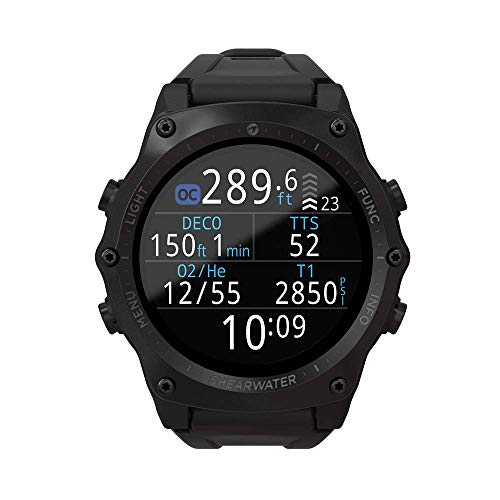
If you're planning to dive regularly and want a computer that grows through advanced and technical certifications, the Shearwater TERIC is the benchmark. Full-color display, air integration, multiple gas support, and software updates that keep it current for years. Expensive — but divers who buy it rarely replace it.
What we like
Full-color display with air integration and multi-gas support
Software updates keep it current through any certification level
What to know
Feature complexity takes time to learn, overkill for new divers
Premium price is hard to justify before your first 50 dives
Scuba diving's learning curve is front-loaded into one long weekend — your Open Water certification. By the time you surface from your fourth ocean dive, you'll have a C-card and a clear sense of whether this is your hobby. Here's what to expect, how to prepare, and how to make the most of those first dives.
Nobody picks up scuba diving gradually. You don’t wade in. The entry point is a certification course — three to four days of classroom material, confined-water (pool) skill practice, and four open-water dives in the ocean. At the end, you’re a certified diver. Before that, you aren’t.
This front-loading is actually a feature. The skills that keep you safe underwater are real skills — not theoretical ones — and they need to be automatic before you’re in the ocean. The course forces you to build them in a controlled setting first. By the time you hit the reef, you know what you’re doing.
Here’s what those first days actually look like.
The classroom: less painful than you think
Every Open Water course starts with some version of a knowledge component — either a printed manual, an online video series (PADI eLearning, SSI’s platform), or both. Your instructor will give you the specifics. The material covers dive physics, equipment, safety procedures, and the physiological basics of pressure and air supply.
Read it. This is not paperwork. The chapter on pressure effects — what happens to your ears, your sinuses, and your air spaces as you descend — will make your first pool session make much more sense. The material on ascent rates and decompression will explain exactly why you don’t just swim to the surface when you want to.
None of it is difficult. It’s the kind of thing that’s easy to retain once you’re in the water experiencing it.
The pool sessions: where the real learning happens
Pool (or “confined water”) sessions are where you learn the fundamental skills of scuba diving in a controlled, forgiving environment. Expect to spend 6–8 hours in the water across two sessions before your ocean dives. You’ll practice:
Mask clearing. Flooding and clearing your mask underwater is the most unnerving skill for beginners and the most essential to have automatic. You’ll practice it until it’s boring — which is exactly the point. The first time you do it, your brain sends a fairly urgent “this is not normal” signal. By the fifth time, it’s just a thing you do.
Regulator recovery. Dropping and recovering your regulator underwater, then clearing the water from it so you can breathe. Again: unsettling once, unremarkable by the third time.
Buoyancy control. Inflating and deflating your BCD to hover motionless in the water column. This is harder than it sounds and takes longer to feel natural. You won’t master it in the pool — you’ll just understand the concept. Real buoyancy control develops across 20–50 dives. Don’t let yourself feel behind.
Out-of-air procedures. What to do if you run out of air: signal your buddy, share air from their octopus (backup second stage), and ascend together. You’ll practice this until it’s fast.
Safety stops. Hovering at 15 feet (5 meters) for 3 minutes at the end of every dive gives dissolved nitrogen time to leave your blood safely. You’ll practice holding this depth without anchoring yourself on the bottom.
The pool sessions are where most students’ anxiety either dissipates or crystallizes. If the pool doesn’t feel comfortable by the end of your second session, tell your instructor — not as a sign of failure, but because they can often identify one specific thing you’re fighting against that’s fixable.
The ocean dives: what to expect
Your four certification dives are typically done over two days in open water — a quarry, a bay, or the ocean, depending on your location. Each dive has a specific skill list to complete, but they’re spread across the four dives so you’re never doing everything at once.
Dive 1 is mostly about getting comfortable. You’ll descend to shallow depth (15–20 feet), practice a few skills from the pool list, and get your first real sense of what neutral buoyancy feels like in open water (spoiler: harder than the pool, more current, different visibility). The mission is to not panic.
Dives 2 and 3 are where the skills consolidate. You’ll go deeper (up to your certification limit of 40 feet for most entry courses), practice more complex scenarios, and start having something resembling actual dives rather than skill exercises. By dive 3, most students are looking at the reef more than at their instructor.
Dive 4 is usually the best one. The skills are checked off, you know the procedure, and you can actually dive. Most people surface from dive 4 with some version of “I want to do that again.”
The skills that actually matter (vs. the ones you’ll forget)
The certification course teaches you a lot. Some of it you’ll use every dive; some of it you’ll never use again but are glad exists.
Use every dive:
Pre-dive safety check (BWRAF: BCD, Weights, Releases, Air, Final check) with your buddy
Equalizing your ears on descent — you do this by swallowing or pinching your nose and gently blowing every few feet. If it hurts, stop and ascend slightly until the pressure releases
Monitoring your air pressure — check your gauge every few minutes, signal your buddy when you hit 1,500 psi (the standard turn-around point), and surface with at least 500 psi
Safety stop at 15 feet, every dive
Rarely used but essential to know:
Sharing air from your octopus
Removing and replacing your BCD underwater (required for certification; used in real life almost never)
Compass navigation (this one you’ll use more than you expect on dives without good visibility)
Buoyancy: This is the skill that separates divers who look comfortable from divers who don’t, and it can’t be rushed. You’ll breathe your way up and down in the water column at first. By dive 15 or 20, it starts to feel like flying. Be patient with it.
After the card: what comes next
Your Open Water certification qualifies you to dive to 60 feet (18 meters) with a buddy who is also certified. That covers the vast majority of recreational dive sites worldwide. The card is issued by PADI, SSI, or your certifying agency and is accepted at dive operators globally — no re-testing, no probationary period.
The instinct after certification is to plan a dive trip immediately, which is exactly right. The skills you built in your course will atrophy quickly if you don’t use them. Aim to do your first post-cert dive within a month.
Your first specialty worth getting is the Advanced Open Water certification — it extends your depth limit to 100 feet (30 meters) and introduces you to night diving, navigation, and deep diving in structured form. Most divers get Advanced Open Water within their first year. After that, a Rescue Diver certification is what the dive community considers the mark of a genuinely competent recreational diver — it’s not about rescuing other people; it’s about thinking clearly in abnormal situations.
DAN dive insurance ($30–40/year) is worth signing up for before your first post-cert ocean dive. It covers hyperbaric chamber treatment if you ever get decompression sickness. The chamber treatment costs $10,000+; the insurance costs less than a meal out.
During your cert course, rent everything except your mask. A mask that seals on your face is personal — no rental mask will fit you as well as one you’ve tried on yourself.
After certification, buy gear in this order:
Mask — already done
Fins and booties — $80–150 for a good set. Worth owning because fit matters and rental fins are often thrashed
Dive computer — buy one before your first post-cert dive. The Cressi Leonardo is the standard recommendation: clean display, conservative algorithm, under $200
Wetsuit — once you know your diving conditions (tropical 3mm vs. temperate 5mm)
BCD and regulator — after 20–30 dives, once you know whether you prefer jacket vs. back-inflate, and you’ve tried a few different regulators
Most divers wait 6–12 months before buying a regulator. Rent it. The money you save on rental fees doesn’t come close to the cost of a regulator you’ll want to replace in a year anyway.
Things beginners get wrong
Ascending too fast. The maximum safe ascent rate is 30 feet (9 meters) per minute — slower than you’d naturally want to swim up. Breathe out as you ascend, watch your dive computer, and don’t race. This is the rule that prevents decompression sickness.
Skipping ear equalization until it hurts. Equalize early and often — start before you feel pressure and do it every 2–3 feet on descent. If it hurts, stop. Descending through pain causes barotrauma. The fix is always to ascend slightly, wait, and try again slowly.
Not breathing continuously. Holding your breath underwater while scuba diving causes pulmonary barotrauma on ascent — expanding air with nowhere to go. This is the cardinal rule of scuba. Breathe continuously. Your regulator delivers air on demand; there’s no reason to hold it.
Being a bad dive buddy. Your buddy is your emergency backup and you are theirs. Check in on each other’s air every few minutes. Stay within arm’s reach in low visibility. Dive together, surface together.
Save your money
What you don't need yet
Beginners get pressured to buy a lot of stuff that doesn't help them play
better. Here's what we'd skip on day one.
A dive knife — Looks purposeful, rarely necessary. You'll want one eventually for cutting yourself free of fishing line entanglement, but not in your first year. A small line cutter is safer and more practical.
An underwater camera — Wait until you can hold neutral buoyancy for five minutes without thinking about it. Taking photos while learning is a great way to crash into coral and miss all the fish. Your first 20 dives should be entirely focused on technique.
A drysuit — Drysuits require a separate specialty certification and cost $1,500 and up. Unless you're planning cold-water diving specifically, start with a 5mm wetsuit. You'll know within your first year whether you need one.
A dive light — Useful for night dives and penetration diving, but beginners should do neither. A light makes sense around your second or third certification level.
Nitrox fills — Enriched air extends your bottom time and reduces post-dive fatigue, but requires a separate certification. Stick to air for your first 25 dives, then take the Nitrox specialty course when your bottom time actually matters to you.
First week
Your first seven days
A short, real plan to get from gear-on-doorstep to actually playing.
Find a PADI or SSI Open Water certification course near you — this is step one before any gear purchase. · Action
Read DAN's medical FAQ before you certify — it's the clearest summary of who can and can't dive safely, and worth knowing in advance. · Learn
DAN medical FAQ · Divers Alert Network — the safety authority in recreational diving
Sign up for your Open Water course. Most run over a long weekend (2 pool sessions + 4 ocean dives) or across 2–3 weeks of evenings. Both formats work equally well. · Action
Don't buy a BCD, regulator, or wetsuit until after you've completed your certification dives. Rental gear covers everything you need, and you'll make much better purchasing decisions once you know what you actually prefer. · Action
FAQ
Common questions
How much does it cost to get into scuba diving?
An Open Water certification course runs $300–600 depending on your location and instructor. Your first personal gear purchases (mask, fins, maybe a wetsuit) add another $150–300. Hold off on buying a BCD and regulator until after you're certified — rental gear covers your first 20+ dives, and you'll make far better purchasing decisions once you know your preferences.
Do I need to buy gear before my certification course?
Only your mask. Mask fit is personal — a rental mask that leaks is genuinely miserable and distracts you from learning. Buy a mask, test the fit at home, and bring it to the pool session. Rent everything else through certification.
Is scuba diving dangerous?
Recreational diving within Open Water limits has an excellent safety record. The risks are real but predictable and manageable: ascending too fast, running low on air, ignoring no-decompression limits. Your Open Water course teaches you exactly how to avoid all of these. The biggest risk factor for beginners is ignoring the rules — so don't.
PADI, SSI, or NAUI — which certification should I get?
It doesn't matter much. PADI is the most widely recognized globally — easiest to use your card at dive operators worldwide. SSI is equivalent and often cheaper. NAUI is older and more thorough but harder to find instructors for. Choose based on which local shop you trust most. Instructor quality matters more than the agency name.
Can I dive if I'm not a strong swimmer?
You need basic swimming ability — not speed, but comfort. The Open Water test requires swimming 200 meters unassisted and treading water or floating for 10 minutes. If you can't do that yet, a few weeks of adult swim lessons will get you there quickly.
What's the difference between a BCD and a drysuit?
Very different things. Your BCD is the vest that controls buoyancy underwater — every diver uses one. A drysuit is a cold-water thermal option that keeps you completely dry by sealing at the wrists and neck; it replaces a wetsuit, not the BCD. Most beginners don't need a drysuit. A 5mm wetsuit handles the vast majority of recreational diving.
PADI — The world's largest dive training organization. Their course finder locates instructors near you; their C-cards are accepted at dive operators worldwide.
SSI (Scuba Schools International) — PADI's main competitor. Equivalent training standards, fully digital certification — your card arrives in an app, which is convenient for travel.
DAN (Divers Alert Network) — The safety and research authority in recreational diving. Their dive accident insurance ($30–40/year) covers hyperbaric chamber treatment if you ever get decompression sickness. Widely considered essential once you're diving regularly.
Scuba Diving Magazine — Destination features, gear reviews, and technique content. The destination articles are especially useful for planning your first dive trip.
r/scuba — Active, welcoming subreddit. Read the wiki before posting gear questions — most common questions have excellent existing threads. Good for local dive site recommendations.
Undercurrent — Subscription-based consumer advocacy publication for divers (no advertising, no sponsored content). The most unbiased gear reviews and destination safety reports you'll find. Worth the $30/year once you're diving regularly.
As an Amazon Associate, JustBeginning earns from qualifying purchases.
We may also earn commission from other affiliate programs linked on this
page. Editorial recommendations are independent; we don't choose
products based on commission rates.
Product prices and availability are accurate as of the date and time
indicated and are subject to change. Any price and availability
information shown on Amazon at the time of purchase will apply.


 Best starter