Hydrofoil surfing is the closest thing surfing has to flying — you're riding a carbon wing above the water, not on it. The gear is expensive and the setup is non-obvious. But once it clicks, nothing else feels like this. Here's what to actually buy.
By Colin B. · Published May 31, 2026 · Last reviewed May 31, 2026
NRS Vapor Life Jacket PFD
— USCG-rated impact vest that stays put during wipeouts and doubles as a life jacket.
Budget total
$1200
Typical total
$1800
The foil system alone runs $600–1,200; add a board, wetsuit, and safety gear and you're at $1,200–2,500 total. This is an expensive sport to enter cold.
We earn commission on qualifying Amazon purchases — see our
affiliate disclosure.
Price tiers and budget totals shown above are editorial estimates;
actual Amazon prices vary.
At a glance
Our top pick in each category
The fastest path through this guide — each best-starter pick by category.
Scroll for the budget and upgrade alternatives.
Take a lesson before you buy anything. Foil surfing has one of the steeper learning curves in water sports — the foil is unforgiving in the first few sessions, and two hours with an instructor will tell you whether this is your sport before you commit $1,500. Most foil schools include a rental setup, so you'll learn what gear fits your body and goals.
Buy the foil system before the board. Many first-time foil surfers own a longboard or SUP that can be rigged with a foil box insert. If you have a compatible board already, you can cut your upfront cost by $400–600. Check whether your board has the right track width and a foil-compatible tail block before ordering a dedicated foilboard.
Wing size is the most non-obvious choice. Bigger front wings (1,400 cm² and up) lift at lower speeds — meaning you don't need much wave energy to get airborne. Beginners always want the biggest wing they can find, and they're right to. Resist the urge to buy a smaller, faster wing because it looks cooler; you'll spend all your time crashed in the water and none of it flying.
The foil system — mast, front wing, fuselage, and rear stabilizer — is the heart of the sport and the most expensive part of your kit. Beginners need a large, high-lift front wing (1,400 cm² or bigger), a shorter mast (60–75 cm) for more stable crashes, and a fuselage long enough to keep the wing geometry forgiving. Every major brand sells beginner-specific configurations; don't mix and match components across brands until you know what you're doing. Buy complete.
Foil System — what's the difference?
A few common shapes, each making a different trade.
Large Learner Wing (1,400–2,000 cm²)
Lifts at slow speeds, very stable. Best for first sessions.
Area
1,400–2,000 cm²
Takeoff speed
Low
Top speed
25–30 km/h
Best for First 20–30 sessions; weak beach break; heavier riders
Tradeoff Slow max speed; feels draggy once you're comfortable foiling
Best for Experienced foilers pumping between waves; downwind runs
Tradeoff Very punishing on mistakes; crashes are faster and harder
Best starter
Slingshot
HoverGlide FWing V1
$$$
★★★★★Our rating
Slingshot's HoverGlide is one of the most widely used learner foil systems for good reason: the FWing has a large, forgiving front wing and the geometry is genuinely stable at low speeds. The package comes with mast, fuselage, and wings configured for learning — no part-matching guesswork. Real customer support and a brand with a decade of foil experience behind it.
What we like
Large FWing lifts at low wave energy — ideal for learners
Complete package means no part-matching headaches
Slingshot's parts availability and support is excellent
What to know
On the heavier side vs. carbon upgrades — you feel it after 3 hours
FWing geometry is too stable for aggressive surfing later
Once you're comfortable foiling, Axis is where serious surf-foilers land. The S-Series is Axis's complete foil for surf and SUP, built for riders progressing beyond the learning phase. Fully modular — swap wings without replacing the mast or fuselage. A real investment, but the system grows with you for years.
What we like
Modular system — swap wings without replacing mast or fuselage
S-Series is purpose-built for surf and SUP foiling conditions
Axis build quality is the benchmark in the surf-foil community
What to know
Full kit runs $1,500+ — too much to risk on your first week
S-Series geometry favors intermediate riders; not a learner foil
The foilboard is shorter and wider than a regular surfboard — typically 4'6" to 5'6" with extra volume up front to help you paddle onto a wave before the foil engages. The key spec is the mast box: it must match your foil's track width (usually Tuttle, Deep Tuttle, or a proprietary track). A dedicated foilboard costs $350–650 new; many beginners start on an old longboard or SUP with a foil box insert. That works fine until you're riding consistently.
Best starter
Slingshot
WF-T V2 Foilboard
$399.00 as of Jun 22, 2026
★★★★★Our rating· In Stock
The WF-T V2 is Slingshot's purpose-built first-timer foilboard — wider and higher-volume than performance shapes, with an outline optimized for the learning phase. EVA deck pad, correct mast box position, and a forgiving rocker. Many learners start here behind a boat before moving to surf foiling, and the board handles both.
What we like
Explicitly designed for first-time foilers — not a performance board adapted
Wide, high-volume shape paddles onto waves and flat water easily
Mast box position is optimized for the learning phase
What to know
Wake-oriented design — better in flat water than steep ocean surf
At 4'5", larger riders over 180 lbs should consider the WF-2 V5
★★★★☆Our rating· Only 11 left in stock - order soon.
Hyperlite's Starship punches above its price point with Durashell top construction that absorbs the beatings of learning. EPS core keeps weight down for easier paddling. A reliable board from a trusted wake sports brand at a lower price point than the Slingshot WF-T — the right call if budget is the priority.
What we like
Durashell top survives the beatings of learning foil surfing
EPS core keeps weight low for easier paddling and handling
What to know
Narrower than the WF-T — slightly less stable on day one
Foil track position less optimized than dedicated learner boards
A 3/2mm full wetsuit is the standard for foil surfing in most ocean conditions (58–72°F water). You're in the water constantly as a learner, and the foil's sharp edges make skin protection worth the investment. Don't buy a shorty or 2mm suit — you'll be cold and cut. A good 3/2mm from O'Neill, Rip Curl, or Patagonia runs $150–350 and will last 4–6 years with proper rinse-and-dry care.
Best starter
O'Neill
Reactor-2 3/2mm Back Zip Full Wetsuit
$$
★★★★★Our rating
The Reactor II is O'Neill's workhorse entry-level wetsuit and the standard recommend for good reason: warm, flexible, and durable at a price that doesn't hurt. GBS seams handle real sessions, and O'Neill's sizing is consistent. Pick the correct size and it seals properly from day one.
What we like
GBS seams stay sealed through real sessions, unlike budget suit seams
Flexible enough for paddling without restricting your shoulders
O'Neill sizing is consistent — order your normal suit size
What to know
Torso runs long — average-height riders consider sizing down
Not a thermal suit; add a hood when water drops below 58°F
For under $130, the Phoenix is a legitimate 3/2mm suit that keeps you in the water longer. Not as stretchy as the O'Neill and the seams aren't as refined, but for a beginner still deciding if foil surfing is their thing, it's a smart entry point from a real surf brand.
What we like
Under $130 — lowest price for a real 3/2mm full suit
YKK zipper is reliable; it's the failure point on cheap wetsuits
What to know
Less stretch than O'Neill — shoulders feel restricted when paddling hard
Seams start to leak after a second season; plan to upgrade
When you're foiling multiple sessions per week, the E-Bomb's E4 neoprene makes a real difference — noticeably warmer for the same thickness and stretches like a second skin. The zip-free entry keeps water out better than a back-zip. Worth it once you're committed.
What we like
E4 neoprene runs warmer than standard for the same 3/2 thickness
Zip-free entry keeps water out better than traditional back-zip
Rip Curl build quality holds up to daily surfing abuse
What to know
Zip-free entry takes practice — awkward until you learn the technique
$300+ only makes sense if you're surfing three or more times a week
An impact vest and water helmet are not optional in foil surfing — they're the difference between a manageable crash and a trip to the ER. The foil has exposed carbon or aluminum edges when you're in the water; you will crash, and you will hit the board or the foil. An impact vest absorbs the blunt contact. A helmet protects against the harder hits. Buy both before your first session. Full stop.
Best starter
NRS
Vapor Life Jacket PFD
$$
★★★★★Our rating
The NRS Vapor is a top-rated Type III paddle sports PFD widely used by foil surfers for its low-profile fit and real flotation. It floats you if you get separated from your board and provides torso protection during wipeouts. Trusted by whitewater kayakers — the durability is proven in hard conditions. Don't paddle out without one.
What we like
USCG Type III approved — floats you if you get separated from the board
Low-profile mesh back allows real paddling range of motion
Trusted by whitewater kayakers — durability is proven in hard use
What to know
Less foam coverage than dedicated wake impact vests — more minimalist fit
Runs slightly warm in tropical conditions; take water breaks
Sandbox is the go-to water helmet for foil surfers and wakeboarders. The Legend Low Rider sits low over the ears, doesn't interfere with peripheral vision, and has drainage ports that flush water instantly. ABS shell and EPS liner provide real impact protection. The surf-fit design keeps it on in tumbles the way ski helmets won't.
What we like
Drainage ports flush water instantly — no sloshing after submersion
Low-rider fit stays on in tumbles better than high-profile helmets
ABS and EPS combo provides real protection without being a hard hat
What to know
Not rated for the highest foiling speeds
No visor — bright sun sessions need sunglasses or surf goggles
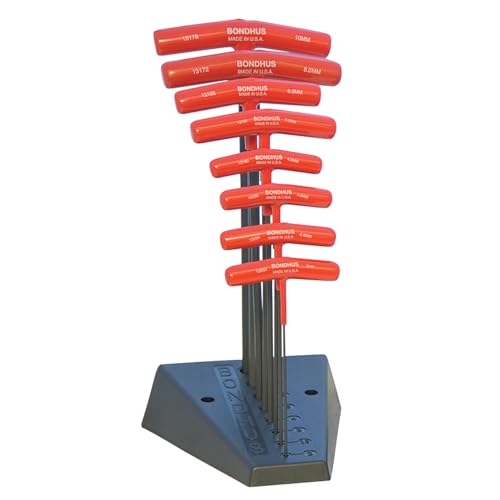
Foil surfing runs on hardware — torqued stainless bolts hold your mast to the board, the wings to the fuselage, and the fuselage to the mast. Undertorqued bolts cause component failures mid-session; overtorqued bolts strip threads. You need the right hex keys, the right torque spec (usually 4–8 Nm for foil bolts), and a travel bag large enough to protect the wings from each other.
Best starter
Bondhus
13189 T-Handle Hex Key Set (Metric)
$
★★★★★Our rating
Foil bolts are typically M6 and M8 hex, and you need a T-handle — not an L-key — to get proper torque without stripping. Bondhus is the professional standard for hex keys; the ball-end tips let you torque at an angle when the mast box is awkward to reach. One set lasts years and fits in your foil bag.
What we like
T-handle gives you feel for proper torque — L-keys lead to over-tightening
Ball-end tips reach bolts at angles in tight mast boxes
Bondhus steel outlasts bargain hex keys by years
What to know
T-handle format is bulkier than an L-key set for travel
Set has many sizes you won't use — 5mm and 6mm are the critical ones
Foilboards take a beating in transit — the mast track box and rails are fragile under load. Ride Engine's Thermal Block uses solar-reflective foam to keep the board cool and prevent delamination in hot car trunks. The 7'10" size fits most foilboards, and it doubles as a surf or SUP board bag when you're not foiling.
What we like
Solar-reflective exterior reduces heat buildup in car trunks
Custom foam padding protects the mast box and board rails
Doubles as a surf or SUP board bag between foiling sessions
What to know
Board bag only — foil components need a separate wrap for air travel
7'10" fits most boards; verify your board length fits before ordering
Most first-time foil surfers expect to be flying by session two. You won't be. Here's the honest picture of what the first month looks like — and why it's worth every crash.
Foil surfing has one of the steepest entry ramps in water sports. The board is unfamiliar, the foil system has four separate components with a torque spec for each bolt, and the moment the wing lifts you above the surface — if you’re unprepared — you lose all control instantly. This is not a sport where you can wing it on day one.
It is, however, a sport where the payoff is real. That first time you feel the board lift off the water and hold — smoothly, steadily, flying — is one of the strangest and most addictive sensations in outdoor recreation. Nobody who makes it to that moment regrets the crashes it took to get there.
Here’s what your first month actually looks like.
Sessions 1–2: Learn the hardware before anything else
Your first session goal is not to fly. It’s to understand your equipment and survive with no injuries.
Before you paddle out, assemble the foil on your kitchen floor and practice the order of operations: fuselage onto mast, front wing into fuselage nose, rear stabilizer into fuselage tail, mast into board track. Torque every bolt to your brand’s spec (usually 4–6 Nm for wing bolts, 6–8 Nm for mast bolts). Do this twice.
On the water, the first thing to notice is how different the board feels with the foil attached. It’s heavier on one end, it tracks differently in the water, and paddling onto a wave requires more commitment than a regular surfboard. You will pearl. The nose will dive, you’ll go over the front, and the foil will surface behind you. This is fine and expected.
Session one success means: you paddled into some waves, you felt the lift engage at the tail, and you made it back to the beach without injuring yourself or anyone else. That’s it.
Sessions 3–6: The first flights (and why they’re terrifying)
Somewhere around session three or four, something different happens. You paddle into a wave at the right angle, your weight is slightly back, and the foil generates enough lift to pop the board an inch above the surface. For approximately half a second, you are flying.
Then you crash.
This is progress. This is exactly what you want.
The problem most beginners have at this stage is over-correction. When the board rises, instinct says to push forward (lean toward the nose) — which drives the front wing down and you back into the water. The correct response is almost nothing: stay centered, let the foil find its equilibrium, and trust the wing to regulate the altitude.
A few techniques that actually help in sessions 3–6:
Bend your knees more than feels natural. Lower center of gravity, more stability, more time to react.
Watch the horizon, not the nose. Your eyes drive your balance. Looking down accelerates the nose-dive.
Let waves do the work. You don’t need to generate speed by pumping at this stage — find a consistent crumbling wave and practice paddling in cleanly. Speed comes from the wave, not from you.
Crash away from the foil. Every time you fall, fall to the side opposite the foil. The wing has edges. Give it space.
By session six, most learners are getting 5–10 second flights on good waves. Not consistent, not controlled — but real.
Sessions 7–15: Building consistency
This is the phase where everything starts to connect, and also where progress can feel frustratingly uneven. Some sessions you’ll string three consecutive flights. Others you’ll crash on every attempt. This is normal.
What you’re actually learning in this phase: altitude control. The foil wants to fly at a specific height — usually 12–18 inches above the surface for a learner wing — and your job is to find and hold that height. Too much back foot pressure and you climb; too much front foot pressure and you drop. The feedback loop is fast, which is why it takes time to internalize.
The other skill developing here is pumping: the rhythmic front-to-back weight shift that generates lift in flat water or between waves. Most learners discover pumping accidentally when they stop paddling and realize the foil kept them up for an extra few seconds. Practice it deliberately. Pumping is what separates foil surfing from just surfing on a raised board.
Around session ten, most learners have their first “connected” run — a flight that lasts 30 seconds or more, where they feel in control for most of it. It’s a qualitative shift. The sport changes from “I’m trying to stay up” to “I’m actually riding this thing.”
The same mistakes show up in almost everyone’s first month:
Paddling onto waves too deep. Foils need a specific angle of attack to generate lift. If you paddle in too far behind the peak, the wave is already breaking over you when the foil tries to lift, and you go backward. Find the shoulder.
Under-torqued mast bolts. The mast carries enormous lateral stress when the foil is generating lift. If the bolts aren’t properly torqued, the mast rocks in the track — you feel a clunking wobble and lose all predictability. Check your torque before every session.
Too much wax. Foilboards need traction pads, not wax. Wax clumps, gets on your wetsuit, and doesn’t bond properly to the harder surfaces foilboards use. Use a proper traction pad.
Surfing alone. You will fall, the foil will surface somewhere unexpected, and the board may hit you. A spotter on the beach or a partner in the water who knows where you are is not optional during the learning phase.
What month two looks like
By the end of your first month — assuming you’ve gotten 10–15 sessions in — you should be consistently flying on the right waves, starting to experiment with direction changes, and beginning to understand what your foil’s geometry actually does.
Month two is when the sport becomes genuinely playful. You start making decisions about where on the wave you want to be, rather than just trying to stay up. You’ll start to feel when a wave is about to die and pump to the next section. The crashes still happen, but they’re less random.
The learning curve is steep and the gear is expensive. But foil surfing rewards patience in a way that almost no other water sport does — because once you’re actually flying, the whole ocean looks different.
Save your money
What you don't need yet
Beginners get pressured to buy a lot of stuff that doesn't help them play
better. Here's what we'd skip on day one.
An efoil (electric hydrofoil) — The motor removes the need for wave energy but adds 40 lbs of battery and $10,000+ to the price. Learn to foil on waves first — it builds better instincts.
A wing foil setup — Wing foiling (handheld inflatable wing) is a related but different discipline. Don't split your learning between two sports at once.
High-aspect performance wings — Small, fast wings with thin profiles need real speed to fly. Until you're consistently staying up for 30-second runs, the learner wing is the right wing.
A GoPro mast mount — Your first months of footage is water splashing over the camera as you fall. Wait until you're consistently foiling before filming sessions.
Custom board shaping — Production boards are better matched to foil geometry than anything a general shaper will dial in without specific foil experience. Ride production first.
First week
Your first seven days
A short, real plan to get from gear-on-doorstep to actually playing.
Book a lesson at a local foil school before buying gear. Two hours with an instructor compresses months of trial and error. · Action
Assemble the foil dry on your kitchen floor and torque every bolt to spec. Learn the assembly order before you're on a wet beach. · Action
Pick a beginner-friendly break: waist-to-chest-high, soft crumble, sandy bottom. Rocky breaks and foils do not mix. · Action
First session goal: get comfortable with the foil in the water. You are not trying to fly on day one — feel how the lift engages. · Action
Never foil alone while learning. The foil is a genuine hazard if you fall badly. · Action
FAQ
Common questions
How much does it cost to start foil surfing?
Realistically $1,200–2,500 for a complete learner setup (foil system, board, wetsuit, safety gear). The foil system alone runs $600–1,200. Price out used gear and take a lesson first before committing to the full kit.
Can I learn foil surfing without lessons?
You can, but we strongly recommend at least one lesson. Foil surfing has a sharp early learning curve, and a good instructor can compress months of trial and error into a single session. The foil is genuinely dangerous — learning proper crash protocol with a certified teacher is worth every dollar.
What's the difference between surf foiling and wing foiling?
Surf foiling uses wave energy to propel you — you paddle into a wave, then the foil lifts you. Wing foiling uses a handheld inflatable wing for power in wind, no waves needed. They use similar hardware but are different skills. Most people start with one and eventually try both.
What kind of waves do I need to learn on?
Waist-to-chest-high, slow-crumbling beach break is ideal. You don't need power — you need consistency and forgiving crashes. Avoid hollow, fast breaks. Flat-water tow-foiling behind a jetski is another popular learning method if consistent waves aren't accessible.
How do I avoid getting cut by the foil?
Always wear your impact vest and helmet. When you fall, fall away from the board and cover your head with your arms. The foil's danger zone is directly under and behind the board — swim clear of it before resurfacing. Many foilers also use a leg leash tethered to the mast so the foil stays close but can't swing at you.
What mast length should a beginner use?
60–75 cm. Shorter masts mean the wings fly closer to the surface — the foil exits the water sooner when you over-pump, rather than launching you skyward. Most beginner packages come with a 65 or 70 cm mast. Don't upgrade to a 90 cm mast until you're fully confident in your control.
Foil.zone — The primary community forum for all foil disciplines — surf foil, wing foil, kite foil, efoil. Use the search before posting; most learner questions have detailed threads from experienced riders.
r/Foiling — Active subreddit with gear advice, crash videos, and session reports. Good for finding local foil communities and reading unsponsored gear takes.
Kai Lenny (YouTube) — One of the world's best all-around watermen and a foiling pioneer. His tutorials are genuinely educational — watch his progression videos for a realistic picture of the learning curve.
International Surfing Association — The ISA governs surf foiling internationally and certifies instructors. Use their directory to find a qualified school near you.
Stoked & Foiling (YouTube) — One of the best YouTube channels dedicated to foil surfing instruction. Thorough gear comparisons, technique breakdowns, and beginner guides without the marketing fluff.
As an Amazon Associate, JustBeginning earns from qualifying purchases.
We may also earn commission from other affiliate programs linked on this
page. Editorial recommendations are independent; we don't choose
products based on commission rates.
Product prices and availability are accurate as of the date and time
indicated and are subject to change. Any price and availability
information shown on Amazon at the time of purchase will apply.


 Best starter