Sailing is one of those skills you don't learn from gear — you learn it from water time, under instruction. But once you've got your first lesson under your belt, the gear question opens up fast: life jacket, foul-weather gear, gloves, shoes. Here's what to buy, what to wait on, and why you don't need to own a boat to fall in love with this sport.
By Colin B. · Published May 24, 2026 · Last reviewed June 11, 2026
Safety gear is non-negotiable — budget at least $150 for a good PFD and gloves. A full first-season kit (PFD, jacket, gloves, shoes) runs $350-450. The boat comes later.
We earn commission on qualifying Amazon purchases — see our
affiliate disclosure.
Price tiers and budget totals shown above are editorial estimates;
actual Amazon prices vary.
At a glance
Our top pick in each category
The fastest path through this guide — each best-starter pick by category.
Scroll for the budget and upgrade alternatives.
Take a lesson before you buy anything except a life jacket. ASA 101 (Basic Keelboat) or a dinghy intro course will show you what gear you actually use on the water — most of it belongs to the boat. Your personal kit starts with safety gear: PFD, foul-weather gear, gloves.
The dinghy vs. keelboat question matters for gear. Dinghy sailing (Laser, Sunfish, small racers) means you'll capsize intentionally in a wetsuit. Keelboat sailing (20+ foot boats that don't capsize) means foul-weather layers over normal clothes. Your course will tell you which world you're entering.
Don't buy at a marina chandlery if you can avoid it — prices run 30-50% higher than online. West Marine is the fallback for emergency items. For your first kit, Amazon and specialty retailers like Defender have everything this guide recommends.
A PFD — personal flotation device, life jacket — is the one piece of gear you own before everything else. Sailing schools provide them, but you should own one that fits you, not a loaner that fits everyone. For beginners, a foam Type III is the honest recommendation: no CO2 cartridge to arm, no oral inflation tube to remember, no annual inspection required. Just put it on and it works. Inflatable PFDs look sleeker and pack smaller, but they require annual maintenance and will fail if the cartridge is expired or wet when it shouldn't be. Get comfortable on the water first, then consider an inflatable.
PFDs — what's the difference?
A few common shapes, each making a different trade.
Type III Foam
Beginner's choice — zero maintenance, always works.
Buoyancy
15.5 lbs minimum
Maintenance
None required
Profile
Bulky
Best for First season, inland and coastal sailing, lesson days
Tradeoff Less comfortable for long passages than inflatable
Tethered safety for bluewater — not a beginner item.
Buoyancy
35+ lbs
Maintenance
Annual inspection
Profile
Slim with harness
Best for Offshore passages, ocean racing, bluewater cruising
Tradeoff Expensive and specialized — overkill until sailing past sight of land
Best starter
Onyx
MoveVent Dynamic Paddle Sports Life Vest
$$
★★★★★Our rating
The MoveVent's articulated foam panels give you full arm mobility — you can grind a winch, pull a halyard, and trim a sail without feeling trapped. Coast Guard Type III approved, fits comfortably over foul-weather gear, and never needs rearming. Our top pick for anyone in their first season on the water.
What we like
Articulated foam panels — full arm range of motion while sailing
No cartridge to re-arm, no annual inspection — it just works
Coast Guard Type III approved, fits over foul-weather layers
What to know
Bulkier than inflatable PFDs — takes some getting used to
Runs warm in summer — less comfortable in July and August
The cheapest Coast Guard Type III life jacket worth buying. Less articulated than the Onyx but entirely functional for calm-water sailing and lesson days. If you're not yet sure sailing is your sport, this gets you legal and safe for under $30.
What we like
Under $30 — lowest-cost path to a legal, functional PFD
Durable foam construction — will outlast a decade of casual use
What to know
Limited arm mobility — genuinely restricts active sailing movements
Bulky fit — uncomfortable for all-day wear underway
Once you're sailing regularly — offshore passages, racing, extended cruising — an inflatable makes more sense. The MIT 70 auto-inflates on water contact, packs to fanny-pack size, and stays comfortable for 8-hour passages. Annual inspection takes 5 minutes. Wait until you've logged 20+ hours before buying this.
What we like
Auto-inflates on water contact — protection you don't have to remember
Packs to fanny-pack size — barely notice it after the first hour
What to know
Annual inspection and re-arming required after any deployment
Will not deploy correctly if the CO2 cartridge is expired or corroded
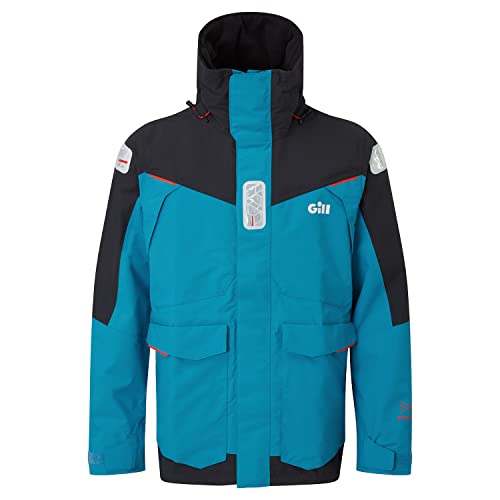
Sailing makes you wet even in good weather — spray off the bow, cockpit drains, rain squalls that appear from nowhere. Foul-weather gear is the jacket that keeps you dry enough to stay comfortable and warm enough to stay safe. Entry-level gear works fine for coastal sailing in mild conditions. Anything offshore, overnight, or in cold climates warrants real sailing kit from Gill, Musto, or Helly Hansen. Don't cheap out on foul-weather gear for genuinely harsh conditions — hypothermia doesn't care about your budget.
Best starter
Helly Hansen
Pier 3.0 Jacket
$$$
★★★★★Our rating
Helly Hansen is a legitimate sailing brand worn by offshore crews worldwide, and the Pier 3.0 is their coastal entry point. Helox waterproofing, taped seams, high collar, and sealed cuffs. Not as bombproof as their offshore line, but genuinely waterproof for lesson days and fair-weather coastal sailing.
What we like
Helox waterproofing with taped seams — stays dry in sustained spray
High collar and sealed cuffs block the cold that gets everyone eventually
Helly Hansen is the brand offshore racing crews actually wear
What to know
Coastal-grade — not rated for sustained offshore squalls
Pricier than generic rain jackets, but you feel the difference fast
Not a sailing jacket — but it's genuinely waterproof, widely available, and costs under $60. For lesson days and summer coastal sailing where spray is light and you're never far from shore, it works fine. Replace it with real sailing gear once you're hooked.
What we like
Under $60 and genuinely waterproof for mild conditions
Available everywhere — easy return if sizing is off
What to know
No sailing-specific collar or wrist seals — gaps in rough water
You'll replace it within a season if sailing becomes your thing
The OS2 is what serious cruisers and racing crews actually wear. 2.5-layer waterproof-breathable fabric, fully taped seams, integrated hood, adjustable cuffs, and waterproof zippers. When you're 20 miles offshore and a squall appears, you want this jacket. It'll outlast three cheaper ones.
What we like
2.5-layer waterproof-breathable fabric — stays dry without sweating through
Fully taped seams and waterproof zippers — no leak paths anywhere
The brand race crews and bluewater cruisers genuinely choose
What to know
Expensive — significant overkill for lesson days and coastal day sailing
Heavy and technical — more jacket than most beginners will ever need
Sheets, halyards, and dock lines are rough on hands — especially on your first few sails before you build calluses. Sailing gloves protect your palms, improve grip on wet lines, and take about one session to feel natural. Full-finger gloves are better for cold weather and general line-handling; three-finger (cut off the index and middle fingertip) give more dexterity for electronics and instruments in warm conditions. Most beginners start full-finger and switch once they know what they prefer.
Best starter
Gill
Championship Long Finger Sailing Glove
$$
★★★★★Our rating
Gill is the standard in sailing gloves — the Championship Long Finger is what sailors hand new crew when they show up unprepared. Amara leather palm for grip on wet lines, neoprene back for warmth, adjustable wrist strap. Lasts two full seasons of regular sailing if you rinse them after use.
What we like
Amara leather palm grips wet sheets better than bare hands
Neoprene back keeps hands warm in cold cockpits and spray
The glove sailing crews actually reach for — proven on real boats
What to know
Full finger limits fine dexterity for instrument and phone use
Amara palm wears through in 1-2 seasons of heavy-duty line work
Short-finger gloves cover about 3/4 of each finger — enough protection on lines, enough dexterity for instruments, chartplotters, and touchscreens. The Deckhand's Amara palm matches the Championship in grip quality. Popular in warm climates where full-finger feels stifling. Buy these after a few sessions in the Championship; you'll know if you want more hand freedom.
What we like
3/4-length fingers balance line grip with instrument dexterity
Same Amara leather palm as the Championship — grips wet lines equally well
What to know
Less cold protection than full-finger — wrong call below 60°F
Shorter finger coverage wears through faster on rough anchor lines
Wet fiberglass decks are treacherous, and the wrong footwear on a heeled-over sailboat has put sailors in the water. You need non-marking, non-slip soles — the white rubber that grips wet surfaces without leaving scuff marks on the deck. Regular sneakers have black rubber that marks fiberglass; hiking boots have lug soles that catch cleats and lines dangerously. Boat shoes (Sperry, Sebago) work beautifully in warm, dry conditions. In cold or consistently wet conditions, dedicated sailing boots are worth the investment.
Best starter
Sperry
Top-Sider Authentic Original Boat Shoe
$$
★★★★★Our rating
The Authentic Original is genuinely the canonical boat shoe — invented in 1935 specifically for sailing, still the correct answer for warm-weather deck work. Non-marking siping sole, 360-degree lacing system, and leather that gets better with salt water. Every sailing school recommends these or an equivalent.
What we like
Siping non-marking sole designed specifically for sailing — 70-year pedigree
Leather uppers grow more comfortable and water-resistant with use
Acceptable ashore too — doesn't scream nautical off the dock
What to know
Not waterproof — wet feet in rain and sustained spray
Cold-water sailing requires boots; these are fair-weather footwear
When you're racing or sailing in cold, wet conditions, you want a boot built for the job. The Race Boot has a non-marking sole, ankle support on a heeled deck, and a neoprene-lined shaft that keeps your feet functional in 50°F conditions. Also excellent for coastal cruising in autumn and early spring.
What we like
Neoprene lining keeps feet warm and functional in cold, wet cockpits
Ankle support matters when the boat heels 20-plus degrees
Non-marking sole on a boot — handles the dock and the open water
What to know
Too hot and heavy for summer sailing — purely a cold-season item
Higher investment — buy once you know your sailing season extends past summer
A handheld VHF radio is the most important safety item after your PFD. VHF Channel 16 is the international distress and hailing channel — monitored by the Coast Guard and every vessel at sea. If your engine fails, someone gets hurt, or you need assistance, VHF is how you call for it. Cell phones don't work offshore, and even in coastal waters a VHF reaches where your phone can't. Every sailor should own one before leaving sight of shore. The other item worth having from day one: a whistle clipped to your PFD. It's the lowest-tech, highest-reliability emergency signal available.
Best starter
Uniden
MHS75 Handheld Floating VHF Radio
$89.99 as of Jun 22, 2026
★★★★★Our rating
The MHS75 floats when knocked overboard, is waterproof to JIS7 standard, transmits at 5W for Coast Guard range, and costs under $70. It's the beginner's answer to VHF — straightforward, durable, and does the one job it needs to do without requiring a manual.
What we like
Floats when dropped overboard — the feature that matters most
5W power reaches the Coast Guard and nearby vessels offshore
Under $70 — no excuse not to own one before going offshore
What to know
Battery degrades over 2-3 seasons — plan to replace eventually
No integrated GPS — step up to the HX890 for that feature
★★★★☆Our rating· Only 13 left in stock - order soon.
Once you're sailing regularly offshore, a built-in GPS transforms your VHF from a radio into a navigation safety tool. The HX890 sends your GPS position automatically in a DSC distress call — one button tells the Coast Guard exactly where you are. The most important upgrade a solo or offshore sailor can make.
What we like
Built-in GPS sends exact position in a DSC distress call automatically
DSC capability — the international digital standard for maritime safety
Standard Horizon is the most trusted name in handheld marine VHF
What to know
Costs 3x more than the budget VHF — overkill for coastal day sailing
More complex interface — practice using it before you need it under stress
A pealess whistle produces a reliable signal even when fully wet — traditional pea whistles clog with salt water and stop working. Clip one to your PFD before every sail. It's the $10 piece of safety gear that costs nothing to carry and could make the difference if you end up in the water.
What we like
Pealess design works when wet — traditional whistles fail in salt water
Clips directly to your PFD — with you if you go in the water
What to know
Only audible within a few hundred yards in calm conditions
Not a substitute for VHF or PLB in serious offshore situations
Sailing has a real learning curve — but the first season is mostly about getting comfortable on the water, not mastering the boat. Here's how to spend it well.
Sailing is one of the few hobbies where the skill gap between day one and day thirty is enormous — and that gap is mostly the fun part. Your first season is not about becoming a sailor. It’s about becoming someone who is comfortable on a boat, can read wind on the water, and knows what they don’t know yet. That last one matters more than it sounds.
This is what a well-spent first sailing season looks like: how to get instruction, what to practice, where to crew, and when to start thinking about actually buying a boat.
Step zero: take a real course
You cannot learn sailing from YouTube the way you can learn to change a tire or cook pasta. The variables — wind, current, heel angle, point of sail, traffic — interact in ways that require someone beside you on the boat, in real time, saying “ease that sheet” or “you’re headed.”
The American Sailing Association’s ASA 101 Basic Keelboat course is the standard starting point for adults. It covers points of sail, basic maneuvering, docking, anchoring, and safety. Most schools complete ASA 101 in a weekend. Cost runs $400-600 depending on location. The certification matters because it’s internationally recognized — an ASA 101 card gets you into most charter operations in the US, Caribbean, and Europe.
If a full certification feels like too much commitment for a first taste, many sailing clubs offer intro days — two or three hours on the water with an instructor, no obligation. Do this first if you’re unsure sailing is for you. Most people who do it come back.
After your first lesson, you know how to steer and roughly how to trim a sail. What you don’t yet have is the automatic sense of wind direction — what sailors call “reading the water.”
Wind isn’t invisible on the water. Look for:
Cat’s paws — small dark ripples spreading across the surface. That’s a puff of breeze. If you’re heading toward it, tighten up; if it’s coming from behind, ease and let it push you.
Wind on your face — the simplest indicator. Wet your hand, hold it up. The cool side is upwind.
The telltales on your sail — small yarn or ribbon attached to the sail cloth. Both sides should flow straight back. If the leeward (downwind) telltale drops, you’re overtrimmed. If the windward one drops, you’re undertrimmed.
Other boats — which way are they heeled? Where’s their bow pointing? Water reads boats better than it reads you.
Spend your first few months noticing wind constantly. On the street, in the park, at dinner — what’s the wind doing, where’s it coming from, how strong? This sounds obsessive. Sailors are a little obsessive. It becomes second nature.
The first three months: crew on other people’s boats
The fastest way to advance past beginner sailing is to crew on boats that are sailed better than you sail. Most sailing clubs have racing programs — Wednesday night races, weekend regattas — and they’re perennially short-handed. You don’t need to be fast or skilled to crew. You need to show up, be quiet when experienced sailors are working, and listen.
Crewing teaches you things no course does:
Real boat speed. You’ll feel the difference between a properly trimmed boat and a sloppy one. The faster ones hum. The slower ones wallow.
Reading other sailors. Watch how the skipper reads a shift, calls a tack, decides when to hoist the spinnaker. This is sailing judgment — the part that takes years, but starts accumulating from your first race.
The language. Sailing has specific vocabulary for a reason — ambiguity on a boat is dangerous. You’ll absorb the right words faster by hearing them used in context than by studying a glossary.
Most clubs have “crew wanted” boards, email lists, or social media groups. Ask at the bar after racing. Skippers with shorthanded boats are grateful for reliable crew who ask good questions and don’t make extra work.
Beginners often focus on the wrong things. The skills that actually make you a better sailor, in order of importance:
1. Helm time. Just steering. Keeping the boat at a consistent angle to the wind. This feels trivial and is actually surprisingly hard to do well in changing conditions.
2. Understanding sail trim. A well-trimmed sail is the difference between a boat that powers upwind and one that slides sideways. On a keelboat, you control the mainsail with the mainsheet (pulling in = trim, easing out = ease) and the jib with the jib sheets. Learn what “stalled” feels like versus “powered.”
3. Tacking and jibing without drama. Tacks (turning the bow through the wind when going upwind) and jibes (turning the stern through the wind when going downwind) are the two basic maneuvers. Make them smooth and controlled. A ragged jibe with a flogging mainsail in a blow is how beginners get hurt.
4. Docking. The skill that causes more embarrassment than any other. Sailboats don’t have brakes. You approach a dock slowly, accounting for wind and current, and you have one chance to get it right. The instinct to use the engine to stop the boat is correct — you’ll practice this until it’s routine.
5. Understanding weather. You don’t need to read synoptic charts on day one. You do need to understand what a building sea breeze looks like, why the wind often drops after sunset, and what a line of cumulus on the horizon might mean. Learn to use Windy or Passage Weather before every sail.
The middle of the season: start thinking about what kind of sailing you want
Sailing is not one sport. It’s several sports that happen to use the same equipment:
Racing — competitive, tactical, demanding physically and mentally. Most accessible through club racing on someone else’s boat.
Cruising — point-to-point passages, overnight trips, anchoring in coves. More about seamanship, navigation, and self-sufficiency than speed.
Dinghy sailing — small, responsive, easy to capsize. Closer to windsurfing in feel. Often the fastest skill-builder.
Day sailing — casual exploring with no destination in mind. The majority of sailing that actually happens.
By mid-season, you’ll have a sense of which direction pulls you. It matters for what certification to pursue next (ASA 103 Basic Coastal Cruising, ASA 104 Bareboat Chartering, US Sailing racing certifications), what gear to buy, and ultimately what kind of boat makes sense if you ever buy one.
At least 20-30 hours of actual helm time — not as crew watching someone else sail, but your hands on the wheel or tiller.
One certification (ASA 101 minimum, ASA 103 if you’re serious about cruising)
A club, school, or regular crew situation — somewhere to keep sailing without having to start over every time
A sense of what’s next — racing? Cruising? Owning a dinghy for the lake? Chartering in the Caribbean next winter?
What you don’t need at the end of your first season: a boat. Most experienced sailors will tell you to wait at least a year before buying. The boat you want on day 30 is rarely the boat you want on day 300. Sailing clubs often have boats you can use for cheap; many areas have fractional boat ownership programs. The water will still be there.
Save your money
What you don't need yet
Beginners get pressured to buy a lot of stuff that doesn't help them play
better. Here's what we'd skip on day one.
A boat — Spend your first season crewing on other people's boats and doing club racing as crew. You'll learn ten times faster and decide exactly what kind of boat you actually want before spending the money.
A personal EPIRB or PLB — Essential for bluewater offshore sailing, complete overkill for coastal day trips. Get one when you're sailing offshore beyond VHF range.
Offshore harness and tether — The harness that clips you to the boat and prevents falling overboard offshore. Unnecessary for coastal day sailing where rescue is never far away.
Full sailing bibs — The waterproof pants that match your foul-weather jacket. Worth the investment in cold climates or extended offshore sailing — skip until your second season unless sailing October through March.
Chartplotter or dedicated GPS — A handheld VHF with GPS handles navigation for your first season. Dedicated chartplotters are for when you're navigating coastlines solo and independently.
Sailing instruments — Wind speed, depth sounder, and boat speed displays live on the boat — not in your kit. The boat you're crewing on or chartering already has them.
First week
Your first seven days
A short, real plan to get from gear-on-doorstep to actually playing.
Book an ASA 101 Basic Keelboat or local dinghy intro course — sailing is one of the skills you genuinely have to learn with an instructor. · Action
ASA School Finder · American Sailing Association's official school directory
Buy a life jacket that fits you. Don't sail indefinitely on borrowed school PFDs. · Buy
Find your nearest sailing club and ask about crew positions — most clubs have beginner crew nights where experienced skippers want extra hands and are happy to teach. · Action
Read The Annapolis Book of Seamanship — the most useful sailing reference ever written for people serious about learning the craft. · Learn
FAQ
Common questions
Do I need to own a boat to learn sailing?
Absolutely not. Most sailors spend their first year or two crewing on other people's boats, taking lessons, and doing club racing. You learn faster without the distraction of ownership, and you'll know exactly what kind of boat you want when you're ready to buy.
What's ASA certification and do I need it?
ASA (American Sailing Association) certification is a recognized standard that lets you charter boats worldwide. ASA 101 covers basic keelboat sailing. A local lesson is fine for getting started, but certification opens the door to chartering in the Caribbean, Mediterranean, and beyond. Get certified — it opens the world.
Dinghy or keelboat — which should I learn on?
Both have merits. Dinghies teach faster instincts because capsize is real and immediate — you learn heel, wind, and trim quickly. Keelboats are more comfortable and closer to what most adult beginners eventually want to sail. Your local sailing school will steer you based on what's available.
How much does it cost to get into sailing?
An ASA 101 course runs $400-600 depending on location. Your personal gear kit (PFD, gloves, jacket, shoes) costs $150-400. You don't need to spend anything on a boat until you're sure sailing is your sport — club racing and chartering can extend that timeline for years.
Is sailing dangerous for beginners?
Coastal sailing in fair conditions with proper instruction is quite safe. The primary risks are preventable: wear your PFD, understand the weather forecast, stay in sight of shore until you're confident, and carry a VHF radio. Offshore sailing carries more serious risks that come with experience and proper equipment.
How fit do I need to be to start sailing?
Casual keelboat sailing is low-impact — most of the work is trimming lines and steering. Racing and dinghy sailing demand more athleticism (hiking out on a dinghy is a real workout). Start wherever your fitness is; sailing builds boat-specific strength over time.
American Sailing Association (ASA) — The most recognized sailing certification body in the US. Their school finder and course catalog is where you start.
US Sailing — The national governing body for sailing in the US. Club racing directory, safety standards, and race results.
Practical Sailor — The Consumer Reports of sailing gear — rigorous product testing, independent reviews, no advertising conflicts. Bookmark this before buying any safety equipment.
Sailing World — Racing-focused magazine. Good for technique and boat reviews once you're past beginner stage.
Cruising World — For the offshore and liveaboard side of sailing. Deep dives on passages, gear, and the cruising lifestyle.
Sailing Anarchy — Industry-leading news and commentary. Gear reviews, race coverage, and the blunter side of sailing culture.
The Annapolis Book of Seamanship — The most comprehensive sailing reference for beginners and beyond. Buy this alongside your first PFD.
As an Amazon Associate, JustBeginning earns from qualifying purchases.
We may also earn commission from other affiliate programs linked on this
page. Editorial recommendations are independent; we don't choose
products based on commission rates.
Product prices and availability are accurate as of the date and time
indicated and are subject to change. Any price and availability
information shown on Amazon at the time of purchase will apply.
Our top pickOnyx MoveVent Dynamic Paddle Sports Life Vest


 Best starter