Welcome to one of the most passionate collector communities on earth. The good news: you don't need the latest limited drop to get started. The real game is knowing what you have, how to keep it fresh, and how to spot a fake at fifty feet.
By Colin B. · Published May 23, 2026 · Last reviewed June 8, 2026
The shoes are the expensive part. The gear to maintain and display them is surprisingly reasonable: a solid cleaning kit, a few display boxes, and a protection spray runs well under $130.
We earn commission on qualifying Amazon purchases — see our
affiliate disclosure.
Price tiers and budget totals shown above are editorial estimates;
actual Amazon prices vary.
At a glance
Our top pick in each category
The fastest path through this guide — each best-starter pick by category.
Scroll for the budget and upgrade alternatives.
The shoes themselves are the hardest part to buy well. Limited drops sell out in seconds; resale prices move like stocks. Start by buying what you actually like to wear (colorways and silhouettes you'd reach for) rather than chasing investment value. Taste comes before portfolio.
Authentication matters from day one. Even if you're buying from a reputable source, knowing how to spot a fake is a skill that protects you for life. Learn it on cheap pairs before you're dropping real money.
Pick a focus and stick to it. The most interesting collections have a point of view: one brand, one era, one silhouette, one colorway. A focused collection of 20 pairs beats a scattered wall of 60.
Cleaning sneakers is the single most important maintenance skill. Done right, a 10-year-old pair looks fresh. Done wrong, you damage the material and set yellowing in worse. The right kit depends on what you're cleaning: mesh and canvas tolerate wet scrubbing; leather needs gentler treatment; suede and nubuck must be cleaned dry. Buy for your collection's dominant material: most beginners have mostly mesh and canvas, which means Reshoevn8r is your answer.
Cleaning Kits — what's the difference?
A few common shapes, each making a different trade.
Universal (Mesh & Canvas)
Wet scrub with solution and brush. Works on most sneakers.
Materials
Mesh, canvas, rubber
Method
Solution + brush
Risk level
Low
Best for Running shoes, Chucks, Air Force 1 uppers, most Jordans
Tradeoff Too harsh for suede, skip this on napped materials
Gentle cleaner plus conditioner to prevent cracking.
Materials
Smooth leather, patent
Method
Damp cloth + conditioner
Risk level
Low-medium
Best for Leather Jordans, AF1s, dress sneakers, patent collabs
Tradeoff Skipping conditioner dries leather and causes cracking over time
Suede & Nubuck
Dry brush and eraser only: water damages the nap permanently.
Materials
Suede, nubuck
Method
Dry brush + suede eraser
Risk level
High if wet
Best for Yeezys, Timberlands, suede Sambas, nubuck Nike models
Tradeoff One wet scrub can permanently mat the nap, buy a dedicated suede kit
Best starter
Reshoevn8r
3 Pc Starter Shoe Cleaning Kit
$$
★★★★★Our rating
The go-to cleaning kit in the sneaker community for good reason. Three brush sizes (soft for uppers, medium for midsoles, stiff for outsoles) paired with a plant-based solution safe on virtually every material except suede. The 3oz kit is the right size to learn technique before committing to a larger bottle. This is what the community converged on, and they're not wrong.
What we like
Three brush sizes tackle every zone of the shoe systematically
Plant-based formula safe on mesh, canvas, leather, and rubber
Community standard: a decade of sneakerhead consensus
What to know
Not for suede or nubuck: solution damages the nap
3oz runs out if cleaning multiple pairs in one session
Jason Markk is where you go when your collection gets more expensive. The Essential Kit's formula is gentler on luxury materials (designer collabs, fragile textiles, premium leathers) and the brush bristles are noticeably softer. Worth the step up once your collection has pairs you'd be devastated to damage. The 4oz bottle lasts a long time.
What we like
Gentler formula: safe on fragile textiles and designer materials
4oz bottle lasts through dozens of cleaning sessions
What to know
Twice the price of Reshoevn8r for similar results on most shoes
Overkill for canvas and rubber-heavy everyday pairs
When you need a quick clean between sessions (after a dusty day, before a meetup, on the road), individually packaged wipes beat hauling a full kit. Not a replacement for deep cleaning, but a genuinely useful tool for keeping things presentable between sessions. Toss a few in your bag.
What we like
Individually wrapped: toss a few in your bag for on-the-go touch-ups
No water or brushes needed, wipe and done in 60 seconds
What to know
Surface-level only: won't remove midsole yellowing or deep scuffs
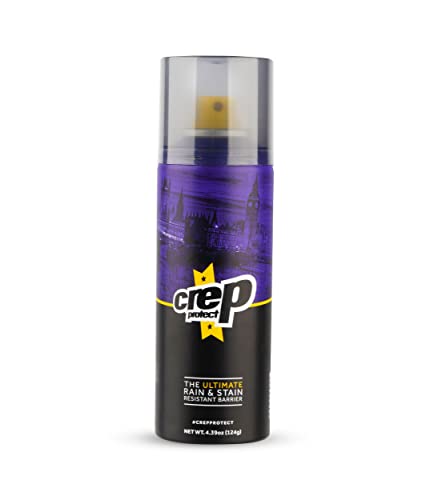
Protection goes on before the first wear, not after the first scuff. A good water and stain repeller bonds with the material and dramatically reduces how much effort every future cleaning session takes. The best collectors treat every new pair before they leave the box. Crep Protect is the community favorite: it doesn't change how shoes look or feel, and it genuinely works on every major material.
Best starter
Crep Protect
Shoe Protector Spray
$16.00 as of Jun 22, 2026
★★★★★Our rating· In Stock
The community standard for sneaker protection. Apply two coats before the first wear, let dry, and your shoes shed water and resist stains with almost no effort. Works on mesh, canvas, leather, and suede without altering texture or sheen. Reapply every few weeks of regular wear: it's a habit worth forming.
What we like
Works across all materials: mesh, canvas, leather, and suede
Invisible barrier doesn't change texture or sheen
Community-verified formula trusted by collectors worldwide
What to know
Strong smell during application: spray outdoors or in ventilated area
Needs reapplication every few weeks on frequently-worn pairs
Half the price of Crep Protect, and genuinely effective on canvas and mesh. Not as well-optimized for sneakers specifically, but Scotchgard has been waterproofing fabrics for decades and the formula is proven. A sensible starter option while you're building your collection and technique.
What we like
Half the cost of Crep Protect for similar canvas and mesh results
Large can lasts through many pairs, excellent value per application
What to know
Not sneaker-specific: test on a hidden area before full application
★★★★☆Our rating· Only 2 left in stock - order soon.
Angelus is the most trusted brand in sneaker customization and restoration. Their water repeller is formulated for premium materials (luxury leather, fragile textiles, expensive collabs) where standard sprays might slightly affect the finish. If you're protecting a $400 pair, use Angelus.
What we like
Trusted by sneaker customizers for fragile and luxury materials
Preserves finish on premium leathers better than generic sprays
What to know
Premium price: overkill for everyday canvas and mesh pairs
How you store shoes determines whether you have a collection or a pile. The clear plastic box is the standard: see every pair at a glance, stack uniformly, and protect shoes from dust and humidity. Deadstock pairs stay in their original box inside a clear display (the double-box method). Pairs you wear rotate to a separate accessible shelf. Start simple with a case of clear boxes and grow the system as the collection grows.
Best starter
IRIS USA
Clear Shoe Storage Box (4-Pack)
$
★★★★★Our rating
The most popular clear shoe box on Amazon for good reason: consistent sizing, reliable stackability, and the lid snaps shut without a fight. Get a 12-pack to start: you'll fill them faster than you expect. A collection without uniform boxes looks chaotic; these fix that immediately.
What we like
Full visibility from any angle: see every pair without opening boxes
Stacks securely and holds up under multiple boxes of weight
Consistent sizing you can reorder and match existing stock
What to know
May not fit men's size 13+: measure before buying in bulk
Lids can crack if stacked too high or loaded with heavy items
★★★★☆Our rating· Only 13 left in stock - order soon.
A front-drop-door version that lets you pull any pair without unstacking everything above it. Slightly flimsier than IRIS but noticeably more convenient when you're rotating pairs daily. Better for active wear rotation than static deadstock display.
What we like
Drop-front door: grab any pair without unstacking the entire column
Cheaper per unit than IRIS, smart choice for casual rotating pairs
What to know
Flimsier construction: not great for long-term deadstock storage
Drop door loosens noticeably with frequent daily use
When you have a pair worth showcasing (a grail, a collab, a sample), a proper acrylic display case is how you do it. UV-protective acrylic keeps the shoe visible from all angles while blocking the light that accelerates yellowing. Use one or two of these for hero pairs; clear boxes for the rest.
What we like
UV-protective acrylic slows light-induced yellowing on display pairs
360-degree visibility: shows off a grail from every angle
What to know
Acrylic scratches easily: microfiber cloth only for cleaning
Premium price means you'll use one or two, not an entire wall
Fakes have gotten frighteningly good. A replica Jordan today can fool the casual eye and even some resale platforms' photo review. Authentication is a skill that takes time to build, but the tools are cheap and the basics catch most fakes. Every collector should own a UV blacklight (checks UV reactive stamps on midsoles), a digital caliper (measures sole thickness against documented specs), and a loupe (examines stitching, texture, and tag printing under magnification).
Best starter
Morpilot
UV Blacklight Flashlight (51 LED)
$
★★★★★Our rating
Most Nike and Jordan midsoles carry UV-reactive stamps only visible under blacklight, and replicas routinely miss or botch these. A UV flashlight catches this in three seconds. It's the easiest auth check to run, catches a large percentage of fakes, and costs less than a decent lunch. Buy this before you buy anything secondhand.
What we like
Catches UV stamp fakes in seconds, the fastest authentication check
Works on most Nike, Jordan, and Adidas midsoles
Under $15, the highest ROI tool in your authentication kit
What to know
UV stamps vary by year: need a model-specific reference to compare
Won't catch pairs where UV stamp is correct but stitching isn't
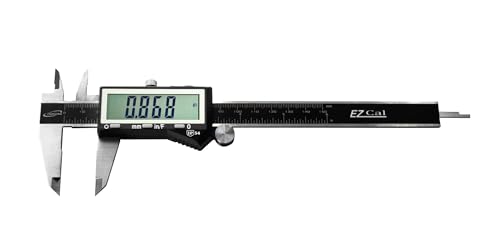
Replica manufacturers consistently cut corners on midsole thickness: it's expensive to get right. Measuring a pair against documented specs (available on Legit Check) is one of the most reliable physical checks you can run. Accurate to 0.001 inch, costs under $20, and gives you hard data instead of guesswork.
What we like
0.001-inch accuracy reveals sole thickness shortcuts on replicas
Under $20 and useful across dozens of different sneaker models
What to know
Requires knowing the correct spec per model and year, homework required
Adds time to the check: not a quick glance, needs setup
Stitching, font, tag printing, and texture details that look fine to the naked eye fall apart at 30x magnification on replica pairs. Real Jordans have tight, consistent stitching; most replicas don't. Real Nike tags have specific font spacing and ink quality that fakes replicate poorly. The loupe is your final check when everything else passes.
What we like
Stitching and font errors invisible to the naked eye appear at 30x
Built-in LED illuminates the inspection area even in dim conditions
What to know
Requires reference photos to know what 'correct' looks like per model
Learning curve: takes a few authentic pairs to calibrate your eye
Most new collectors buy the wrong things first. Here's the order of operations (what to learn, what to buy, and what to ignore) in the first 30 days.
Sneaker collecting has a reputation for being about hype (about bots, limited drops, and resale math). That’s real, but it’s also the part that drives people away. The better version of this hobby is simpler: you build a collection of shoes you genuinely love, you learn to keep them looking fresh, and you develop the eye to know what’s real and what isn’t.
The first month is about building that foundation. Here’s what it actually looks like.
Week 1: Buy intentionally, not reactively
The worst thing you can do in week one is try to catch a limited drop. You don’t have the authentication skills yet, you don’t have a point of view yet, and you’ll almost certainly overpay.
Instead, spend this week figuring out what you actually like. Go to a Foot Locker, a DSW, a local sneaker boutique. Handle things. Try silhouettes. Notice what you keep looking back at after you walk away.
What to buy in week one:
One pair that represents what you’d actually wear: a silhouette you already reach for or have always wanted
The Reshoevn8r 3oz Starter Kit, before the shoes arrive
A can of Crep Protect spray
A 12-pack of clear shoe boxes
Apply the Crep Protect before the first wear. This is not optional: you can’t undo the first scuff.
Clean the shoes after the first wear, even if they look fine. This is how you build the habit. Mix a small amount of Reshoevn8r solution with water, scrub with the medium brush on the midsole, the soft brush on the upper, and wipe with a clean cloth. Let them air dry. Box them. Done.
The routine takes 10 minutes. If you don’t establish it in week one, you’ll skip it in week three, and then you’ll have a pair with set-in scuffs you’re annoyed about.
Week 2: Learn to authenticate
Before you buy anything secondhand, you need to be able to read a fake.
The good news: most fakes fail obvious checks. The bad news: some don’t, and the ones that don’t are the ones people try to sell you for real money.
The basic authentication stack:
Start with Legit Check (legitcheck.app). Search the exact model you’re buying. The guides show exactly what to look for: the font on the tag, the shape of the toe box, the stitching count on the heel. Bookmark the page for every silhouette you’re considering buying.
For anything over $100, add hardware:
UV blacklight: reveals the UV-reactive stamps on Nike and Jordan midsoles. Shine it on the midsole of an authentic pair you own first, so you know what it should look like.
Digital calipers: midsole thickness is one of the most commonly botched measurements on replicas. Check against the documented spec on Legit Check.
Post photos to r/Sneakers before you buy. Not after. Before. The thread regulars are fast and accurate, and they’ll tell you within minutes if something’s off.
The platforms:
StockX: authentication-verified on purchase. You’re paying a premium for the guarantee, but for first-time buyers it’s worth it.
GOAT: similar model, slightly different fee structure. Both are safer than eBay for new collectors.
eBay: more risk, more reward. Once you can authenticate independently, eBay prices are often better. Not yet.
Week 3: Build a point of view
The most interesting collections have a thesis. Not “I like sneakers”, but something more specific.
Some examples of theses that work:
One brand, all eras: every colorway of the Air Force 1, from 1982 to now
One colorway across silhouettes: Triple White only, across every brand
One decade: everything from the Jordan III through Jordan VII, the original Tinker Hatfield run
One function: hiking-boot-adjacent sneakers. Trail runners. Court shoes only.
You don’t have to commit to a thesis in week three. But start noticing what you keep coming back to. The pairs that excite you the most. Is there a pattern? The thesis usually reveals itself by pair six or seven.
What the thesis does: it makes buying decisions easier (does this fit the collection?), makes the collection more interesting to look at (it has a logic), and makes you a more credible seller if you ever trade up.
Week 4: Start rotating properly
By week four, you probably have three to five pairs. This is when storage and rotation start to matter.
The system:
Display pairs (shoes you love but wear rarely): stay boxed in their IRIS clear boxes, stacked in a cool, dry location out of direct light. One silica gel packet per box slows yellowing.
Rotation pairs (what you’re actually wearing): live on a shelf in order of last worn, so you’re cycling through instead of always reaching for the same two pairs.
Deadstock pairs (unworn, stored for value or sentiment): original box inside the clear box. The double-box method.
Inventory: Start a spreadsheet. At minimum: model, colorway, size, condition grade (DS / VNDS / Worn), and purchase price. Add StockX current bid as a reference column if you want to track value. The spreadsheet matters when you eventually want to trade or sell: you’ll know exactly what you paid and what you have.
The yellowing clock: White midsoles on Nike Air units begin oxidizing from the moment of manufacture. UV light and heat accelerate it. A white-soled pair stored in a dark, cool box will yellow slower than one on a sunlit shelf. This is not hypothetical: you can see the difference on the same colorway with different storage histories.
What changes after month one
By the end of the first month, a few things should be true:
You have a cleaning routine you actually do
You can authenticate a standard Jordan or Nike colorway without looking everything up
You have a sense of what kind of collector you’re becoming
You have not bought anything in a panic, chased a drop you didn’t land, or paid 2x retail for something you could have found at retail with patience
The last point matters. The sneaker market rewards patience and penalizes panic. The pair you missed this week will come back around: in a different colorway, a different size run, a restocked retailer. It almost always does.
Save your money
What you don't need yet
Beginners get pressured to buy a lot of stuff that doesn't help them play
better. Here's what we'd skip on day one.
A sneaker bot — Bots are for resellers, not collectors. Build taste and a relationship with local shops first: that's how you actually score what you want.
Crease guards or toe box shields — Functional for beaters but unnecessary on display pairs. You don't need them until you're protecting shoes you genuinely can't replace.
Professional restoration service — Wait until you have a pair worth $200+ to restore. Learning basic cleaning yourself is more valuable than outsourcing it on cheap pairs.
A dedicated display shelving unit — A wall-mounted display system looks incredible, but 12 clear boxes stacked against a wall do the same job for $30 while you figure out your space and focus.
Limited-edition hype drops — The most desired releases are also the most replicated. Build authentication skills on older models before spending real money on limited pairs.
First week
Your first seven days
A short, real plan to get from gear-on-doorstep to actually playing.
Pick your first three pairs intentionally: one for color, one for history, one for everyday wear. · Action
Order the Reshoevn8r 3oz Starter Kit before your first pair arrives. · Buy
Learn to authenticate before buying secondhand. · Learn
Legit Check App · Most comprehensive free authentication guide by model and year
r/Sneakers Auth · Post your pair for a community call: fast and merciless about fakes
Start a simple inventory: model, colorway, size, condition, purchase price. Even a spreadsheet works. · Action
Browse StockX or GOAT as a buyer-only account to understand current market prices before spending. · Action
FAQ
Common questions
How do I know if sneakers I'm buying secondhand are authentic?
Use Legit Check (legitcheck.app) for model-specific guides. For any secondhand buy: check UV stamps with a blacklight, measure sole thickness against documented specs, and examine stitching with a loupe. When in doubt, post photos to r/Sneakers before paying: the community is genuinely helpful and merciless about fakes.
Should I deadstock my collection or wear the shoes?
Wear them. Shoes that sit unworn for years eventually deglue: the adhesive breaks down regardless of storage conditions. Deadstocking only makes sense for pairs you're planning to resell. For everything else, wear them, clean them, and keep them fresh. That's the point of collecting.
Where do I find limited releases without paying resale?
SNKRS app for Nike/Jordan, adidas app for Adidas, and direct retailer raffles (Foot Locker, Shoe Palace, Finish Line). Build relationships with local sneaker boutiques: stores often reserve pairs for regulars. Accept that you'll miss some drops. Buy what you can at retail and don't chase the rest.
How often should I clean my sneakers?
Light wipe after every wear. Deep clean with brushes and solution every 4-6 wears for pairs you're rotating. Deadstock pairs: inspect monthly for yellowing or sole degradation. Don't over-clean: every scrub removes a little material, and overwashing leather dries it out faster.
What happens to sneakers stored for years?
Three things: yellowing (midsole oxidation, especially white soles and Nike Air units), degluing (adhesive breaks down, usually 15-20 years even in good storage), and foam crumbling (urethane midsoles eventually fail regardless of conditions). Cool, dark, low-humidity storage slows all three. Add silica gel packets to each box.
What's the best first silhouette to collect?
Air Force 1 or Stan Smith. Both are widely available in hundreds of colorways, have deep history, and are forgiving to clean and store. They're also the baseline for authentication practice: once you know what a real AF1 looks like, you have a frame of reference for almost everything else.
Legit Check App — The most comprehensive authentication guide on the internet, organized by model and release year. Free. Bookmark it before you buy anything secondhand.
Sneaker News — Release dates, collab announcements, and history features. The closest thing sneakers has to an editorial paper of record.
Sole Collector — More collector-focused than Sneaker News. Deep archive of vintage pairs, release history, and grail documentation worth bookmarking.
r/Sneakers — 1.5M+ members. The authentication help threads are genuinely reliable: post photos and experienced collectors call fakes in minutes. Also: WDYWT (What Did You Wear Today) for collection inspiration.
StockX — The primary market for secondhand sneaker pricing. Use it as a price reference even if you buy and sell elsewhere. Authentication-verified on purchase.
Complex Sneakers (YouTube) — The deepest archive of sneaker history on YouTube. 'The Buyer' and 'Sneaker Shopping' series are essential for understanding what actually moves the market.
Jacques Slade (YouTube) — 25 years in sneakers, calm delivery, no hype. His collection tours and care videos are better than anything written for hands-on technique.
As an Amazon Associate, JustBeginning earns from qualifying purchases.
We may also earn commission from other affiliate programs linked on this
page. Editorial recommendations are independent; we don't choose
products based on commission rates.
Product prices and availability are accurate as of the date and time
indicated and are subject to change. Any price and availability
information shown on Amazon at the time of purchase will apply.
Our top pickReshoevn8r 3 Pc Starter Shoe Cleaning Kit


 Best starter