Badminton is deceptively fast — at the pro level, shuttles top 200 mph. But as a beginner it's one of the most accessible racket sports: inexpensive to start, genuinely fun from day one, and easy to play anywhere a net can go. A good racket, nylon shuttlecocks, and proper court shoes are all you actually need. Here's exactly what to buy first and what to skip.
By Colin B. · Published May 15, 2026 · Last reviewed June 22, 2026
ASICS Gel-Rocket 11
— Court shoes with real lateral support — badminton has the same ankle-rolling hazard as any court sport.
Budget total
$75
Typical total
$185
A real beginner racket, a 12-pack of nylon shuttlecocks, and proper court shoes run $120-200. The gear lasts; shuttlecocks are the only ongoing cost, and nylon ones hold up for weeks of casual play.
We earn commission on qualifying Amazon purchases — see our
affiliate disclosure.
Price tiers and budget totals shown above are editorial estimates;
actual Amazon prices vary.
At a glance
Our top pick in each category
The fastest path through this guide — each best-starter pick by category.
Scroll for the budget and upgrade alternatives.
Don't start with feather shuttlecocks. Feathers are the standard at clubs and in competition, and they do fly better — but beginners smash them out of shape after a handful of hits, at $1.50-2 per shuttle. Nylon shuttlecocks last ten times longer, fly just as well in casual play, and cost a fraction as much. Switch to feathers when your technique is consistent enough that the difference actually matters.
Yonex is the brand that actually matters in badminton. It's the one name you'll see on the bags of every serious club player, and for good reason — their entry-level rackets are genuinely better than mid-priced generic rackets in swing feel and durability. If you're spending $40+, spend it on an entry-level Yonex rather than a flashy no-name. Victor and Li-Ning are the other real brands; everything else is a step down.
If you plan to play at a gym or badminton club, don't buy a net — just show up. Clubs have courts; you only need a racket and shuttles. If backyard play is the plan, a portable net is a 10-minute setup. Either way, don't let logistics delay you — find a club first, make sure the sport clicks, then buy anything beyond a racket and some shuttles.
Your racket is the purchase where brand actually matters in badminton. Yonex, Victor, and Li-Ning are the three real options; everything else is a meaningful step down in build quality and swing feel. For a beginner, the key specs are weight (look for 85-90g unstrung, marked '4U' or '5U') and balance point. A head-light racket swings fastest and is most forgiving for beginners; an even-balance is the all-around default; a head-heavy racket generates more power but demands a more precise swing. The factory stringing (typically 22-24 lbs) is fine for your first year — don't restring immediately. Skip combo sets entirely; the rackets in those are junk. Buy a single real racket from one of the three quality brands and you'll have something worth learning on.
Rackets — what's the difference?
A few common shapes, each making a different trade.
Head-Light
Fastest swing speed, best at the net. The doubles-specialist pick.
Balance
Below midpoint
Swing speed
Fastest
Smash power
Lower
Best for Doubles players, quick net exchanges, beginners who mishit frequently
Tradeoff Less power on deep clears and smashes; harder to generate pace from the back-court
Even-Balance
All-around feel. The default pick for most beginners.
Balance
At midpoint
Swing speed
Moderate
Smash power
Moderate
Best for All-around play, singles and doubles, most recreational beginners
Tradeoff Never best-in-class for either swing speed or power — a compromise that's the right compromise for most
The Nanoflare 001 Ability is the racket we'd hand a brand-new player without hesitation. Head-light balance and a flexible shaft make it forgiving on mishits and fast through the swing — exactly what you need when you're still finding the sweet spot. Factory strung at 22 lbs, loose enough to be kind to imperfect contact. At under $40, genuine Yonex quality without the premium price.
What we like
Genuine Yonex quality at a real beginner price point
Head-light balance is the most forgiving for mishits and quick exchanges
Factory strung at 22 lbs — kind to imperfect contact for months
What to know
Grip runs slightly smaller than western brands — add overgrip if needed
Won't grow with you past 12-18 months of serious play
If you're not sure badminton will stick and want to spend as little as possible to find out, the Senston N80 is the honest budget answer. Full graphite shaft — not aluminum, which matters for vibration and feel — reasonable swing weight, and a price that removes all the risk. The quality gap between this and a real Yonex is real but not dealbreaking for casual play. Once you're hooked, upgrade.
What we like
Full graphite shaft — noticeably better feel than aluminum rackets
Two rackets for the price of one makes it easy to share
Price removes all risk from testing whether badminton sticks
What to know
Noticeable quality gap versus a real Yonex in swing feel and durability
No brand recognition if you join a club and want to fit in
The Astrox 77 Tour is where committed players land after their first year. Head-heavy balance and a stiff shaft give genuine smash power and back-court authority an entry racket can't match. The rotational generator shifts weight at impact for extra snap. When your technique is the limiting factor and not your racket, this is the upgrade that ends the cycle.
What we like
Head-heavy balance delivers genuine smash power a beginner racket can't match
Rotational generator shifts weight at impact for extra snap on contact
The racket serious recreational players don't need to upgrade from
What to know
Head-heavy feel amplifies wrist fatigue in long sessions
Overkill and punishing until your stroke mechanics are consistent
Shuttlecocks are the one consumable in badminton, and most beginners make the mistake of starting with feathers. Feather shuttlecocks have genuinely superior flight — they decelerate more sharply at the end of their arc, which enables the drops and drives that make high-level badminton tactical. They also cost $1.50-2 each, and a beginner smashing them out of shape burns through a 12-pack in one afternoon. Nylon shuttlecocks are the right call for your first six months: they fly consistently, last for weeks of casual play, and cost about a quarter each. Speed grade matters — look for 'medium' speed (often marked '77' or 'medium') for most indoor courts at room temperature. Start nylon, switch to feathers once your swing stops destroying them.
Best starter
Yonex
Mavis 350 Nylon Shuttlecocks
$18.00 as of Jun 22, 2026
★★★★★Our rating· Only 2 left in stock - order soon.
The Mavis 350 is the standard nylon shuttle at badminton clubs worldwide, the tube you see on the benches at almost every recreational facility. Consistent flight path, durable skirt, and the exact flight arc you will train on and keep playing with for years. Get the medium speed for most indoor play. A tube lasts a typical beginner a few weeks of weekly sessions.
What we like
The standard nylon shuttle used at clubs worldwide, no surprises
Durable skirt lasts weeks of casual play at a fraction of feather cost
Consistent flight path trains the same arc you will use in club play
What to know
Does not replicate the sharper deceleration of feather shuttles
Speed grade selection (slow, medium, fast) adds a small decision point
When your swing is consistent enough to stop crushing nylon shuttles, a goose-feather shuttle is the standard step up. The Aerosensa line gives you a better flight arc and sharper deceleration than nylon, which is what makes net drops and drives feel so satisfying in club play. The AS-30 is real match-grade feather at a recreational price, a sensible move once your technique has settled.
What we like
Superior flight arc and sharper deceleration than any nylon shuttle
Match-grade goose feather at a recreational club price
Makes net drops and back-court drives feel noticeably more satisfying
What to know
Degrade after 15 to 30 minutes of hard play, costly for beginners
Not worth the cost until your technique stops shredding them
This is the gear purchase where beginners most often cut corners, and the one most likely to end your first month on the couch. Badminton is a sport of explosive lateral movement — a lunge to the net, a direction change at the back corner, a push-off from center court — and running shoes are engineered specifically for forward momentum, not sideways cuts. Court shoes (badminton-specific or tennis shoes both work) have flat soles, lateral stability, and non-marking rubber for gym floors. The extra grip is the part that surprises first-timers: on a slick gym floor, the difference between a court shoe and a running shoe is the difference between a clean lunge and a turned ankle.
Best starter
ASICS
Gel-Rocket 11
$$
★★★★★Our rating
The Gel-Rocket is the shoe we'd put a new court player in every time. Comfortable out of the box, well-priced, and ASICS's reputation is built on decades of volleyball and badminton. Non-marking rubber grips gym floors well, lateral support holds on quick direction changes, and forefoot cushioning absorbs the repeated lunging load. A safe, no-regret first pair.
What we like
Non-marking rubber grips gym floors reliably for quick direction changes
Comfortable out of the box — no break-in period to endure
ASICS court expertise refined over decades of volleyball and badminton
What to know
Not badminton-specific — less toe-box reinforcement than dedicated models
Fewer colorway options compared to dedicated tennis shoe lines
If budget is the constraint, K-Swiss makes a reliable court shoe at a lower price point than ASICS. Flat non-marking sole, decent lateral support, and comfortable for a two-hour session. Not as specialized as a purpose-built badminton shoe, but a massive improvement over running shoes on a gym floor. The right entry point if you're still deciding whether badminton will become a habit.
What we like
Lowest price entry into a real flat-soled court shoe
Flat non-marking sole is a massive improvement over running shoes on gym floors
Comfortable for two-hour casual sessions right out of the box
What to know
Less lateral stability than ASICS or Yonex-specific court options
Not purpose-built for badminton's explosive lunge and pivot demands
★★★★☆Our rating· Only 1 left in stock - order soon.
When you are playing twice a week and your feet are logging it, the Power Cushion 65X is the upgrade. Yonex Power Cushion technology absorbs the landing shock that regular court shoes let through to your knees. Slim, lightweight, and built specifically for the badminton movement pattern, the forefoot grip and toe-box reinforcement are noticeably better than any general court shoe.
What we like
Power Cushion absorbs landing shock that reaches your knees otherwise
Built specifically for badminton's forefoot-heavy movement pattern
Toe-box reinforcement holds up to wear that ruins general court shoes
What to know
Runs narrow, wide-footed players need to size up or try in person
Premium price only justifies itself if you play twice a week or more
If you're playing at a club, gym, or recreation center, skip this section — they have nets and courts. If you want to play in a backyard, driveway, or park, a portable badminton net is a 10-minute setup and far better than rigging anything improvised. What matters: official height (5 feet at center, 5 feet 1 inch at the posts), poles that don't wobble in a light breeze, and a net at least 20 feet wide for accurate court dimensions. Most sets include poles and net; some bundle rackets and shuttles too — skip those if you've already bought a real racket, the included ones are always junk.
Best starter
Park & Sun Sports
Tournament Badminton Net System
$69.99 as of Jun 22, 2026
★★★★★Our rating· Only 9 left in stock (more on the way).
Park & Sun makes portable nets that actually hold regulation height and don't collapse in a breeze. Steel ground stakes, adjustable height poles, and a 21-foot wide net that gives you accurate court dimensions. Sets up in about 10 minutes without tools. The serious choice in a category full of flimsy options — if you're going to play outside regularly, buy it once and be done.
What we like
Holds true regulation height without sagging or wobbling in light wind
Steel ground stakes stay anchored — doesn't need rocks or extra weights
21-foot width gives accurate court dimensions for real practice
What to know
Heavier than camp-style nets — takes two people to carry comfortably
Pricier than entry-level options if you're just testing outdoor badminton
If you want the cheapest functional net to see if backyard badminton is worth setting up properly, EastPoint's easy-setup net does the job. Won't blow over in a light breeze, quick assembly, and the price makes the test trivial. Lighter poles than the Park & Sun, so it's not the right answer for weekly play in any wind, but perfectly fine for occasional casual games.
What we like
Lowest price entry into a functional backyard net setup
Quick assembly — up in five minutes without tools or extra stakes
Price makes it a trivial trial before committing to a real setup
What to know
Lighter poles aren't reliable in any real wind — best for calm days
Not built for weekly outdoor play — the Park & Sun is the better long-term buy
Two accessories make an outsized difference in comfort: an overgrip and a wristband. Badminton racket handles get slippery fast — you're swinging hard, often for an hour or more, and a grip that moves in your hand translates directly into mishits and hand fatigue. Replacement overgrip wraps over the factory grip, adds tackiness and texture, and costs $2-5 a wrap. The wristband keeps sweat off your palm and away from the grip. Both together run under $15, and both make a real difference by session two. Replace the overgrip every three to four weeks of regular play.
Best starter
Yonex
Super GRAP Overgrip AC102EX (3-pack)
$
★★★★★Our rating
The AC102EX is the overgrip you'll find on the rackets of club players worldwide. Slightly tacky, thin so it doesn't build up grip circumference much, and absorbent enough for a sweaty session. Three per pack — replace it every three to four weeks of regular play and your racket always feels fresh in hand. Peel the factory wrap off first; don't layer on top of it.
What we like
The overgrip on club players' rackets worldwide — proven tackiness and feel
Thin enough not to meaningfully change grip circumference
Three per pack covers months of regular play at a trivial cost
What to know
Need to remove factory grip wrap first — one extra setup step
Won't fix grip slippage caused by incorrect grip technique
★★★★☆Our rating· Only 9 left in stock - order soon.
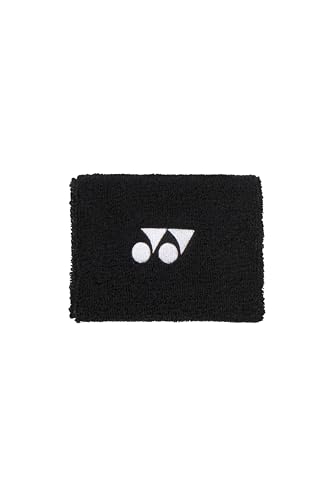
Sounds trivial until you are mid-rally and sweat is running down your forearm onto your grip. A wristband stops the drip before it reaches your hand, keeping your overgrip tacky longer and saving you from re-gripping mid-point. The Yonex band is thick enough to actually absorb sweat through a long session without soaking through.
What we like
Stops sweat reaching your grip and killing the tackiness mid-rally
Thick terry absorbs a full session without soaking through
Trivially priced, eliminates a real annoyance for heavy sweaters
What to know
Only matters if you sweat heavily, not every player needs one
Does not eliminate the need for regular overgrip replacement
Most beginners underestimate how technically demanding badminton is from day one — especially the serve. Here's what to expect, what to practice first, and when the game stops feeling like frantic scrambling and starts feeling like a sport.
Badminton has a reputation for being a backyard game — light shuttle, short racket, easy to pick up. That impression lasts until your first service fault, your first frame shot rattling off the edge of the racket, your first time trying to cover a back corner at full sprint. Then it clicks: this sport is technically demanding in a way its casual reputation doesn’t prepare you for.
This is your first ten hours, hour by hour. What to expect, what to prioritize, and what to let go until later.
Hours 1–2: Get the grip right before anything else
The single most important thing you can do in your first two hours of badminton is hold the racket correctly from the start. This sounds obvious. It isn’t — most people who pick up a badminton racket grip it like a tennis racket (full western, palm behind the handle) or like a frying pan (palm flat against the face). Both habits become genuinely hard to unlearn after a few weeks of reinforcement.
The correct grip for most shots is the forehand grip: shake hands with the racket handle so your thumb runs diagonally across the wider beveled face of the octagonal grip. For backhand shots, rotate the thumb to rest flat against the narrow face. These two grips cover 90% of the shots you’ll ever play.
The other common mistake in the first two hours: squeezing the racket constantly. Badminton uses a loose grip that tightens sharply on impact and releases immediately after — the same mechanic as throwing a punch. A perpetually tight grip kills your wrist snap and fatigues your forearm inside twenty minutes. Hold the racket loosely, like a pen you’re about to click. You’ll generate more power with less effort.
Practice the forehand and backhand grip switch in front of a mirror for five minutes before your first session. It’s the one piece of technique that pays off forever.
The serve is where most beginners get humbled, and it’s where they make the mistake of not practicing it specifically before facing an opponent.
Badminton’s service rules are stricter than any other racket sport:
The shuttle must be below your waist at contact, and the racket head must be below your wrist.
Your feet can’t move until you strike — a foot fault loses the point exactly like a service fault.
In singles, the shuttle must clear the short service line and land before the long service line in the diagonal box.
In doubles, the service box is shorter — easy to hit long even with a gentle swing.
Most beginners fault on one of two things: serving into the net (making contact too late, with the shuttle dropping below the required height) or serving long (misjudging the arc from a backyard-game instinct to swing harder). The high serve — a deep, looping shot that drops near the back baseline — is the safest starting serve for singles. The low serve — a flat shot that barely clears the net to land in the short service box — is the default in doubles.
Spend 15 minutes before your first real game practicing serves at an empty net. Hit 50 serves. Your fault rate drops from 40% to manageable. The serve is the only shot in badminton you fully control — there’s no excuse not to practice it alone before playing a point.
Around hours three to five, the forehand clear also becomes essential. A high, deep shot from your back court to your opponent’s back court, played with a full overhead swing. The clear buys you time when you’re out of position, resets a losing rally, and is the one shot you need to own before you start thinking about smashing.
Hours 6–10: When rallies become real
Around hour six, something shifts. The shuttle stops being an object you’re reacting to and starts being something you’re placing. The court stops being a single surface and starts being zones — the back corners, the net tape area, the mid-court no-man’s-land. You begin to notice where your opponent is, not just where the shuttle went.
This is when footwork goes from something you’ve read about to something you actually feel the absence of. The basic movement pattern in badminton is a return to center — after every shot, you recover toward the middle of your half of the court, roughly equidistant from all four corners. Most beginners stand where they landed after their last swing. The result is a series of scrambles instead of a series of decisions.
Center position gives you roughly equal coverage everywhere. It’s not a perfect position for any individual shot, but it’s the best position for the next shot you haven’t seen yet. Practice recovering to center after every rally in casual games, even when you don’t feel rushed. It’s a habit, and habits built early stick.
The net drop enters your game around hour eight. A soft shot that just topples over the tape and falls steeply in your opponent’s forecourt — the answer when they’ve played a short shot and you’re already at the net. It’s the shot that makes badminton feel like a chess match rather than a hitting contest. You won’t do it consistently for months. But around hour eight you’ll hit your first good one and understand what the sport is actually about at higher levels.
The smash will tempt you constantly. Hold off on making it a go-to shot until hour eight or nine at the earliest. The smash requires exact timing — contact in front of your shoulder, full rotation through the shot — and beginners who smash everything above waist height put 60% of those shots into the net. The smash is a reward for good positioning, not a replacement for consistency.
What you’ll fail at — and that’s normal
Every beginner hits the same walls at roughly the same time:
Service faults on 30-40% of your serves. Normal for the first month. The fix is deliberate practice before games, not frustration during them.
Frame shots rattling off the edge of the racket. Usually a grip issue — you’re tightening at the wrong moment and your racket face is rotating. Loosen your grip; let the wrist snap happen naturally.
Scrambling to corners and arriving a half-step late. This is footwork, and it improves through drilling specific movement patterns, not just logging more games.
Net tape clips at the worst moment. The net in badminton is 5 feet tall — considerably lower than the 3-foot tennis net but still the source of constant beginner frustration. You’re hitting the net because your swing path is still learning to clear it. It goes away.
Nobody watching cares about your mistakes. The other beginners are making the same ones. The experienced players have already forgotten what it was like.
A few habits dramatically change your improvement rate once you have the basics:
Join a club drop-in session. Playing with people slightly better than you is the fastest pathway to improvement in any racket sport, and badminton clubs are unusually welcoming to beginners. Show up, bring your own shuttles, and rotate through the courts. You’ll get informal coaching from experienced players without even asking for it.
Watch a match before you play again. BWF World Tour matches are free on YouTube. Watch specifically how players move — the recovery to center position between every shot, the net exchange, the transition from back-court to forecourt. The patterns become obvious once you know to look for them, and watching 20 minutes of high-level play is worth more than reading any amount of technique articles.
Take one group lesson around hours 15-20. Not before — you don’t have enough context to know what questions to ask. After ten hours of play, a group lesson will identify two or three specific things holding you back and give you drills you can practice solo. Before ten hours, it’ll mostly be things you’re already learning through play.
At hour ten, you’re not a beginner in the sense of not knowing where to stand or what you’re trying to do. You’re a beginner in the sense of still developing — which is the more interesting thing to be.
Save your money
What you don't need yet
Beginners get pressured to buy a lot of stuff that doesn't help them play
better. Here's what we'd skip on day one.
Feather shuttlecocks in bulk — Until your technique is consistent, feathers won't survive your session. Start with nylon; switch to feathers when you stop breaking them after a handful of hits.
A high-tension restring — Factory strings at 22-24 lbs are fine for your first year. Higher tensions (26-28 lbs) require a more precise swing to benefit from — until then they just add harshness and punish mishits harder.
Multiple rackets — Pros carry backups in case of snapped strings mid-match. At beginner tension on nylon shuttles, you won't snap strings. One good racket for the first 6-12 months.
A dedicated badminton bag — Any sports bag holds a racket and a tube of shuttlecocks. Multi-racket bags exist for players who carry four rackets to tournaments. That's not you yet.
Badminton-branded apparel — Any athletic shorts and a moisture-wicking top work. The branded Yonex jerseys look great but cost four times comparable athletic wear for no performance benefit at beginner level.
First week
Your first seven days
A short, real plan to get from gear-on-doorstep to actually playing.
Find your nearest badminton club or recreational facility with courts. · Action
Practice the forehand and backhand grip at home before your first hit — correct grip from the start saves weeks of re-learning. · Action
Show up to a club drop-in session. You'll rotate through games with players at all levels and pick up real-time coaching from more experienced players without even asking. · Action
FAQ
Common questions
How much does it cost to start badminton?
A real beginner racket ($30-50), a 12-pack of nylon shuttlecocks ($15-20), and court shoes ($60-100) put your total at $105-170. If you're playing at a club with nets, that's everything. For backyard play, add a portable net ($40-80). Budget picks bring the total down to $75-90; quality starter picks run $170-200.
Should I start with feather or nylon shuttlecocks?
Nylon, without question. Feather shuttlecocks are the standard at clubs and in competition, and they fly better once your technique develops. But beginners smash them out of shape in a handful of hits at $1.50-2 per shuttle. Nylon shuttlecocks last ten times longer, fly consistently, and cost a fraction as much. Switch to feathers after a few months when you stop destroying them on contact.
Do I need a Yonex racket, or will any racket work?
Any graphite racket from Yonex, Victor, or Li-Ning will serve you well. Budget steel or aluminum rackets feel heavy and dead, and the vibration causes elbow discomfort over time. Yonex is simply the most accessible quality brand in most markets. You don't need to spend more than $35-50 for a genuinely good beginner racket.
Can I play badminton outside?
Technically yes, but it's not recommended for serious play. Even a light breeze disrupts the shuttle's flight significantly. Outdoor nylon shuttlecocks (marked with a higher speed number) handle moving air better than standard ones, but you're still playing a fundamentally different game than what the sport is designed around. If outdoors is your only option, pick a dead-calm day.
What's the hardest thing to learn as a beginner?
The serve, by a wide margin. Badminton's service rules are unusually strict — the shuttle must be below your waist at contact, the racket head below your wrist, and your feet can't move. In singles, the shuttle must land in the correct diagonal box; in doubles, the box is smaller. Service faults are how most beginners lose their first dozen rallies. Practice serves before you play a competitive point.
How do I find people to play with?
Local badminton clubs are the best answer — most cities have at least one, and drop-in sessions let you pay a small fee ($5-10) to play with whoever shows up. Recreation centers and gyms with badminton courts run open sessions too. Badminton has a remarkably welcoming culture for beginners; show up, bring your own shuttles, and introduce yourself.
Badminton World Federation (BWF) — The sport's global governing body. Official rules, world rankings, and tournament coverage. Bookmark the Laws of Badminton page — the service rules specifically are worth reading before your first session.
USA Badminton — The US national governing body. Club finder, sanctioned tournaments, and development programs. Start here to find local play in the US.
Badminton Famly (YouTube) — The most thorough English-language coaching channel for all skill levels. Thomas Laybourn (former world #1) breaks down technique in beginner-accessible ways. Start here for fundamentals — footwork, grip, serve mechanics.
Shuttle Life (YouTube) — Well-produced tutorials and gear reviews for recreational players. Useful for understanding racket specs and the practical differences between beginner vs. intermediate gear without the jargon.
r/badminton — Active community for questions, gear advice, and technique feedback. The wiki has a solid beginner FAQ. Gear threads are useful; technique-correction threads are hit-or-miss without video.
BadmintonCentral Forums — The oldest and most detailed English-language badminton forum. Gear discussions go extremely deep — ideal for researching specific racket and string setups. Better for intermediate players; overwhelming without context as a beginner.
As an Amazon Associate, JustBeginning earns from qualifying purchases.
We may also earn commission from other affiliate programs linked on this
page. Editorial recommendations are independent; we don't choose
products based on commission rates.
Product prices and availability are accurate as of the date and time
indicated and are subject to change. Any price and availability
information shown on Amazon at the time of purchase will apply.


 Best starter