Bowhunting is the slow game of deer season. No firearms, no long shots — just you, a compound bow, and 30 yards of margin for error. The gear stack is specific and the investment is real ($900–1,600 to start), but hunters who try it rarely go back. Here's exactly what you need for your first season in the stand.
By Colin B. · Published May 29, 2026 · Last reviewed July 16, 2026
The compound bow alone runs $400–800 ready-to-hunt. Add a treestand, harness, broadheads, rangefinder, and camo and you're at $900–1,600 before your first season.
We earn commission on qualifying Amazon purchases — see our
affiliate disclosure.
Price tiers and budget totals shown above are editorial estimates;
actual Amazon prices vary.
At a glance
Our top pick in each category
The fastest path through this guide — each best-starter pick by category.
Scroll for the budget and upgrade alternatives.
Get fitted before you buy a bow. Draw length is not optional — shooting the wrong length is inaccurate and can injure your shoulder over time. Every archery pro shop will measure you for free. Do not order a bow online without knowing your draw length first.
Buy a package bow your first season. RTH (ready-to-hunt) packages include a sight, arrow rest, stabilizer, and wrist sling. Buying components separately saves maybe $75 and costs calibration headaches a beginner doesn't need. Get the package. Swap components year two when you know what you want.
Download your state's bowhunting regulations before buying anything — especially broadheads. Minimum draw weights, legal broadhead types, and mandatory hunter-ed courses vary by state. Season dates affect everything you buy.
The gear
What you actually need
Compound Bows
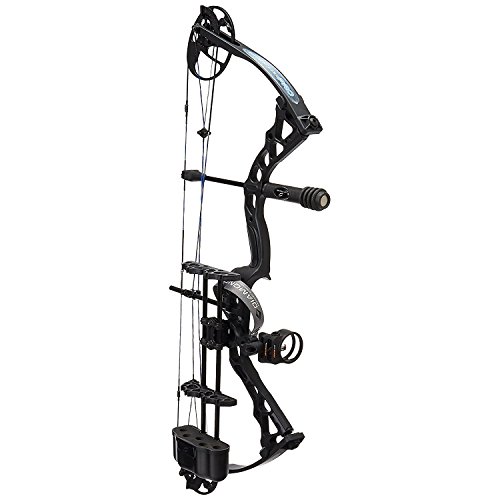
Your bow is the biggest decision and the biggest spend. For a first-season hunter, you want a ready-to-hunt (RTH) package at a draw weight of 40–60 lbs — enough for clean kills on deer without punishing your joints during practice. Adjustable bows grow with you as you build strength and form. Don't start above 60 lbs; overdrawn bows destroy accuracy faster than anything.
Compound Bows — what's the difference?
A few common shapes, each making a different trade.
Ready-to-Hunt (RTH) Package
Comes with sight, rest, and stabilizer — hunt from the box.
Includes
Sight, rest, stabilizer, wrist sling
Best for
First-season hunters
Value
Saves $50–100 vs. buying separately
Best for First-season hunters who want to hunt immediately without component research
Tradeoff Included accessories are functional but not premium — most hunters swap them after year one
Bow only — source accessories separately for full control.
Includes
Bow only
Best for
Second-year hunters with specific preferences
Add-ons
$150–250 for sight, rest, stabilizer
Best for Returning hunters who know what sight and rest they want
Tradeoff Requires separate component research, tuning, and additional upfront spend
Best starter
Bear Archery
Bear Cruzer G4 Ready to Hunt Compound Archery Bow, 70lb. Draw Weight, Right Hand, Black/Muddy
$419.99 as of Jun 22, 2026
★★★★★Our rating· Only 4 left in stock - order soon.
The most beginner-friendly hunting compound on the market. Adjustable 5–70 lbs draw weight and 12–30" draw length, so it grows with you as you build strength. The RTH package includes a Trophy Ridge sight, arrow rest, stabilizer, and wrist sling — everything you need to hunt straight from the box. Reliable, forgiving, and great value at ~$450.
What we like
Adjustable 5–70 lbs — grows with you as strength and form develop
RTH package includes sight, rest, stabilizer — hunt from the box
Bear's limited lifetime warranty covers the riser and limbs
What to know
3.6 lbs is heavier than purpose-built hunting bows at this price
Included Trophy Ridge accessories are functional, not premium
Bowtech-built at a lower entry price. Adjusts from 5–70 lbs and 13–31" draw length — the widest range on the market, ideal if you're still growing or buying for a family member too. Package includes a sight, drop-away rest, stabilizer, and quiver. Honest competition for the Bear at a similar price, with a slight edge in draw-range versatility.
What we like
Widest draw adjustment available — 13–31" draw, 5–70 lb weight
Bowtech-built quality at a budget-friendly entry price point
Drop-away rest included — better for arrow flight than blade rests
What to know
Drop-away rest needs shop tuning out of the box — not immediately ready
Slightly noisier at full draw than newer single-cam designs
When you've shot a full season and know your draw specs, PSE's Bow Madness series is where performance-focused hunters step up from a package bow. Dedicated hunting cam geometry, cleaner draw cycle, and purpose-built for 20–45 yard shooting rather than all-purpose adjustability. Ships bare bow — budget $150–200 for a quality sight and rest separately.
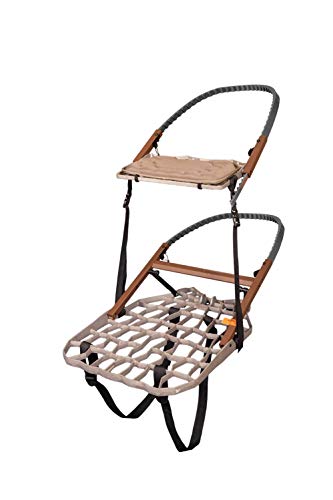
Most deer hunters hunt from elevated positions — a treestand puts your scent above the deer's nose and breaks up your silhouette against the skyline. Climbing treestands are the most versatile (set up wherever the deer are), while hang-on stands are quieter but require separate climbing sticks. For your first season on public land, a climbing stand is the simpler choice.
Best starter
Summit
Viper SD Climbing Treestand
$$$
★★★★★Our rating
The climbing stand that's defined the category for 20 years. Quiet, comfortable, rated to 300 lbs. The Viper SD packs small enough to hike into public land locations, deploys reliably, and has a seat and footrest platform that keeps you comfortable through a cold morning sit. The stand you'll still be hunting from in 10 years.
What we like
Category-defining climber with 20+ years of field-proven reliability
Rated 300 lbs with comfortable padded seat and footrest platform
Packs small enough to hike into hard-to-reach public land locations
What to know
Only works on straight 8–20" trees — useless on forked or leaning trunks
First setup takes 15–20 minutes; practice at home before season
★★★★☆Our rating· Only 5 left in stock - order soon.
At 5.5 lbs, one of the lightest hang-on platforms available. Pair it with climbing sticks and you get a two-piece mobile setup with quieter entry than any climber. Ideal for hang-and-hunt setups on private land where you can pre-hang before season. Solid welded-steel construction for the price point.
What we like
5.5 lbs — among the lightest hang-on platforms for mobile setups
Quieter entry than climbing stands when paired with climbing sticks
Works on any tree diameter — more versatile than climbers
What to know
Requires separate climbing sticks — add $80–150 to true cost
Less comfortable for all-day sits than fully padded climbers
The premium mobile hunting standard. Significantly quieter and lighter than the Summit, with an adjustable platform angle that handles moderate tree lean that defeats most climbers. The Hand Climber Combo II includes both seat and platform sections. Serious public land hunters end up here — worth knowing it exists before you spend less on something you'll replace.
What we like
Whisper-quiet climbing — critical on educated public-land deer
Handles moderate tree lean that defeats conventional climbers
Cult following among mobile hunters — excellent used resale value
What to know
$400–500 combo price — hard to justify until you know you're committed
Steeper learning curve than conventional cable-style climbing stands
Treestand falls are the leading cause of hunting fatalities. A full-body harness connected to the tree keeps you alive if you slip during setup, while seated in the stand, or on the way down. This is not optional — every treestand manufacturer says so, every experienced hunter wears one. Buy the harness before you buy the stand.
Best starter
Hunter Safety System
Pro Series Harness
$$
★★★★★Our rating
The industry standard for good reason: comfortable enough to wear all day, easy to put on correctly (critical — a misfit harness can be as dangerous as no harness), and includes a Lifeline that keeps you connected from the moment your feet leave the ground to the moment they return. The Pro Series hits the right balance of comfort and protection.
What we like
Industry-standard comfort for full-day treestand sits in any weather
Includes a Lifeline — stay connected from ground to stand and back
Easy to fit correctly — critical for harnesses to work as intended
What to know
Must be sized correctly — measure before ordering, not after
Bulkier than minimalist harnesses; heavy layers underneath can interfere
Muddy Women's Hunting Tree Stand Safety Systems Lightweight Padded Nylon Quick-Release Safeguard Harness, Small/Medium
$91.99 as of Jun 22, 2026
★★★★☆Our rating· Only 19 left in stock - order soon.
Slimmer profile than the HSS, slightly lighter, with a suspender-style design that works better over heavy base layers. If you hunt in cold climates and wear thick insulation, the Muddy fits over it more naturally than most harnesses. Equivalent protection at a similar price — personal fit preference drives the choice between these two.
What we like
Slimmer profile works better over bulky cold-weather insulation layers
Lighter than HSS — noticeable difference on long pack-in hunts
What to know
Suspender design takes a few outings to fit correctly — read the guide
Less name recognition than HSS — harder to find local fitting advice
Arrows and broadheads are your ammunition. Match your arrow spine (stiffness rating) to your bow's draw weight and draw length — a mismatched spine flies unpredictably and produces inconsistent kills. For a 50–60 lb hunting bow, 350–400 spine arrows are the sweet spot. Broadheads come in two flavors: fixed-blade (simpler, more reliable, better penetration on quartering shots) and mechanical (larger wound channel, flies like a field point). For deer inside 40 yards, either works.
Best starter
Carbon Express
Maxima RED SD 350 Arrows (6-Pack)
$$
★★★★★Our rating
The carbon arrow most pro shops reach for when setting up a new hunter. Maxima RED's dual-carbon construction makes the front two-thirds stiffer than the rear — that dynamic spine reduces fishtailing at release and tightens groups at hunting distances. Come pre-fletched. Available in 350 spine for most hunting draw-weight setups.
What we like
Dual-carbon construction reduces fishtailing — tighter groups at range
Pro-shop standard: consistently built, easy to match replacements
Come pre-fletched and ready to tip with your broadhead of choice
What to know
Mid-tier price; budget hunters find cheaper arrows that get the job done
350 spine suits 50–65 lb bows — verify your draw weight before ordering
The best-selling mechanical broadhead for good reason. The no-collar (NC) design deploys reliably on impact and opens to a 2" cutting diameter — a wound channel that is simply easier to track than a fixed-blade entry. Flies like a field point at practice distances, so no re-sighting when you switch from target tips to hunting tips. Top pick for deer inside 40 yards.
What we like
2" cutting diameter on deployment — large wound channel for easy tracking
No-collar design deploys reliably compared to older Rage models
Flies like a field point — no re-sighting switching from practice tips
What to know
Can fail to deploy on extreme angle shots through heavy shoulder bone
Single-use after a kill — budget for fresh replacements each season
★★★★☆Our rating· Only 9 left in stock - order soon.
The Trocar HB is a hybrid broadhead: a fixed trocar tip that punches through bone combined with mechanical blades that deploy on impact. Best of both worlds — the bone-punching reliability of a fixed tip with a larger wound channel on the blades. Three 100-grain broadheads for under $30 makes it easy to keep a fresh set ready each season.
What we like
Fixed trocar tip punches bone reliably on angle shots
Mechanical blades open a larger wound channel than fixed-only designs
Under $30 for 3-pack — easy to refresh with new broadheads each season
What to know
Requires bow tuning like fixed blades — different POI from field points
Hybrid design adds a failure point over purely fixed-blade broadheads
Bowhunting's ethical range is inside 40–50 yards for most hunters. Beyond that, margin for error compounds fast. A rangefinder removes the guesswork: range your shooting lanes before deer season, mark distances on nearby trees, and you shoot with confidence instead of estimation. Even a basic $60 rangefinder is dramatically better than none.
Best starter
Bushnell
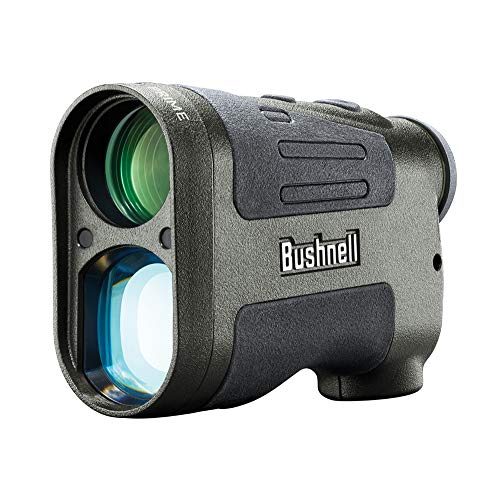
Prime 1300 Laser Rangefinder
$$
★★★★★Our rating
Does exactly what a bowhunter needs: ranges to 1,300 yards (overkill for our distances, but useful for scouting) with angle-compensated readings for elevated treestand shots. Compact, weatherproof, and Bushnell's optics are good enough that you'll use it for glassing too. Strong no-regret pick at the mid-range price.
What we like
Angle-compensated readings — essential for downward treestand shots
1,300-yard range; doubles as a scouting optic in open terrain
Compact and weatherproof for pack-in public land setups
What to know
Display washes out in direct bright sunlight — not for open prairie
No Bluetooth for integration with rangefinding bow sights
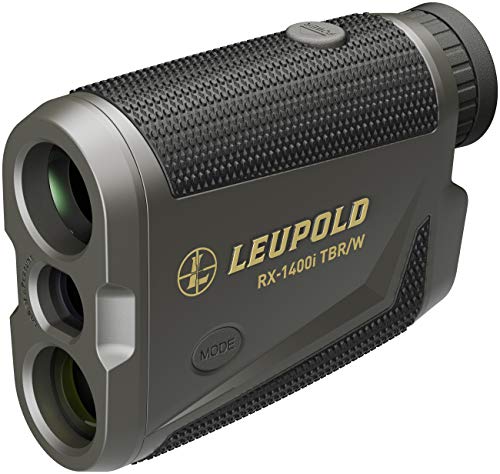
The display clarity and acquisition speed at this price tier is genuinely better than budget units — noticeably so at legal shooting hours in near-dark. TBR/W gives you angle-corrected readings that account for slope. Leupold's lifetime guarantee is real and fully transferable. Buy once, keep indefinitely.
What we like
Leupold lens clarity is visibly better than budget units in low light
Under $60 and it accurately ranges to 450 yards — everything a treestand deer hunter actually needs. Display is basic and it's not waterproof, but it returns a number in under a second and fits in a jacket pocket. If your budget is tight and a rangefinder competes with other gear, this gets the core job done.
What we like
Under $60 — the budget pick that still eliminates range guesswork
Sub-second ranging inside hunting distances — fast when a deer is moving
What to know
Not weatherproof — rain defeats it; keep it cased in wet weather
Basic display washes out in bright morning sunlight
Deer see in near-UV and detect movement brilliantly. Camo breaks your outline against the tree; scent control buys you precious extra minutes when the wind shifts. For a first season, mid-priced camo in a pattern that matches your terrain (Mossy Oak or Realtree for eastern woods) is enough. Scent control is cheaper and more important than premium camo — a deer will smell you before it sees the wrong pattern.
Best starter
Hunters Specialties
Scent-A-Way MAX Field Spray (24 oz)
$9.99 as of Jun 22, 2026
★★★★★Our rating· Only 11 left in stock - order soon.
Spray your outer layer, boots, and equipment before every sit. Scent-A-Way MAX neutralizes odors rather than just masking them. Deer hunters argue endlessly about scent products, but most agree: eliminating what you can eliminates variables. At $15–20, this is the highest-ROI addition to your first-season kit. Use it every time you walk out the door.
What we like
Neutralizes odors at ~$15 — highest ROI item in your first-season kit
Works on clothes, boots, and gear — one spray covers everything
Hunters Specialties brand trusted by whitetail hunters for decades
What to know
Doesn't make you scent-free — a direct nose-on wind will still bust you
Needs reapplication every 2–3 hours on a full-day sit
You don't need $300 Sitka gear your first season. A midweight camo hoodie in Realtree Edge pattern works for early- and mid-season deer hunting across most eastern US terrain. Layer it over a moisture-wicking base and under a heavier jacket when it gets cold. Realtree Edge is their most versatile all-terrain pattern.
What we like
Realtree Edge works across most eastern US woodland terrain types
Mid-layer versatility — pairs with base and outer shell across seasons
Fraction of the cost of premium hunting apparel brands
What to know
Some versions are cotton-blend — seek polyester for moisture management
Mid-layer only; you still need a separate outer shell for cold sits
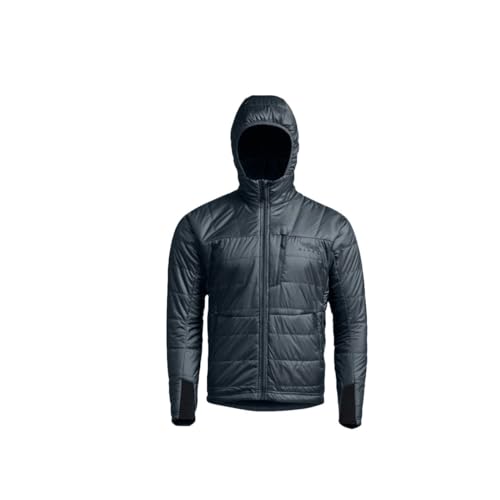
If there's one premium camo item worth the investment, it's your outer layer. The Aerolite is Sitka's lightest insulated hunting jacket — GORE-TEX Infinium fabric that packs to fist-size, cuts wind completely, and is dead quiet against limbs and bark. A deer-at-20-yards kind of quiet. The jacket you wear on every hunt for a decade.
What we like
Dead quiet on brush — critical when a deer closes the last 20 yards
Packs to fist-size — no bulk penalty for mobile pack-in setups
GORE-TEX Infinium blocks wind while staying highly breathable
What to know
$300–400 — skip the first season, earn it after you're committed
Light insulation only; pair with a heavier mid-layer for cold sits
The bow is the easy part. Learning to sit still, read the woods, and close the distance on a whitetail — that's what the first season actually teaches you.
Most people think bow hunting is about the shot. It’s not. The shot is five seconds of a six-hour sit. The first season is about everything that happens before the shot — finding deer, getting close without them knowing, and waiting through enough cold mornings that the odds finally swing your way.
This is what your first season actually looks like.
Before season: the range is your job
You have no business hunting from a stand until you can hit a 4” circle at 20 yards, every time, with cold hands, on demand. That’s the standard. Not most of the time. Every time.
Set up a practice routine starting eight to ten weeks before your season opener:
Week one and two: 10–15 yards. Don’t touch 20 yards until your form is locked. Form problems at 10 yards become misses at 30. At this distance, you’re building muscle memory for your anchor point, your grip, and your release — the three things that have to be identical on every shot. Draw to the same spot on your jaw. Keep your bow arm soft. Let the release trigger, don’t punch it.
Weeks three through five: 20 yards. This is your hunting distance. Most deer in eastern whitetail country are shot inside 25 yards. Be honest about where your groups are. Tighten them before you move back.
Weeks six through eight: 30 and 40 yards. Extend range, but hold yourself to the 4” standard. If your groups open up, stay at 20 until they close again.
Every session: shoot from a seated position and in your actual hunting clothes. Cold-weather layers change your draw. A thick jacket can catch your string. Find out at the range, not in the stand.
Scouting: find the deer before you buy the stand location
Bowhunters who scout make up for a lot of mistakes. Bowhunters who don’t scout work twice as hard for half the deer.
Pre-season scouting tells you two things: where deer live and where deer travel. These are different locations. Deer bed in thick cover (cedar thickets, briar patches, south-facing hillsides in cold climates) and travel along edges — where the woods meet a field, where one terrain type transitions to another.
What to look for:
Trails. Not game trails (every deer uses those); look for the worn-dirt, rub-haired, frequently-used travel corridors. A good trail has hair on the brush at deer-shoulder height and multiple hoof impressions.
Rubs. Bucks rub velvet off their antlers on saplings, usually 1–4” diameter trees. Fresh rubs (white wood exposed) mean a buck is in the area now. A line of rubs indicates a travel route.
Scrapes. A circle of bare ground under a licking branch, roughly the size of a doormat. Deer (mostly bucks) check and refresh these repeatedly during the rut. A fresh scrape with a worked licking branch overhead is one of the highest-percentage stand locations you’ll find.
Funnels. Places where terrain naturally concentrates deer movement — a gap in a fence line, a point of timber jutting into a field, a ridge saddle between two drainages. Deer are lazy and follow the path of least resistance; funnels are where that path narrows.
OnX Hunt or BaseMap are the two apps serious hunters use for digital scouting. Both overlay property lines, aerial imagery, and topographic maps. Learn the terrain before you ever set foot in it.
Setting up your stand
For your first season, a climbing treestand on public land or permission-based private land is the most versatile setup. Climbing stands let you move — follow the deer, not the fixed stand location.
The climb: always attach to the tree before your feet leave the ground. The lifeline that comes with your Hunter Safety System harness clips to the tree above you and slides up and down as you climb — you’re connected the whole way. Don’t skip this step once. Not once.
Height and tree selection: 15–20 feet is the standard for whitetails. Higher puts you above their natural sight line and keeps your scent above their nose; lower means they can see you move. The tree should be straight, 10–18” diameter, and ideally have some branches behind you to break up your outline.
Wind: hang your stand downwind of where you expect deer to approach. Deer walk into the wind when possible — your scent should be blowing away from their direction of travel. This is the single most important tactical variable in whitetail hunting. A $400 scent-control system cannot overcome a direct wind. Play the wind.
Your first morning in the stand
Get there early — an hour before legal shooting light, minimum. Deer are moving at first light, and anything you do walking in after them is wasted.
Sit still. This is harder than it sounds. You will get cold. Your back will itch. You will see movement and want to spin around. Don’t. Deer detect movement before they detect shape, and shape before they detect color. Slow everything down. Turn your head six inches in five seconds.
The shot opportunity: if a deer walks into range, it will almost certainly be moving. Let it stop before you draw — a walking deer’s front shoulder swings over the vitals in a way that closes the shot window. Wait for a pause. Draw slowly. Pick a spot on the animal, not “the deer” — a spot the size of a baseball on the near-side shoulder, four inches back from the leg crease. Release.
You’ll probably miss your first deer. Maybe your second. The margin for error in bowhunting is inches, not feet. The deer will jump the string (flinch at the sound of your shot), move a half-step, and the arrow will be six inches left of where you aimed. You’ll learn from it in a way that 100 range sessions couldn’t teach you.
What the first season actually teaches you
Where to set up — you’ll pick the wrong trees at first. Hang a stand, hunt it for three mornings, see nothing, and move. Then you’ll see something. The pattern will click and you’ll understand why one side of a ridge holds deer and the other doesn’t.
Shot angle selection — the ethical bowhunting shots are broadside and quartering away. Anything else (straight on, quartering to, straight away) should be passed. You’ll learn which angles look tempting but aren’t.
Patience — the hunter who sits the longest sees the most deer. Cold at 7 AM doesn’t mean the stand is bad. Most mature bucks move at 9–11 AM after the early pressure dies down. Stick it out.
That the gear matters less than the woodsmanship. After one full season, you’ll have opinions about your bow, your stand, your broadheads. Some of those opinions will be right. More importantly, you’ll understand that the hunter who knows where the deer are — and gets there quietly, on the right wind — kills deer. The one who doesn’t, doesn’t.
Upgrade your setup where it actually let you down. If the climbing stand was too noisy on the approach, look at hang-on setups with sticks. If your rangefinder was slow in low light, upgrade it. Fix the real problems, not the hypothetical ones.
Scout in January and February. Post-season scouting in bare-woods conditions shows you everything the leaves were hiding: trails, rubs, bedding areas, sign you walked past all fall. The deer aren’t wary. The pressure is gone. Walk every corner of your hunting area and read it fresh.
Try a 3D archery tournament. Most archery clubs run them in spring. Shooting at life-size 3D animal targets at unknown distances in the woods is the best off-season training there is. You’ll discover shot-angle weaknesses you didn’t know you had.
Get into the rut. If you hunted early season, find a way to take October and early November off from work for your second season. The whitetail rut (typically the first two weeks of November in most northern states) is when bucks abandon their patterns and move constantly in daylight. More deer move in two weeks of rut than in the entire rest of the season combined.
Save your money
What you don't need yet
Beginners get pressured to buy a lot of stuff that doesn't help them play
better. Here's what we'd skip on day one.
A trail camera system — Essential eventually, but your first season is about learning the woods and your shot process. Cameras come year two.
A ground blind — A treestand is the more productive learning tool. Ground blinds require different scent strategy, movement management, and arrow-clearance awareness — save that complexity for later.
A hinge-style or back-tension release — Learn on a basic index-finger trigger release. Hinge and back-tension releases improve shot execution for experienced archers; they confuse beginners.
Premium arrows above $15 per shaft — You'll lose arrows in brush and missed shots. Match spine to your bow's specs, then buy the affordable version until your shot process is consistent.
Electronic game calls — Calls are a mid-season tool once you understand deer movement in your specific area. Learn the woods first.
First week
Your first seven days
A short, real plan to get from gear-on-doorstep to actually playing.
Visit a local archery pro shop to get measured for draw length and draw weight — do this before buying any bow. · Action
Order the Bear Cruzer G4 RTH package or the Diamond Infinite Edge Pro — both include everything to start hunting. · Buy
Find a local 3D archery course and shoot there at least twice before season — shooting at 3D targets in the woods is the closest simulation to an actual hunting shot. · Action
Practice at 20 yards every day for two weeks before expanding to 30 or 40 yards. Accuracy earns distance. · Action
Join ArcheryTalk or r/bowhunting to ask your state-specific setup and hunting questions. · Action
Budget $900–1,600 all-in for your first season. A ready-to-hunt compound bow package runs $400–800. Add a treestand ($200–400), safety harness ($80–120), broadheads and arrows ($80–120), a rangefinder ($60–200), and basic camo ($100–200). That's the realistic minimum for a serious first season.
What draw weight do I need to hunt deer?
Most states require a minimum of 40–45 lbs for deer. In practice, 50–60 lbs is the sweet spot — enough for clean pass-through shots inside 40 yards without the strain that ruins your form. Don't start too heavy: overdrawing destroys accuracy faster than anything. Pull what you can draw smoothly 30 times in a row.
Fixed-blade or mechanical broadheads?
Either works for deer inside 40 yards. Mechanicals fly like field points and open a larger wound channel — easier to use accurately for most beginners. Fixed blades are more reliable on angled shots through shoulder bone and can be resharpened. If you're unsure, start with mechanicals — the accuracy advantage matters more than the reliability edge in clean conditions.
Do I need a hunting license before buying gear?
You need a valid hunting license to hunt, not to buy equipment. But check your state's regulations before buying — some states require a bowhunter education course before issuing your first license, and season dates affect everything downstream.
How far can I ethically shoot with a compound bow?
Most beginners should cap themselves at 30 yards — close enough for confident shot placement on a vital zone, far enough that the deer doesn't hear the shot and jump the string. Practice until every arrow hits within a 4" circle at 20 yards. Then expand to 30. Distance is earned through practice, not gear.
Can I bow hunt without a treestand?
Yes — still hunting (moving slowly through the woods) and ground blinds are legitimate approaches. But for a beginner, a treestand is the most productive way to learn. Elevated position disperses your scent above the deer's nose, gives you a clear view of approaches, and most deer ignore stands after a few days of pressure. Start from a tree, then adapt.
ArcheryTalk Forums — The largest archery and bowhunting forum online. Ask your bow-specific tuning questions here — there's almost certainly a thread for your exact setup already.
Bowhunter Magazine — Long-running editorial publication covering gear, technique, and hunting strategy. Gear reviews are more independent than most YouTube channels.
r/bowhunting — Active subreddit with beginner-friendly culture. Good for state-specific questions and shot-placement discussions.
MeatEater (Steven Rinella) — Podcast, show, and editorial site covering hunting with depth and ethics. The bowhunting episodes are some of the best beginner education in any format.
Deer & Deer Hunting — The authoritative editorial source on whitetail deer behavior, habitat, and hunting strategy. Essential if you're hunting whitetails specifically.
Archery Trade Association (ATA) — Industry body — their consumer pages list certified instructors and pro shops near you. Good starting point for finding a local shop.
As an Amazon Associate, JustBeginning earns from qualifying purchases.
We may also earn commission from other affiliate programs linked on this
page. Editorial recommendations are independent; we don't choose
products based on commission rates.
Product prices and availability are accurate as of the date and time
indicated and are subject to change. Any price and availability
information shown on Amazon at the time of purchase will apply.
Our top pickBear Cruzer G4 Ready to Hunt Compound Archery Bow, 70lb. Draw Weight, Right Hand, Black/Muddy

 Best starter