Racquetball is the most physically punishing of the racket sports — fast, indoor, walls in play, hour-long sessions that leave you genuinely drained. The gear list is short but specific, and one item is non-negotiable: eye protection. The ball moves at 150 mph in tight spaces. People have lost eyes. Read this guide before you hit a court.
By Colin B. · Published May 8, 2026 · Last reviewed July 16, 2026
Racquetball gear is cheaper than tennis but more than pickleball. Most beginners are fully equipped under $200, including the mandatory eye protection.
We earn commission on qualifying Amazon purchases — see our
affiliate disclosure.
Price tiers and budget totals shown above are editorial estimates;
actual Amazon prices vary.
At a glance
Our top pick in each category
The fastest path through this guide — each best-starter pick by category.
Scroll for the budget and upgrade alternatives.
Eye protection is not optional. Racquetball has a real history of eye injuries — the ball is small, fast, and confined inside a four-walled court. Most clubs require eye guards to step on the court at all. We're listing eye protection as an entire category for a reason: do not skip this.
Find a court before you buy gear. Racquetball requires an indoor four-walled court — you can't play it on a tennis court, in a backyard, or with a friend. Most courts are at large gyms (LA Fitness, YMCA, Lifetime), which means a membership or a guest pass. Confirm there's a court within 20 minutes of you before committing.
Don't buy the cheapest racquet on Amazon. Sub-$30 racquets often have aluminum frames that vibrate badly, transferring shock straight into your wrist and elbow. A $50-70 graphite or composite frame is dramatically more comfortable and will save you tendinitis.
The gear
What you actually need
Racquet
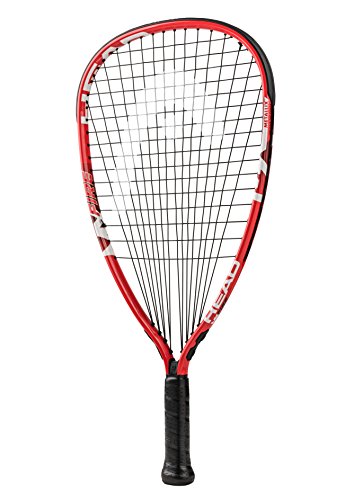
A racquetball racquet is shorter (22 inches max), lighter, and head-heavier than tennis or even pickleball. The variables that matter for a beginner: weight (lighter is faster but less powerful), head shape (teardrop is the standard, quadraform is more forgiving), and grip size. A modern composite/graphite frame in the mid-weight range covers everything most beginners need.
Racquet — what's the difference?
A few common shapes, each making a different trade.
Lightweight (155g and under)
Fast maneuverability, less power. Built for quick wrists.
Weight
150-155g
Power
Low
Maneuverability
Highest
Best for Players with quick reflexes, doubles play where reaction time matters, anyone with elbow sensitivity
Tradeoff Less inherent power; you have to swing harder to drive the ball
Mid-weight (165g), balanced, graphite construction. Around $50. Covers everything a beginner needs without being so light or so heavy that it forces a particular style. The most-recommended starter racquet at most pro shops.
What we like
Graphite frame delivers a crisper feel than aluminum at only $50
165g mid-weight suits nearly every beginner swing speed
What to know
Pre-strung nylon strings lack feel compared to multifilament — restring after 6 months
Around $40. Aluminum-titanium frame, head-light balance, designed specifically for beginners. Heavier than some budget options at 190g — that weight gives you extra stability on off-center hits, which beginners benefit from. Adequate for casual play.
What we like
190g mass stabilizes off-center hits — forgiving while technique is still rough
Cheapest entry point that still plays like a real racquet
What to know
Aluminum frame transfers more vibration than graphite — watch your elbow over time
Gearbox is the most respected racquetball-specific manufacturer; the M40 165 is one of their most popular performance racquets. Built from M40 high-modulus graphite with C3 power groove construction. Around $200-300 depending on spec. Wait until you've played for a few months and decided you want a real performance racquet.
What we like
M40 high-modulus graphite noticeably crisper than entry-level composite frames
Built specifically for racquetball — not a reskinned tennis racquet
What to know
Costs 4x a starter racquet; the gap only shows once you have a repeatable swing
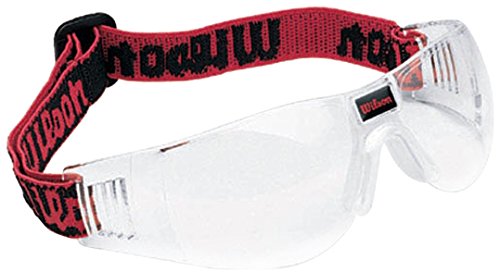
The single most important non-racquet purchase you will ever make for racquetball. The ball travels at speeds up to 150 mph inside a 20×40 foot four-walled room with two players swinging hard. Direct ball hits to the eye cause serious permanent injuries. Most clubs and tournaments require ASTM F803-rated protective eyewear — not regular sunglasses, not regular safety glasses. Get racquetball-rated eye protection before your first session.
Best starter
Python
Xtreme View Eye Guard
$19.99 as of Jun 22, 2026
★★★★★Our rating
ASTM F803-rated, anti-fog coating, fits over most prescription glasses. Around $20. Universally recommended at most racquetball clubs. Don't go cheaper than this — you're protecting your eyes.
What we like
ASTM F803 certified — the only rating that matters for real racquetball safety
Over-glasses fit and anti-fog coating make it work from day one
What to know
Anti-fog coating degrades with sweat — budget for a replacement after 12-18 months
★★★★☆Our rating· Only 8 left in stock - order soon.
Slightly larger viewing area, integrated sweatband, works for players with bigger faces. Around $25. Same ASTM F803 rating as the Python — the difference is fit and comfort, not safety.
What we like
Larger frame gives a wider field of view than most eye guards
Integrated sweatband handles heat buildup better than a separate headband
What to know
Bulkier fit doesn't suit narrower faces as well as the Python
Racquetballs are color-coded by speed: blue is the standard tournament ball, green is the slowest (best for beginners learning to read bounces), red/black is a slow indoor ball, purple is the fastest. For new players, blue is what you want — it's what you'll see at every public court and what the rules use.
Best starter
Penn
Ultra-Blue Racquetballs (3-pack)
$
★★★★★Our rating
The standard ball at every American club, used in USAR tournaments. Around $7 for a 3-pack. Lasts a few weeks of regular play if you don't lose them — racquetballs crack when they get cold, so don't leave them in the car overnight.
What we like
The official USAR tournament ball — what you'll see at every public court
3-pack lasts weeks of regular play at around $7
What to know
Crack suddenly in cold weather — don't leave them in the car overnight in winter
The slower 'green' ball — easier to track and control as a beginner. Pro Penn Green is the standard slow ball, used in some lower-level leagues. Switch to Penn Ultra-Blue once you can comfortably rally.
What we like
Slower speed gives beginners more time to read the bounce and set their feet
Good for solo warmup drills before graduating to the standard blue ball
What to know
Not the standard ball at public courts; can't practice with what you'll actually play
Racquetball is played on a wood or synthetic indoor floor with hard lateral movement, hard stops, and frequent direction changes. Same court-shoe rules as tennis and pickleball: avoid running shoes (they roll your ankle), prioritize lateral support and a non-marking sole. Many gyms enforce non-marking soles strictly.
Best starter
K-Swiss
Hypercourt Express 2
$130.00 as of Sep 10, 2026
★★★★★Our rating· In Stock
Same shoe we recommend for tennis and pickleball — same reasons. K-Swiss has been making indoor court shoes for 60 years. Non-marking sole, good lateral support, around $90.
What we like
60 years of court-shoe design; lateral support holds up through hard stops
Non-marking sole meets gym requirements right out of the box
What to know
Priced at $90 — more than off-brand racquetball shoes, though it earns the premium
Pro-level court shoe with serious cushioning and lateral support. Worth it once you're playing 3+ times a week and starting to feel knee or foot fatigue.
What we like
Gel cushioning noticeably reduces knee and foot fatigue on long play sessions
Heel counter locks the foot in place on hard lateral cuts
What to know
Overkill until you're playing 3+ sessions per week and starting to feel the wear
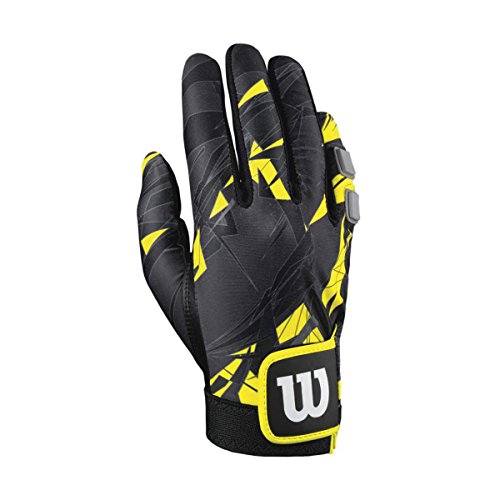
Two cheap items that meaningfully improve play: a racquetball glove (eliminates grip slippage in a sport where your hands sweat hard inside an indoor court) and a wristband (catches sweat before it runs into your eyes — a real concern with eye guards trapping heat). Total under $25.
Best starter
Wilson
Sting Racquetball Glove
$
★★★★★Our rating
Cabretta leather palm, mesh back, replaceable. Around $15. Most beginners overlook this and then watch their grip slip on key shots after 20 minutes of play. The glove fixes it instantly.
What we like
Cabretta leather palm maintains grip through heavy sweating when synthetic palms fail
At $15, the easiest upgrade most beginners skip and regret
What to know
Sizing runs different from golf gloves — try before buying if possible
Cheap, effective, and they keep sweat from running into your eyes — which matters more in racquetball than other racket sports because the eye guards trap heat. Around $10.
What we like
Thick terry cloth blocks sweat from running into your eye guards during play
At $10, the cheapest upgrade that meaningfully improves eye guard comfort
What to know
Terry cloth pilling and compression loss after heavy washing; replace each season
Racquetball is the most physically demanding of the racket sports — and the easiest to feel competent at, fast. Here's what your first thirty days actually look like, walls and all.
Racquetball has a strange position in American sports — every gym has a court, almost no one uses them, and the people who do tend to be obsessed. There’s a reason. The sport is faster than tennis, smaller-court than pickleball, and the wall play introduces a strategic dimension nothing else has. It’s also genuinely punishing — a 45-minute racquetball session is harder than a tennis match.
This is what your first month of it looks like.
Day 1: Eye protection on, just hit the ball at the wall
The first time you step onto a racquetball court, the room feels small. It’s not — it’s regulation, 20 feet wide and 40 feet long — but the four walls and ceiling close in on you in a way an open court doesn’t.
Put your eye guards on before you walk through the door. Don’t take them off during play. Even practicing alone, the ball comes back at you faster than you’ll expect.
The simplest first drill: stand at the back of the court, drop the ball, and hit it at the front wall. Don’t worry about angles, target lines, or shot selection. Just hit the front wall, then chase the ball as it bounces back, hit it again. Twenty minutes of this teaches you more about the bounce than any video could.
Two technical things to know on day one:
Hold the racquet like you’re shaking hands. Same continental grip as tennis. Lets you cover forehand and backhand without changing.
Bend your knees. Racquetball happens low — most balls bounce shorter and lower than your tennis instincts expect. Stay loaded, ready to drop.
Days 2–7: The serve and the box
Racquetball serves are easier to learn than tennis serves but harder to master. The basic motion: stand in the service zone (the painted box mid-court), bounce the ball once, hit it before the second bounce, and the ball must hit the front wall first then bounce in the back half of the court.
Two serves to learn first:
The drive serve. Hit the ball low and hard at the front wall, aiming so it rebounds deep into the back corner. The goal is to give your opponent no time and no angle to return. Workhorse beginner serve.
The lob serve. Hit the ball softly and high at the front wall so it floats high into the back court. Looks weak; it isn’t — it forces your opponent to play a backhand off the back wall, which is the hardest shot in the sport for beginners.
After the serve, the box matters. The middle of the court — roughly the spot where the service zone meets the back of the court — is the dominant position. Whoever stands there controls the rally. Your job for the entire first month is to learn to get back to the box after every shot.
Days 7–14: Reading the back wall
The thing that confuses every new racquetball player is the back wall. The ball doesn’t stop at the back of the court — it bounces off the back wall, and you have to play it as it comes back at you. This is the unique skill of the sport.
The cues to read:
A high, soft ball off the front wall will bounce off the back wall hard and come back fast. You have less time than you think. Move forward.
A low, hard ball off the front wall will bounce on the floor first, lose energy, then weakly tap the back wall. You have more time than you think. Step back, let it come to you.
You’ll misjudge this constantly in your first two weeks. Then it’ll click, and back-wall returns become some of the most satisfying shots in the sport.
Around session four or five, you’ll notice your legs are dead the next day in a way they weren’t from any other sport. Racquetball is brutal on the lower body — constant short, hard movements, lots of squatting to reach low balls, and the recovery sprints back to the box.
Don’t fight this. Embrace it. A 45-minute session is a real workout.
Two adjustments help:
Hydrate aggressively. Indoor courts are warm and you’ll sweat more than you realize.
Stretch your hips and calves before play. Racquetball injuries cluster around the lower body — calf strains, Achilles issues, hip flexor tweaks. Five minutes of warmup pays off.
End of week 3: Take a lesson
Most racquetball clubs have a few people who teach informally — old pros who’ll happily show you proper form for $40-60 an hour. Take one lesson at the end of week three. They’ll spot two specific things you’re doing wrong (almost always grip and footwork) and replacing those bad habits early saves months of practice.
Racquetball clubs are smaller than tennis communities and often more welcoming. Walk in, ask at the desk who teaches, and someone will know.
Month 1+: When racquetball becomes racquetball
By the end of week four, you’ll be playing real games. Not winning many, but playing real games. Your serves will land in the right boxes. You’ll get to most balls. You’ll have a vague sense of where to stand.
The path from there:
Months 2-3: The pinch shot (hitting the side wall first, then the front wall, to force tight back-corner returns). Strategy develops.
Months 4-6: Doubles play — most racquetball happens in doubles, and the positioning is genuinely different from singles.
Year one: You can join a club ladder and not be the worst player on it.
Racquetball has a smaller community than tennis or pickleball, but the people in it are dedicated. Your local club, once you find it, will become a second home faster than you’d expect.
Coming from another racket sport? The wrist motion transfers from squash and ping pong; the angles transfer from tennis. The wall play is unique and will be the only part that feels truly new.
Save your money
What you don't need yet
Beginners get pressured to buy a lot of stuff that doesn't help them play
better. Here's what we'd skip on day one.
A second racquet — Pros carry two in case strings break mid-match. As a beginner you'll wear out strings in months, not break them in the middle of a rally.
Custom string-and-tension setup — Whatever string came on the racquet is fine for your first 6 months. Once you have clean swings, an experienced stringer can guide you to a setup.
Ball-warming devices — Some advanced players warm balls before play to keep bounce consistent. As a beginner, hitting them around for 5 minutes warms them naturally.
Tournament-grade racquetball-specific shoes — Racquetball-specific shoes (yes, they exist) only matter at the competitive level. Tennis court shoes work fine until then.
Specialty apparel — Athletic shorts, a moisture-wicking t-shirt, and the wristband. That's the whole apparel list.
First week
Your first seven days
A short, real plan to get from gear-on-doorstep to actually playing.
Find an indoor racquetball court. LA Fitness, Lifetime, YMCA, and many city rec centers have them. Day passes are usually $10-25. · Action
Watch one professional match — Daniel De La Rosa or Paola Longoria are the dominant current pros. The pace is dramatically faster than recreational play, but you'll see the patterns. · Learn
Find a hitting partner at your level. Racquetball is fundamentally a partner sport — singles or doubles, you need someone in the court with you. · Action
After 3-4 sessions, take one 30-60 minute lesson. Racquetball-specific coaches at most racquetball clubs run $40-60 per hour and will fix grip and footwork issues you can't see yourself. · Action
FAQ
Common questions
Do I really need eye protection?
Yes — and most clubs won't let you on the court without it. Racquetball has a real injury history because the ball is small, hard, and travels at 150 mph in a confined room. ASTM F803-rated eye guards (around $20) are mandatory for safety, and most clubs and all tournaments require them.
How much should I spend on a first racquet?
$40-70 covers everything reasonable for a first racquet. The HEAD MX Spark at the budget end gets you playing; the Wilson Striker is what most pro shops hand new students. Don't spend $150+ until you've played for several months.
Can I use my pickleball or tennis shoes for racquetball?
Yes — court shoes for any of the racket sports work for the others, as long as the sole is non-marking (most gyms require this). The K-Swiss Hypercourt and Adidas GameCourt that we recommend across our racket-sport guides are all non-marking.
How does racquetball compare to other racket sports?
Racquetball is the most physical of the racket sports — fastest ball, smallest court, and you're constantly moving. It's harder on the body than pickleball or ping pong but easier to feel competent at than tennis. The wall-bounce element is unique and takes a few sessions to get used to.
What's the difference between racquetball and squash?
Squash uses a different (smaller, less bouncy) ball, a slightly smaller court, and longer-handled racquets. Strategically they're related but not interchangeable — racquetball rewards power, squash rewards precision and angles. Many North American clubs have both courts.
How often do I need to replace racquetballs?
A 3-pack of balls usually lasts a few weeks of regular play. They lose their bounce gradually and crack suddenly when they get cold — don't leave them in your car overnight in winter. Tournament-grade play uses fresh balls per match; for beginners, they last until they crack.
USA Racquetball (USAR) — The sport's national governing body. Official rules, ratings, and the most complete database of US clubs and tournaments.
International Racquetball Tour — Pro-tour news and coverage. Watch IRT events on YouTube to see what world-class racquetball looks like.
Fran Davis Coaching (YouTube) — Long-time professional coach. Patient, technical, the most-recommended beginner instructional resource.
Racquetball Warehouse — The biggest American specialty retailer. Their gear reviews and string database are bookmark-worthy. Bias: they sell the gear; transparent about it.
International Racquetball Tour (YouTube) — Full pro matches. Watching a Daniel De La Rosa or Paola Longoria match shows you what real high-level racquetball looks like.
r/racquetball — Smaller community than the other racket-sport subs but active and helpful. Search the wiki for beginner-equipment threads.
As an Amazon Associate, JustBeginning earns from qualifying purchases.
We may also earn commission from other affiliate programs linked on this
page. Editorial recommendations are independent; we don't choose
products based on commission rates.
Product prices and availability are accurate as of the date and time
indicated and are subject to change. Any price and availability
information shown on Amazon at the time of purchase will apply.

 Best starter