Spinning your own yarn sounds like something your grandmother did. It is — and it's one of the most meditative, skill-building crafts you can pick up today. The community is warm, the gear is affordable to start, and you can make real yarn within your first afternoon.
By Colin B. · Published May 24, 2026 · Last reviewed June 11, 2026
A drop spindle and a braid of roving costs $55-80 — one of the most affordable craft starts there is. The wheel upgrade is where costs jump to $400+.
We earn commission on qualifying Amazon purchases — see our
affiliate disclosure.
Price tiers and budget totals shown above are editorial estimates;
actual Amazon prices vary.
At a glance
Our top pick in each category
The fastest path through this guide — each best-starter pick by category.
Scroll for the budget and upgrade alternatives.
Start with a drop spindle, not a wheel. A wheel costs $400–800 and is wonderful — but buying one before you know you love spinning is an expensive mistake. A drop spindle costs $25–35 and teaches you everything about draft and twist. If you're spinning three times a week after a month, then talk yourself into the wheel.
Fiber matters as much as the tool. Beginners often buy the prettiest fiber — short-staple merino or a cashmere blend — and then struggle to control it. Buy Corriedale or BFL roving for your first few braids. It's forgiving, slow to draft, and will build good habits. The fancy stuff comes later.
Find a guild before you buy much. Spinning guilds lend wheels, let you try different tools, and give you two hours of hands-on help that no video can match. Search 'handspinners guild' plus your city — they're everywhere and almost universally welcoming to beginners.
A drop spindle is the cheapest, most portable way to start spinning. You draft fiber with one hand while the spindle hangs below, adding twist to form yarn. Top-whorl spindles — where the weighted disc sits at the top — are the most common and beginner-friendly. Expect to spend a session learning the rhythm before your yarn feels like yarn; that's normal. Most spinners start here before investing in a wheel, and many stay here happily forever.
Drop Spindles — what's the difference?
A few common shapes, each making a different trade.
Top-Whorl
Whorl at the tip — intuitive, beginner-friendly, widest selection.
Whorl position
Top
Best for
All fibers
Learning curve
Lowest
Best for Beginners, park-and-draft technique, most fiber types
Tradeoff Slightly less momentum than bottom-whorl at high speed
Whorl at the base — more momentum, favored by many guild spinners.
Whorl position
Bottom
Best for
Worsted-weight and bulkier
Learning curve
Slightly higher
Best for Spinners who want more sustained spin time per flick
Tradeoff A bit harder to master the initial drafting rhythm
Supported Spindle
Rests in a bowl — used for very fine fibers and laceweight.
Use
Bowl or cup support
Best for
Fine and exotic fibers
Learning curve
Different skill set
Best for Spinning very fine yarns, cotton, and short-staple fibers
Tradeoff Entirely different technique from drop spinning — learn later
Budget pick
Woolery
Beginner Drop Spindle Kit Top Whorl with Roving
$
★★★★☆Our rating
Any wooden drop spindle will teach you the basics of drafting and twist. A starter kit that includes a short length of roving means you can spin in the first five minutes without sourcing fiber separately. Not built for the long term, but a fair answer to 'I just want to try it' before committing to a name-brand tool.
What we like
Comes with fiber — you can start spinning in minutes
Under $20 removes the financial barrier to trying spinning
What to know
Shaft can wobble on cheaper units — distracting when learning
Top Whorl Spindle Large, Lacquered - 90mm (3.5 in, 2.75 oz) By Ashford
$
★★★★★Our rating
Ashford has been making spinning tools for decades, and the Student Spindle is how a huge share of spinners learned. The top-whorl design puts the whorl at the tip — spin the shaft, let it hang, draft your fiber. Predictable, well-balanced, and light enough that your arm won't fatigue in a two-hour session.
What we like
Ashford is the most trusted name in beginner spinning tools
Top-whorl design is the most intuitive for new spinners
Balanced enough to hold spin for 30-60 seconds — plenty of working time
What to know
Ships unfinished — a quick beeswax treatment extends spin duration
★★★★☆Our rating· Only 8 left in stock - order soon.
Schacht's Hi-Lo is machined from maple and has an adjustable whorl — you can run it top-whorl or flip it to bottom-whorl, which matters once you develop opinions about spin style. Schacht is a Colorado maker with decades of guild credibility. This is the first spindle you buy when you stop treating spinning as an experiment.
What we like
Machined from maple — spins true with no wobble at any speed
Adjustable whorl works both top and bottom — rare in one spindle
What to know
More spindle than a beginner needs in their first months
Schacht quality carries a price premium — harder to justify early on
A wheel multiplies your efficiency — what takes five minutes on a spindle takes thirty seconds on a wheel. The Ashford Kiwi and Joy are the two wheels every guild teacher recommends for beginners: compact, reliable, and holding good resale value. Budget $400–800 new; used wheels in good condition are common and often smarter than new. Don't buy a wheel until you've spun enough on a spindle to know you genuinely love spinning.
Best starter
Ashford
Kiwi 3 Spinning Wheel
$629.00 as of Jun 22, 2026
★★★★★Our rating· Only 2 left in stock - order soon.
The Kiwi 3 is Ashford's entry-level wheel, designed for people learning to spin. Single-drive mechanism is simpler to troubleshoot, it weighs 11 lbs, and stores against a wall. You'll spin on it for years without outgrowing it, and if you upgrade, it holds resale value well. The most common first-wheel recommendation from guild teachers.
What we like
Ashford's dedicated beginner wheel — built for exactly this stage
Single-drive simplicity means fewer adjustments to troubleshoot
Strong used market if you decide to upgrade to a different model
What to know
Ships flat-pack — assembly takes 30-45 minutes if you skip the video
Single-drive limits your range at the high end once you advance
The Joy 2 folds flat, has double-drive capability, and accepts multiple whorl ratios — meaning you can spin from chunky art yarn down to laceweight without changing tools. It's the wheel I'd buy starting today knowing I was serious: mid-market pricing, built to last decades, compact enough for an apartment.
What we like
Folds completely flat for apartment or travel storage
Double-drive and multiple ratio options span all yarn weights
Same Ashford parts ecosystem — easy to service anywhere
What to know
Double-drive tensioning has a learning curve — budget a setup hour
At $700+, a real financial commitment before you know your style
The fiber you spin matters as much as the tool. Corriedale is the gold standard for beginners: medium staple length, forgiving to draft, and slow enough that you can feel the twist forming. Merino is silkier but shorter-stapled — prone to drafting disasters for new spinners. Buy pre-washed roving (fibers loosely aligned, ready to spin) rather than raw fleece. Processing raw fleece is a whole separate rabbit hole best saved for month three.
Best starter
Paradise Fibers
Corriedale Wool Roving
$
★★★★★Our rating
Corriedale is the fiber spinning teachers hand beginners. Medium staple length means it doesn't slip through your fingers like short merino or resist drafting like long-staple Romney. The natural elasticity forgives twist inconsistencies. Buy at least 4 oz to start — you'll go through more than you expect while learning, and it's inexpensive enough not to stress over.
What we like
Medium staple length is the easiest to control for new spinners
Natural elasticity forgives uneven twist — very beginner-tolerant
Widely available, inexpensive, and neutral enough to dye later
What to know
Less silky than merino — the finished yarn is rustic rather than delicate
Merino combed top is what you graduate to once Corriedale feels boring — silky, dense, and it spins into next-to-skin yarn with real luster. The challenge: at 18-21 micron fineness, the fibers are short and draft fast. Spin at a higher twist angle than Corriedale. Your first braid will be inconsistent; your third will be noticeably better.
What we like
Spins into buttery, next-to-skin yarn with real luster
Combed alignment means fewer neps and a smoother draw
What to know
Short staple drafts fast — unforgiving for spinners still learning tension
Merino pills if spun with too little twist — watch your tpi
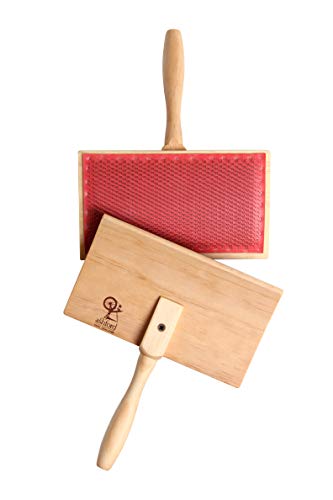
If you buy pre-washed roving or combed top, you can skip prep tools entirely at first. When you want to blend your own colors, process raw fleece, or make custom fiber batts, hand carders are the entry point. Think of them as wide-toothed brushes you use in pairs to align fiber into a smooth, spun-ready rolag. A drum carder comes later, when batch size matters.
Best starter
Ashford
Classic Wool Hand Carders
$89.00 as of Jun 22, 2026
★★★★★Our rating· Only 8 left in stock - order soon.
Hand carders look like wide-toothed dog brushes and work in pairs to align fiber into a ready-to-spin rolag. Ashford's medium-tooth cards handle the majority of wool types you'll encounter in your first year — fine enough for merino, open enough for Corriedale. They're slower than a drum carder but teach you to feel the fiber, which matters while you're developing your hands.
What we like
Medium teeth handle most wool types you'll encounter in year one
Hand carding builds fiber intuition a drum carder can't teach you
What to know
Slow — one rolag takes 2-3 minutes vs. seconds on a drum carder
Arms tire before a drum carder would on larger batches
A drum carder processes fiber in batches instead of one rolag at a time. The Strauch Petite is the one spinners and fiber instructors recommend by name: fine wire teeth, a hand crank, and a design that won't strip or snap your fiber. Buy this when you're processing raw fleece or making custom color blends — not before.
What we like
Processes large batches in a fraction of the hand-carding time
Strauch fine-wire teeth handle both coarse fleece and soft merino
What to know
~$200+ — only worth it when you're processing raw fleece regularly
Bulkier than hand carders; needs a dedicated table space
Once you've spun a spindle full of singles, you need to wind it off into a hank and set the twist with a warm-water soak. A niddy noddy (the hourglass-shaped winding tool) is the first finishing item worth owning — it lets you wind yarn off in consistent loops for measuring and washing. When you start plying two singles together for stronger balanced yarn, a lazy kate holds your bobbins under tension while you spin back.
Best starter
Ashford
Niddy Noddy
$38.50 as of Jun 22, 2026
★★★★★Our rating· Only 6 left in stock - order soon.
The niddy noddy is the hourglass-shaped tool that winds your spun yarn off a spindle or bobbin into a hank for washing and measuring. Ashford's version is solid birch and sized to give you consistent loop lengths — which matters for measuring yardage. You'll reach for it after every single spinning session.
What we like
Winds yarn into evenly-sized hanks for accurate yardage measuring
Solid birch — no flex or wobble that distorts your loop length
What to know
Takes a few sessions to develop a smooth winding rhythm
★★★★☆Our rating· Only 2 left in stock - order soon.
When you're ready to ply — spinning two singles together in the opposite direction for a balanced, stronger yarn — a lazy kate holds your bobbins or spindles under gentle tension while you spin. Without one, plying from the floor is a tangle-inducing ordeal. Simple tool, immediate quality-of-life improvement.
What we like
Holds bobbins under gentle tension for tangle-free plying
Fits standard Ashford bobbin sizes — no adapter needed
What to know
Only useful once you start plying — not a day-one purchase
Spinning your own yarn has a learning curve everyone describes the same way: frustrating for one session, satisfying for the next, and quietly addictive by week three.
Fiber spinning is one of those crafts where the first session can feel humbling — your yarn is lumpy, the spindle keeps dropping, and you’re not sure if you’re doing it right. You are. Lumpy, inconsistent yarn is exactly what the first session looks like, and the fact that you’re making something out of fiber and twist at all means the fundamentals are working.
By the end of a month, you’ll have a skein of real handspun yarn — recognizable, usable, possibly beautiful — and you’ll understand why people who start spinning rarely stop.
Week one: the three things that matter
Before you pick up a spindle, watch five minutes of a park-and-draft beginner video. You want to see the motion, not read about it. The three things that are actually happening:
Draft. You’re thinning the fiber supply by pulling it apart with your hands. This is what controls your yarn’s thickness. Fast, careless drafting = thick, lumpy. Slow, deliberate drafting = finer, more even. Your hands are doing this while the spindle spins below.
Twist. The spindle’s rotation adds twist to the drafted fiber, which locks the fibers together into yarn. Too little twist and the yarn falls apart. Too much and it kinks up on itself and coils. You’ll feel the right amount before you can describe it.
Tension. How hard you’re holding the fiber above the twist. Too tight and twist can’t travel up. Too loose and twist runs away into your fiber supply. The goal is a relaxed but controlled hold — easy to say, a week to internalize.
The most common beginner mistake is trying to control everything at once. You don’t have to. Pick one thing to pay attention to per session. Week one: just keep the spindle spinning and the fiber moving. Consistency comes from reps, not from thinking harder.
By week two, you’ve spun a few lengths of practice yarn and it looks… inconsistent. Good. Inconsistent yarn is a diagnostic tool.
Thick-thin yarn means your drafting hand is varying speed. Try: slow down the whole process. The spindle doesn’t need to be spinning fast; it needs to be spinning long enough for you to draft deliberately.
Yarn that coils and kinks has too much twist. You added spin faster than you added fiber. Try: either draft more fiber per spin, or let the spindle wind down before you draft.
Yarn that falls apart has too little twist. The opposite problem — you drafted faster than you added spin. Try: give the spindle more flicks before drafting, or draft more slowly.
Yarn that breaks is usually under-twisted at a thin spot. When the fiber is very thin, it needs more twist to hold together. Thin spots are actually where beginning spinners lose most of their yarn — learn to see them coming and slow down.
The shortcut to diagnosing all of these: hold your yarn at a 45-degree angle and watch it. Does it hang limp? Too little twist. Does it coil back on itself? Too much. Does it hang with a gentle, balanced S or Z? That’s what you’re aiming for.
Week three: the park-and-draft breakthrough
Most spinning teachers will suggest “park and draft” for beginners, and it’s genuinely the fastest path to consistent yarn. Here’s how it works:
Give the spindle a flick and let it spin freely. Now park it — tuck the spindle under your arm, against your leg, or hold the shaft still — and draft with both hands. No multitasking. You draft until you have a good length of yarn, then you let the spindle hang and twist that length. Then park and draft again.
This is not how you’ll spin forever, but it lets you learn drafting without also managing the spindle’s rotation in real time. Most beginners who hit a wall are trying to do everything at once; park-and-draft separates the skills.
The other week-three milestone: your first plied yarn. Plying means spinning two singles together in the opposite direction — if you spun your singles clockwise (Z-twist), you ply counter-clockwise (S-twist). Plied yarn is balanced, stronger, and looks more like “real yarn.” To ply from a drop spindle, wind your singles onto two bobbins or spools and use a lazy kate to hold them under tension while you spin back.
Week four: setting the twist and finishing your first skein
You’ve spun your first few ounces of singles, maybe plied some of them. Now you need to set the twist — the step that transforms springy, lively yarn into something that hangs straight and behaves.
Wind your yarn onto a niddy noddy to create a hank. Tie the hank loosely in four places with scraps of yarn so it doesn’t tangle. Then:
Fill a bowl with warm (not hot) water and a drop of dish soap or wool wash.
Submerge the hank and let it soak for 10-15 minutes.
Gently squeeze out the water — don’t wring or felt it.
Hang the hank from a doorknob or towel rack with a small weight attached (a sock filled with a few coins works).
Let it dry completely — usually overnight.
When you unwind it the next morning, it’ll hang straight and feel like yarn you bought in a store. That’s the moment most new spinners realize they’ve done something real.
Things you’ll fail at — and that’s normal
Dropping the spindle constantly in week one. It’s supposed to hang. It’ll drop. That’s what the floor is for. Get better at catching the yarn before the spindle unspins itself.
Spinning thick and thin by accident. This resolves on its own over the first month as your hands develop intuition. There’s no shortcut.
Losing your twist. When you stop paying attention for a moment, the twist runs into the fiber supply and locks it up. Draft back into it — pinch the yarn below the lock and draft above the pinch.
Thinking your first skein is terrible. It isn’t. It’s handmade. Show it to someone who knits.
What to do in month two
Spin a consistent weight. Pick one target — worsted, DK, or fingering weight — and practice staying there. This is the skill that separates beginner yarn from intermediate yarn.
Try a different fiber. If you’ve been on Corriedale, spin a braid of BFL. If you’ve been on BFL, try a small amount of merino. Different fibers teach your hands different things.
Consider a wheel. If you’ve been spinning 2-3 times a week for a month and have been consistently reaching for the spindle, that’s the signal. A wheel will make you much faster, and the technique transfer is mostly seamless.
Visit your local spinning guild. Even one session of spinning alongside experienced spinners is worth three months of solo YouTube practice.
Save your money
What you don't need yet
Beginners get pressured to buy a lot of stuff that doesn't help them play
better. Here's what we'd skip on day one.
A spinning wheel (before the spindle) — Master the basics of draft and twist on a $30 spindle before spending $400-800 on a wheel. A month of spindle spinning will also tell you what wheel features you actually want.
A drum carder — Pre-washed roving needs no carding. Save this for when you're processing raw fleeces or blending custom colors — months down the road.
Exotic fibers (silk, cashmere, angora) — Short-staple luxury fibers demand tight twist control you won't have yet. Start with Corriedale and graduate to the fancy stuff once your hands know what they're doing.
A swift and ball winder — For unwinding commercial yarn skeins — which you won't be buying once you're spinning your own. The niddy noddy handles your handspun hanks just fine.
Raw fleece — Beautiful in theory, much more involved in practice. Sorting, skirting, washing, and drying fleece is a full separate skill. Start with pre-washed roving and add this later if you want the full farm-to-yarn experience.
First week
Your first seven days
A short, real plan to get from gear-on-doorstep to actually playing.
Order a drop spindle and a 4 oz braid of Corriedale roving. · Buy
Spin your first practice length — expect lumpy, uneven yarn. That's not failure; that's fiber telling you where your tension is off. Keep going. · Action
Set your first skein: wind it onto the niddy noddy, tie it in four places, and soak it in warm water for 10 minutes. Hang to dry with a small weight attached. Unset handspun is springy and unruly — this step makes it behave. · Action
Spin 20-30 minutes every day for a week. Consistency matters more than length — your hands are building muscle memory, and that only comes with repetition. · Action
FAQ
Common questions
Should I start with a drop spindle or jump straight to a wheel?
Start with a drop spindle. It costs $25-35, teaches you everything about draft and twist, and tells you whether you actually enjoy spinning before you spend $400-800 on a wheel. Most spinners spend 4-8 weeks on a spindle first. If you're spinning three times a week after a month, then talk yourself into the wheel.
What's the most beginner-friendly fiber to spin?
Corriedale wool roving, hands down. Medium staple length that's long enough to control without sliding away, drafts slowly and predictably, and its natural crimp gives you time to feel the twist forming. Avoid short-staple merino and silk blends until you have 10+ hours of spinning done.
What's the difference between roving and combed top?
Roving is carded fiber — slightly jumbled, airier, easier to draft. Combed top is fiber where all strands run parallel — it produces smoother, denser yarn but drafts faster and less forgivingly. Start with roving; move to combed top when you want finer, smoother results.
How long until my yarn looks consistent?
Most beginners spin recognizable yarn in their first session — lumpy, but yarn. Consistent, even yarn takes 10-20 hours of practice. The breakthrough usually comes when you learn to let the twist travel up into your fiber supply instead of fighting it. That's a mindset shift, not a technique — it clicks suddenly.
Do I need to join a spinning guild?
Not required, but genuinely worth it. Guilds lend equipment (you might try a $700 wheel before buying one), host workshops, and include people who have solved every beginner problem you'll face. Search 'handspinners guild' plus your city — they're in almost every metro area and most welcome beginners.
What does 'setting the twist' mean, and do I have to do it?
After spinning, your yarn wants to coil on itself — the twist is alive and restless. Setting the twist means soaking the skein in warm water and hanging it to dry with a small weight, which relaxes the fiber permanently. Yes, you have to do it. Unset handspun is springy and unruly. The process takes five minutes.
Spin Off Magazine — The main spinning publication — techniques, gear reviews, pattern support. The beginner articles section is genuinely excellent and free to read.
Ravelry Spinning Forum — Active community of spinners at every level. The Ravelry 'Learning to Spin' group is especially welcoming for new spinners with embarrassingly basic questions.
Abby Franquemont — YouTube — Author of Respect the Spindle and one of the clearest spinning educators online. Her beginner videos are the best free instruction available.
The Woolery — Long-running fiber arts retailer with deep learning resources — fiber guides, tool comparisons, and tutorials that aren't tied to selling you something specific.
Ashford Wheels Learning Resources — Ashford's own learning hub: assembly videos, beginner guides, and troubleshooting for their wheels and spindles. Bookmark if you buy an Ashford tool.
Long Thread Media (Spin Off parent) — Publisher of Spin Off, Piecework, and Handwoven. Good for finding fiber workshops, retreats, and the broader fiber-arts community calendar.
As an Amazon Associate, JustBeginning earns from qualifying purchases.
We may also earn commission from other affiliate programs linked on this
page. Editorial recommendations are independent; we don't choose
products based on commission rates.
Product prices and availability are accurate as of the date and time
indicated and are subject to change. Any price and availability
information shown on Amazon at the time of purchase will apply.
Our top pickTop Whorl Spindle Large, Lacquered - 90mm (3.5 in, 2.75 oz) By Ashford


 Budget pick