Knife collecting rewards the curious: hundreds of blade steels, handle materials, and makers to explore, and a community famously generous with newcomers. You can start a real collection for under $100. Here's exactly what matters on day one — and what you can safely ignore until you've got a dozen knives.
By Colin B. · Published June 2, 2026 · Last reviewed June 2, 2026
CIVIVI Elementum
— The best $45 first knife. Teaches you what you want before you spend real money.
Budget total
$65
Typical total
$200
One good folder and a sharpener gets you started. Most collectors are at $150–300 once they've bought two quality knives and a proper sharpening setup.
We earn commission on qualifying Amazon purchases — see our
affiliate disclosure.
Price tiers and budget totals shown above are editorial estimates;
actual Amazon prices vary.
At a glance
Our top pick in each category
The fastest path through this guide — each best-starter pick by category.
Scroll for the budget and upgrade alternatives.
Handle before you buy if at all possible. Knife ergonomics are personal — a handle that fits one hand poorly is a knife you'll never pick up. Bass Pro, REI, and dedicated knife shops let you open and close real knives before committing. Five minutes in hand tells you more than fifty reviews.
Steel grade matters, but handle materials and fit-and-finish matter more at the beginning. You can feel whether a pivot is smooth, whether the lock feels solid, whether the handle sits naturally in your grip. You cannot feel a hardness number. Focus on what your hands tell you first.
The most common collecting mistake is buying cheap, then expensive, then cheap again. One good mid-range knife ($100–150) teaches you more than four budget knives. But one budget knife ($40–50) first teaches you whether collecting will stick before you commit real money.
The folding knife is where nearly every collector starts, and for good reason: you carry it daily, handle it constantly, and that physical relationship teaches you more about steel and ergonomics than any amount of forum reading. The key decision isn't brand — it's steel. Budget stainless (8Cr13MoV, Nitro-V) gets the job done. Mid-range American steel (S30V, S35VN) is where most serious collectors settle. Super steels (M390, S45VN) hold edges longer but cost more and sharpen slightly slower. Start with one knife in the $50–130 range. Everything else follows.
EDC Folders — what's the difference?
A few common shapes, each making a different trade.
Budget Stainless
Affordable, easy care, sharpens fast — the right start for most.
Common steels
8Cr13MoV, Nitro-V
Hardness
HRC 58–60
Price range
$30–60
Best for First knife purchases, everyday users, humid environments
Tradeoff Edge dulls faster than premium steel — resharpen more often
S30V steel, the AXIS lock, and Benchmade's free lifetime sharpening service — the Mini Griptilian is where most serious collectors start. At ~$120, it's real money, but this is the knife that makes the obsession click. You'll carry it daily, understand what properly heat-treated steel feels like, and use it as the baseline for everything you buy next.
What we like
AXIS lock is smooth, ambidextrous, and among the safest in production knives
LifeSharp: Benchmade sharpens it free, forever — send it in, get it back sharp
S30V holds a hair-shaving edge through weeks of daily carry
What to know
Factory edge ships dull — plan on sharpening it before first use
~$120 is a commitment if you're not sure collecting will stick
CIVIVI is the entry drug for knife collecting. The Elementum punches well above its $45 price with clean fit and finish, a smooth ball-bearing pivot, and Nitro-V steel that outperforms most $80 knives. Buy one before you spend real money — it'll teach you what you actually want in a folder without the risk.
What we like
Ball-bearing pivot opens like a knife that costs three times as much
Nitro-V steel holds an edge better than most 8Cr13MoV competitors
Slim, light, and inoffensive — disappears in a pocket all day
What to know
Chinese-made: excellent fit and finish, but purists will notice micro tolerances
No US maker warranty comparable to Benchmade's LifeSharp service
The Para 3 is the Spyderco that collectors reach for after their first Benchmade. S45VN steel offers best-in-class edge retention, the G10 scales feel properly textured and grippy, and the full flat grind makes it easier to reprofile than most similarly priced folders. The Compression Lock is buttery smooth after break-in.
What we like
S45VN steel: the current benchmark for production-knife edge retention
Compression Lock is as strong as a liner lock but faster to disengage
Spyderco's cult community means endless mods, reviews, and comparisons
What to know
Compression Lock takes ~200 openings to break in — ships stiff
~$185 is real money; more rewarding as a second or third knife
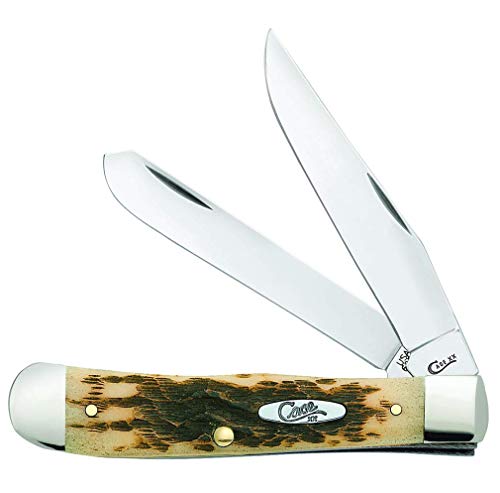
If all your knives are modern locking folders, you're missing half the hobby. Traditional slip-joints — like the Case Trapper — connect you to a century of American knifemaking, have a deep secondary market, and are the gateway to vintage collecting. Bone handles, 1095 Cro-Van steel, and a walk-and-talk that takes practice to appreciate.
What we like
Slip-joint is legal to carry where locking folders face restrictions
Bone handles and 1095 Cro-Van steel at a fair price for the heritage
Connects you to vintage collecting — same patterns go back to 1889
What to know
No lock — requires deliberate handling; not for careless pocket use
Develops patina and requires more care than modern stainless folders
Fixed blades are the quieter branch of the collecting tree — less flashy than folders but deeply satisfying. They're mechanically simpler (no pivots to loosen), often more interesting historically, and the sheath-craft that accompanies them is its own sub-hobby. Start with something American-made in a proven steel before chasing exotic Japanese or German makers. High-carbon steel (1095) teaches you about patina and care; stainless (420HC) is more forgiving for a first knife.
Best starter
Buck Knives
119 Special
$$
★★★★★Our rating
Made in Post Falls, Idaho since 1972. Buck's 420HC steel isn't the most exotic, but they heat-treat it better than almost anyone else using the same alloy — the 119 holds a real working edge and sharpens easily on any stone. At $65, this is the cleanest entry point into fixed blade collecting: genuine American heritage at a fair price.
What we like
Made in Post Falls, Idaho — American heritage since 1972
Buck's heat treat of 420HC outperforms the same steel elsewhere
Clip point blade is versatile for hunting, camp use, and display
What to know
Leather sheath stitching loosens after heavy field use
420HC won't impress steel snobs — though that's not why you buy it
If you want to understand what a Scandinavian grind feels like — the long, flat bevel that makes freehand sharpening nearly foolproof — buy a Mora first. The Companion is $20, the Swedish 12C27 steel is honest, and the lessons it teaches about edge geometry apply to every knife you'll ever own. Not a collector piece — a teacher.
What we like
Scandi grind is the easiest to freehand-sharpen to a truly sharp edge
Swedish 12C27 steel punches above its weight for a budget fixed blade
Under $25 — no hesitation cost for a learning knife
What to know
Plastic handle and basic sheath — a working knife, not a display piece
Not impressive at a show; the point is skill-building, not acquisition
1095 high-carbon steel, an open-source sheath system, and a cult following among collectors who actually use what they own. The ESEE 3 rusts if you ignore it — and that's the point. Caring for high-carbon steel teaches you more about metallurgy and patina than any YouTube video can.
What we like
1095 high-carbon steel develops a beautiful protective patina over time
Open-source kydex sheath design means unlimited aftermarket options
ESEE knives are warranted for life, no questions asked
What to know
1095 steel requires active care — rusts fast without protective oil
~$95 is mid-range money for a working fixed blade, not a display knife
Every knife in your collection needs to be sharp — a dull collector knife is a contradiction in terms. The good news: sharpening is a learnable skill that makes you a better collector by teaching you about steel, edge geometry, and bevel angles. Guided systems (Lansky, Edge Pro) hold the angle for you and work reliably for beginners. Freehand whetstones are more rewarding to master but take time to learn. Start guided, graduate to freehand when you've got ten or more knives worth caring about.
Best starter
Lansky
Deluxe 5-Stone Sharpening System
$52.63 as of Jun 22, 2026
★★★★★Our rating· In Stock
Guided systems remove the hardest part of learning to sharpen: holding a consistent angle. The Lansky Deluxe walks you through coarse-to-polished on a controlled guide rod, and the result is genuinely sharp — not just 'better than before.' Every collector needs a sharpening system. Start here before spending $180 on a freehand stone setup.
What we like
Controlled angle guide removes the biggest beginner sharpening obstacle
5-stone progression takes any dull blade to a polished, hair-shaving edge
Works on both sides of nearly every blade style including serrated edges
What to know
Ceramic rods won't remove chips or handle major reprofiling work
Slower than freehand for experienced sharpeners who know their angles
If you want to learn freehand sharpening — the skill that separates true knife people from gear collectors — the King KW-65 is the right beginner stone. The 1000/6000 combo covers reprofiling and polishing in one piece. Japanese water stones feel completely different from ceramic rods, and this $25 stone will teach you more about edge geometry than any guided system.
What we like
1000/6000 combo handles both reprofiling and finishing in one stone
Water stone feedback teaches you to feel the edge angle as you work
Under $30 — low-commitment way to learn a lifelong skill
What to know
Freehand technique takes 5–10 knives to develop consistent angles
Slower material removal than diamond stones — not for chip repair
★★★★☆Our rating· Only 1 left in stock - order soon.
The Edge Pro Apex is the system serious collectors reach for when the Lansky plateaus. Longer guide rods hold angle with more precision than the clamp system, the stones cover finer grits, and the results are visibly sharper. Worth the $180 once you can tell the difference — which usually happens around your eighth or ninth knife.
What we like
Longer guide rods produce more consistent angles than compact systems
Edge Pro stones available in finer grits for a mirror-polished edge
Huge community of sharpeners — abundant tutorials and stone reviews
What to know
At ~$180, overkill until you have 10+ knives worth the precision
Angle calibration step has a learning curve — not quite plug-and-play
The right storage protects your investment and lets you actually enjoy the collection. A padded roll prevents blades from scratching each other; a glass-lid display case lets you see everything at once and show visitors. Don't overthink this early — individual blade guards on each knife plus a locked drawer is perfectly adequate for the first five or six pieces. Scale up when the collection starts feeling crowded.
Best starter
Leather Knife Roll
Storage Bag
$$
★★★★★Our rating
When you have three or four knives, you need somewhere to put them that isn't a kitchen drawer. A padded leather roll protects blades from scratching each other, keeps your collection organized and portable, and looks better than a zip-lock bag. Start here well before you invest in a display case.
What we like
Padded slots prevent blades from contacting each other and dulling
Rolls up for storage or travel — your collection goes with you
Leather develops character with age, becoming part of the collection
What to know
Open design doesn't control humidity — store in a dry location
Many rolls are sized for kitchen knives; folders need the smaller slots
A glass-lid display case is the endgame for most collectors: knives visible, organized, and protected from dust. Once you have a dozen pieces worth displaying, a proper case turns a collection into something you actively enjoy looking at every day. Velvet-lined interior prevents blade-to-case scratches.
What we like
Glass lid means knives are visible without handling — reduces wear
Lock keeps the collection secure from casual pilfering
Velvet lining prevents blade-to-case contact and shows finish well
What to know
A real display case signals collector-level commitment — have 12+ knives first
Humidity control requires silica gel packets; case itself is not sealed
Knives need occasional attention — especially folders with pivot mechanisms and high-carbon steel blades. Two things matter: a light lubricant for pivot points and locking mechanisms (prevents galling and keeps deployment smooth), and a protective wax or oil for the blade and handle (slows oxidation and patina on both metal and natural handle materials). Fifteen minutes of maintenance after every few carries keeps a $200 knife performing like new for decades.
Best starter
Sentry Solutions
TUF-GLIDE Pen
$
★★★★★Our rating
TUF-GLIDE is the pivot lubricant that knife people actually use. One application on the pivot and blade tang keeps a folder deploying smoothly for months, prevents metal-on-metal galling, and adds a thin corrosion barrier to the blade. The pen applicator is foolproof — no mess, no overlubing.
What we like
Dry lubricant won't attract pocket lint the way oil-based lubes do
One pen covers an entire folder's pivot — a bottle lasts years
Also works as a thin rust inhibitor on the blade itself
What to know
Dry-film formula needs reapplication after deep cleaning with solvent
Less effective on rough machine surfaces — most production knives are fine
The museum-quality preservation wax that serious collectors use on everything: metal blades, bone handles, leather sheaths, wood scales. A light coat every few months slows oxidation, protects natural handle materials from drying out, and builds up a subtle patina that improves with each application. Museums have trusted it for 50 years.
What we like
Museum-grade microcrystalline wax — the conservator's standard
Works on metal, bone, wood, leather, and antler — one product covers all
Doesn't yellow or get sticky in heat like carnauba-based waxes
What to know
Expensive for what it is — mineral oil works 80% as well on blades alone
Requires buffing after application — not a quick wipe-down product
Most beginners buy the wrong knife first — not because it's bad, but because they didn't know what they were choosing. Here's how to build taste, not just a pile of blades.
Knife collecting has a problem that most collecting hobbies don’t: you can buy twenty knives before you understand why some of them are better than others. The forums are full of people who started with a $20 Chinese folder, graduated to a $300 Benchmade, then realized they’d been buying wrong the whole time because they’d never handled enough different knives to develop taste.
This guide is about avoiding that loop. One month, done right, gives you a better baseline than most people develop in a year.
Week 1: Before you buy anything, understand what you’re choosing
The single most important concept in knife collecting is steel. Everything else — handle material, blade geometry, maker reputation — matters after you understand steel.
Here’s the practical version:
Budget stainless (8Cr13MoV, AUS-8, Nitro-V): The steel on most knives under $60. Gets sharp, dulls faster than premium steel, sharpens easily when it does. Not a flaw — it’s a trade-off. Great for learning.
Mid-range stainless (S30V, S35VN, 20CV): The collector sweet spot between $80–200. Holds an edge noticeably longer than budget stainless, still sharpens reasonably easily. This is where most serious collectors stay long-term.
Super steels (M390, S45VN, CTS-204P): The top tier. Best edge retention, sometimes harder to reprofile, and the price reflects it. Meaningful at $150–300+ knives from serious makers.
High-carbon steel (1095, 1075, O1): The old way. Incredible edges, develops a beautiful protective patina over time, rusts if you neglect it. More common in fixed blades and traditional knives. A different relationship with your knife — more active.
You don’t need to memorize all of these. Just know they exist, and that when someone on BladeForums argues about steel, this is what they’re arguing about.
Week 2: Handle everything, buy one thing
The worst knife-collecting habit is buying before handling. Knife ergonomics are deeply personal — a handle shape that feels perfect in one hand is awkward in another. The only way to know is to hold things.
Places to handle knives before buying:
REI (great Benchmade and Kershaw selection, staff usually knowledgeable)
Bass Pro or Cabela’s (stronger in fixed blades and traditional slip-joints)
A local knife shop (if you have one — worth finding)
Gun shows (mixed quality but often good variety for traditional knives)
When you handle a folder, pay attention to these things in order:
Does the pivot feel smooth or gritty? A smooth detent and deployment tells you about manufacturing quality.
Does the handle fill your grip naturally, or do you have to think about it? A knife you have to accommodate is a knife you’ll eventually dislike.
Does the lock feel confident? There should be no play or flex when the blade is deployed.
What’s the weight? Lighter isn’t always better — some people find very light knives feel cheap, others love them. You won’t know until you’ve held both.
By the end of week 2, you should have handled at least 6–8 different knives. Then buy one. Just one.
For most people, the right first knife is either the CIVIVI Elementum ($45) to see what a modern folder feels like without much risk, or the Benchmade Mini Griptilian ($120) as the “real” baseline that everything else gets measured against. If you’re already sure collecting will stick: the Benchmade. If you’re still testing the water: the CIVIVI.
Week 3: Learn to sharpen
A collector who can’t sharpen their knives is a hobbyist; a collector who can is a practitioner. Sharpening is also the fastest path to understanding steel — you’ll feel the difference between 8Cr13MoV and S30V the first time you put them on the same stones.
Start with a guided system. The Lansky Deluxe 5-Stone setup is the most forgiving for beginners — the guide rod holds your angle so the only variable is pressure and stroke count. After an hour with it, you should be able to produce an edge that shaves arm hair. That’s the benchmark.
The progression on a Lansky:
Extra coarse (70-grit): Only for damaged or very dull edges — you’re removing metal
Coarse (120-grit): The standard starting point for a typical working edge
Medium (280-grit): Refining the bevel
Fine (600-grit): The working edge — sharp enough for most cutting tasks
Work one side to a consistent burr before switching sides. Feel for the burr with your thumb against the flat of the blade — you’ll feel a slight catch when it’s there. When you can raise a burr on each side consistently, the rest is just progression through grits.
Week 4: Your first collection decisions
By week four, you’ve handled knives, bought one, and sharpened it. Now you have enough information to start making real collection decisions.
The axis that matters most: EDC folders vs. traditional slip-joints vs. fixed blades. These aren’t just different knives — they’re different subcultures within the same hobby.
Modern folders (Benchmade, Spyderco, CIVIVI): The most active part of the hobby. You carry them, open and close them, develop feel for mechanisms. The BladeForums EDC subforum is where most of the conversation lives.
Traditional slip-joints (Case, GEC, Queen, vintage): Connects you to American knifemaking history going back to the 1800s. A huge secondary market, passionate collectors, and a completely different collecting logic — these are knives you appreciate for their patterns, bone handles, and walk-and-talk, not their steel specs.
Fixed blades: The quietest branch. More connection to craft and tool tradition. Easier to collect meaningfully (fewer variables) but harder to carry daily.
Most collectors start with modern folders and branch out. But if you handle a Case Trapper at a shop and something clicks — follow that instinct. The hobby goes where your taste takes it.
What makes a knife “worth collecting”:
It’s not primarily about resale value or rarity. It’s about meaning to you — maker story, handle material, historical pattern, the way a particular steel performs on your sharpening stones. The people who buy knives purely for potential appreciation end up with a portfolio, not a collection.
Buy knives you want to carry or display or study. The rest follows.
Don’t buy fast in month one. The temptation is real — new knife people often go from zero to ten knives in the first thirty days, and then realize they don’t actually like most of them.
The collectors who develop the best taste early are the ones who lived with each knife for at least two weeks before buying the next. You learn more from one knife over a month than from ten knives over a month. Handle broadly, buy slowly, sharpen everything.
By the end of month one you should have: two or three knives you actually like, a functional sharpening setup, a BladeForums account, and a clearer sense of which direction the hobby pulls you. That’s a better foundation than most people have after a year.
Save your money
What you don't need yet
Beginners get pressured to buy a lot of stuff that doesn't help them play
better. Here's what we'd skip on day one.
Custom or handmade knives — Buy 15–20 production knives first. You need the reference points to know what you actually want a maker to build.
Limited-edition production runs — Chasing sprint runs and exclusives is a flipper's game until you've developed real taste. Let the market decide which ones matter.
Japanese kitchen knives — A completely different collecting world with its own steels, makers, and community. Start one rabbit hole at a time.
A glass display case — Overkill until you have at least 10–12 pieces worth displaying. A knife roll and a dry drawer work fine early on.
A belt grinder or forge — Knifemaking is a rewarding hobby — but it's a separate one. Collect first; make later if the bug bites.
First week
Your first seven days
A short, real plan to get from gear-on-doorstep to actually playing.
Order your first EDC folder and carry it every day this week. · Buy
Create a BladeForums account and read the 'What Knives Are You Carrying' megathread. The community is opinionated and generous. · Action
BladeForums · The main knife collecting community — every question answered, sometimes brutally
Visit a local knife shop, sporting goods store, or gun shop and handle a few knives before buying your second one. REI and Bass Pro usually have a decent selection you can actually touch. · Action
Learn the four steel families: budget stainless (8Cr13MoV), mid stainless (S30V/S35VN), super steel (M390/S45VN), and high carbon (1095). You'll hear these names constantly. · Learn
Open and close your new folder 100 times. Deliberately. Feel the detent, the action, the lock engagement. This is how collectors build the intuition that makes future purchases easier. · Action
FAQ
Common questions
What's the best first knife to buy for collecting?
For most people: a CIVIVI Elementum ($45) to learn what you want, followed by a Benchmade Mini Griptilian (~$120) as your first 'real' knife. The CIVIVI teaches you; the Benchmade sets your baseline. If you only buy one, skip the CIVIVI and start with the Benchmade.
How much does it cost to start a knife collection?
You can start for $45–65 (a CIVIVI folder or a Buck 119 fixed blade plus a basic lubricant). A more complete starter setup — good folder, fixed blade, and sharpening system — runs $150–200. Most serious collectors are at $500–1000 in total by the end of their first year, which is still cheap compared to most collecting hobbies.
What does steel grade actually affect in daily use?
Mainly edge retention (how long before it dulls) and ease of sharpening (how quickly it comes back). Better steel holds an edge longer between sharpenings but is sometimes harder to reprofile. For most beginners, the difference is smaller than the marketing suggests — good sharpening skills matter more than buying premium steel.
Is knife collecting legal?
Most knives are legal to own in the US. Carry laws vary significantly by state and city — blade length limits, locking mechanism restrictions, and 'intent' clauses are all common. Switchblades and assisted-openers have the most restrictions. Check your local laws before carrying anything new. BladeForums has per-state summaries.
What's the difference between folders and fixed blades for collecting?
Folders are the more active part of the hobby — you carry them, open them, develop feel for the mechanism. Fixed blades are simpler mechanically but connect more directly to historical and craft traditions. Most collectors end up with both; start with a folder since you'll learn more from daily carry.
How do I know if a knife is worth collecting vs. just buying?
Honest answer: you don't know at first, and that's fine. Collect what draws you — maker reputation, handle materials, blade geometry — and your taste refines itself over time. The collecting community has strong opinions about value retention; don't worry about that until you have 15 or 20 knives.
How do I care for high-carbon steel knives?
Wipe the blade dry after any contact with moisture. Apply a thin coat of food-grade mineral oil or TUF-GLIDE before storage. High-carbon steel develops a patina (a grey-brown oxide layer) over time — this is protective and desirable, not damage. The patina eventually makes the blade more rust-resistant than it was new.
BladeForums — The main knife collecting community. Every steel, maker, and technique debated at length. Opinionated but generous with newcomers — search before you post.
KnifeCenter — Major retailer with extensive editorial reviews and comparison guides. Good for researching before you buy.
Knife Informer — Independent review site with steel comparisons, brand deep-dives, and beginner guides. One of the better written resources in the space.
r/knives — Active subreddit. Better for show-and-tell and quick opinions than deep research. The wiki has a solid beginner FAQ.
Nick Shabazz (YouTube) — The most thorough production-knife reviewer on YouTube. Consistent evaluation criteria, honest about quality issues, and prolific. Start here for any knife you're considering.
Best EDC Knife Reviews (YouTube) — Practical, use-focused reviews with an eye toward carry and cutting performance. Complements Shabazz's collector-oriented takes.
Case Collector's Club — For those drawn to traditional slip-joint and American-heritage knives. Connects you to the secondary market and limited patterns that don't show up on Amazon.
As an Amazon Associate, JustBeginning earns from qualifying purchases.
We may also earn commission from other affiliate programs linked on this
page. Editorial recommendations are independent; we don't choose
products based on commission rates.
Product prices and availability are accurate as of the date and time
indicated and are subject to change. Any price and availability
information shown on Amazon at the time of purchase will apply.


 Best starter