A steel tongue drum sounds like what would happen if a handpan had an affordable sibling. You strike the metal tongues with rubber mallets or your fingers, and the drum rings out in its tuned scale (usually a pentatonic that sounds consonant in nearly any order). Budget: $80 to $200 for most beginners. The only real decision is how many tongues and which scale. Here's what actually matters.
By Colin B. · Published June 15, 2026 · Last reviewed June 15, 2026
Your first drum runs $80-150. Add $30 for a sticker set and a mallet upgrade and you're fully equipped.
We earn commission on qualifying Amazon purchases — see our
affiliate disclosure.
Price tiers and budget totals shown above are editorial estimates;
actual Amazon prices vary.
At a glance
Our top pick in each category
The fastest path through this guide — each best-starter pick by category.
Scroll for the budget and upgrade alternatives.
The pentatonic scale is forgiving by design. Most beginner drums are tuned to D major pentatonic, which means nearly any combination of notes in any order sounds at least decent. This is intentional. The instrument was engineered for accessibility.
Tongue count matters more than brand. An 8-note drum gives you one octave and suits meditation or ambient play. An 11-note lets you play actual melodies. A 15-note opens two full octaves but takes longer to memorize. For most beginners, 11 notes is the answer.
Most beginner drums include mallets, a bag, and note stickers in the box. Verify before buying accessories separately.
The gear
What you actually need
Steel Tongue Drums
The most important buying decision is tongue count. An 8-note drum covers one pentatonic octave and suits ambient or meditative playing. An 11-note gives you more melodic range while staying beginner-friendly. A 15-note opens two full octaves but takes longer to memorize. For most people, the 11-note in D major pentatonic is the answer: the scale sounds consonant in nearly any order you play the tongues, so you make music immediately, not after years of practice. Brand matters less than tongue count and tuning quality.
Steel Tongue Drums — what's the difference?
A few common shapes, each making a different trade.
8 Notes
One pentatonic octave, ideal for meditation and ambient playing.
Tongues
8
Octaves
1
Typical size
6-8 inches
Best for Relaxation, ambient play, first-time buyers on a budget
Tradeoff Limited melodic range; feels restrictive after 1-2 months of daily play
★★★★★Our rating· Only 17 left in stock - order soon.
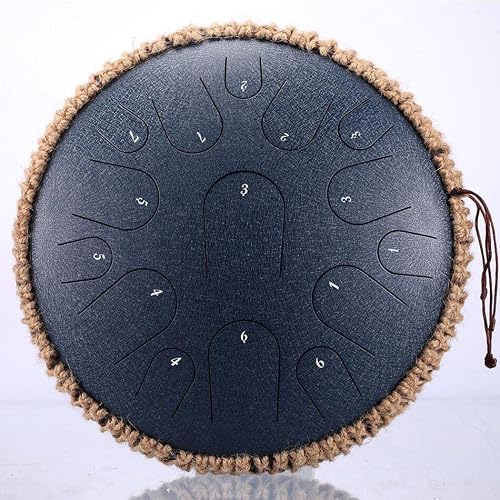
The 11-note D major pentatonic is the most-recommended beginner configuration, and LEKATO's version hits the price-to-quality sweet spot. Warm tone rather than tinny, consistent tuning out of the factory, and the package includes mallets, a carry bag, and note stickers. Ready to play within five minutes of opening the box.
What we like
D pentatonic tuning sounds musical in nearly any note order
Package includes mallets, carry bag, and note stickers
In-tune from the factory; no adjustment needed out of the box
What to know
Powder-coat finish can arrive with minor cosmetic scuffs
Included mallets worth upgrading after the first month
AKLOT's 8-note C key comes complete with mallets, note stickers, finger picks, and a gig bag, everything in the box for under $60. One octave limits melodic range, but the C pentatonic sounds just as musical as D for relaxation and ambient play. If you want to follow most online D-major tutorials directly, step up to the 11-note.
What we like
Complete kit under $60: mallets, stickers, picks, and bag included
C pentatonic sounds musical in any order, same principle as D pentatonic
What to know
C key doesn't match most D-major tabs online; some transposing needed
One octave limits you to short melodic fragments, not full songs
HLURU is the brand serious players upgrade to. Their 15-note drum gives you two full octaves, better steel quality, and a rounder, more resonant tone you can't get from budget options. The larger 13-inch body means longer sustain on each note. Worth the premium once you're playing daily and feeling the limits of your starter drum.
What we like
Two full octaves let you arrange complex melodies with bass and top notes
HLURU steel quality produces noticeably more resonant tone than budget brands
Longer sustain per note; excellent for meditation and ambient playing
What to know
15 tongues take time to memorize; free-form playing is harder at first
Premium price ($180-250); overkill for the first two months
Most drums ship with two rubber-tipped mallets that work for the first week or two. After that, a dedicated four-mallet set is worth having: you can hold two in each hand for interval playing and choose the tone you want (soft tips for mellow, sustained ringing; firmer tips for brighter attack). Fingertip picks (silicone thimbles) let you play with your fingers without building calluses, which most players prefer once they've learned the note positions by feel.
Best starter
Steel Tongue Drum Soft Mallets 4-Pack
$11.81 as of Jun 22, 2026
★★★★★Our rating· Only 14 left in stock - order soon.
Four mallets means you can hold two per hand and play intervals impossible with just two. Soft rubber tips produce the warm, sustained tone most beginners expect from the instrument. The step up in weight and tip quality over included mallets is immediately noticeable.
What we like
Four mallets let you play intervals and harmonies with both hands
Soft rubber tips produce the warm, resonant tone beginners expect
What to know
Tip firmness varies slightly by batch; some packs run firmer than listed
Longer handles can feel unwieldy on compact 6-8 inch drums
Fingertip picks are silicone thimbles that slip over your fingertips, letting you play by hand without building calluses. Most players prefer mallets to start, then shift to fingers once they know the note positions. These protect your fingertips during the transition and produce a slightly brighter, more precise attack than bare skin.
What we like
Lets you play by finger without building calluses over weeks
Silicone thimbles fit snugly without slipping mid-song
What to know
Takes a few tries to find which finger size fits your hand
Slightly reduces tactile feedback compared to bare fingertips
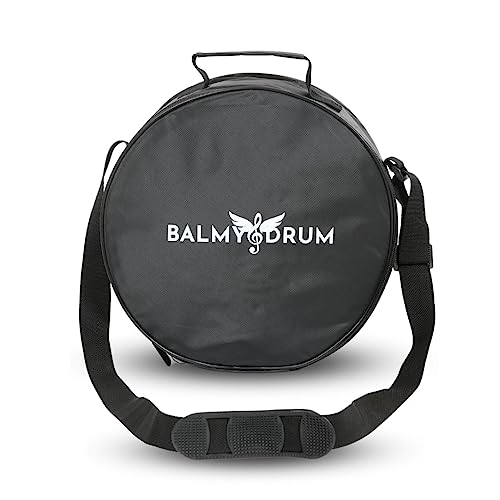
Most drums ship with a thin fabric sleeve that barely qualifies as protection. A purpose-built padded bag has foam interior, separate compartments for mallets and accessories, and keeps the steel finish from scuffing in transit. If you play at home only, it doubles as storage. The hard-shell upgrade is worth it only if you travel with the compact drum on planes or through rough environments.
Best starter
Steel Tongue Drum Padded Carry Bag 10 Inch
$39.95 as of Jun 22, 2026
★★★★★Our rating· Only 14 left in stock - order soon.
This padded bag has a foam interior, a shoulder strap, and fits 8- to 10-inch drums, covering most 11-note beginner drums. Most drums that include a bag ship with something thinner; this is what you actually want after day one if your drum didn't include adequate padding.
What we like
Foam interior protects tongue finish from scuffs in transit
Shoulder strap makes carrying the drum hands-free
What to know
Fits up to 10 inches; won't accommodate the 13-inch HLURU upgrade drum
Shoulder strap is unpadded; tiring for walks longer than 15 minutes
If you bought the compact 6-8 inch budget drum and plan to travel with it, this hard shell case provides protection no padded bag can match: overhead bin compression, outdoor drops, and rough transport. Foam-padded interior and a locking clasp. The padded bag is all most at-home players need; this is for those taking the drum on the road.
What we like
Hard shell survives overhead bin compression and outdoor drops
Foam-molded interior keeps the drum from shifting or rattling
What to know
Sized for compact 6-inch drums; won't fit 10-inch or larger
Heavier than a padded bag; not worth it for home-only players
Steel tongue drums use a letter-based notation system: songs are written as sequences of note names (D, F, A, G, etc.) or as positions on a tongue diagram. Stickers that label each tongue are the fastest way to learn which position makes which sound. A songbook calibrated to D major pentatonic gives you arranged tabs for popular melodies that work immediately on any 11-note drum. Both become less necessary once you memorize the layout, usually within a few weeks of regular play.
Best starter
Shanrya
Steel Tongue Drum Note Stickers
$8.06 as of Jun 22, 2026
★★★★★Our rating· Only 4 left in stock - order soon.
The standard tongue drum tab system uses letter notation (C, D, E, F, G, A, B). Stickers that label each tongue let you follow tabs without memorizing positions first, which means you can play real songs in your first session. Gold PVC, waterproof, and sized for 8 to 15 tongues. Most online tutorials and apps assume you have these.
What we like
Lets you follow tabs and play real songs from day one
Waterproof PVC; remove cleanly without leaving residue
What to know
Stickers can shift slightly if you play aggressively with mallets
Redundant once you memorize positions, usually within a few weeks
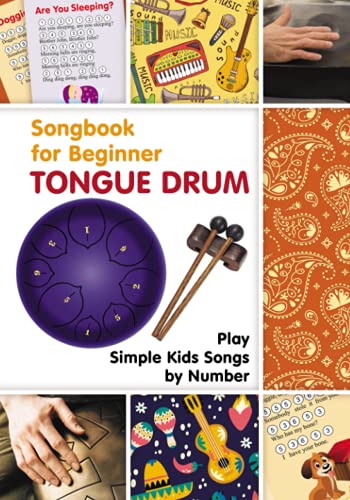
A dedicated songbook for D major pentatonic covers exactly the melodies that work on the most common beginner drum. Letter-notation tabs are laid out measure by measure; no music theory required. Even if you can't read standard sheet music, you can play the first song within 20 minutes of opening this book.
What we like
Letter-notation tabs require zero music theory to follow
Songs calibrated to D major pentatonic, the standard beginner scale
What to know
Songs are simple; you'll outgrow it within a month of daily play
Limited to D pentatonic scale; less useful for C key drum buyers
Steel tongue drum is one of the few instruments where you sound musical within minutes. The pentatonic scale works in your favor from the very first session. Here's what to expect in your first month, and how to make the most of it.
Most instruments punish beginners. You press the wrong key on a piano and it just sounds wrong. You draw a bow across a violin string and it squeaks. The steel tongue drum is different: the tongues are tuned to a pentatonic scale, which means almost any order of notes you play sounds at least decent. The instrument is engineered so that exploration feels like music rather than like failure.
This is what your first month actually looks like, week by week, with the things that matter and the things you’ll be tempted to overthink but shouldn’t.
Session one: set up and explore
Before you play a single song, do two things. First, apply the note letter stickers to each tongue (most beginner drums include them; if yours doesn’t, they’re a few dollars on Amazon). The stickers label each tongue C, D, E, F, G, A, or B. Second, play every tongue once, left to right, to hear the full scale.
Then put down the stickers, the tabs, the YouTube tutorials, and just improvise for 10 minutes. Hit any tongue in any order. Let sounds ring and overlap. There’s no wrong answer when the scale is pentatonic. This session is about building a sensory map of the instrument, not about playing correctly.
The two most common beginner mistakes in session one: (1) trying to follow a tab immediately instead of exploring first, and (2) dampening notes too quickly because the ringing feels like noise. Let it ring. The sustain is the point.
Week one: learning where the notes live
By the end of the first week, your goal is to know the position of every note without looking at the stickers. This is achievable. You have 8 or 11 tongues arranged in a fixed pattern; with 15 minutes of daily play, most people have the layout memorized within 5 to 7 days.
The method that works fastest: pick two adjacent tongues and alternate them for a minute, then add a third, then a fourth. You’re not learning songs yet; you’re training your hand to find notes by feel rather than by reading sticker labels.
Once you know where the notes live, learn one simple tab all the way through before moving on. Most free beginner tabs use letter notation (D-A-F-D-A, etc.). The note stickers are your reference. Play the sequence slowly, don’t worry about timing, and repeat until the notes are automatic. This takes one or two sessions, not one or two weeks.
What to expect to struggle with: even timing. The pentatonic scale makes notes sound good; rhythm is the actual skill. Tapping a foot or playing to a slow metronome helps, but it isn’t required in week one. Get the notes first, then the timing.
With the note positions learned and one tab under your fingers, week two opens up. Most simple melodies you know well (folk songs, lullabies, popular hook lines) can be played on a D major pentatonic tongue drum. Tabs for these exist in abundance online; search ‘steel tongue drum D pentatonic tabs’ and you’ll have more than you can learn in a month.
A pattern worth building into your daily practice: spend the first five minutes reviewing what you already know (muscle memory maintenance), then spend ten minutes on one new thing. This two-part structure keeps you improving without making the session feel like homework.
Around week two is when most players start thinking about playing with their fingers instead of mallets. You can. Fingertip picks (silicone thimbles) protect your fingertips during the transition and produce a slightly brighter attack than rubber mallets. Most people end up preferring one or the other; try both before you commit to a preference.
What makes this instrument different
The steel tongue drum is one of the rare instruments where the beginner experience and the advanced experience feel continuous rather than separated by a wall of technique. What you’re doing in week one (exploring the scale, finding melodic patterns, letting notes ring) is the same thing players who’ve been at it for five years are doing. The skill ceiling is real but not intimidating.
The wellness angle is real too. The sustained, resonant tones of a pentatonic scale are used deliberately in sound therapy and meditation contexts. This isn’t pseudoscience; there’s a reason the instrument feels calming to play. Many people keep playing tongue drum not to get better at music but because the playing itself is the reward.
What to do after your first month
After a month of daily play, you’ll know your note positions by feel, have five to ten songs learned, and probably be thinking about what’s next. A few things that change the slope from here:
Try a different scale. Most beginner drums are D major pentatonic, but C major, G major, and minor pentatonic all feel completely different and will expand your vocabulary. You don’t need to buy a new drum yet; just find tabs written for your scale and explore more deeply.
Record yourself. Even a phone recording after a session reveals things you don’t notice while playing. The timing issues become obvious. So does the progress.
If you want more range, consider 15 notes. Once you’ve genuinely hit the ceiling on what your 11-note drum can do, a 15-note drum (two full octaves) opens new territory. This is a real upgrade, not a beginner upsell. Wait until you feel the limit before spending the money.
You’re not a beginner anymore after a month of consistent play. You’re a player with a handful of songs and a feel for the instrument, which is a much more interesting place to be.
Save your money
What you don't need yet
Beginners get pressured to buy a lot of stuff that doesn't help them play
better. Here's what we'd skip on day one.
A RAV Vast handpan — The $2,000+ sibling of the tongue drum. Beautiful, but a completely different instrument. Start here first.
Multiple drums in different scales — One drum covers your first six months. Buy a second scale only when you've genuinely hit the ceiling on what one drum can do.
An electronic digital tongue drum — Units with 128 built-in scales sound clever but the tactile feedback is different from steel. Learn on steel first.
A professional tongue filing kit — Factory tuning on a decent drum is accurate enough for years. Don't file tongues unless they're genuinely out of tune.
Dampening rings or foam overlays — Advanced technique tool for controlling sustain on individual tongues. Irrelevant until you're past beginner level.
First week
Your first seven days
A short, real plan to get from gear-on-doorstep to actually playing.
Order the LEKATO 11-note D major drum so it arrives before the weekend. · Buy
11 notes covers everything a beginner wants. An 8-note gives you one octave, which is great for ambient play and meditation. A 15-note gives two full octaves for complex arrangements. Unless you specifically want the meditative simplicity of 8 notes, start with 11.
Which scale should I buy?
D major pentatonic for almost everyone. It's the standard beginner scale, most tutorials are written for it, and the pentatonic tuning means any combination of notes sounds at least decent. Once you've learned D, branch out. Not before.
Can I play with my fingers instead of mallets?
Yes. Most beginners start with mallets because it's easier to control volume and sustain, then shift to fingers once they've memorized the note positions. Fingertip picks bridge the gap and let you play by hand without building calluses.
Is the steel tongue drum hard to learn?
It's one of the most accessible instruments there is. The pentatonic tuning means any combination of notes sounds consonant. You make musical sounds within minutes, simple songs within a week, and recognizable melodies within a month. No music theory required.
How does it compare to a handpan?
The handpan ($2,000 and up) has a richer, more overtone-complex sound and a wider tonal palette. The steel tongue drum sounds similar but brighter and more bell-like. Many people use tongue drums as a low-commitment entry to the handpan world. They're related but distinct instruments.
How do I find songs to play?
Search 'steel tongue drum tabs D major pentatonic' on YouTube or any instrument tab site. Songs are written as sequences of note letters (D, F, A, G, etc.) that match the stickers on your tongues. You don't need to read music; you just need to know your note positions.
Handpan World — The broader handpan and tongue drum community. Scale comparisons, reviews, and video tutorials.
As an Amazon Associate, JustBeginning earns from qualifying purchases.
We may also earn commission from other affiliate programs linked on this
page. Editorial recommendations are independent; we don't choose
products based on commission rates.
Product prices and availability are accurate as of the date and time
indicated and are subject to change. Any price and availability
information shown on Amazon at the time of purchase will apply.
Our top pickLEKATO Steel Tongue Drum 10 Inch 11 Notes D Major

 Best starter