Dirt biking has a higher gear bar than most hobbies — plan on spending $800-1,500 on safety equipment before you even sit on a bike. But the gear is what makes it safe, and once you have it, the bike is just a bike. Here's exactly what to buy, what order to buy it in, and what you can skip until you know it'll stick.
By Colin B. · Published May 28, 2026 · Last reviewed June 20, 2026
Fox Racing V1 MIPS Helmet
— The entry-level MX helmet everyone recommends — MIPS protection, trusted Fox build, real safety.
100% Strata 2 Goggles
— The goggle every beginner buys first — fits any helmet, clear lens, durable foam seal.
Fox Racing Dirtpaw Gloves
— The Fox Dirtpaw is the default beginner glove — proven grip, durable, under $30.
Budget total
$800
Typical total
$1300
Safety gear only — bike not included. Budget an additional $2,000-4,000 for a used beginner trail bike from a dealer or private seller.
We earn commission on qualifying Amazon purchases — see our
affiliate disclosure.
Price tiers and budget totals shown above are editorial estimates;
actual Amazon prices vary.
At a glance
Our top pick in each category
The fastest path through this guide — each best-starter pick by category.
Scroll for the budget and upgrade alternatives.
Gear comes before the bike. Most tracks require a certified helmet and closed-toe footwear at minimum — but you need boots, body armor, goggles, and proper pants too. Show up without a full kit and you won't be allowed to ride, period.
Buy your helmet in person if at all possible. Helmet fit varies dramatically between manufacturers — a Fox runs small, a Bell runs large, and a helmet that wobbles is not protecting you. Every local dealership has a fitting bench. Buy it there, then order the rest online.
Start on a used beginner bike. A scratched-up Honda CRF250F or Kawasaki KLX230 teaches you just as much as a new one, and you will tip it over in your first season. That's normal, and it matters a lot less when the bike cost $2,500 instead of $5,500.
Your helmet is the single non-negotiable piece of dirt bike gear — nothing else comes close. Look for DOT certification at minimum; ECE 22.06 is the current gold standard. MIPS (Multi-directional Impact Protection System) is worth paying for: it reduces rotational forces in the most common crash type. Budget $150-250 for a real beginner helmet from Fox, Bell, or Fly Racing; go cheaper and you're buying something certified to fail. Plan to replace it every 5 years or after any significant impact, whichever comes first.
Helmet — what's the difference?
A few common shapes, each making a different trade.
MX / Motocross
Built for the track. Maximum protection, aggressive visor, no face shield.
Visor
Fixed aggressive peak
Face protection
Open face (goggles required)
Ventilation
Moderate — track pace moves air
Best for Motocross tracks, supercross, dedicated track days
Tradeoff Open-face design means goggles are not optional
Adds a face shield. Legal on both dirt trails and public roads.
Visor
Shorter road-oriented peak
Face protection
Flip-down face shield + goggles
Ventilation
Moderate — balanced for both uses
Best for Riders who mix trail riding with street dual-sport adventures
Tradeoff Heavier than pure MX or enduro helmets; compromise for two worlds
Best starter
Fox Racing
V1 MIPS Helmet
$$$
★★★★★Our rating
Fox Racing is the most trusted name in MX gear, and the V1 MIPS is where most beginners land. DOT and ECE 22.06 certified, MIPS liner included, and the shell sizing is the industry benchmark. Available in every major shop and easy to get fitted. The V1 is the safe, no-regret first helmet.
What we like
DOT and ECE 22.06 certified — the current safety gold standard
MIPS liner reduces rotational force in the most common crash type
Fox's most popular beginner helmet — fitment guides widely available
What to know
Sizing runs small — try on before ordering if at all possible
Ventilation adequate but not exceptional for hot-weather trail riding
Bell has made MX helmets for decades, and the Moto-9 MIPS delivers genuine MIPS protection at the lowest price point where it still makes sense. DOT certified, comfortable liner, and available in full sizes. If the Fox V1 is out of stock or over budget, this is a legitimate runner-up.
What we like
MIPS protection at the lowest price point that still makes sense
Bell's DOT certification has been trusted for decades in motorsports
What to know
Interior padding wears out faster than Fox or Fly Racing helmets
Ventilation is the weakest point — uncomfortable above 85°F
★★★★☆Our rating· Only 5 left in stock - order soon.
The Formula Carbon cuts weight dramatically compared to entry helmets — less neck fatigue on long trail sessions, and noticeably better ventilation. When you're riding 2-3 days a week, those things compound. Wait until you're committed before spending this much on a lid.
What we like
Carbon fiber shell dramatically cuts weight — less neck fatigue on long rides
Exceptional ventilation for hot-weather trail and enduro riding
Goggles keep roost (rocks and clods thrown by the bike in front of you) out of your eyes and seal out fine dust on dry tracks. They must fit your helmet — most adult MX helmets use a standard goggle width, but check compatibility if you have an enduro helmet with a taller eye port. Foam quality matters more than lens quality at this price range: cheap foam disintegrates after one muddy session and leaks. Clear lens is the right default for beginners; leave tinted lenses for sunny-day specialists.
Best starter
100%
Strata 2 Goggles
$$
★★★★★Our rating
The Strata 2 is the industry-standard beginner goggle for a reason: triple-layer foam seals roost and dust reliably, the lens is anti-scratch treated, and they fit virtually every adult MX helmet without compatibility issues. The $50 price is honest — you're not paying for branding.
What we like
Triple-layer foam seals roost and fine dust effectively
Fits virtually every adult MX helmet — no compatibility headaches
Anti-scratch lens treatment holds up to regular track use
What to know
No roll-off or tear-off system — lens swap required for mud days
Foam degrades after a season of dusty riding — replace annually
★★★★☆Our rating· Only 3 left in stock - order soon.
Under $40 with genuine optical quality — not the toy goggles you find at general sporting goods stores. Scott is a real MX brand, the foam is serviceable, and the strap holds on all adult helmets. The right answer if the 100% is out of stock.
What we like
Under $40 with genuine MX optical quality — not a toy goggle
Wide strap stays put on all adult helmet sizes
What to know
Foam thins noticeably in the first season of regular dusty riding
Lens clarity a step below 100% at comparable pricing
The premium choice for serious mud and dust conditions — the Airbrake's roll-off system lets you clear the lens mid-ride, and Oakley's Prizm lens technology is genuinely better in low-light trails. Overkill for day one, but worth knowing about when you're riding weekly.
What we like
Roll-off tear-off system clears mud mid-ride — no blind laps
Prizm lens technology is noticeably better in low-light forest conditions
What to know
Premium price is overkill until you're riding consistently every week
Roll-off canister requires refilling and periodic maintenance
MX boots are engineered for one thing street footwear is not: protecting your feet and ankles in a fall. The ankle rotation protection alone is worth the price — a broken or twisted ankle is the most common dirt bike injury, and a good boot reduces that risk dramatically. You don't need racing boots on day one, but you do need actual MX boots. Running shoes, work boots, and hiking boots are not acceptable safety gear on a motorcycle, and most tracks won't let you ride in them.
Best starter
Fox Racing
Comp Boot
$249.95 as of Jun 22, 2026
★★★★★Our rating· Only 3 left in stock - order soon.
The Fox Comp is where most beginners land: purpose-built ankle protection, four buckle closures that adjust as you go, and Fox sizing that's consistent enough to order online with confidence. Not flashy, but every local shop stocks them and every track sees them constantly.
What we like
Purpose-built ankle rotation protection — the most common dirt bike injury
Fox boot sizing is documented and consistent enough to order online
Four-buckle closure breaks in faster than lace-up designs
What to know
Stiffer than any street boot — takes 3-5 rides to break in fully
Not waterproof — wet trail days soak through without boot covers
The Maverik is legitimate MX ankle protection at sub-$150, and Fly Racing is a real brand with a real warranty. Lighter than the Fox Comp, which beginners appreciate when they're not yet used to stiff footwear. Good for occasional track days without overcommitting.
What we like
Sub-$150 entry to real MX ankle protection — not a fashion boot
Lighter than premium boots — easier adjustment for new riders
What to know
Buckle hardware wears out faster than Fox or Alpinestars equivalents
Sole grip degrades quickly on concrete staging areas
★★★★☆Our rating· Only 1 left in stock - order soon.
When you're riding twice a week, the Tech 3's multi-chamber ankle support system becomes noticeably worth the price — it absorbs far more impact than entry boots, and the microfiber construction is lighter and more breathable than leather. The step up committed riders make.
What we like
Multi-chamber ankle system absorbs far more impact than entry boots
Microfiber is lighter and more breathable than leather construction
What to know
Runs narrow — wider feet should size up or try the Tech 7
At $280+, the price is real — worth it only when riding regularly
A chest and back protector protects you from roost hits during normal riding and from the ground in a fall. You want coverage across chest, back, and shoulders. The cleanest approach for beginners is an integrated armor jacket — one purchase, one thing to put on, and the plates don't shift around under your jersey. Standalone chest protectors are fine once you know what you want, but an integrated jacket removes a decision point on gear-up day. Elbow guards matter too; buy separately if your jacket doesn't include them.
Best starter
Fox Racing
Titan Sport Jacket
$$
★★★★★Our rating
The Titan Sport is the beginner-smart choice: chest, back, shoulders, and elbows in one integrated jacket. CE Level 1 certified across all plates. Fits under your MX jersey, stays in place, and removes four gear decisions from your morning. It's what every rental program and beginner clinic puts on students.
What we like
Chest, back, shoulders, and elbows covered in one purchase
CE Level 1 certified across all impact zones
Fits under MX jersey — stays in place through the full ride
What to know
Ventilation limited — uncomfortable in temperatures above 90°F
Sizing runs generous — order one size down from your normal top
Leatt is a legitimate safety brand — they were one of the first to take neck braces seriously — and the 3.5 standalone chest plate is real protection at a real price. Good option if you want to mix and match rather than buy an integrated jacket, or if you already have separate back protection.
What we like
Leatt is a genuinely trusted safety brand — more than just branding
Standalone plate fits over or under the jersey flexibly
What to know
Chest plate only — no back or elbow protection included
Standalone plates can shift position during a fall without a full jacket
When you're riding aggressive terrain regularly, the 5.5 Pro's bio-foam absorbs energy dramatically better than hard plates in real-world impacts. Full integrated coverage — chest, back, shoulders, and arms — with a slim fit that doesn't feel like wearing a suit of armor.
What we like
Bio-foam absorbs energy better than hard plates in real falls
Complete coverage — chest, back, shoulders, arms in one system
What to know
Premium price — serious kit for committed riders, not day one
Bulkier than entry armor; takes getting used to under a tight jersey
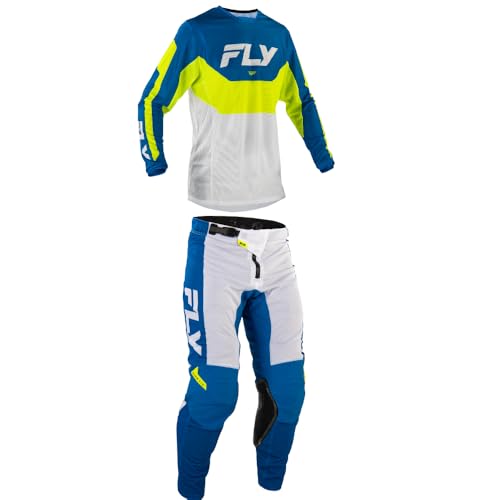
MX pants and jerseys look like racing kit because they are — but the function is real. Pants have built-in knee pad pockets, reinforced knees, and a cut designed to move over your boots. Jerseys are loose enough to sit over body armor without bunching. Jeans are not suitable on a dirt bike: they bind, catch, and tear. Any name-brand MX pants in the $70-120 range will last a season of regular riding. Buy the matching jersey with the pants — the fit is designed together and you'll look like you belong on the track.
Best starter
Fox Racing
180 Pants
$144.95 as of Jun 22, 2026
★★★★★Our rating· In Stock
The Fox 180 is the most-worn MX pant at beginner tracks nationwide, and for good reason: reinforced knee and seat panels last through a season of regular falls, sewn-in knee pad pockets fit standard knee guards correctly, and Fox's size chart is actually reliable. Pair with the matching 180 jersey.
What we like
Reinforced knee and seat panels built to survive regular trail falls
Sewn-in knee pad pockets fit standard guards without modifications
Fox 180 is the most stocked MX pant — easy to exchange if needed
What to know
Waist sizing runs generous — go down a size if between sizes
Knee guard pockets need a fitted guard; loose guards shift inside
Fly Racing sells jersey and pants as a matched combo for under $80 — which removes the mix-and-match guesswork entirely. Real MX construction, real knee pad pockets, and the mesh material is genuinely cooler than standard fabric in hot-weather riding. The best value full kit in the category.
What we like
Jersey and pants sold as matched kit — no mix-and-match guesswork
Mesh material runs cooler than standard MX fabric in summer heat
What to know
Materials noticeably thinner than Fox or Troy Lee at the same use rate
Knee pockets fit loosely — add a knee guard with a side strap or brace
TLD makes the best-looking MX kit at non-team-gear prices, and the GP Pants back it up with better stretch material that makes all-day trail rides noticeably more comfortable. When you're in the saddle for 3+ hours at a stretch, the material quality stops being vanity and starts being function.
What we like
Better stretch fabric makes all-day trail rides noticeably more comfortable
TLD design quality stands out — the best-looking kit at this price tier
What to know
TLD sizing does not match Fox — check their chart separately
At $120+, not the budget choice — the build quality earns it though
MX gloves grip the bars when your hands sweat, absorb bar vibration on rough terrain, and protect your palms in the low-side falls that are very common when learning. They should fit snugly — a loose glove slides when gripping the bars, which is uncomfortable and dangerous. Don't ride without them. Good gloves start at $20. The Fox Dirtpaw is the beginner default because it grips well, breaks in fast, and is cheap enough to replace every season without guilt.
Best starter
Fox Racing
Dirtpaw Gloves
$
★★★★★Our rating
The Dirtpaw is the single most common glove at every beginner track in the country. Synthetic leather palm grips bars wet or dry, knuckle guard protects in falls, and at under $30 they're cheap enough to replace when worn out without agonizing. First glove for nearly every dirt biker.
What we like
The most common beginner MX glove nationwide — proven grip every ride
Under $30 and durable enough to last a full season
Synthetic leather palm breaks in quickly without stiffening up
What to know
Minimal palm padding — bar vibration felt on rough terrain after long rides
Not waterproof — wet conditions soak through within minutes
Under $20 with real MX construction — not the canvas gardening gloves that pass for moto gloves at big-box stores. Thin profile gives better bar feel than padded options, and Fly Racing quality control is consistent at this price tier. Grip for those who want to stay on budget.
What we like
Under $20 with real MX construction — not big-box store quality
Thin profile gives better bar feel than padded alternatives
What to know
Durability noticeably weaker than Fox or Alpinestars counterparts
Palm grip fades faster in hot-weather riding over a full season
★★★★☆Our rating· Only 18 left in stock - order soon.
Injected foam palm protection absorbs bar vibration and impact in ways the Dirtpaw simply can't. When you're riding technical rocky trails or logging serious track hours, the Alpinestars palm protection stops being a luxury. Better wrist adjustment keeps these in place through aggressive riding.
What we like
Injected foam palm absorbs bar impacts noticeably on rough terrain
Better wrist adjustment keeps gloves in place during aggressive riding
What to know
Sizing runs snug — size up a half size if between measurements
At $40+, more than you need until you're riding technical terrain regularly
Most beginners stall out before they start because the gear list feels overwhelming. Here's the right sequence: what to buy first, how to get on a bike safely, and what actually improves fastest with practice.
Dirt biking has a reputation for being hard to start. It’s partly deserved — the gear cost is real, the bikes are powerful, and there are no training wheels. But the learning curve is also faster than most people expect. Body position clicks within a few sessions. The throttle stops feeling like a hair-trigger. The falls get less frequent, and then much less frequent.
This is what your first season actually looks like: the gear sequence, the fundamentals that matter early, and the specific things beginners get wrong most reliably.
Before you ride: get the gear right first
The single most important thing you can do before your first ride is assemble a real safety kit. Not most of it. All of it.
The non-negotiable four:
Helmet — DOT certified minimum, ECE 22.06 preferred. MIPS is worth paying for. No exceptions.
Boots — Real MX boots, not work boots or hiking boots. Ankle protection is their entire job.
Gloves — Your palms will hit the ground in a fall. Gloves are cheap insurance.
Goggles — Roost (rocks and dirt thrown by the bike ahead of you) will blind you without them.
Add before any track session:
Body armor (chest and back protector)
MX pants (not jeans — they bind and catch)
Most tracks require a certified helmet and closed-toe footwear at minimum. Many require a full kit. Show up with running shoes and you go home.
Fit matters enormously with helmets and boots. Buy your helmet in person if at all possible — Fox runs small, Bell runs large, and a helmet that wobbles even slightly is not protecting you. Once you’ve found your size in person, you can order the rest online.
Your first session: the fundamentals that actually matter
If you have access to a beginner riding clinic through the Motorcycle Safety Foundation, take it. The MSF off-road course is specifically designed for new riders and covers more ground in a day than most self-taught riders cover in a month.
If you’re starting on your own, here’s what to focus on in session one:
Body position is everything. Stand up on the pegs — don’t sit. Ninety percent of your body weight on the pegs, not the seat. Knees bent, elbows up, eyes looking well ahead of where you’re currently riding. This feels awkward for the first few rides and then becomes automatic. Every piece of technique that comes after it builds on this position.
Smooth throttle, not snap throttle. Beginners grab the throttle like they’re squeezing a grip rather than rolling it on smoothly. The result is front-wheel lift, rear-wheel spin, and loss of control. Practice rolling the throttle on progressively — start a quarter turn, feel the response, then add more. A motocross bike is not a scooter; respect the power delivery.
Look where you want to go. Not at your front wheel. Not at the obstacle you’re trying to avoid. Pick a point 30 feet ahead and ride toward it. Your body and the bike will follow your eyes. This is the most common instruction beginners ignore and the most effective one in the first five sessions.
Braking. Front brake does about 70% of the stopping work; rear brake controls the tail. Most beginners over-use the rear and under-use the front, which means longer stopping distances and unpredictable rear-end slides. Practice emergency braking in a safe open area before you need it in traffic on the trail.
Clutch and friction zone. Dirt bikes are manual. If you’ve ridden a motorcycle before, this is familiar. If not: find the friction zone — the range of clutch engagement where the bike starts to move but hasn’t fully grabbed — and use it to modulate take-off and slow-speed maneuvering. Stalling is normal and is not a crisis.
Cornering. The single most skill-intensive thing in dirt biking. The basic technique: brake before the corner (not during), lean the bike while keeping your body more upright than feels natural, look all the way through the corner to the exit, and roll the throttle on progressively as you straighten out. This takes a season to ingrain. Don’t be discouraged — everyone is slow in corners for the first year.
Throttle control on hills. Climbing: keep your weight forward, smooth power. Descending: control speed with engine braking and gentle rear brake, not panic stops. Stand on the pegs — sitting through rough terrain transfers every bump directly to your spine.
Berms and ruts. On dirt tracks, the corners develop ruts and berms from repeated use. A berm (a packed dirt banking) is your friend — trust it, lean into it, roll on the throttle through it. A rut (a groove cut into the dirt) will grab your front wheel and point you where it decides to go. Keep your weight back and let the rut guide you rather than fighting it.
Falls. You will fall. Everyone does in the first season. The correct response is: check yourself for injuries (honestly, not bravely), check the bike, get back on if you’re fine. The worst falls are usually slow-speed tip-overs that hurt your pride more than your body. The gear handles the rest.
By session eight or ten, something shifts. The bike starts feeling like an extension of your movement rather than a machine you’re fighting. Corners that took full concentration become automatic. You stop thinking about clutch and start thinking about lines.
What beginners consistently get wrong
Riding in gear that isn’t quite right. A helmet that’s a size too large, boots that are slightly too loose — these degrade real protection in a fall. Check your gear fits correctly every season.
Going too fast too soon. The bike can accelerate much faster than your skills have developed. Ride at the pace where you’re comfortable and in control, not the pace that looks impressive. Speed comes naturally as skills improve.
Skipping warm-up laps. Cold muscles on an unfamiliar track lead to tense riding, which leads to mistakes. Take the first two laps at 60% pace to get a feel for the surface and pick your lines.
Not learning track etiquette. Signal when you’re pulling off the track. Don’t cut someone off on the inside of a corner. Know the flag system — especially the red flag (stop immediately, off-course). Tracks are generally welcoming to beginners who show they’re paying attention.
After a season of regular riding, you’ll have a much clearer sense of what you want from the hobby: MX track days, trail riding, enduro racing, or just weekend exploration. That clarity is worth having before you spend serious money on gear upgrades.
At the end of season one, three things are worth doing:
Reassess your bike. Does it fit you? Is it too powerful or too tame? A used beginner bike is meant to be traded up from. Most riders move on after a year or two, which keeps the used market liquid.
Consider a neck brace. Once you’re riding regularly, a Leatt or Alpinestars neck brace is the most meaningful safety upgrade available. It’s not day-one gear, but it belongs in your kit once you’re committed.
Find a regular group. Riders who challenge you slightly are the fastest path to improvement. Most MX tracks have active rider communities; trail riding clubs are common in most states. Riding solo teaches you less and is harder to stay motivated.
Save your money
What you don't need yet
Beginners get pressured to buy a lot of stuff that doesn't help them play
better. Here's what we'd skip on day one.
A Leatt neck brace — A critical safety upgrade once you're riding regularly — but add it after you've mastered the basics. Day one body mechanics matter more than neck braces.
Orthopedic knee braces — Custom-fit prescription braces ($400-600) are for committed riders with knee history. Basic knee guards in your pants pockets are fine to start.
A GoPro or action camera — Add it after you're comfortable and confident on the bike. Cameras are a distraction when you're still learning where to look.
A brand-new bike — Buy used for your first year. You will tip it over, and scratches on a $2,800 used bike hurt much less than scratches on a $5,500 new one.
Race transponders and numbers — Tracks rent transponders for practice days. Race numbers and graphics are for when you actually sign up for a race.
Custom graphics kits — Fun project, zero performance benefit. Save this for the second season when you know the bike is a keeper.
First week
Your first seven days
A short, real plan to get from gear-on-doorstep to actually playing.
Order your helmet first — everything else can wait, but helmets need a proper fit that takes time to source. · Buy
Visit your nearest track on an observation day before your first ride — watch experienced riders, ask questions, and learn the gate and pit etiquette. · Action
FAQ
Common questions
How much does it cost to start dirt biking?
Full gear kit — helmet, boots, body armor, goggles, gloves, jersey and pants — runs $800-1,300 for our recommended picks. The bike is separate: budget $2,000-4,000 for a quality used beginner trail bike. Starting total is realistically $3,000-5,000, which makes dirt biking one of the more expensive hobbies to enter. That said, gear lasts years and a good starter bike holds its value.
Trail bike or motocross bike — which should I start on?
Trail bike for most beginners. MX bikes have aggressive power delivery, very stiff suspension, and no kickstand — they're engineered for tracks and jumps, not margin for error. Trail bikes like the Honda CRF300L, Kawasaki KLX230, or Yamaha TT-R230 are lower-strung, more forgiving, and often street-legal. Start on a trail bike, ride for a season, then decide if you want to move to MX.
Do I need a license to ride a dirt bike?
On private property and dedicated MX tracks: no license required in most U.S. states. On public land (national forests, BLM land, OHV parks): you'll need an OHV registration sticker and sometimes a permit. On the street: a motorcycle license and a street-legal bike are required. Check your state's DMV site and local OHV regulations — they vary significantly.
What gear is absolutely required before my first ride?
A DOT-certified helmet, gloves, and real MX boots — most tracks require exactly these three at minimum. We'd add goggles and body armor before any track session. Riding without proper gear is how preventable injuries happen; the gear exists for a reason and none of it is optional.
How dangerous is dirt biking?
Honest answer: higher-risk than most hobbies. Falls are common when learning, and speeds on trails and tracks can be significant. The gear exists to make those falls survivable. The injury rate for properly geared-up, trained riders is dramatically lower than for people who skip gear or lessons. Take a beginner clinic, wear the full kit every time, and the sport is a lot safer than the reputation suggests.
How do I actually learn to ride?
The best structured path is an MSF off-road riding clinic — available in most states and designed exactly for beginners. Alternatively, most MX tracks have beginner days and demo programs. Don't try to teach yourself in an empty parking lot; you'll ingrain bad habits and the bike will win early arguments. Find an organized beginner session or a patient friend with real experience.
American Motorcyclist Association — The national governing body for motorcycling. Track sanctioning, land access advocacy, and the primary source for OHV riding rights and regulations.
Motorcycle Safety Foundation — The standard for beginner riding instruction in the U.S. The off-road course is the best structured path for new dirt bikers — check the course finder for dates near you.
Dirt Rider — Long-running print and digital magazine. Gear reviews, trail guides, and bike tests. The bike comparison reviews are particularly useful for first-bike research.
Vital MX — The closest thing to an ESPN for motocross. Race coverage, rider forums, and an active community. Beginner-friendly threads in the forums cover first-bike questions thoroughly.
r/Dirtbikes — Active subreddit. Good for first-bike questions and hearing from riders at your actual level. Search before posting — first-bike threads are thorough and searchable.
Beginner dirt biking (YouTube) — Several well-produced beginner channels cover body position, throttle control, and cornering. Watch before your first ride — the visual patterns land faster than written guides.
As an Amazon Associate, JustBeginning earns from qualifying purchases.
We may also earn commission from other affiliate programs linked on this
page. Editorial recommendations are independent; we don't choose
products based on commission rates.
Product prices and availability are accurate as of the date and time
indicated and are subject to change. Any price and availability
information shown on Amazon at the time of purchase will apply.


 Best starter