Waterfowl hunting rewards preparation, but you don't need to be obsessive about it on day one. The starter list is short: a reliable pump shotgun, chest waders, two dozen decoys, and a duck call. Everything else gets added over seasons. Here's how to get in the marsh without getting over your head.
By Colin B. · Published May 29, 2026 · Last reviewed July 16, 2026
A realistic first season runs $950–1,500 for gear plus $50–100 for a state license and federal duck stamp. The shotgun and waders are the big line items — annual costs drop sharply once you own them.
We earn commission on qualifying Amazon purchases — see our
affiliate disclosure.
Price tiers and budget totals shown above are editorial estimates;
actual Amazon prices vary.
At a glance
Our top pick in each category
The fastest path through this guide — each best-starter pick by category.
Scroll for the budget and upgrade alternatives.
Buy your state hunting license and the federal Migratory Bird Hunting and Conservation Stamp (the 'duck stamp') before you do anything else. Both are legally required to hunt ducks in the US. The duck stamp costs $27/year and is available at most sporting goods stores or online at the USFWS website.
Scout before you spend on decoys. Where you hunt determines what you need — open water takes different setups than flooded timber or field spreads. Walk your spots before season and watch where birds are actually using. The best 12-decoy spread in the right location beats 100 decoys in the wrong one.
Lead shot is federally illegal for waterfowl hunting — steel shot or other non-toxic alternatives are required. This affects ammo cost and choke selection. Most duck hunters run 3-inch steel loads in #2 or BB shot, which requires a choke rated for steel. Check your gun's choke before opening day.
The gear
What you actually need
Camo Apparel
Duck hunting clothing has two jobs: break up your silhouette and keep you warm in a cold blind. Waterfowl have excellent color vision and identify human faces, skin, and white teeth at surprising distances. A face mask is non-negotiable. For warmth, a windproof fleece mid-layer handles most of the season. Add a waterproof wading jacket when weather turns serious. Spend the real money on waders and your shotgun before upgrading to premium hunting apparel.
Best starter
Drake Waterfowl
Drake Non-Typical Heavyweight Camo Hunting Jacket
$$
★★★★★Our rating
Drake's Non-Typical Heavyweight fleece is windproof, quiet in brush, and printed in Mossy Oak that disappears in marshes and flooded timber. It's the mid-layer duck hunters reach for when they want to stay warm in a blind without paying Sitka prices. Works from early teal through late November.
What we like
Windproof quiet fleece won't rustle when mounting your gun in the blind
Mossy Oak camo pattern disappears in marsh, flooded timber, and cattail cover
Drake build quality at half the price of Sitka — the smart mid-layer pick
What to know
Fleece absorbs moisture in heavy rain — layer a waterproof shell over it
Runs warm; might be too heavy for early teal season hunting in August
★★★★☆Our rating· Only 1 left in stock - order soon.
A face mask is the single most cost-effective concealment purchase in duck hunting. Birds identify human faces at 100+ yards. A stretch-fit camo mask for $10 eliminates the #1 visual giveaway. Primos makes a breathable, moisture-wicking version that doesn't fog glasses and fits under any cap.
What we like
Eliminates the most visible piece of a hunter's silhouette for under $15
Breathable stretch-fit doesn't restrict breathing or speech in the blind
What to know
Can fog glasses on cold mornings if exhaled air channels upward
Stretch fabric loosens over seasons with heavy use
3-layer GORE-TEX Pro in Optifade Waterfowl camo — purpose-built for the conditions of serious duck hunting. Completely waterproof, fully breathable, and designed with shooting range of motion built in. At $400+, buy it after your first season confirms the sport has you for the long run.
What we like
3-layer GORE-TEX Pro: completely waterproof and fully breathable all day
Optifade camo designed around waterfowl vision science, not aesthetics
What to know
At $400+, significant investment for a first-season hunter testing the sport
Sizes trim — order one size up if you're layering fleece underneath
Chest waders separate duck hunting from a cold, wet disaster. For most waterfowl hunters, 5mm neoprene is the standard: warm enough for pre-dawn marsh walks in November, durable on muddy banks, and significantly cheaper than breathable waders. Bootfoot waders — where the boot is permanently attached — seal better than stockingfoot options and are faster to pull on in the dark. Wader fit matters: undersized waders restrict your swing; oversized waders fill with water if you step in a hole.
Best starter
Frogg Toggs
Grand Refuge 2.0 Bootfoot Chest Wader
$
★★★★★Our rating
Frogg Toggs makes the entry point that actually holds up. The Grand Refuge 2.0's breathable construction with insulated rubber bootfoot keeps you warm in 35°F water, the bootfoot design seals better than stockingfoot waders, and the chest box pocket holds your calls and license. Under $160 — the right price for a first marsh season.
What we like
5mm neoprene keeps you warm in 35°F water — the cold-weather standard
Bootfoot design seals better than stockingfoot — no mud-slip at the ankle
Under $160 — the right price for a first season in the marsh
What to know
Bulky neoprene restricts movement in dense brush or on ladder stands
Too warm for August teal season — uncomfortable above 60°F
Breathable waders pack down, dry faster, and span a wider temperature range than neoprene — from teal season in August through late December. Banded's RedZone uses reinforced knees and a double-seat panel for the hard landings in a layout blind. Worth it once you're hunting multiple species across the season.
What we like
Works from teal season in August through late December ice hunting
Packs smaller and dries faster than neoprene — easier to manage in a boat
What to know
No thermal insulation — must layer properly in cold water below 50°F
More expensive than neoprene at the same quality tier — $250+ entry
If you hunt from a pit blind, a boat, or a vehicle-accessible field spread, knee-high rubber boots are more practical than full chest waders. LaCrosse's Alphaburly is insulated, 100% waterproof, and pulls on faster — important when you're setting decoys at 4am.
What we like
Faster on/off than waders — practical for boat and pit blind hunters
100% waterproof rubber with neoprene lining handles serious cold
What to know
Knee-high only — water above the knee floods instantly without warning
Too heavy for long walk-in setups compared to lighter wading options
Ducks decoy to other ducks. Your spread needs to look like a feeding flock — realistic silhouettes, natural spacing, and movement. For a beginner, foam-filled floaters in mallard patterns are the standard: durable, paint holds up, and they work across North America. A dozen is the minimum; two dozen is where most first-year hunters land. Motion matters too — a single spinning-wing decoy adds realism that no static spread can match on calm bluebird days.
Best starter
Avery Outdoors
GreenHead Gear Pro-Grade Mallard Floaters 6-Pack
$$
★★★★★Our rating
GreenHead Gear is what most serious duck hunters upgrade to after their first season — so smart beginners start here. Foam-filled construction won't waterlog, and the paint survives bag-drag, boat thunks, and seasons of retrieval. These will still be in your spread in year five.
What we like
Foam-filled body won't waterlog or crack — outlasts hollow-body by years
Pro-Grade detail passes close-bird inspection at 10 yards
Standard mallard pattern works everywhere in North America
What to know
Heavier per dozen than hollow-body — pack-in spread gets tiring fast
More expensive per dozen than entry hollow-body sets
Hollow-body decoys are lighter to haul and cheaper per dozen than foam-filled. Flambeau's Storm Front 2 has a convincing head-body profile and the corrugated weight keel tracks well in current. The right call if you're still figuring out how deep this waterfowl obsession runs.
What we like
Lighter per dozen than foam-filled — easier to pack into remote setups
Corrugated weight keel tracks well in current and wind chop
What to know
Paint chips faster than foam-filled decoys after repeated bag work
Can invert in choppy water — pull and reset more often in wind
A spinning-wing decoy adds motion no static spread can match on calm bluebird days. The MOJO Elite's motor stays reliable in temperatures down to 0°F — cheaper spinners quit in real cold. Run it on the edge of your spread early season. On heavily pressured public water, rotate it out after the first few hunts.
What we like
Motor reliable down to 0°F — cheaper spinners fail in real cold weather
Motion and flash pulls distant birds that ignore static spreads on calm days
What to know
Educated birds on pressured water learn to avoid spinning wings fast
Some states restrict use mid-season — check regulations before buying
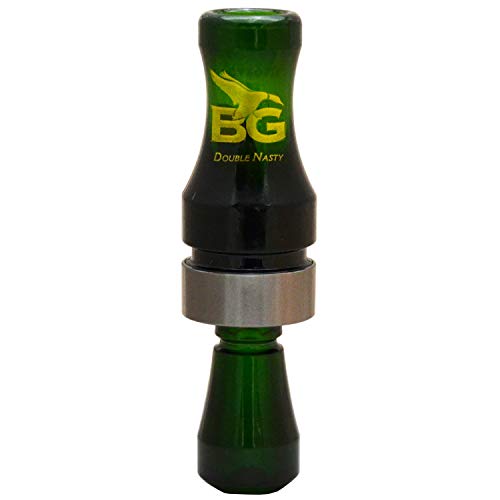
A duck call is a reed instrument that produces a nasal quack when you blow into it. It takes real practice to use convincingly — but the difference between a half-decent call and silence matters most on slow mornings when birds are reluctant. Single-reed calls are louder and have more tonal range; double-reed calls are easier to learn and harder to accidentally screech. For a beginner, a double-reed call is the right start. You'll practice for two seasons before stepping up.
Best starter
Buck Gardner
Double Nasty Duck Call
$29.99 as of Jun 22, 2026
★★★★★Our rating· Only 6 left in stock - order soon.
Double-reed calls are inherently forgiving — you work hard to produce a screech. The Double Nasty delivers a convincing hen quack and feed call right out of the box without much practice. Buck Gardner is a working guide's brand used in Arkansas duck camps, not a shelf product.
What we like
Double-reed design is forgiving — very hard to screech when blowing naturally
Convincing hen quack and feed call on first blow — most important calls
Guide-used brand: proven production, not shelf merchandise
What to know
Less volume than single-reed — can't reach working birds over 200 yards
Less tonal range than single-reed once you want to advance
Single-reed calls have more volume and tonal range than double-reed — you can produce everything from a low feed chuckle to a loud hail call. Primos makes an affordable version that teaches the fundamentals. Harder to learn, but the ceiling is higher when you're ready to develop real calling technique.
What we like
Single-reed produces the loudest, most versatile sound range available
Affordable way to learn fundamentals before upgrading to a boutique call
What to know
Easier to squeal accidentally — requires real embouchure and breath control
Less forgiving than double-reed while learning — frustrating early on
A polycarbonate call is a different instrument than entry-level acrylic — crisper reed response, more consistent tone, and a board you can tune as your technique develops. Fred Zink's Power Hen is competition-proven at the World Waterfowl Calling Championship. Buy after two seasons of real practice.
What we like
Polycarbonate body delivers crisper, more consistent reed response than acrylic
Competition-proven at World Championship level events
What to know
Amplifies bad habits as effectively as good ones — demands real technique
Wasted purchase until your calling is already functional — 2+ seasons out
Three items most first-year duck hunters skip and regret: a blind bag to organize calls, shells, and license in the dark before legal shooting time; hearing protection for every shot (steel loads out of a 12-gauge are permanent hearing damage events without it); and a calls lanyard so your duck call is always at your chest when birds commit. Total spend under $120. The right blind bag alone is worth more than a better shotgun on a typical morning in the marsh.
Best starter
Avery Outdoors
Finisher Blind Bag
$$
★★★★★Our rating
The Avery Finisher is the industry standard blind bag — found at guides' feet from Louisiana to Saskatchewan. Padded ammo pockets, fleece-lined glass slots, and a strap system that lashes to a layout blind. Everything has a place, and nothing shifts on the walk-in.
What we like
Industry standard among working guides — proven design, not a first-season gimmick
Padded ammo pockets and fleece-lined glass slots protect your gear
Strap system lashes to a layout blind — one less thing to lose in the dark
What to know
400 cubic inches feels crowded on multi-day float trips — upgrade to 600
Premium price for a bag — cheaper alternatives exist for casual setups
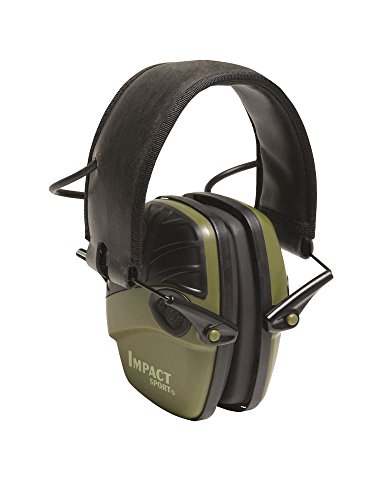
Electronic hearing protection amplifies ambient sound — you'll hear ducks working before you see them — while cutting shotgun blasts to safe levels instantly. Every shot without protection is permanent cumulative hearing damage. The Impact Sport is the standard at ranges and in blinds nationwide.
What we like
Amplifies ducks working the spread before you can see them
A lanyard keeps your duck call, license, and secondary calls at your chest — immediately accessible without unzipping anything. The real advantage is speed: when birds commit and you're mid-setup, your call is already in your hand. Most experienced callers never hunt without one.
What we like
Keeps duck call immediately accessible — no digging through a bag mid-setup
Holds license, whistle, and secondary calls in one organized system
What to know
Makes noise when loaded — must tuck under jacket during walk-in
One more thing to tangle in decoy cords if you're not disciplined
Duck hunting has one of the steeper learning curves in hunting — but the first season is about showing up and absorbing, not shooting limits. Here's what the whole arc actually looks like.
Duck hunting is not a sport you figure out in a weekend. It’s a sport you figure out over seasons — and understanding that going in makes your first season dramatically less frustrating. The people who love it most are the ones who treated year one as an education, not a performance.
This is what that education actually looks like.
Before the season: the real work happens here
Most of the decisions that determine whether your first duck hunt is good or dismal happen before you ever pull a trigger.
Get legal first. You need a state hunting license and a federal Migratory Bird Hunting and Conservation Stamp — the duck stamp. The duck stamp is required by federal law for anyone 16 and older hunting migratory waterfowl. It costs $27 and is available at any sporting goods store or at the USFWS website. Without it, everything else is illegal.
If you’ve never held a hunting license, most states require a hunter education certificate. Take the course before you buy anything else — it covers firearms safety, hunting ethics, and regulations in a single session, most of which are available online.
Scout before season. This is the highest-leverage hour you can spend before opening day. Drive the roads near your planned hunting area at first light and last light in the weeks before season. Note where birds are landing, feeding, and roosting. A 12-decoy spread on a location where birds are actually using will out-produce a 100-decoy spread on arbitrary water every single time. You’re not hunting ducks — you’re hunting where ducks want to be.
Practice your call before you need it. Download a duck calling practice track — there are dozens on YouTube — and blow your call against it for ten minutes a day for two weeks before opening day. You don’t need to sound like a World Championship caller. You need to not sound like a threat. Beginners who sound bad enough actively spook birds. Beginners who sound mediocre are often still effective because the visual spread does most of the work.
Your first duck hunt will probably not go the way you imagined. Here’s what actually happens:
You’ll arrive in the dark and realize that everything takes longer in the dark. Setting decoys takes twice as long as you expected. The first time you try to rig a decoy with a split ring and a jute line at 4am in cold water, you’ll understand why experienced hunters rig all their decoys the night before.
Decoy placement basics. Set your spread so birds can land into the wind — waterfowl, like aircraft, land facing into the wind. Leave a landing zone (an open pocket of water with no decoys) downwind of your spread, about 10 yards in diameter. Birds want to land in that opening. Your shooting position should be at the edge of the spread, upwind, so decoying birds come toward you rather than passing over you.
The call is a conversation, not a performance. When birds are working — circling, looking at your spread — call back to them to keep their attention. When birds are committed and coming down, go quiet. The number one calling mistake beginners make is overcalling on birds that are already in the bag. Silence is a call.
Legal shooting time. This is not sunrise — it’s 30 minutes before sunrise in most states. Know your exact legal shooting time before you get there. The best shooting is often in the first 20 minutes of legal light. Birds that worked your spread for an hour will be traded by the time the sun fully rises.
Your first hunt might produce birds. It might not. Either way, pay attention to everything: where birds came from, which calls seemed to pull them, how they reacted to your spread. Every observation is a lesson for next time.
Duck hunting has more variables than most hunting disciplines, and they all interact. Give yourself at least two seasons before you judge your own competence:
Reading birds. Over time, you develop an eye for what a duck is doing at distance — circling with interest vs. passing with no intention of committing, dropping altitude vs. staying high. This takes hundreds of encounters. You can’t shortcut it. In your first season, you’ll recognize it in retrospect (“that bird was actually working us”) more than in real time.
Calling progression. The basic hen mallard call — a five-note descending quack — is learnable in two weeks. The comeback call, the feed chuckle, and the greeting call each take months. Skilled callers layer these together in real time based on what the birds are doing. This is a years-long progression, and beginners who try to run the whole sequence before they have the basics down often overcall and flare birds. Learn the basic quack. Then the feed chuckle. Then graduate.
Decoy spread design. A J-hook spread. An X spread. A U-shaped spread for wind. The spinning-wing in the pocket. These configurations exist because waterfowl behavior responds differently depending on conditions. In your first season, set a simple spread with a clear landing zone and learn how birds react. The geometry gets refined once you have enough reps to see patterns.
Hunting pressure. Public land ducks get educated fast. By week three of a busy season, birds that were landing freely on opening day are flaring at 200 yards. This is when the calling and decoy work separates good hunters from beginners. Fresh spots, early arrivals, and quality calling matter more on pressured birds. Don’t take it personally — it’s a testament to how perceptive waterfowl are.
Overcalling on committed birds. The birds are coming. Stop calling. This is the hardest lesson in waterfowl hunting and the one most beginners have to be corrected on by a more experienced hunter standing right next to them.
Setting decoys in the dark without rigging them first. Tangled cords, frozen split rings, weights wrapped around decoy heads. Rig everything at home in daylight, store it properly, and deploy in the dark like you’re running a system.
Shooting at birds that are too far away. A common effective range for steel shot on ducks is 35–45 yards. At 60 yards, steel has lost enough velocity that it wounds and cripples birds without killing them cleanly. Learn to judge yardage, and call birds closer before shooting.
Not knowing your bag limits before you hunt. Bag limits for waterfowl are species-specific, change annually, and vary by region. A mallard limit might be two in one region and five in another. Know your species limits before you head out, not after.
Hunting the wrong time of day for conditions. On bluebird calm days with no wind, birds tend to stay put and don’t move much. On overcast, windy days with a front moving through, birds are relocating and actively looking for food. The best duck hunters pick their hunt days around weather, not around their work schedules when possible.
What changes in year two
By the end of your first season, you’ll have a long list of things to fix. That’s the correct outcome. Here’s what most hunters adjust heading into year two:
Your calling will improve dramatically if you practiced. Your spread placement will be more deliberate. You’ll know which spots hold birds on which conditions. You might start thinking about a dog.
The retriever question comes up for most serious duck hunters by year two or three. A trained retriever changes the experience completely — they find crippled birds you would have lost, they work in cover you can’t, and the partnership is one of the most satisfying relationships in hunting. It’s a two-to-three-year project to properly train a retriever. If you know duck hunting has you, start thinking about a puppy.
You’re not going to be a great duck hunter after one season. You’re going to be a duck hunter — which is something worth being.
Save your money
What you don't need yet
Beginners get pressured to buy a lot of stuff that doesn't help them play
better. Here's what we'd skip on day one.
A retriever — The most rewarding part of mature duck hunting — and a 3-5 year project. Don't rush the dog decision into your first season. Learn your spots and develop your own skills first, then add the dog.
A jerk rig or water motion system — Jerk strings add ripple motion to your spread but require a hand and a line to operate. Learn basic spread setup and calling first — movement you can add, calling takes real practice.
Premium waterfowl camo clothing — Your first season doesn't demand Sitka Delta. Any dark brown or camo jacket works fine for a blind or marsh setup. Upgrade clothing after you've committed to hunting multiple times a season.
A boat or full blind rig — Hunting the same public marsh on foot tells you what you'd actually want in a boat and blind setup. Know your spots before spending $5,000–20,000 on a boat rig.
A layout blind — Layout blinds are purpose-built for field hunting geese in open land. Buy one after you've committed to field setups as a regular scenario — another $200-300 and requires open field access.
First week
Your first seven days
A short, real plan to get from gear-on-doorstep to actually playing.
Buy your state waterfowl hunting license and the federal duck stamp — both are legally required before you can hunt ducks in the US. · Action
Federal Duck Stamp · USFWS — buy the $27 annual stamp online or at any sporting goods store
Buy your shotgun at a local gun store, Cabela's, or Bass Pro. Tell them it's for waterfowl — a Mossberg 500 or Remington 870 in 12 gauge with a 3-inch chamber. The background check and paperwork happen in-store. · Action
Order chest waders so they arrive before your scouting trips. Size up one size if you're between measurements. · Buy
Scout your hunting location before season opens. Walk it in daylight, note where ducks are feeding and resting, and identify where the birds are actually using. · Action
Buy 24 foam-filled decoys and two boxes of 3-inch non-toxic steel #2 shot. Rig the decoys with weights and swivels before opening day — don't do it in the dark. · Action
Practice your duck call 10 minutes a day for two weeks before opening day. You don't need to sound like a champion — you need to not sound like a predator. · Buy
Should I buy a pump or semi-automatic shotgun for duck hunting?
Start with a pump. Pump shotguns (Mossberg 500, Remington 870) are cheaper, simpler, and work reliably when cold, wet, and neglected — exactly the conditions of a duck blind. Semi-automatics cycle faster and have milder felt recoil with heavy steel loads, but cost two to four times more and require more maintenance. Buy a pump for your first season. If you're still hunting hard in year three, the upgrade will feel earned.
Do I need a dog to duck hunt?
No — you can retrieve birds yourself or with a partner in most situations, especially in shallow water. A dog transforms the experience and dramatically improves recovery rate, but it's a 3–5 year training commitment and real expense. Hunt a few seasons first to confirm the addiction before investing in a retriever.
How many decoys do I actually need to start?
A dozen is the minimum that looks convincing from the air. Twenty-four is the sweet spot for most hunting situations. More is sometimes better on big open water, but most successful spreads are 12–36 decoys positioned thoughtfully, not 100 decoys placed randomly. Spread design matters more than count.
What shotgun loads should I use for ducks?
Lead shot is federally illegal for waterfowl in the US — steel or other non-toxic shot is required by law. For mallards and most puddle ducks, 3-inch steel loads in #2 or BB shot is the standard. Avoid small pellet sizes; steel is less dense than lead and needs larger pellets to maintain knockdown energy.
How early should I get to my hunting spot?
Plan to have decoys set, your blind concealed, and your shotgun loaded before legal shooting time — which is typically 30 minutes before sunrise. Ducks move heaviest in the first hour after sunrise. Getting there an hour before legal light and rushing setup is worse than arriving 90 minutes early and being ready.
What is a federal duck stamp and do I need one?
The federal Migratory Bird Hunting and Conservation Stamp — called the 'duck stamp' — is a $27/year federal license required to hunt migratory waterfowl in the US. You need it in addition to your state hunting license. Buy it online at USFWS or at most sporting goods stores. It also doubles as free admission to any National Wildlife Refuge.
What's the difference between puddle ducks and diving ducks?
Puddle ducks (mallards, teal, pintail, wigeon) feed in shallows and jump straight up when flushed. They respond well to decoys, calling, and standard marsh setups. Diving ducks (scaup, canvasback, redhead) are found on deeper open water and require larger spreads, different positioning, and less calling. Most beginners start with puddle ducks.
U.S. Fish & Wildlife Service — Duck Stamp — Where to buy the required federal duck stamp and understand federal waterfowl regulations. Bookmark the migratory bird regulations page for season dates and bag limits.
Your State Fish & Wildlife Agency — The only authoritative source for your specific season dates, bag limits, non-toxic shot requirements, and any state-specific regulations. Rules vary dramatically by state — check before buying gear.
Ducks Unlimited — The major waterfowl conservation organization. Their habitat work is what keeps duck populations healthy. Their beginner resources cover calling basics, decoy placement, and habitat identification.
Delta Waterfowl — Conservation science focused organization with some of the most technically detailed waterfowl hunting content available. Their magazine is worth a look once you're through the basics.
MeatEater — Steve Rinella's hunting content covers waterfowl regularly. The duck hunting podcast episodes are among the best beginner-accessible content for understanding the culture and craft without assuming experience.
r/WaterfowlHunting — Active subreddit for waterfowl hunters. Post gear and scouting questions here — you'll get straight answers from hunters who started where you are, without the tribal brand arguments of YouTube comments.
As an Amazon Associate, JustBeginning earns from qualifying purchases.
We may also earn commission from other affiliate programs linked on this
page. Editorial recommendations are independent; we don't choose
products based on commission rates.
Product prices and availability are accurate as of the date and time
indicated and are subject to change. Any price and availability
information shown on Amazon at the time of purchase will apply.
Our top pickFROGG TOGGS Grand Refuge 2.0 Bootfoot Chest Wader

 Best starter