Disc golf is one of the few sports where most courses are completely free, the gear is cheap, and you can go from curious to hooked in a single afternoon. But disc selection trips up every beginner — buy the wrong discs and you'll blame your form when the problem is your equipment. Here's exactly what to buy first.
By Colin B. · Published May 22, 2026 · Last reviewed June 3, 2026
Discraft Buzzz Mid-Range
— The Discraft Buzzz: the best-selling mid-range disc ever made — the upgrade every beginner eventually makes.
Budget total
$35
Typical total
$115
Most courses are free to play, so gear is your only cost. A $35 starter disc set gets you on the course day one. Add a bag and trail shoes once you know it'll stick.
We earn commission on qualifying Amazon purchases — see our
affiliate disclosure.
Price tiers and budget totals shown above are editorial estimates;
actual Amazon prices vary.
At a glance
Our top pick in each category
The fastest path through this guide — each best-starter pick by category.
Scroll for the budget and upgrade alternatives.
Don't buy distance drivers yet. This is the single most common beginner mistake in disc golf. Distance drivers are designed for arm speeds over 60 mph — most beginners throw 40-50 mph. A driver in your hands won't go straight, won't go far, and will convince you that you're bad when really you just bought the wrong disc. Start with a putter and a mid-range and wait three months.
Try someone's discs before you commit. Most disc golfers are happy to let a curious newcomer throw a few at the course. You'll immediately feel the difference between a putter, a mid-range, and a driver — and the descriptions on packaging will finally make sense.
Three discs are enough to start. You don't need 20 discs. A putter, a mid-range, and a beginner-friendly fairway driver is everything you need for the first three months. Top amateurs could beat most recreational players with just those three discs.
Disc selection is the thing that confuses every beginner, and the solution is simpler than the marketing makes it look. You need three types: a putter (short, controlled shots), a mid-range (your workhorse from 100-250 feet), and eventually a fairway driver. Skip distance drivers entirely for at least three months — they're made for arm speeds you don't have yet, and throwing one will make you look worse, not better.
Discs — what's the difference?
A few common shapes, each making a different trade.
Putter
Blunt edge, low speed rating. Used for all shots inside 100 ft and for dedicated putting.
Speed rating
1–3
Effective range
50–150 ft
Flight shape
Very stable, minimal fade
Best for Putting, approach shots, beginners learning throwing mechanics
Tradeoff Limited distance ceiling — not the disc for driving
Sharper rim, more glide. For 200+ ft once your form is consistent. Skip in month one.
Speed rating
7–9
Effective range
200–350 ft
Flight shape
Varies by stability rating
Best for Open holes, straight shots over 250 ft, players with developed form
Tradeoff Punishes poor form — turns and crashes if your arm speed isn't there yet
Best starter
Innova
DX Disc Golf Starter Set
$42.13 as of Jun 22, 2026
★★★★★Our rating· In Stock
Innova is the oldest disc golf brand in the world, and their DX Starter Set is the go-to recommendation everywhere — from the PDGA to r/discgolf. You get a putter (Aviar), mid-range (Shark), and a fairway driver (Leopard), all in understable plastic tuned for slower arm speeds. The Leopard is legendary among beginners: it goes straight and fades gently instead of diving left like most drivers.
What we like
Includes putter, mid-range, and understable driver in one box
Aviar and Leopard are trusted by players at every skill level
DX plastic is grippy and forgiving on the release
What to know
DX plastic wears out faster than premium lines under heavy use
Leopard may be too overstable for the very slowest arm speeds
Dynamic Discs is one of the most trusted names in the sport, and this starter set gives you three discs in eye-catching burst plastic that's easy to spot in the rough. Good beginner-friendly flight characteristics throughout. A legit starting point — especially if it's on sale.
What we like
Burst plastic makes discs easy to spot when they land in the rough
All three discs tuned for beginner-friendly flight characteristics
What to know
Less community name recognition than Innova if you ask at the course
The Buzzz is the best-selling mid-range disc in history, and every disc golfer eventually owns one. Stable, predictable flight — it goes where you throw it instead of turning over or fading hard. Once you've played 20-30 rounds, your mid-range becomes your most-used disc, and the Buzzz is the benchmark the rest of the category is measured against.
What we like
Most predictable mid-range flight on the market — goes where you throw it
Forgiving enough for beginners, precise enough for advanced players
Available in every plastic line; easy to find at any disc retailer
What to know
Standard Buzzz can feel overstable for players with the slowest arm speeds
The Aviar is the most played putter in disc golf history. If you want one dedicated practice putter outside your starter set, this is it. Straight, reliable, great in the hand — which is why touring pros have thrown it for 30 years. Buy it in DX or Pro plastic for outdoor putting practice.
What we like
Beadless rim gives a clean grip comfortable for both fairway and basket putts
30 years of proven performance from recreational to touring-pro level
What to know
DX plastic wears over time — upgrade to Pro or Champion plastic after a year
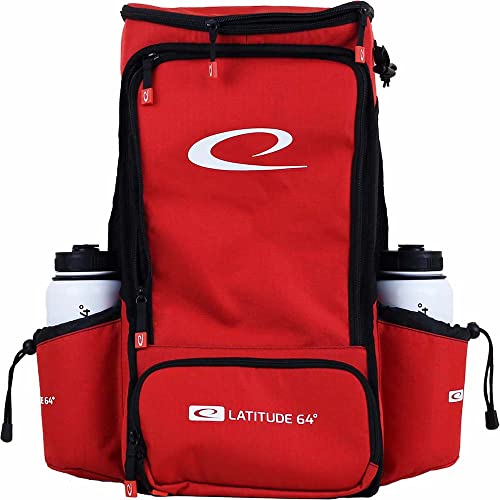
For your first three rounds, you can carry three discs in your hands and skip the bag entirely. But once you have six or more discs, something to hold them matters. The Trooper is the community default — big enough to grow into without being overkill. Resist the urge to buy a massive premium backpack when a simple bag will do everything you need for year one.
Best starter
Dynamic Discs
Trooper Disc Golf Backpack
$$
★★★★★Our rating
The Trooper is the default beginner backpack recommendation on r/discgolf for good reason: it's affordable, holds 18+ discs, has a dedicated putter pocket, water bottle holder, and room for gear. Simple, practical, and the right bag for your first year — no unnecessary waterproofing or carbon-fiber framing. Dynamic Discs makes real disc golf gear, not branded sporting-goods-chain filler.
What we like
Dedicated putter top pocket for quick access between throws
Holds 18+ discs with room for rain gear and a water bottle
Sub-$60 price suits someone who isn't sure disc golf will stick yet
What to know
Basic frame padding — adequate but not exceptional on hilly courses
Holds up to 12 discs in individual slots and adds two bottle holders. If you want the lightest, most minimal option possible, this is it. Lightweight, no-nonsense, and cheap enough that it doesn't feel like a commitment.
What we like
Extremely lightweight — barely noticeable on short rounds
Individual disc slots keep discs from banging against each other
What to know
12-disc capacity means you'll outgrow it once your bag expands past that
When you've crossed the 12-disc threshold and play twice a week, a backpack changes everything. The BP-2 holds 20+ discs, has a padded back panel, putter pocket up top, water bottle holder, and enough organizational pockets to stop the 'where did I put my mini' problem forever. Prodigy builds bags for touring pros — the construction is real.
What we like
Premium padded back panel stays comfortable across 18 hilly holes
20+ disc capacity with dedicated putter, accessory, and bottle pockets
What to know
Extra weight and bulk is overkill for players still under 12 discs
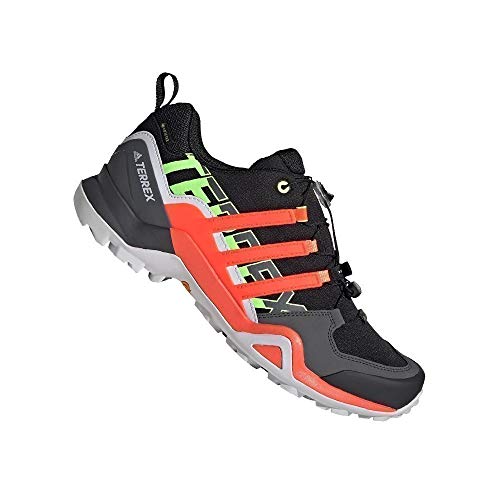
Disc golf isn't hard on shoes — you're walking, not sprinting. But teepads get slippery, courses cross wet grass and muddy paths, and you'll be on uneven ground for 18 holes. Trail runners with good grip and some water resistance are the real-world answer. You don't need dedicated disc golf cleats unless your local courses are notoriously wet.
Best starter
Adidas
Men's Terrex Swift R2 GTX
$$$
★★★★★Our rating
GORE-TEX waterproofing, sticky Continental rubber outsole, and Adidas build quality at a fair price. The Terrex Swift R2 GTX is what disc golfers on wet Pacific Northwest courses reach for — keeps your feet dry through six hours of dewy morning grass and still grips concrete teepads. A real trail runner, not an athleisure shoe with a trail label.
What we like
GORE-TEX liner keeps feet dry through wet dewy morning courses
Continental rubber outsole grips both concrete teepads and muddy paths
What to know
Runs warm in dry summer heat — the GTX adds $20 over the non-waterproof version
The Moab 3 is the most popular hiking shoe in the world for a reason: durable, grippy, comfortable on uneven ground, and usually under $120. Not as nimble as a trail runner, but handles disc golf courses without complaint. A great option if you already own something similar.
What we like
Most popular hiking shoe in the world — durability is proven over millions of pairs
Usually under $120 and feels familiar if you already own a hiking shoe
What to know
Heavier and less nimble than a purpose-built trail runner
You need three things beyond your discs: a mini marker disc (required by PDGA rules to mark your lie when picking up your disc during play), a towel to dry your grip in wet conditions, and a permanent marker to write your name and number on each disc. You will lose one eventually — a labeled disc comes back. Total cost under $20.
Best starter
Innova
Mini Marker Disc Pack
$11.99 as of Jun 22, 2026
★★★★★Our rating· Only 20 left in stock - order soon.
A mini marker disc is mandatory equipment for PDGA-sanctioned play — you place it in front of your disc to mark your lie before picking it up. This mini pack from Innova is cheap, comes in bright colors so you won't lose it, and keeps you legal on the course. Every serious player carries at least two.
What we like
Bright colors make it easy to spot on fairway grass
Cheap enough to keep two in your bag at all times
What to know
Easy to forget until you need one — buy it before your first competitive round
Disc Golf Towel with Clip for Disc Golf Bags – Microfiber Waffle Towels for Discs – Cool Designs (24 x 16 inches / 60x40cm) – Disc Golf Accessories
$
★★★★☆Our rating
A damp disc grip feels like a slipped throw before the disc leaves your hand. A disc golf towel — narrow, long, with a clip ring — hangs from your bag and dries both your disc and your throwing hand between shots. After one wet round, this becomes non-negotiable. This one clips to any bag and washes clean.
What we like
Clips to bag zipper so it's always within reach between shots
Dries both the disc and your throwing hand — one towel, two jobs
What to know
Wears out after a season of outdoor use — treat it as a consumable
A portable disc golf target lets you practice putting in your backyard — and putting is the fastest way to drop strokes. This isn't a day-one purchase (learn to throw and find courses first), but once you're playing weekly and your putting percentage is the frustrating variable, a basket pays for itself in speed of improvement. Buy one with chains that actually catch discs — cheap baskets let discs kick out, which defeats the purpose.
Best starter
Innova
DISCatcher EZ 24-Chain Basket
$$$
★★★★★Our rating
The DISCatcher is the gold standard practice basket — same manufacturer that makes PDGA-approved course targets. The EZ model has 24 chains, catches discs reliably, and assembles without tools. Cheap knockoff baskets look similar but have fewer chains and let discs kick out, which makes them useless for building putting confidence.
What we like
24 chains catch discs reliably without kick-outs that undermine practice
Same manufacturer as PDGA-approved course targets — build quality is real
What to know
Heavy enough that packing it to the park for every round gets old quickly
MVP's Black Hole baskets are what many PDGA courses install. The Lite version is lighter and cheaper than the DISCatcher while still catching discs consistently. If portability matters and you want real build quality, this is the one to buy.
What we like
What many PDGA courses actually install — build quality is proven in the field
Lighter than the DISCatcher, easier to carry to a park or field
What to know
Premium price for a budget pick — the quality gap over knock-offs is real but costs
Most beginners expect disc golf to feel like frisbee. It doesn't — not at first. Here's what your first month actually looks like, from the first awkward throw to your first genuinely satisfying round.
Disc golf has a reputation for being easy to pick up. That’s mostly true — but “easy to pick up” is doing some work in that sentence. The mechanics of the backhand throw are genuinely unintuitive at first, disc selection is confusing in ways that aren’t obvious until you’ve thrown a few rounds, and course management takes a few weeks to click into place.
The good news: the sport rewards patience over athleticism, most courses are free, and the community is one of the friendliest in outdoor sports. Here’s what your first month actually looks like.
Week 1: The first throw
The most surprising thing about disc golf for new players is that a golf disc flies nothing like a frisbee. A golf disc is smaller, heavier, and shaped to fly on a specific path depending on how hard you throw it and which direction you aim the nose. The first time you throw one, it will probably go sideways. That’s normal.
Here’s the foundation of the backhand throw — the one you’ll throw 80% of the time for the next year:
The grip: Hold the disc with your fingers curled under the rim and your thumb on top. Firm but not white-knuckle. The disc should feel secure, not clenched.
The reach-back: Pull the disc straight back along your hip line, keeping it level (not tilted up). The nose of the disc — the leading edge — should point slightly down, not up. A nose-up disc catches air and turns over.
The release: Snap through with your wrist at the end, like you’re skipping a stone. The power comes from hip rotation and that wrist snap, not from a big arm swing.
The most common beginner error is “muscling” the disc — swinging hard like you’re throwing a baseball. That causes the disc to turn over (curve hard to the right for right-hand backhand throws) and crash into the ground. Throw at 70% effort and focus on a clean release. The disc will go further and straighter than a full-effort throw for the first several months.
If you followed the gear guide and bought a starter set, you have three discs: a putter, a mid-range, and a fairway driver. Here’s when to throw each one:
Putter: Use it inside 100 feet and whenever you need absolute control. Many beginners use their putter for every shot in the first two weeks — that’s not wrong, and it’s genuinely good form practice. A putter is the easiest disc to throw straight.
Mid-range: Your workhorse disc. Use it from 100-250 feet, on wooded holes where precision matters, and any time you want the disc to go roughly where you aim it. In your first month, you’ll probably throw your mid-range more than anything else.
Fairway driver: You have one in your starter set, but use it sparingly until your form is consistent. The driver rewards clean mechanics. If you throw it with the same form problems as a beginner throw, it’ll turn over and crash harder than the mid-range would. When you do throw it, aim to throw it exactly like your mid-range — same form, same effort level. Let the disc do the work.
One hard rule: don’t buy a distance driver in month one. Distance drivers are designed for arm speeds over 60 mph — most beginners throw 40-50 mph. A distance driver at beginner arm speeds turns immediately to the right and crashes. You’ll think you’re bad at disc golf. You’re not bad; you just bought the wrong disc.
Week 3: Reading a course
Disc golf courses are laid out in “holes” — you throw from a tee pad to a metal basket with hanging chains. The disc falls into the basket to complete the hole. Courses range from flat, open fields (beginner-friendly) to dense, technical wooded layouts with elevation changes.
A few things that make a real difference in week three:
Hyzer vs. anhyzer: The angle of the disc at release controls its flight path. Tilting the left edge down at release (hyzer) makes the disc fade left sooner. Tilting the left edge up (anhyzer) sends it curving right. Understanding this gives you shot-shaping — the ability to curve the disc around obstacles intentionally rather than accidentally.
Disc selection by hole: On open holes, throw your fairway driver or mid-range. On tight wooded holes, reach for your mid-range or even your putter — control beats distance when trees are involved. The beginner instinct is always to grab the driver; the smart play is usually the mid-range.
Playing the course, not the disc: Notice what the hole demands before you choose your disc. A 200-foot hole through a tunnel of trees is not an opportunity to grip your driver. Choose the disc for the shot, not the shot for the disc.
Putting is where disc golf games are won and lost. Most beginners practice their drives and ignore their putting — and then wonder why their scores don’t improve after the first few months. Putting is approximately 40% of your total strokes. It’s the fastest investment.
The basic putting form:
Stand about shoulder-width apart, facing the basket. Hold the disc at chest height, angled slightly up. Step forward with your dominant-side foot, extending your arm toward the basket in a smooth push-follow-through. The goal is a flat, controlled flight that hits the chains dead center and doesn’t bounce out.
Inside the circle (inside about 33 feet): This is your automatic zone — you should be making these consistently within a month. Focus on a smooth, repeatable stroke. No power, all control.
Circle two (33-65 feet): Longer putts where a miss is acceptable, but a make is not impossible. In your first month, just aim to get it close. You’ll develop circle-two confidence over the following three months.
A practice basket in your backyard is the single highest-leverage gear purchase for improving quickly. Set it up, putt 100 times, three times a week. Your score will drop faster than any amount of playing actual rounds.
The things you’ll fail at — and that’s normal
Every beginner fails at the same handful of things. You will too. None of them mean anything:
Throwing rollers: Your disc hits the ground and rolls away dramatically. Usually caused by too much anhyzer at release. You’ll fix it by keeping the disc slightly hyzer (left edge down) until your form settles.
Losing discs in water: It will happen. Write your name and phone number on every disc before your first round. Disc golfers find lost discs and return them — but only if they know whose disc it is.
Throwing out of bounds: Most courses have out-of-bounds areas (water, roads, designated OB). When you go OB, you throw from a drop zone or from where the disc crossed the OB line, plus one penalty stroke. Don’t stress it — just learn the hole.
Scoring: Disc golf scoring is like ball golf — par is the expected number of throws per hole, and you’re trying to match or beat it. Bogey (one over par) is absolutely fine in month one. Breaking par on a hole is a legitimately good moment.
What to do in month two
A few things accelerate your learning once the basics are in place:
Find a regular group. Two or three players at roughly your level who play once a week. You’ll improve faster playing with people slightly better than you who point out what you’re doing wrong in real time.
Add one more disc — carefully. By month two, you might want to add an individual putter or the Discraft Buzzz mid-range to your bag. Add one disc, learn it thoroughly, and resist the urge to buy six more. The players with bags of 30 discs aren’t playing better than the players with eight — they’re just spending more.
Watch tournament footage. Professional disc golf is available free on the Disc Golf Pro Tour YouTube channel. Watching elite players navigate courses you’ve played — or courses like ones you’ve played — is genuinely educational. You start seeing the shot decisions, not just the throws.
You’re not a beginner anymore at the end of month one. You’re someone who understands the game, has real throws in your bag, and knows what you’re working on. That’s a much more interesting place to be.
Save your money
What you don't need yet
Beginners get pressured to buy a lot of stuff that doesn't help them play
better. Here's what we'd skip on day one.
Distance drivers — Built for arm speeds over 60 mph. Beginners throw 40-50 mph and will see zero benefit — the disc turns and crashes instead of flying straight. Wait 3-6 months of consistent play.
A 30-disc bag — You don't have 30 discs yet, and you shouldn't. Three to six discs are enough for the first three months — overpacking just means carrying extra weight and losing track of which disc did what.
A disc golf cart — Useful when you're playing seriously with a 20+ disc setup. Overkill for a beginner with a simple bag. Add this once you're playing twice a week year-round and hauling a heavy load.
Premium plastic (Z, ESP, Star, Champion) — Same flight shapes as standard plastic, more durable, better grip in specific conditions. Worth it after month six — not before you know which discs you actually throw.
A disc golf rangefinder — Useful for competitive play and accurate distance tracking. Zero value for beginners who need to develop consistent mechanics before worrying about exact yardage.
First week
Your first seven days
A short, real plan to get from gear-on-doorstep to actually playing.
Download UDisc and find your nearest disc golf course. · Action
UDisc · The essential disc golf app — course finder, scorekeeping, and stats. Free tier is enough to start.
PDGA Course Directory · Official PDGA course finder with ratings and detailed course layouts.
Order the Innova DX Starter Set — three discs, all tuned for slower arm speeds. · Buy
Watch one beginner disc selection video before your first round. Danny Lindahl's explanation of why beginners shouldn't throw distance drivers is the most important ten minutes for a new disc golfer. · Learn
Write your name and phone number on each disc with a permanent marker before your first round. · Action
Play your first round with just the three starter set discs — no more. · Action
Play two more rounds in your first week. Disc golf mechanics click through repetition faster than any amount of study. · Action
FAQ
Common questions
How much does it cost to play disc golf?
Most public courses are completely free — that's one of disc golf's great selling points. You pay for gear once: a starter disc set runs $30-40, a basic bag runs $20-35, and trail shoes are optional. Budget $35 for day one, $110-150 for a full starter kit with bag and shoes.
Can I just throw a regular frisbee?
Technically yes, practically no. A flying disc frisbee is too light and too wide to fly consistently on a disc golf course — it floats and drifts unpredictably. Golf discs are smaller, heavier, and shaped to fly on a predictable path. The difference is noticeable in the first five throws.
How far should I be throwing as a beginner?
150-250 feet with a mid-range is completely normal in your first month. Don't worry about distance — worry about accuracy and consistency. Players who throw 200 feet accurately beat players who muscle a driver 300 feet into the rough every time.
What does 'understable' mean, and why does it matter?
Understable discs turn to the right during flight (for right-hand backhand throwers) before fading left at the end. For beginners, understable discs are easier to throw straight because your slower arm speed doesn't fully engage the disc's stability rating. Most beginner recommendations — including the Innova Leopard — are understable for this reason.
Do I need to take lessons?
Not at first. Disc golf has a massive free teaching library on YouTube (Danny Lindahl and GK Pro are the two best beginner channels), and the in-person disc golf community is famously welcoming. One round with an experienced player teaches more than an hour of solo research. Formal lessons make sense after month two, once you've identified specific mechanical issues.
What's the fastest way to get better?
Play with people slightly better than you and ask questions. Then practice putting separately — 100 short putts three times a week improves your score more than anything else you can do. Putting is roughly 40% of most disc golfers' strokes and gets the least dedicated practice time.
PDGA — Professional Disc Golf Association — The sport's governing body. Course directory, official rules, player ratings and stats. The rules page is the authoritative source for how the sport is actually played.
UDisc — The essential disc golf app and website. Course finder, scorekeeping, distance tracking, and the most comprehensive disc flight database online. Free tier covers everything a beginner needs.
Danny Lindahl (YouTube) — The best beginner coaching channel on YouTube. Patient, clear, evidence-based. Start with his disc selection and form fundamentals series — they'll save you six months of bad habits.
GK Pro (YouTube) — Great beginner and intermediate content. His disc golf tips series is practical and actionable. Second-best channel after Lindahl for newer players.
Disc Golf Network — The sport's dedicated streaming platform. Paid, but worth it if you want to watch pro events — seeing elite players on real courses is genuinely educational for understanding course strategy.
r/discgolf — Active, welcoming community. Best for course recommendations, gear questions, and disc advice. Read the wiki before posting a 'what discs should I buy' question — the answer is always the Innova starter set.
Infinite Discs — The most respected disc golf retailer. Better selection than Amazon, detailed flight charts, and accurate disc ratings. Once you know what you want, this is where to buy it.
As an Amazon Associate, JustBeginning earns from qualifying purchases.
We may also earn commission from other affiliate programs linked on this
page. Editorial recommendations are independent; we don't choose
products based on commission rates.
Product prices and availability are accurate as of the date and time
indicated and are subject to change. Any price and availability
information shown on Amazon at the time of purchase will apply.


 Best starter