Goats are the gateway animal into homesteading, and once you've had them, nearly impossible to give up. Setup costs run $300–800 before a single animal arrives — but that gear lasts for years. Here's exactly what to buy first, and what you can skip until you've got the basics down.
By Colin B. · Published June 13, 2026 · Last reviewed June 13, 2026
This covers setup gear only, not the animals. Goats run $50–500+ by breed; Nigerian Dwarf does typically start at $200. Budget separately for animals, annual vet visits ($100-200/goat), and ongoing hay.
We earn commission on qualifying Amazon purchases — see our
affiliate disclosure.
Price tiers and budget totals shown above are editorial estimates;
actual Amazon prices vary.
At a glance
Our top pick in each category
The fastest path through this guide — each best-starter pick by category.
Scroll for the budget and upgrade alternatives.
Don't buy animals before the fence is up and tested. Goats are escape artists and will find every weak point in your perimeter within the first hour. Build the infrastructure first, walk the perimeter looking for gaps over 4 inches wide, then bring animals home.
Decide on your purpose before ordering gear. Dairy goats (Nubians, Saanens, Nigerian Dwarfs) need a milk stand and dairy supplies. Meat breeds like Boers are more hands-off. Fiber breeds like Angoras need shearing equipment. Nigerian Dwarfs are the dual-purpose compact option most beginners start with — manageable size, friendly, and productive.
Source hay locally before anything else. Hay doesn't ship economically; you need a local farm store or hay supplier lined up before your first animals arrive. Ask at the feed store who's selling square bales in your county — this matters more than any Amazon order.
Goats are famous escape artists. A fence that holds horses won't necessarily hold goats, which push, climb, and squeeze through gaps you'd never expect. The 2x4 no-climb woven wire is the industry standard: small mesh prevents horn-hooking and leg-catching, and it stops predators from reaching through. Electric fence is cheaper per foot and works once your goats learn to respect it, but training takes a few weeks of supervision. Cattle panels are the premium option — rigid, fast, and nearly indestructible, but expensive for larger perimeters.
Fencing — what's the difference?
A few common shapes, each making a different trade.
Woven Wire (2x4 No-Climb)
Permanent and predator-proof. The default for serious setups.
Cost / 100 ft
$50–80 + posts
Predator defense
High
Install time
Half day with help
Best for Permanent pastures, mixed livestock, anywhere coyotes or dogs are a concern
Tradeoff Most labor-intensive; you're stretching and stapling wire, not snapping panels
The industry standard for good reason. The 2x4-inch mesh is too small for a goat to get a leg or horn through, and the high-tensile wire holds up against determined escape attempts. A 200-ft roll covers a full starter perimeter with room to spare.
What we like
2x4 mesh stops legs and horns from catching — the most common goat fence injury
High-tensile wire resists stretching and stays tight through seasons
Works for mixed livestock; horses and sheep respect it too
What to know
Needs posts every 8-10 feet, sold separately for another $80-150
A 200-ft roll is very heavy; two people or a post driver makes install easier
Once goats are trained to the fence, electric is dramatically cheaper per foot than woven wire. This charger handles up to 10 miles of wire from a single outlet. Pair it with step-in posts and polywire for a complete perimeter under $100.
What we like
Cheapest per linear foot once the energizer is paid for
Reconfigurable; reshape your pasture or add paddocks in an afternoon
What to know
Useless until goats are trained; unsupervised first days are risky
Not predator-proof without a dedicated hot wire near the ground
The rotational-grazing tool for serious homesteaders. Pre-attached posts make a complete portable paddock in 20 minutes; move it weekly and your pasture recovers faster than goats can overgraze it. Skip this for your first full season.
What we like
Complete portable paddock deploys in 20 minutes with no tools needed
Premier 1 is the gold standard for electric netting; quality is real
What to know
Expensive at $175+; overkill until after your first full season
Tangles badly if not rolled carefully after each move
Goats are wasteful eaters. Hay tossed on the ground gets pawed into bedding they won't touch; a hanging feeder cuts waste by 40-60% and pays for itself in feed savings within a month. Adults need 1-3 gallons of water per day, more for lactating does. In freeze-prone climates, a heated bucket is essential — goats stop drinking when water drops near freezing and dehydrate faster than you'd expect.
Best starter
Little Giant
Hook-Over Goat Trough, Galvanized
$41.29 as of Jun 22, 2026
★★★★★Our rating· Only 16 left in stock - order soon.
The classic galvanized hook-over trough that livestock keepers have hung on fence rails for decades. Keeps feed elevated and clean, resists chewing and rust, and hooks on without any tools. Mount it where the goat can't stand in it and the hay stays clean.
What we like
Galvanized steel lasts decades; goats can't chew or crack it
Elevated design cuts hay waste versus ground feeding
Hooks on any fence rail in seconds with no tools or screws
What to know
One trough per 1-2 goats; larger herds need multiple units
Open top lets rain wet the feed if your shelter has any roof gaps
The indestructible rubber tub every livestock keeper ends up owning. Can't crack from hooves or cold; fill it with grain, minerals, or water. At $25-30, buy three and use them for everything — one for grain, one for water, one to spare.
What we like
Virtually indestructible; survives hooves, cold, and rough handling
Multi-use: grain bin, water bucket, or mineral tub interchangeably
What to know
No mounting option; goats tip it trying to reach the last bits
Flexible walls let grain spill when a goat leans in aggressively
Goats stop drinking when water drops below 45°F, causing urinary calculi in bucks and dehydration in does. This thermostatically controlled bucket keeps water above freezing without overheating in milder weather — a necessity in most of the US.
What we like
Thermostatically controlled; heats only when temps drop near freezing
Flat back mounts against wall, keeping cord away from curious goats
What to know
Requires electricity near the shelter — not for remote pastures
Needs daily refilling; this is not an automatic waterer
Two things new keepers almost always neglect: hoof trimming and minerals. Hooves grow continuously and don't wear down naturally in a pasture — untrimmed hooves curl under and cause lameness within a season. Proper shears and 30 minutes every 6-8 weeks per animal prevents the problem entirely. Loose mineral supplement fills the three most common nutritional gaps (selenium, copper, zinc) and costs pennies a day to provide.
Best starter
LANHE Tactical
Curved Blade Goat & Sheep Hoof Trimmers
$8.99 as of Jun 22, 2026
★★★★★Our rating· In Stock
The curved blade and spring-loaded mechanism are exactly what the job requires. The curved tip reaches cleanly around the hoof wall while the spring handle reduces hand fatigue over a multi-goat session. At under $25, affordable enough to keep a spare pair in the barn kit.
What we like
Curved blade reaches around the hoof wall without awkward angling
Spring-loaded handle reduces hand fatigue trimming multiple goats
Under $25 — affordable enough to keep two pairs and never search for them
What to know
Dulls after every few uses; keep a sharpening stone nearby
Not heavy-duty enough for severely overgrown hooves on large breeds
★★★★☆Our rating· Only 2 left in stock - order soon.
After shears cut the length down, a hoof knife cleans the white line and removes soft rot pockets the shears can't reach. An inexpensive set covers all routine hoof work; you don't need specialty blades until foot rot becomes a recurring problem.
What we like
Cleans white line and rot pockets that shears alone can't reach
A basic combo handles 99% of routine hoof work for small flocks
What to know
Requires more technique than shears; watch a video before first use
The go-to first-response supplement for goat keepers. Nutri-Drench delivers glucose, vitamins, and trace minerals directly without digestion — absorbed faster than any feed-based solution. Keep a quart on the shelf for kids that won't nurse, does recovering from kidding, or any animal that suddenly stops eating.
What we like
Absorbed without digestion — faster response than feed-based supplements
Shelf-stable and ready for the middle of a kidding emergency
What to know
Not a substitute for finding and treating the underlying illness
Needs a drenching gun or large syringe to administer, sold separately
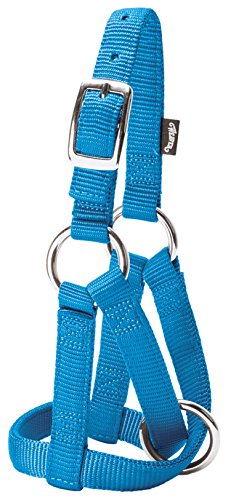
You cannot do hoof trims, vet checks, or medication without a way to restrain your goat calmly and safely. A well-fitted halter and lead rope are the minimum; a milk stand adds a third point of control that keeps the animal still for longer tasks. Goats trained to the halter from day one are dramatically easier to work with — start the day you bring them home, not after you realize you need to trim hooves and can't catch the animal.
Best starter
Weaver Leather
Adjustable Goat Halter
$19.79 as of Jun 22, 2026
★★★★★Our rating· Only 19 left in stock (more on the way).
Weaver's nylon halter fits Nigerian Dwarfs up to full-size breeds with simple buckle adjustments. Comfortable for supervised wear in the field, strong enough for vet visits and hoof days. The standard answer to 'what halter should I buy' in every goat forum.
What we like
Adjustable nylon fits breeds from Nigerian Dwarfs to Nubians
Comfortable enough for supervised daily wear during field time
Weaver Leather quality at a non-premium price point
What to know
Check fit weekly on kids — too-tight halters cause sores quickly
Not for unsupervised overnight wear; remove before turnout
The halter's other half. Hamilton makes durable poly lead ropes at commodity prices. Ten feet gives you control while standing safely to the side — important when a goat spooks. Buy two; they disappear into the barn never to be found again.
What we like
10-foot length gives working distance while keeping you in control
Durable nylon holds up to daily use through seasons
What to know
Nylon burns bare hands if a goat bolts suddenly; wear gloves
Snap clip can jam with mud — inspect before each use
A milk stand holds the goat's head in a stanchion while she eats grain, freeing both hands for milking, hoof trimming, or injections. Even non-dairy keepers find it essential for vet tasks. Grain in the head box makes a tense goat cooperative within seconds.
What we like
Stanchion holds head still, freeing both hands for milking or trimming
Grain in the head box makes even a nervous goat cooperative fast
What to know
Bulky; needs a dedicated spot in the barn or shelter
Overkill if you're keeping wethers purely for companionship
Most goat health problems trace back to mineral deficiencies. Selenium deficiency causes white muscle disease in kids; copper deficiency leads to rough coats and poor immunity; zinc gaps hurt reproduction. Loose mineral is the answer — goats self-regulate their intake from loose mineral far more accurately than from a lick block. Keep a covered feeder of loose goat-specific mineral available 24 hours a day; it costs pennies per goat per day and prevents hundreds of dollars in vet bills.
Best starter
Manna Pro
Loose Goat Mineral, 8 lb
$
★★★★★Our rating
The most widely available and well-formulated loose mineral for goats. Covers selenium, copper, zinc, and iodine in the right proportions for dairy and meat breeds alike. An 8-lb bag feeds a small herd for 2-3 months. Available at farm stores and ships reliably on Amazon.
What we like
Balanced selenium, copper, and zinc matched to goat requirements
8-lb bag lasts a small herd 2-3 months at pennies per goat per day
Available at most farm stores if Amazon ships slow
What to know
Not a substitute for selenium injections in selenium-deficient soil regions
A grain supplement formulated for goats that provides extra energy for lactating does or goats in cold weather. Not a hay replacement — always feed hay first — but useful during kidding season or winter months when energy demand spikes.
What we like
Formulated specifically for goats, not repurposed cattle or sheep feed
Provides critical extra energy for lactating does in cold weather
What to know
Overfeeding causes enterotoxemia — hay always comes first
50-lb bags need rodent-proof storage in a sealed metal bin
Goats are easier to keep than most people think, and harder in ways nobody warns you about. Here's what your first season actually looks like, starting from an empty pasture.
The internet will tell you that goats are “easy” or that goats are “impossible.” Both are wrong. They’re predictable animals with specific needs, and the keepers who struggle are almost always the ones who skipped the infrastructure or got animals before the fence was ready.
Here’s what your first season actually looks like, month by month, with the things that matter and the traps worth avoiding.
Before the animals arrive: the infrastructure month
Every experienced goat keeper will tell you the same thing: don’t buy the animals first. The order should be fence, then shelter, then animals — and you should test the fence before anything living comes through the gate.
Goats are not testing your fence to escape. They’re just curious, and they push everything. A loose T-post, a saggy middle wire, a gap under a corner post — they will find it within hours of arrival. Walk your perimeter and press on every post. If it wobbles, it needs to go deeper or get a cross-brace. Look for gaps over 4 inches wide anywhere near ground level. Baby Nigerian Dwarfs can fit through openings you’d swear were too small.
Shelter doesn’t need to be fancy. Three solid walls, a roof that keeps rain off, and enough space that animals aren’t stacked on top of each other in freezing weather. The minimum is roughly 12 square feet per standard goat, 8 per Nigerian Dwarf. Ventilation matters more than warmth — goats handle cold better than moisture, and a poorly ventilated shelter causes respiratory problems faster than a drafty one.
Set up feeders and water before day one. Fill the water, check for leaks, confirm the feeder is mounted at the right height. You want to be watching the animals on their first day, not installing hardware.
One pre-arrival task most beginners skip: find a large-animal or mixed-practice vet who sees goats before you need them. Call around. Not all small-animal vets see goats. Many large-animal vets are primarily cattle or equine practices and will still take a call about a sick goat, but you want to know the number before 11pm with a goat down.
The first month: learning what they’re telling you
Goats are vocal animals with clear preferences. In the first few weeks, you’re learning to read them.
A goat that won’t stop crying is either lonely (a single goat with no companion), has found something wrong with its food or water, or is in heat (does cycle every 21 days and are loud about it). Most first-month noise is the loneliness problem — which is why two goats is always the answer for beginners.
Loose mineral matters from day one. Put out a covered feeder of loose goat-specific mineral as soon as the animals arrive. Don’t use cattle or sheep mineral — the copper ratios are wrong for goats, and copper deficiency shows up within weeks as a rough coat, faded color, and poor immune response. Loose mineral is the answer over lick blocks because goats self-regulate their intake far more accurately from loose mineral.
Watch how they eat. A goat that approaches the hay, sniffs it, and walks away is telling you the hay quality is poor — dusty, moldy, or stemmy with no leaves. Goats are selective feeders and will waste hay they don’t want while appearing to have plenty available. Good hay should be green, leafy, and smell sweet. If your first hay source has problems, find another before your animals start losing condition.
By month two, you’ll probably be overdue for your first hoof trim. Don’t wait for visible curling — trim before the hooves start to look long, because prevention is much easier than correction.
Get a milk stand, or improvise a restraint system before the first trim. Hoof trimming a goat that’s thrashing loose is how beginners get injured and how goats get nicked in ways that create problems. A milk stand with grain in the head box turns a resistant animal into a cooperative one in about thirty seconds.
The trim itself: cut parallel to the coronary band (the hairline at the top of the hoof), not at a dramatic angle. Trim the hoof wall flush with the sole. The sole should be flat; if it’s concave you’ve gone too far. The quick (blood supply) sits higher than most beginners expect — if you see pink, stop. A small nick bleeds a lot and looks alarming; it isn’t dangerous, but it will make the goat resent future trims if you do it repeatedly.
First trim should take 15-20 minutes per goat while you figure out the technique. By month six, an experienced keeper does a trim in 5 minutes flat.
The parasite conversation
Barber pole worm (Haemonchus contortus) is the biggest health challenge for goats in humid climates. It’s a blood-sucking stomach worm that causes anemia — and it has developed resistance to most dewormers in most regions.
The answer is not to deworm on a calendar. The answer is FAMACHA scoring: pull back the lower eyelid and compare the color of the mucous membrane to a reference chart. A pink-red membrane means the goat is fine. Pale to white means anemia, which means worm load, which means deworm that animal. This approach targets only the animals that need treatment, which slows resistance development dramatically.
Take the free FAMACHA training online before your first animals arrive. It takes two hours. It will save you animals and money.
What actually goes wrong in the first year
The most common first-year problems, in order:
Escape. Almost always a fence problem you missed during setup. Walk the perimeter. Again.
Mineral deficiency. Rough coat, faded color, reproductive problems. The fix is loose mineral free-choice from day one, not a salt lick.
Enterotoxemia. A fast-moving bacterial disease that kills goats that ate too much grain too fast. Prevent it with CDT vaccination (annually, and boosters for kids) and by never making sudden diet changes. Introduce grain slowly.
Founder (laminitis). Grain overload causes inflammation in the hooves. Prevention is the same: never let a goat into the grain bin unsupervised, and change diet gradually.
Bloat. Usually from too much lush spring pasture or fermented feed. Learn to distinguish frothy bloat (foam, requires treatment) from free gas bloat (tympanic ping on the left side, often resolves with walking). Keep a stomach tube on hand once you have animals; knowing how to use it may save a life.
None of these are obscure. All of them are preventable with basic management. The keeper who does well in year one is the one who read about these before they happened, not after.
What year one actually teaches you
By the end of your first season, you’ll know your animals individually — which one pushes the fence, which one is the dominant doe who controls feeder access, which one will stand quietly for a trim and which one needs grain plus a firm grip.
You’ll also know what you’d do differently. More shelter space. Better hay. A milk stand before the first hoof day, not after. Every experienced keeper has the same list.
The animals that do well in year one are usually the ones kept by people who did the work upfront: the fence, the mineral, the vet number in the phone. Goats aren’t hard to keep. They’re just specific.
Save your money
What you don't need yet
Beginners get pressured to buy a lot of stuff that doesn't help them play
better. Here's what we'd skip on day one.
A buck (male goat) for breeding — Bucks are aggressive, smelly, and need separate housing. Rent one from a local breeder when the time comes, or use artificial insemination. Most beginners don't need their own buck for the first year or two.
Automated milking equipment — Hand-milking is faster than cleaning a machine for small herds. Most people with 1-3 dairy goats hand-milk for years before buying machinery.
A grain-heavy feeding setup — Goats need hay as the foundation of their diet. High-grain diets cause enterotoxemia and bloat. Get your hay situation sorted before buying anything else.
Calendar-based dewormers — Deworm based on FAMACHA eye scoring or fecal egg counts, not a fixed schedule. Routine calendar deworming builds drug-resistant parasites faster than almost anything else you can do.
A purebred specialty breed — Start with a hardy dual-purpose cross or a Nigerian Dwarf. Purebred dairy breeds and Angoras require better nutrition, more health monitoring, and more experience to thrive.
First week
Your first seven days
A short, real plan to get from gear-on-doorstep to actually playing.
Inspect your fencing before anything else — walk every foot of the perimeter looking for gaps over 4 inches wide and test post firmness. · Action
Source local hay before the animals arrive. A local farm store or hay supplier is essential; don't rely on shipping for bulk feed. · Action
Order your halter and hoof shears so they arrive before or with your animals. · Buy
How much does it actually cost to start keeping goats?
Setup gear runs $300-800 before animals. The animals themselves cost $50-500 by breed; a good Nigerian Dwarf doe runs $200-400. Add annual hay ($300-600 per goat), vet visits ($100-200/year/goat), and fencing. Most beginners spend $1,000-2,000 all-in for their first two goats in the first year.
What's the minimum space needed for two goats?
The rule of thumb is 200 square feet of enclosed pasture per goat for small breeds (Nigerian Dwarfs), 250-300 for standard breeds. A 12x12 shelter for two goats with a 20x30 attached paddock is a workable starter setup. More space always produces healthier, calmer animals.
Can I keep just one goat?
Technically yes, but goats are herd animals and a single goat is often anxious, noisy, and destructive from loneliness. Plan for at least two — even if the second is a wether (castrated male) kept as a companion. Two goats cost only marginally more than one to set up.
What's the difference between dairy, meat, and fiber goats?
Dairy breeds (Nubian, Saanen, Nigerian Dwarf) need twice-daily milking. Meat breeds (Boer) are larger, hardier, and don't require milking. Fiber breeds (Angora, Cashmere) need annual shearing. Nigerian Dwarfs are a popular beginner choice: small, dual-purpose, and manageable.
How often do goats need veterinary care?
Plan on annual CDT vaccinations, at least one fecal egg count per year for parasite monitoring, and hoof trims every 6-8 weeks. New animals need a vet check and a 2-week quarantine before joining your herd. Budget $100-200 per goat per year for routine care, more if milking or breeding.
American Dairy Goat Association — Registry, breed standards, and educational resources for dairy breeds. The official organization if you ever want to register animals or show in competition.
Fiasco Farm — The most thorough beginner reference on the web, written by an actual goat keeper. Health, nutrition, kidding, and milking covered in plain language. Bookmark this before buying your first goat.
FAMACHA Training (SCSRPC) — Free training for detecting barber pole worm anemia. Worth completing before you have animals — deworming strategy is one of the most consequential decisions you'll make as a keeper.
Maryland Small Ruminant Page — Dr. Susan Schoenian's extension resource, one of the most cited references for parasite management and goat nutrition. Dense but authoritative.
r/goats — Active community with experienced breeders. Good for breed selection, health questions, and fence debates. Skip the 'is my goat pregnant' threads until you know what to look for.
As an Amazon Associate, JustBeginning earns from qualifying purchases.
We may also earn commission from other affiliate programs linked on this
page. Editorial recommendations are independent; we don't choose
products based on commission rates.
Product prices and availability are accurate as of the date and time
indicated and are subject to change. Any price and availability
information shown on Amazon at the time of purchase will apply.


 Best starter