Terrariums are part miniature garden, part living sculpture, and you can build a genuinely beautiful first one for under $75. The critical insight beginners miss: open terrariums suit dry plants like succulents, while closed terrariums trap humidity for tropical moss and ferns. Get the plant-container pairing right and your build can thrive for years with minimal maintenance.
By Colin B. · Published May 24, 2026 · Last reviewed June 8, 2026
A mason-jar open terrarium with succulents costs under $50. A proper closed tropical build with a hinged geometric vessel, plants, tools, and substrate runs $80-130.
We earn commission on qualifying Amazon purchases — see our
affiliate disclosure.
Price tiers and budget totals shown above are editorial estimates;
actual Amazon prices vary.
At a glance
Our top pick in each category
The fastest path through this guide — each best-starter pick by category.
Scroll for the budget and upgrade alternatives.
Don't mix open and closed plants. Succulents and cacti evolved for dry air and fast-draining gritty soil. Ferns, nerve plants, and mosses need trapped humidity to thrive. Mixing them (a cactus in a closed tropical jar) is the single most common beginner mistake and will kill something within weeks.
Start smaller than you think. A 1-gallon wide-mouth jar is more forgiving than a 10-gallon tank for your first build. Less substrate to layer, fewer plants to balance, and you can see the whole thing clearly as you plant. Scale up after you understand how your chosen plants behave.
Buy plants last. Choose your vessel, gather your substrate layers, and plan your layout, then source plants. Plants chosen before a container is in hand often end up too large, wrong for the humidity level, or incompatible with each other.
The gear
What you actually need
Glass Vessel
Your container is the single most important decision you will make: it determines your plant choices, your maintenance schedule, and whether your build is self-watering or needs regular attention. Open containers (no lid) suit dry plants: succulents, cacti, air plants. Closed containers (lidded) trap humidity for tropical plants like ferns and nerve plants. Wide openings make planting and maintenance dramatically easier than narrow-neck bottles.
Glass Vessel — what's the difference?
A few common shapes, each making a different trade.
Open Terrarium
No lid, dry air: suited for succulents, cacti, and air plants.
Humidity
Ambient (low)
Watering
Weekly or biweekly
Plant type
Succulents, cacti, air plants
Best for Beginners who want drought-tolerant plants and a sunny windowsill
Tradeoff Needs regular watering, not the set-and-forget style of a closed build
Glass Geometric Terrarium with Hinged Lid, 11 Inch
$$
★★★★★Our rating
This hinged geometric terrarium is the go-to beginner vessel: the top opens wide for planting, the glass is thick enough to feel solid, and the proportions work: not so deep that tools can't reach, not so shallow that you can't fit a proper drainage layer. Start here and scale up once you know what style you want.
What we like
Hinged top opens wide for easy planting, no contortion needed
Proportions fit a proper drainage-to-soil layer stack
Geometric shape reads as a designed object on any shelf
What to know
Corners trap condensation; wipe weekly in closed setups
Fixed geometry limits plants to low-growing compact species
A gallon wide-mouth jar is the honest beginner's terrarium. It costs around $15, holds enough substrate for real plants, and the wide opening means you can plant with your hands instead of specialized tools. The lid creates a closed humid environment. Not the most photogenic build, but it teaches you all the same principles and costs nothing to experiment with.
What we like
Wide mouth means you can plant with hands, no tools required
Under $20, low-stakes first build to learn from
What to know
Not as photogenic as geometric styles
Solid glass lid is harder to regulate humidity than hinged lids
Large Geometric Glass Terrarium Box with Swing Lid
$84.90 as of Jun 22, 2026
★★★★☆Our rating· In stock
A large glass terrarium box is the statement piece. The glass-and-metal frame sits on any shelf and reads as furniture. The swing lid opens fully (the best maintenance access you get in a glass container), and the proportions accommodate branching plants, taller mosses, and more ambitious hardscape. Buy this once you know what style of terrarium you're building.
What we like
Full-access swing lid for best maintenance ergonomics
Reads as furniture on a shelf, not a DIY project
Large footprint accommodates taller and branching plants
What to know
Metal frames can rust in humid closed setups without upkeep
Larger size requires more plant mass to avoid looking sparse
Proper layering is what separates a terrarium that lasts years from one that rots in weeks. The classic false-bottom system stacks four layers: drainage pebbles at the base, then a layer of horticultural charcoal to filter bacteria, then a thin sheet of sphagnum moss to keep soil from sifting into the drainage zone, then your plant-specific soil on top. Skip the charcoal layer and organic matter starts decomposing in your drainage pool within months.
Best starter
Perfect Plants
Premium Horticultural Charcoal
$16.99 as of Jun 22, 2026
★★★★★Our rating· In Stock
Horticultural charcoal does two jobs: it absorbs toxins from decomposing plant matter, and it keeps anaerobic bacteria from colonizing your drainage layer. Most beginners skip it, then wonder why their terrarium smells like a swamp after a few months. It's cheap, it lasts forever, and it belongs in every terrarium whether open or closed, tropical or desert.
What we like
Prevents anaerobic bacteria buildup in the drainage layer
One bag covers multiple terrarium builds and stores indefinitely
What to know
Doesn't replace drainage gravel; add both to every build
A good soil mix is the substrate everything above it depends on. Miracle-Gro Tropical is formulated for the moisture-retaining, nutrient-rich conditions that ferns, nerve plants, and tropical ground covers need. Swap it for a fast-draining cactus mix if you're building an open succulent terrarium. Don't use generic garden soil; it compacts and drains poorly in closed containers.
What we like
pH and nutrients pre-tuned for tropical indoor plants
Retains moisture without becoming hydrophobic like some peat mixes
What to know
Wrong for open terrariums; succulents rot in moisture-retaining soil
LECA (lightweight expanded clay aggregate) replaces your entire drainage layer with reusable clay balls that wick moisture without waterlogging roots. Popular in semi-hydroponic closed terrariums where you want to rewater from the bottom. More expensive upfront but reusable indefinitely, and makes root health much easier to monitor than gravel.
What we like
Reusable indefinitely; rinse, sterilize, and use again
Bottom-watering works naturally with LECA layers
What to know
More expensive upfront than pea gravel for same drainage function
Requires different watering habits than standard soil terrariums
Plant choice depends entirely on which container you picked. Succulents and cacti evolved for dry air and fast-draining soil; they suffocate in humid closed terrariums. Ferns, nerve plants, mosses, and miniature orchids need that humidity and will crisp up in an open desert container. Pick your style first, then buy only plants suited to it. Don't mix a cactus into a tropical build because it looked interesting at the nursery.
Best starter
Hirts Gardens
Fittonia Nerve Plant, 2.5 Inch Pot
$
★★★★★Our rating
Fittonia is the textbook closed-terrarium plant: it's almost unkillable in a humid glass environment. The patterned leaves look dramatic in a small container, it stays compact, and it wilts visibly when it needs water, one of the few plants that communicates its needs clearly. Available at most grocery store floral departments and garden centers, or reliably via mail.
What we like
Thrives in the humid, indirect-light conditions of a closed terrarium
Wilting signals watering need clearly; hard to accidentally overwater
Stays compact and low-growing; won't outpace a small container
What to know
Looks dramatically dead when dry (it isn't), startling until you know it
Cannot tolerate direct sun through glass; bleaches and burns fast
Air plants are the no-soil beginner option for open terrariums. They mount on rocks, shells, or driftwood without planting; just mist twice a week and soak in water for an hour every two weeks. Available in multipacks for under $20 and they teach terrarium design (composition, negative space, hardscape) without any of the layering complexity of a planted build.
What we like
No soil, no drainage layer; mount on rocks or driftwood
Multipacks under $20, easy to experiment with arrangement
What to know
Must dry fully within 4 hours of soaking or rot sets in at the base
Not suited for closed terrariums; too much trapped humidity
An assorted succulent pack gets you hands-on experience with the most forgiving plant category available. Mix textures and rosette sizes in an open geometric container, variety reads as designed even when your compositional instincts are still developing. Fat Plants is a reliable Amazon seller with genuinely healthy plants, not the leggy, stressed specimens common in grocery stores.
What we like
Most drought-tolerant plants available, extremely forgiving
Huge variety of textures and rosette forms in one assorted pack
What to know
Need more light than most indoor spots provide; a grow light helps
Rot quickly in closed or humid terrariums; open builds only
Long tools aren't optional: they're how you reach the bottom of a container without spilling substrate all over your arm. The minimum kit: long tweezers for placing individual plants, a long-handled brush for sweeping stray soil off the glass walls, and a small funnel for adding substrate cleanly. A bamboo skewer or chopstick handles most other fine adjustments. This whole category costs under $25 and lasts indefinitely.
Best starter
Juicykits
Terrarium Tools Set, 5-Piece Stainless
$
★★★★★Our rating
Deep or narrow-necked containers make it physically impossible to plant with bare hands. This terrarium tool set (long stainless tweezers, a curved-tip planter, a long-handled brush, funnel, and spout) covers every planting task for under $20. The brush is underrated: it's the only way to clean stray substrate off the inside glass walls without scratching them.
What we like
Reaches the bottom of deep containers without spilling substrate
Long brush cleans glass walls without scratching
Stainless steel; rinse and reuse indefinitely
What to know
Awkward for large root balls; better for fine plant-placement work
The right misting tool matters more than it sounds. A fine-mist spray bottle distributes water evenly across the substrate surface without displacing plants or pooling. For closed terrariums, you mist once at setup and maybe once a month after. Not much, but it needs to land gently. An adjustable nozzle handles both misting and targeted watering for open builds.
What we like
Fine mist distributes water evenly without displacing light soil
Adjustable nozzle handles both misting and targeted spot watering
What to know
Pressurized models lose pressure mid-spray in very cold rooms
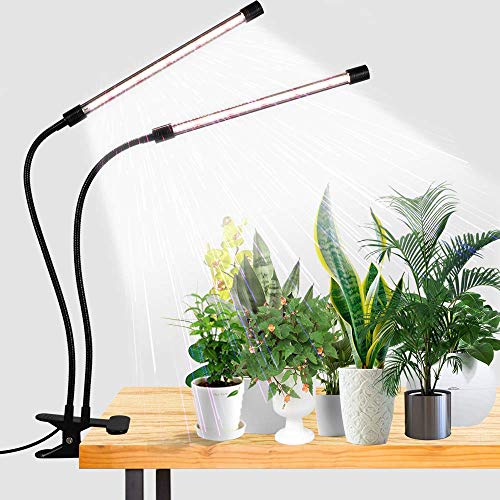
Most terrariums do fine in bright indirect light, a few feet from a window, no direct sun, which scorches even sun-loving succulents through glass. If your space is genuinely dim (more than five feet from a window, or a north-facing apartment), a small grow light makes a real difference. You don't need anything powerful: a 10-20 watt full-spectrum LED running 12-14 hours a day covers most builds.
Best starter
GooingTop
LED Grow Light, 6000K Full Spectrum Clip
$21.45 as of Jun 22, 2026
★★★★★Our rating· In Stock
A clip-on gooseneck LED positioned 6-10 inches above your terrarium solves the most overlooked beginner problem: most indoor rooms don't have enough ambient light for plants to thrive, especially in winter. Run it 12-14 hours a day on a timer. Even succulents benefit from a dedicated light source rather than relying on a window that may be too far away.
What we like
Solves the most overlooked terrarium problem: too little indoor light
Clip-on design works on any shelf edge or container lip
What to know
Single point of light creates uneven coverage over wide builds
Position at least 6 inches above glass; closer and it overheats plants
If you're building multiple terrariums on a shelf, a T5 grow light strip illuminates the full run rather than spotlighting one build. Barrina's T5 tubes are the standard recommendation in the planted-terrarium community, with consistent spectrum, energy-efficient, and strips can be daisy-chained for wider coverage. Overkill for one terrarium, perfect once you have three or four.
What we like
Covers an entire shelf of terrariums, not just one build
Strips daisy-chain for wider coverage without additional outlets
What to know
Overkill for a single terrarium; buy this at build three or four
Moss is the finishing layer that makes a terrarium look complete rather than like a plant in a jar. Live or preserved moss knits the substrate surface together and creates a natural-looking floor. Hardscape elements (rocks, cork bark, driftwood) add structure and give plants something to grow against. One anchor piece plus a moss carpet is enough; five rocks reads as cluttered.
Best starter
Mosser Lee
Long Fiber Sphagnum Moss
$
★★★★★Our rating
Long-fiber sphagnum moss is the workhorse material of closed terrariums: it layers between the drainage pebbles and soil as a filter barrier, carpets the substrate surface as ground cover, and holds moisture evenly without waterlogging. Mosser Lee is the standard brand carried by most garden centers and terrarium suppliers. Buy more than you think you need, as it compresses significantly when dry.
What we like
Triple duty: filter barrier, ground cover, and moisture retention
Compresses into drainage layer; expands when wet as plant base
What to know
Live moss needs very high humidity; preserved works better in open setups
A single piece of natural driftwood gives your terrarium a vertical anchor point that no manufactured decoration can replicate. Epiphytic plants (orchids, tillandsia, certain ferns) can mount directly onto wood and grow upward. Choose a piece that fits without touching the glass walls; the gap between wood and glass is what makes it look like it's growing inside, not wedged in.
What we like
Gives the build a vertical focal point plants can grow against
Epiphytic plants mount directly onto wood, no soil needed
What to know
Untreated wood releases tannins that can color condensation on glass
Sizing is imprecise; gaps in the container look unintentional
Building a terrarium takes an afternoon. Keeping it alive takes understanding three things. Here's what actually matters, and the one mistake that kills most first builds.
Most first terrariums die for the same reason: the builder mixed plants that don’t belong together, didn’t add a charcoal layer, or watered a closed terrarium like a houseplant. None of those are complicated mistakes to avoid. You just need to know about them before you start.
This guide walks through a first terrarium weekend, from choosing a style to the moment you set the lid and walk away. By Sunday evening, you should have a build that will outlast any houseplant you’ve ever owned.
Saturday morning: pick your style
Before you buy anything, decide which kind of terrarium you’re building. Everything else (the container, the substrate, the plants) follows from this one choice.
Open terrarium. No lid. Ambient humidity, regular airflow. Suited for succulents, cacti, and air plants: plants that evolved for dry conditions and die quickly in trapped moisture. You water these like a slow-drain houseplant: water when the top inch of soil is dry. Beautiful on a sunny windowsill. Low anxiety. The trade-off is that it needs regular watering rather than the near-zero maintenance of a closed build.
Closed terrarium. A sealed or lightly-vented container. Humidity trapped inside recycles as condensation, keeping the soil moist with almost no input from you. Suited for tropical plants: ferns, nerve plants (Fittonia), moss, small orchids, miniature peperomia. The classic “living ecosystem” look. Water it once at setup and then mostly leave it alone, maybe a light mist once a month. This is the one that surprises people with how little maintenance it needs.
Paludarium. A water zone plus a land zone in the same container. More complex to set up and requires understanding of aquarium filtration, but the most dramatic result. Not the first build for most people. Start with a closed terrarium and revisit this after you’ve built two or three.
For a first build, choose closed tropical unless you have a genuinely bright south-facing windowsill. Closed terrariums are more forgiving of imperfect light, require almost no watering, and produce the most visually satisfying result.
A complete closed terrarium build requires five things:
1. The container. A glass container with a lid or hinged top. Wide openings are dramatically easier to plant. A geometric terrarium from Mkono, a gallon wide-mouth jar, or a glass Wardian case all work. Avoid narrow-neck bottles for a first build; you’ll end up frustrated trying to place plants through a three-inch opening.
2. The drainage layer. Small aquarium pebbles or gravel, rinsed once. About an inch deep in the base of your container. This is where excess water collects so plant roots never sit in standing water.
3. Horticultural charcoal. A thin layer (half an inch) on top of the drainage pebbles. Most beginner guides and YouTube tutorials skip this step. Don’t. Charcoal absorbs toxins from decomposing organic matter and prevents anaerobic bacteria from colonizing the drainage zone. Without it, the terrarium may look fine for months and then suddenly smell like a swamp. It costs a few dollars and takes thirty seconds to add.
4. Sphagnum moss. A thin sheet on top of the charcoal. This acts as a barrier that keeps soil from sifting down into your drainage layer over time. A little goes a long way: one or two tablespoons spread flat.
5. Soil. For closed tropical terrariums, use a tropical potting mix (Miracle-Gro Tropical works well). For open succulent terrariums, use a fast-draining cactus mix. Do not use generic potting soil from the hardware store; it compacts in containers and holds too much moisture.
Plants come last, after the container and substrate are assembled and you know exactly how much room you have.
Saturday evening: the build
Clear your workspace. Lay down newspaper or a tray; substrate spreads.
Step 1: Add drainage pebbles. Pour about an inch of rinsed gravel into the base of your container. Shake the container gently to level it.
Step 2: Add charcoal. Sprinkle a thin layer over the pebbles. Half an inch is enough.
Step 3: Add sphagnum moss. Lay a thin sheet over the charcoal. This is the soil barrier: it doesn’t need to be thick, just continuous enough that soil can’t sift through.
Step 4: Add soil. Pour two to three inches of soil on top. This is the growing layer: deep enough for plant roots, shallow enough that your tallest plant doesn’t scrape the lid. Use a funnel or folded paper to direct substrate without splashing the glass walls.
Step 5: Plant. Start with your largest plant. Dig a small well, lower the roots in, and firm the soil around the stem. Then add smaller plants around it. Use long tweezers if the opening is narrow. Space plants with a little room; they’ll grow, and overcrowding traps moisture at the stem where rot starts.
Step 6: Add moss and hardscape. Press sphagnum moss into any bare soil patches. Add a rock or piece of driftwood if you have one. Keep negative space; empty areas between plants make the arrangement look designed rather than crammed.
Step 7: Clean the glass. Use the long brush from your tool set to sweep substrate off the inner walls before putting the lid on. Smeared glass is the difference between a terrarium that looks like a finished object and one that looks like a muddy jar.
Step 8: Mist and close. Mist the substrate lightly; you want the top layer of soil damp, not saturated. Close the lid. You are done.
Set the terrarium in bright indirect light. No direct sun; glass amplifies heat and can cook plants against a sunny window.
Within a few hours, you’ll start to see condensation forming on the inside of the glass. This is normal. It’s the water cycle working. Condensation rises, hits the cool glass, runs back down, and the substrate stays moist without any input from you.
What’s normal:
Light condensation on the walls in the morning, clearing as the room warms up
Soil looking dark and moist: that’s correct
Some slight settling of the substrate in the first 24 hours
What’s not normal:
Heavy fog that doesn’t clear by midday; the substrate is too wet. Crack the lid for 24 hours.
White surface mold within the first few days: usually benign, often clears on its own. Remove affected material if it spreads.
Yellowing leaves in the first week: often transplant shock. Give it two weeks before worrying.
Leave the terrarium alone for a full week before touching it. The ecosystem needs time to stabilize. Every time you open the lid to check on things, you disrupt the humidity cycle and introduce more variables. Set it. Watch it from the outside. Trust the build.
What to expect in the first month
A well-built closed terrarium in adequate light will do very little that’s visible in the first week. That’s the point. By week two, you’ll usually see new growth: a small leaf unfurling from a nerve plant, fresh fronds on a fern, moss brightening and spreading slightly.
By week four, you have a real sense of whether the build is working. A healthy closed terrarium has:
Condensation cycling daily
Soil that stays moist without intervention
Plants that look the same or better than at planting
If plants are still declining at four weeks, the most likely culprits are insufficient light or too-wet substrate at initial planting. A grow light fixes the first problem. For the second, open the lid for several days to dry out slightly, then re-seal.
The thing beginners don’t anticipate is how satisfying a working terrarium is compared to standard houseplants. It doesn’t ask you for anything. You don’t forget to water it. It just grows, quietly, on a shelf, indefinitely.
Save your money
What you don't need yet
Beginners get pressured to buy a lot of stuff that doesn't help them play
better. Here's what we'd skip on day one.
Automated misting systems — Hand-misting works fine until you have five or more large builds. A $10 spray bottle is the right tool for years one and two.
CO2 injection — That's for high-tech planted aquariums, not terrariums. Your plants will do fine on ambient CO2 from a well-ventilated room.
Pre-made terrariums from plant shops — A professionally built terrarium costs three times what you'd spend building the same thing, and building it yourself is half the point of the hobby.
Terrarium fertilizer — A healthy drainage layer with charcoal provides enough nutrients for the first year. Fertilizing a closed terrarium too early causes overgrowth and algae.
First week
Your first seven days
A short, real plan to get from gear-on-doorstep to actually playing.
Decide: open terrarium (succulents/cacti) or closed terrarium (tropical/moss). Everything else follows from this choice. · Action
Order your glass vessel so it arrives before you source plants; proportions determine what fits. · Buy
Gather your substrate stack: drainage pebbles (aquarium gravel from any pet store), horticultural charcoal, sphagnum moss, and plant-specific soil. · Buy
Source plants from a local nursery if possible; you can select healthy individual plants rather than taking chances on shipping stress. · Action
Build it: pebbles first, then charcoal, then a thin moss barrier, then soil, then plants. Mist lightly, set the lid, and leave it alone for a week. · Action
Check after day seven: a small amount of condensation on the glass is normal and healthy in a closed terrarium. Heavy fog that never clears means you overwatered; crack the lid for 24 hours. · Learn
r/Terrariums wiki · Community-maintained beginner FAQ covering condensation, mold, and plant choices
Terrarium Tribe · In-depth beginner guides covering closed vs open setups, substrate recipes, and plant compatibility
FAQ
Common questions
What's the difference between an open and closed terrarium?
An open terrarium has no lid and allows air to circulate freely, suited for succulents, cacti, and air plants that evolved for dry conditions. A closed terrarium traps humidity and recycles water vapor, creating a self-sustaining mini-ecosystem for tropical plants like ferns, nerve plants, and moss. Mixing plants from different categories (a cactus in a closed build) is the fastest way to kill something.
How often do I water a terrarium?
Closed terrariums rarely need watering after the initial setup, maybe once a month, sometimes less. The condensation cycle keeps plants hydrated. Open terrariums need watering more regularly: succulents every 1-2 weeks, more often in hot dry rooms. The classic test is to stick your finger an inch into the soil; if it feels damp, don't water yet.
Do I need a special grow light?
Not always. If you have a bright windowsill (south or west-facing, within three feet of the glass), most plants do fine without supplemental light. If your room is genuinely dim, a $20-30 LED grow light running 12-14 hours a day makes a real difference. Succulents especially struggle without adequate light and will stretch and weaken (etiolate) indoors without help.
Can I use regular potting soil?
Not for most terrariums. Standard potting mix compacts in containers, drains poorly, and holds too much moisture for succulents. Use a cactus/succulent mix for open terrariums and a tropical potting mix (like Miracle-Gro Tropical) for closed builds. The specific substrate choice affects drainage, moisture retention, and root health for years.
Why is there mold in my terrarium?
Mold usually means one of three things: you overwatered at setup, there's a dead plant or leaf decomposing below the soil, or you skipped the horticultural charcoal layer. Small amounts of white surface mold often clear on their own as the ecosystem stabilizes; remove the affected material and increase ventilation by cracking the lid for a day or two. Black mold that spreads means something is rotting underneath; excavate and remove it.
r/Terrariums (Reddit) — The most active beginner community online. Good search for troubleshooting condensation, mold, plant IDs, and substrate recipes. Wiki tab has a solid FAQ.
Terrarium Tribe — Best written resource for beginners. In-depth guides on closed vs open builds, plant compatibility, substrate layering, and common problems. No fluff.
SerpaDesign (YouTube) — High-quality terrarium and paludarium build videos. Great for visual learners; watching a full build from drainage layer to planted is worth more than any written guide.
Tanner Whitehouse: The Tao of Self (YouTube) — Accessible, beginner-paced terrarium tutorials. Covers closed tropical builds in detail with clear explanations of layering and plant selection.
Terrarium Quest — Plant compatibility database and substrate calculators. Use the plant search to verify whether a species suits open or closed conditions before you buy.
As an Amazon Associate, JustBeginning earns from qualifying purchases.
We may also earn commission from other affiliate programs linked on this
page. Editorial recommendations are independent; we don't choose
products based on commission rates.
Product prices and availability are accurate as of the date and time
indicated and are subject to change. Any price and availability
information shown on Amazon at the time of purchase will apply.
Our top pickGlass Geometric Terrarium with Hinged Lid, 11 Inch