Sports cards are having their biggest moment since the 1990s, and with that comes real opportunity and a real minefield. The good news: the supplies you need cost almost nothing. The bad news: beginners lose money without knowing a few rules about condition, grading, and where to buy. This guide is the shortcut.
By Colin B. · Published May 23, 2026 · Last reviewed June 6, 2026
The supplies are cheap: sleeves, binders, and storage boxes run under $75. What you spend on actual cards is a completely separate question.
We earn commission on qualifying Amazon purchases — see our
affiliate disclosure.
Price tiers and budget totals shown above are editorial estimates;
actual Amazon prices vary.
At a glance
Our top pick in each category
The fastest path through this guide — each best-starter pick by category.
Scroll for the budget and upgrade alternatives.
Sleeve every card immediately, before you set it down, before you show it to anyone. Condition is the single most important variable in sports card value. A PSA 10 of the same card can be worth 5–20x a PSA 7 of the same card. Handle cards by their edges, never touch the surface, and sleeve them the moment they come out of a pack.
Ripping packs is entertainment, not investing. The expected value of any sealed pack is negative: the price of the pack exceeds the statistical value of what's inside. Buy packs the way you'd buy a movie ticket: for the experience, not the return. When you want a specific card, buy it as a single on eBay. Filter by 'Sold' listings to see what cards actually trade for, not what sellers are hoping to get.
Know where fakes come from before you buy anything expensive. Modern counterfeit autographs and tampered graded slabs have gotten disturbingly convincing. Buy raw autographs only from established, high-volume eBay sellers (99%+ feedback, 500+ transactions), COMC, or in person at reputable shops and shows. Avoid Instagram DMs and Facebook Marketplace for anything above $20 until you know what you're looking at.
The gear
What you actually need
Card Sleeves
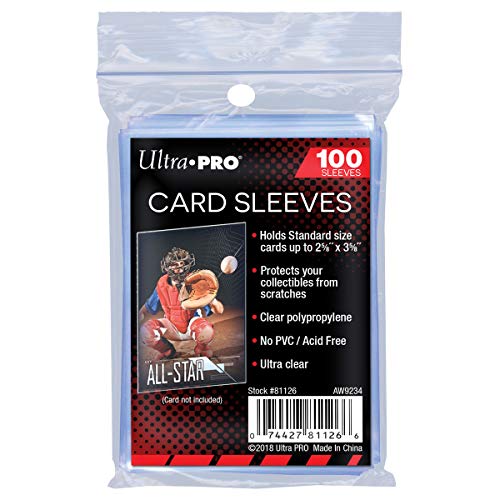
Your first move with any card is to sleeve it, before you set it down, before you show it to anyone. Penny sleeves (cheap, soft, clear poly) are the default; every card gets one. Perfect-fit sleeves (tighter, fewer air pockets) are what PSA and BGS require inside top loaders for grading submissions. Buy penny sleeves in bulk: 500 is not too many for a growing collection.
Best starter
Ultra Pro
Penny Sleeves 100ct
$
★★★★★Our rating
Ultra Pro has been the collector standard for decades; their sleeves show up in every card shop, every show, every storage box in the hobby. Crystal-clear poly so you can read every card without removing it. Start with a 100-count; buy 500-count once you realize you'll need them for everything you own.
What we like
Industry-standard brand, available everywhere collectors shop
Crystal-clear poly lets you read the card without removing it
Bulk packs keep cost to under a cent per sleeve
What to know
Soft plastic won't stop bending; always back with a top loader
Low-grit inner surface can scratch glossy foil cards over time
BCW is Ultra Pro's main competitor and often costs a bit less per sleeve in bulk. Functionally identical for commons and mid-tier cards. If you're buying in quantity, BCW's bulk pricing is worth comparing: sometimes better, never worse.
What we like
Slightly cheaper per sleeve in bulk compared to Ultra Pro
Same function as Ultra Pro; no quality gap for everyday storage
What to know
Less widely available at local card shops than Ultra Pro
PSA and BGS both require cards inside perfect-fit sleeves before going into a top loader for grading submission. These are tighter than penny sleeves with fewer air pockets, which prevents movement and minimizes damage in transit. Worth having a pack on hand before you send anything off.
What we like
Required for PSA/BGS grading submissions; buy these before you grade
Tighter fit means less card movement inside the top loader
What to know
Harder to insert cards than penny sleeves; requires patience
A top loader is the rigid clear plastic holder that goes over a penny sleeve to protect your better cards from bending. Slide the sleeved card in from the top (hence the name). Standard is 35pt, which fits 99% of base and rookie cards. For thick relics, patches, and jersey cards, you need a thicker loader. The number is the holder's inner clearance in points; most modern trading cards are about 20pt thick.
Top Loaders — what's the difference?
A few common shapes, each making a different trade.
35pt (Standard)
Fits 99% of base cards, standard rookies, and vintage cards.
Card thickness
Up to ~22pt
Best for
Base sets, modern singles
Best for Every standard-thickness card you own; make this your default pick
Tradeoff Cards with embedded memorabilia will rattle and shift inside
The 35pt Ultra Pro top loader is the default unit of sports card protection. Every card shop stocks them, every collector uses them, and they fit essentially every standard-thickness card made in the last 30 years. Buy a 25-pack to start; you'll need more within a month.
What we like
The universal standard; fits 99% of base and rookie cards
Ultra Pro consistency is reliable batch to batch
Stackable and shelf-stable for long-term storage
What to know
Too thin for any card with embedded memorabilia or a relic window
Hard plastic corners can snag penny sleeves during insertion
BCW top loaders have slightly thicker walls than Ultra Pro, which some collectors prefer for long-term storage. A few cents cheaper per holder in bulk, and the quality is solid. A perfectly valid alternative if Ultra Pro is sold out or priced higher.
What we like
Slightly thicker walls than Ultra Pro; preferred by some for storage
BCW bulk pricing beats Ultra Pro when buying 100+ at a time
What to know
Clarity varies more batch to batch; some packs run slightly hazy
For cards with embedded jersey pieces, patches, or other thick memorabilia. The 130pt holder fits cards that are 55–130pt thick, the typical range for single-layer relic cards. If your card rattles in a 35pt holder, this is the fix.
What we like
Fits thick relic and memorabilia cards that swim in standard 35pt
Same Ultra Pro build quality as the standard line
What to know
Way too large for standard cards; only buy what the card actually needs
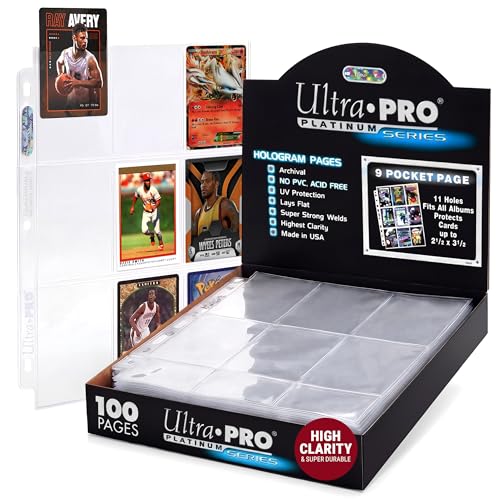
A 9-pocket D-ring binder is how most collectors display base cards, parallels, and set completions; flip through the pages, spot what's missing, and show people your collection without handling individual cards. Get a D-ring binder (not O-ring); D-rings don't stress the spine of the pages. Pages designed for trading cards have a snug fit; standard office-supply pages let cards slide and scratch.
Best starter
BCW
3-Inch D-Ring Card Album
$10.99 as of Jun 22, 2026
★★★★★Our rating· In Stock
BCW makes the most trusted binders in the hobby. The 3-inch D-ring design means plenty of capacity as your collection grows, the reinforced cover holds up to repeated use, and it lays flat when open for easy browsing. Pair it with a pack of 9-pocket pages and you have a complete card album for under $20.
What we like
D-ring protects pages better than O-ring; no page-spine pressure
Lay-flat opening makes browsing easy without bending pages
Available at most card shops; easy to buy more as collection grows
What to know
Cardboard cover scuffs over time; keep away from wet surfaces
Pages sold separately; easy to forget when ordering
The pages go inside any standard D-ring binder. Ultra Pro's 9-pocket design holds standard cards securely without sliding. A 100-pack holds 900 cards; start here before committing to a specific brand of binder, and add more as your collection grows.
What we like
100-pack covers your first several sets at once
Fits any standard 3-ring D-ring binder; mix brands freely
What to know
Pages not included in binder; needs to be bought separately
★★★★☆Our rating· Only 9 left in stock - order soon.
The PRO-Binder has permanently bound pages and a zipper closure so cards don't fall out if you toss the binder in a bag. If you're a set builder who wants a grab-and-go album, this beats assembling a binder and pages separately, and it looks better too.
What we like
Zipper closure keeps cards secure in transit; toss it in any bag safely
Built-in pages eliminate the binder-plus-pages assembly step
What to know
Fixed capacity; buy a second when you outgrow it, no expansion
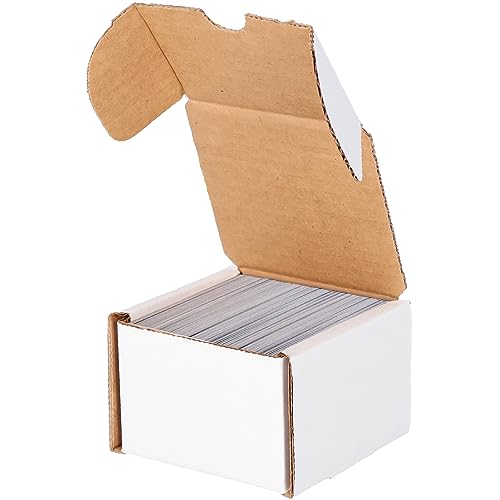
For commons, duplicates, and cards waiting to be sorted, you need a box. BCW cardboard storage boxes are the industry standard: cheap, stackable, and sized for one row of sleeved cards. A short box holds about 200 cards; a long box holds 800. Start with a short box; graduate to long boxes once your collection passes a thousand cards.
Best starter
BCW
200-Count Trading Card Storage Box
$17.45 as of Jun 22, 2026
★★★★★Our rating· In Stock
The BCW short box is the industry standard for organizing commons. Cheap, stackable, and sized for one row of top-loaded or sleeved cards. Start here; you'll fill it within a year if you buy packs, then add long boxes as the collection grows.
What we like
Industry standard; found in every card shop and collection room
Stackable design keeps your collection organized on a shelf
Cheap enough to buy separate boxes for different teams or sets
What to know
Cardboard material; not waterproof, keep away from moisture and basements
Once your collection outgrows the short box, a long box is the natural next step. 800-card capacity, same sturdy cardboard, and it fits on most standard shelves. Serious collectors have a stack of these sorted by year or set.
What we like
800-card capacity; a full year of pack buying fits in one or two
Same stackable BCW construction, works with your existing short boxes
What to know
Heavy when full; don't stack more than three or four high
For your best cards: the hits, the rookies with real upside, anything you'd consider submitting to PSA someday. One-touch holders are rigid UV-resistant acrylic cases with a magnetic closure. They sit on a shelf, stack cleanly, and make a card look like it belongs in a display case. The 35pt size covers most cards; 55pt and 75pt for thicker relics and chrome refractors.
Best starter
Ultra Pro
One-Touch 35pt Magnetic Card Holder
$$
★★★★★Our rating
The standard one-touch holder for standard-thickness cards. UV-resistant acrylic, a satisfying magnetic snap, and clean enough that your best cards look like they belong in a display case. The go-to holder when a top loader isn't serious enough for what you're protecting.
What we like
UV-resistant acrylic slows fading on vintage and colored cards
Magnetic closure opens without tools; display-ready immediately
Sits flat, stacks cleanly on a shelf or in a box
What to know
Closing too fast can nick card corners; squeeze slowly every time
Pricier than top loaders; save these for cards that actually matter
Same holder, thicker profile, for cards with a relic window, thicker chrome cards, or anything that floats in a standard 35pt one-touch. If your card rattles inside a 35pt holder, this is the right size.
What we like
Fits chrome and light relic cards too thick for the standard 35pt
Same UV protection and magnetic quality as the 35pt version
What to know
Standard cards rattle in this; only buy when the card needs extra room
Two cheap tools every collector should own before spending real money on raw cards. A loupe (jeweler's magnifier) lets you inspect card surfaces for scratches, print defects, and creases that affect a card's grade. A UV light reveals hidden repairs, bleached vintage cards, and washed autograph signatures: the three most common forms of card fraud a beginner will encounter. Together they cost under $25.
Best starter
30x Jeweler's Loupe Magnifier
$
★★★★★Our rating
At 30x magnification you can see print dots, surface scratches, and edge wear that aren't visible to the naked eye, all of which affect a card's PSA or BGS grade. Essential before submitting anything for grading, and useful any time you're evaluating a raw card from a private seller.
What we like
30x magnification reveals scratches and wear invisible to the naked eye
Folds flat and fits in a pocket; use it at shows and at the shop
Works equally well for stamps, coins, and other collectibles
What to know
Takes practice; you'll see more 'defects' than actually affect grade
A UV light makes faked and chemically-washed autographs glow differently from authentic signatures; authentic ink absorbs UV differently than counterfeit ink. It also reveals bleaching on vintage cards and invisible stains that would tank a grade. A $15 tool that pays for itself the first time it saves you from a bad buy.
What we like
Reveals washed autographs and invisible bleaching on vintage cards
Exposes chemical treatment that would tank a PSA or BGS grade
What to know
Takes time to learn what authentic vs. fake UV response looks like
Most new collectors lose money in their first month because they skip the boring fundamentals. Here's how to actually start, without the expensive mistakes.
Sports card collecting has a reputation for being complicated, and there’s some truth to that. The market is deep, the vocabulary is thick, and there are people actively trying to take advantage of beginners. But the fundamentals are genuinely simple, and if you learn them in the right order, the rest of the hobby opens up fast.
Here’s what your first month actually looks like, prioritized so you don’t have to learn the hard lessons the expensive way.
Week 1: Before you touch a card, understand condition
The single most important thing a new collector learns, and usually learns too late, is that condition determines value more than almost anything else. The same card, in PSA 10 (gem mint) condition, can be worth 5x, 10x, or 20x what it trades for in PSA 7 (near mint). A card with a single scratch or a soft corner is a fundamentally different card from one that came out of the pack and went straight into a sleeve.
This changes how you handle every card you ever touch:
Hold cards by the edges, never the face. The oils from your fingerprints cause micro-scratches on glossy surfaces that are invisible to the naked eye but show up under a jeweler’s loupe, and graders at PSA and BGS have loupes. Touch the edges. Never the face.
Sleeve immediately. The moment a card comes out of a pack, it goes into a penny sleeve, then into a top loader if it’s worth anything. This is not optional. Cards left unsleeved get surface scratches from being stacked against each other, from sliding across tables, from being picked up and put down. The first $10 you spend on supplies saves you from losses that will dwarf it.
Learn the grading scale. PSA, BGS, and SGC all use slightly different language, but the core standard is: 10 = gem mint (perfect), 9 = mint (minor imperfections), 8 = near mint/mint, 7 = near mint, 6 and below = damaged in some visible way. A PSA 10 requires perfect centering, sharp corners, no scratches, and clean surfaces. Most cards pulled from packs grade 8 or 9 at best; the 10s are the exception.
Week 2: Where to actually buy cards
The best source for specific cards is not a pack. Packs are random. If you want a Patrick Mahomes rookie, or a 1952 Topps Mickey Mantle, or a Kobe Bryant auto; buy that card as a single.
eBay sold listings are the market. Go to eBay, search for the card you want (include the year, brand, and any parallel, e.g. “2020 Prizm Justin Herbert Silver Rookie RC”), and filter by “Sold.” What you see is the actual price real buyers paid in the last 90 days. Not what sellers are asking, but what cards changed hands for. This is the only price that matters.
COMC (Check Out My Collectibles) is a consignment marketplace where sellers send their cards to COMC’s warehouse, COMC lists them, and you buy from verified, authenticated inventory. Lower fraud risk than eBay private sellers, especially for higher-value cards you can’t inspect in person.
Your local card shop (LCS) is worth finding even if their prices are slightly higher than eBay. A good LCS has knowledgeable staff who will tell you honestly if a card is overpriced or if the signature on that “auto” looks off. The in-person relationship is valuable, especially early.
Avoid Facebook Marketplace and Instagram sellers for anything above $20 until you know what authentic cards look like. These channels have the highest concentration of fakes and scams targeting new collectors.
You’ll want to rip packs. Everyone does; there’s a genuine thrill in not knowing what you’ll get. Do it. Buy some packs. But understand what you’re actually doing when you do:
The expected value of a pack is always negative. The manufacturer doesn’t sell packs at a loss. Every box is priced so that the average pull, at current market prices, is worth less than the box cost. The pack premium is what you pay for the experience of randomness. That’s a legitimate reason to buy packs (entertainment has value), but it’s not investing.
If you care about a specific player, buy the card. If you want a Wembanyama rookie, calculate what that rookie costs as a single on eBay, compare it to what you’d spend on hobby boxes chasing it, and buy the card directly. The math is always better on singles.
Rip cheap packs if you want the hobby experience. Retail blaster boxes ($25–40), hanger packs, and value packs let you participate in the rip-and-reveal experience without the brutal economics of hobby boxes ($100–400+). Start here.
Week 4: Understanding grading, when it makes sense
Grading is the process of sending a card to PSA, BGS, or SGC, having it professionally evaluated and given a numeric grade, then returning it in a sealed hard plastic case (called a slab). Graded cards sell for a premium because the grade is an independent authentication of condition.
Grading costs money. PSA’s economy tier starts around $25 per card, plus shipping. BGS is similar. That means a card has to be worth meaningfully more in graded form than it costs to grade it. The math only works on cards with real value; a common rookie worth $5 raw should not be graded.
The break-even math matters. If a card is worth $40 raw and PSA 10 copies sell for $120, the potential upside is $80. Subtract $25 for grading, $15 for shipping, and several months of waiting; it starts to look like a coin flip on whether you’ll come out ahead. Most beginners over-grade. Be conservative.
The grading population report tells you how many exist. PSA publishes how many of each card they’ve graded at each grade level (called the “pop report,” available at psacard.com). A card with a pop of 3 in PSA 10 is genuinely scarce. A card with a pop of 847 in PSA 10 is not.
The fakes problem: how to protect yourself
Card fraud is real and has gotten sophisticated. The main forms you’ll encounter as a beginner:
Fake autographs on legitimate cards. Someone takes a real, unsigned card and adds a forged signature. Signs to look for: a UV light reveals that the “ink” doesn’t absorb the same way authentic signatures do. A 30x loupe shows that printed autographs have halftone dots; real signatures have ink depth and flow.
Altered grades. Someone cracks open a legitimate graded slab, replaces the card with a better-condition copy (or swaps the label), and re-seals it. The case looks authentic. Check that the label number matches the PSA database at psacard.com; every legitimate slab has a unique serial number that PSA will verify online.
Trimmed vintage cards. Someone trims the edges or corners of a damaged vintage card to make it look better-conditioned. A centering ruler and a micrometer catch this; trimmed cards are measurably smaller than standard size.
None of these require you to become an expert immediately. The practical defense is: buy from verified sources and stay skeptical of deals that look too good. A 1986 Fleer Michael Jordan PSA 10 does not appear for $200. If it does, something is wrong.
Save your money
What you don't need yet
Beginners get pressured to buy a lot of stuff that doesn't help them play
better. Here's what we'd skip on day one.
A PSA or BGS submission — Grading costs $20–50+ per card minimum. Only submit when the graded value clearly exceeds the fee; most cards beginners own don't qualify. Learn the market first.
A price guide subscription — eBay sold listings are free, real-time, and more accurate than any subscription guide. Filter by 'Sold' and check the last three transactions before paying for anything.
A collection management app — Useful eventually for a large collection, but hand-sorting is how you actually learn what you own. Apps add overhead before you have enough cards to need them.
Display cases or shadow boxes — Once your best cards are in one-touch holders, a shelf is a fine display. Wall cases are a nice eventual upgrade, not a day-one purchase.
Humidity-controlled storage — Modern cards are stable at normal room temperature and humidity. Vintage cards from the 1950s–70s are the exception; don't worry about this until your collection goes vintage.
First week
Your first seven days
A short, real plan to get from gear-on-doorstep to actually playing.
Buy penny sleeves before you buy a single pack of cards. · Buy
How much should I spend to start collecting sports cards?
The supplies to protect your collection run $30–75. What you spend on actual cards is unlimited, and that's the point. Buy a few inexpensive packs or singles while you're learning, and increase your spend only after you understand which cards hold value and why.
Are sports cards a good investment?
For most beginners, no. Cards are a hobby that occasionally becomes a side hustle for people who put in serious research time. A very few collectors make money consistently; most break even or lose when they factor in grading fees, shipping, and the cards that never appreciated.
What sport or set should I collect?
Collect what you actually watch and care about. Nobody stays motivated building a set for a sport they don't follow. Baseball, basketball, and football have the deepest markets and the most liquidity if you ever want to sell; football rookies especially.
How do I know if a card is valuable?
Check eBay sold listings, not asking prices. Filter by 'Sold' and look at the last three or four completed sales for the exact card (including the parallel and grade if applicable). That's the market price. Everything else is a seller's wishful thinking.
Should I get my cards graded?
Only when the graded value clearly exceeds the cost of grading, which is typically $25–50 per card at economy tier. A card worth $40 raw rarely justifies a $25 submission. Most beginners over-grade. Learn the market for a few months before your first submission.
How do I avoid buying fake cards?
Stick to established, high-volume eBay sellers (99%+ feedback, 500+ transactions) or COMC for online purchases. In person, trust reputable local shops and licensed show dealers. Never buy expensive autographs from Instagram, Facebook Marketplace, or any seller you can't verify; that's where most beginner fraud happens.
PSA (Professional Sports Authenticator) — The dominant grading and authentication service. Their Population Report shows how many copies of a card exist at each grade; essential for understanding rarity and value.
Beckett Media — Long-running price guide and grading service. Less real-time than eBay sold listings, but a useful benchmark for established cards. Also runs a solid shop directory.
COMC (Check Out My Collectibles) — Consignment marketplace for individual card singles. Lower fraud risk than eBay for buying; good for selling commons in bulk. The authenticated-inventory model protects buyers.
Sports Card Investor — Market analysis podcast and newsletter with a business/investment lens. More useful after you know the basics; the data tools are worth bookmarking once you're buying seriously.
r/baseballcards — The most active card-collecting subreddit. Good for PC (personal collection) show-offs, authentication questions, and market sentiment. The wiki has solid beginner resources.
Blowout Cards Forums — The most established hobby forum. Authentication threads, group breaks, and veteran collector knowledge. Noisier than Reddit but deeper on the authentication and grading topics.
As an Amazon Associate, JustBeginning earns from qualifying purchases.
We may also earn commission from other affiliate programs linked on this
page. Editorial recommendations are independent; we don't choose
products based on commission rates.
Product prices and availability are accurate as of the date and time
indicated and are subject to change. Any price and availability
information shown on Amazon at the time of purchase will apply.

 Best starter