Gouache is the paint TikTok's art community can't stop talking about: opaque and matte like acrylic, workable like watercolor, and forgiving of mistakes. Before you spend anything, there's one decision to make: traditional or acrylic gouache. Here's exactly what you need to start.
By Colin B. · Published May 24, 2026 · Last reviewed June 13, 2026
Quality starter gouache, brushes, and watercolor paper runs $65–90. Budget $130–150 if you want artists'-grade picks across every category.
We earn commission on qualifying Amazon purchases — see our
affiliate disclosure.
Price tiers and budget totals shown above are editorial estimates;
actual Amazon prices vary.
At a glance
Our top pick in each category
The fastest path through this guide — each best-starter pick by category.
Scroll for the budget and upgrade alternatives.
The most important decision you'll make: traditional or acrylic gouache? Traditional (Holbein, Winsor & Newton) stays water-soluble forever, meaning you can rework and rehydrate days later. Acrylic gouache (Turner, Liquitex) dries waterproof so layers never lift. Most TikTok and Instagram tutorials use traditional gouache. Pick one and stick with it; they require different techniques.
Don't buy student-grade paints. Unlike oils or acrylics, cheap gouache contains so much chalk filler it looks streaky and dull even when applied correctly, and you'll think you're painting wrong when you're not. Entry-level professional brands cost only $20–30 more for a starter set and perform completely differently.
You might already own your palette. Gouache stays workable on the palette and rehydrates with a spray of water. A glass dinner plate, ceramic tile, or plastic tray works fine. Don't buy a stay-wet palette until you've decided you love the medium.
This is the most consequential decision in gouache. Traditional gouache (Holbein, Winsor & Newton) rewets and reworks indefinitely, perfect for the fluid, painterly style you see on TikTok and Instagram. Acrylic gouache (Turner, Liquitex) dries waterproof, better for building bold layers without muddying the colors below. Buy artists'-grade from day one. The quality difference over student sets is dramatic enough that beginners blame themselves instead of the paint.
Paint Sets — what's the difference?
A few common shapes, each making a different trade.
Traditional Gouache
Stays water-soluble; rework and rehydrate freely.
Dries
Re-wettable
Layers
Lift when wet
Brands
Holbein, W&N
Best for Beginners, soft-edge work, most TikTok tutorial styles
Tradeoff Wet lower layers lift when you paint over them
★★★★★Our rating· Only 3 left in stock - order soon.
Holbein is the brand professional illustrators default to, and for good reason: consistent pigment density across the range, no cheap filler colors. The creamy texture brushes out smoothly right from the tube. Eighteen colors covers every foundational palette need, including earth tones beginners actually reach for. The best entry point into traditional gouache.
What we like
Professional-grade pigment density, colors stay vivid after drying
18 colors covers every foundational palette need without gaps
Creamy, lump-free consistency straight from the tube
What to know
Pricier than student sets; expect $45–65 for this set
Water-soluble layers can lift when painted over while damp
Winsor & Newton Designers' Gouache is the other traditional brand worth trusting. The 10-tube set gives you a solid foundation of colors at a slightly lower price than Holbein, with the same commitment to pigment quality. Slightly more fluid consistency, and some painters prefer it for covering large areas. Solid first set if the Holbein price is a stretch.
What we like
Trusted professional brand at a lower price point than Holbein
Slightly more fluid consistency, easier to cover large areas evenly
What to know
10 colors means more mixing from the start
Some colors lean slightly transparent compared to Holbein equivalents
Once you've worked through the 18-color set and know which colors you reach for, the 24-color set fills the gaps without redundancy. The additional colors are well-chosen, with more ochres, greens, and specialty hues that reduce mixing time. If you're buying once and want everything from day one, start here instead.
What we like
24 colors gives you specialty hues, so less mixing from scratch
Same Holbein pigment quality as the starter set, just more range
What to know
Higher upfront cost; buy the 18 first if you're not sure you'll commit
Six tubes overlap with the 18-color set if you already own it
If you want waterproof layers (for mixed-media work, or because accidentally lifting your base layer sounds like a nightmare), Turner's acrylic gouache is the professional's choice. Same flat matte finish as traditional, but dries permanently. Layers sit on top of each other cleanly without muddying. Requires acrylic-style cleanup; no rehydrating dry paint.
What we like
Dries waterproof, layers lock permanently, no accidental lifting
Same flat matte finish as traditional gouache but stays put forever
What to know
Dries fast; small palette amounts only, spray bottle is essential
No second chances once dry; can't rehydrate old palette paint
Gouache uses the same brushes as watercolor: rounds for detail, flats for filling. Synthetic brushes are fine; you don't need natural hair. The most important qualities are a tip that snaps back cleanly, a ferrule that doesn't loosen, and a range of sizes. Start with a set covering at least a size 2, 6, and 12 round. Those three handle 90% of what beginners paint. Avoid super-cheap brushes; they fray after two sessions and make everything feel harder than it is.
Best starter
Princeton
Neptune Series 4750 Watercolor Brush Set
$70.42 as of Jun 22, 2026
★★★★★Our rating· Only 9 left in stock - order soon.
Princeton Neptune brushes are synthetic squirrel: they hold water and snap back like natural hair at a fraction of the price. This 4-piece set (rounds 4, 6, 8, 10) is what most illustration instructors recommend to beginners, and it earns it: consistent tip quality across sizes, good water capacity, ferrules that stay put. The brush set we'd buy for a friend starting tomorrow.
What we like
Synthetic Kolinsky, snaps back to a fine point like natural hair
Consistent quality tip across all sizes in the set
Ferrules stay tight through months of regular use
What to know
Largest round may be more brush than beginners need early on
Mid-range price, not cheap, but completely earns it
If you're not ready to spend $30+ on brushes before you know if gouache will stick, Artify's set gets you through the first few months. Passable tip quality, a wide range of sizes in one purchase, comfortable handles. Expect to replace them after a few months of regular use, but they won't stop you from learning.
What we like
Wide size range covers rounds, flats, and detail brushes in one set
Under $15, sensible spend before you know if gouache sticks
What to know
Tips start to fray after 2–3 months of regular use
Ferrules loosen faster than premium brushes; check before sessions
★★★★☆Our rating· Only 2 left in stock - order soon.
Da Vinci's Casaneo series is where serious illustrators end up. The synthetic filament holds a precise tip under load: no splaying, no springiness, just control. A noticeable step up from Princeton Neptune for precision work, with beautifully balanced handles that reduce hand fatigue in long sessions. Buy individual sizes once you know which ones you actually reach for.
What we like
Precision tip holds under load, no splay on fine detail work
Beautifully balanced handles, less hand fatigue in long sessions
What to know
Primarily sold individually; building a range gets expensive fast
More brush than a beginner needs; wait until you know your sizes
Gouache needs heavy paper, at least 140 lb (300 gsm). Anything lighter will buckle and warp as wet paint dries, and you'll spend more time flattening paper than painting. Cold-press watercolor paper is the standard surface: slightly textured, forgiving, available in pads or blocks (blocks stay flat without taping). Bristol board is a smooth alternative for flat, graphic illustration. Regular sketchbook paper is fine for practice sketches, but your finished work deserves real paper.
Best starter
Strathmore
400 Series Watercolor Pad, 9x12
$9.62 as of Jun 22, 2026
★★★★★Our rating
Strathmore's 400 Series is the art-school standard: 140 lb cold-press that handles gouache cleanly without warping, available in 9x12 or 11x14 pads at a fair price. The tooth holds paint well and allows light lifting without tearing. Reliable, widely available, and what most instructors expect beginners to be working on.
What we like
140 lb cold-press, handles gouache without buckling or warping
Art-school standard, widely available and priced fairly
Tooth accepts both wet washes and dry-brush gouache techniques
What to know
Loose pad sheets can warp in high humidity without taping
Not the smoothest surface; graphic illustrators may prefer Bristol
Canson's XL line is the budget workhorse: real 140 lb paper at a noticeably lower price than Strathmore. The 11x15 format gives you more working space than a 9x12 pad, helpful for larger studies. The surface is slightly coarser, which some painters love for natural texture. Use it for practice and studies; save Strathmore or Arches for finished pieces.
What we like
Genuine 140 lb paper at the lowest price in the category
Coarser texture adds natural variation to flat gouache washes
What to know
Coarser surface can frustrate smooth flat-color work
Slightly warm paper tone can affect white paint color accuracy
★★★★☆Our rating· Only 1 left in stock - order soon.
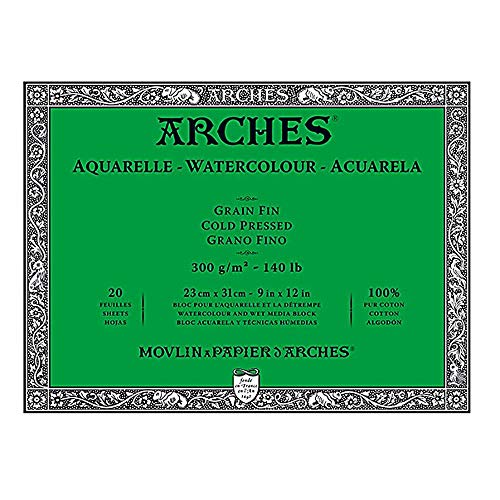
Arches is the benchmark paper for professional watercolorists, and it's equally excellent for gouache. The 140 lb cold-press has a consistent, beautiful tooth and handles multiple wet layers without protest. Block format (pages glued on all four sides) means the paper stays flat while wet with no taping needed. Buy it when your work is good enough that the paper should be too.
What we like
Block format keeps sheets flat while wet, no taping or clipping needed
Benchmark paper quality, handles multiple wet layers without complaint
What to know
Significantly pricier than pads; save for finished work, not studies
Block separation requires a palette knife; takes a little care
Traditional gouache dries on the palette but reactivates with a spray of water, bringing yesterday's colors back to life every session. A stay-wet palette slows initial drying even further. At minimum you need something non-porous (plastic, glass, or ceramic) so pigment doesn't soak in. A glass plate or ceramic tile from home works fine. Upgrade to a real palette once you have a feel for how much paint you use per session.
Best starter
Masterson
Sta-Wet Premiere Palette
$$
★★★★★Our rating
The Masterson Sta-Wet is what illustration instructors recommend when students ask how to stop wasting gouache. A wet sponge under palette paper keeps colors soft and workable between sessions; open it the next morning and everything is ready to go. Saves real money on paint over time. The lid seals tight enough to store an open palette for days.
What we like
Wet sponge base keeps paint workable between sessions, reducing waste
Airtight lid lets you store an open palette for days without drying
What to know
Palette paper gets soggy if the sponge is too saturated
Bulkier than a flat palette, takes up more studio counter space
A smooth oval wood palette with a thumb hole for comfortable hand-held use. Works well for mixing sessions: set colors around the outer edge and mix in the center. Under $15 and ergonomic enough to hold while you paint rather than leaving it flat on the desk. Wipe clean at the end of each session.
What we like
Thumb hole lets you hold the palette while painting, more natural workflow
Under $15, sensible spend before you know your palette habits
What to know
Wood absorbs pigment over time; rub thin linseed oil into surface before first use
No mixing wells; colors can bleed into each other on a flat surface
Three tools beginning gouache painters overlook until they need them: painter's tape (to secure paper flat and create crisp edges (the clean white border in most gouache art is just taped paper)), a fine-mist spray bottle (to rehydrate paint on the palette and keep everything workable mid-session), and a two-chamber water container (clean water in one side, rinse water in the other). Total cost under $20, and all three will immediately improve your experience.
Best starter
3M
Scotch Blue Painter's Tape
$4.49 as of Jun 22, 2026
★★★★★Our rating· In Stock
The clean white border in virtually every TikTok gouache painting is just taped paper: blue painter's tape on the edges, removed after drying. Scotch Blue is the reliable choice: it seals well enough to prevent paint bleeding under the edge, and peels away cleanly from watercolor paper without tearing. Buy the 0.94-inch width. Buy two rolls.
What we like
Creates the crisp white border you see in all TikTok gouache art
Peels cleanly from watercolor paper without tearing the surface
What to know
Remove while slightly damp; fully dry gouache chips at tape edge
May lift paper fibers if left on for more than a day or two
★★★★☆Our rating· Only 2 left in stock - order soon.
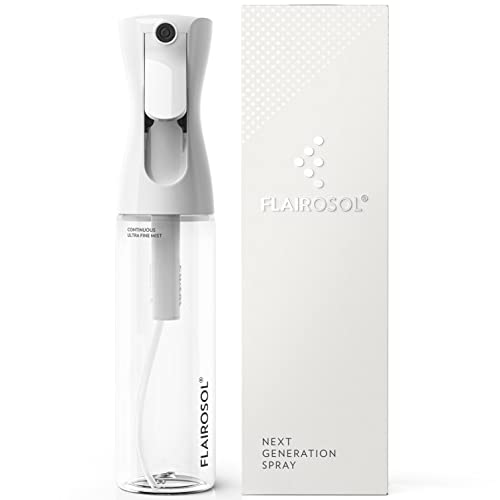
Traditional gouache on the palette reactivates with water; a few sprays brings yesterday's colors back to life. A fine mist bottle (not a coarse spray) does this without flooding your palette. The Flairosol gives a consistent ultra-fine mist that won't pool. A $10 tool that saves real paint over time.
What we like
Ultra-fine mist rehydrates palette paint without flooding it
Keeps traditional gouache workable mid-session on dry days
What to know
Fine mist nozzles clog with heavy pigment residue; rinse after use
Not needed for acrylic gouache; dry acrylic paint won't reactivate
Gouache rewards beginners faster than almost any other painting medium, if you know what to expect and don't fall for the traps. Here's what the first four weeks actually look like.
Gouache has a reputation for being approachable, and it’s earned. The paint is forgiving, the medium dries fast enough to iterate quickly, and mistakes can be painted over. But beginners regularly hit the same walls in the same order, and knowing what’s coming makes the first month a lot less frustrating.
This is what the first four weeks actually look like, including the parts nobody mentions.
Week one: Understanding what the paint actually does
Before you paint anything recognizable, spend the first two or three sessions just learning how gouache behaves. That sounds like delay. It’s not. Thirty minutes of paint experiments saves you weeks of wondering why your results look wrong.
The key things to discover:
Consistency is everything. Gouache should be the thickness of heavy cream: not toothpaste, not water. Too thick and it drags, goes streaky, and cracks as it dries. Too thin and it goes transparent, which defeats the whole point of gouache. Get a scrap sheet of paper and test: squeeze a small amount, add water bit by bit with your brush, and try a flat stroke. You’re looking for full opacity in one smooth pass.
Gouache dries lighter. This surprises everyone. Mix a color that looks perfect while wet, and it will be noticeably lighter when dry. The shift is most dramatic with dark colors and warm earth tones. You’ll calibrate for this over weeks. Just be aware it’s the paint, not a mistake.
Reactivating is a feature, not a bug. If you’re using traditional gouache, that color you mixed yesterday and left on your palette is still alive. A few sprays of water and a brush stroke will bring it back. This saves real money. Don’t wash your palette between sessions; just seal it or leave it and spray before you start next time.
Flat, even color is gouache’s signature look, and it’s harder than it looks. The TikTok technique of blocking in perfect flat shapes feels effortless in the videos. In practice, it takes a specific technique that most beginners don’t stumble onto naturally.
The trick is wet-on-wet with a loaded brush and no going back. Load your brush with paint, lay down a stroke, and keep moving in the same direction. The mistake beginners make is going back over drying paint with another stroke; this drags the top layer, creates streaks, and looks rough. Lay the stroke and leave it. If the area needs another pass, let it dry completely first, then go over it.
Brush size matters more than you’d think. Use a brush that’s large enough to cover the area in two or three strokes, not ten. Big flats for big areas, small rounds for edges and details. Working in too many small strokes is the most common cause of streaky coverage.
When you nail a clean, flat shape for the first time (when the color sits even and matte and exactly where you put it), you’ll understand what the fuss is about.
Week three: Layering and when layers fight back
By week three most beginners want to layer: to put one color over another, build up a painting, add shadows or highlights on top of a base.
This is where traditional and acrylic gouache diverge completely.
With traditional gouache: the lower layer can reactivate as you paint over it. Brush strokes that are too wet on top of a fresh layer will lift the color below, mixing it with your new color and muddying the result. The solution is to work with slightly stiffer paint when layering (less water than usual), use confident strokes that don’t linger, and always let the lower layer dry completely before adding on top. Touch the surface: if it’s cool, it’s still damp. Wait.
With acrylic gouache: layers lock permanently. Once dry, the lower layer is a solid foundation. You can glaze, scrub, and rework without disturbing what’s below. The tradeoff is that you can’t fix the base layer after it’s down, so plan first.
Highlights are where gouache really earns its reputation. Unlike watercolor, you can add white highlights directly on top of dark paint (after it’s dry). A small round brush loaded with slightly stiff titanium white can drop a bright point of light onto a dark shadow. This single technique (pure white on dark) looks confident and professional almost immediately.
Week four: Color mixing and building a working palette
By week four you’ve got a feel for the paint. Week four is about learning to mix efficiently: to reach the color you see in your head without three rounds of guessing.
Start with a limited palette and learn it well. Six colors (a warm and cool version of red, yellow, and blue, plus white) let you mix any color you need. (Black is optional and often muddies mixes; mix dark colors from the primaries first.) This constraint sounds frustrating but produces better results than a 24-color set where you just grab a tube and hope.
Mixing with white is one of the things that makes gouache different. Adding white to any color pushes it toward pastel. Adding white to a dark color warms it and reduces saturation. White is your most important pigment for the soft, chalky look that defines the medium’s aesthetic.
A note on colors drying lighter: start your mixes slightly darker and warmer than your target, knowing the dry result will shift. This becomes instinct around month two. Until then, dry test strips on scrap paper before committing to your painting.
Don’t start with portraits or landscapes. The medium will fight you. Start with subjects that reward flat color and graphic shapes:
Fruit and vegetables: simple forms, strong local color, forgiving of imprecision
Mugs and objects: clear silhouettes, good practice for clean edges and small highlights
Color-field thumbnails: just shapes and color relationships, no drawn subject at all
The goal in month one is to trust the medium. Gouache will do things for you that no other paint will: flat matte color, vivid opacity, easy corrections. Learn those behaviors and you’ll have something to work with for years.
Save your money
What you don't need yet
Beginners get pressured to buy a lot of stuff that doesn't help them play
better. Here's what we'd skip on day one.
Individual tube colors — A starter set covers everything you need. Buy single tubes only after you've identified which colors you actually use, typically after 3–6 months of regular painting.
Gouache mediums and extenders — Mediums (gum arabic, flow improver) solve specific problems you don't have yet. Learn the paint first, add mediums when you know what's missing.
A light box or tracing pad — Useful eventually for transferring sketches to paper, but completely skippable while you're learning basic gouache technique and color mixing.
Cold-press illustration board — Great for finished work but expensive per sheet. Start with watercolor pad sheets; upgrade once you're creating pieces worth preserving.
Specialty brushes (fan, mop, hake) — Fan, mop, and hake brushes have specific uses. A basic round-and-flat set covers everything in your first six months of painting.
First week
Your first seven days
A short, real plan to get from gear-on-doorstep to actually playing.
Decide: traditional or acrylic gouache? Read the Paint Sets section if you're not sure, it matters before you order anything. · Action
Order a starter paint set: Holbein for traditional gouache, Turner for acrylic gouache. · Buy
Order a Princeton Neptune brush set and Strathmore 400 watercolor pad. · Buy
Paint three small studies: a flat wash, a gradient, and a simple subject. Your only goal is understanding how the paint behaves, not making something beautiful. · Action
Before your second session: tape the edges of a fresh sheet with blue painter's tape. Paint to the edge, let dry, peel the tape for your first proper bordered gouache piece. · Buy
What's the difference between traditional and acrylic gouache?
Traditional gouache (Holbein, Winsor & Newton) stays water-soluble forever, so you can rehydrate and rework it even days after drying. Acrylic gouache (Turner, Liquitex) dries waterproof and cannot be reactivated. They look similar but require completely different techniques. Most beginner tutorials and TikTok creators use traditional gouache.
Do I need artists'-grade paint or is student grade fine?
Artists'-grade: this is the one medium where the quality gap is most obvious. Student-grade gouache has so much chalk filler it looks streaky and dull even when applied correctly. Entry-level professional brands (Holbein, Winsor & Newton) are only $20–30 more for a starter set and perform completely differently.
What paper should I use for gouache?
Cold-press watercolor paper at 140 lb (300 gsm) minimum. Anything lighter will warp and buckle as wet paint dries. Strathmore 400 or Canson XL are reliable and affordable. Arches is the step-up for finished work. Bristol board works for smooth, graphic illustration styles that want a flat surface.
Why does my gouache look dull and chalky when it dries?
Either you're using student-grade paint (which has too much filler), or the paint is too thick with not enough water. Gouache should have a creamy, fluid consistency, about the thickness of heavy cream. Add a small amount of water, test on scrap paper, and aim for a smooth, opaque coat in a single pass.
Can I mix gouache with watercolor?
Yes, traditional gouache and watercolor are fully compatible. Mix them for more opaque watercolors or softer gouaches. Keep a clean palette to avoid muddy results. Note that acrylic gouache is NOT compatible with watercolor; they behave differently when rewetted and will separate or pill.
How do I get crisp white borders in my gouache paintings?
Blue painter's tape. Tape the edges of your paper before you start, press the tape down firmly so paint can't bleed under it, paint all the way to the tape edge, and remove the tape while the paint is still slightly damp. The clean white border is just the untouched paper underneath.
r/Gouache — Active community for gouache painters. The wiki covers brand recommendations and beginner FAQs. Scroll new posts for inspiration and feedback on your own work.
Blick Art Materials: Gouache — The most comprehensive single reference for understanding brand tiers and product lines. Blick's editorial notes on each product are accurate and reliable.
Teoh Yi Chie (Parkablogs) — Singaporean illustrator with deep, methodical reviews of gouache brands, brushes, and papers. The most thorough independent brand testing available in English.
Lena Danya (YouTube) — Clear, beginner-friendly gouache tutorials. Strong on color mixing and the TikTok flat-illustration style. Start here for technique.
Strange Planet Studio (YouTube) — Process videos and brand comparisons. Particularly good on traditional vs. acrylic gouache and paper choices; watch before you buy.
As an Amazon Associate, JustBeginning earns from qualifying purchases.
We may also earn commission from other affiliate programs linked on this
page. Editorial recommendations are independent; we don't choose
products based on commission rates.
Product prices and availability are accurate as of the date and time
indicated and are subject to change. Any price and availability
information shown on Amazon at the time of purchase will apply.
Our top pickHolbein Artists' Gouache G713 - Set of 18 15ml


 Best starter